
Lavender in pots dies from the roots up. The single greatest killer of container-grown lavender isn’t cold, light, or pests — it’s a potting mix that holds moisture longer than the plant’s Mediterranean genetics can tolerate. Standard bagged potting soil, designed for moisture-loving annuals, turns a lavender pot into a slow-acting swamp. Success depends entirely on replicating the sharp drainage and alkaline pH of lavender’s native limestone scree.
I’m Rikta — the co-founder and writer behind Lawn Gear Lab. I’ve spent countless hours dissecting bag labels, analyzing ingredient particle sizes, and cross-referencing grower reports to isolate the few mixes that actually prevent root rot while delivering the lean fertility lavender demands.
After comparing mineral composition, drainage speed, and pH profiles across seven commercial blends, one mix consistently outperforms the rest — the soil for lavender plants in pots that balances porosity with just enough organic structure to sustain a full blooming season without compaction.
How To Choose The Best Soil For Lavender Plants In Pots
Container lavender demands a mix that mimics a dry, rocky hillside. Generic potting soil, even premium brands, often fails because it’s engineered for water retention. Here’s what to check before you buy.
Particle Size and Grit Content
Lavender roots need large air pockets. A mix dominated by fine peat or compost compacts after a few waterings, suffocating the root system. Look for visible aggregates — pumice, perlite, calcined clay, or lava rock in the 1/8- to 1/4-inch range. The mix should look chunky, not like dark mud. If you can’t see individual particles, it’s too dense for lavender.
pH Range and Alkalinity
Lavender prefers a soil pH between 6.5 and 8.0, with an ideal target around 7.0 to 7.5. Most standard potting soils trend acidic (5.5 to 6.5) because of peat moss content. An acidic mix locks up essential nutrients like calcium and magnesium, leading to stunted growth and yellow foliage. A bag labeled for cacti or succulents is often a closer match, but always check for added lime or alkaline buffers if the primary ingredient is peat.
Drainage Speed vs. Moisture Retention
The goal is a mix that allows water to flow freely out of the drainage holes within seconds, not minutes. Lavender roots must dry out between waterings. Ingredients like peat moss and coir hold water against the root ball; pumice, perlite, and sand encourage rapid percolation. A simple test: wet a handful of the mix. If it holds a clump shape when squeezed, it retains too much water. If it crumbles immediately, it’s suitable.
Quick Comparison
On smaller screens, swipe sideways to see the full table.
| Model | Category | Best For | Key Spec | Amazon |
|---|---|---|---|---|
| Soil Sunrise Lavender Potting Mix | Premium Blend | Lavender-specific container mix | 8 qt, peat + pumice + lime | Amazon |
| Soil Sunrise Cactus Mix | Premium Gritty | DIY custom lavender blend base | 8 qt, pine bark + sand + clay | Amazon |
| Rosy Soil Cactus Mix | Organic Peat-Free | Eco-conscious growers | 4 qt, worm castings + microbes | Amazon |
| Miracle-Gro Cactus Mix (3-Pack) | Budget Bulk | Large pots on a budget | 24 qt total, fast-draining formula | Amazon |
| Midwest Hearth Cactus Soil | Entry-Level | Small single pots | 4 dry qt, peat + perlite | Amazon |
| Avalution Lava Rock Pebbles | Amendment Only | Adding drainage to existing mix | 2.4 lb, 1/4 inch lava rock | Amazon |
| FANTIAN Pumice Pebbles | Amendment Only | Bulking up aeration | 5 lb, 5-8 mm lava mix | Amazon |
In‑Depth Reviews
1. Soil Sunrise Lavender Potting Soil Mix (8 Quarts)

This is the only blend in this comparison formulated specifically for lavender in containers. Soil Sunrise built the mix around lavender’s known requirements: peat moss for modest moisture retention, perlite and pumice for macro-porosity, horticultural charcoal to absorb impurities, and — critically — added lime to push the pH into the alkaline range lavender demands. The sand component adds weight, preventing the mix from floating out of pots during heavy rain or overhead watering.
Grower reports describe plants responding within days — bushing out, setting more flower spikes, and showing deeper green foliage. The 8-quart bag fills a standard 12-inch pot, and the ingredients list is fully natural with no synthetic fertilizers or wetting agents. Multiple buyers confirm the mix eliminates the need for additional amendments, a rare claim for any bagged soil targeting a notoriously finicky herb.
The only tradeoff is the inclusion of peat moss, which some growers prefer to avoid for environmental reasons. However, the peat here is balanced by a high percentage of drainage aggregates, so the overall texture remains loose. For a dedicated lavender mix that works straight from the bag, this is the benchmark.
What works
- Formulated specifically for lavender with added lime for alkalinity
- Visible coarse aggregates (pumice, perlite, sand) prevent compaction
- Proven results — plants bloom faster and bushier in user reports
What doesn’t
- Contains peat moss, which may concern eco-conscious buyers
- Premium price per quart versus generic cactus mixes
2. Soil Sunrise Cactus and Succulent Potting Mix (8 Quarts)
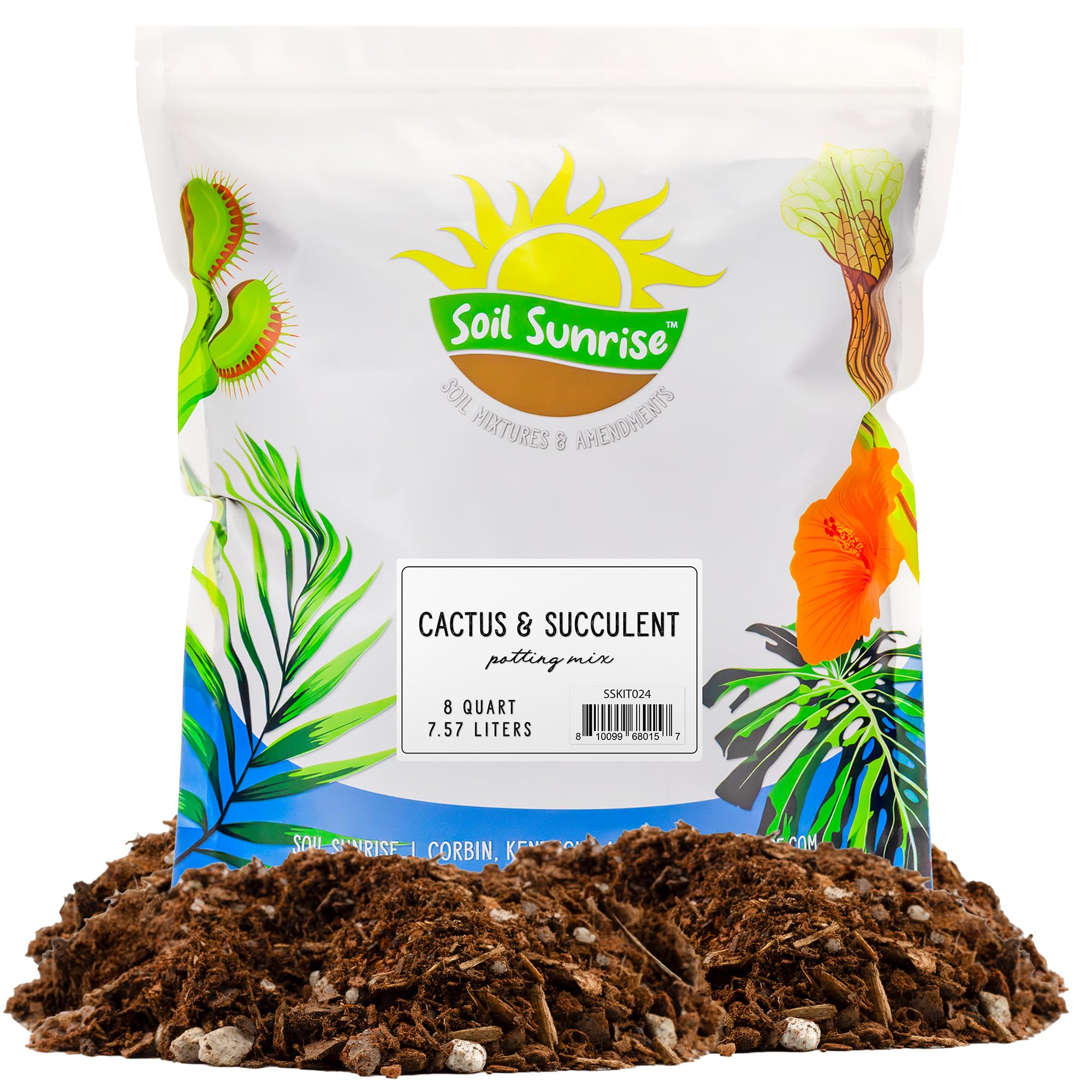
Though labeled for cactus, this gritty mix shares the same parent company and quality ethos as the lavender blend, making it an excellent second option for lavender growers who want to custom-tune their pH. The ingredient profile — pine bark, silica sand, calcined clay, and pumice — creates a structure that drains almost instantly. Growers report that a 50/50 blend of this mix with the Soil Sunrise lavender blend produces the fastest-draining, most rot-resistant pot yet.
The calcined clay acts as a lightweight aggregate that holds some nutrients without retaining water, while the sand provides the physical weight lavender pots need for stability. Multiple customer reviews confirm no bugs, no gnats, and no foul odors — a sign of well-composted, clean ingredients. Buyers who previously relied on big-box cactus soils note that this mix is recognizably grittier and less prone to turning into a solid block after a season.
On its own, this mix lacks the alkaline lime buffer lavender requires. If used as a standalone, you will need to add garden lime or dolomite to raise the pH. But as a blending component, it offers the best drainage-to-nutrient balance of any bagged product here.
What works
- Exceptional drainage — drains instantly with visible grit
- Clean ingredients with no bugs, smells, or mold reported
- Versatile as a standalone or blending base for custom mixes
What doesn’t
- No lime included — requires pH adjustment for lavender
- Pine bark may decompose faster than mineral-only mixes
3. Rosy Soil Cactus & Succulent Potting Mix (4 Quarts)
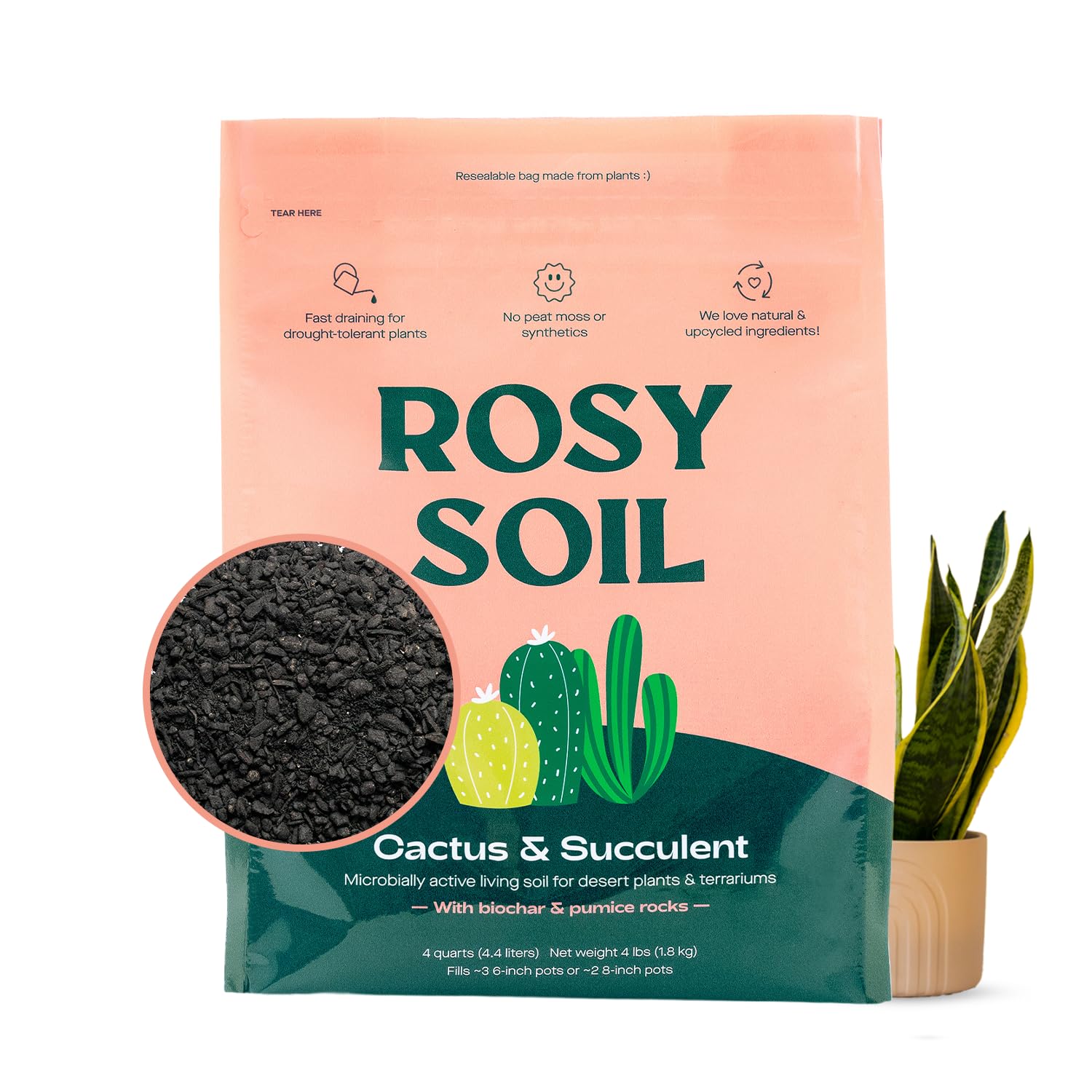
Rosy Soil takes a fundamentally different approach: rather than relying on chemical or mineral amendments, this mix loads living biology — beneficial fungi, microorganisms, and worm castings — directly into the bag. The result is a peat-free, chunky texture that stays loose and airy while building a self-sustaining root ecosystem. For lavender, which is sensitive to over-fertilization, the microbe-driven nutrient cycling provides a steady, low-nitrogen food source without the burn risk of synthetic granules.
The crumb structure is visibly different from conventional mixes. Growers describe it as dark, even, and slightly moist but never soggy. Multiple buyers confirm no pests or gnats after opening, which is a strong indicator of proper sterilization. Users blending this with bonsai soil or additional perlite report the best results for older lavender plants that need extra drainage.
The 4-quart bag fills about two to three standard pots, and the resealable packaging helps maintain freshness. The main caveat: this mix is designed for cactus and succulents, so it trends neutral to slightly acidic. Adding a tablespoon of lime per pot is recommended to shift the pH into lavender’s ideal alkaline range.
What works
- Peat-free formula drains freely and resists compaction
- Living microbes and worm castings feed roots naturally
- Clean, bug-free, and sustainably packaged in the USA
What doesn’t
- pH is not optimized for lavender — requires added lime
- Small bag size requires multiple units for larger pots
4. Miracle-Gro Cactus, Palm & Citrus Potting Mix (3-Pack, 8 Quarts Each)

This three-bag bundle delivers 24 quarts of fast-draining cactus mix at a cost per quart that undercuts most specialty blends. The formula is built around a proprietary blend of sphagnum peat moss, perlite, and a wetting agent that helps the dry bag rehydrate quickly. For lavender, this mix needs modification — it lacks the alkaline pH and the coarse aggregate size that prevents compaction over multiple seasons.
Experienced growers in the reviews describe using this as a base and blending it 50/50 with additional perlite, pumice, or chicken grit to achieve the drainage lavender requires. The included plant food charge is designed for fast-growing succulents and cacti, not for Mediterranean herbs, so nitrogen levels may be higher than lavender prefers. The 3-pack is best suited for growers with multiple large containers who are comfortable amending and customizing.
The biggest advantage is availability and consistency. Miracle-Gro’s manufacturing scale means every bag is identical, which is valuable when you’re blending across multiple pots. If you add limestone and extra drainage aggregate, this becomes a serviceable bulk solution for lavender.
What works
- High-volume 24-quart bundle at a competitive bulk rate
- Readily available and consistent batch-to-batch
- Works as a base when amended with lime and extra grit
What doesn’t
- Too fine-textured for lavender without major amendments
- Contains synthetic fertilizer charge that may over-feed lavender
5. Midwest Hearth Cactus & Succulent Potting Soil (4 Dry Quarts)
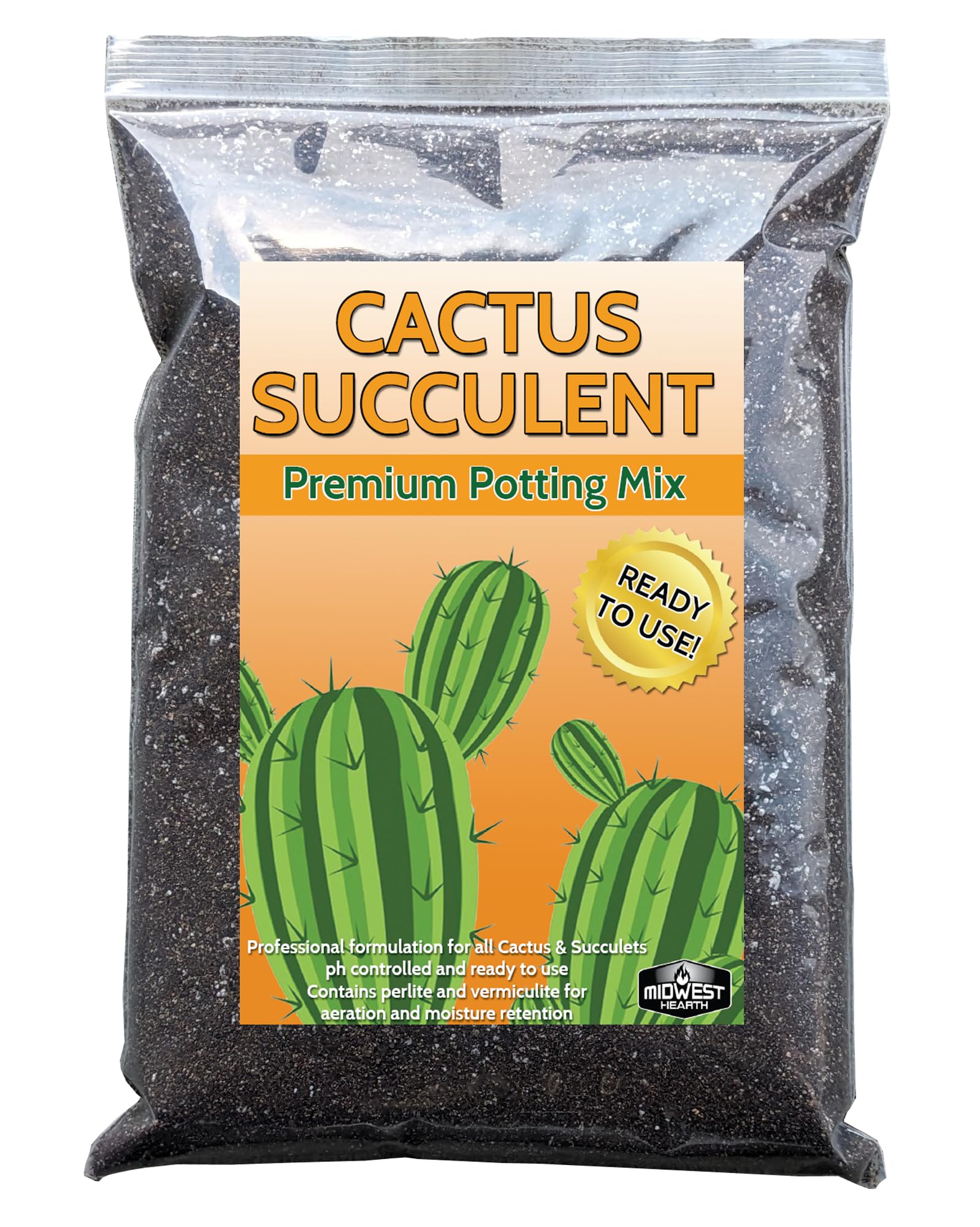
Midwest Hearth positions this as a ready-to-use cactus mix made in the USA, blending peat moss, perlite, and vermiculite. The pH is pre-balanced for succulents, which gives it a neutral to slightly acidic profile — close to lavender’s range but not quite alkaline enough without a supplement. The particle size is finer than the Soil Sunrise or Rosy blends, meaning it compresses more over a growing season.
Customer feedback is positive for standard succulents like aloe, jade, and Christmas cactus, with multiple 5-star ratings citing happy plants and easy handling. The 4-quart bag works for two to three small pots, making it a good trial size for a single lavender cutting or a first-time container grower. Users note that dry particles can be dusty and may blow around if the bag is stored near an open window.
For lavender specifically, this mix needs at least one amendment: a handful of garden lime to raise pH and a 25% addition of pumice or coarse sand to improve the drainage profile. Without these adjustments, the peat and vermiculite hold too much moisture for lavender’s comfort zone over a full watering cycle.
What works
- Affordable entry point for testing a single small pot
- pH pre-balanced for succulents — close to lavender’s target
- Ready to use straight from the bag for most desert plants
What doesn’t
- Peat and vermiculite hold too much moisture for lavender alone
- Fine particles create dust and compact faster than gritty mixes
6. Avalution Lava Rock Pebbles Pumice (2.4 lb)

Lava rock is one of the most effective single-ingredient amendments for lavender pots because it creates permanent macro-pores that never break down. These 1/4-inch pebbles from Avalution are clean, uniform, and functionally inert, meaning they don’t alter pH or release nutrients — they simply improve drainage and aeration. When mixed at a 30-50% ratio into a peat-based soil, they transform a water-retentive mix into a free-draining bed.
Buyers use this product in multiple ways: as a top dressing to prevent soil splash and fungus gnats, as a base layer for semi-hydro setups, and as a bulk additive for cactus and succulent custom blends. Reviews note that the stones are attractive — subtle grey tones that look natural in clear pots or terrariums. Some buyers recommend rinsing thoroughly before use because the bag can contain fine dust from transit.
The 2.4-pound bag is modest in volume. For a single 10-inch lavender pot, you will use most of the bag if blending at a 1:1 ratio with soil. This is best viewed as a companion purchase to a base soil, not a standalone solution.
What works
- Permanently improves drainage — lava rock never decomposes
- Inert pH profile works with any base soil without altering balance
- Attractive appearance suitable for top dressing
What doesn’t
- Small bag size — need multiple bags for large pots
- Dusty out of the bag; requires rinsing before use
7. FANTIAN Pumice Pebbles Mix (5 lbs, 5-8 mm)
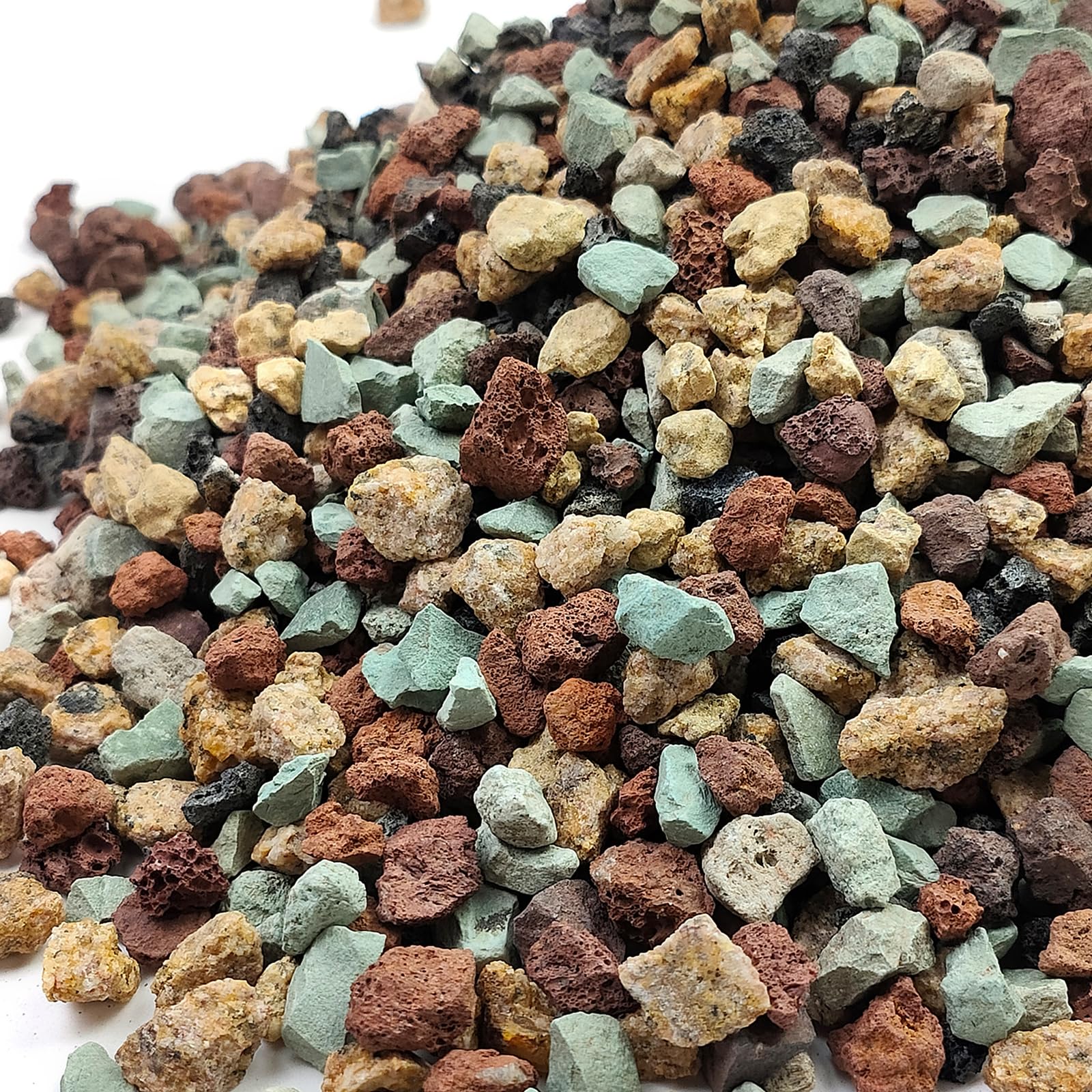
This 5-pound bag combines lava stone, Maifanitum stone, and green zeolite — three mineral aggregates with different pore structures. The mixture creates a more complex drainage profile than single-material amendments. Maifanitum adds trace mineral release, and zeolite contributes some cation exchange capacity, which is rare for an aggregate amendment. Together, they create a gritty, free-draining base that lavender roots thrive in.
The particle size is sifted to 5-8 mm (about 1/4 inch), making it compatible with both small pots and larger planters. Buyers report using it to bulk up cactus soil, to improve aeration for orchids, and even as a decorative top dressing. Multiple reviews confirm it effectively keeps fungus gnats away by eliminating surface moisture. The 5-pound weight provides about twice the volume of the Avalution bag, making this the more economical choice if you need to amend several pots.
As with any mineral aggregate, dust from processing and transport is present. Rinsing in a colander before mixing is recommended. For lavender, blend at a 40-50% ratio with a balanced base soil and add lime to ensure alkalinity — the stones themselves are pH-neutral.
What works
- Multi-mineral blend improves drainage and adds trace minerals
- 5-pound bag provides good coverage for multiple medium pots
- Helps prevent fungus gnats by drying the soil surface
What doesn’t
- Dusty out of bag; requires thorough rinsing before use
- Stones are heavier than perlite, adding weight to pots
Hardware & Specs Guide
Soil pH Targets
Lavender requires a soil pH between 6.5 and 8.0, with an ideal landing zone of 7.0 to 7.5. Most peat-based potting mixes test at 5.5 to 6.2, which blocks calcium uptake and stresses the plant. A simple digital pH meter or an inexpensive test strip can confirm your mix before planting. If your bagged soil tests below 6.5, mix in 1 tablespoon of hydrated lime or dolomitic lime per gallon of soil to shift the balance upward.
Particle Size and Porosity
Lavender roots need physical air pockets. A mix should contain at least 30-40% visible aggregates between 2 mm and 8 mm in diameter. Ingredients like pumice, perlite, calcined clay, crushed granite, or lava rock create this structure. Fines (smaller than 1 mm) should make up less than half the total volume. To test porosity: water a saturated pot and time the drainage — lavender soil should empty fully within 10-15 seconds.
FAQ
Can I use regular potting soil for lavender in pots?
How often should I repot lavender into fresh soil?
Do I need to add gravel at the bottom of a lavender pot?
Final Thoughts: The Verdict
For most gardeners, the soil for lavender plants in pots winner is the Soil Sunrise Lavender Potting Soil Mix because it is the only bagged blend formulated specifically to deliver the alkaline pH and coarse drainage lavender requires without mixing or amendments. If you want the absolute fastest drainage and plan to custom-tune pH yourself, grab the Soil Sunrise Cactus Mix and blend it with lime. And for eco-conscious growers who prefer a peat-free, microbe-driven living soil, nothing beats the Rosy Soil Cactus Mix with a small addition of garden lime.