
Hoya roots are notoriously sensitive to compaction — a single season in heavy, moisture-locking dirt can trigger root rot and stop a blooming vine dead in its tracks. The difference between a plant that sulks for months and one that throws out peduncles and fragrant flowers comes down to the physical structure of the mix around its roots. This guide breaks down the chunky, fast-draining formulations that match the epiphytic nature of Hoyas, so you can stop guessing and start growing.
I’m Rikta — the co-founder and writer behind Lawn Gear Lab. I’ve spent hundreds of hours studying potting mix specifications, comparing aeration profiles, particle sizes, and moisture retention curves, and cross-referencing owner feedback to isolate what actually works for Hoya growers.
Every mix reviewed here passes the same test: does it create the open, breathable environment Hoyas need to push out thick roots and clusters of blooms? This is the definitive guide to finding the best soil for hoya.
How To Choose The Best Soil For Hoya
Selecting the right mix for your Hoya means understanding that these plants are semi-epiphytic — in the wild, they grow on tree bark rather than dense forest floor soil. The goal is to replicate that open, quick-draining environment in a container.
Particle Size and Texture
A mix that looks like coarse crumbs rather than fine dust is what Hoyas need. Large particles — bark chips, pumice, coarse perlite, and coco chips — create air pockets that allow oxygen to reach the root zone. Fine particles like peat and sand fill those gaps and trap water, which is the fastest way to suffocate a Hoya root system.
Moisture Retention vs. Drainage
Hoyas need consistent moisture but cannot tolerate wet feet. A good mix holds enough water to keep the roots hydrated between waterings while allowing excess to drain completely within seconds. Ingredients like coco coir and worm castings provide balanced moisture retention without becoming soggy, while pumice and LECA act as drainage anchors.
Nutrient Content and pH
Hoyas prefer a slightly acidic to neutral pH range (around 6.0 to 7.0) and moderate nutrient levels. Overly rich mixes can cause lush green growth at the expense of blooms. Look for a base that includes worm castings or a slow-release organic fertilizer, but avoid heavy compost blends that stay wet too long.
Quick Comparison
On smaller screens, swipe sideways to see the full table.
| Model | Category | Best For | Key Spec | Amazon |
|---|---|---|---|---|
| Rosy Soil Aroid Mix | Premium Aroid | Microbially active, peat‑free growing | 4 quarts, biochar + pumice | Amazon |
| Sol Soils Chunky Mix | Peat‑Free Chunky | Ultra‑fast drainage for sensitive Hoyas | 1 gallon, coco coir + pumice + LECA | Amazon |
| rePotme Hoya Classic | Specialist Blend | Botanic‑grade Hoya‑specific formulation | 2 quarts, handcrafted bark + organic matter | Amazon |
| Gardenera Hoya Mix | Branded Hoya Mix | First‑time repotting convenience | 2 quarts, peat + worm castings | Amazon |
| DUSPRO 8in1 Aroid Mix | Multi‑Component | Budget‑friendly versatility | 2 quarts, 8‑ingredient blend | Amazon |
In‑Depth Reviews
1. Rosy Soil Aroid Soil Mix
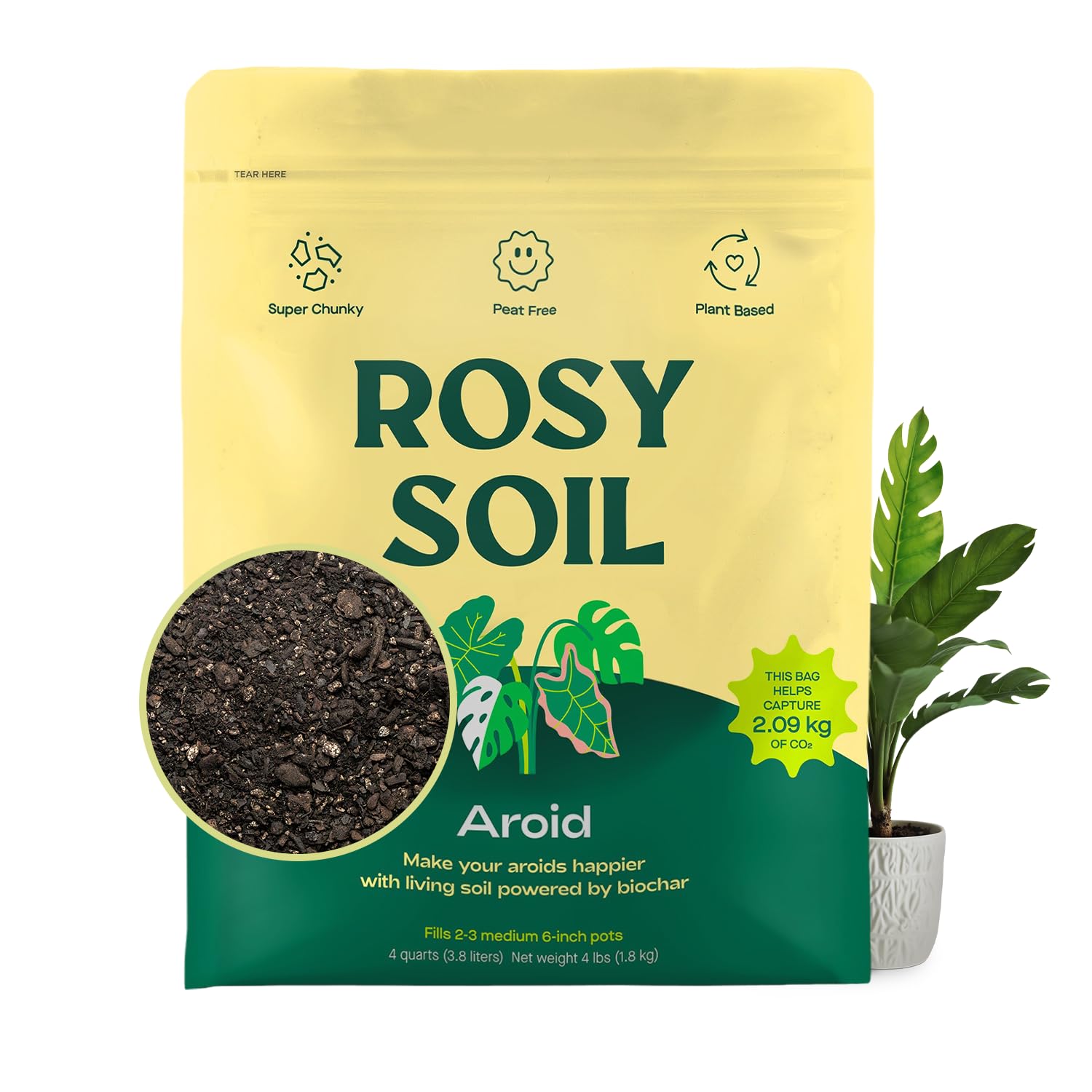
Rosy Soil’s Aroid mix is engineered around biochar and volcanic pumice — two ingredients that create a genuinely airy, chunky structure without relying on peat moss. The absence of peat means less compaction over time, which directly benefits Hoya roots that need consistent oxygen exchange. The inclusion of mycorrhizae and worm castings provides a living biological component that boosts nutrient uptake and root resilience.
At 4 quarts, this bag fills two to three medium pots, and the resealable packaging keeps the remaining mix fresh for future repotting sessions. Customer feedback consistently reports rapid new growth and an absence of fungus gnats after switching from traditional soil blends, which points to the mix’s excellent drainage and biological balance. The texture is chunky but not overly coarse — roots can weave through the particles easily.
The carbon-negative manufacturing process also appeals to growers who want to minimize their environmental footprint. The occasional observation that it is less chunky than some ultra-premium blends is relative — for the price point and performance, this remains the most complete all-rounder for Hoya growers who want a ready-to-use, science-backed mix.
What works
- Biochar and pumice create lasting aeration without compaction
- Microbially active formula boosts root health and nutrient cycling
- Peat-free and carbon-negative manufacturing aligns with sustainable practices
What doesn’t
- Texture is less chunky than some boutique aroid blends
- Bag size may be small for large collections
2. Sol Soils Houseplant Chunky Mix
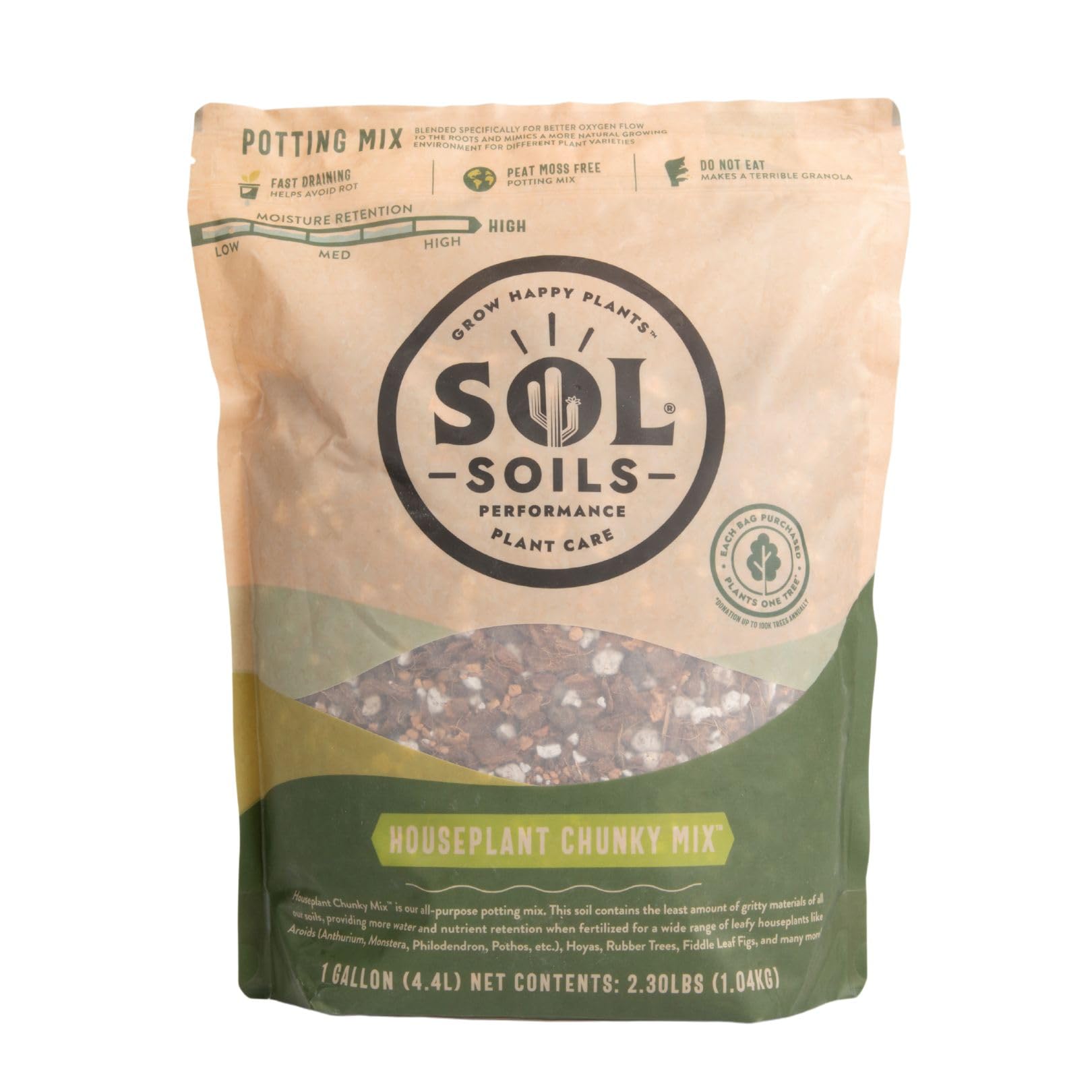
Sol Soils has crafted a mix that prioritizes drainage above all else, combining coconut coir, husk chips, perlite, pumice, pine bark, and LECA into a blend that is notably dry and free-flowing out of the bag. This formulation is ideal for Hoya collectors who water on a strict schedule and want a mix that never holds moisture longer than necessary. The 1-gallon volume is generous for a premium product and can handle multiple repotting sessions.
Owners of Hoya species that require extra aeration — such as Hoya carnosa compacta or Hoya kerrii — report that this mix eliminates the need for additional perlite or bark amendments. The peat-free formula also avoids the acidic breakdown that can shift pH over time. The inclusion of recycled forest products gives the mix a slightly woody texture that mimics the epiphytic bark environment Hoyas naturally cling to.
The primary trade-off is cost — this is one of the more expensive options per quart on the market. However, users consistently note that the quality eliminates the need to bake or treat soil before use, and the absence of pests and mold justifies the premium for serious collectors. For growers with a larger collection, the bag size helps offset the per-pot cost.
What works
- Exceptional drainage — mix remains dry and airy even after watering
- No gnats, mold, or pests reported even without pre-treatment
- Peat-free and supports global reforestation initiatives
What doesn’t
- Higher price per quart compared to most competitors
- Very dry texture may require more frequent watering in arid environments
3. rePotme Hoya Classic Potting Soil

rePotme’s Hoya Classic mix is made in small handcrafted batches and is used by botanic gardens, which speaks directly to the formulation’s reliability. The blend features a bark-and-organic-matter base that provides a genuinely open structure — you can see individual bark nuggets and fiber fragments when you pour it out. The resealable pouch is a practical touch for apartment dwellers who don’t need to use the entire bag at once.
Hoya owners who have repotted years-old plants into this mix report a visible difference in root health within weeks. The drainage is sharp enough to prevent waterlogging, yet the organic matter holds just enough moisture to keep the roots from drying out completely between waterings. The bag’s dry weight is notably light, confirming the high air-to-solid ratio that Hoyas require.
The cost per quart is higher than generic mixes, but the sample-size mini bag is exactly right for growers with just one or two Hoyas who don’t want to store a large bag. Some users note that they needed more soil than expected for larger pots, which can make the per-pot cost climb. For specialized, low-volume repotting, this is the most tailored option available.
What works
- Handcrafted in small batches with visible bark structure
- Used by botanic gardens — formulation is field-tested
- Resealable pouch extends shelf life between uses
What doesn’t
- Expensive per quart, especially for larger pots
- Small mini bag may not be enough for a full repot of a large Hoya
4. DUSPRO 8in1 Aroid Potting Mix
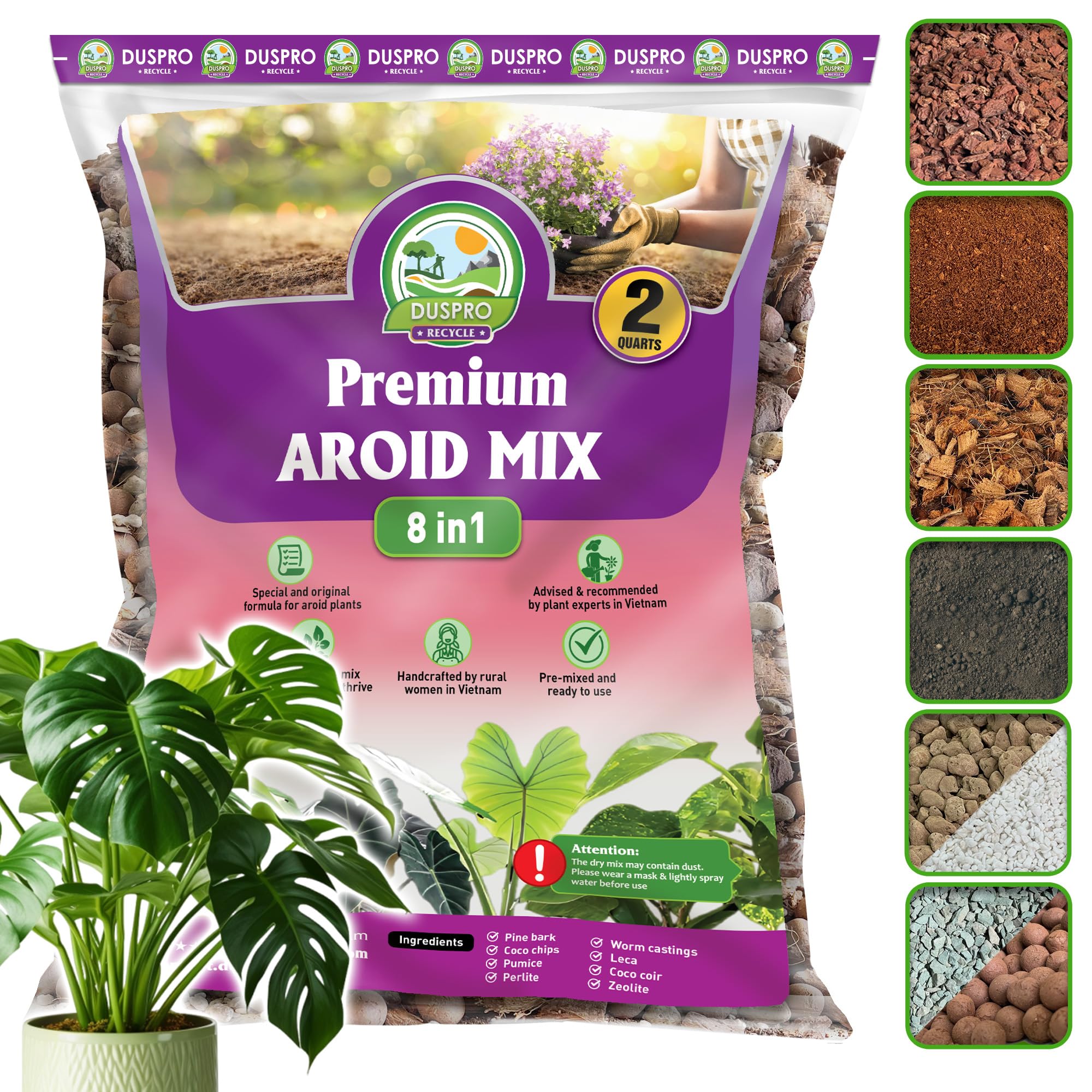
DUSPRO’s 8in1 blend combines pine bark, coco chips, pumice, LECA, perlite, zeolite, coir, and worm castings into a single pre-mixed bag that eliminates the need for DIY component sourcing. The inclusion of zeolite is a standout — this mineral helps buffer nutrient levels and maintain a stable pH, which benefits Hoyas that are sensitive to sudden shifts in soil chemistry. The texture is appropriately chunky with visible air gaps throughout.
Customer feedback highlights that this mix supports a wide range of plants, not just aroids, making it a versatile option for growers with mixed collections. An indoor gardener reported repotting a money tree and seeing immediate improvement, while another used it to revive a lemon tree by replacing heavier soil around the roots. The 2-quart size is compact but can handle several small to medium pots.
One practical note is that the mix can be dusty when poured — a mask is recommended if you are sensitive to particles. For the price point, it delivers eight different components that would otherwise require separate purchases, making it an excellent entry point for new Hoya growers who want a balanced mix without the research investment.
What works
- Eight components provide a balanced blend without DIY mixing
- Zeolite inclusion buffers pH and nutrient levels
- Works across multiple plant types beyond aroids
What doesn’t
- Dusty when poured — mask recommended during use
- Texture favors aroid plants but may be too airy for moisture-loving Hoyas
5. Gardenera Premium Potting Mix for Hoya

Gardenera’s Hoya-specific mix uses Canadian peat moss and worm castings as its base, creating a blend that is nutrient-rich and retains moisture better than chunky alternatives. This makes it a good choice for growers who live in dry climates or who tend to underwater — the peat holds water longer, giving roots more time to absorb moisture. The 2-quart bag is small, which keeps the entry cost low for first-time Hoya owners.
New Hoya growers in particular have reported positive results, with one user noting that a 40-year-old cutting started recovering within a day after being transplanted from generic potting soil. The pre-mixed formula is convenient, and the nutrient profile supports vigorous leaf growth. For growers who are still learning their watering rhythm, the extra moisture buffer reduces the risk of the plant drying out completely.
The main drawback is that the peat content can compact over time, especially if the mix is not amended with additional perlite or bark. Some experienced Hoya collectors find the texture too fine for long-term root health and prefer to add their own drainage components. For the price, it works well as a base mix that can be customized.
What works
- Peat and worm castings provide rich nutrient content for vigorous growth
- Moisture retention benefits Hoyas in dry indoor environments
- Pre-mixed and ready to use straight out of the bag
What doesn’t
- Peat base compacts over time, reducing aeration
- Fine texture may require additional perlite or bark for optimal drainage
Hardware & Specs Guide
Particle Size Distribution
The ideal Hoya mix contains particles ranging from 2mm to 12mm in size. Bark chips and pumice in the 4–10mm range create the air pockets that mimic an epiphytic environment. Fine particles smaller than 1mm should make up less than 20% of the total volume to avoid filling those gaps. A simple visual test: when you squeeze a handful of moist mix, it should crumble apart rather than form a dense clump.
pH and Electrical Conductivity
Hoyas perform best in a pH range of 6.0 to 7.0. Most peat-based mixes start around 5.5 and drift more acidic as the peat decomposes, which can stunt root growth over time. Mixes with coco coir, pumice, or biochar tend to hold a more stable pH. Electrical conductivity, which measures soluble salts, should stay below 1.5 mS/cm for young plants and under 2.0 mS/cm for established specimens to avoid fertilizer burn.
FAQ
Can I use regular potting soil for my Hoya?
Should I add perlite to a pre-mixed Hoya soil?
Final Thoughts: The Verdict
For most gardeners, the soil for hoya winner is the Rosy Soil Aroid Mix because it combines peat-free structure, microbial activity, and consistent drainage in a mid-range package. If you want the highest aeration possible and don’t mind a premium price, grab the Sol Soils Chunky Mix. And for a budget-friendly option that covers all the bases without guesswork, nothing beats the DUSPRO 8in1 Aroid Mix.