
Hibiscus plants demand a very specific bedroom for their roots: a mix that is loose enough to let oxygen in, acidic enough to unlock nutrients, and sharp-draining enough to never let those roots sit in a puddle. A heavy, alkaline, or water-logged soil is the fastest way to yellow leaves, bud drop, and root rot—the three killers that end most hibiscus dreams before the first bloom opens.
I’m Rikta — the co-founder and writer behind Lawn Gear Lab. I spend my days studying horticultural data sheets, comparing NPK ratios against pH tolerances, and analyzing hundreds of verified owner experiences to separate the commercial hype from what actually keeps tropical and hardy hibiscus alive across every growing zone.
The best tools in the shed mean nothing if your roots are suffocating. This guide walks through the exact acidity range, drainage texture, and ingredient list that define a superior soil for hibiscus, then ranks the top-ready mixes so you can match your plant’s needs to the right bag without guessing.
How To Choose The Best Soil For Hibiscus
Hibiscus roots are sensitive to compaction, alkalinity, and standing water. Three specifications determine whether a mix supports heavy blooming or silently kills the plant.
pH Level: The Nutrient Gatekeeper
Hibiscus prefers a slightly acidic environment between 5.5 and 6.5. Above pH 7.0, iron and manganese become unavailable—new leaves turn pale yellow with dark veins (iron chlorosis) and flower production stalls. Always check the pH range listed on the bag. A mix formulated for “acid-loving plants” directly meets this requirement.
Drainage & Aeration: The Root Breath Test
Heavy clay or dense peat that holds water for days suffocates fine hibiscus roots, inviting fungal rot. Look for perlite, coarse sand, pine bark fines, or vermiculite in the ingredient list. A handful of moist mix should hold its shape when squeezed but crumble apart when you release the pressure. If it compacts into a mud ball, the drainage is too low.
Nutrient Profile & Organic Content
Hibiscus is a heavy feeder, but fresh fertilizer in the mix can burn tender roots. A balanced mix (not “moisture control” which retains water) with composted bark, coco coir, or worm castings provides a gentle nutrient release. Avoid mixes with synthetic time-release granules for young or freshly repotted plants.
Quick Comparison
On smaller screens, swipe sideways to see the full table.
| Model | Category | Best For | Key Spec | Amazon |
|---|---|---|---|---|
| Coast of Maine Acid-Loving | Premium Organic | Low pH maintenance | 20 Qt volume | Amazon |
| Soil Sunrise Acid Loving 12 Qt | pH Balanced | Acidic bloom boost | 12 Quarts | Amazon |
| Perfect Plants Indoor 8qt | All Natural | Indoor hibiscus | 8 Quarts | Amazon |
| Midwest Hearth Premium 8 Qt | Professional Mix | Seedlings & cuttings | 8 Dry Quarts | Amazon |
| Jessi Mae Potting Soil 4 Qt | Slightly Acidic | Small repots & propagation | 4 Quarts | Amazon |
| Soil Sunrise Bird of Paradise 8 Qt | Tropical Blend | Container tropicals | 8 Quarts | Amazon |
| Miracle-Gro Potting Mix 3-Pack | Multi-Purpose | Budget refill bulk | 24 Qt total | Amazon |
In‑Depth Reviews
1. Coast of Maine Organic & Natural Planting Soil for Acid Loving Plants

The Coast of Maine Acid-Loving mix combines composted manure, sphagnum peat moss, and aged bark into a blend that holds a steady low pH perfect for hibiscus. At 20 quarts, this is the largest premium bag among the contenders, making it the most economical choice for multiple pots or a single large container. Owners report strong, quick growth in berries and azaleas—both plants with the same acid requirement as hibiscus.
The texture is light and fluffy straight out of the bag, incorporating enough organic matter to retain moisture without turning soggy. The absence of synthetic fertilizers means the roots can settle in without fear of chemical burn. OMRI listing adds third-party verification for those who prefer a certified-organic input.
A small number of users note the bag can arrive compressed. Allow a few minutes to fluff the mix by hand before potting. The price per quart is significantly lower than smaller specialty bags while maintaining a premium ingredient list.
What works
- Best volume-to-price ratio among premium acid mixes
- Light, crumbly texture that drains well
- OMRI organic certification adds trust
What doesn’t
- Bag may settle during shipping and require aeration
- Not a complete mix for heavy feeders—may need supplemental fertilizer after 8 weeks
2. Soil Sunrise Acid Loving Plant Potting Soil Mix (12 Quarts)
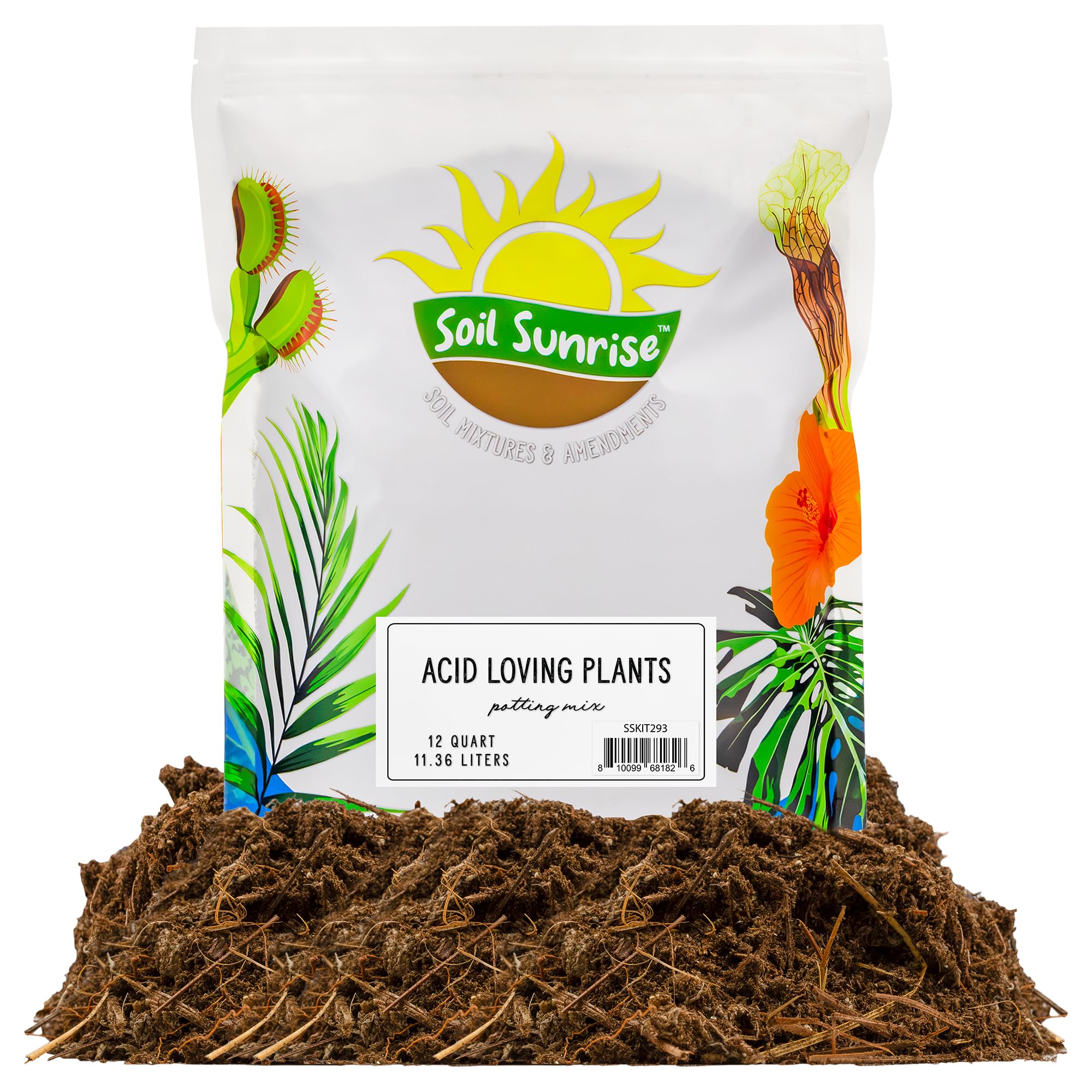
Soil Sunrise formulates this mix specifically for plants that need enhanced acidity. Peat moss, pine needle mulch, pine bark mulch, sphagnum moss, and vermiculite create an environment where hibiscus can access iron and manganese without soil additives. The 12-quart size lands in a sweet spot—large enough for a 14-inch pot yet compact enough for apartment storage.
Owners consistently describe strong bloom performance after repotting, with one user reporting a gardenia thriving and another seeing heavy flowering on a fuchsia. The drainage is sharp: water flows through quickly, reducing the risk of wet feet. A pre-moisten step is recommended for the peat base to avoid initial hydrophobic spots.
The bag dimensions can surprise—it is denser and smaller in physical footprint than some 8-quart bags because of the ingredient weight. Measure your pot volume before ordering to avoid an unexpected shortage.
What works
- High acidity ideal for tropical hibiscus varieties
- Rapid drainage prevents root rot
- Natural ingredients support sustainable growing
What doesn’t
- Requires pre-moistening to fix initial water repellency
- Bag size appears smaller than typical 12-quart containers
3. Perfect Plants Indoor Plant Soil (8 Quarts)
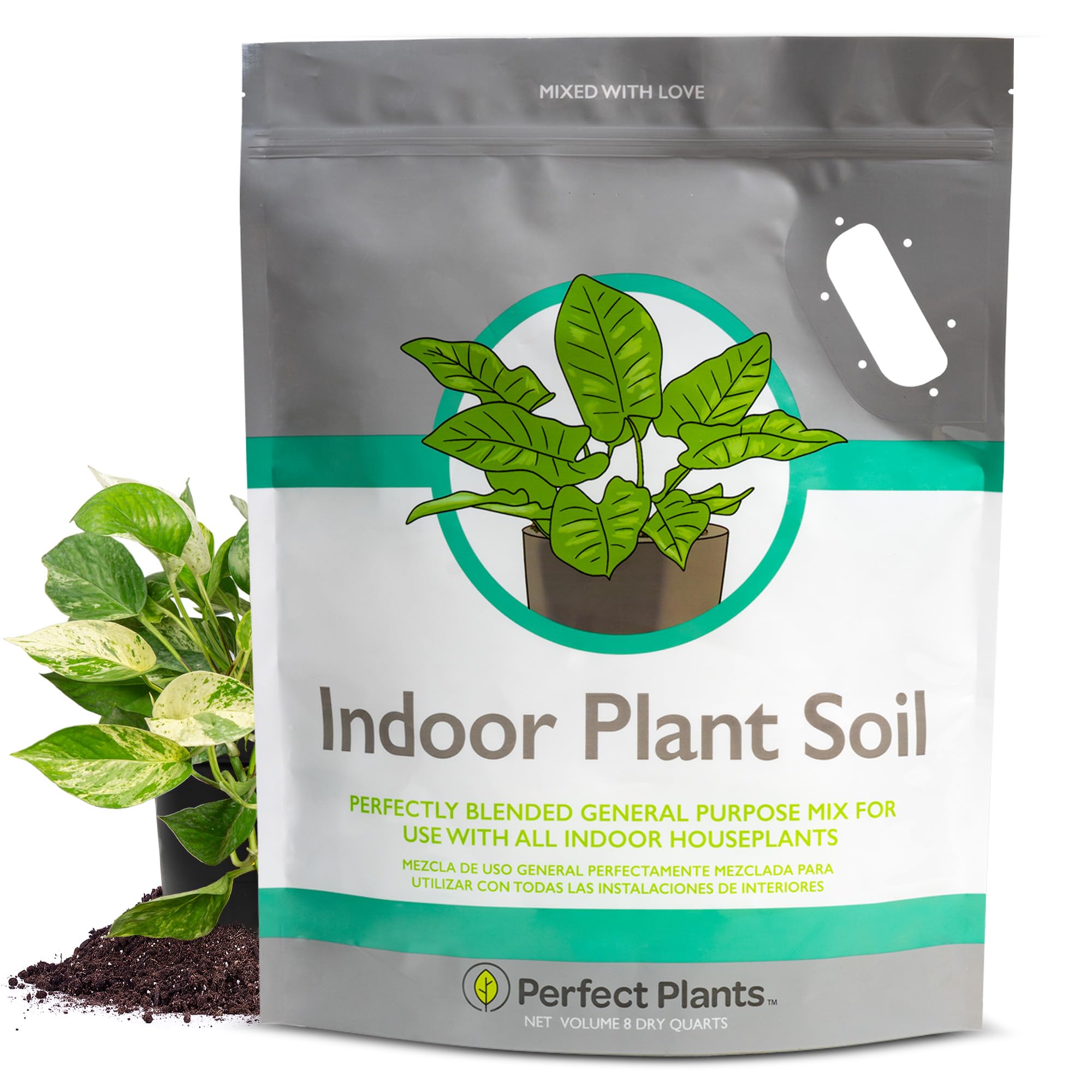
Perfect Plants combines pine bark, coco coir, perlite, sand, and garden lime to create a mix that drains fast and stays aerated for months. Indoor hibiscus growers report zero fungus gnats—a common frustration with bagged soil. The blend is lightweight enough to use in hanging baskets and ceramic pots without adding excessive weight.
The moisture management works: water flows through the coarse particles while the coco coir retains just enough for the roots to drink. Multiple verified reviews highlight consistent leaf growth on aglaonema and spider plants, confirming the mix supports general tropical plants as well as hibiscus. The resealable bag keeps unused soil fresh.
The 8-quart volume covers two medium pots (8-10 inch). For a single large hibiscus standard, you may need two bags. The absence of synthetic, slow-release fertilizer means you will need to begin liquid feeding after the first month.
What works
- Completely free of fungus gnats and weed seeds
- Light, airy texture with excellent drainage
- Resealable heavy-duty bag for long storage
What doesn’t
- Volume is moderate—large pots need multiple bags
- No built-in fertilizer; requires separate feeding program
4. Midwest Hearth Premium Potting Soil Mix (8 Dry Quarts)

Midwest Hearth uses the same three-ingredient backbone—peat moss, perlite, and vermiculite—used by professional greenhouse growers. The texture is exceptionally fluffy when you open the bag, providing immediate aeration for fine hibiscus roots. The pH is pre-balanced to suit a broad spectrum of plants, though it leans slightly acidic enough for hibiscus.
Owners specifically praise its performance as a seed-starting medium and for young cuttings where root sensitivity is highest. The mix stays loose after repeated watering cycles; it does not crust or compact the way cheaper soils do. The resealable bag also includes a clear window to see the texture before opening.
Because the mix contains no added lime or bark, it drains faster than many garden-center blends. Hibiscus in this medium will need more frequent watering in hot weather. The 8-quart volume is ideal for a single large tropical hibiscus or a set of four 6-inch pots.
What works
- Professional-grade triple blend for maximum aeration
- No weeds, no bugs, no synthetic fillers
- Ideal for cuttings and sensitive young roots
What doesn’t
- Dries quickly in hot conditions; needs attentive watering
- Not a specialized acid mix—pH may need monitoring
5. Jessi Mae Potting Soil (4 Quarts)

Jessi Mae’s 4-quart bag is hand-mixed in small batches with organic materials and perlite, achieving a light, fluffy texture that snake plants and peace lilies love—and the same qualities apply to hibiscus. The slight acidity and sharp drainage make it a low-risk choice for a single small hibiscus in a 6-inch pot. Users note that the organic smell fades after a day or two, and no fungus gnats appear.
The bag is genuinely small: 4 quarts covers about one medium pot. For a single houseplant hibiscus, that is exactly the right amount. The mixing quality is consistent—the perlite is evenly distributed rather than settling at the top as seen in mass-produced soils. The lack of chemical additives makes it safe for immediate repotting.
The price per quart is higher than larger bags, so growers with multiple hibiscus plants will find the value proposition weaker. For propagation, single-plant care, or apartment dwellers with limited storage, this size eliminates waste.
What works
- Perfect small size for one-pot repots
- Organic, chemical-free formula for sensitive roots
- Hand-mixed with even perlite distribution
What doesn’t
- Small volume is less economical per quart
- Organic smell can be strong for first two days
6. Soil Sunrise Bird of Paradise Potting Soil Mix (8 Quarts)

Although marketed for Bird of Paradise, this Soil Sunrise blend of peat moss, perlite, and lime hits every specification tropical hibiscus needs: a soilless base that provides pH balance, sharp aeration, and rapid drainage. Verified owners recovering root rot on their BoP plants confirm the mix rescued stressed roots—a testament to its air-holding capacity.
The 8-quart bag fits a standard 12-inch pot with room to spare. The resealable top is reinforced to stay closed between uses, a detail appreciated by apartment growers. The lime in the formulation gently buffers the peat acidity, keeping the pH in that safe slightly-acidic zone without drifting alkaline.
This is a soilless mix, which means it has very low inherent fertility. Hibiscus planted in this medium will require a consistent schedule of water-soluble fertilizer beginning two weeks after repotting. Without feeding, growth slows sharply after the first month.
What works
- High aeration helps root rot recovery
- Resealable bag stores well in small spaces
- pH balanced for tropical acid lovers
What doesn’t
- Needs immediate and consistent liquid fertilizer
- Labeled for Bird of Paradise—buyers must know hibiscus needs match
7. Miracle-Gro Potting Mix (8 Quarts, 3-Pack)

Miracle-Gro Potting Mix is the familiar entry-level option found in big-box stores. The three-pack delivers 24 total quarts at a price that undercuts every specialty brand on this list. The mix includes a fertilizer charge that feeds container plants for up to six months, which reduces immediate maintenance for casual hibiscus growers.
The texture is acceptable for hibiscus but is noticeably denser than the Coast of Maine or Soil Sunrise blends. It drains adequately in terracotta pots but can retain more moisture in plastic containers. Owners who bought it for general planting reported strong growth on annuals and perennials, though some noted the soil can compact if not fluffed before use.
The primary trade-off is pH: Miracle-Gro is formulated for general container use, not specifically for acid lovers. Hibiscus in this mix may need occasional pH monitoring and acidifying supplements like coffee grounds or a liquid acid fertilizer. For multiple containers on a tight budget, it works—but requires more attention to long-term chemistry.
What works
- Three-pack provides high total volume for lowest cash outlay
- Built-in fertilizer covers first six months
- Readily available and consistent quality
What doesn’t
- Denser texture may hold too much moisture in plastic pots
- Not formulated for acidic plants; pH may be too neutral
Hardware & Specs Guide
pH Range
Hibiscus roots absorb iron, magnesium, and nitrogen most efficiently between pH 5.5 and 6.5. A mix that lists “acid loving” on the bag almost always meets this range. Neutral or alkaline mixes (pH 7.0+) will cause leaf chlorosis over time unless you amend with sulfur or peat moss.
Drainage Ingredients
Perlite and coarse sand create the physical air pockets hibiscus needs. Vermiculite retains more water, so it should be present in smaller proportions. Pine bark fines add both drainage and slow-decay organic matter. Avoid mixes listing “moisture control” polymers—they are designed for water-loving plants, not tropical bloomers.
FAQ
Can I use regular potting soil for hibiscus?
Is it better to buy a pre-mixed soil or make my own for hibiscus?
How do I know if my soil is too alkaline for hibiscus?
Final Thoughts: The Verdict
For most growers, the soil for hibiscus winner is the Coast of Maine Acid-Loving mix because it delivers the largest volume of premium, certified-organic, low-pH material at the best per-quart value. If your hibiscus lives indoors and you need a guaranteed bug-free medium, grab the Perfect Plants Indoor Plant Soil. And for budget-conscious potting of multiple containers, nothing beats the raw volume of the Miracle-Gro 3-Pack—just watch the pH.