
A hanging basket is a closed system — whatever moisture builds up stays trapped until drainage fails, roots suffocate, or the whole thing turns into a soggy mess. The single biggest difference between baskets that bloom for months and baskets that die by July is the growing medium, not the plant variety or the fertilizer schedule. Standard garden soil compacts into concrete in a container, but the right mix stays loose, drains freely, and keeps oxygen flowing to the root zone every single day.
I’m Rikta — the co-founder and writer behind Lawn Gear Lab. I have spent hundreds of hours cross-referencing soil composition data, comparing moisture-retention claims against real-world drainage performance, and synthesizing feedback from thousands of container-gardening owners to understand exactly which bagged mixes deliver on their promises for hanging baskets.
This guide cuts through the marketing and compares the critical specs — aeration, moisture control, weight, and fertility — across the best options available. Finding the right soil for hanging baskets starts with understanding these trade-offs, not picking the prettiest bag on the shelf.
How To Choose The Best Soil For Hanging Baskets
Hanging baskets are the most demanding container environment in gardening: limited root volume, full sun exposure on all sides, and gravity working against even moisture distribution. A standard bag of topsoil or cheap potting mix guarantees root rot within weeks. Here is what actually matters when you sort through the options.
Drainage and Aeration Are Non-Negotiable
Every hanging basket has a drainage hole, but the hole is useless if the soil itself holds water like a sponge. The ideal mix contains at least 25–35 percent coarse aggregate — perlite, pumice, or lava rock — to create pore spaces that let excess water escape and oxygen reach the roots. Mixes that rely solely on fine peat moss without added perlite or vermiculite compact quickly and turn anaerobic in the bottom third of the basket.
Moisture Retention vs. Weight
Hanging baskets dry out faster than ground beds because wind and sun hit all sides. Moisture-control additives like wetting agents or hydrogel crystals help stretch time between waterings, but they also add weight when saturated — a critical factor if your bracket or hook has a load limit. Coco coir holds more water than peat moss without becoming waterlogged, but it is denser when wet. Lightweight perlite-heavy mixes dry faster and are easier to lift.
Fertility and pH Balance
Most potting mixes include a starter charge of fertilizer that feeds plants for four to six weeks. For long-season baskets, look for a mix that feeds up to six months, or plan to supplement with liquid fertilizer after the initial charge fades. pH should sit between 5.5 and 6.5 for most flowering annuals. Adding lime can raise pH if the mix is too acidic, but most commercial bagged products already balance pH for a broad range of plants.
Quick Comparison
On smaller screens, swipe sideways to see the full table.
| Model | Category | Best For | Key Spec | Amazon |
|---|---|---|---|---|
| Midwest Hearth Premium | All-Purpose | Balanced moisture & aeration for mixed flowers | Peat + Perlite + Vermiculite blend | Amazon |
| Miracle-Gro Moisture Control 2-Pack | Moisture Control | Reducing watering frequency in hot climates | Absorbs 33% more water than basic soil | Amazon |
| Rosy Soil Cactus & Succulent | Peat-Free | Ultra-fast drainage for succulents | Living soil with microbes & worm castings | Amazon |
| Midwest Hearth African Violet | Specialty | Shade-loving basket plants | pH balanced for African violets | Amazon |
| Bigmeta Coco Coir Perlite | Soilless | High-aeration indoor baskets | 70% coco coir / 30% perlite ratio | Amazon |
| FANTIAN Pumice Lava Rock Mix | Gritty Mix | Custom blending for succulent baskets | 1/4 inch pumice & lava pebbles | Amazon |
| Soil Sunrise Coco Peat & Perlite | Soilless | Eco-friendly seed starting & baskets | 100% natural coco coir + perlite | Amazon |
In‑Depth Reviews
1. Midwest Hearth Premium Potting Soil Mix

Midwest Hearth’s Premium mix combines peat moss for moisture retention, perlite for drainage, and vermiculite for aeration — the holy trinity for hanging baskets. The resulting texture is light and fluffy right out of the bag, with no large bark chunks or compacted clumps that block drainage. Users report that the pH is balanced for a broad spectrum of plants, eliminating the guesswork of adding lime or sulfur before planting.
This mix shines in mixed-flower baskets where you need consistent moisture without waterlogging. The 4-quart bag is small enough for weekend projects but large enough to fill a standard 12-inch basket with some left over for a second smaller pot. Reviews note that the resealable bag keeps unused soil fresh between uses — a practical detail when you only need a few quarts at a time.
For gardeners who want a ready-to-use, professional-grade base that works for petunias, geraniums, fuchsias, and begonias straight from the bag, this is the most versatile option. The blend supports strong root development without requiring additional perlite or drainage amendments for most standard basket plants.
What works
- Balanced three-ingredient blend (peat, perlite, vermiculite) for optimal aeration
- Light, fluffy texture that does not compact in containers
- pH-controlled for a broad range of flowering plants
What doesn’t
- Small bag size may be insufficient for multiple large baskets
- No long-term fertilizer charge — plants need feeding after 4–6 weeks
2. Miracle-Gro Moisture Control Potting Mix (2-Pack)

The 2-pack of Miracle-Gro’s Moisture Control formula is designed specifically for container environments where inconsistent watering is the biggest killer. It contains sphagnum peat moss, coir, and a wetting agent that absorbs up to 33 percent more water than standard potting soil — meaning the basket stays moist longer on hot days without becoming a swamp. The built-in fertilizer feeds plants for up to six months, reducing the need for liquid feeding schedules.
Each 8-quart bag fills about two 8-inch containers, so the 2-pack covers four baskets or one large basket plus refills. The texture is consistent and free of large debris, and bags arrive fresh without mold or insect contamination. Some users note that the moisture control effect takes adjustment — the soil feels drier on top than it actually is, so trusting the weight of the basket rather than surface feel is important.
This is the best choice for gardeners who forget to water or live in hot, dry climates where baskets dry out in half a day. The moisture buffer buys you an extra 12–24 hours between waterings, which can be the difference between thriving and wilting plants during a heat wave.
What works
- Absorbs 33% more water than basic potting soil to reduce watering frequency
- Built-in fertilizer feeds hanging baskets for up to 6 months
- Two bags cover multiple baskets at a competitive value
What doesn’t
- Moisture control can be deceptive — soil feels dry on top when still moist below
- Heavier when saturated, which may exceed lightweight basket hook limits
3. Rosy Soil Cactus & Succulent Potting Mix
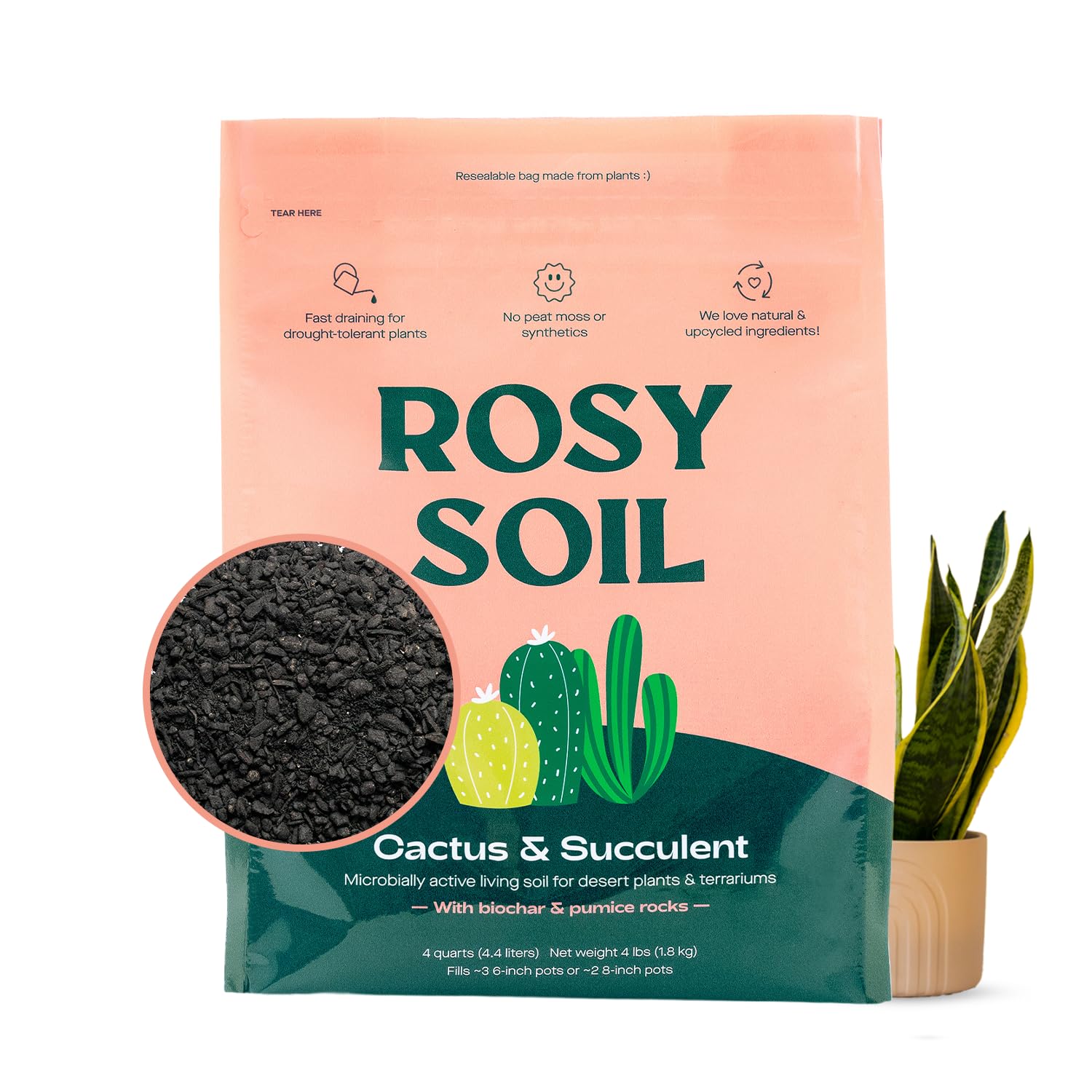
Rosy Soil’s cactus and succulent mix is a peat-free formulation that relies on chunky aggregates and living microbial inoculants to create a fast-draining, root-friendly environment. The texture is intentionally coarse — no fine dust or compacted clumps — which means water flows through in seconds rather than pooling on top. Pre-loaded worm castings and beneficial fungi feed plants slowly without synthetic fertilizers, making this a true “living soil” for containers.
For hanging baskets planted with succulents, jade, snake plants, or aloe vera, this mix eliminates the guesswork of blending your own gritty medium. The 4-quart resealable bag fills two to three pots and stores easily between uses. Some experienced succulent growers note that adding extra pumice or bonsai grit can tailor the drainage even further for sensitive species like lithops, but the base mix works well for most drought-tolerant plants right out of the bag.
The peat-free formula also addresses environmental concerns about peat harvesting, and the packaging is plastic-neutral. If you want a sustainable, high-performance mix that supports a thriving root microbiome without synthetic additives, this is the premium choice.
What works
- Chunky, fast-draining texture prevents root rot in succulents and cacti
- Living soil with microbes and worm castings feeds plants naturally
- Peat-free and plastic-neutral packaging for eco-conscious gardeners
What doesn’t
- Not ideal for moisture-loving basket plants like ferns or impatiens
- May still require additional grit for ultra-sensitive succulent species
4. Midwest Hearth African Violet Natural Potting Soil Mix

Midwest Hearth’s African Violet formulation uses the same peat-perlite-vermiculite base as their Premium mix but adjusts the pH specifically for African violets and other shade-loving plants. The result is a soft, fine-textured medium that does not pack dense around delicate root systems. Users who repotted miniature violets report that the plants recovered quickly and began blooming within weeks — a strong sign that the mix reduces transplant shock.
In hanging baskets, this mix works well for plants that prefer consistent moisture and indirect light, such as ferns, begonias, and impatiens, where the pH balance supports healthy leaf and flower development. The 4-quart bag contains a generous volume — multiple reviewers noted that the bag held more than expected for the size. The texture is free of large bark pieces, making it suitable for shallow-rooted plants that struggle with chunky mixes.
For gardeners who want a pH-perfected mix for specific basket plants without having to test and amend the soil themselves, this specialty blend saves time. The light texture also reduces overall basket weight, which is a practical advantage when hanging from hooks with lower weight ratings.
What works
- pH balanced specifically for African violets and similar plants
- Soft, light texture that reduces transplant shock
- No large bark chunks — suitable for fine-rooted plants
What doesn’t
- Higher cost per quart compared to all-purpose mixes
- Limited availability in larger bag sizes
5. Bigmeta Coco Coir Perlite Mix

Bigmeta’s soilless mix combines 70 percent coco coir with 30 percent perlite to create a lightweight, high-aeration growing medium that resists compaction better than peat-based alternatives. Coco coir holds water effectively but releases it more readily than peat moss, reducing the risk of anaerobic conditions at the bottom of hanging baskets. The perlite adds structural pore spaces that keep oxygen flowing to the root zone even after repeated waterings.
The 2-quart bag is ideal for small indoor baskets, seed starting, or blending with other amendments for larger projects. The mix arrives dry and loose — users simply fluff it and pot. One reviewer noted finding a small rock in their bag, but this appears to be an infrequent manufacturing outlier rather than a pattern. The coco coir base also means the soil does not become hydrophobic when it dries out, a common problem with peat-based mixes that form a crust.
This is a strong choice for indoor hanging baskets or for gardeners who want a soilless base that they can customize with their own fertilizer and pH adjustments. It is also an excellent option for mixing with heavier soils to improve aeration without adding significant weight.
What works
- High coco coir content resists compaction and stays airy over time
- Perlite ratio ensures excellent drainage in small containers
- Wets easily after drying out — no hydrophobic crust issues
What doesn’t
- Small 2-quart bag may be too little for larger baskets
- No added fertilizer — plants need supplemental feeding from the start
6. Soil Sunrise Coco Peat & Perlite Potting Mix
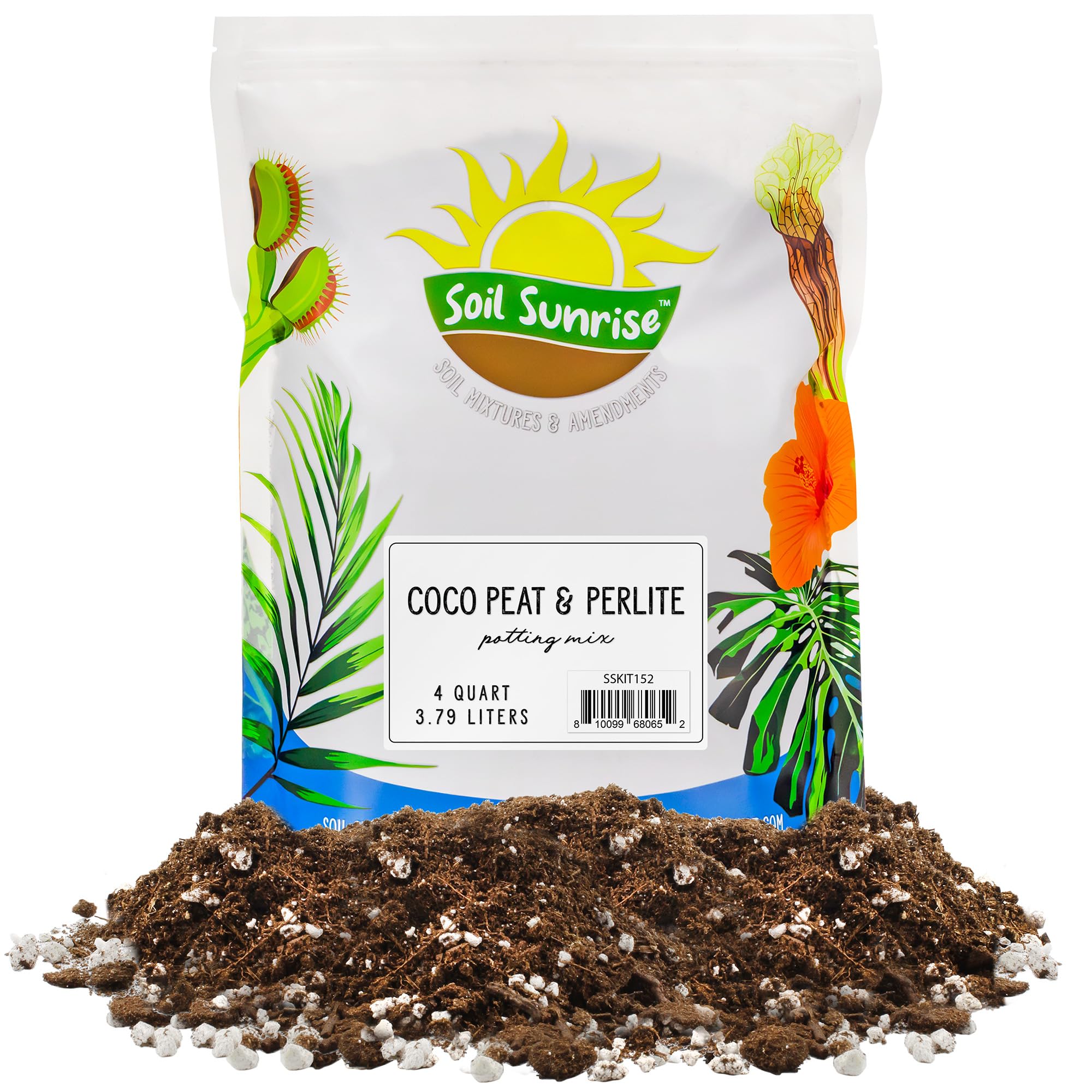
Soil Sunrise offers a straightforward soilless blend of coco coir and perlite without additives, chemicals, or synthetic fertilizers. The 4-quart bag provides enough volume for a large 12-inch basket or multiple smaller containers, and the loose texture means you can start planting immediately after fluffing. The coir base retains moisture well without becoming waterlogged, and the perlite prevents the mix from compacting over time.
Users report that the mix works well for houseplants, seed starting, and container gardening where a clean, inert base is preferred. The lack of added nutrients means you can control the feeding regimen completely — ideal if you use specific fertilizer schedules for different plants in the same basket. The resealable bag is convenient for storing leftover mix, though some users note that transferring to a sturdier container keeps the contents fresher.
For budget-conscious gardeners who want a natural soilless medium without paying for premium branding, this mix delivers solid performance at a lower price point. The downside is that it does not come with any starter fertilizer, so immediate feeding is required for plants that need a nutrient boost from day one.
What works
- 100% natural coco coir and perlite — no synthetic chemicals or additives
- Larger bag size (4 quarts) covers a full 12-inch basket
- Good aeration and drainage for most container plants
What doesn’t
- No fertilizer included — plants need immediate supplemental feeding
- Bag packaging is less durable; may need transfer to a more robust container
7. FANTIAN Succulent Cactus Soil Pumice Mix
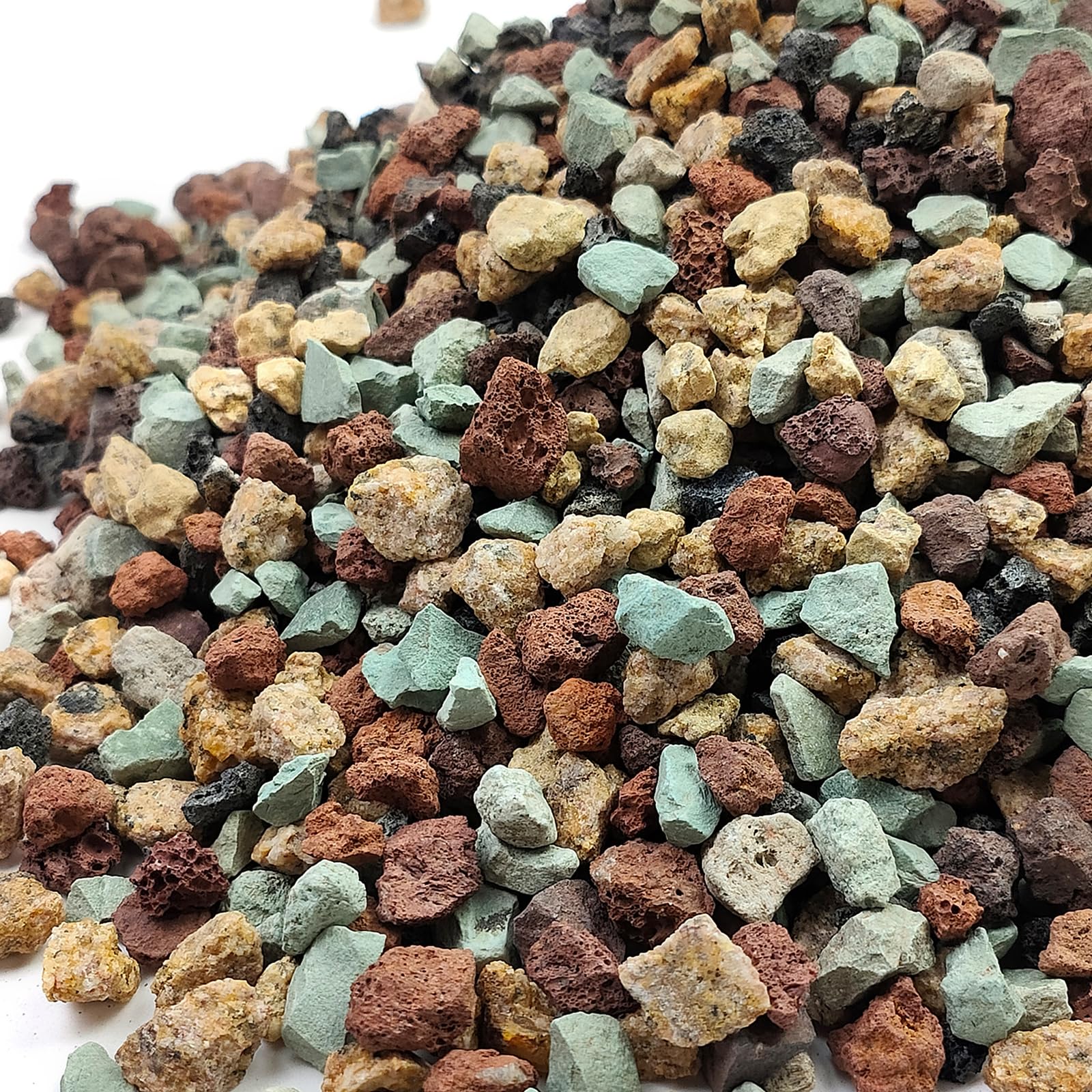
FANTIAN’s pumice and lava rock mix is not a standalone potting soil — it is a gritty aggregate designed to be blended with other media or used as a top dressing for hanging baskets with succulents, cacti, or orchids. The 1/4-inch particles (5–8 mm) are sifted to a consistent size that creates large air pockets and prevents water from pooling around roots. The mix includes lava stone, Maifanitum stone, and green zeolite, each contributing different drainage and mineral properties.
In a hanging basket, this mix shines when blended with coco coir or peat at a 50:50 ratio to create a custom fast-draining medium for plants that hate wet feet. It also works as a decorative top layer that prevents weeds, reduces mud splashing during watering, and keeps the basket looking tidy. Users note that the bag arrives with some dust from processing — rinsing the pebbles before use solves this quickly.
For succulent and cactus enthusiasts who want to build their own basket mix from the ground up, this is the most cost-effective way to add true grit and drainage without buying expensive packaged succulent soil. It is not suitable as a solo growing medium for moisture-loving plants, and beginners may find the blending process less convenient than a ready-to-use bag.
What works
- Consistent 1/4-inch particle size creates excellent drainage and aeration
- Lightweight — does not weigh down hanging baskets when mixed
- Works as both a soil amendment and decorative top dressing
What doesn’t
- Not a standalone potting mix — requires blending with other media
- Bag contains dust from processing that requires rinsing before use
Hardware & Specs Guide
Peat Moss vs. Coco Coir
Peat moss holds water longer and is slightly acidic, making it ideal for acid-loving plants like ferns and begonias. Coco coir holds water too but releases it more readily and resists compaction better, plus it rehydrates easily after drying out. For hanging baskets that dry out quickly, coir is often the better choice because it does not form a water-repellent crust.
Perlite vs. Vermiculite
Perlite is volcanic glass that creates air pockets for drainage. Vermiculite is a mineral that absorbs water and slowly releases it. In hanging baskets, perlite is preferred for drainage-focused mixes (succulents, orchids), while vermiculite is useful for moisture-retentive mixes (ferns, impatiens). Many all-purpose mixes use both for balance.
Fertilizer Charge
Some bagged soils include a controlled-release fertilizer that feeds plants for weeks or months. This is convenient for gardeners who forget to fertilize, but it removes control over nutrient ratios. Soilless mixes (coco coir + perlite) contain zero fertilizer, requiring you to add your own — which gives precise control but demands consistency.
pH Range
Most flowering basket plants prefer a pH between 5.5 and 6.5. Peat-based mixes naturally lean acidic (around 4.5–5.5) and often include lime to raise the pH. Coco coir sits near neutral (5.5–6.5). If your water is alkaline, a slightly acidic mix can help buffer the pH and keep nutrients available to the plant roots.
FAQ
Can I use regular garden soil in a hanging basket?
How often should I water a hanging basket with moisture-control soil?
Is peat-free soil better for hanging baskets?
Why does my hanging basket soil smell like rotten eggs?
Do I need to add perlite to pre-made potting mix for baskets?
Final Thoughts: The Verdict
For most gardeners, the soil for hanging baskets winner is the Midwest Hearth Premium Potting Soil Mix because its balanced blend of peat, perlite, and vermiculite delivers consistent drainage and moisture retention without requiring additional amendments for standard flowering plants. If you want built-in moisture control that buys you extra time between waterings, grab the Miracle-Gro Moisture Control 2-Pack. And for succulent baskets that demand ultra-fast drainage in a peat-free formula, nothing beats the Rosy Soil Cactus & Succulent Mix.