
Elephant ears (Alocasia and Colocasia) demand a specific growing medium that provides constant moisture without ever suffocating their thick, fleshy roots. Most standard potting soils hold too much water, leading to root rot and yellowing leaves long before your plants ever reach their full tropical glory.
I’m Rikta — the co-founder and writer behind Lawn Gear Lab. I’ve spent hundreds of hours analyzing ingredient lists, customer feedback, and drainage specs to identify which bagged soils genuinely meet the exacting standards of these thirsty but sensitive plants.
To help you skip the trial-and-error, this guide breaks down the specific aeration, moisture retention, and pH requirements that make the difference between survival and spectacular growth — directly comparing the top contenders on the market today for the right soil for elephant ears.
How To Choose The Best Soil for Elephant Ears
Selecting the right medium for Alocasia and Colocasia comes down to understanding their dual need for consistent moisture and high oxygen flow around the root zone. A mix that leans too heavy on peat or fine compost will compact and starve the roots, while one that drains too aggressively may dry out between waterings, causing leaf edges to crisp. The ideal blend balances water-holding capacity with physical structure that resists settling over time.
Drainage and Aeration Are Non-Negotiable
Elephant ear roots are thick and fleshy, comparable to potato tubers, and they rot quickly in anaerobic conditions. Look for ingredients like pumice, perlite, orchid bark fines, coco husk chunks, or lava rock. These create air pockets that allow excess water to drain freely while keeping oxygen circulating around the root system. A mix that feels lightweight and crumbly in the bag rather than dense and muddy is a strong indicator of proper structure.
Moisture Retention Without Sogginess
These plants are native to swampy tropical environments, but in a container, the roots cannot tolerate standing water. Coco coir and peat moss serve as the moisture reservoir, but they must be balanced with chunky drainage materials. Sphagnum peat holds water well but becomes acidic over time, while coco coir retains moisture without compacting and has a neutral pH. Many premium blends use coco coir as the primary water-holding component for this reason.
pH Balance and Nutrient Availability
Elephant ears prefer a slightly acidic to neutral pH range of 5.5 to 6.5. Within this window, micronutrients like iron and manganese remain available for uptake, which directly influences leaf color and size. Ingredients like lime are often added to peat-heavy mixes to buffer acidity. Biochar and worm castings contribute to microbial activity that helps regulate pH naturally and makes nutrients more accessible over time.
Organic Matter and Long-Term Fertility
Worm castings, compost, and mycorrhizal fungi provide a slow-release nutrient base that supports steady foliage production without the risk of chemical burn. Mycorrhizae form a symbiotic relationship with the roots, increasing water and nutrient absorption efficiency. For elephant ears, which are heavy feeders during the growing season, a soil that includes these biological components reduces the frequency of liquid fertilizer applications and builds resilience against transplant shock.
Quick Comparison
On smaller screens, swipe sideways to see the full table.
| Model | Category | Best For | Key Spec | Amazon |
|---|---|---|---|---|
| Soil Sunrise Elephant Ear Mix | Specialty Blend | Directly formulated for Elephant Ears | 8 Quarts, Peat & Sand Base | Amazon |
| Perfect Plants Aroid Mix | Chunky Aroid | Large containers, heavy feeders | 8 Quarts, Pine Bark & Charcoal | Amazon |
| Top Tier Genetics Aroid 4QT | Premium Biochar | Root growth & microbial health | 4 Quarts, Biochar & Coco Coir | Amazon |
| Grow Queen Craft Aroid Mix | Peat & Perlite Free | Eco-conscious, sensitive roots | 2 Quarts, Tree Fern & Pumice | Amazon |
| Soil Sunrise Bird of Paradise Mix | General Tropical | Large pots, direct soil planting | 8 Quarts, Soilless Peat Blend | Amazon |
| Rosy Soil Aroid Mix | Peat-Free Biochar | Indoor collection, carbon-negative | 4 Quarts, Biochar & Pumice | Amazon |
| Top Tier Genetics Aroid 2QT | Entry-Level Aroid | Small pots, beginners | 2 Quarts, Coco Husk & Bark | Amazon |
In‑Depth Reviews
1. Soil Sunrise Elephant Ear Potting Soil Mix (8 Quarts)
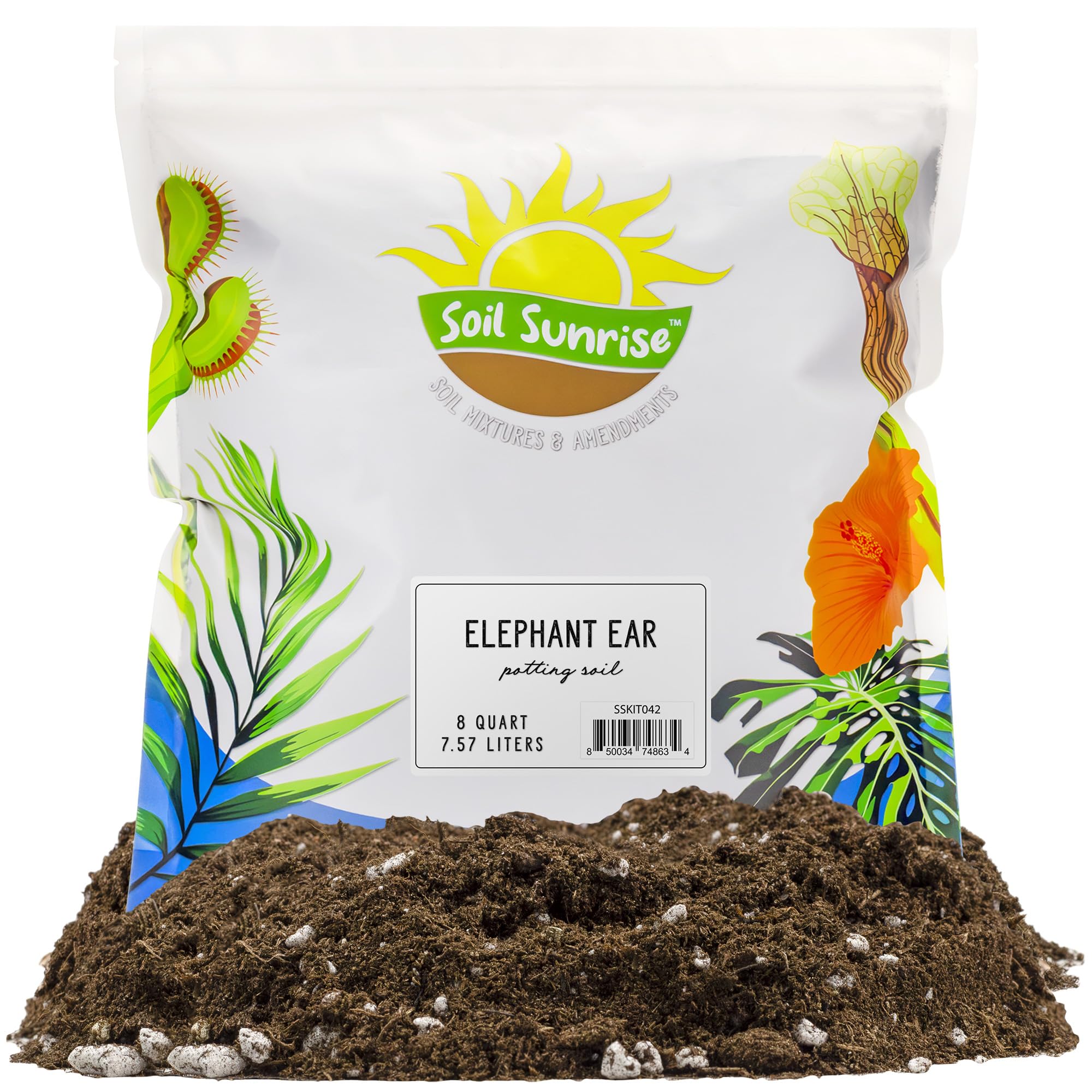
This is the only mix on the market designed explicitly for Colocasia and Alocasia, which means ingredient proportions are tuned to the unique needs of elephant ear roots from the start. The blend uses peat moss for moisture retention, sand and perlite for structural drainage, worm castings for slow-release nutrients, and lime to buffer the naturally acidic peat base. At 8 quarts, the bag size matches what you need for a single large container or several smaller pots, making it practical for a single planting session without excess waste.
Customers report that plants pushed new leaves immediately after repotting, and the moisture retention is praised specifically for colocasia varieties that demand consistently damp soil. The worm castings provide enough nutrition to support initial growth spurts, though pairing with a nitrogen-heavy liquid fertilizer like fish emulsion is recommended during peak summer growth. A few bags arrived with packaging damage due to shipping, so inspecting upon delivery is wise.
For growers who want a straightforward, one-bag solution without mixing multiple components, this mix eliminates the guesswork. The sand component adds weight that helps anchor tall stems in larger pots, a subtle but meaningful advantage over lighter aroid blends that can topple in deep containers. It is not a chunky aroid mix in the style of bark-heavy blends, so if you prefer extremely airy texture, you may want to add extra perlite or orchid bark.
What works
- Formulated specifically for Elephant Ear plants with balanced moisture and drainage
- Worm castings provide natural slow-release fertility for vigorous foliage growth
- 8-quart volume is generous enough for large containers without overbuying
What doesn’t
- Peat-based composition may not appeal to buyers seeking peat-free options
- Packaging durability is inconsistent with reports of bag tears during shipment
2. Organic Aroid Potting Mix by Perfect Plants (8qt)
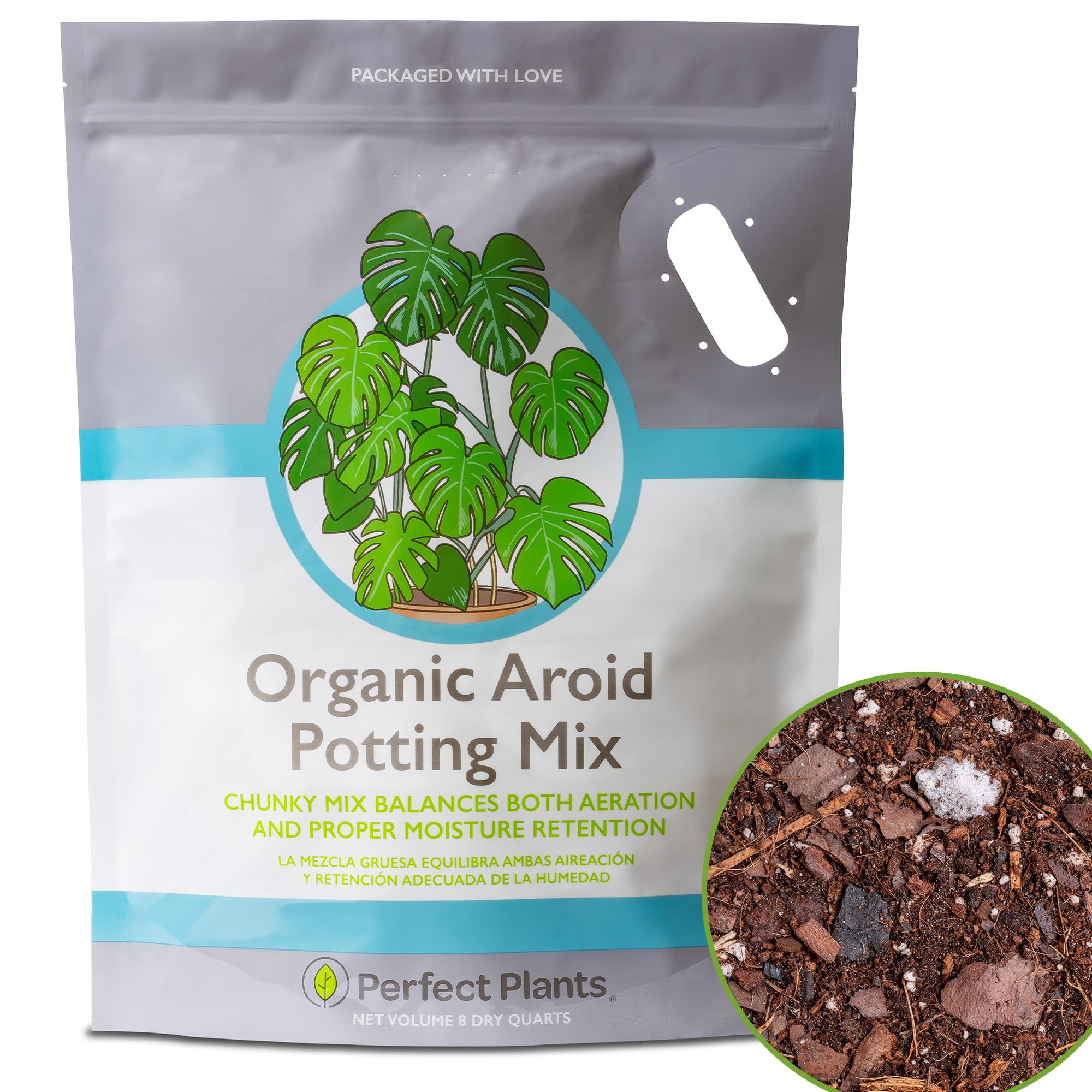
The Perfect Plants aroid mix hits a rare sweet spot between chunkiness and fine-particle structure that keeps the media from compacting while still holding enough moisture between waterings for elephant ears. Pine bark chunks, horticultural charcoal, sponge rocks, and perlite create a lattice of air pockets, while peat moss and coco coir bind the mix together without creating a dense mud. This means the root zone stays oxygenated even when the soil remains damp, which is exactly what Alocasia and Colocasia require to avoid root rot. The 8-quart resealable bag fills seven to eight 6-inch pots, offering strong value for a large collection.
Customer reports consistently note that plants show new foliage growth rapidly after repotting, indicating minimal transplant shock and good nutrient accessibility from the worm castings and mycorrhizae. One user specifically mentioned that their Monstera adansonii produced multiple new leaves within weeks, reinforcing the mix’s suitability for fast-growing tropicals. The charcoal component also helps keep the mix fresh and reduces odor, a subtle benefit of indoor containers that sit in living spaces.
The only gripe from users is the resealable zipper, which many found difficult to close fully after use. This is a minor but real annoyance for those who do not use the entire bag at once. Transferring the remaining mix to a bucket or a sealed bin solves the issue easily. For anyone with multiple elephant ears or a mixed aroid collection, this mix delivers consistent results and reduces the need for amendments.
What works
- Balanced chunky texture provides both drainage and moisture retention
- Worm castings and mycorrhizae support vigorous root development and leaf growth
- Large 8-quart bag offers excellent value for multiple pots
What doesn’t
- Resealable zipper on the bag is unreliable and may not close properly
- Contains peat, which may not align with peat-free gardening preferences
3. Top Tier Genetics AROID Potting Mix (4 QTS)
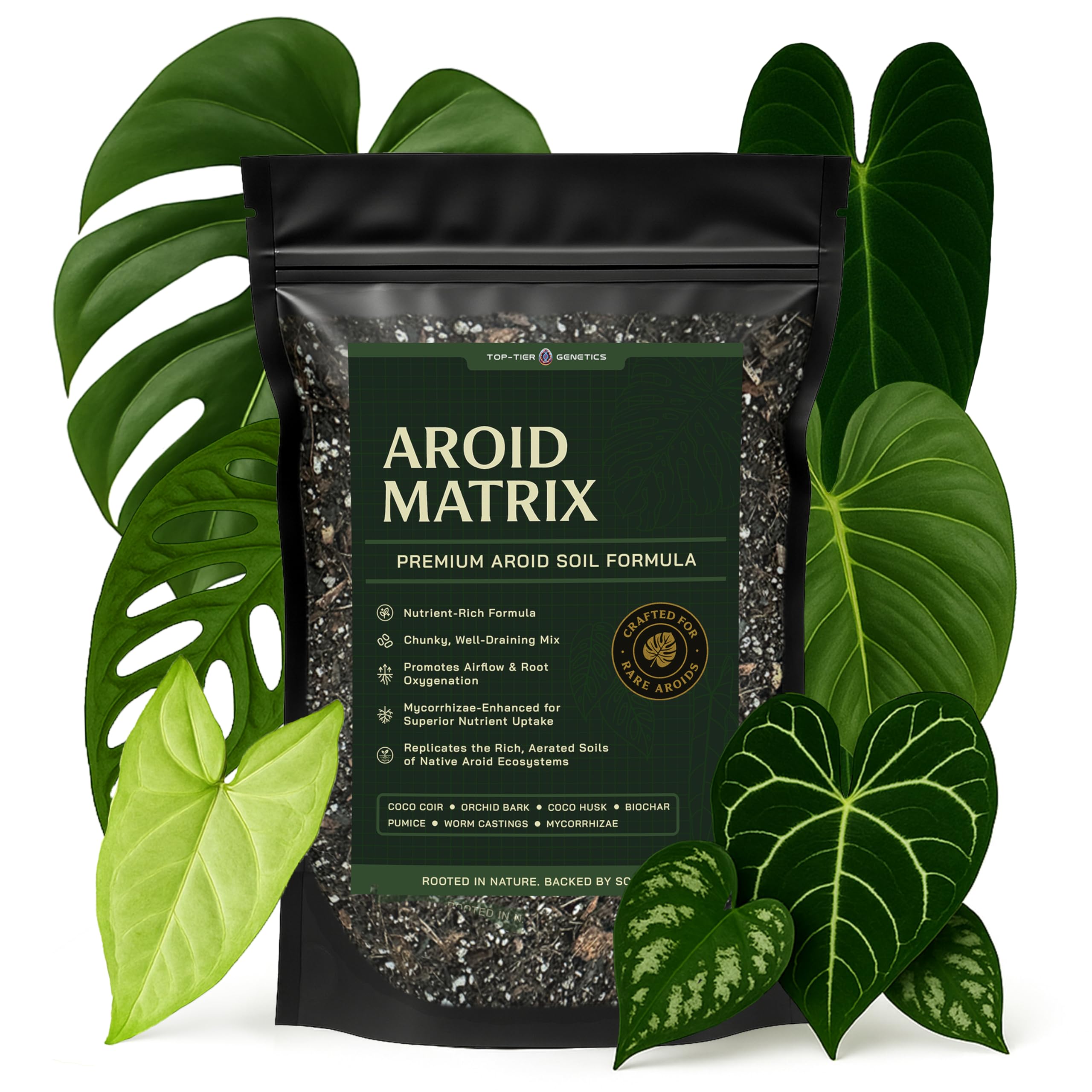
Top Tier Genetics positions this blend as a complete, ready-to-use aroid medium with a strong emphasis on long-term soil biology. The inclusion of biochar is the standout feature — biochar’s porous structure provides a permanent home for beneficial bacteria and mycorrhizal fungi, which enhances nutrient cycling and retained moisture availability over months of use. The orchid bark, coco husk, and pumice deliver the chunky texture that elephant ear roots need for oxygen flow, while coco coir acts as the moisture reservoir. The mix arrives light and airy straight out of the bag with no dust or fine sediment.
Buyers report that plants perk up visibly within days of repotting, with descriptions of explosive root growth and vibrant leaf color. The premium pricing is justified by the ingredient quality and the fact that the mix requires zero amendments — no extra perlite, no additional bark, no pH adjusters. For growers who value convenience and are willing to pay for a fully engineered product, this mix performs reliably across multiple aroid genera.
The 4-quart volume is worth noting: it will fill two to three medium 6-inch pots comfortably, but large containers will require multiple bags. If you are potting a single large elephant ear in a 12-inch pot, you will need at least two bags. This is not a complaint about the product itself, but a practical purchasing consideration for those with bigger plants. The resealable bag design is standard and holds up well for storage.
What works
- Biochar enhances microbial life and long-term nutrient retention
- Chunky bark and pumice structure prevents compaction and root rot
- Ready to use immediately with no mixing or amendments required
What doesn’t
- 4-quart size requires multiple bags for large pots or collections
- Premium pricing may be steep for growers on a tight budget
4. Grow Queen Craft Aroid Potting Mix (2QT)
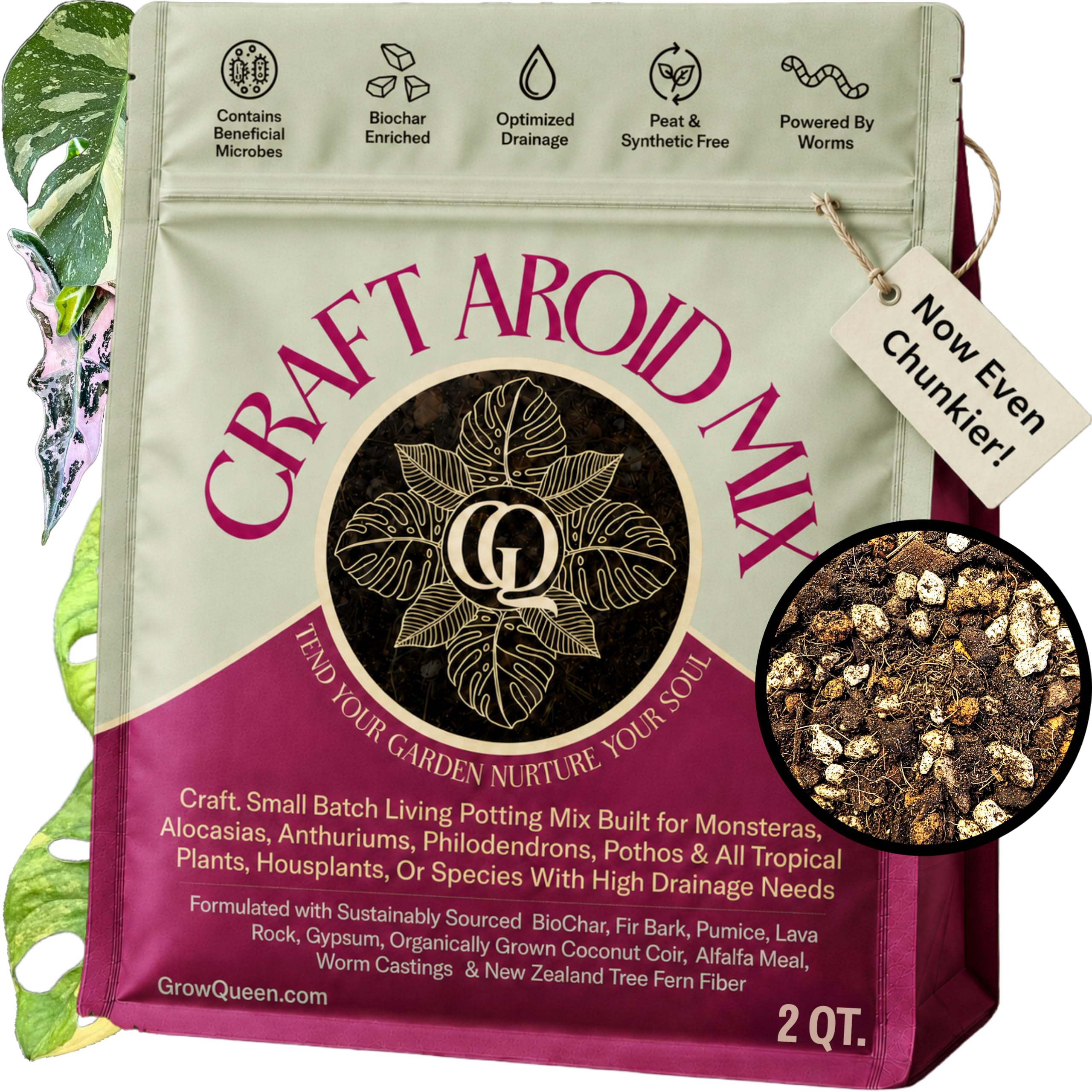
Grow Queen takes an uncompromising stance against peat and perlite, replacing both with New Zealand tree fern fiber, pumice, and lava rock. Tree fern fiber acts as a natural soil conditioner that neutralizes pH to around 6.0, matching the native soil conditions of tropical Alocasia habitats. The Douglas fir bark fines provide chunky aeration, while the coco coir is certified organic and washed aggressively to remove excess salts — a common issue with lower-grade coir that can burn sensitive roots. The mix is moistened before bagging, which helps it settle properly around roots immediately after repotting.
Customers consistently describe the mix as light, chunky, and free of pests or mold. Multiple reviews mention seeing new growth within the first week and no signs of compaction even after a month of regular watering. The inclusion of tree fern fiber is especially relevant for elephant ears because it maintains an open structure longer than bark alone, resisting the breakdown that leads to dense soil over time. The pet-safe and non-toxic formulation adds reassurance for households with animals.
The 2-quart bag size is the smallest in this guide, making it ideal for a single small Alocasia or for testing the mix before committing to larger volumes. For growers with multiple large elephant ears, this size will require multiple purchases. The premium ingredients are reflected in the per-quart cost, but for those who prioritize peat-free and perlite-free gardening, the quality justifies the price point.
What works
- New Zealand tree fern fiber conditions pH to ideal 6.0 for tropical plants
- Peat-free and perlite-free with eco-friendly pumice and lava rock
- Certified organic coir with extensive salt washing prevents root burn
What doesn’t
- 2-quart bag is small and requires multiple units for large pots
- Premium pricing per quart is high for cost-conscious shoppers
5. Soil Sunrise Bird of Paradise Potting Soil Mix (8 Quarts)

Though labeled for Bird of Paradise, this soilless blend of peat moss, perlite, and lime works effectively for elephant ears because the structural requirements overlap significantly. The soilless nature means it is lightweight and resists compaction, while the lime buffers the peat to maintain a pH in the 5.5–6.5 range. At 8 quarts, one bag fills a large 12-inch pot comfortably, matching the volume needs of a single mature elephant ear. The resealable bag is convenient for apartment dwellers who lack storage space.
Customer reviews highlight the mix’s drainage capabilities, with one user specifically noting it saved their Bird of Paradise from root rot by providing enough aeration for recovery. For elephant ears, which face identical root rot risks in dense soil, this characteristic translates directly. The mix is described as easy to work with and consistent batch to batch, which matters when you are relying on a single product for multiple plants.
The primary limitation is that it is not specifically calibrated for elephant ears the way the Soil Sunrise Elephant Ear mix is. The perlite provides drainage, but the lack of bark or coco husk means the texture is less chunky than dedicated aroid blends. Growers who prefer a very open, bark-heavy mix may want to amend this with orchid bark or pumice. For those who want a simple, large-volume mix that gets the job done without fuss, this is a solid alternative.
What works
- Large 8-quart volume in a resealable bag suits big containers
- Soilless blend with lime provides good pH balance and drainage
- Proven to assist root rot recovery in tropical plants
What doesn’t
- Not a chunky aroid mix; texture may be too fine for some growers
- Peat-based formulation conflicts with peat-free gardening goals
6. Rosy Soil Aroid Soil Mix (4 Quarts)
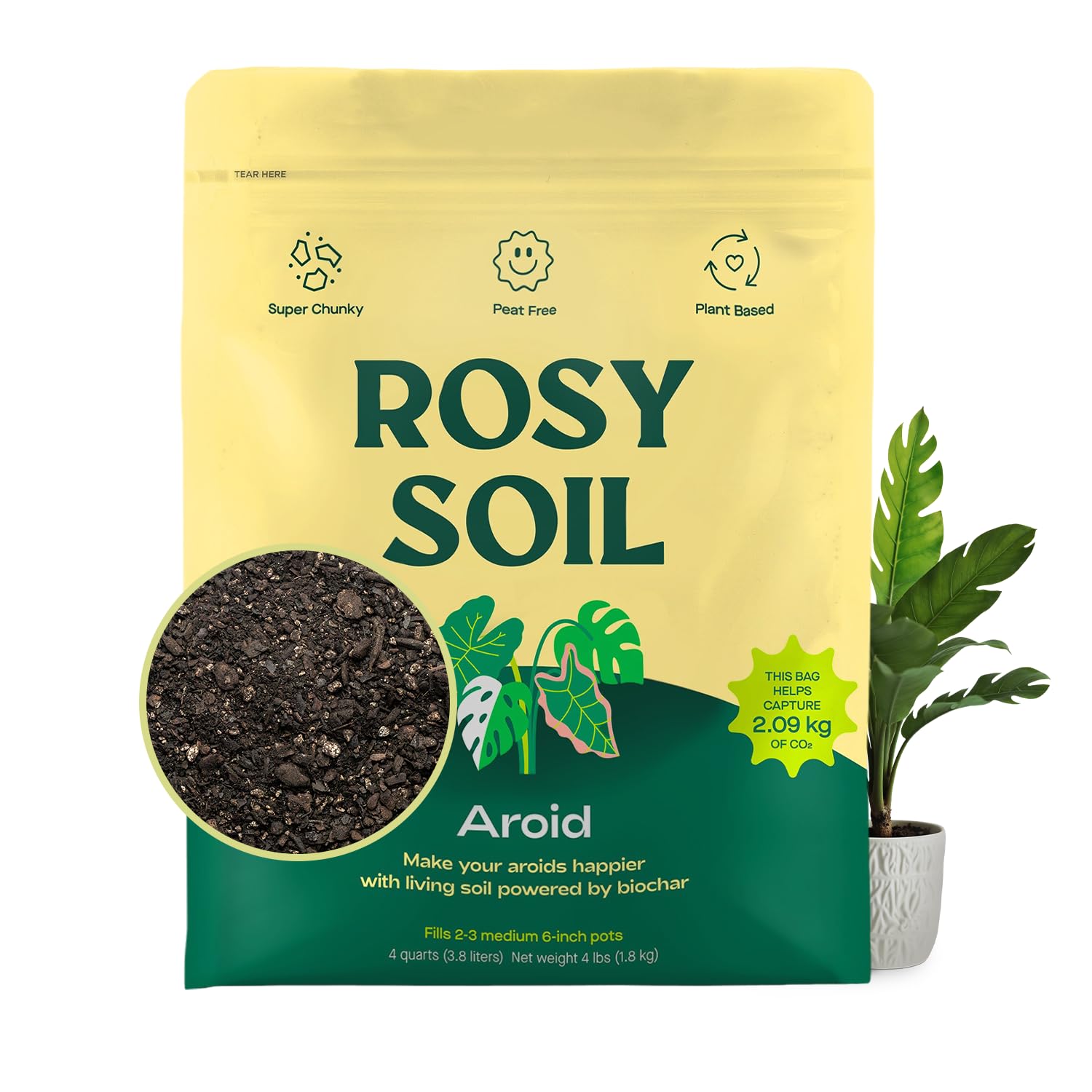
Rosy Soil’s aroid mix is engineered around microbially active ingredients — worm castings, mycorrhizae, compost, and biochar — that create a living soil environment. The biochar acts as a carbon-negative alternative to peat while providing microscopic pore spaces that house beneficial bacteria. Pine bark fines and pumice establish the chunky structure that elephant ear roots require, and the mix drains fast enough to prevent overwatering even for inexperienced growers. The 4-quart resealable bag is plastic-neutral and designed to stay fresh between uses.
Customers switching from Ocean Forest or similar premium mixes report seeing new growth on all repotted plants within two weeks, with zero fungus gnat issues. The absence of peat is a major plus for environmentally conscious buyers, and the carbon-negative claim adds a sustainability dimension that few competitors offer. The mix works well for bottom watering, which encourages deep root development — a technique many Alocasia growers prefer.
Some users note that this blend is less chunky than other aroid-specific mixes, feeling closer to a premium potting soil than a bark-heavy aroid blend. For elephant ears, this is not necessarily a flaw, as the finer texture holds more moisture, which these plants appreciate. However, if you are accustomed to mixes with large bark chunks that you can see and feel, this may feel denser than expected. The bag is on the smaller side at 4 quarts, so plan accordingly for larger pots.
What works
- Microbially active formula with biochar, worm castings, and mycorrhizae
- Peat-free and carbon-negative design for sustainable gardening
- Fast drainage effectively prevents overwatering and fungus gnats
What doesn’t
- Texture is less chunky than bark-heavy aroid blends
- 4-quart bag is small and may require multiple purchases for larger jobs
7. Top Tier Genetics Premium AROID Soil Blend (2 QTS)
This 2-quart entry from Top Tier Genetics uses the same ingredient philosophy as the 4-quart version — orchid bark, coco husk, pumice, biochar, worm castings, and mycorrhizae — but in a smaller format that is perfect for testing or repotting a single small Alocasia. The mix is designed to be ready to use out of the bag, requiring no additional amendments. The chunkiness from the bark and husk provides immediate aeration, while the coco coir holds just enough moisture to keep roots hydrated without sogginess.
Customer feedback is overwhelmingly positive, with users reporting that plants perked up within days and showed explosive root growth. The biochar component supports long-term microbial activity, making this a good choice for growers who want to maintain soil health between repottings. The airy, fresh texture is noted in multiple reviews as a key differentiator from heavier bagged soils.
The small bag size is the main constraint: 2 quarts is barely enough for one 6-inch pot, and you will need multiple bags for any collection beyond a single plant. The price per quart is also higher than the larger format, so buying the 4-quart version is more economical if you know the mix works for your plants. This is best used as a trial size or for very small pots.
What works
- Premium chunky texture with orchid bark, coco husk, and pumice
- Biochar and mycorrhizae support soil biology and root health
- Ready to use straight from the bag with no mixing needed
What doesn’t
- 2-quart size is very small, requiring multiple bags for most uses
- Higher per-quart cost compared to buying the larger 4-quart version
Hardware & Specs Guide
Chunky vs. Fine Texture
The physical structure of the soil is the single most important factor for elephant ears. Chunky mixes incorporate bark fines, coco husk, pumice, or lava rock in sizes from 2mm to 10mm, creating visible air gaps that allow oxygen to reach the root system. Fine-textured soils, including standard potting mixes and peat-heavy blends, pack tightly around roots and restrict airflow, which promotes fungal growth and root rot. Look for a mix where you can see distinct particles of bark, perlite, or stone rather than a uniform dark powder. If the bag feels heavy and dense, it likely lacks the structural components these plants need.
Peat vs. Coco Coir Water Retention
Peat moss and coco coir both hold moisture, but they behave differently over time. Peat is acidic (pH 3.5–4.5) and requires lime to buffer to a range suitable for elephant ears. It repels water when dry and can form a hydrophobic crust. Coco coir has a neutral pH, holds water without becoming waterlogged, and rehydrates easily after drying out. For elephant ears, which dislike drying out completely, coco coir provides more forgiving moisture management. Many premium aroid mixes use coir as the primary moisture-holding component for this reason.
Biochar and Microbial Inoculants
Biochar is a form of charcoal produced by pyrolyzing organic matter in a low-oxygen environment. Its porous structure creates microhabitats for beneficial bacteria and mycorrhizal fungi, which enhance nutrient availability and protect roots from pathogens. Mycorrhizae form a symbiotic network that extends the effective root zone, increasing water and mineral absorption. Worm castings add immediately available nutrients including nitrogen, phosphorus, and potassium. Mixes that include all three components create a self-sustaining soil ecosystem that reduces the need for frequent liquid fertilizer applications.
Volume and Pot Size Matching
Elephant ear bulbs and root systems expand rapidly during the growing season, and soil volume directly influences how often you need to water and fertilize. A single mature Alocasia or Colocasia in a 10-to-12-inch pot requires roughly 6 to 8 quarts of soil. Smaller 2-quart bags are suitable for 4-to-6-inch pots or for propagating offsets. When purchasing, match the bag volume to your pot size and consider buying multiple bags for larger containers. Overcrowding roots into a pot that is too small with insufficient soil volume stunts leaf size and increases watering frequency.
FAQ
Can I use regular potting soil for elephant ears?
What pH level should soil for elephant ears have?
Should I mix my own soil or buy a pre-made blend?
How often should I water elephant ears in this type of soil?
Can I use the same soil for elephant ears and other tropical houseplants?
Final Thoughts: The Verdict
For most gardeners, the soil for elephant ears winner is the Soil Sunrise Elephant Ear Potting Soil Mix because it is the only blend designed specifically for Alocasia and Colocasia, providing the right balance of peat-based moisture retention and sand/perlite drainage with worm castings for natural fertility. If you want a chunky, peat-free option with long-term microbial benefits, grab the Top Tier Genetics AROID Potting Mix. And for large collections or heavy feeders on a budget, nothing beats the volume and balanced texture of the Perfect Plants Organic Aroid Mix.