
Specs are compiled from manufacturer listings and verified buyer reviews and can change over time — please confirm the key details on the product page before buying.
If you are planting a dragon fruit cactus, the single most important thing to get right is the soil. Regular potting mix holds too much water, and a cactus that sits in wet soil for even a few days can develop root rot — the number one killer of these plants. This guide sorts through the best options so you can pick a mix that drains fast, stays airy, and still holds enough moisture for the plant’s shallow root system.
I’m Rikta — the founder and writer behind Lawn Gear Lab. This guide is built by comparing the manufacturers’ published specifications and the patterns across verified customer reviews, so you get each pick’s real strengths and trade-offs instead of marketing spin.
You want a soil for dragon fruit that drains fast and feeds the plant — so the real question is if you need a big bag of basic mix or a smaller bag that already has fertilizer in it.
Quick Picks
- Espoma Organic Cactus Potting Soil Mix (8 qt, Pack of 2) — Best Overall
- LGM Premium Cactus & Succulent Soil Mix (0.5 Cu Ft) — Premium Pick
- DUSPRO Succulents Soil Potting Mix (4QT) — Best Value
- Premium Christmas Cactus Soil – Organic, Nutrient-Rich (2 QTS) — Small Batch Pick
- Hoffman 10410 Organic Cactus and Succulent Soil Mix (10 Quarts, 2 Pack) — Budget Bulk
How To Choose The Best Soil For Dragon Fruit
Dragon fruit is an epiphytic cactus, meaning its roots are used to grabbing onto tree bark and rocks in the wild — not heavy, wet dirt. That makes soil choice a real fork in the road. Here are the three things to get right before you buy.
Drainage and Aeration Matter More Than Nutrients
The number one cause of a dead dragon fruit plant is root rot from soil that stays soggy. Look for a mix that contains perlite, pumice, lava rock, or coarse sand — these create air pockets so water flows through fast. A good rule of thumb: if the soil feels heavy and dense in the bag, it is probably too wet for a cactus.
Organic Ingredients Keep Edible Plants Safe
Because dragon fruit produces fruit you eat, an organic mix without synthetic fertilizers or chemicals is the safer choice. Ingredients like worm castings, kelp meal, and composted bark feed the plant slowly without burning tender roots. Many cactus mixes also include mycorrhizae — a beneficial fungus that helps roots absorb water and nutrients more effectively.
Volume and Bag Size Matter for Your Project
If you are potting a single cutting, a 2-quart bag is plenty. But if you are filling a large container or repotting multiple plants, a bigger bag — like a 10-quart or 0.5-cubic-foot bag — saves you from buying extra soil later. Check the volume in quarts or ounces before you click buy, because the bag size in the photo is not always the bag you get.
Quick Comparison
| Model | Best For | Volume | Key Ingredient | Organic | Amazon |
|---|---|---|---|---|---|
| Espoma Cactus Potting Mix | Best Overall / Large Jobs | 8 Quarts (pack of 2) | Peat Moss, Perlite, Myco-Tone | Yes | Amazon |
| LGM Premium Cactus & Succulent Mix | Premium Nutrients | 0.5 Cubic Feet | Volcanic Ash, Chicken Manure, Kelp Meal | Yes | Amazon |
| DUSPRO Succulents Soil Potting Mix | Pre-Blended 7-in-1 | 4 Quarts | Perlite, Pumice, Lava Rock, Worm Castings | Yes | Amazon |
| Premium Christmas Cactus Soil | Small Batch / Single Pot | 2 Quarts | Bark, Perlite, Coir | Yes | Amazon |
| Hoffman Organic Cactus & Succulent Mix | Value / Bulk (2-Pack) | 10 Quarts | Peat Moss | Yes | Amazon |
In‑Depth Reviews
1. Espoma Organic Cactus Potting Soil Mix (8 qt, Pack of 2)

The bag that keeps your dragon fruit dry and fed from day one.
Espoma blends sphagnum peat moss, humus, and perlite to create soil that gives roots both air and drainage. That perlite (a lightweight volcanic glass that creates air pockets) is what stops water from pooling around the roots of your dragon fruit. The bag also contains Myco-Tone — a proprietary blend of endo and ecto mycorrhizae, which are beneficial fungi that help roots absorb water and nutrients more efficiently.
Compared to the Hoffman mix, which buyers report holds more moisture, the Espoma mix leans drier and airier. Owners mention that aloe plants that constantly got root rot in other soils had no such problem here. At 598.4 ounces across two 8-quart bags, this is a heavy-duty value — enough to fill several large containers or multiple repots. One reviewer did mention accidentally buying more than they needed, so double-check your container size before ordering.
What makes it click
- Proprietary Myco-Tone fungi boost root health naturally
- Volume is generous — 8 quarts per bag, 2 per pack
- Perlite and peat moss create excellent drainage and aeration
One thing to watch
- Bags are larger than some buyers expect; measure your pot first
Reach for it if: you are potting one or more dragon fruit plants and want a trusted organic mix with built-in root boosters that works for cactus, palm, and citrus too.
Look elsewhere if: you need a tiny bag for a single small pot — you may end up with extra soil.
2. LGM Premium Cactus & Succulent Soil Mix (0.5 Cu Ft)
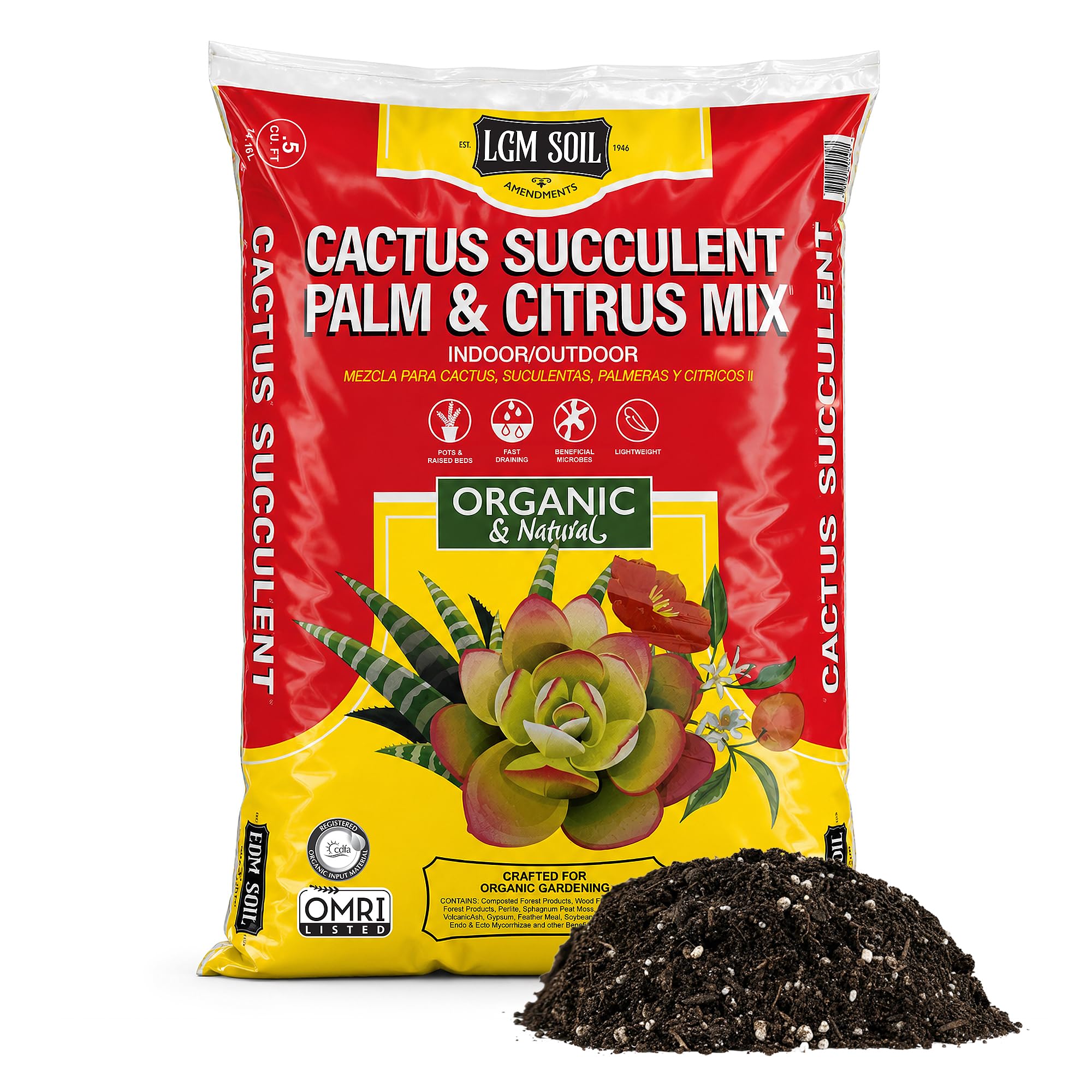
Loaded with slow-release nutrients most cactus soils skip.
This mix uses volcanic ash and porous perlite (a lightweight volcanic glass that traps air pockets) so water drains instantly — unlike denser soils that can slowly suffocate roots. What sets the LGM blend apart from the Premium Christmas Cactus Soil (which uses bark, perlite, and coir but has no added nutrients) is that it includes chicken manure, kelp meal, and iron sulfate to feed the plant naturally for months. The pH-balanced formula also works for citrus, palms, and plumeria.
Buyers mention this is a “great mix, well draining” and exactly what they needed for plants like fiddle leaf figs. At 0.5 cubic feet (475.0 ounces), it is a solid mid-size bag — larger than the 2-quart Christmas Cactus bag but smaller than the Espoma twin-pack. One reviewer noted loose sticks in the soil, which is common with compost-heavy blends, so sift it if you prefer a finer texture for small pots.
Why it stands out
- Volcanic ash and perlite provide excellent root rot protection
- Chicken manure, kelp meal, and iron sulfate feed plants naturally
- Family-owned brand since 1946, made with aged forest products
Something to know
- Contains loose sticks and bark chunks — may need sifting for tiny pots
Best for the grower who wants: a nutrient-rich mix that stops root rot and feeds plants for months, all in one bag — no extra fertilizer needed.
Not the pick if: you prefer a fine, uniform texture without visible compost chunks.
3. DUSPRO Succulents Soil Potting Mix (4QT)
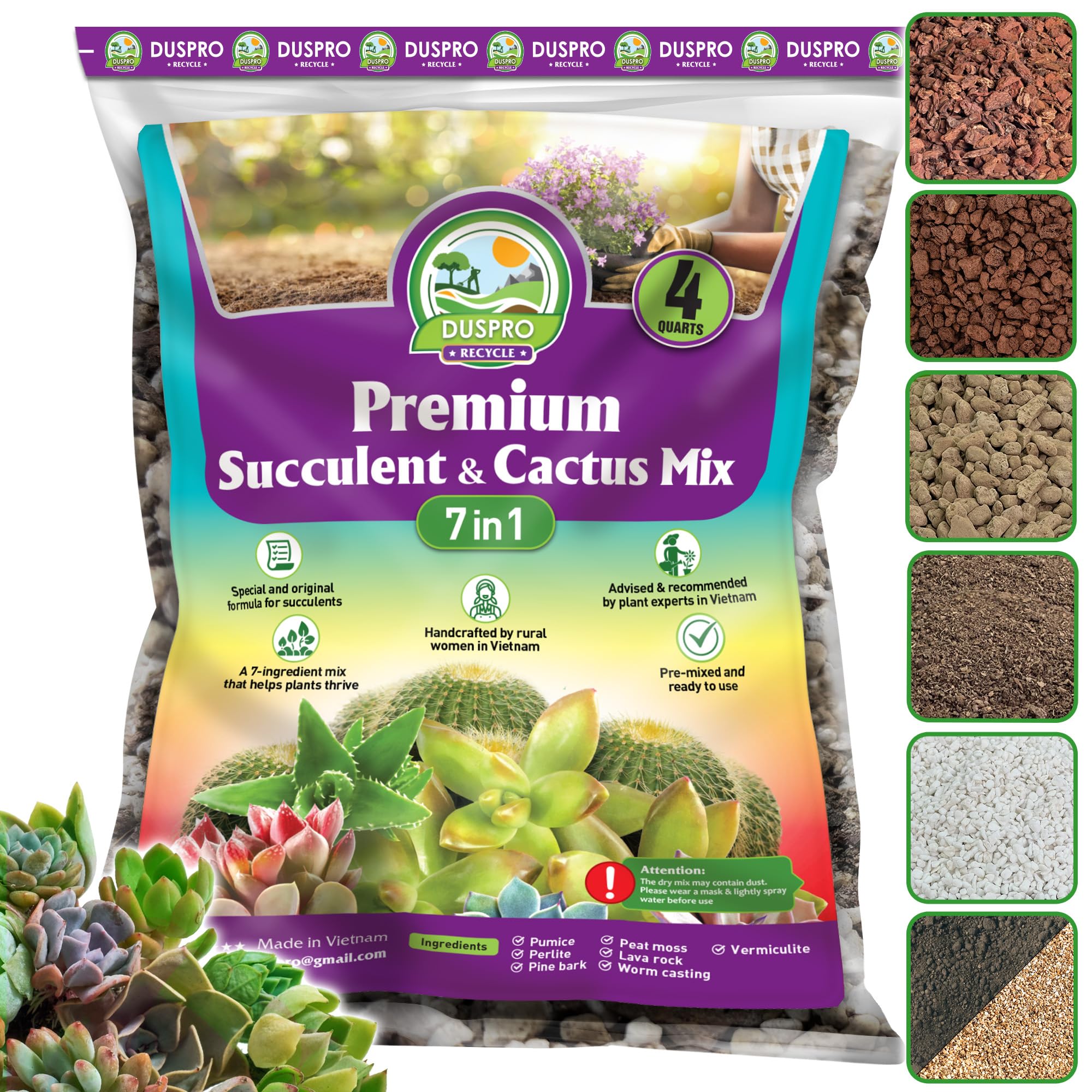
Seven ingredients in one bag, no mixing required.
DUSPRO blends perlite, pumice, lava rock, peat moss, pine bark, worm castings, and vermiculite. That seven-ingredient lineup gives you excellent drainage from the volcanic rocks plus natural nutrients from worm castings — a strong middle ground between the bare-bones Hoffman mix and the rich LGM blend. The bag is ready to use right out of the package, so you do not have to do any extra mixing.
Customers note this is the best potting mix they have used for desert plants like saguaro and yucca, noting that it drains so well there is no need to dig native soil. One buyer did mention it was smaller than expected — at 4 quarts, it fills roughly 32 small pots or a few larger ones, so check your container size. Unlike the Hoffman mix, which some reviewers found stays damp, the DUSPRO blend is built to prevent soggy roots.
What works
- Seven-ingredient blend gives both drainage and slow-release nutrients
- Ready to use — no mixing, no measuring
- Excellent drainage prevents root rot for desert plants
What is a catch
- 4-quart bag is smaller than it looks in photos for some buyers
Grab it if: you want a pre-blended, nutrient-rich mix that drains fast and works for a range of succulents — not just cactus.
Skip if: you need a bulk supply for a big container; the 4-quart bag goes fast on larger projects.
4. Premium Christmas Cactus Soil – Organic, Nutrient-Rich (2 QTS)
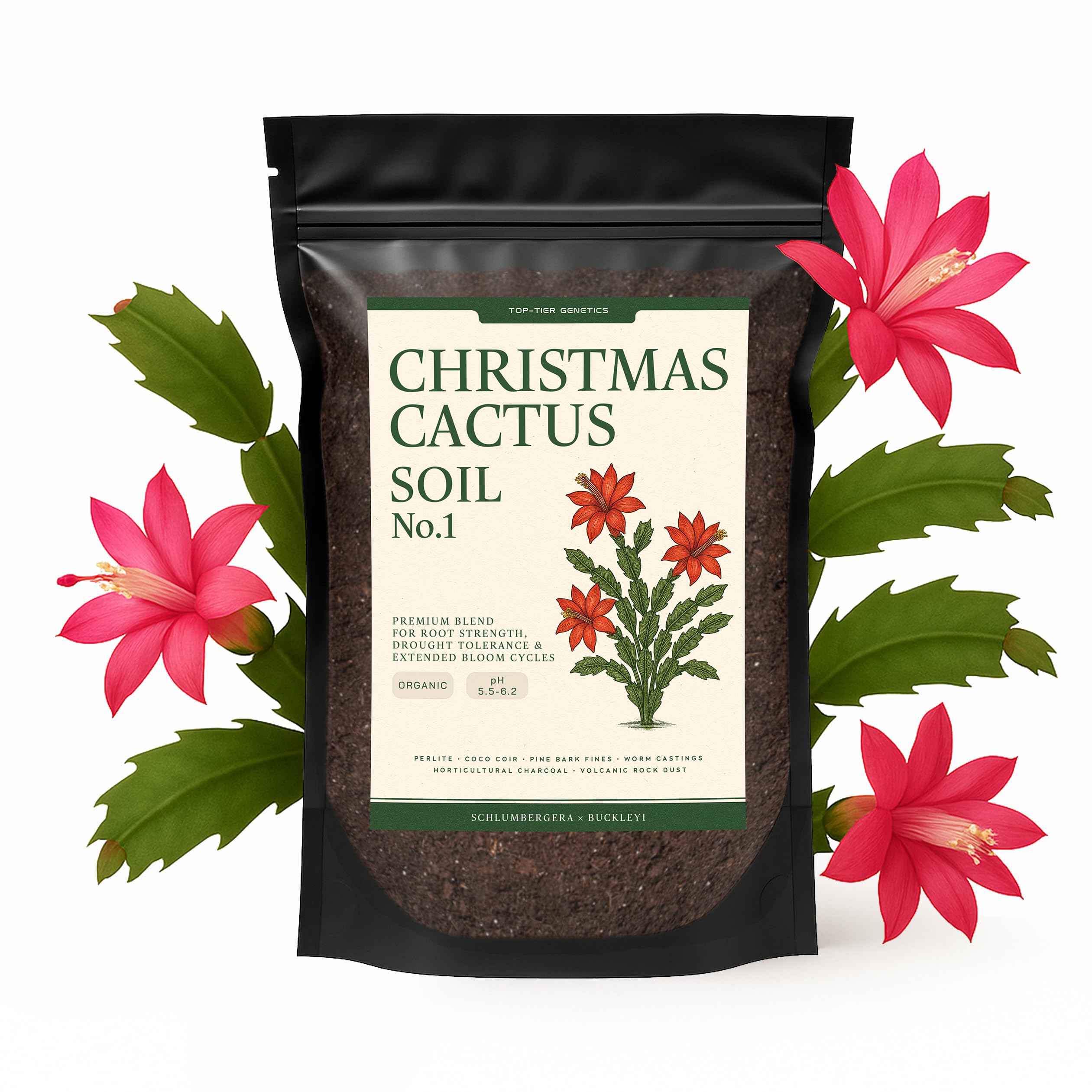
A gritty, airy mix designed for the exact same roots as dragon fruit.
This soil from Top Tier Genetics is formulated for epiphytic holiday cacti — plants whose roots naturally grow on tree bark, not heavy dirt. The blend uses bark, perlite, and coir (coconut fiber) to create a “gritty, airy” texture, as one buyer described it. That structure drains quickly, preventing root rot, while holding enough moisture for the plant. Because dragon fruit is also an epiphytic cactus, this mix works almost identically.
The big trade-off is volume. At only 2 quarts (64.0 ounces), this bag fits just 1-2 pots — a contrast to the Espoma mix, which holds 598.4 ounces. Unlike the LGM mix, there are no added nutrients like chicken manure or kelp meal, so you may need to fertilize later if you keep the plant long-term. Reviewers point out the soil brought new life to smaller plants and even prompted blooms after repotting.
Why it is a good fit
- Bark, perlite, and coir create exceptional drainage
- Ideal for epiphytic cacti — same root type as dragon fruit
- Promotes strong new growth and blooming, per buyers
The main limitation
- 2-quart bag is small — only enough for 1-2 pots
Pick this if: you are potting a single dragon fruit cutting or small plant and want a gritty, airy mix that mimics its natural growing conditions.
Move on if: you need to fill multiple pots or a large container — the bag is too small for bigger jobs.
5. Hoffman 10410 Organic Cactus and Succulent Soil Mix (10 Quarts, 2 Pack)

A massive bag that works well — but only if you add grit.
Hoffman gives you 10 quarts total (two 5-quart bags) for the price, making it the most volume per dollar among these picks. The mix uses peat moss as its base and arrives ready to use — no mixing required straight out of the bag. Shoppers say their plants thrived and they repotted multiple times without any issues.
There is a catch. Unlike the gritty DUSPRO or LGM mixes, the Hoffman soil holds more water. Several buyers report it stays damp longer than expected and even compacts like regular soil — not ideal for dragon fruit unless you add something to it. Buyers recommend mixing it with perlite or pumice (a lightweight volcanic rock) for succulents. At 10 quarts versus 2 quarts for the Premium Christmas Cactus Soil, you will likely need to buy a separate bag of perlite to make it drain fast enough for a dragon fruit.
What is good
- Excellent value — 10 quarts total in a 2-pack
- Encourages bloom and root development, per reviews
- Comes ready to use with no mixing needed
What needs work
- Retains more moisture than other cactus mixes; needs perlite added
- Can compact like standard soil if used alone
Best for the budget-conscious grower who: plans to mix their own blend and needs a cheap bulk base to which they can add perlite or pumice.
Not ideal if: you want a ready-to-use soil that drains perfectly for dragon fruit right out of the bag — this one needs amending.
Understanding the Specs
Drainage and Aeration
Drainage is how fast water flows through the soil — and it is the single most important spec for dragon fruit. Ingredients like perlite (volcanic glass), pumice (lightweight volcanic rock), lava rock, and coarse sand all create air channels so water does not pool around the roots. A bag that lists “peat moss” as the first ingredient usually holds more moisture than one that leads with perlite or pumice. If you see “compacted” or “dense” in reviews, that mix needs amending for dragon fruit.
Organic vs. Synthetic
Because dragon fruit produces edible fruit, an organic soil — one that does not contain synthetic fertilizers or chemical additives — is safer. Look for ingredients like worm castings (composted worm manure), kelp meal (dried seaweed), and mycorrhizae (beneficial root fungi). These feed the plant slowly and naturally, reducing the risk of burning tender roots. The product label usually says “organic” or “natural” on the front, but check the ingredient list for “no synthetic plant foods or chemicals” to confirm.
FAQ
Can I use regular potting soil for dragon fruit?
What is the best pH level for dragon fruit soil?
Do I need to add perlite to store-bought cactus soil?
How often should I repot dragon fruit with fresh soil?
Can I mix my own dragon fruit soil at home?
What is the difference between cactus soil and succulent soil?
Is organic soil really necessary for dragon fruit?
How much soil does a dragon fruit plant need?
Can I use soil from my garden for dragon fruit?
What is mycorrhizae and why should I care?
Final Thoughts: The Verdict
Across the board, the best soil for dragon fruit is the Espoma Organic Cactus Potting Soil Mix because it combines proven drainage with Myco-Tone root boosters and generous volume at a fair mid-range price. If you want built-in slow-release nutrients that feed your plant for months, grab the LGM Premium Cactus & Succulent Mix. And for a single small pot or cutting, the Premium Christmas Cactus Soil gives you that gritty, airy texture dragon fruit roots love.
How We Picked
We do not accept paid placement. Every pick is matched to a real buyer and a real use-case; we do not hands-on test units.
Sources & Methodology
Specifications: manufacturer listings and product documentation. Review insights: verified customer reviews, as of July 2026. Pricing: not shown on this page (it changes often); check the current price via the retailer link.
As an Amazon Associate, Lawn Gear Lab earns from qualifying purchases. This does not affect which products we feature.