
Dieffenbachia thrives in a soil that holds moisture yet drains fast enough to prevent the root rot that kills most indoor specimens. The wrong mix leads to yellowing leaves, stunted growth, and a slow decline that frustrates even experienced houseplant owners. Finding the right balance of aeration, organic matter, and pH is the single most important decision you make for this tropical beauty.
I’m Rikta — the co-founder and writer behind Lawn Gear Lab. I’ve spent hundreds of hours cross-referencing bag ingredients, comparing drainage rates, and analyzing owner feedback to find the blends that actually keep Dieffenbachia roots healthy and foliage vibrant.
After filtering through dozens of mixes, I’ve zeroed in on the blends that deliver the chunky, well-aerated structure Dieffenbachia roots demand. This guide breaks down the top contenders to help you confidently pick the best soil for dieffenbachia without guesswork or wasted money.
How To Choose The Best Soil For Dieffenbachia
Dieffenbachia is an epiphytic aroid in its native habitat, meaning its roots cling to tree bark and organic debris rather than heavy clay. The soil you choose must mimic that airy, chunky structure. Here are the critical factors to evaluate.
Drainage and Aeration Are Non-Negotiable
The single biggest killer of Dieffenbachia is a soil that stays wet too long. Look for mixes that include pumice, perlite, orchid bark, or lava rock. These chunky amendments create air pockets so oxygen reaches the root zone and excess water flows through. A mix that feels heavy or dense in the bag will compact and suffocate roots.
pH Level Between 6.0 and 6.5
Dieffenbachia prefers slightly acidic soil. Peat moss naturally lowers pH, while some premium blends use New Zealand tree fern fiber or biochar to stabilize pH around 6.0. Using a mix with neutral or alkaline pH can block nutrient uptake, leading to yellow leaves and poor growth.
Organic Nutrients Without Over-Feeding
Worm castings and mycorrhizae provide gentle, slow-release nutrition that Dieffenbachia uses steadily. Avoid soils with synthetic time-release fertilizer beads unless you know the release schedule — too much nitrogen scorches leaf margins. A rich but gentle organic base gives you more control over feeding.
Quick Comparison
On smaller screens, swipe sideways to see the full table.
| Model | Category | Best For | Key Spec | Amazon |
|---|---|---|---|---|
| Premium AROID Soil Blend | Aroid Premium | Rich organic nutrition | 4 dry quarts, biochar + mycorrhizae | Amazon |
| Craft Aroid Potting Mix 2QT | Aroid Premium | Peat-free & perlite-free | 2 quarts, NZ tree fern fiber | Amazon |
| DUSPRO 7-in-1 Mix | Mid-Range Blend | Versatile 7-ingredient mix | 2 quarts, 7 premium ingredients | Amazon |
| Craft Aroid Potting Mix 1QT | Entry Aroid Mix | Small batch testing | 1 quart, pet-friendly, coco coir | Amazon |
| Midwest Hearth Cactus Mix | Fast Draining | Quick drainage in small pots | 4 dry quarts, pH-balanced | Amazon |
| Midwest Hearth Premium Potting | General Purpose | Large repotting projects | 8 dry quarts, peat + perlite + vermiculite | Amazon |
| Miracle-Gro Potting Mix 3-Pack | All-Purpose Value | Multi-plant household use | 3 x 8 quarts, feeds 6 months | Amazon |
In‑Depth Reviews
4. Premium AROID Soil Blend for Monstera, Philodendron, Alocasia, Anthurium – 2QTS
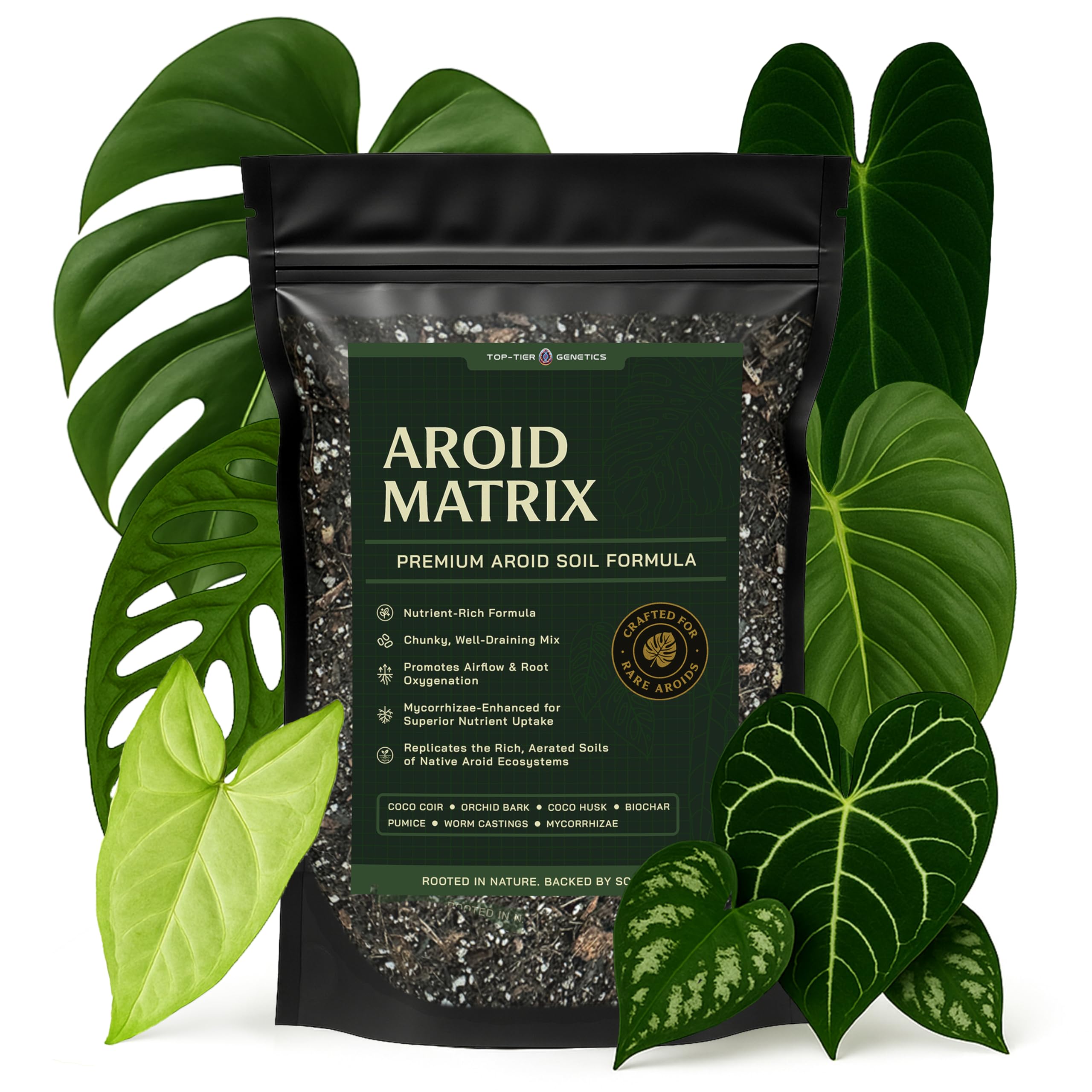
This blend from Top Tier Genetics uses orchid bark, coco husk, and pumice to create the chunky, airy texture Dieffenbachia roots crave. The inclusion of biochar sets it apart — biochar increases microbial habitat and nutrient retention over the long term, which is rare in bagged aroid mixes. Worm castings and mycorrhizae provide gentle organic feeding without the risk of fertilizer burn.
At 2 dry quarts, the bag size suits a single repotting for a medium Dieffenbachia or several small cuttings. The mix is pre-moistened and ready to use, eliminating the dusty startup that plagues many dry blends. Owners consistently report new root growth within days and foliage perking up noticeably after switching to this formula.
The biggest practical advantage is the moisture balance: the pumice and bark drain fast enough to prevent sogginess, while the coco coir retains just enough water to keep from drying out completely between waterings. This reduces the guesswork around watering frequency for a Dieffenbachia owner.
What works
- Biochar improves long-term soil structure and root health
- Ready to use with no amendments needed
- Balanced moisture retention prevents both rot and dryness
What doesn’t
- 2-quart bag is small for large pots over 8 inches
- Premium price per quart compared to generic mixes
5. Craft Aroid Potting Mix – Elite Organic Alocasia, Philodendron, Monstera Soil Mix – 2QT (Peat & Perlite Free)
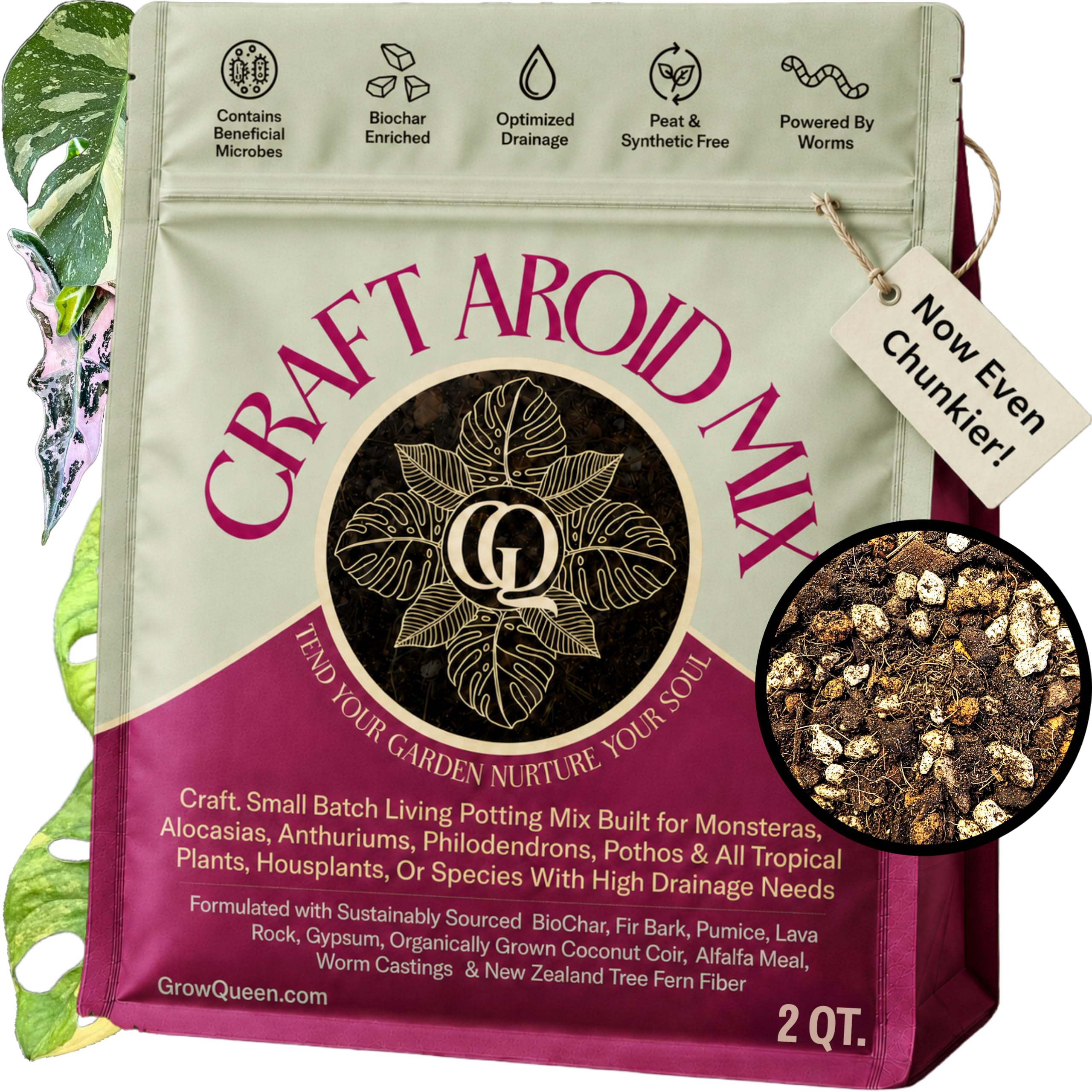
Grow Queen’s 2-quart Craft Aroid Mix is a standout for environmentally conscious growers. It entirely omits peat moss and perlite — peat harvesting releases stored carbon, and perlite production is energy-intensive. Instead, the formula relies on certified organic coco coir, pumice, lava rock, and Douglas fir bark fines to create the chunky structure Dieffenbachia needs.
The inclusion of New Zealand tree fern fiber acts as a natural pH buffer, pulling the mix down to around 6.0. That acidic sweet spot is exactly where Dieffenbachia absorbs nutrients most efficiently. Owners note that the mix stays open and breathable months after repotting, with no signs of compaction or salt buildup.
It arrives pre-moistened and produces almost no dust when handling. The 2-quart size covers one larger repot or several smaller pots. Reviews consistently highlight that plants show visible new growth within two weeks, and the lack of synthetic fertilizers means you control when and how much to feed.
What works
- Peat-free and perlite-free reduces environmental footprint
- Tree fern fiber maintains ideal pH for aroids
- Pre-moistened, nearly dust-free to work with
What doesn’t
- No built-in fertilizer requires separate feeding schedule
- 2-quart bag may not fill a 10-inch pot completely
3. DUSPRO 2QRT Pre-Mixed House Plant Soil – Aroid Potting Mix 7-in-1
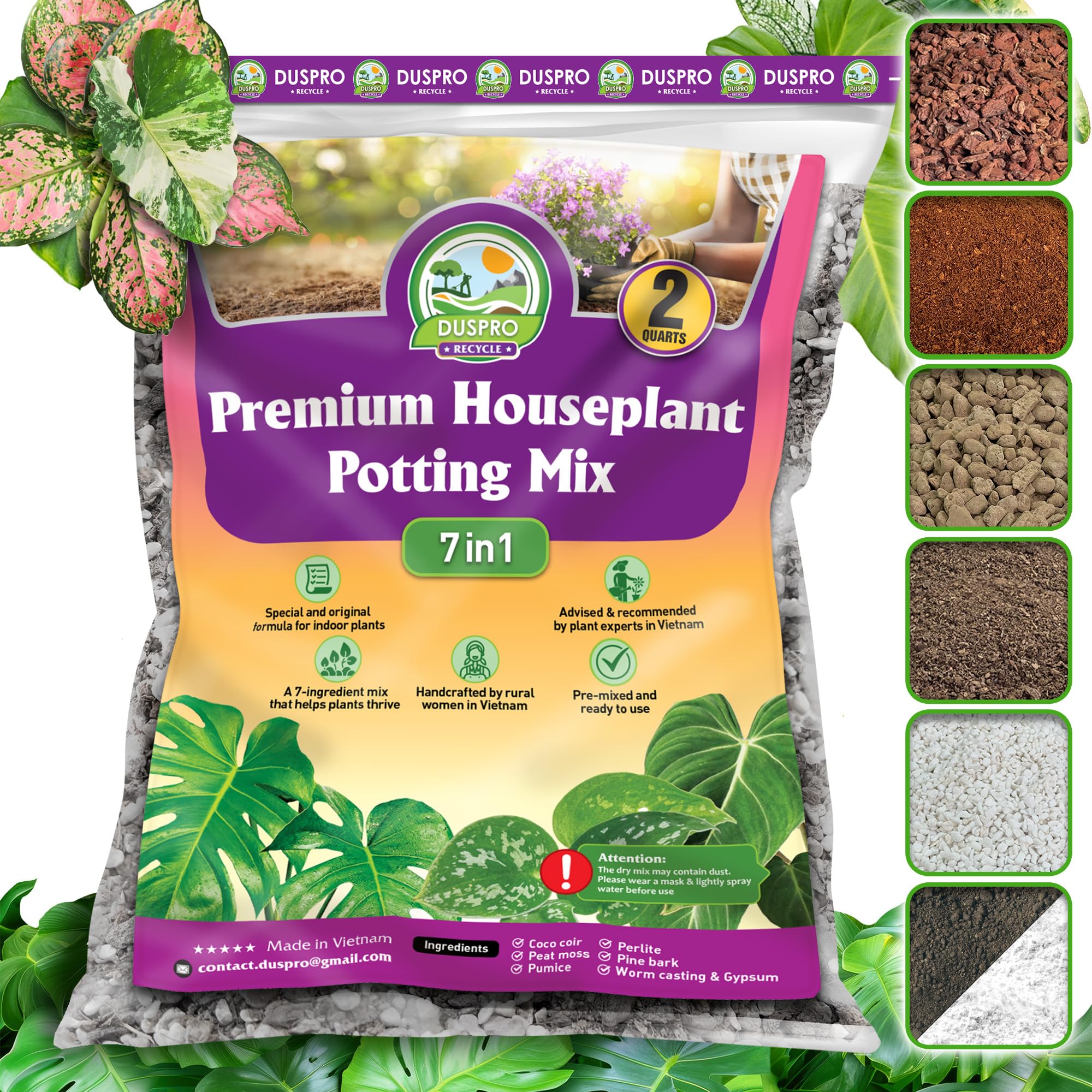
DUSPRO packs seven components into this 2-quart bag: coco coir, peat moss, perlite, pumice, worm castings, pine bark, and gypsum. For a Dieffenbachia owner who wants a complete mix without sourcing separate amendments, this delivers broad nutrition and texture in one go. The gypsum supplies calcium and helps balance pH, while the pine bark adds lasting chunkiness.
Hand-blended by skilled workers in Vietnam, the mix shows visible consistency — each scoop contains a balanced ratio of fines, bark pieces, and pumice. The coco coir and peat moss hold enough moisture to keep a Dieffenbachia hydrated for 10–14 days, but the perlite and pumice prevent the soil from becoming waterlogged. Owners report that herbs, monsteras, and peace lilies all thrive in this blend.
The main trade-off is dustiness: dry particles can settle at the bottom, so shaking the bag before use is essential. Once moistened after potting, the dust settles and the mix performs well. The 2-quart bag covers two 6-inch pots comfortably, but larger repots require the 4- or 8-quart options.
What works
- Seven ingredients cover drainage, aeration, and nutrition
- Gypsum adds calcium and pH stability
- Versatile across multiple houseplant types
What doesn’t
- Dry dust requires shaking before use
- Peat moss content may not suit zero-peat preferences
2. Craft Aroid Potting Mix – Elite Organic 1QT
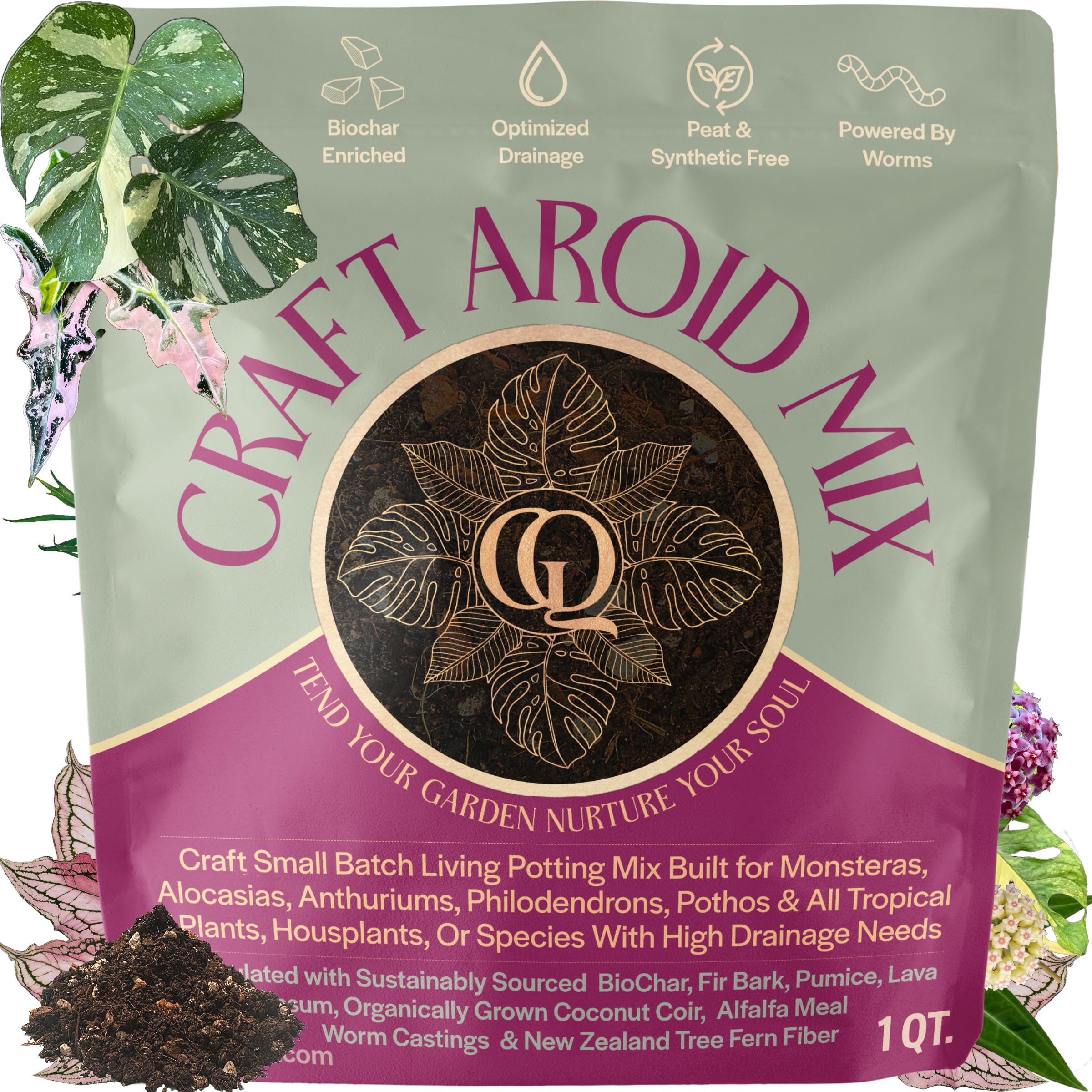
The 1-quart version of Grow Queen’s Craft Aroid Mix offers the same organic, chunky formula as the larger bag but in a test-friendly size. It uses certified organic coco coir, pumice, lava rock, and Douglas fir bark fines to deliver optimal drainage. New Zealand tree fern fiber again buffers pH to 6.0, matching Dieffenbachia’s natural preference.
This small bag is ideal for someone who wants to try an aroid-specific mix before committing to a larger volume, or for repotting a single small Dieffenbachia cutting. The mix is pre-moistened and produces minimal dust. Owners note that the texture stays open and does not settle into a dense mass after watering, a common issue with cheaper soils.
At 1 quart, it fills one 4-inch pot with some leftover. For a Dieffenbachia that has outgrown its nursery pot, you will likely need multiple bags. However, the pet-friendly, non-toxic formulation makes it a safe choice for households with animals that might dig in the soil.
What works
- Low commitment size for testing aroid mixes
- Non-toxic and safe around pets
- Pre-moistened and nearly dust-free
What doesn’t
- Too small for a standard 8-inch Dieffenbachia pot
- No built-in fertilizer, requires separate plant food
1. Cactus & Succulent Potting Soil Mix – Midwest Hearth – 4 Dry Quarts
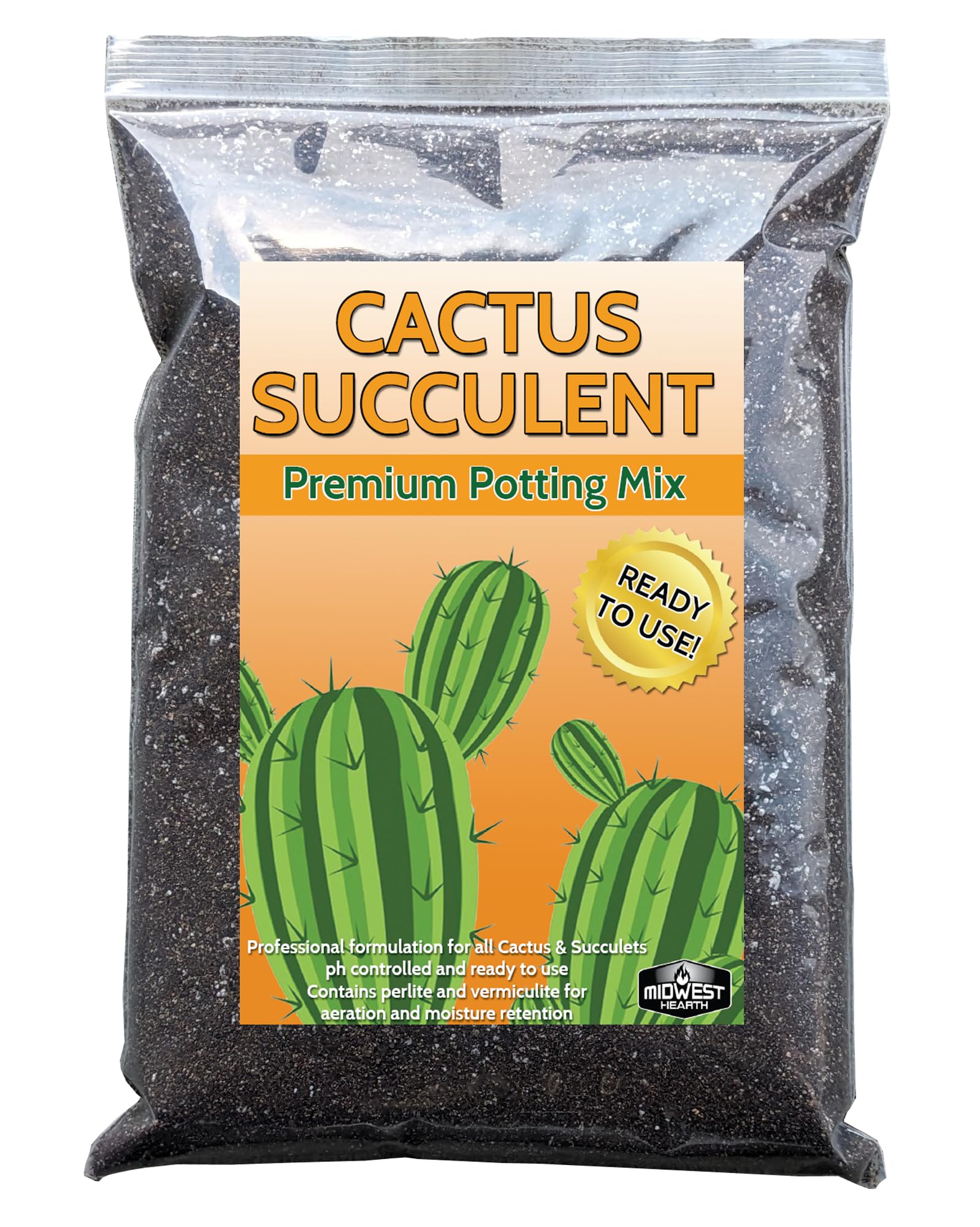
Midwest Hearth’s cactus formula uses peat moss, perlite, and vermiculite to create a fast-draining base. While marketed for succulents, the blend’s structure works for Dieffenbachia if you are comfortable monitoring moisture closely. The 4-quart bag covers several repots, making it an economical entry point for owners with multiple plants.
The mix arrives dry and ready to use, but pre-wetting before potting helps the peat rehydrate evenly. Owners of succulents report excellent root health, and the same fast drainage prevents the root rot that plagues Dieffenbachia in dense soil. The pH is balanced for desert plants, which sits slightly higher than Dieffenbachia’s ideal — though still acceptable with careful feeding.
The major drawback is the dusty texture: dry perlite and peat particles can blow around near open windows. Once the soil is moistened, the dust settles. For a Dieffenbachia owner on a tight budget who can supplement with extra bark or pumice, this makes a serviceable base that drains effectively.
What works
- Fast drainage reduces overwatering risk
- Large 4-quart bag offers good coverage per dollar
- Made in USA with consistent quality
What doesn’t
- Dry and dusty, can blow around before wetting
- Lacks the chunky bark aroids prefer for long-term aeration
6. Premium Potting Soil Mix – Midwest Hearth – 8 Dry Quarts

Midwest Hearth’s premium general-purpose mix combines peat moss, perlite, and vermiculite in a light, fluffy texture. The 8-quart bag offers substantial volume, suitable for multiple Dieffenbachia repots or mixing with orchid bark to increase chunkiness. It is pH-controlled to suit a broad range of plants, including tropicals.
Owners praise the resealable bag and the absence of weeds or bugs — a sign of clean manufacturing. The soil holds moisture well without becoming waterlogged, and the vermiculite adds a degree of water retention that benefits Dieffenbachia during dry indoor winter air. Users find it works as a reliable seed starter as well.
The main limitation for Dieffenbachia is the lack of chunky bark or pumice. The mix drains adequately but compacts over time in larger pots. For best results, blend it with additional perlite or orchid bark to create the airy structure Dieffenbachia needs long-term.
What works
- Large 8-quart bag covers multiple pots
- Light, fluffy texture with good moisture retention
- Resealable bag keeps remaining soil fresh
What doesn’t
- Lacks chunky bark for sustained aeration
- Compacts over time without added perlite
7. Miracle-Gro Potting Mix 3-Pack – 8 qt. Bags

Miracle-Gro Potting Mix is the most recognized name in container gardening. This 3-pack provides 24 total quarts, enough to repot an entire collection. The soil contains a fertilizer that feeds plants for up to six months, reducing the need for immediate supplemental feeding. For a Dieffenbachia owner managing many plants, this simplifies the process.
The texture is lighter than garden soil but still denser than a dedicated aroid mix. It drains adequately for Dieffenbachia if you are careful with watering, but it lacks the chunky bark and pumice that prevent compaction. Owners note that it does not pack down as hard as some cheaper soils, which helps root penetration.
The built-in fertilizer is the double-edged sword: it works well for heavy feeders but can cause leaf burn in Dieffenbachia if the plant is sensitive or if you add extra fertilizer on top. For a straightforward, budget-friendly option that handles a wide range of plants, the value of three large bags is hard to ignore.
What works
- Three bags provide excellent value for multi-plant households
- Extended release fertilizer feeds for six months
- Lightweight and easy to handle
What doesn’t
- Denser than aroid-specific mixes, prone to slow compaction
- Built-in fertilizer can cause leaf burn if overfed
Hardware & Specs Guide
Chunky Texture vs. Fine Texture
Dieffenbachia roots need air pockets. Mixes containing pine bark, orchid bark, Douglas fir bark fines, or lava rock create lasting gaps that let oxygen circulate. Fine-textured soils (those high only in peat and perlite) can collapse after several watering cycles. Check ingredient lists for visible chunks — if the bag description lists only peat, perlite, and vermiculite, the mix will likely compress over time.
pH Buffering Ingredients
Blends with peat moss, New Zealand tree fern fiber, or biochar actively pull pH into the 6.0–6.5 range that Dieffenbachia prefers. Mixes that rely solely on coco coir may drift closer to neutral (6.8–7.0), which still works but can reduce iron and manganese availability. If you choose a coco-based mix without pH buffers, consider occasional acidifying fertilizer or liquid pH adjustment.
FAQ
Can I use regular potting soil for Dieffenbachia?
Should I add perlite to my Dieffenbachia soil?
What pH should Dieffenbachia soil be?
How often should I repot Dieffenbachia with fresh soil?
Final Thoughts: The Verdict
For most gardeners, the best soil for dieffenbachia winner is the Premium AROID Soil Blend because its biochar, mycorrhizae, and chunky pumice-bark structure deliver the perfect moisture-air balance. If you want a peat-free, eco-friendly option, grab the Craft Aroid Potting Mix 2QT. And for a versatile, value-packed mix that handles multiple plants, nothing beats the DUSPRO 7-in-1 Mix.