
Specs are compiled from manufacturer listings and verified buyer reviews and can change over time — please confirm the key details on the product page before buying.
Your coffee arabica plant is picky about one thing above all else: the ground it sits in. A mix that holds too much water turns those glossy dark leaves yellow, while the wrong pH stops the roots from pulling up nutrients at all. This guide cuts through the fertilizer hype to find the soil that gives your beans the acidic, well-drained home they actually need — and it explains exactly what to feel for in the bag before you buy.
I’m Rikta — the founder and writer behind Lawn Gear Lab. This guide is built by comparing the manufacturers’ published specifications and the patterns across verified customer reviews, so you get each pick’s real strengths and trade-offs instead of marketing spin.
Coffee arabica roots hate soggy ground, so this look at the best soil for coffee arabica focuses on drainage, a slightly acidic pH, and mixes proven with acid-loving houseplants.
Our Picks at a Glance

How To Choose The Best Soil For Coffee Arabica
Arabica coffee plants are rainforest understory trees, so they want a mix that mimics a forest floor: rich, slightly acidic, and never waterlogged. If the soil stays wet for days, the roots suffocate and the leaves brown at the tips. Get the texture right and the rest of your care routine gets far easier.
Acidity is the gatekeeper
Arabica prefers a pH in the 5.0–6.5 range. In that zone, iron and other micronutrients dissolve easily, and the leaves stay deep green. A soil labeled for “acid-loving plants” is your shortcut, since it is blended with ingredients like pine bark or peat moss that naturally push the pH down.
Drainage beats richness
Feel for perlite — those small white volcanic pebbles — or pumice in the mix. They create air pockets so water flows through instead of pooling. A light, fluffy texture is a good sign; a dense, muddy bag is not, because it will hold moisture around the roots and invite rot.
Match the bag to the plant
Consider how many pots you are filling. A compact 4-quart bag refreshes one small houseplant, while a 12- or 20-quart bag handles a bigger repot or several plants at once. Buying a bag that is too large for a single plant just means half the soil goes stale in storage.
Quick Comparison
| Model | Best For | Volume | Weight | Key Blend | Amazon |
|---|---|---|---|---|---|
| Jessi Mae Slightly Acidic Potting Soil★ Best Overall | Indoor houseplant repots | 4 quarts | — | Perlite + organic materials | Amazon |
| Soil Sunrise Acid Loving Mix | Container acid-lovers | 12 quarts | 3.3 pounds | Peat moss, pine, vermiculite | Amazon |
| Coast of Maine Acid Loving Soil | Big beds & berry patches | 20 quarts | 82 pounds | Composted manure + sphagnum peat | Amazon |
In-Depth Reviews
1. Jessi Mae Slightly Acidic Potting Soil
Our pick — 4.5★ from 700+ verified ratings; the strongest balance of quality and price.
The hand-mixed indoor blend that gets the acidity and drainage right for a single houseplant.
For a coffee arabica sitting on a windowsill, this 4-quart bag of Jessi Mae is the easiest win. It is built around perlite and organic materials, so water moves through quickly instead of sitting heavy on the roots — the exact drainage your bean plant cries out for. Mixed in small batches in the USA, it arrives with a light, airy texture that keeps the root zone breathing between waterings.
The slightly acidic pH is what makes it click for arabica, since that is the range where the plant pulls iron and other nutrients out of the soil. It is also crafted without chemicals, which cuts the worry about fertilizer burn on a young plant. The trade-off for that careful formulation is size: at 4 quarts you are refreshing one pot, not a whole shelf of plants. And because it is genuinely organic, the bag can smell earthy for a couple of days after opening — the scent fades, and the plants are fine.
Buyers report that the bag runs smaller than the photos suggest, yet the soil itself wins people over — a peace lily pushed out a new bud within a few weeks of repotting, and snake plants settled in happily. The top praise lands on soil quality above anything else, which is exactly the metric that matters for a fussy arabica.
What wins owners over: the soil quality itself is the headline — the blend performs exactly as an acid-loving indoor mix should, and the light texture feels right the moment you open it.
Size reality check: the 4-quart volume suits a single repot, not a collection, and the bag looks bigger in the listing than it does in hand.
Reach for this if: you have one or two indoor arabica plants and want a ready-to-use, slightly acidic mix with strong drainage.
Look elsewhere if: you are repotting several plants at once and need a larger volume to work through.
2. Soil Sunrise Acid Loving Plant Potting Soil Mix
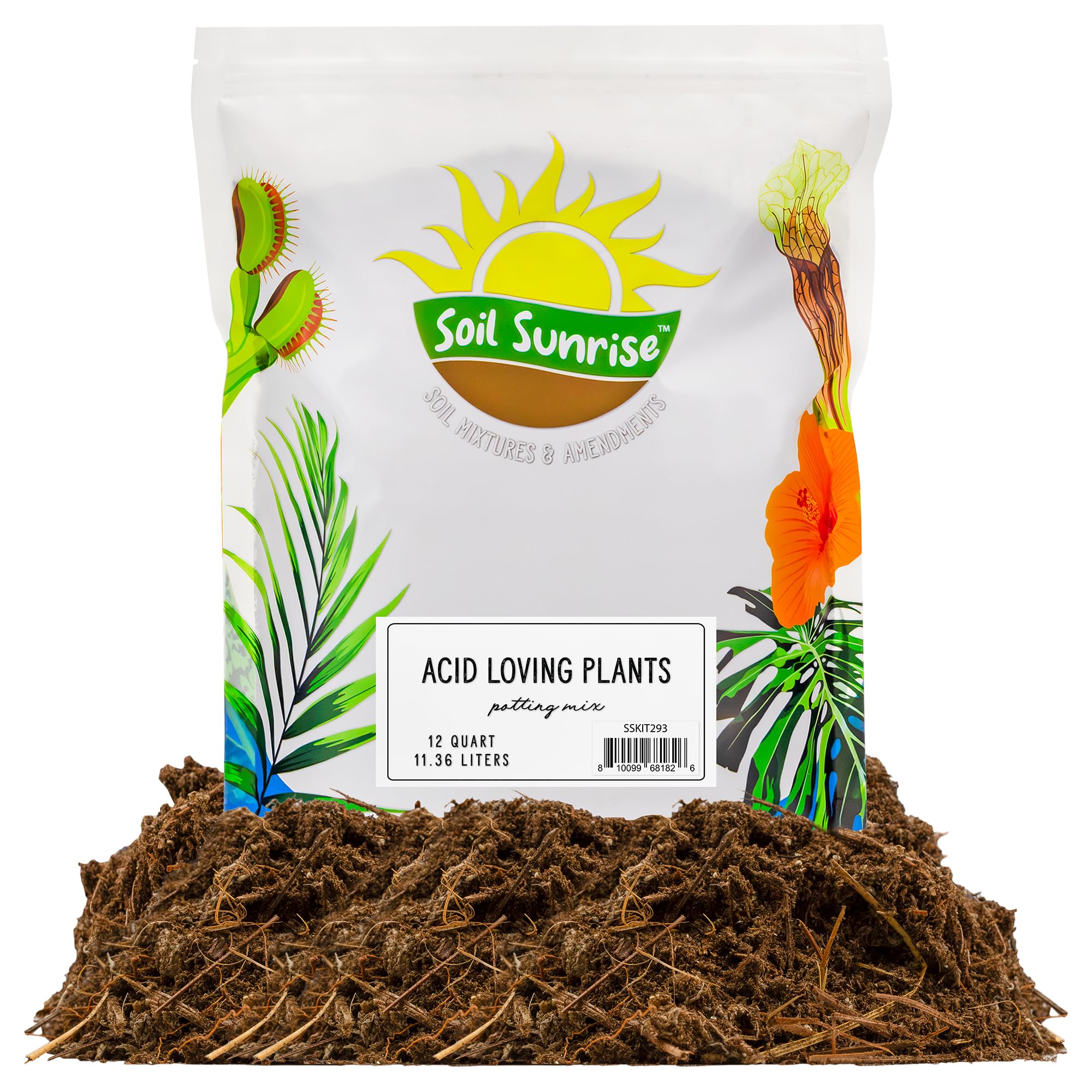
A pH-balanced, artisan-mixed container blend with a proven track record for acid lovers.
Soil Sunrise blends its mix in Kentucky from peat moss, pine needle mulch, pine bark mulch, sphagnum moss, and vermiculite — a recipe aimed squarely at azaleas, rhododendrons, and blueberries that also fits coffee arabica’s needs. The pine content nudges the pH down naturally, while the sphagnum moss and vermiculite hold just enough moisture without letting the roots drown. At 12 quarts and just 3.3 pounds, it is easy to lift and leaves plenty of room to repot a medium plant with leftovers.
The growth results here are the kind owners bring up again and again: one olive cutting went from a 6-inch start to a 5-foot bush in three years, and an arabica coffee plant doubled in size right after repotting. That is the response you want from a soil that finally gives the roots the right acidity. There is one quirk worth knowing — the mix can run hydrophobic when it is bone dry, so it helps to pre-moisten the soil before potting, let it soak, then drain before you add your plant.
The honest caveat is packaging: the delivery bag is thin, and some find the size smaller than the listing photo suggests. But the fuchsia and gardenia owners who pushed past that are unanimous that the soil itself performs, and the package ships fast. For an arabica owner who wants a proven, pH-balanced container blend, this is the one to beat.
Why owners stick with it
- Proven growth: a coffee plant doubled after repotting
- 12-quart volume handles a full repot with leftovers
- All-natural ingredients crafted in Kentucky
The packaging trade-offs
- Delivery bag is thin and easy to tear
- Runs hydrophobic if it dries out — pre-moisten first
- Arrives smaller than the listing image suggests
Who this beats: the larger 12-quart volume and proven acid-loving growth results give it an edge over smaller single-plant bags if you are repotting more than one pot.
Who should pass: anyone who wants a bag that ships in a sturdy, resealable package — this one arrives in thin plastic.
3. Coast of Maine Organic Planting Soil for Acid Loving Plants
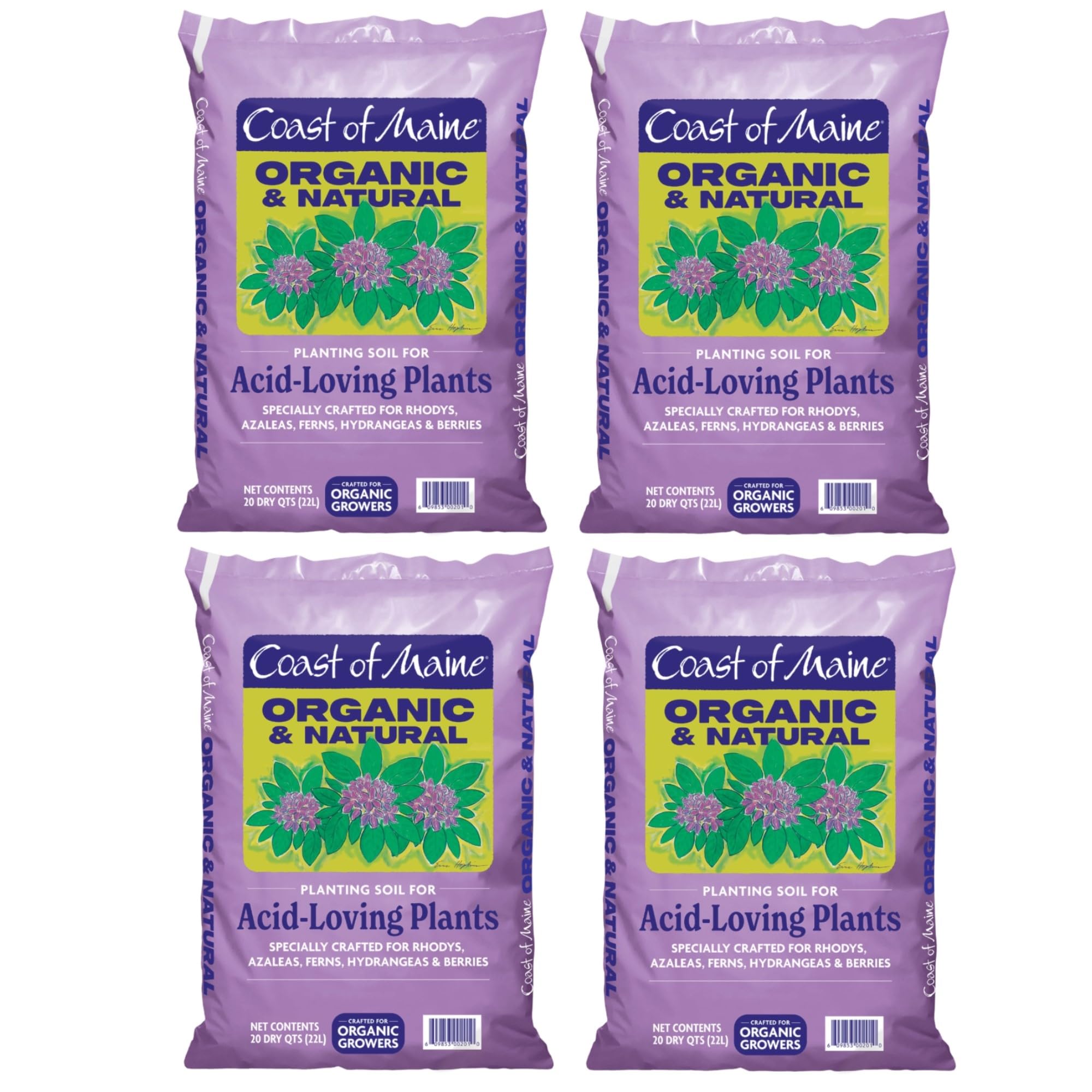
A 20-quart workhorse packed with composted manure for the gardener planting beyond one pot.
When your coffee arabica is moving into a larger container or joining a bed of acid-loving companions, Coast of Maine brings serious volume to the job. This 20-quart blend pairs composted manure with sphagnum peat moss to lock in a low pH and hold moisture while still draining well — the balance that keeps blueberries, strawberries, and ferns all happy in the same growing program. At 82 pounds, it is a beast to haul, so plan your repot before the delivery lands.
The OMRI listing for organic use is a genuine comfort for anyone who wants to avoid synthetic inputs in the soil their plant lives in. Owners describe the texture as soft and easy to work, and the results speak clearly: dormant blueberry bushes took off after planting in raised beds, and berries came on strong. That is the kind of revival an arabica will appreciate too, given it shares the same love for acidic, rich ground.
The measured take: some owners are unsure whether the bag actually shifted their soil’s acidity, so treat this as a quality organic foundation rather than a guaranteed pH fix. And with 20 quarts on hand, you will have plenty left over for the rest of your acid-loving lineup. If you only have one small arabica, this is far more soil than you need — but for a serious gardener, the value lands hard.
The big-bag strengths
- 20 quarts of low-pH organic blend for multiple plants or beds
- OMRI listed for organic growing
- Soft texture that owners find easy to work with
Before you commit
- 82-pound weight is a serious lift — get help or a cart
- Acidity change is not always measurable after use
- Overkill for a single small houseplant
Choose this when: you are feeding several acid-loving plants or an outdoor bed and want one big bag of certified organic material.
Think twice if: you care for one indoor arabica and the 82-pound bulk is more than your space — or your back — can manage.
Understanding the Specs
Drainage & Aeration
Look for perlite, pumice, or vermiculite in the ingredient list — these create air pockets that let water drain and roots breathe. A mix with sphagnum moss balances that by holding a little moisture, so the root zone stays damp but never waterlogged. For coffee arabica, this balance is the difference between thriving leaves and yellowing ones.
pH Balance
Coffee arabica wants slightly acidic ground, typically in the 5.0 to 6.5 range. Soil labeled “acid-loving” is blended with ingredients like pine bark or peat moss to push pH down naturally. If you see those ingredients on the bag, the mix is doing the acidity work for you without needing extra amendments.
FAQ
Can I use regular potting soil for coffee arabica?
How often should I repot my coffee arabica into fresh soil?
Is a 4-quart bag enough for one coffee plant?
Why does my soil smell earthy or organic after opening?
What is the difference between potting mix and garden soil?
How do I fix hydrophobic soil that repels water?
Will acid-loving soil help my coffee plant grow faster?
Can I use the same soil for blueberries and coffee?
Why is drainage so critical for coffee arabica roots?
Final Thoughts: The Verdict
If you want one dependable pick, the soil for coffee arabica winner is the Jessi Mae Slightly Acidic Potting Soil because it delivers the exact drainage and acidity a single houseplant needs without any mixing on your part. If you want a bigger volume with proven growth results, grab the Soil Sunrise Acid Loving Mix. And for a serious gardener feeding multiple beds, the Coast of Maine Organic blend is the one to reach for — just bring a cart for the 82-pound bag.
How We Picked
We do not accept paid placement. Every pick is matched to a real buyer and a real use-case; we do not hands-on test units.
Sources & Methodology
Specifications: manufacturer listings and product documentation. Review insights: verified customer reviews, as of August 2026. Pricing: not shown on this page (it changes often); check the current price via the retailer link.
As an Amazon Associate, Lawn Gear Lab earns from qualifying purchases. This does not affect which products we feature.