
Potted citrus trees are among the most rewarding container plants you can grow, but they’re also the most demanding when it comes to their potting medium. A single misstep in soil composition — overly dense structure, neutral pH, or poor drainage — leads straight to yellowing leaves, root rot, and fruit drop. Getting the mix right from day one is the single most important decision you’ll make for your tree’s long-term health.
I’m Rikta — the co-founder and writer behind Lawn Gear Lab. I’ve spent hundreds of hours cross-referencing technical soil specifications, analyzing pH buffering agents, pore-space ratios, and organic matter composition, and filtering through verified owner experiences to assemble this guide with surgical precision.
Whether you’re repotting a Meyer lemon or nursing a struggling Key lime back to health, this guide breaks down exactly what to look for in a soil for citrus trees in pots and which pre-blended options deliver consistent results without guesswork.
How To Choose The Best Soil For Citrus Trees In Pots
Container citrus has unique requirements that standard potting soil cannot meet. The roots are confined, so water dynamics, nutrient availability, and pH shifts happen faster than in-ground. Choosing blindly leads to chlorosis, root suffocation, or nutrient lockout. Here are the three critical factors to evaluate.
pH Range and Acidic Balance
Citrus trees demand a slightly acidic environment — ideally between pH 5.5 and 6.5. Outside this range, essential micronutrients like iron, manganese, and zinc become unavailable even if they’re present in the soil. Look for blends that explicitly state their pH target and include ingredients like peat moss, organic acidic compost, or dolomite lime to stabilize acidity over time. A soil that drifts alkaline will cause interveinal chlorosis (yellow leaves with green veins) within weeks.
Drainage, Aeration, and Texture
Root rot is the number-one killer of potted citrus. The soil must drain rapidly while still retaining enough moisture between waterings. Premium citrus mixes incorporate coarse sand, horticultural perlite, and sometimes coconut coir or vermiculite to create pore spaces for oxygen. A mix that feels heavy or compacts when squeezed is dangerous — it will hold water too long and suffocate fine feeder roots. Chunky, light-textured soil that doesn’t clump signals good aeration.
Organic Matter and Nutrient Profile
Citrus trees are heavy feeders. The best container mixes include compost, worm castings, or a slow-release organic fertilizer that provides nitrogen, phosphorus, and potassium over several months. Micronutrients like magnesium and iron are particularly important for foliage health and fruit development. Some blends are complete and ready to use; others are base mixes that require supplemental feeding after 4–6 weeks. Know which type you’re buying to avoid starving your tree mid-season.
Quick Comparison
On smaller screens, swipe sideways to see the full table.
| Model | Category | Best For | Key Spec | Amazon |
|---|---|---|---|---|
| Soil Sunrise Citrus Tree Potting Soil Mix (30 Qt) | Premium Mix | Large containers & long-term growth | 30 quarts, worm castings & lime | Amazon |
| GARDENWISE Premium Organic Citrus Potting Soil | Premium Mix | Balanced all-in-one formula | pH 5.5–6.5, 3 quarts | Amazon |
| GARDENWISE Organic Lemon Tree Soil | Mid-Range Mix | Quick results & new growth | 6-month fertilizer, 3 quarts | Amazon |
| Miracle-Gro Cactus, Palm & Citrus Potting Mix (3-Pack) | Mid-Range Mix | Multi-plant repotting & succulents | Fast-draining, 24 qt total | Amazon |
| Soil Sunrise Avocado Tree Potting Soil Mix | Mid-Range Mix | Avocado & seedling transition | 12 quarts, peat & sand | Amazon |
| Farmer’s Secret Citrus Tree Booster Fertilizer | Fertilizer Booster | Supplementing existing soil | 32 oz liquid, 1 tsp/gal | Amazon |
| Back to the Roots Organic Worm Castings | Soil Amendment | Enhancing any potting mix | 5 lbs, slow-release granules | Amazon |
In‑Depth Reviews
1. Soil Sunrise Citrus Tree Potting Soil Mix (30 Quarts)
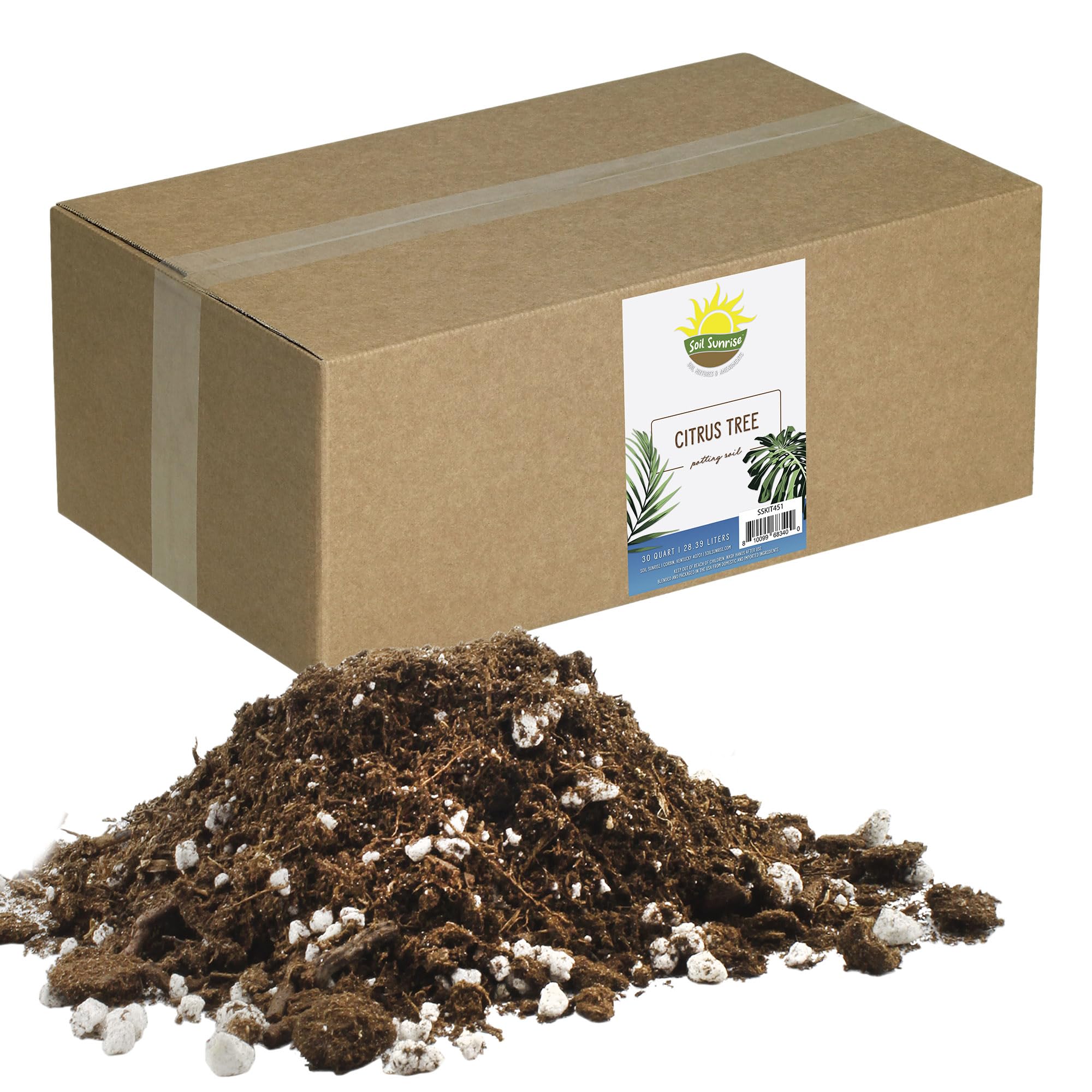
This 30-quart bag from Soil Sunrise is the largest dedicated citrus mix on this list, making it the obvious choice for anyone repotting multiple trees or moving a dwarf citrus into a substantial container. The blend combines peat moss, horticultural perlite, coarse sand, worm castings, and lime — every ingredient serves a specific function: aeration from perlite, drainage from sand, nutrient retention from castings, and pH stabilization from lime. Owners consistently report vigorous new growth within two weeks of repotting, with lime trees and Meyer lemons showing particular responsiveness.
The texture is notably chunky and light, which prevents compaction even after repeated watering cycles. The worm castings provide a gentle slow-release nutrient base that reduces the need for immediate supplemental feeding. Several buyers noted that the bag arrived with some spillage inside the shipping box because the inner plastic bag isn’t heat-sealed — this is a packaging inconvenience rather than a product flaw, and the soil quality itself earned consistent praise across multiple repotting projects.
At this volume, the per-quart value is strong compared to smaller premium blends. The mix supports both indoor and outdoor container trees, and the balanced pH range eliminates the guesswork that plagues generic potting soils. For anyone serious about growing citrus in containers and wanting a single-bag solution for larger pots, this is the most complete option available.
What works
- Large 30-quart volume suitable for multiple repots or big containers
- Chunky, well-aerated texture resists compaction
- Worm castings provide slow-release nutrition from day one
What doesn’t
- Inner bag not sealed; some spillage during shipping
- Premium pricing per bag may feel steep for small projects
2. GARDENWISE Premium Organic Citrus Potting Soil
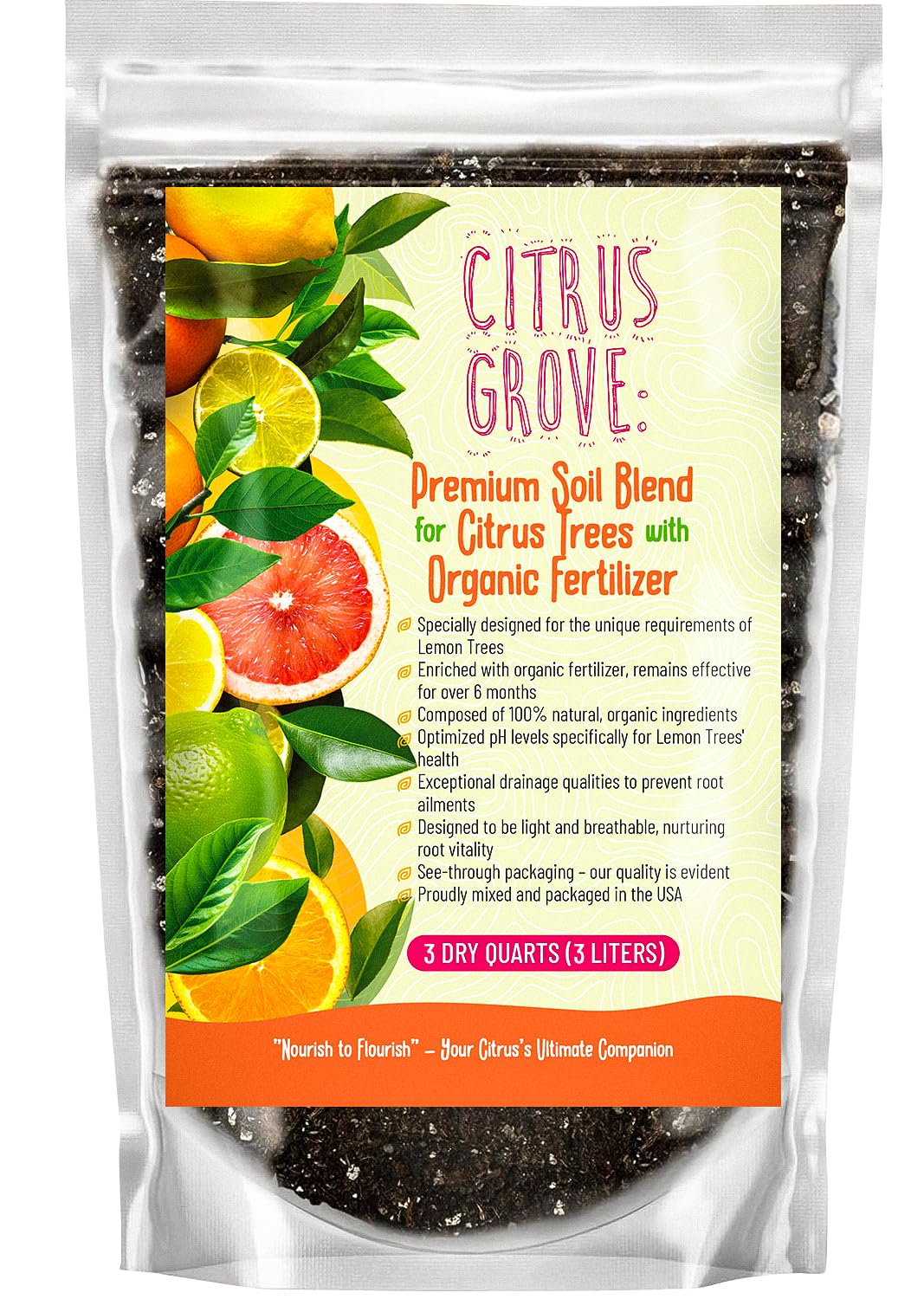
GARDENWISE has formulated this mix specifically for citrus trees, targeting a pH corridor of 5.5 to 6.5 using organic acidic compost and peat moss. The inclusion of dolomite lime adds pH stability so the soil doesn’t drift acidic or alkaline over time — a common failure in cheaper blends. The ingredient list is thorough: extra perlite, coarse sand, coconut coir, vermiculite, garden compost, and a custom organic fertilizer. Every component works toward better drainage without sacrificing moisture retention.
Customer feedback highlights rapid results: grapefruit trees showed dark green foliage within days after repotting, and lemon trees pushed new growth that hadn’t appeared in months. The 3-quart size is compact, ideal for a single medium-sized pot or for topping off an existing container. Some users considered it expensive relative to the bag size, but the concentrated formula means you’re paying for a complete, ready-to-use mix rather than a base that needs amendment.
The micronutrient profile — iron, magnesium, and manganese — addresses the most common deficiency patterns seen in container citrus. If you want a small-batch, hand-blended mix that requires no additional fertilizer for the first 4–6 weeks, this is the most carefully engineered option on the market today.
What works
- Stable pH controlled by dolomite lime and acidic compost
- Rich in iron, magnesium, and manganese for foliage health
- Fast results: visible new growth within two weeks
What doesn’t
- Small 3-quart bag limits use to one pot or small projects
- Higher cost per quart compared to larger bulk options
3. GARDENWISE Organic Lemon Tree Soil
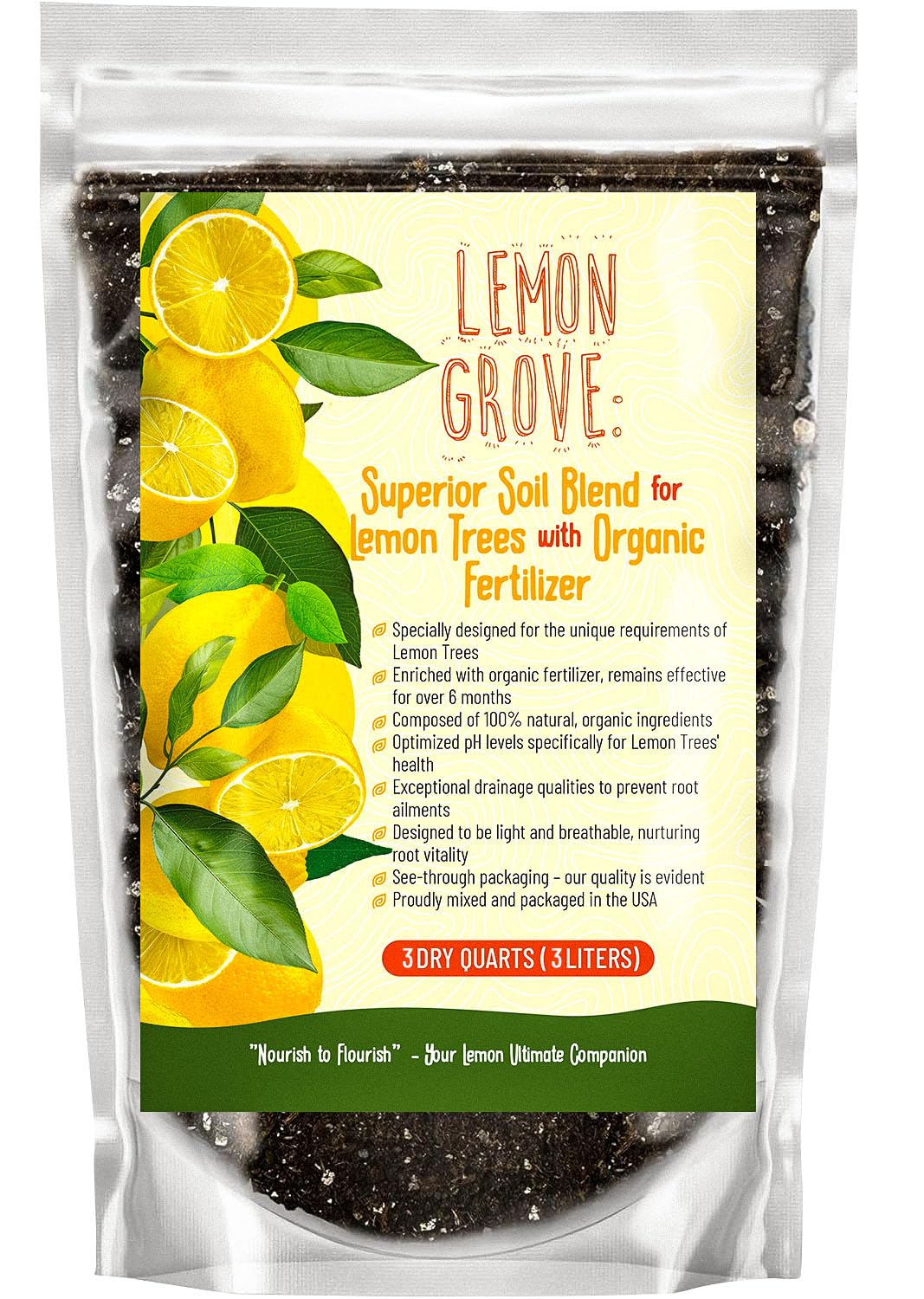
This sibling product to the Premium Citrus mix shares much of the same DNA — extra perlite, coarse sand, coconut coir, vermiculite, and organic compost — but adds a slow-release organic fertilizer that feeds for up to six months. That extended feeding window makes it particularly attractive for gardeners who want a set-it-and-forget-it approach during the growing season. Meyer lemon owners report seeing fresh sprouts within two weeks, and multiple reviews note that trees previously in a dormant state began pushing green growth after repotting.
The drainage characteristics are excellent. The coarse sand and perlite create a free-draining structure that prevents waterlogged roots, while the coconut coir holds just enough moisture to keep roots hydrated between waterings. The 3-quart size is again compact, but the inclusion of built-in fertilizer reduces the need to buy separate plant food for the first half-year. The pH is aimed at the same 5.5–6.5 sweet spot as the premium version.
Some buyers felt the price was slightly high for the bag size, but the 6-month fertilizer component adds tangible value that offsets the upfront cost. If you’re repotting a single lemon tree and don’t want to manage a separate feeding schedule, this soil simplifies the entire maintenance routine.
What works
- Six-month slow-release fertilizer included — no early feeding needed
- Excellent drainage prevents root rot in heavy waterers
- Proven results reviving dormant or struggling citrus trees
What doesn’t
- Bag size is modest for larger containers
- Price per quart higher than unfertilized bulk mixes
4. Miracle-Gro Cactus, Palm and Citrus Potting Mix (3-Pack)

Miracle-Gro’s Cactus, Palm & Citrus mix is one of the most widely available options, and the 3-pack bundle delivers 24 quarts total — enough to fill several 8-inch containers. The formula is built around fast drainage, using a lightweight, porous structure that works well for palms and succulents alongside citrus. It’s enriched with Miracle-Gro plant food, so there’s some initial fertility baked in, though not as prolonged as the dedicated citrus blends from GARDENWISE or Soil Sunrise.
Customer reviews consistently mention its effectiveness for Christmas cactus and succulents, with citrus-specific feedback being more mixed. Some users noted that the mix drains almost too quickly for citrus trees in hot, dry climates where moisture retention is needed between waterings. A common workaround is blending this 50/50 with standard potting soil to achieve a middle ground. The texture is fine and consistent, not chunky like the hand-blended artisan mixes.
This is a strong option if you have multiple plants — not just citrus — and want a single fast-draining mix that works across species. It won’t replace a purpose-engineered citrus soil for dedicated growers, but for casual gardeners or those on a budget who need volume, the 3-pack provides reliable drainage at a reasonable per-quart cost.
What works
- Three-bag bundle offers excellent total volume for the price
- Fast-draining formula works for cacti, palms, succulents, and citrus
- Easy to find and widely stocked
What doesn’t
- Drains too fast for some citrus growers in dry climates
- Less nutrient-dense than dedicated citrus blends
5. Soil Sunrise Avocado Tree Potting Soil Mix (12 Quarts)

While labeled for avocados, this Soil Sunrise blend shares the same foundational philosophy as citrus-specific mixes: peat moss for acidity, perlite for aeration, sand for drainage, and lime for pH stabilization. The 12-quart size sits between the small premium bags and the massive 30-quart citrus mix, making it a practical middle-ground volume for a medium-sized container. Owners praise its light, fluffy texture that drains well without allowing roots to dry out completely.
Avocado growers in particular report smooth transitions when moving seedlings from water propagation to soil, which speaks to the mix’s gentle structure and balanced moisture profile. A few experienced growers noted that the perlite content could be higher for extremely heavy feeders, but this is easily corrected by adding extra perlite during potting. The lack of worm castings or added fertilizer means this is a base mix — budget for supplemental feeding after the first month.
For anyone growing both citrus and avocados, this single mix can serve double duty. The pH range is appropriate for acid-loving plants, and the texture supports the sensitive root systems of young trees. It’s a versatile, reliable choice that won’t break the bank for medium-scale container gardeners.
What works
- Light, fluffy texture ideal for young trees and seedlings
- 12-quart size is versatile for medium pots
- Works well for both avocado and citrus species
What doesn’t
- No added fertilizer — supplemental feeding required after one month
- Some users wish perlite content was higher for extra drainage
6. Farmer’s Secret Citrus Tree Booster Fertilizer (32 oz)

This is not a soil mix — it’s a super-concentrated liquid fertilizer formulated to supplement any citrus potting soil. The dosing is remarkably efficient: one teaspoon per gallon of water applied weekly along the drip line. For indoor or container trees, the manufacturer recommends cutting the dosage in half or applying every other week. The 32-ounce bottle lasts a long time, making the per-feeding cost very low despite the upfront price.
Customer stories are compelling. One owner brought a sick lemon tree back from the brink after moving it outside for rain nourishment and applying this fertilizer 2–3 times — the tree set flowers and existing fruits grew larger. Another user in Phoenix, AZ, where native soil lacks organic matter, saw a yellowing tree turn lush green within weeks. However, a detailed review pointed out that the formula lacks calcium and magnesium, both critical for citrus fruit development and preventing blossom-end rot.
Use this booster as a complement to a good base soil, not a replacement for proper potting mix. The high nitrogen and iron content addresses yellowing foliage quickly, but you’ll need to supplement calcium and magnesium separately for balanced long-term nutrition. It’s an excellent rescue tool for trees showing deficiency symptoms.
What works
- Extremely concentrated — one teaspoon per gallon goes far
- Fast-acting on yellowing leaves and weak growth
- Great for reviving stressed or sick citrus trees
What doesn’t
- Lacks calcium and magnesium — must supplement separately
- Not a soil mix; requires a base potting medium
7. Back to the Roots Organic Worm Castings (5 lb)

Worm castings are one of the most effective organic amendments for citrus soil, and Back to the Roots delivers a clean, odor-free product at a reasonable price point. This 5-pound bag of pure vermicompost is made in the USA and contains beneficial microbes that enhance soil biology and protect seedlings from pathogens. The granular texture blends easily into any potting mix without compacting.
Citrus growers have found it particularly useful for amending chunky soil blends that lack organic fertility — mixing a handful into the potting hole or sprinkling it on top as a top dressing provides a steady release of nutrients. Multiple reviewers noted improved leaf color and overall plant vigor after incorporating it into their standard citrus mix. The resealable bag keeps contents fresh between uses.
This is not a standalone potting soil; it’s a supplement. If you already have a drainage-focused base mix that’s light on nutrients, adding worm castings bridges the gap without overwhelming the roots. The moisture-retention properties are worth noting — castings hold water, so adjust watering frequency accordingly. For anyone looking to boost organic matter without synthetic chemicals, this is the cleanest option available.
What works
- Pure organic worm castings with no fillers or synthetic additives
- Beneficial microbes improve soil health and disease resistance
- Odor-free and safe for indoor use
What doesn’t
- Not a complete potting mix — requires a base soil
- Holds significant moisture; may need watering adjustment
Hardware & Specs Guide
pH Buffering Components
The most critical spec in citrus soil is not NPK numbers — it’s how the mix maintains acidity. Dolomite lime slowly neutralizes acidic decomposition, preventing pH crashes. Peat moss provides immediate acidity but breaks down over time. Quality blends use both, creating a buffer that keeps pH in the 5.5–6.5 range for months. Without lime, peat-based mixes can drift below pH 5.0, locking out phosphorus and calcium.
Pore Space and Drainage Ratio
Container citrus needs at least 30–40% pore space in the soil volume for root respiration. Perlite creates macropores for rapid drainage, while coarse sand creates micropores for slower water movement. Coconut coir or vermiculite adds water-holding capacity without collapsing pore structure. The ideal mix passes water through completely within 30 seconds of saturation but stays moist for 2–3 days in a standard pot.
Organic vs. Synthetic Fertilizer Sources
Blends with compost, worm castings, or blood meal release nutrients through microbial activity, which is slower but more stable for container environments. Synthetic fertilizers deliver instant availability but can burn roots if over-applied in confined pots. The best citrus soils use a hybrid approach: a base of organic compost for steady release, supplemented with a mild slow-release fertilizer to cover the first 2–3 months.
Volume-to-Pot Size Matching
A common mistake is buying a mix that’s too small for the container. A 3-quart bag fills approximately one 8-inch pot. A 12-quart bag handles a 12–14 inch pot. The 30-quart bag can fill a 16–18 inch planter or refill three smaller pots. Measure your container’s volume in quarts before buying — underfilling leads to root exposure, and overfilling compacts the mix at the bottom.
FAQ
Can I use regular potting soil for citrus trees in pots?
How often should I repot a citrus tree into fresh soil?
Should I add fertilizer immediately after repotting citrus?
Final Thoughts: The Verdict
For most gardeners, the soil for citrus trees in pots winner is the Soil Sunrise Citrus Tree Potting Soil Mix (30 Quarts) because it combines the largest volume with worm castings, lime, and a chunky texture that citrus roots love. If you want a precisely pH-balanced mix that’s ready to use out of the bag, grab the GARDENWISE Premium Organic Citrus Potting Soil. And for budget-friendly bulk feeding with proven revival results, nothing beats the Farmer’s Secret Citrus Tree Booster Fertilizer as a complement to your base soil.