
Specs are compiled from manufacturer listings and verified buyer reviews and can change over time — please confirm the key details on the product page before buying.
Caladiums are fussy about one thing above all else: their roots need to breathe, but they also need steady moisture — get that wrong and the leaves turn yellow or the tubers rot before they even sprout. The best soil for caladiums strikes that balance between holding enough water and draining the excess fast, which is why generic bagged mixes often fail. I’m going to show you four blends that actually get this right, from budget-friendly options to premium mixes packed with aeration ingredients.
I’m Rikta — the founder and writer behind Lawn Gear Lab. This guide is built by comparing the manufacturers’ published specifications and the patterns across verified customer reviews, so you get each pick’s real strengths and trade-offs instead of marketing spin.
Every mix here was chosen because it provides the sharp drainage and consistent moisture that Caladiums demand, and I break down exactly what makes each one work — or fall short — so you can pick the right soil for caladiums without second-guessing yourself.
Quick Picks
- Grow Queen Craft Organic Houseplant Potting Mix — Best Overall
- Smart Grower Organic Potting Soil — Premium Pick
- Soil Sunrise Aroid Plant Potting Soil Mix — Aroid Specialist
- Miracle-Gro Organic Indoor Potting Mix — Budget Champion
How To Choose The Best Soil For Caladiums
Before you grab a bag, understand that Caladiums are tropical tubers — they want consistent moisture but will rot in soggy, compact soil. The right mix holds water like a sponge that is only half-wet: damp, never soaked.
Prioritize Aeration Over Moisture Retention
Look for chunky ingredients like pine bark, pumice, or perlite. These create air pockets that let oxygen reach the roots and excess water drain away quickly. A mix that feels tightly packed in the bag is a red flag for Caladiums.
Check for Organic Matter Without Compaction
Coir, worm castings, and compost add nutrients and hold moisture, but they should be balanced with coarse materials. If the bag lists “forest products” or “peat” as the first ingredient without aeration partners, the blend will likely turn into a dense paste after a few waterings.
Quick Comparison
| Model | Best For | Volume | Key Ingredients | Weight | Amazon |
|---|---|---|---|---|---|
| Grow Queen Craft Organic Houseplant Potting Mix | Best Overall Aeration | 8 Quarts | Douglas fir bark, lava rock, pumice, worm castings | — | Amazon |
| Smart Grower Organic Potting Soil | Ready-to-Use Premium | 83.04 Cubic Inches | Biochar, worm castings, coco coir, mycorrhizal fungi | 3 lb | Amazon |
| Soil Sunrise Aroid Plant Potting Soil | Aroid-Specialist Blend | 8 Quarts | Coco coir, pine bark, perlite, worm castings, charcoal | 1.5 kg | Amazon |
| Miracle-Gro Organic Indoor Potting Mix | Budget-Friendly Starter | 8 qt. (2-Pack) | Sphagnum peat moss, coir, natural fertilizer | 9 lb per bag | Amazon |
In‑Depth Reviews
1. Grow Queen Craft Organic Houseplant Potting Mix
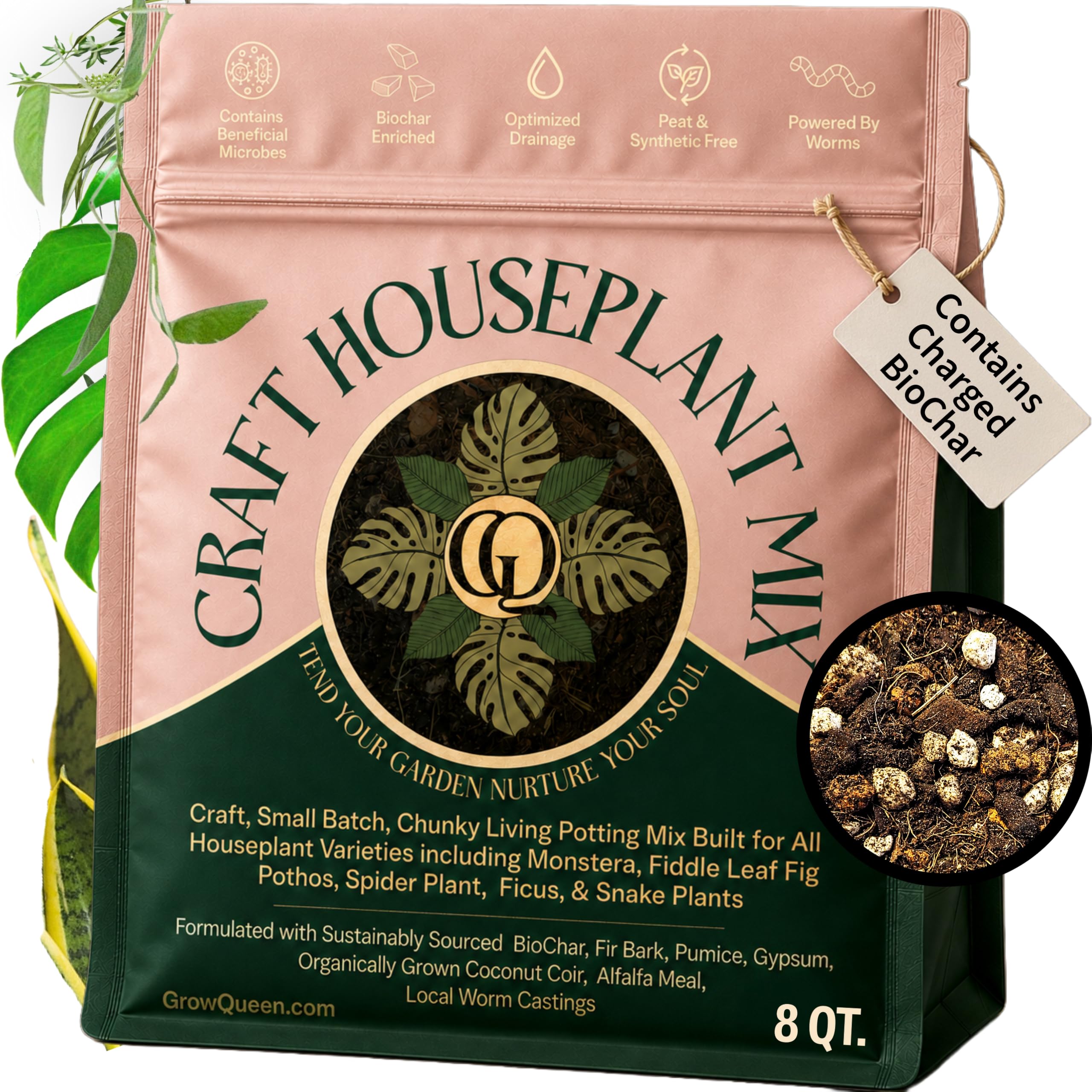
The chunkiest, most breathable mix of the bunch — built for roots that hate sitting wet.
If you want your Caladiums to develop a healthy root system without the constant fear of rot, this is the mix to grab. It combines large Douglas fir bark fines, lava rock, and pumice — three ingredients that create instant drainage and keep air flowing through the pot. Unlike the denser Miracle-Gro blend, this one is difficult to overwater, a trait buyers will appreciate since Caladium tubers are notoriously sensitive to excess moisture. The mix arrives gently pre-moistened, so it settles around roots right away instead of repelling water like dry peat often does.
It also uses premium organic worm castings (not compost filler) for steady nutrition, paired with charged biochar that holds nutrients without collapsing the soil structure. At 8 quarts, it fills a standard large pot and eliminates the need for perlite amendments. Buyers report the lack of dust and floating white chunks since it is both peat-free and perlite-free.
The breathable edge: A chunky structure (Douglas fir bark + lava rock + pumice) that physically prevents soil compaction — your Caladiums get both moisture and oxygen without you having to mix your own aeration ingredients.
The only trade-off: It costs more than standard bagged mixes, but the bioactive ingredients mean you rarely need extra fertilizer for the first few months.
Reach for this if: You have killed Caladiums by overwatering before, or you want a set-and-forget mix that does the aeration work for you. The pre-moistened texture also reduces transplant shock for new tubers.
Look elsewhere if: You prefer a lighter, less chunky feel for very small pots — the bark fines can be bulky in a 4-inch nursery pot.
2. Smart Grower Organic Potting Soil for Indoor Plants
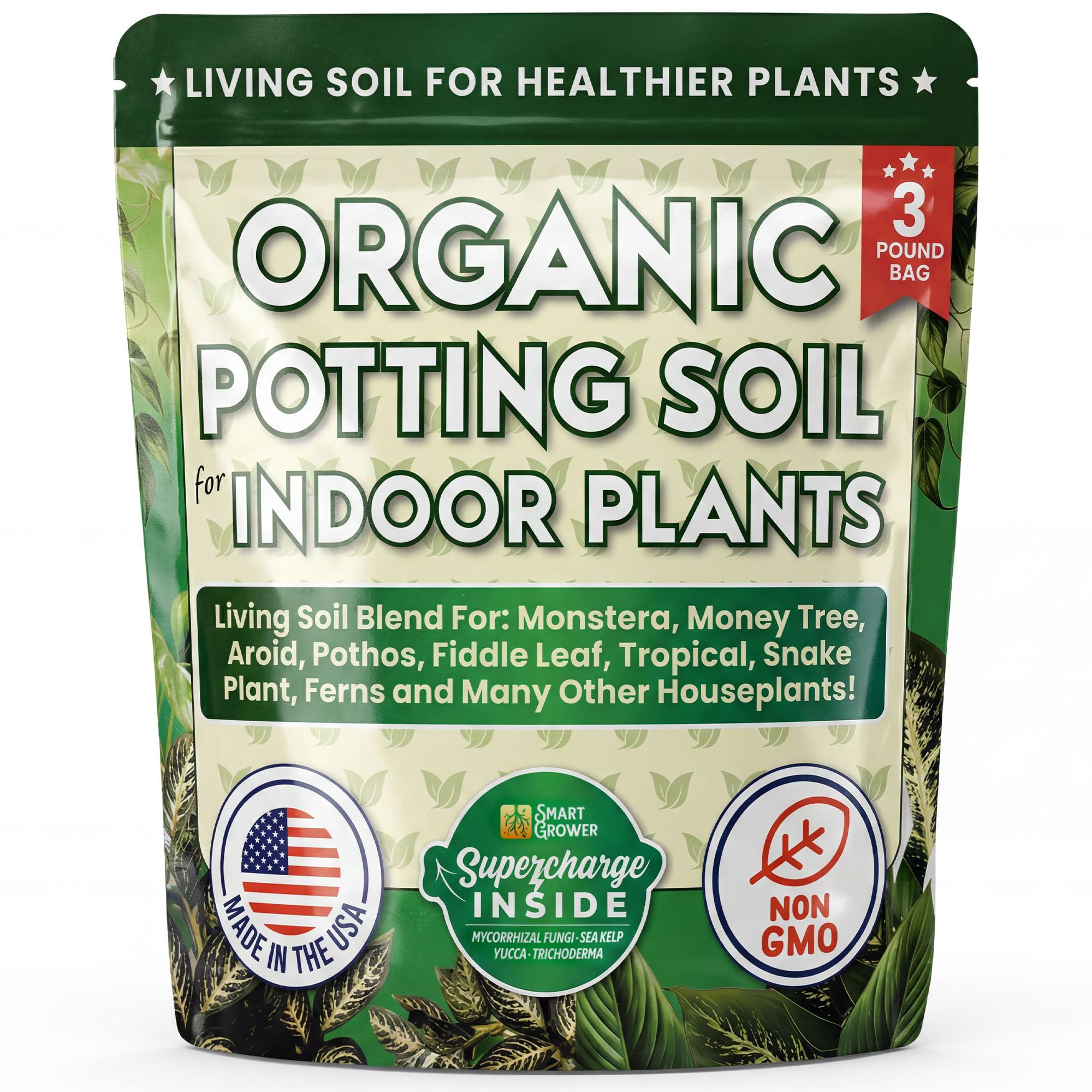
An open-and-plant bag packed with biochar and mycorrhizal fungi to revive weak roots fast.
This 3-pound bag is a complete living soil blend: organic compost, peat, biochar, worm castings, and coco coir create a lightweight mix that drains well but still clings to enough moisture for tropical plants. Unlike the Grow Queen mix which relies on bark and rock for aeration, Smart Grower uses biochar — a stable carbon structure that holds nutrients and water in its porous surface while keeping the soil from getting soggy. The blend also includes mycorrhizal fungi, sea kelp, and beneficial Bacillus microbes, which help struggling plants establish roots more quickly.
It is made in the USA without bone meal or fish byproducts, so it is safe for homes with pets. Owners mention that bags arrive ready to use with no mixing or expanding needed — just open and plant. The 83.04 cubic inch volume is smaller than the 8-quart bags from other picks, so it works best for a few medium pots rather than a large garden bed.
What gives it an edge
- Biochar + worm castings deliver nutrients without chemical fertilizer burn
- Free from animal byproducts — safe around curious pets
- Lightweight texture makes repotting less messy than dense peat mixes
The shortfall
- Smaller volume (3 lb) means one bag won’t fill a 10-inch pot for a mature Caladium
- No chunky bark or pumice — aeration relies on coco coir and biochar, which is less dramatic than the Grow Queen mix’s structure
Best for recovering plants: The mycorrhizal fungi and microbe blend is ideal if your Caladiums arrive stressed from shipping or you are trying to save a tuber from rot damage.
Not for large containers: Buy two bags if you plan to fill a 12-inch pot; the 3-pound size runs out fast.
3. Soil Sunrise Aroid Plant Potting Soil Mix

A no-chemicals, all-natural blend that mimics the jungle floor Aroids evolved in.
Caladiums are in the Araceae family, which means this mix — designed specifically for Aroids like Alocasia, Colocasia, and Philodendron — is a natural fit. The blend uses coconut coir, pine bark, perlite, worm castings, and horticultural charcoal to balance drainage and moisture retention without any synthetic fertilizers or additives. The charcoal is a smart addition: it filters impurities and improves airflow, reducing the risk of root rot in dense pots. Unlike the Miracle-Gro option which relies on peat, this mix stays open and crumbly even after several waterings.
The 8-quart bag fills a 12-inch pot, and the pine bark provides the chunkiness that Caladium roots need. Customers note that it works well straight out of the bag without needing extra perlite, saving a step. It lacks the bioactive boosters (mycorrhizal fungi or bacillus) that Smart Grower includes, so it is a cleaner, more straightforward option.
The jungle mimic: Pine bark + perlite + charcoal create a texture that stays airy for months, while the coir holds just enough water for Caladiums’ tropical needs — no guesswork required.
One detail to note: There is no added fertilizer, so you will need to supplement with a balanced liquid feed after the first month, especially if you are growing for large leaves.
Choose this if: You want a pure, chemical-free mix that mirrors the natural growing conditions of Caladiums and you are comfortable adding your own fertilizer schedule.
Pick the Grow Queen instead if: You want the extra insurance of worm castings already in the blend and a pre-moistened texture that reduces transplant shock.
4. Miracle-Gro Organic Indoor Potting Mix, 8 qt. (2-Pack)

The two-bag bundle that keeps your wallet happy — if you are willing to amend for drainage.
If you are on a tight budget or planting Caladiums in a larger outdoor container where drainage is easier to control, this OMRI-listed mix from Miracle-Gro is a solid starting point. It uses responsibly sourced sphagnum peat moss, coir, and a quick-start natural fertilizer to help regulate moisture and protect against over- and under-watering. The two-pack gives you 16 total quarts (two 8-qt. bags), enough to fill multiple 8-inch pots.
The catch is texture: this mix is noticeably denser than the aroid-focused blends above. The peat and coir hold water well, but without added pine bark or pumice, the soil can compact over time. Buyers planning to use this for Caladiums will need to mix in extra perlite or coarse sand to create the chunky structure that tubers prefer. It works well as a base for a custom blend, but it is not drain-ready straight from the bag like the Grow Queen or Soil Sunrise.
Where it wins
- Two 8-qt. bags for the price of one specialty mix — great value for multiple pots
- Natural fertilizer gives seedlings and transplants a gentle nutrient boost
- Moisture-regulation technology helps beginners avoid extreme dry/wet swings
Where it falls short for Caladiums
- Lacks chunkiness — no bark, pumice, or perlite in the ingredient list
- Compaction risk over time; requires added perlite for healthy tuber growth
- Not a true “open and plant” mix for this particular plant family
Great as a base for DIY mixers: If you already have perlite or orchid bark on hand, this budget-friendly bundle lets you build a Caladium-friendly blend without paying for a premium bag.
Skip if you want one-step convenience: Straight from the bag, it is too dense for Caladiums — you will have to amend it, which defeats the purpose of a grab-and-go mix.
Understanding the Specs
Aeration Ingredients (Pine Bark, Pumice, Lava Rock, Charcoal)
These coarse, chunky particles create physical air pockets in the soil so water flows through instead of pooling. For Caladiums, which evolved in loose jungle leaf litter, a mix without aeration feels like a sealed plastic bag around the roots. The Grow Queen mix leads here with three separate aeration components (Douglas fir bark, lava rock, pumice), while Miracle-Gro has none and requires you to add your own.
Bioactive Boosters (Mycorrhizae, Worm Castings, Microbes)
These are living organisms or organic matter that help roots absorb nutrients and fight disease. Mycorrhizal fungi attach to root hairs and extend their reach into the soil; worm castings provide gentle slow-release nitrogen. Smart Grower includes a full suite of these, while Soil Sunrise keeps it simple with castings and charcoal. If you have struggled with weak Caladium growth, a mix with these boosters can make a visible difference in leaf size within weeks.
FAQ
Should I use regular potting soil for Caladiums?
What is the difference between aroid mix and general potting soil?
Can I use succulent or cactus soil for Caladiums?
How often should I repot a Caladium?
Does the pH of the soil matter for Caladiums?
Why does my Caladium soil stay wet for days after watering?
Can I reuse old Caladium soil for new tubers?
Do Caladiums need fertilizer in the soil mix?
Final Thoughts: The Verdict
For the majority of shoppers, the soil for caladiums winner is the Grow Queen Craft Organic Houseplant Potting Mix because its chunky Douglas fir bark, lava rock, and pumice structure gives you the best drainage and aeration without any mixing or amending. If you want bioactive boosters that help weak roots recover quickly, grab the Smart Grower Organic Potting Soil. And for a clean, chemical-free aroid blend that works straight out of the bag, the Soil Sunrise Aroid Mix is your best bet — no additives, just the right texture for Caladiums.
How We Picked
We do not accept paid placement. Every pick is matched to a real buyer and a real use-case; we do not hands-on test units.
Sources & Methodology
Specifications: manufacturer listings and product documentation. Review insights: verified customer reviews, as of July 2026. Pricing: not shown on this page (it changes often); check the current price via the retailer link.
As an Amazon Associate, Lawn Gear Lab earns from qualifying purchases. This does not affect which products we feature.