
Specs are compiled from manufacturer listings and verified buyer reviews and can change over time — please confirm the key details on the product page before buying.
Do not treat your aloe vera like a normal houseplant with standard potting soil. Those thick, fleshy leaves store water, so roots rot fast in damp, dense dirt. You need a mix that drains hard and dries quickly. This guide finds the five blends that match what an aloe vera root system actually needs.
I am Rikta, founder of Lawn Gear Lab. This guide compares published specs from manufacturers and patterns across verified customer reviews. You get each pick’s real strengths and trade-offs.
Whether you are repotting a struggling plant or starting fresh, the right foundation makes all the difference. The best soil for aloe vera depends on fast drainage, proper aeration (air pockets in the mix), and ingredients that mimic the arid ground it evolved in.
Quick Picks
- LGM Premium Cactus & Succulent Soil Mix (0.5 Cu Ft) — Best Value
- Rosy Soil Cactus & Succulent Potting Mix (4 Quarts) — Living Soil
- Tinyroots Succulent Soil – Cactus Soil Potting Mix (2.25 Quarts) — Fine Drainer
- Bonsai Jack Succulent, Cactus and Bonsai Soil – Jacks Gritty Mix (2 Quarts) — Pure Grit
- The Soil Sage 5 Dry Qt Cactus & Succulent Potting Soil Mix (5 Quarts) — Premium Hand-Blend
How To Choose The Best Soil For Aloe Vera
Aloe vera roots need air, not a sponge. If the soil holds water longer than a few days, the roots begin to suffocate and rot. The three factors below separate a good aloe mix from a bag that will drown your plant.
Drainage Speed & Particle Size
Look for a chunky, gritty texture. Ingredients like pumice (a lightweight volcanic rock), lava rock, calcined clay (heat-treated clay that resists breaking down), or pine bark fines (small bits of pine bark) create air pockets that let water flow straight through. Fine, dusty soils compact and trap moisture. A fast-draining mix means you can water deeply one day and find the pot nearly dry the next.
Ingredients That Feed vs. Ingredients That Just Drain
Some premium gritty mixes have zero nutrients. They drain perfectly but require you to add fertilizer (liquid plant food). Others include slow-release organic matter like worm castings (worm waste that feeds plants), chicken manure, or kelp meal (dried seaweed) that feed the plant for months. Decide if you want a pure mineral base that gives you full control over feeding or an all-in-one blend that supports growth right out of the bag.
pH Balance
Aloe vera prefers a slightly acidic to neutral pH (a measure of acidity or alkalinity), roughly between 5.5 and 7.0. A mix optimized for succulents (plants that store water in their leaves) will already be in this range. If the soil is too alkaline (common with cheap potting soils), the plant struggles to absorb nutrients, leading to pale, weak leaves.
Quick Comparison
On smaller screens, swipe sideways to see the full table.
| Model | Best For | Volume | Weight | Key Ingredient | Amazon |
|---|---|---|---|---|---|
| LGM Premium Cactus Mix | Nutrient-packed value | 0.5 Cu Ft | 475.0 Ounce | Volcanic Ash & Chicken Manure | Amazon |
| Rosy Soil Cactus Mix | Living organic soil | 4 Quarts | 4 Pounds | Worm Castings & Microbes | Amazon |
| Tinyroots Succulent Soil | Fine-grained drainage | 2.25 Quarts | — | Pumice & Lava Rock | Amazon |
| Bonsai Jack Gritty Mix | Uncompromising grit | 2 Quarts | 2.41 Pounds | Calcined Clay & Pine Coir | Amazon |
| The Soil Sage 5 Qt | Premium hand-blended | 5 Quarts | 3.19 Kilograms | Lava Rock & Mycorrhizae | Amazon |
In‑Depth Reviews
1. LGM Premium Cactus & Succulent Soil Mix (0.5 Cu Ft)
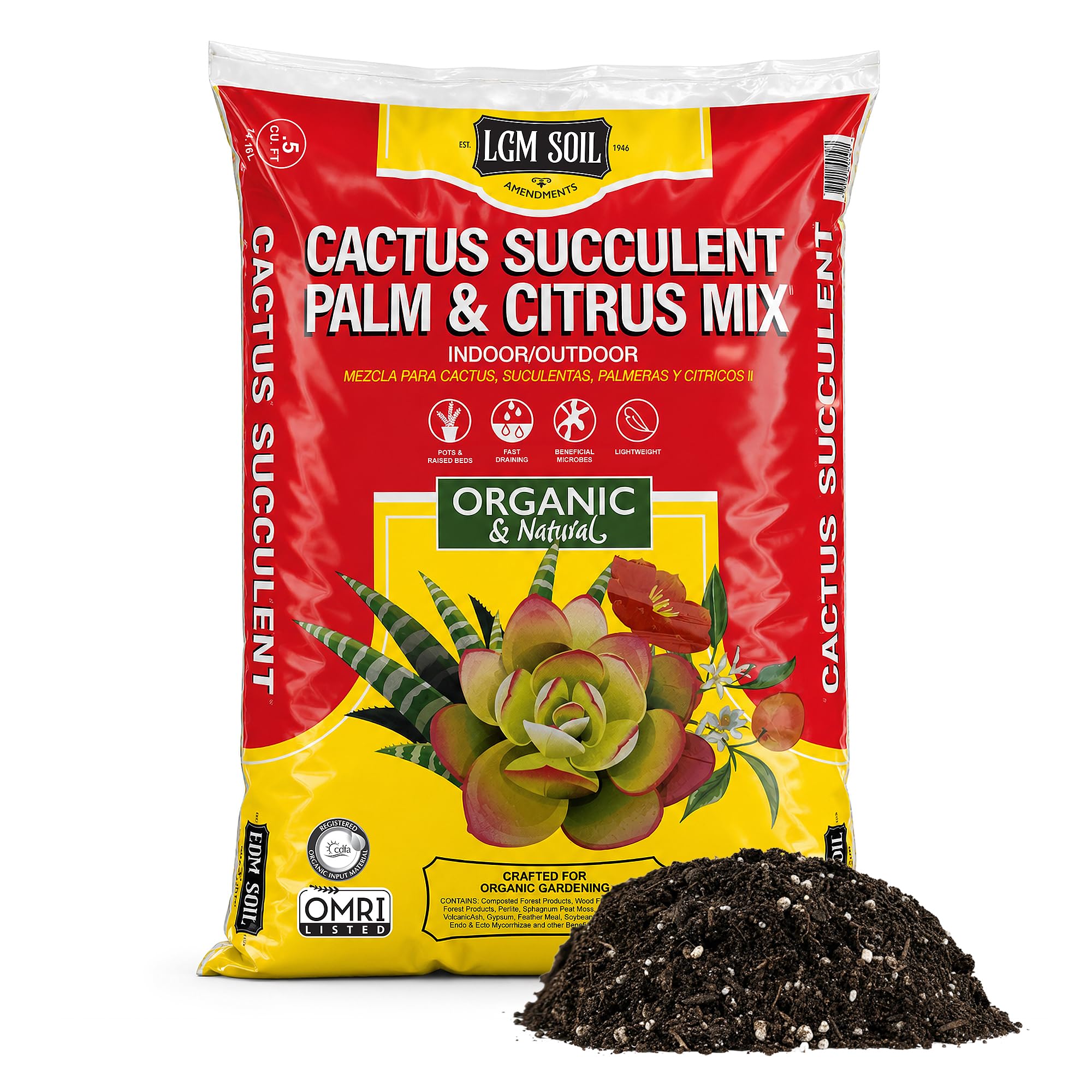
The big bag that brings its own nutrients so you do not have to buy fertilizer separately.
This 0.5 cubic foot mix feeds your aloe vera naturally for months. It contains chicken manure, kelp meal, and iron sulfate — a clear difference from the Bonsai Jack gritty mix, which has near-zero nutrients on its own. The key ingredient is volcanic ash and porous perlite (a lightweight volcanic glass that improves drainage). They create instant drainage while holding just enough moisture for hydration. The result is a pH-balanced formula that also works for finicky citrus trees and palms.
Buyers report it works well for cactus and fiddle-leaf figs, describing it simply as “a great product” that drains exactly as promised. At 475.0 ounces, this bag is the largest in the lineup by a wide margin, versus the Bonsai Jack bag at 2.41 pounds. That suits anyone repotting multiple plants or a large aloe cluster.
Biggest strength: You get a fully fertilized, fast-draining mix in one bag without mixing in extras.
The trade-off: Some reviewers noted loose sticks in the mix, and the quality control is not as uniform as premium hand-blended options.
Reach for this if: you want the most soil volume for your money and prefer a mix that feeds your aloe for months without extra fertilizer.
Look elsewhere if: you want a perfectly uniform, sifted grit or a bag that is totally free of wood debris.
2. Rosy Soil Cactus & Succulent Potting Mix (4 Quarts)
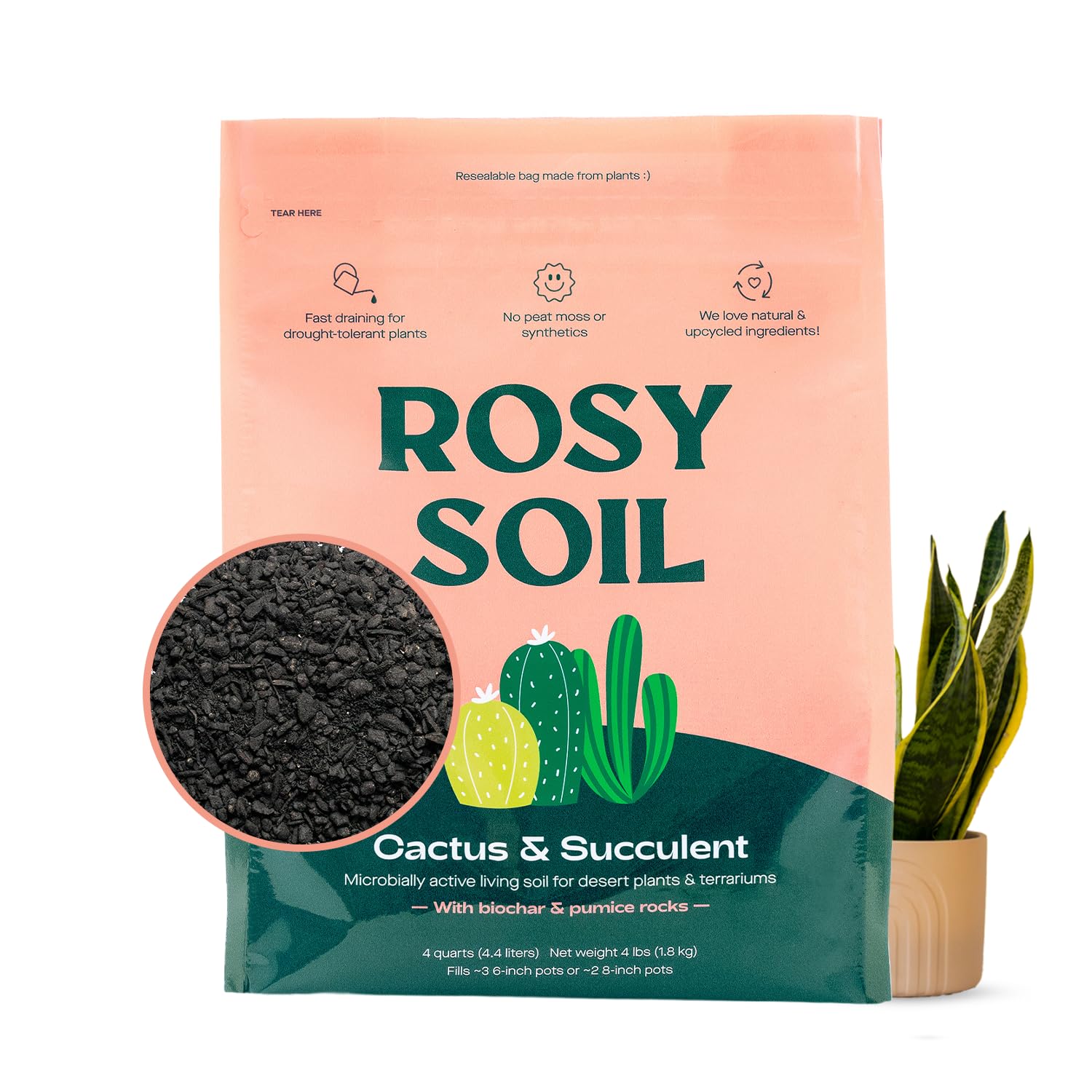
A living, breathing mix with worm castings that feeds roots without synthetic chemicals.
This 4-quart bag skips peat moss (partially decayed plant matter that holds water like a sponge) — a smart move for aloe vera, since peat traps moisture and promotes rot. Instead, Rosy Soil loads its mix with beneficial fungi, microorganisms, and organic worm castings that build a healthy root environment. The texture stays loose and airy, so excess moisture drains fast and the roots can breathe. Reviews note it works especially well for aloe and Christmas cactus, with one buyer reporting “plants healthy after 1 month.”
Compared to the nutrient-dense LGM mix, this bag is smaller (4 quarts vs. 0.5 cubic feet) but adds the microbe-and-worm-casting layer that supports root health over the long haul. The resealable packaging keeps the soil fresh between uses, and clear planting guidance is printed on the bag.
Why it stands out: The living-soil approach (pre-loaded microbes and worm castings) means you do not need to add synthetic fertilizers.
One catch: A few users found the mix slightly moist on arrival and noted the resealable bag can be tricky to close properly.
Grab this for: an organic, peat-free, microbe-rich foundation that is ready to use straight from the bag — ideal for an aloe you want to pamper.
skip it if: you need to pot several plants at once; this 4-quart bag fills about 2-3 medium pots.
3. Tinyroots Succulent Soil – Cactus Soil Potting Mix (2.25 Quarts)

A finer-grained mix that drains beautifully and makes overwatering nearly impossible.
This 2.25-quart blend combines double-sifted pine bark fines, calcined clay, pumice, and lava rock into a texture that is noticeably finer than most gritty mixes. One reviewer called it “finer grain than other brands,” noting that it works great for tiny succulents like lithops (living stones). The sand boosts drainage, the clay manages water retention, and the bark keeps roots stable. Owners mention they can water deeply once a week, soak the pot, and let it drain fully without any soggy soil worry.
One user who had killed succulents from overwatering in the past said this mix “makes it almost impossible to over water.” That is a huge plus for aloe owners who tend to love their plants a little too hard with the watering can. It is pricier per quart than standard potting soil, but the prevention of root rot makes it a smart investment for a single prized aloe.
The core advantage: The finer particle size means it fits into small pots better than chunky mixes, while still draining like a dream.
The trade-off: It costs more per quart than value options like the LGM mix, so it is best for a few pots rather than a large garden.
Best suited for: aloe owners who have killed succulents by overwatering before and want a mix that forgives mistakes.
Not the best for: large repotting projects, since the 2.25-quart bag goes fast if you have multiple big pots.
4. Bonsai Jack Succulent, Cactus and Bonsai Soil – Jacks Gritty Mix (2 Quarts)

The gold standard for root-rot rescue — a mineral-only mix that forces your aloe to dry fast.
This 2-quart trademarked blend uses Bonsai Block, Monto Clay, and Pine Coir (pine fines) to create a soil optimized for a pH of 5.5 (the pH level aloe prefers to absorb nutrients), water absorption, evaporation, and bulk density. It is intentionally ultra-lightweight and airy, designed for plants like aloe that need “dryer feet between watering.” One reviewer noted they “saved 17 plants after previous losses” after switching to this gritty mix — a powerful endorsement for anyone rehabbing an aloe that has been sitting in waterlogged dirt.
It is a true mineral mix, so it does not feed the plant. You will need to add liquid fertilizer on your own schedule. At 2.41 pounds for a 2-quart bag, compared with the Rosy Soil mix at 4 pounds for 4 quarts, it reflects an airy, porous composition. The catch is the cost: reviewers consistently call it expensive, and some recommend using cheaper gravel or soil in the bottom of the pot to stretch the bag further.
What it does best
- Excellent drainage prevents root rot completely — no fungus gnats, no soggy pots.
- Optimized pH of 5.5 is ideal for acid-loving aloe vera.
The biggest drawback
- No nutrients in the mix; you must add fertilizer yourself.
- Price is the highest per quart in this lineup.
Reach for this if: your aloe has already suffered root rot or you want the most bulletproof drainage possible, even if it means adding fertilizer.
Look elsewhere if: you want a bag that feeds the plant on its own or you are on a tight budget — this one is premium-priced for premium performance.
5. The Soil Sage 5 Dry Qt Cactus & Succulent Potting Soil Mix (5 Quarts)
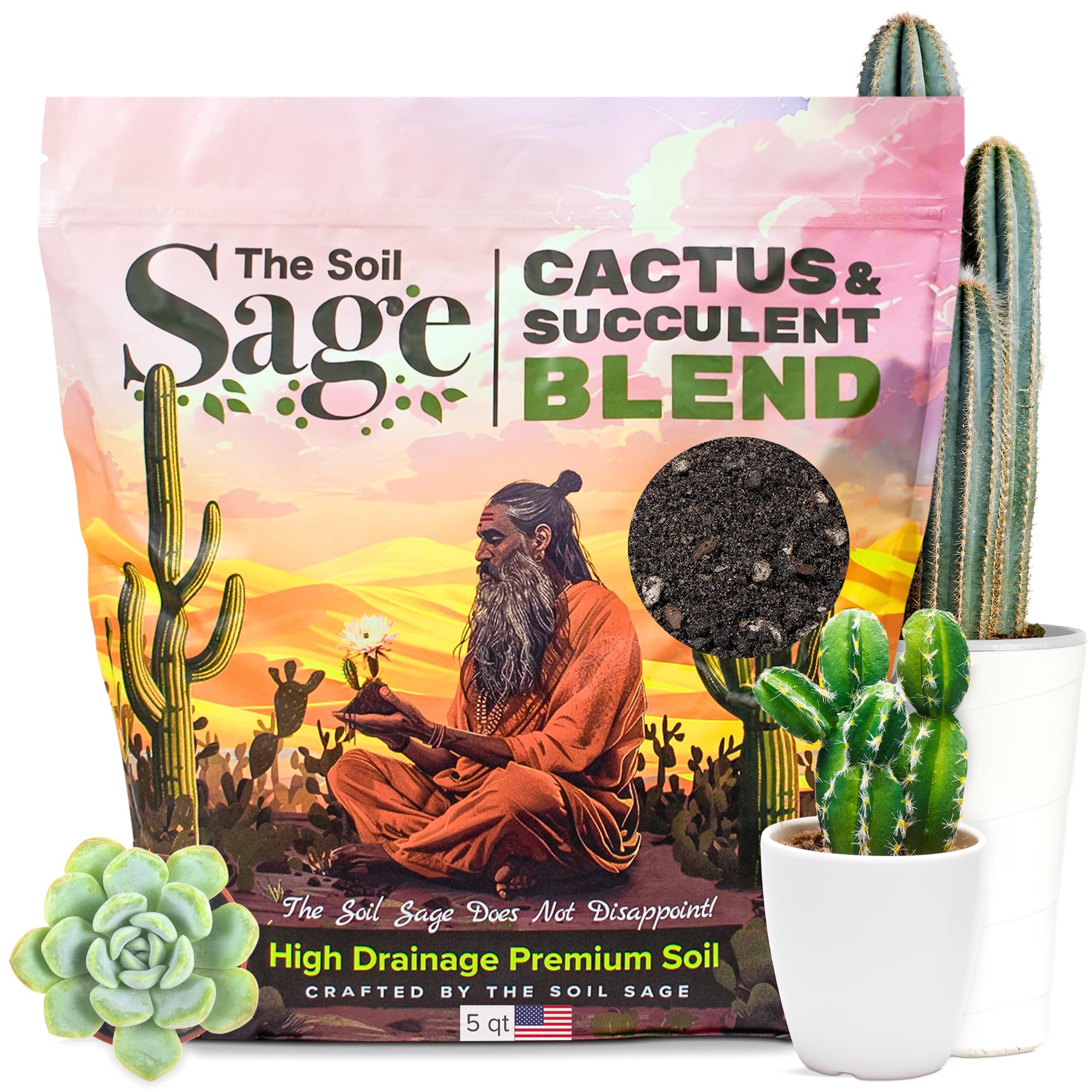
Hand-blended in small batches with lava rock and mycorrhizae for aloes that need a premium start.
This 5-quart mix is made in the U.S.A. and crafted in small batches. It contains lava rock, pumice, compost, bark, sand, biochar (a form of charcoal that holds moisture and nutrients), and mycorrhizal fungi (beneficial fungi that attach to roots and help uptake nutrients). The mycorrhizae give aloe vera a strong head start, something the purely mineral Bonsai Jack mix does not offer. The chunky, fast-draining texture prevents overwatering, and the biochar helps retain moisture and nutrients without getting soggy.
Reviewers are impressed with the quality. One says “best cactus soil” and praises the excellent drainage that stops root rot. The 5-quart bag is the largest volume in this list after the LGM bulk bag, and it includes four 4-inch round mesh pot screens to prevent soil loss. The catch is the price: one reviewer admitted they love the soil but are “not decided if that will stop me from buying another bag or not.”
Why it commands a premium: hand-blended ingredients, mycorrhizae for root health, and biochar for smart moisture management.
The honest trade-off: You pay top dollar for the quality, and the bag is heavy at 3.19 kilograms — fine for a solid repotting session but not the most convenient to carry.
Best for: the dedicated aloe enthusiast who wants a hand-crafted, nutrient-boosted mix that goes beyond basic drainage.
pass on it if: you are repotting a single small aloe or want to keep the cost under — the smaller Tinyroots bag is better value for one plant.
Understanding the Specs
Volume & Bag Size
The volume tells you how many pots one bag will fill. A 4-quart bag typically fills 2-3 medium pots (6-8 inch diameter). A 0.5 cubic foot bag (about 15 quarts) is the bulk option, good for a large aloe cluster or multiple plants. If you are potting a single small aloe, a 2-quart bag is plenty and costs less upfront.
Ingredients & Nutrients
The ingredient list is the most important label to read. “Gritty” or “mineral” mixes (pumice, lava rock, calcined clay) drain fastest but contain no food for the plant. “Organic” mixes with worm castings, compost, or chicken manure feed the aloe naturally for months. Choose based on if you want to water-and-forget (organic) or control the feeding schedule yourself (mineral).
FAQ
Can I use regular potting soil for aloe vera?
How often should I water aloe vera in this soil?
Does aloe vera need acidic soil?
What is the difference between a gritty mix and a regular succulent mix?
Should I add perlite to succulent soil for aloe vera?
How much soil do I need for a 6-inch aloe vera pot?
Does aloe vera need fertilizer in succulent soil?
Can I use cactus soil for aloe vera?
Is peat-free soil better for aloe vera?
How do I know if my aloe vera has root rot?
Final Thoughts: The Verdict
For the majority of shoppers, the best soil for aloe vera winner is the LGM Premium Cactus & Succulent Soil Mix because it combines fast drainage with built-in nutrients (chicken manure, kelp meal, iron sulfate) in a large 0.5 cubic foot bag at a very competitive price. If you want a living organic mix with microbes and worm castings, grab the Rosy Soil Cactus & Succulent Potting Mix. And for hardcore root-rot protection and the most bulletproof drainage possible, the standout is the Bonsai Jack Gritty Mix.
How We Picked
We do not accept paid placement, and we did not hands-on test every unit. Instead, we match each pick to a real buyer and use-case by comparing the manufacturers’ published specifications against the patterns in verified customer reviews — so you get each pick’s real strengths and trade-offs instead of marketing copy.
Sources & Methodology
Specifications: manufacturer listings and product documentation. Review insights: verified customer reviews, as of July 2026. Pricing: not shown on this page (it changes often); check the current price via the retailer link.
As an Amazon Associate, Lawn Gear Lab earns from qualifying purchases. This does not affect which products we feature.