
Specs are compiled from manufacturer listings and verified buyer reviews and can change over time — please confirm the key details on the product page before buying.
You grab a 5-gallon bucket and pour in bagged dirt, but your tomato plants end up waterlogged and buggy before they really get going. The fix is picking a soil that actually feeds your plants without needing a chemistry degree. This guide breaks down three proven contenders to take the guesswork out.
I’m Rikta — the founder and writer behind Lawn Gear Lab. This guide is built by comparing the manufacturers’ published specifications and the patterns across verified customer reviews, so you get each pick’s real strengths and trade-offs instead of marketing spin.
When you need the right soil for 5 gallon bucket garden, matching the mix to your watering habits, your comfort with nutrients, and if you want to fight local critters makes all the difference.
Quick Picks
- Nature’s Living Soil Super Soil Concentrated — Best Overall
- Michigan Peat Garden Magic Moisture Retaining — Best Value
- Espoma Organic Potting Soil Mix — Premium Pick
How To Choose The Best Soil For 5 Gallon Bucket Garden
A 5-gallon bucket is a contained ecosystem — whatever soil you put in is all your plant has to live on. The first decision you face is if you want a soil that does the feeding for you (water-only super soil) or a mix that serves as a blank slate where you add your own plant food. The second factor is texture: a bucket has no drainage to the earth below, so a soil that holds too much moisture drowns roots, and one that drains too fast leaves plants thirsty. The third and sneakiest issue is pest risk — some organic soils come with hitchhiking fungus gnats, and buyers have strong opinions on which brands avoid that.
Water-Only Super Soil vs. Traditional Potting Mix
A super soil like the Organic Super Soil Concentrated Strength works by packing a concentrated layer of nutrients at the bottom of your bucket. Microorganisms in the soil break those nutrients down over time, so you literally just add water from seed until harvest. A traditional potting mix like the Michigan Peat or the Espoma holds your plant in place but does not provide a full season of food — you add liquid nutrients or slow-release fertilizer yourself. Super soil is simpler day-to-day but costs more upfront and can smell strong during mixing; a traditional mix is cheaper and smells like plain earth but requires more feeding attention.
Bag Size and Bucket Math
One 5-gallon bucket takes roughly 0.6 to 0.7 cubic feet of soil to fill. The Organic Super Soil is a 1-pound concentrate designed to sit at the bottom of a 5-gallon container — you still need to buy separate potting soil to fill the rest of the bucket. The Michigan Peat comes in a 40-pound bag that gives you a lot of volume for the money; owners mention it is a heavy bag to haul but covers multiple buckets. The Espoma comes in a 1-cubic-foot bag, which is just over enough to fill one 5-gallon bucket with a little left over for a smaller pot.
Quick Comparison
| Model | Best For | Type | Bag Size / Weight | Key Feature | Amazon |
|---|---|---|---|---|---|
| Nature’s Living Soil Super Soil | Water-only bucket growing | Super Soil Concentrate | 0.45 kg (1 lb) | Just water from seed to harvest | Amazon |
| Michigan Peat Garden Magic | Budget-friendly volume for multiple buckets | General Purpose Mix | 40 lbs | Good drainage, moisture retention | Amazon |
| Espoma Organic Potting Soil | Indoor container safety | All-Purpose Organic Mix | 1 Cubic Foot | Myco-tone mycorrhizae, bug-free | Amazon |
In‑Depth Reviews
1. Nature’s Living Soil Super Soil Concentrated Strength

This is the only mix on the list that lets you skip liquid nutrients entirely — just add water from seed to harvest.
You dump the 1-pound bag into the bottom of a 5-gallon container, fill the rest with organic potting soil, and microorganisms in the concentrate feed your plant from the root zone upward. Customers note this exact method works. One noted their “plant with super soil is thriving and larger with more vegetative growth than plant without.” Unlike the Michigan Peat or Espoma, which require you to feed your plants yourself, this super soil does all the work. The downside? The smell is strong. Multiple customer reviews call the odor “very strong” and “stinky,” comparing it to “sour feet.” The manufacturer acknowledges this. The smell fades once you mix it into the bottom of the pot and cover it with plain soil. One reviewer noted they “would repurchase but won’t top-dress due to odor.” At 0.45 kilograms (about 1 pound), the bag is also very small — this is a concentrate additive, not a bucket-filler. You still need a separate base potting soil to make up the bulk of the bucket volume.
Water-Only Simplicity
- Just water from seed to harvest — no mixing nutrients
- Buyers confirm stronger vegetative growth vs. soil without it
- Made for photoperiod flower plants in 5-gallon containers
The Smell Trade-off
- Strong initial odor — buyers describe it as “stinky” and “sour feet”
- You still need a separate bag of organic potting soil to fill the bucket
- Not suitable for top-dressing due to lingering smell
Reach for this if: you want the lowest-maintenance bucket garden possible and can tolerate a smelly mixing day for months of hands-off feeding.
Look elsewhere if: you need a standalone bucket-filler or you garden in a small indoor space where a strong fishy odor would be a problem.
2. Michigan Peat Garden Magic Moisture Retaining Potting Soil
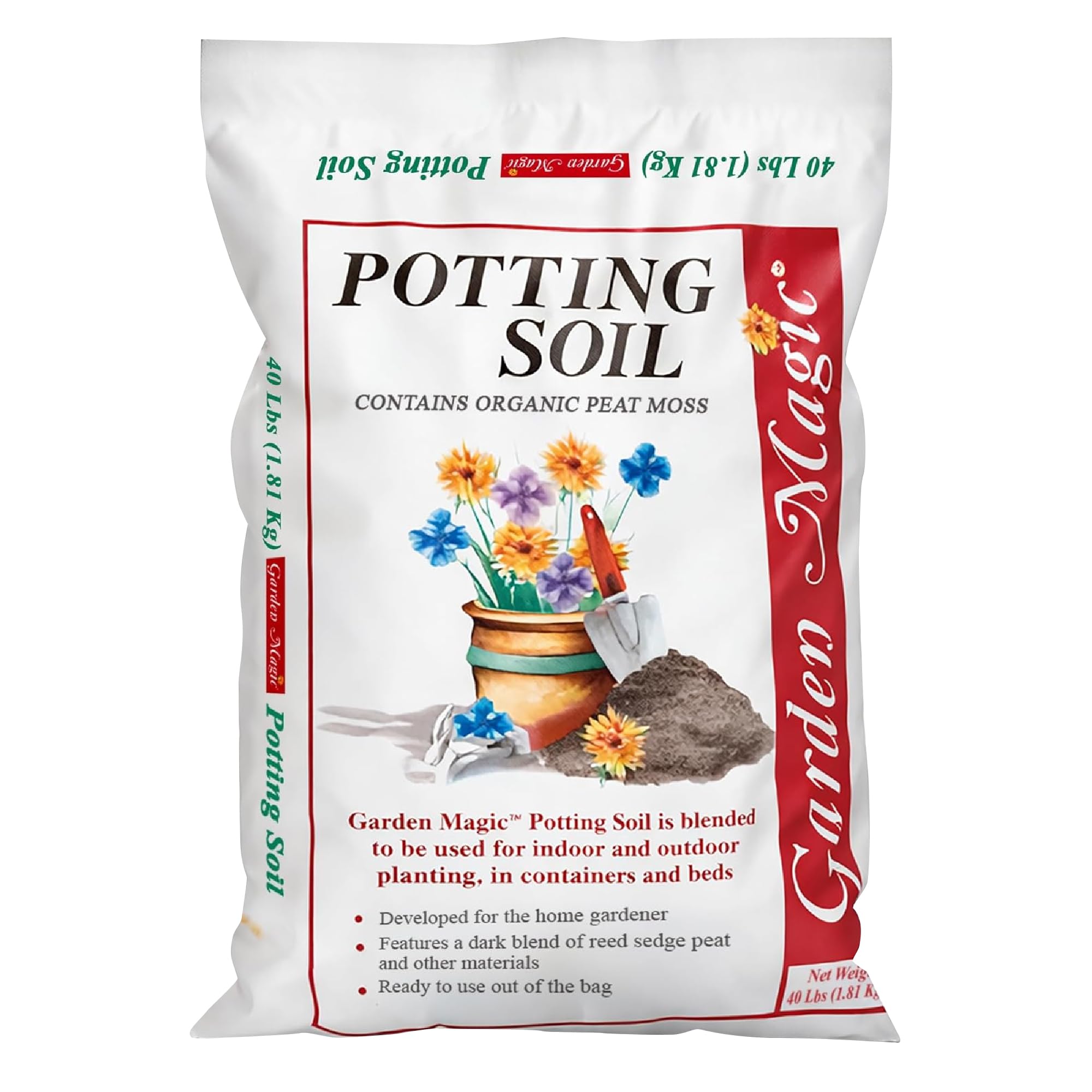
The 40-pound bag gives you the most soil volume per dollar, but you handle all the feeding yourself.
Unlike the Nature’s Living Soil concentrate, the Michigan Peat is a “fill and go” soil — you open the bag, scoop it into your bucket, and you are done. No concentrated nutrient layers, no water-only promises. What you get instead is sheer volume: a 40-pound bag covers multiple 5-gallon buckets in one shot. Buyers agree on the value, calling it “great value for 40lb bag” and pointing out its “good drainage.” One buyer mentioned “seeds sprouting well, no insect infestation” — a key concern for bucket gardeners who dread fungus gnats. The soil has rough edges. Several reviews mention the mix contains “a few larger wood sticks” in the bag. These are probably fine for enriching a garden bed but slow to break down in a closed container. The moisture retention feature works well for moderate dry spells, but you still need a watchful watering hand in a bucket environment where drainage is limited. This is not an organic-certified product or a blend with added nutrients. It sits firmly in the “plain dirt plus your own effort” camp.
Volume & Price
- 40-pound bag fills multiple 5-gallon buckets
- Reviewers point out good drainage and zero insect problems
- Ready to use straight out of the bag — no mixing required
Texture & Grit
- Contains some larger wood sticks that are slow to compost in containers
- No added nutrients — you must supply your own fertilizer
- Heavy 40-pound bag to haul from the delivery drop-off
Grab this for: multi-bucket setups on a budget where you are already comfortable mixing your own liquid nutrients.
skip it if: you want a water-only organic feeding system or need a fine-textured mix free of wood chunks for small seedlings.
3. Espoma Organic Potting Soil Mix

The clean organic blend that indoor bucket growers trust — shoppers say no fungus gnats after storage under cover.
The Espoma mix is a blend of sphagnum peat moss, humus, and perlite (a lightweight volcanic rock that helps aeration), plus earthworm castings, alfalfa meal, kelp meal, and feather meal. All natural ingredients with zero synthetic plant foods. what separates it from the Michigan Peat is what it does not come with: fungus gnats (tiny flying insects that live in damp soil). One buyer specifically noted that after “storing opened bag outside under cover,” there were “no fungus gnats or invasive critters” and that it was “safe for indoor pots.” The bag size is 1 cubic foot (about 7.5 gallons of loose soil), which is enough for just over one 5-gallon bucket — a precise single-bucket fill. There is a key nuance: the soil contains no added fertilizer. One buyer confirmed “this potting soil has no fertilizer which is what I wanted,” explaining you need to moisten it through a layered hand-mixing process before transplanting. Another buyer, however, reported a different experience: “after a week, there are many small flying insects in the pot” and concluded it “is only suitable for outdoor use, not indoor use.” So while the majority of reviews are positive, the insect issue appears to depend on your storage and environment. If you keep your bucket indoors, you might still risk gnats. If you are growing on a patio or in a greenhouse, the risk seems minimal.
Clean & Natural
- Rich organic blend with earthworm castings, kelp meal, and feather meal
- Buyers report no fungus gnats after storage under cover
- Contains Myco-Tone mycorrhizae (a beneficial fungus that supports root health)
Indoor Caveat
- No fertilizer included — you must feed your plants separately
- One owner reported flying insects indoors after a week
- 1 cubic foot fits just over one bucket, not a multi-bucket bulk buy
Best pick for: growers who want a natural organic base with mycorrhizae and need a pest-free start for indoor or covered-patio buckets.
Consider the alternative if: you want a mix with built-in fertilizer or you are filling many buckets and prefer a bag that covers them all in one trip.
Understanding the Specs
Super Soil vs. Traditional Mix
A super soil concentrate, like the Nature’s Living Soil, is a nutrient-dense additive that you layer at the bottom of your bucket. Microorganisms break it down gradually over the growing season, so you only need to add water from the seed stage all the way to harvest. A traditional potting mix, like the Michigan Peat or the Espoma, is a growing medium that physically supports the roots but does not provide a full season of food — you must add your own liquid or granular fertilizer to sustain the plant’s growth through flowering and fruiting.
Bag Volume vs. Weight
Bag sizes are labeled differently across brands. The Michigan Peat is sold by weight (40 pounds), which gives you a lot of material but no simple cubic measurement — you are guessing bucket count based on density. The Espoma is sold by volume (1 cubic foot), which is roughly 7.5 gallons of loose soil, meaning it fills just over one 5-gallon bucket with some compaction. The Nature’s Living Soil is sold as a 1-pound concentrate and requires you to buy a separate bag of plain potting soil to fill the remaining 4+ gallons of the bucket. Match the bag size to the number of buckets you are filling, not just the price.
FAQ
How much soil do I need to fill one 5-gallon bucket?
Can I use super soil concentrate alone without extra potting soil?
Will these soils attract fungus gnats or other bugs?
Is the Michigan Peat Garden Magic organic?
Does the Nature’s Living Soil really work with just water from seed to harvest?
Can I use the Espoma mix for vegetables and herbs in a bucket?
Why does the Nature’s Living Soil smell so bad?
How many 5-gallon buckets will a 40-pound bag of Michigan Peat fill?
Should I add perlite or drainage material to these soils for a bucket garden?
Final Thoughts: The Verdict
For most people, the soil for 5 gallon bucket garden winner is the Nature’s Living Soil Super Soil Concentrated Strength because it turns your bucket into a water-only feeding system that owners mention produces real growth gains, as long as you can handle the mixing odor. If you want the most soil volume per dollar and you are already feeding your plants manually, grab the Michigan Peat Garden Magic 40-Pound Bag. And for indoor or covered-patio bucket growers who want a clean, organic base with mycorrhizae and minimal pest risk, the Espoma Organic Potting Soil Mix is the safest bet.
How We Picked
We do not accept paid placement. Every pick is matched to a real buyer and a real use-case; we do not hands-on test units.
Sources & Methodology
Specifications: manufacturer listings and product documentation. Review insights: verified customer reviews, as of July 2026. Pricing: not shown on this page (it changes often); check the current price via the retailer link.
As an Amazon Associate, Lawn Gear Lab earns from qualifying purchases. This does not affect which products we feature.