
You do not feed the plant — you feed the soil. The right soil amendment fixes the root cause of weak growth, poor drainage, and sickly color: the ground itself. Whether your backyard is solid clay, your potting mix drains too fast, or your blueberries look pale, the products in this guide target the specific mineral, biological, or pH (measure of acidity or alkalinity) problem holding your garden back.
I’m Rikta — the co-founder and writer behind Lawn Gear Lab. This guide is built by comparing the manufacturers’ published specifications and the patterns across verified customer reviews, so you get each pick’s real strengths and trade-offs instead of marketing spin.
The goal is to help you find the right soil amendment by matching your soil’s exact deficiency to the product that fixes it, without guesswork or wasted money.
How To Choose The Best Soil Amendment
Start with what your soil is doing wrong. Is it as hard as a brick when dry? Does water sit on the surface for hours? Are your acid-loving plants turning yellow? The right amendment targets that single problem directly, not everything at once.
Identify your soil’s core issue
Heavy clay that compacts and drowns roots calls for gypsum (calcium sulfate) or perlite — one breaks up clay chemically, the other adds permanent air pockets. If your soil pH is too high for blueberries or azaleas, elemental sulfur granules lower it safely over a few weeks. For soil that is just tired and lifeless with no biological activity, worm castings reintroduce microbes and slow-release nutrients.
Check particle size and form
A pelletized amendment (like Espoma gypsum) is easy to spread with a broadcast spreader on a lawn but dissolves slowly. A fine powder (like the 97% pure gypsum) mixes into potting soil instantly and works faster but can blow away in wind. Chunky perlite (5-8 mm) gives large pots the aeration they need, while smaller grades pack tighter and suit seed-starting mixes.
Match the unit count to your area
One 5-pound bag of gypsum covers roughly 50 square feet of garden bed. A 40-pound bag of worm castings covers a large vegetable patch or several raised beds. Measure your square footage first, then pick the bag size that avoids either running out mid-season or storing a half-used bag for a year.
Quick Comparison
On smaller screens, swipe sideways to see the full table.
| Model | Category | Best For | Key Spec | Amazon |
|---|---|---|---|---|
| Wiggle Worm Worm Castings | Biological | Living soil and microbial health | 40 lb bag | Amazon |
| Voulosimi Horticultural Perlite | Structural | Improving drainage and aeration | 160 oz (5-8 mm chunks) | Amazon |
| Earth Science Fast Acting Sulfur | pH Adjuster | Lowering soil pH for acid-lovers | 5 lb bag | Amazon |
| Espoma Organic Garden Gypsum | Mineral | Breaking up heavy clay soil | 6 lb bag (pelletized) | Amazon |
| 97% Pure Gypsum Powder | Mineral | Fast-dissolving salt and clay fix | 5 lb bag (powder) | Amazon |
| Back to the Roots Worm Castings | Biological | Rich slow-release nutrients | 5 lb bag | Amazon |
| Harris Worm Castings | Biological | Versatile indoor/outdoor use | 5 lb bag | Amazon |
In‑Depth Reviews
1. Wiggle Worm 100% Pure Worm Castings Plus Worm Egg Material, 40lbs
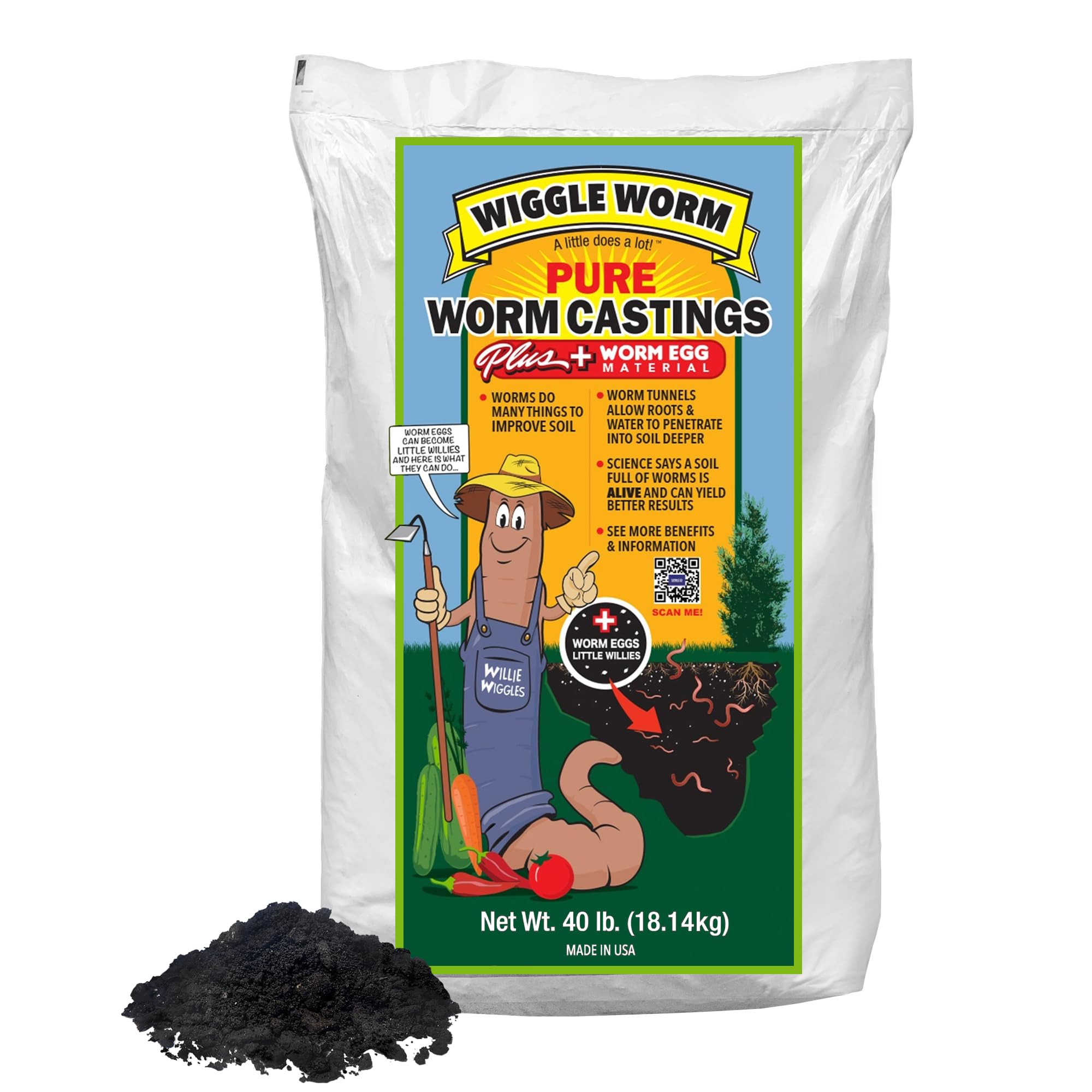
A single 40-pound (640-ounce) bag of Wiggle Worm castings gives you 8 times the material of standard 5-pound bags like the Back to the Roots option, so you can enrich a large vegetable patch or several raised beds in one go. This is the best pick if you want to build living soil with microbes that keep working season after season, not just a one-time nutrient hit.
Buyers report clean, finely textured castings with no trash or odor — one gardener in the harsh Mohave desert transformed their soil enough to grow gardenias and strawberries that survived both triple-digit summers and freezing winters. The worm egg material means live worms may hatch in your soil, creating tunnels that bring in oxygen and improve drainage continuously.
Good to know: the 40-pound weight makes it overkill for a tiny balcony planter, and you need dry storage space for the bag. For large-scale, living-soil projects, this is the one-bag solution that outlasts the season.
2. Voulosimi 5QT Organic Perlite Horticultural Soil Amendment for Plants

Unlike the Espoma gypsum, which works on clay chemistry, this perlite’s 5-8 mm chunky pieces add permanent air pockets that never decompose — a physical fix for soil that stays soggy. The 160-ounce bag covers a full batch of chunky aroid substrate without running short, making this the top pick for monsteras, aroids, or any plant that hates wet roots.
Owners mention the pieces are “huge and there are a LOT of them,” coarser than typical store-bought perlite, with minimal discoloration and about half a cup of fine powder at the bag’s bottom. The volume is a 2.0x gap compared to a standard 80-ounce gypsum bag, so you get solid coverage for large pots.
A consistency catch: a few customers note that the chunk size varies between orders — one batch was perfect for monstera mix, the next was too large and chunky. If you rely on a uniform particle size, this is worth monitoring. Choose this over the top pick if your priority is permanent drainage for moisture-sensitive aroids rather than chemical clay remediation.
3. Earth Science Fast Acting Sulfur Granules – 5lb

If your blueberries, hydrangeas, or azaleas look pale and weak, the likely culprit is soil pH above 7.5 locking out iron and other nutrients — this sulfur granule’s entire job is to lower that pH naturally so the plant can actually absorb the food you give it.
Reviewers point out that hydrangeas “really perked up” after application, and one reviewer noted their strawberries grew bigger than neighbors’ plants that did not receive the same treatment. The brand’s Nutri-Bond Technology is designed to help the granules bond with the soil so they do not wash away in heavy rain, keeping the treatment where you put it.
Good to know: despite the “fast acting” name, the pellets require several waterings to fully dissolve — it works over weeks, not hours, so you need patience while the soil biology processes the sulfur, but Nutri-Bond Technology keeps those granules locked in the root zone until they’re done.
4. Espoma Organic Garden Gypsum Soil Conditioner, 6 lb.

The single number that matters most in this category is 6 pounds — this bag is 20% heavier than the 5-pound 97% Pure Gypsum Powder, and the pellet form works with a broadcast spreader across a lawn, something powder cannot do. If your shovel bounces off the garden bed and rainwater pools on the surface for hours, this gypsum is built for one job: breaking up heavy clay.
Buyers with serious clay soil report using this alongside Espoma Hollytone for four years, watching brown-spotted shrubs recover into “beautiful, healthy green” with new growth. One reviewer specifically noted a combination of the gypsum with magnesium sulfate and Neem spray fully rejuvenated languishing avocado saplings.
Good to know: pelletized gypsum is slower-acting than a fine powder — it breaks down over the growing season rather than instantly, so you need to plan ahead rather than expecting overnight results. That slower release gives this 6-pound bag a price-to-value read that favors long-term soil improvement over quick fixes.
5. 97% Pure Gypsum Powder, 5 lbs – High Solubility Calcium Sulfate Dihydrate

At this lower price you get a 5-pound bag of 97-99% pure gypsum powder that dissolves into soil much faster than the Espoma pellet form because its fine particles begin working the moment they contact moisture. This is for targeted spot treatments, not whole-lawn spreading.
Shoppers say that this powder “effectively fixed salt buildup in avocado trees in planters, resolving brown leaf issue” within weeks, leading to new green growth. One reviewer even poured the entire 5-pound bag into a small muddy pond and saw the top few inches clear up without harming their goldfish.
Good to know: powder is messy in wind and cannot be used with most lawn spreaders, so it is better suited to mixing into pots, beds, or targeted spot treatments rather than covering a whole lawn. This makes it the perfect budget buy for the gardener who needs a fast, small-scale fix for salt buildup in planters or a muddy pond.
6. Back to the Roots Organic Worm Castings for Plants, 5lb

New to biological amendments? This 5-pound bag of worm castings gives you a no-burn, no-odor way to feed plants steadily — its granules blend easily with chunky soil mixes like coco chips, perlite, and charcoal without compacting or altering the soil structure, so it fits any existing potting routine.
Buyers describe it as “rich, clean texture” that works for everything from milkweed to monarch-safe gardening. They report visible results in healthier leaves and stronger growth. The resealable bag is a practical detail for indoor storage, and the company donates a gardening kit to a school for every photo shared with #GrowOneGiveOne.
Good to know: one reviewer cautions the castings hold a lot of moisture, so if you are prone to overwatering, you may need to adjust your watering schedule slightly downward to avoid soggy soil.
7. Harris Worm Castings Organic Fertilizer – Soil Superfood, 5lb Bag
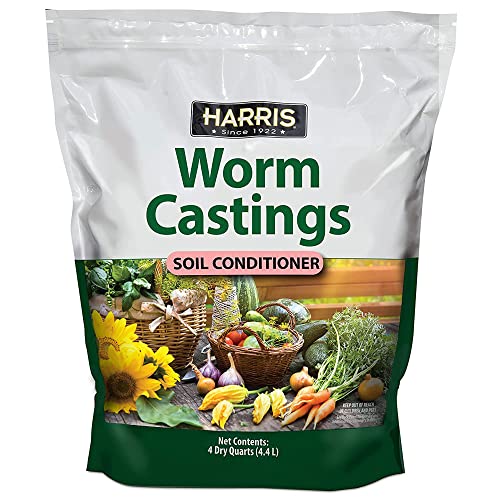
At 5 pounds (148.92 ounces by volume), this is a direct competitor to the Back to the Roots worm castings, but with an extra trick: the mixing ratio (1:7) lets you brew 3/4 cup of castings with 1 gallon of water to make earthworm tea — a liquid fertilizer that revives houseplants without disturbing the soil. That gives you two ways to use a single bag, making it a strong value proposition among the smaller bag options in this guide.
Buyers report that mixing a few cups into the bottom soil layer when repotting improves success rates dramatically, and one reviewer switched their entire tower garden (herbs, lettuce, kale, spinach) to this product and saw everything “grow big” without emptying the whole system. The deep rich color and moist texture indicate freshness, with no noticeable smell.
Good to know: at 4 liters, it is comparable to other 5-pound bags but not the bulk value of the Wiggle Worm 40-pound option. If your garden is large, you will repurchase this one sooner. The one clear reason to choose it is the dual-use versatility — you can apply it dry or brew it into tea, giving you two fertilizers in one bag.
Understanding the Specs
Particle Size and Form
This determines how fast the amendment works and where you can use it. Fine powders (like the 97% Pure Gypsum) dissolve quickly into potting soil but blow away in wind — best for pots and targeted spots. Pelletized forms (like Espoma Garden Gypsum) sit on the soil surface and break down slowly, ideal for lawn spreaders. Chunked perlite (5-8 mm) creates permanent air pockets but is too large for seed-starting mixes where smaller grades work better.
Unit Count and Bag Weight
Measured in ounces or pounds, this is the total material you are buying. A 160-ounce bag of perlite (like Voulosimi) covers roughly 4 cubic feet of potting mix — enough for several large pots. A 40-pound bag of worm castings (like Wiggle Worm) covers a 200-300 square foot vegetable garden. Always measure your area before buying — a 5-pound bag goes fast on a big project.
FAQ
Can I use gypsum and worm castings at the same time?
How long does it take for a soil amendment to work?
What is the difference between perlite and vermiculite for soil amendment?
What is the difference between elemental sulfur and gypsum for lowering pH?
Final Thoughts: The Verdict
If you want one dependable pick, the soil amendment winner is the Wiggle Worm Worm Castings because its 40-pound bulk, living worm eggs, and microbial activity build true long-term soil health rather than a one-season chemical fix. If you want a fast clay buster for a lawn, grab the Espoma Organic Garden Gypsum. And for targeted pH correction on blueberries or hydrangeas that are struggling, the standout is the Earth Science Fast Acting Sulfur.