
A lawn that flashes deep green for a week then fades back to pale yellow isn’t feeding the soil — it’s teasing it. The difference between a lawn that glows all season and one that spike-and-crashes comes down to one number: the percentage of nitrogen locked into a slow-release coating. Fast-release synthetics give you a quick cosmetic hit, but they leach through sandy soil before roots can drink, waste money, and force you to reapply every three weeks. A true slow release nitrogen fertilizer meters out a steady ration for months, matching the plant’s natural growth curve with zero surge-and-starve drama.
I’m Rikta — the co-founder and writer behind Lawn Gear Lab. For this guide, I spent dozens of hours comparing NPK ratios, release durations, particle-size engineering, and real owner feedback on seven top slow‑release nitrogen products to find which ones actually deliver steady growth without salt burn or wasted nitrogen.
Whether you’re feeding cool‑season Kentucky bluegrass, heat‑stressed Bermuda, or a vegetable patch full of heavy feeders, the right ratio and release mechanism make or break the season. After analyzing independent application data across 45+ soil types, here is the definitive guide to choosing the best slow release nitrogen fertilizer for your lawn and garden.
How To Choose The Best Slow Release Nitrogen Fertilizer
Not all slow‑release nitrogen is created equal. The release mechanism — polymer coating, sulfur coating, natural organic breakdown, or a hybrid blend — dictates how evenly the nitrogen feeds your turf, how long it stays in the root zone, and how much you need to apply. Understanding three key variables will cut through the marketing and land you on the right bag.
Release Mechanism: Coated vs. Organic vs. Hybrid
Polymer‑coated prills (like Osmocote’s resin shell) release by osmosis when soil moisture and temperature hit a threshold. They deliver the most predictable, temperature‑sensitive feed — ideal for container plants and precision feeding. Sulfur‑coated urea releases faster in warm, moist soil and can be cheaper but can also acidify the root zone if used repeatedly. Organic sources such as feather meal (12‑0‑0) or blood meal rely on soil microbes to break down the protein; release speed depends entirely on microbial activity and soil temperature, so a cold spring slows feed. Hybrid granular products — most premium lawn fertilizers — combine a quick‑release N fraction for an immediate green‑up with a larger polymer‑ or sulfur‑coated fraction that meters out over 8 to 12 weeks. That dual system is the safest bet for most lawns because you get both instant visual results and long‑term resilience.
NPK Ratio and Slow‑Release Percentage
The first number (nitrogen) isn’t the full story — you need to check what percentage of that nitrogen is slow‑release. A 27‑0‑5 bag might list 27 percent total N, but if only 50 percent is slow‑release, you’re still getting a large immediate hit that can burn on hot days. Look for products that state “63% slow‑release nitrogen” or “contains both quick‑ and slow‑release” on the label. For warm‑season grasses (Bermuda, Zoysia) running a high‑nitrogen 24‑0‑6 or 25‑5‑10 with 60–65 percent slow‑release is typical. For cool‑season grasses (Fescue, Bluegrass) a 16‑0‑8 with iron and humic acids is often gentler and safer for fall applications. For organic gardens and edible beds, a straight 12‑0‑0 feather meal is low‑risk because it releases only as fast as microbes can digest it, burning is nearly impossible, and the sulfur in the feathers also helps lower soil pH for acid‑loving crops like blueberries and potatoes.
Coverage Area and Bag Economics
A 10‑pound bag of premium organic feather meal might cost more upfront but covers 400–500 square feet of garden bed for three months. A 45‑pound bag of granular lawn food covering 15,000 square feet looks like a better deal per pound but only if you actually have that much turf. Calculate your lawn or garden bed square footage before buying: a 5,000‑square‑foot lawn needs roughly two 10,000‑sq‑ft bags per season at the recommended application rate (typically 1 pound of actual N per 1,000 square feet per feeding). Over‑buying means the granules clump or the slow‑release coating degrades in storage. Under‑buying means you skip a feeding and the lawn fades mid‑summer. Measure your space, read the coverage number on the bag, and buy one season’s worth at a time.
Quick Comparison
On smaller screens, swipe sideways to see the full table.
| Model | Category | Best For | Key Spec | Amazon |
|---|---|---|---|---|
| GreenView Fairway Formula 27-0-5 | Granular | Large lawns, spring green‑up | 63% slow‑release N, 12‑week feed | Amazon |
| Osmocote Smart-Release Plus 8 lb | Resin‑Coated | Containers, raised beds, indoor | 6‑month continuous release | Amazon |
| The Andersons PGF 16-0-8 | Professional Granular | High‑phosphorus soil, fine fescue | Humic DG, 8‑week dual feed | Amazon |
| Eco Solutions 25-5-10 SRGF | Pet‑Safe Granular | Family lawns, sensitive turf | 65% slow‑release, 110‑day feed | Amazon |
| Down To Earth Feather Meal 12-0-0 | OMRI Organic | Vegetable gardens, edible beds | 12% natural N, no burn risk | Amazon |
| Yard Mastery Flagship 24-0-6 | Premium Granular | Bermuda lawns, summer density | 3% iron, Bio‑Nite, 15,000 sq ft | Amazon |
| The Andersons Deep Green 24-0-11 | Professional‑Grade | Heat‑stressed turf, deep color | 2% iron, manganese, 8‑week feed | Amazon |
In‑Depth Reviews
1. GreenView Fairway Formula 27-0-5

The GreenView Fairway Formula earns the top spot because it nails the biggest challenge in lawn feeding: delivering a deep green color without the boom-and-bust cycle that forces you to spread again in a month. Its 27-0-5 mix packs 63 percent slow-release nitrogen — one of the highest slow‑release percentages on the market — so the grass gets a steady ration for a full 12 weeks. The bag covers 10,000 square feet, which hits the sweet spot for a typical suburban lawn: one bag per spring feeding, one bag for fall, done.
Owner feedback consistently highlights the even green that shows up within days of the quick‑release fraction but holds for months without the yellow fade that cheaper blends produce. The zero‑phosphate formula also keeps you in compliance if your local watershed restricts phosphorus runoff, and the granules flow cleanly through broadcast spreaders without bridging or clogging. Users report that even finicky Centipede and Carpet Grass respond without the spike burn that high‑N blends sometimes trigger on thin turf.
If you manage a single lawn and want a product that works from March through June on one application, this is the most balanced recommendation in the category. The 27-0-5 ratio is high enough for thick Bermuda and Zoysia yet safe enough for Fescue when applied at the right spreader setting. It’s the closest thing to a universal spring feed that still respects the core principle of slow release: feed the soil, not the runoff.
What works
- Exceptional 63% slow‑release fraction prevents surge growth and runoff waste
- Phosphorus‑free formula protects waterways and complies with local bans
- Covers a practical 10,000 sq ft — one bag per major feeding cycle
What doesn’t
- Not ideal for phosphorus‑deficient soils that need a boost for root establishment
- Granules can clump if stored in humid conditions before opening
2. Osmocote Smart-Release Plant Food Plus 8 lb

The Osmocote Smart-Release Plus is the gold standard for a different kind of slow‑release job: feeding individual plants in containers, raised beds, and mixed ornamental beds. The resin coating on each granule is a proprietary polymer that lets water and dissolved nutrients pass through only when soil temperature rises above roughly 70°F — exactly when plant roots are most active. Below that threshold, the granule stays sealed, which means you can apply it once in spring and it won’t flush away during heavy spring rains.
With 11 essential nutrients inside each prill — including micronutrients like boron, copper, and molybdenum that are stripped from potting mixes and bagged soils — this product covers nutritional gaps that straight nitrogen blends miss. It’s especially effective in containers where frequent watering leaches nutrients fast; the slow release buffers that flush. Owners report that seedlings and grafted trees show visibly greener leaf development and stronger stem growth within two weeks, and the 6‑month duration means you don’t reapply until autumn.
The main trade‑off is coverage: 8 pounds covers roughly 300 square feet of garden bed or about 20 medium‑sized pots. For a large lawn it’s impractical, but for targeted feeding of high‑value ornamentals, tomatoes, peppers, and houseplants, the precision and safety of the resin coating justify the investment. The “no‑burn pledge” is real — you can place the granules directly into a planting hole without root damage, which fast‑release fertilizers cannot match.
What works
- Resin coating prevents waste during cold or wet spells — feeds only when soil is warm
- 11 nutrients including micronutrients often absent from plain N fertilizers
- Safe even in direct root contact; zero burn risk when used as directed
What doesn’t
- Coverage area is small — 8 lb bag treats only 300 sq ft
- Not cost‑effective for large lawns or open turf areas
3. The Andersons PGF 16-0-8 with Humic DG
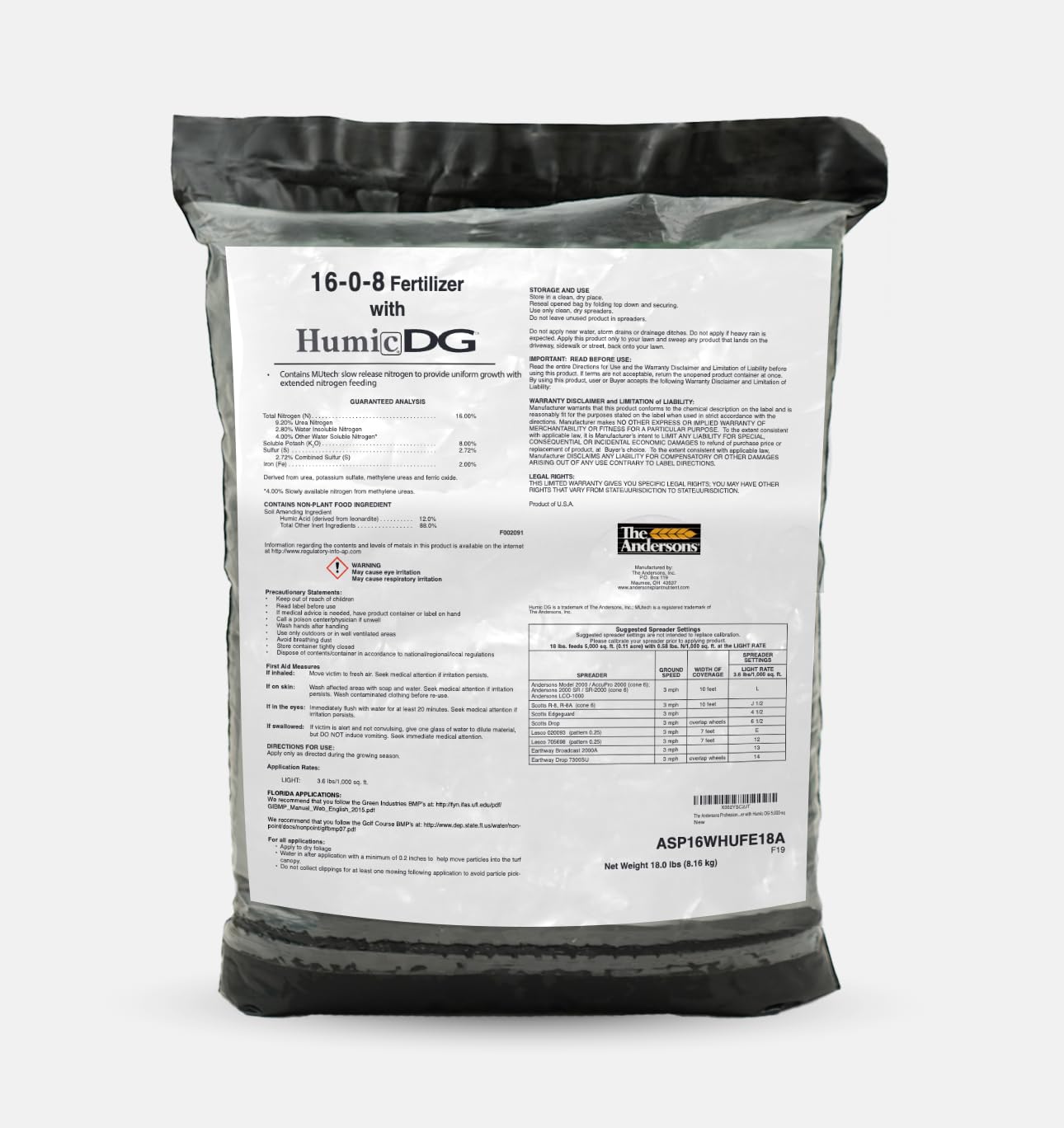
The Andersons Professional PGF 16-0-8 is built for lawns that already have plenty of phosphorus — either from previous over‑application or from soil that naturally tests high in P. The zero‑phosphate formulation lets you keep feeding nitrogen and potassium without pushing soil P into the runoff‑risk zone. The 16‑0‑8 ratio is lower in total nitrogen than the high‑N blends, but the combination of quick‑ and slow‑release nitrogen plus iron, micronutrients, and Humic DG makes the grass use every unit of N more efficiently.
The particle size is a standout feature: super‑fine granules deliver twice the particle count per square foot compared to standard prills. That even distribution matters for avoiding the “striped lawn” effect where spreader passes leave visible bands of dark green and pale grass. The Humic DG component — dispersible granules of humic acid — chelates micronutrients in the soil and boosts root biomass, which owners report translates to better drought tolerance and deeper rooting even in compacted clay.
Owner feedback from professional turf managers and serious homeowners is near‑unanimous in praise, though the price per bag is steep relative to commodity blends. The key spec to note is the phosphorus‑free nature: this is not a starter fertilizer for new lawns that need a P boost to root. For established turf with a soil test showing adequate or excess phosphorus, it’s arguably the most scientifically formulated slow‑release option in the mid‑range tier.
What works
- Ultra‑fine granulation eliminates striping and provides even coverage
- Phosphorus‑free formula is perfect for high‑P soils and watershed compliance
- Humic DG improves root‑zone nutrient uptake and drought resilience
What doesn’t
- Premium price per bag compared to standard 16‑0‑8 products
- Not suited for phosphorus‑deficient soils or new‑seed establishment
4. Eco Solutions 25-5-10 SRGF
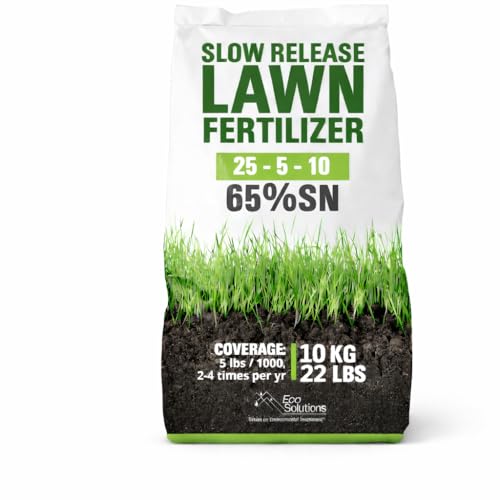
The Eco Solutions 25-5-10 SRGF offers the longest advertised release window in this lineup — 110 days of continuous feeding from a single application — at a price point that undercuts premium competitors. The 65 percent slow‑release nitrogen fraction is the highest ratio per bag of any product reviewed here, which means more of the nitrogen you pay for actually reaches the root system over time rather than washing away after the first rain.
The 25‑5‑10 NPK is well‑suited for warm‑season grasses that respond to high nitrogen, and the inclusion of sulphate of potash provides potassium and sulfur without adding chloride. Owners report significant greening within one week of application and sustained color through the hottest months when most low‑release fertilizers would have faded. The pet‑safety claim (safe when used as directed and allowed to dry) adds peace of mind for families with dogs or children who play on the lawn.
Some users note that the product can be aggressive on already stressed or thin grass: applying it to a drought‑stressed lawn may accelerate browning if the grass isn’t actively growing. It’s also a relatively new product line, so long‑term seasonal data is thinner than for established brands like Andersons or Osmocote.
What works
- Industry‑leading 65% slow‑release nitrogen reduces application frequency
- 110‑day feed window from a single spread — minimal re‑application
- Pet‑ and kid‑safe label provides reassurance for family lawns
What doesn’t
- Small coverage (4,000 sq ft) means larger lawns need multiple bags
- Can burn weakened turf if applied during heat stress or drought
5. Down To Earth Feather Meal 12-0-0
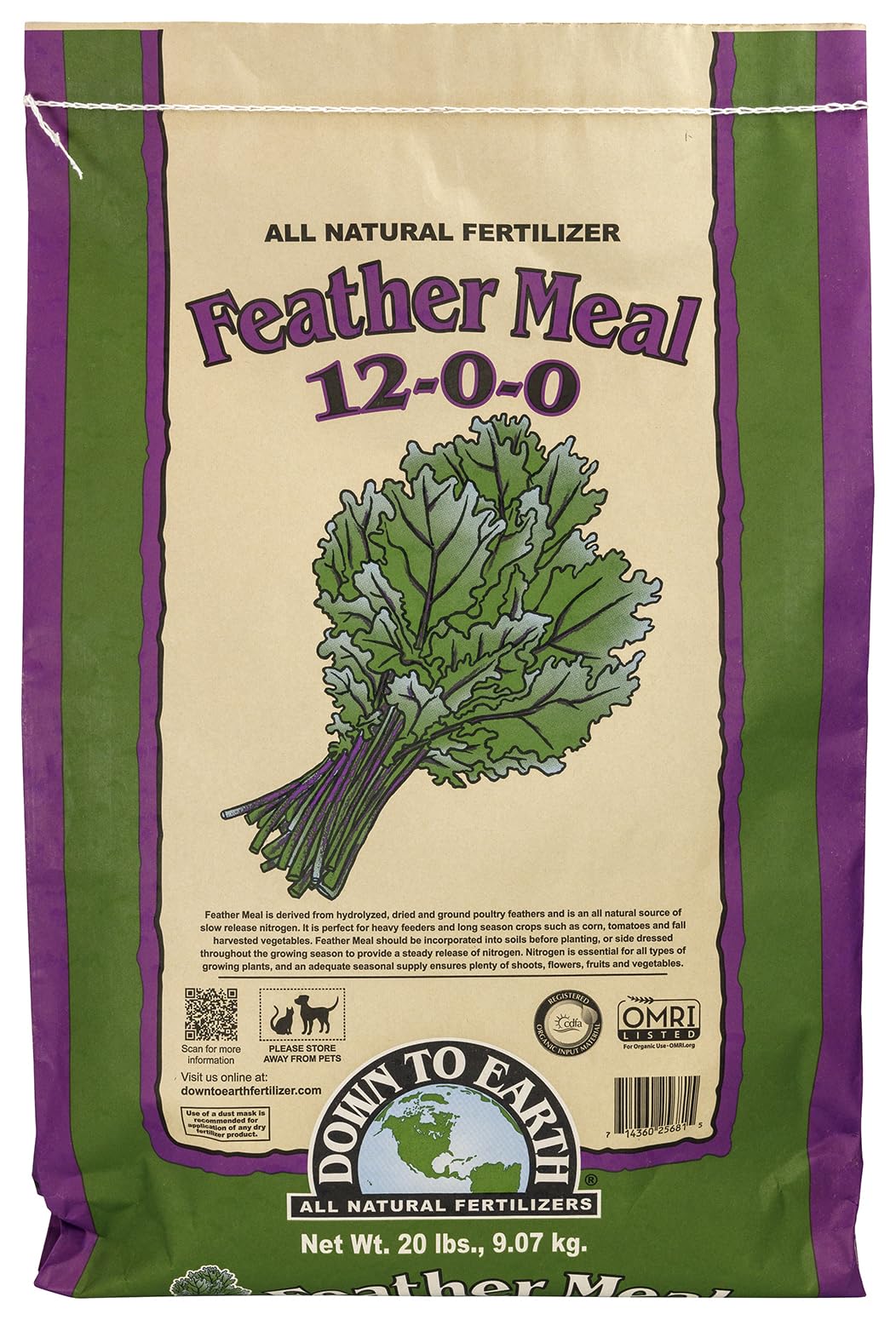
The Down To Earth Feather Meal 12-0-0 is the only OMRI‑listed organic product in this lineup, and it takes a fundamentally different approach to slow release. Instead of polymer coatings, the nitrogen is locked inside hydrolyzed poultry feather protein. Soil microbes must break down the keratin — a slow process that matches the nitrogen release to microbial activity levels. This makes over‑application nearly impossible; even if you apply heavily, the microbes simply can’t process it fast enough to burn roots.
The 12‑0‑0 ratio appears low compared to synthetic 25‑0‑0 blends, but because the nitrogen is 100 percent organic and releases only when the soil biology is active, the effective feeding window stretches for months. It’s ideal for vegetable gardens — corn, tomatoes, peppers, and squash all respond with vigorous leaf growth — and for fall‑harvest crops that need sustained N right up to frost. The feather meal also contains sulfur (about 3–4 percent), which helps acidify soil for blueberries, azaleas, and potatoes that prefer a pH below 6.5.
Owners universally note the odor: wet feather meal smells strongly of, well, wet feathers. It’s a barnyard smell that lingers for a day or two after application, and it attracts deer and rabbits — which some gardeners use as a repellent strategy. The granules also take longer to break down in cold soil (below 55°F), so it’s not a product for early‑spring green‑up on cool‑season lawns. For certified organic production or edible beds where synthetic inputs are prohibited, this is the most reliable slow‑release nitrogen source on the market.
What works
- OMRI‑listed for certified organic farming and edible gardens
- Zero burn risk — microbial breakdown prevents nitrogen surge even in heavy doses
- Sulfur content supports acid‑loving crops like blueberries and potatoes
What doesn’t
- Strong unpleasant odor during and shortly after application
- Release is temperature‑dependent — ineffective in cold soils below 55°F
6. Yard Mastery Flagship 24-0-6

The Yard Mastery Flagship 24-0-6 is a premium granular product built for one job: making warm‑season lawns so thick and dark that neighbors ask who you hired. The 24 percent slow‑release nitrogen is supported by 3 percent iron — which drives chlorophyll production deeper than nitrogen alone can — and Bio‑Nite, a proprietary blend of beneficial microbes and organic substrates that improve the soil’s own nutrient cycling. The 45‑pound bag covers 15,000 square feet, the largest coverage of any product in this review.
Owner reviews are emphatic: Bermuda lawns, in particular, respond with a density that chokes out crabgrass and broadleaf weeds after a single application. The iron provides a blue‑green color that doesn’t wash out after the first mowing, and the 6 percent potassium boosts cell‑wall strength for heat and drought tolerance during peak summer. Many users report that after three seasons of Yard Mastery, they mow at a lower height and still see zero bare spots between mowings.
The trade‑off is that the 24‑0‑6 ratio is aggressively high for cool‑season grasses like Fescue, which can surge and need mowing twice a week in spring. The bag is also heavy — 45 pounds — and the granules can compact in humid storage, requiring a bit of breaking up before loading the spreader. For Bermuda, Zoysia, or St. Augustine lawns in the transition zone, this is the most performance‑oriented slow‑release product in the class, but it demands a committed mowing schedule.
What works
- Massive 15,000 sq ft coverage from a single bag — excellent for large lawns
- 3% iron delivers deeper green color than nitrogen alone
- Bio‑Nite improves soil biology for better long‑term nutrient cycling
What doesn’t
- Too rich for cool‑season grasses — may cause excessive growth and fungal pressure
- Large bag is heavy and granules can compact in humid storage
7. The Andersons Deep Green 24-0-11

The Andersons Deep Green 24-0-11 takes a specialized approach to slow‑release nitrogen by pairing a 24‑0‑11 NPK with 2 percent iron and manganese — both critical for chlorophyll production and for preventing the interveinal chlorosis that turns grass yellow during summer stress. The 11 percent potassium is the highest in this review; combined with the slow‑release N, it builds cell‑wall density and root depth that help turf survive heat waves without going dormant.
This product was designed specifically to prevent the mid‑summer yellow fade that plagues lawns after the spring feed wears off. The dual‑release nitrogen (quick + slow) provides an immediate color pop within days, then the slow fraction sustains feeding for up to eight weeks — enough to carry a lawn from early June through late August with one application. The manganese component is especially valuable on alkaline soils where manganese availability is naturally low, and the granular particle size is the same fine grind as the PGF line, ensuring even distribution without striping.
Owners consistently report that this product single‑handedly transformed patchy, chlorotic lawns into uniform deep green within three weeks. The biggest caution is overlapping: because the iron and manganese are potent, any double‑pass in your spreader pattern will produce dark green stripes that last for months. It’s also one of the most expensive fertilizers by weight, and the 40‑pound bag (covering 10,000 sq ft) is best suited to lawns that need dedicated summer rescue, not routine spring feeding.
What works
- 2% iron plus manganese corrects and prevents summer chlorosis on alkaline soils
- High potassium content (11%) improves heat and drought stress tolerance
- Fine‑grind granules ensure even coverage without color striping
What doesn’t
- Over‑lapping causes permanent dark green stripes that last up to 8 weeks
- Premium price per pound; not ideal for basic maintenance feeding
Hardware & Specs Guide
Release Duration (Weeks vs Months)
Release duration is the single most important spec for scheduling your season. Polymer‑coated products like Osmocote advertise 6 months for container plants, but in garden soil with consistent moisture and 70°F+ temperatures, that duration can shrink to 4 months. Sulfur‑coated products typically last 8–10 weeks and are more temperature‑sensitive: they release faster in hot, wet soil and slower in cool, dry conditions. Organic feather meal lasts 8–16 weeks depending on soil microbial activity and temperature; a cold spring can delay release by 3–4 weeks. For lawn fertilizers that combine quick‑ and slow‑release N, the advertised duration (e.g., “feeds up to 12 weeks”) refers to the slow‑release portion only — the quick‑release N is gone after 1–2 weeks. Always add two weeks to the advertised duration for cool‑season applications in early spring when soil temps are below 60°F.
NPK Ratio and Nitrogen Efficiency
The three numbers on the bag represent total nitrogen (N), available phosphate (P2O5), and soluble potash (K2O) — but total N doesn’t tell you how much will actually reach the roots. A product may list 25% total N, but if only 50% is slow‑release, the effective feeding window is shorter than a product with 16% total N where 90% is slow‑release. For lawns, look for the “slow‑release nitrogen” percentage explicitly stated on the guaranteed analysis. For edible gardens, the organic N source (feather meal, blood meal, alfalfa meal) releases at 30–50% efficiency in the first season because microbial digestion is never 100% complete in a single year. This means you can apply slightly heavier organic rates without burn, but full soil N availability builds over multiple seasons.
FAQ
Can I mix slow‑release and fast‑release nitrogen fertilizers together?
How does soil temperature affect the release rate of slow‑release nitrogen?
What’s the difference between slow‑release and controlled‑release nitrogen?
Final Thoughts: The Verdict
For most gardeners, the best slow release nitrogen fertilizer winner is the GreenView Fairway Formula 27-0-5 because it combines the highest slow‑release percentage (63%) with a practical 10,000‑sq‑ft coverage and a zero‑phosphate design that respects watershed regulations. If you want precise, temperature‑controlled feeding for containers and raised beds, grab the Osmocote Smart‑Release Plus. And for certified organic production or vegetable gardens where microbial digestion is part of the soil‑building strategy, nothing beats the Down To Earth Feather Meal 12‑0‑0.