
Standard shovels fold under pressure when you hit a buried rock or a patch of caliche. A proper rock shovel needs a reinforced blade-to-handle joint, high-carbon or forged steel, and a handle that absorbs shock without splintering — anything less is a trip back to the hardware store. The difference between a frustrating afternoon and a finished trench comes down to the right geometry and gauge.
I’m Rikta — the co-founder and writer behind Lawn Gear Lab. I’ve spent hundreds of hours comparing blade steel compositions, handle attachment methods, and digging leverage across the top-rated rock-digging tools, cross-referencing real owner feedback with measured specs to find which shovels actually hold up against granite, shale, and root-entangled clay.
Whether you’re clearing a rocky bed for a retaining wall or excavating a drainage ditch in gravelly soil, this guide reveals the only shovel for rocks tough enough to survive the job without snapping or dulling after the first dozen swings.
How To Choose The Best Shovel For Rocks
Selecting a shovel for rock removal means looking past simple blade width. Rock-laden soil punishes weak handles and thin steel. Focus on three areas: the metal’s thickness and hardening, the handle’s connection method, and the blade’s edge profile.
Blade Gauge and Steel Type
Gauge numbers run inverse to thickness — 14-gauge steel is roughly 0.0747 inches thick, while a standard 16-gauge garden shovel measures about 0.0625 inches. For rocks, 14-gauge or thicker (lower gauge number) is mandatory. Forged carbon steel (heat-treated to HRC 45–60) holds an edge longer and resists bending when leveraged against buried stone. Avoid stamped blades; they warp under the point loads common in rock digging.
Handle Construction and Shock Dampening
Fiberglass handles with a solid core absorb vibration better than wood and won’t rot or splinter. Aluminum handles reduce weight but transmit more shock to your palms. Look for a full-length epoxy or riveted connection between handle and blade — a loose ferrule or single-screw attachment will fail under prying torque. Rubberized or H-grip textures prevent the tool from twisting in wet hands.
Edge Profile and Specialty Features
A sharpened, straight edge bites into compacted soil; a serrated edge chews through roots embedded in rock. Pick mattocks combine a pointed pick for breaking stone on one side and a flat chisel blade for grubbing on the other — effectively two tools in one. If you’re digging around established trees or utility lines, a narrower 7-inch blade with a serrated side gives you precision without sacrificing cutting power.
Quick Comparison
On smaller screens, swipe sideways to see the full table.
| Model | Category | Best For | Key Spec | Amazon |
|---|---|---|---|---|
| Bully Tools 14-Gauge | Round Point | General rock & root digging | 14-gauge alloy steel, 60″ handle | Amazon |
| Fiskars 60″ Pro | Round Point | Prying & leverage on rocks | Sharpened alloy steel, aircraft-grade aluminum handle | Amazon |
| Root Slayer 22011 | Serrated | Roots embedded in rocky clay | 13-gauge carbon steel, serrated inverted V tip | Amazon |
| Truper Pick Mattock | Pick Mattock | Breaking rock & clearing trench | 2.5 lb forged steel head, fiberglass handle | Amazon |
| Glorousamc Forged Adze | Pick Mattock | Heavy soil busting & archaeology | 5 lb forged 1045 steel, HRC 45-60, 36″ fiberglass | Amazon |
| Lesche Digging Tool | Serrated Blade | Precision rock & root cutting | Chrome-moly steel, 7″ blade, serrated left side | Amazon |
| VNIMTI Aluminum Snow Shovel | Flat Scoop | Moving loose rock & gravel | Aluminum alloy head, 45″ fiberglass handle, 3.7 lb | Amazon |
In‑Depth Reviews
1. Bully Tools 14-Gauge Round Point Gardening Shovel

The Bully Tools shovel uses 14-gauge American alloy steel — roughly 30% thicker than the 16-gauge imports that bend when levered against a buried rock. The extended neck reinforces the blade-to-handle transition, a common failure point on cheaper digging tools. Owners report digging out mature root systems and compacted clay without any handle separation or blade curl.
At 5.4 pounds and a full 60-inch length, this shovel delivers excellent reach while keeping your back upright during deep trenching. The fiberglass handle resists moisture and UV degradation, though some users note the blade isn’t razor-sharp out of the box. A few minutes with a flat file remedies that, and the sharpened edge then bites through rocky soil noticeably better.
Wirecutter and The Spruce have both featured this model as a top pick for heavy-duty digging, which aligns with the consistent five-star feedback from landscapers and homeowners. The polyester veil coating on the fiberglass prevents splintering, and the minimal assembly (one Phillips screw) means you’re digging within a minute of unboxing.
What works
- Extra-thick 14-gauge steel resists bending against rocks
- Long 60-inch handle reduces back strain during deep digging
- Fiberglass construction won’t rot or splinter like wood
What doesn’t
- Blade arrives dull and needs hand sharpening for best rock penetration
- Heavier than standard shovels at 5.4 pounds
2. Fiskars 60″ Pro Garden Shovel for Digging
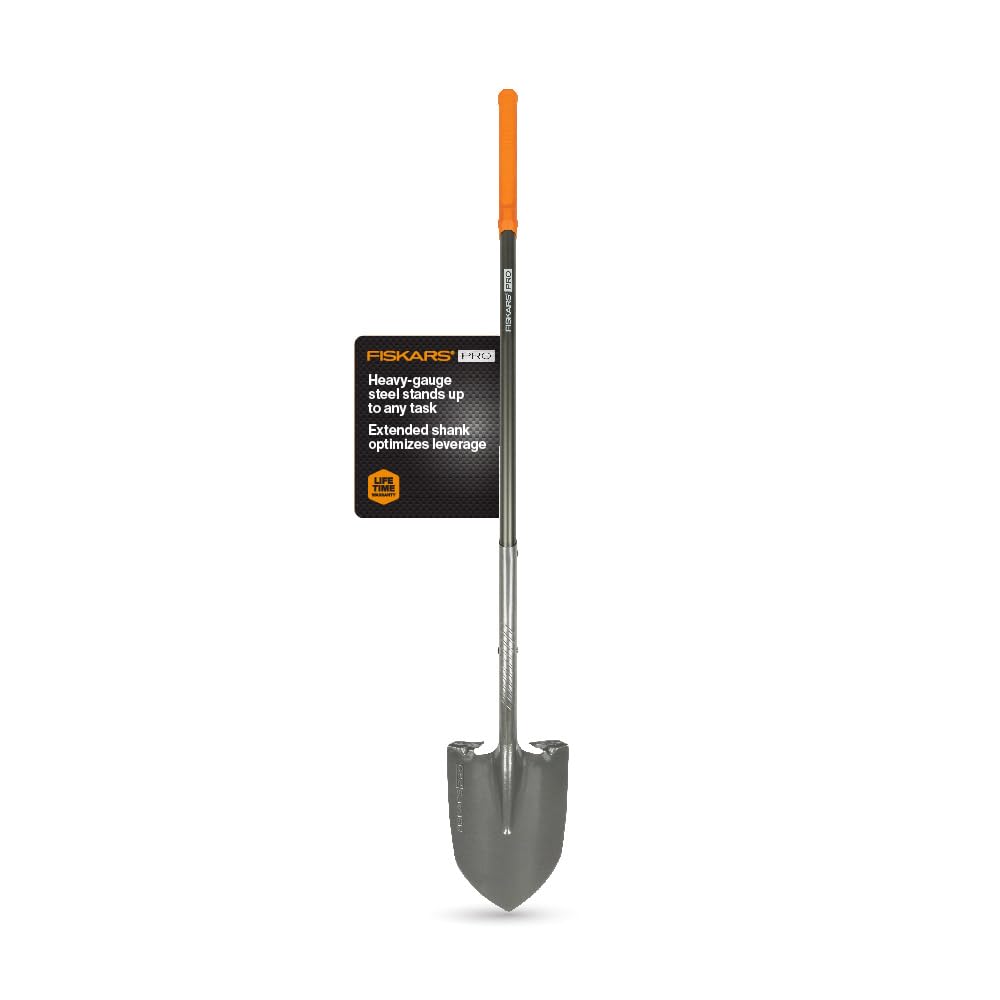
Fiskars engineered this shovel with a teardrop-shaped aluminum shaft that provides more torsional control than round handles. The blade is sharpened from the factory and made from heavy-gauge alloy steel that stays sharp through repeated rock contact. Owners consistently mention that this shovel shows no flex or bending when used for prying out concrete-encased posts and large field stones.
At just 2 pounds, the Fiskars is remarkably light for a rock-rated digging tool. The aluminum handle transfers more impact vibration than fiberglass, but the long 60.5-inch length and the Power Grip rubber sleeve mitigate fatigue during extended sessions. Multiple reviewers report that this tool outperformed broken wooden and fiberglass shovels on rocky terrain.
The full lifetime warranty backs the construction, and seasoned landscapers in the feedback call it a “beast” that makes hard jobs exponentially easier. The only trade-off is that aluminum handles can feel cold in winter and may dent under extreme abuse, but for pure digging and prying efficiency, this is a category leader.
What works
- Factory-sharpened blade cuts through rocky soil immediately
- Very lightweight at 2 pounds reduces arm fatigue
- Teardrop shaft improves control during leverage moves
What doesn’t
- Aluminum handle transmits more shock than fiberglass
- May show cosmetic scratches from heavy rock contact
3. Root Slayer 22011 Garden Shovel with Serrated Blade

The Root Slayer features a 13-gauge carbon steel blade — slightly thicker than the Bully Tools’ 14-gauge — with a serrated inverted V cutting point. The serrations bite into fibrous roots and fractured rock, making it especially effective in clay-heavy soil where roots and stone are intertwined. The resin-encased steel shaft runs through the handle for added structural integrity.
At 5 pounds and a 45-inch total length, this is a shorter, more maneuverable tool than the long-handle options. The raised tread on the footrest provides solid grip even in wet clay, and the ergonomic grip reduces wrist strain during repetitive cuts. One reviewer reported digging out over 250 gallons of rootball vines without the blade dulling or the handle loosening.
The powder-coated finish resists rust, and the bright red color makes it easy to spot in tall grass or brush. The manufacturer explicitly advises against using it for heavy prying or excessive leverage, so if your primary task is popping out boulders, a pick mattock or the Fiskars may be a better fit.
What works
- Serrated inverted V tip cuts through roots and packed stone
- Thick 13-gauge steel resists bending under load
- Extended foot tread provides secure footing on slick soil
What doesn’t
- Not designed for heavy prying or levering boulders
- Shorter handle offers less reach for deep trenching
4. Truper Pick Mattock, 2.5 lb Forged Steel Head
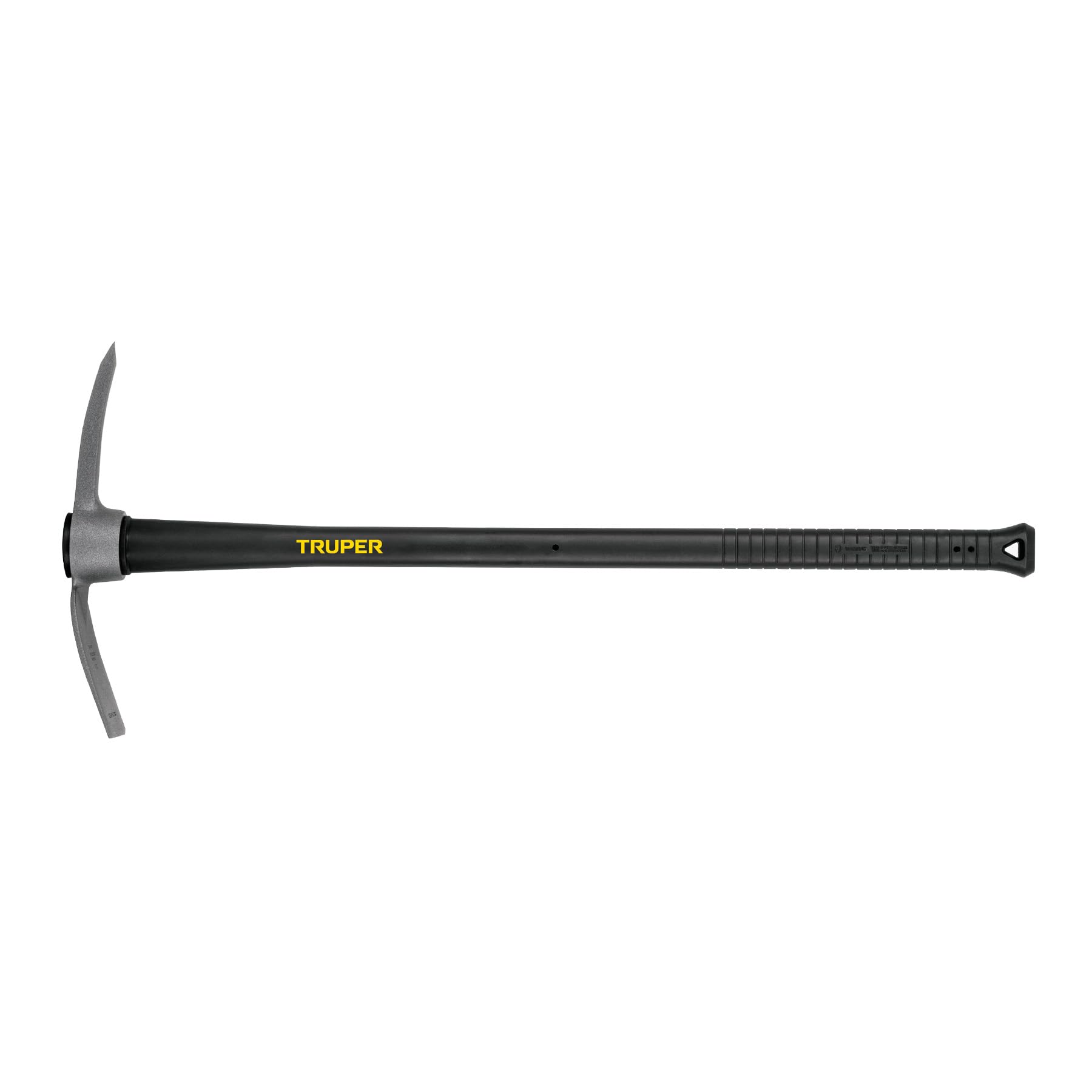
The Truper is a dedicated pick mattock with a 2.5-pound forged steel head that combines a sharp pick point for breaking rock and a flat mattock blade for grubbing roots. The fiberglass handle with a rubber cushion grip absorbs significant impact shock — a critical feature when swinging against granite or caliche. Several owners mention receiving the 5-pound variant instead of the listed 2.5, but even the lighter version is effective for most homeowners.
One 5-foot-2 female reviewer reported digging a 3- to 4-foot wide hole 12 inches deep in rocky clay in just 2 hours — a job that previously took 3 to 4 days with a standard shovel. The pick point concentrates force into a small area, fracturing stone that would otherwise stop a flat blade cold. The rubber grip stays secure even when wet, though the fiberglass handle can create friction burns on sliding hands if you don’t wear gloves.
Pre-assembled out of the box, the Truper saves the hassle of attaching the head yourself. The only consistent complaint is a large Prop 65 warning label glued to the handle that some users found difficult to remove cleanly.
What works
- Forged steel pick point breaks rock more efficiently than any flat shovel
- Fiberglass handle with rubber grip absorbs shock effectively
- Ready to use immediately — no assembly required
What doesn’t
- Fiberglass handle can burn hands if you slide your grip without gloves
- Stiff warning label on handle can be difficult to peel off
5. Glorousamc Forged Adze Pick Mattock 5 lb

The Glorousamc mattock uses a 5-pound head forged from 1045 high-carbon steel with an HRC rating of 45–60. That mass gives it serious momentum for breaking through hardpan, shale, and small boulders. The dual-purpose head lets you switch between the pick action for loosening soil and the adze edge for grubbing weeds and small roots. The H-Grip handle becomes tackier when wet, improving control in damp conditions.
Assembly is required — the head slides onto the fiberglass handle from the bottom and is held by pressure and gravity. Several owners found the fit tight enough to require ice water or a hammer to seat it. One reviewer raised a safety concern that no fastener secures the head, which is a valid point for a 5-pound swinging tool. Check the fit carefully before heavy use.
For the price point, you get a lot of forged steel for your money. Owners building drainage trenches and working archaeological sites report that the tool handles sustained abuse well. The 36-inch handle provides good leverage without being unwieldy, but users with shorter torsos may find the length comfortable.
What works
- 5-pound forged steel head delivers powerful rock-breaking impact
- H-Grip handle improves wet-weather control
- High HRC 45-60 rating keeps the edge durable
What doesn’t
- Head attaches without a fastener — potential safety risk if loose
- Assembly can require significant force to seat the head
6. Lesche Digging Tool & Sod Cutter with Free Sheath

The Lesche is a compact 7-inch bladed tool made from chrome-moly steel — the same alloy used in aircraft components. It’s not a full-length shovel but a handheld digging saw that excels at cutting through roots and fractured rock in tight spaces. The serrated left edge chews through compacted soil, while the pointed tip can pry out small rocks and weeds.
At just over a pound, the Lesche is highly portable and comes with a belt sheath for hands-free carrying. The blade width of 1.75 inches makes it ideal for planting bulbs, removing individual weeds with deep taproots, or working in rock-filled garden beds where a full shovel would damage adjacent plants. Users who have owned the tool for 15 years report that it remains sharp without ever needing professional sharpening.
The trade-off is obvious: this is not a tool for digging post holes or moving cubic yards of soil. It’s a specialized rock-cutting hand tool, not a replacement for a full shovel. But if you need precision in a rocky bed, the Lesche is unparalleled in its category.
What works
- Chrome-moly steel virtually indestructible under normal use
- Serrated edge cuts roots and compacted rock with ease
- Compact size and included sheath make it highly portable
What doesn’t
- Not suitable for large-scale digging or deep trenching
- Requires occasional sharpening and light oiling for optimal performance
7. VNIMTI Aluminum Snow Shovel 45 Inches
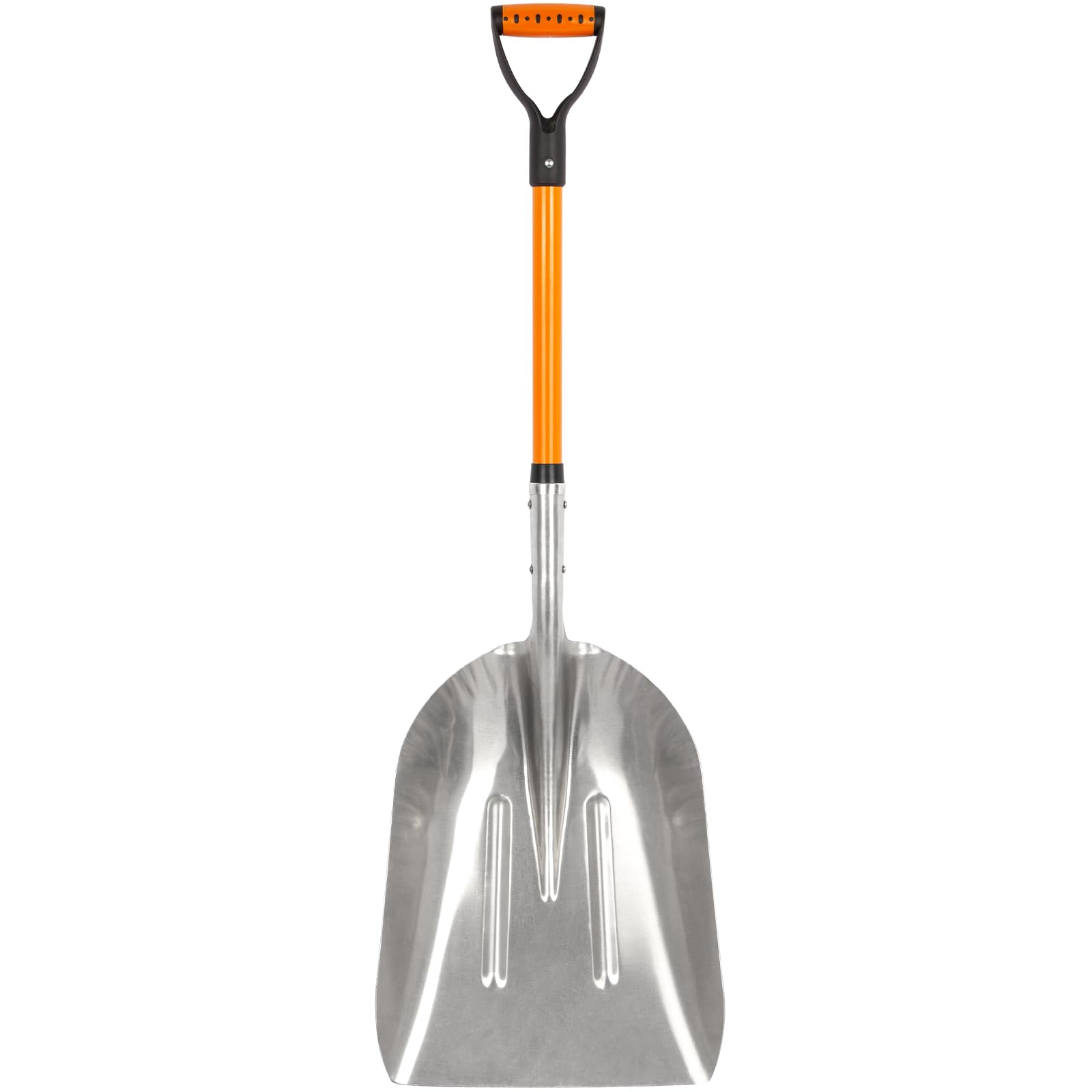
The VNIMTI is a wide aluminum scoop shovel designed primarily for snow, but its 19×14-inch flat blade makes it effective for moving loose gravel, mulch, and small rocks after you’ve already broken up the ground with a pick or mattock. The aluminum head won’t rust, and the 45-inch fiberglass handle keeps the total weight at just 3.7 pounds — significantly lighter than any steel rock shovel.
Owners who used it to clear mud and debris after heavy rainfall found the wide scoop moved material faster than a standard round-point shovel. It’s pre-assembled and requires no setup. The rounded D-grip handle provides a comfortable hold, though users under 5 feet 3 inches reported the handle length feels a bit short when trying to push the scoop across flat surfaces.
This is not a rock-breaking tool. The aluminum blade will dent if you try to hammer it into packed stone or use it as a pry bar. But as a secondary transport shovel for shifting already-loosened rock and gravel, the VNIMTI offers a light, affordable solution that saves your steel digging shovel for the heavy work.
What works
- Light 3.7-pound weight reduces fatigue during repetitive scooping
- Wide 19×14-inch blade moves loose rock and gravel quickly
- Rust-proof aluminum head and pre-assembled design
What doesn’t
- Aluminum blade will dent if used for breaking or prying rock
- Handle length feels short for taller users pushing loads
Hardware & Specs Guide
Steel Gauge and Its Real-World Meaning
Gauge numbers in shovel blades follow the same system as sheet metal — a lower number means thicker steel. 13-gauge (0.0897 inches) and 14-gauge (0.0747 inches) are the minimum for rock work. Standard garden shovels often use 16-gauge (0.0625 inches), which bends under the point leverage required to dislodge a buried rock. When comparing models, check the product specifications for “Gauge” or “Thickness” — if neither is listed, assume it’s 16-gauge or thinner and treat the shovel as unsuitable for rocks.
Forged vs. Stamped Steel Blades
A forged shovel blade is heat-treated and shaped under extreme pressure, aligning the grain structure of the steel for maximum strength. Stamped blades are cut from flat sheet metal and bent into shape. For rock digging, forged 1045 carbon steel or chrome-moly alloy (4130 or 4140) is far superior. The HRC (Hardness Rockwell C) scale tells you how well the edge holds up — look for HRC 45–60 in rock tools. Softer steel dulls quickly against quartz and granite; harder steel may chip if you strike at an angle.
FAQ
Can a standard garden shovel handle rocky soil without breaking?
Is a pick mattock better than a shovel for breaking up large rocks?
Final Thoughts: The Verdict
For most gardeners, the shovel for rocks winner is the Bully Tools 14-Gauge Round Point because its thick American steel and long fiberglass handle deliver the leverage and durability needed for sustained rock digging without breaking the bank. If you want lightweight prying power and a factory-sharpened edge, grab the Fiskars 60″ Pro. And for breaking up embedded stone before you even start digging, nothing beats the Truper Pick Mattock.