
You can save a lot of money starting your own seeds, but a tray that cracks on the first fill, traps water, or breaks delicate roots will wreck your whole season. A good seed-starting tray lets you control humidity, drain water easily, and survive at least two spring seasons. This guide compares five top-rated kits by their real specs so you can pick the right one for your garden.
I’m Rikta — the co-founder and writer behind Lawn Gear Lab. This guide is built by comparing the manufacturers’ published specifications and the patterns across verified customer reviews, so you get each pick’s real strengths and trade-offs instead of marketing spin.
Starting a dozen tomato seedlings or a hundred pepper plants? The best seed starting trays give you adjustable dome vents for humidity control, clear walls to see root growth, and sturdy materials that let you transplant without tearing roots.
How To Choose The Best Seed Starting Trays
Picking the right tray means matching it to how many seeds you start, how much root disturbance your plants can handle, and how humid your growing area is. Here is what to look for in each category.
Cell count and size
More cells let you start more seedlings, but smaller cells mean you must transplant sooner. A 200-cell kit (like the Mr. Pen option) works well for large gardens, while a 48-cell tray with deeper cups (like the silicone Ryscam) lets slower-growing peppers or tomatoes stay put longer before they need moving.
Adjustable vents on the dome
A dome that seals tight with no vents traps moisture and heat, which creates mold and weak, spindly stems. Look for at least four adjustable vents you can slide open to lower humidity as seedlings harden off. The UWIOFF and AC Infinity trays both show that vent control is a must for consistent germination.
Material and reuse potential
Flimsy trays crack by mid-season, especially if you use a heat mat underneath. Thicker plastic (Mr. Pen, AC Infinity) holds up longer. The Ryscam tray uses a flexible silicone bottom that pops each seedling out root-first — a genuine advantage if you grow plants that hate root disturbance, like melons or cucumbers.
Quick Comparison
On smaller screens, swipe sideways to see the full table.
| Model | Category | Best For | Key Spec | Amazon |
|---|---|---|---|---|
| UWIOFF 144-Cell Kit | Value | First-time seed starters on a budget | 144 cells in 12 packs | Amazon |
| VIVOSUN 72-Cell Kit | Compact Set | Small indoor batches with heat mats | 72 cells in 6 trays | Amazon |
| Ryscam 48-Cell Silicone | Root-Safe | Plants sensitive to root disturbance | 48 flexible silicone cells | Amazon |
| Mr. Pen 200-Cell Set | Ultra-Value | Large gardens and high-volume starts | 200 cells across 5 trays | Amazon |
| AC Infinity Heavy-Duty Dome | Premium | Serious growers needing durable gear | 3mm thick dome, 40 cells | Amazon |
In‑Depth Reviews
1. UWIOFF Seed Starter Tray, 12-Pack 144 Cells

144 cells across 12 separate trays — the highest cell count per dollar in this roundup — make this the top pick for home gardeners who need to start a large number of seedlings on a budget. Each cell measures 1.5 inches square and 2.25 inches deep, giving most flower and vegetable seeds enough room to develop a solid root ball before transplanting. Buyers report these as “best seed trays I’ve found,” and they call out the see-through walls that let you check root growth without lifting the plant.
Each tray includes a clear dome with four adjustable vents that slide open to lower humidity gradually, so you do not have to lift the whole lid and lose moisture suddenly. The plastic feels sturdier than other budget kits, and the set comes with 20 plant labels and a small soil tool. The whole kit weighs only 16 ounces, so stacking trays on a shelf or heat mat feels secure.
The honest trade-off is cell size: at 2.25 inches deep, these trays work well for quick-starters like lettuce or tomatoes, but seedlings that need deep rooting before transplanting (like peppers) will outgrow them sooner. For most home gardeners who want a large, affordable, repeatable system, this pick checks every box.
Why it’s great
- 12 complete trays with domes and bases for the price of one premium kit
- Clear plastic lets you see root development early
- Four sliding vents per dome give fine humidity control
Good to know
- Shallow cells may mean earlier transplanting for deep-rooting plants
- No silicone bottom for pop-out transplanting
2. VIVOSUN 6-Pack Seed Starter Trays, 72 Cells
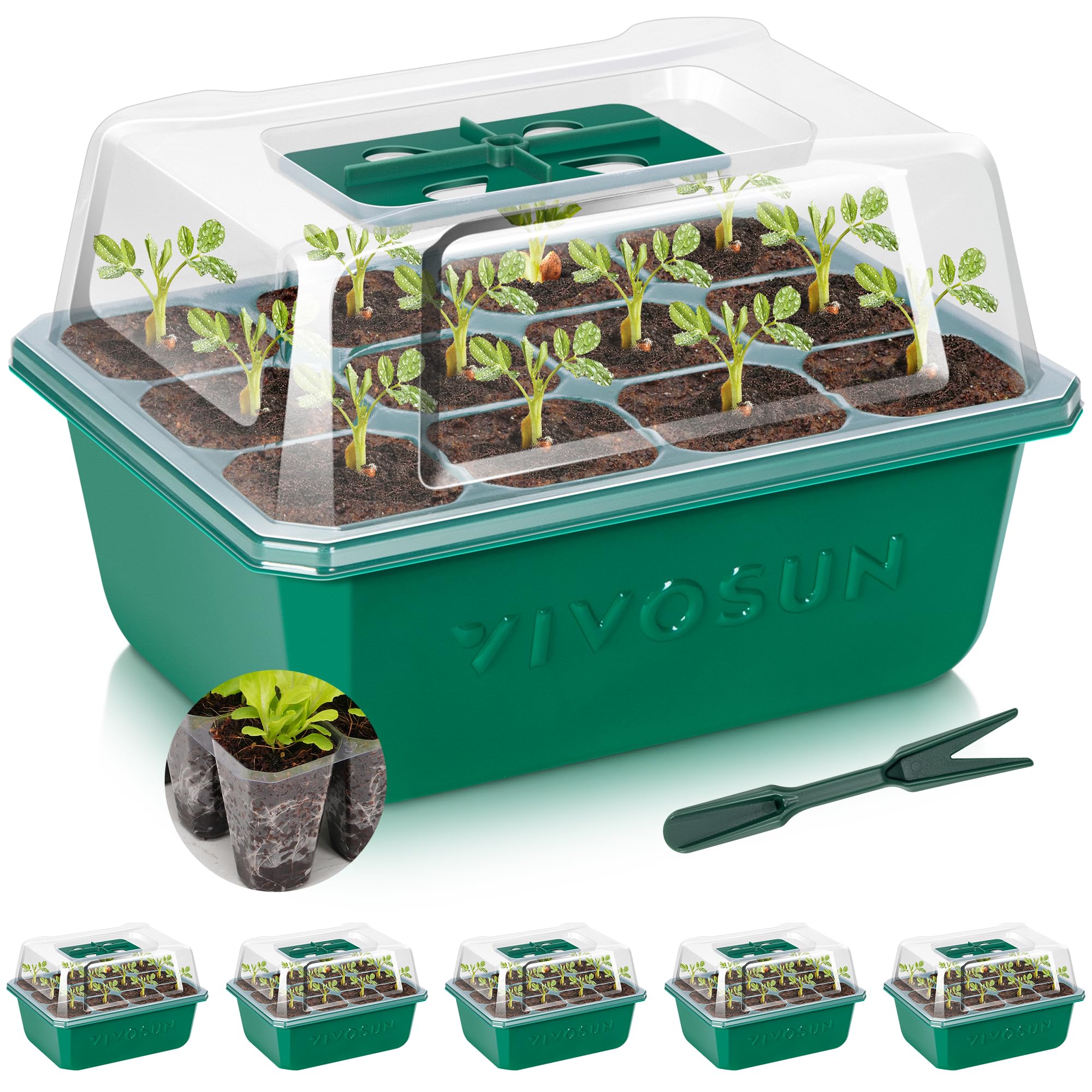
Compared to the top pick UWIOFF’s 144 cells, the VIVOSUN kit gives you 72 cells in six 12-cell trays — half the total cell count — but each tray measures 5.12 inches tall with the dome. That extra headroom matters when you use a heat mat, because the taller dome keeps humidity condensed right over the soil surface. One buyer verified “75% germination in 2 weeks,” which reflects consistent performance when you dial in humidity and temperature.
Each cell has a drain hole to prevent overwatering, and the transparent dome has an adjustable vent that slides open to control airflow. The kit includes a set of garden tools and 10 labels, making it a complete starter package for indoor use. The trays are slim enough to fit side-by-side on a standard 20-inch shelf under a single grow light.
If you start just a few dozen plants indoors and value compact storage over massive cell count, choose this over the UWIOFF. The individual tray footprint (5.91 x 7.48 inches) is smaller than the UWIOFF’s 7.3 x 5.7 inches per tray, and the dome is taller, which helps trap humidity for fussy seeds like strawberries.
Where it shines
- Taller dome (5.12 inches) for better humidity retention on heat mats
- Rated to handle heat mats up to 120°F without warping
- Compact trays fit neatly under a single grow light
Worth noting
- 12 cells per tray is small for large-scale planting
- Owners mention direct sun over 65°F can overheat the dome
3. Seed Starter Tray, 48 Cells — Flexible Silicone
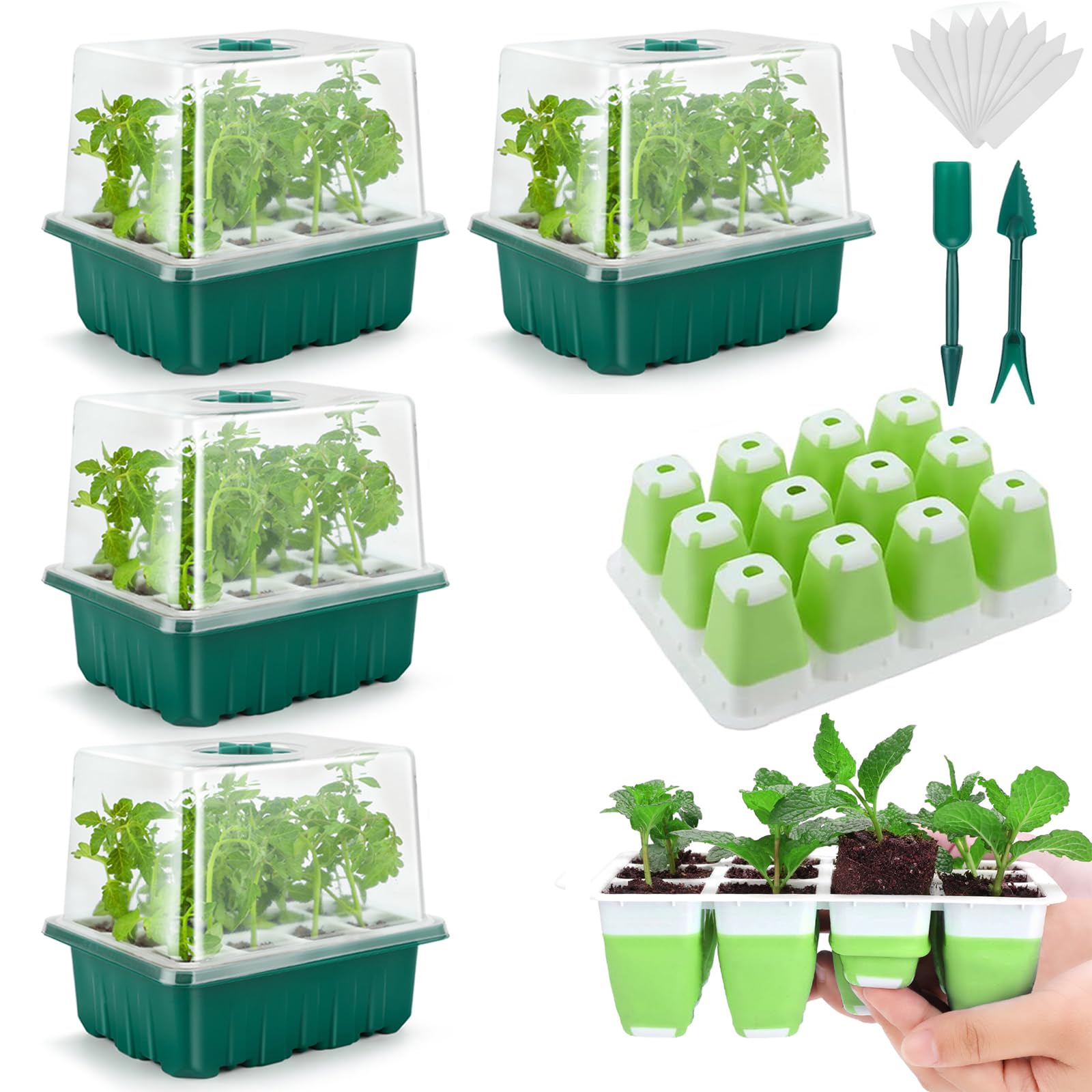
Ever tugged a seedling out of a rigid plastic cell and found the roots snapped off? This tray is the fix. The Ryscam tray uses a flexible silicone bottom on each cell. You push up from underneath, and the whole root ball — roots, soil, and seedling — pops out intact. Buyers confirm that these “pop-out cups prevent root disturbance,” which is a real advantage for plants like cucumbers, squash, and melons that hate having their taproot touched.
The tray holds 48 cells, each sitting inside a base with deep grooves that pull excess water away from the roots and keep it contained — no puddles on your counter. The dome is 4.33 inches tall, tall enough for peppers and tomatoes to get a strong start before you transplant. The whole kit is BPA-free (free of bisphenol A, a chemical sometimes used in plastics) and dishwasher safe, so you can sanitize it between batches without worrying about chemicals.
The standout spec here is the combination of silicone cells and a self-watering base design — something you will not find on any other tray in this list.
What stands out
- Silicone cells pop out without damaging roots — no transplant shock
- Self-watering base and deep grooves prevent overwatering
- BPA-free, dishwasher safe, and includes 10 labels and two tools
The trade-offs
- 48 cells is a smaller batch for larger gardens
- Silicone can be harder to clean thoroughly if soil dries in the grooves
4. Mr. Pen Seed Starter Tray Kits, 5 Set, 200 Cells
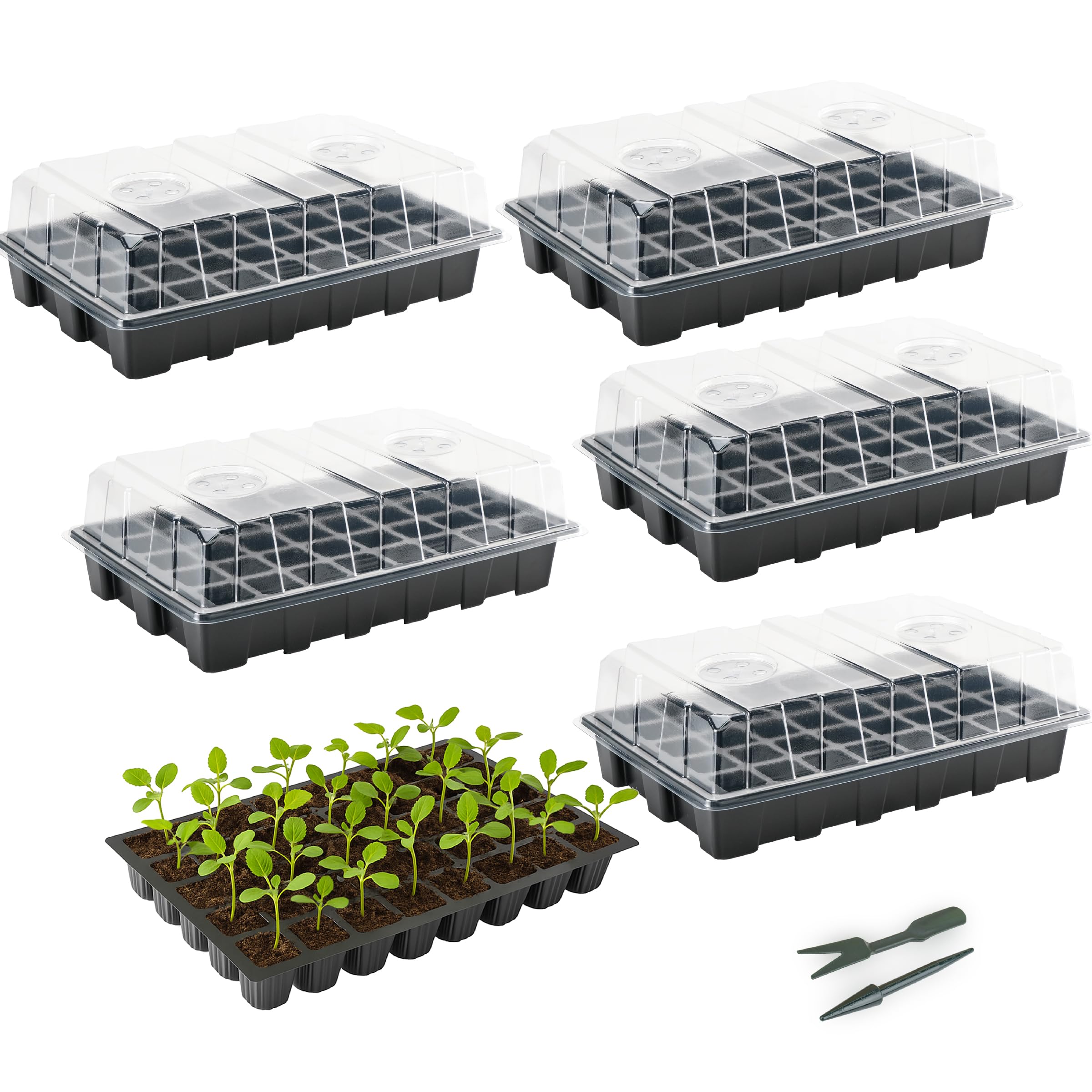
200 cells — 4.2 times more than the 48-cell Ryscam tray — earns this the top volume score in the guide. Five complete sets, each tray measuring 14.5 x 9 x 4.3 inches (about 2.5 times larger per tray than the UWIOFF’s 5.7 x 7.3 inch footprint), let you start tomatoes, peppers, lettuce, and herbs all at once.
Two cell sizes — a 40-cell tray and a 15-cell tray with wider holes — accommodate different seed sizes. Customers note “2 arrived cracked but still functional with a mat underneath,” so shipping can dent the sturdy plastic. Clear vented domes slide onto the bases and hold humidity well; reviewers point out seeds “sprouted faster than expected.” A shovel and scoop are included.
At this price for 200 cells, you pay about the same per cell as a mid-range 48-cell kit, but you get more plastic that is less refined. If your priority is volume over elegance and you are okay inspecting trays on delivery, this gives you the most seedlings for the least money.
The upsides
- 200 cells across 5 complete sets is the highest capacity in this guide
- Mixed cell sizes (40-cell and 15-cell trays) suit different seed types
- Excellent humidity retention — shoppers say faster-than-expected sprouting
Keep in mind
- Some units arrive with cracked trays; inspect on delivery
- Domes slide off easily per buyer feedback
5. AC Infinity Humidity Dome, Heavy-Duty Germination Kit

The AC Infinity kit sits in a tier above every other product here, and the numbers back it up. The dome is 3 millimeters thick — roughly double the wall thickness of standard seed trays — so it will not crack, warp, or fog up after repeated heat mat cycles. The set includes a 5×8 cell tray (40 cells total), a sturdy drip tray that does not leak, and optional height extension panels that add extra vertical room for taller seedlings. Buyers call it “top notch bar none” and note that it is “the germination kit that will last.”
The dome has multiple adjustable vents that let you fine-tune humidity more precisely than the basic slide vents on other trays. The drip tray is heavy-duty enough to support a load of wet soil and water without bowing, and the glossy plastic allows maximum light penetration. One buyer who uses it for tissue culture acclimation (hardening lab-grown plantlets to normal air) says it handles humidity levels up to 99% — but warns you may need a separate thermostat for a heat mat to avoid overheating.
The clear win here is durability: this kit is built to last through many seasons, while cheaper trays start showing cracks by mid-spring. If you are a serious grower who propagates dozens of plants every year and you are tired of replacing broken plastic, the AC Infinity is the only truly lifetime-grade option in this guide.
Why we’d pick it
- 3mm thick dome is nearly indestructible — outlasts cheaper plastics by years
- Height extension panels let you raise the dome for tall seedlings
- Drip tray is leak-proof and supports heavy loads
A few caveats
- 40-cell capacity is low compared to budget options
- Humidity can reach 99%; you may need to vent actively
Understanding the Specs
Cell Count vs. Cell Depth
More cells mean you can start more plants, but shallow cells (around 2 inches deep) force you to transplant sooner. Deeper cells (2.25 inches or more) let slower-growing plants like peppers and tomatoes build a stronger root system before moving outside. Match your seed type to the cell depth, not just the total number.
Humidity Dome Vents
A dome that has no vents creates a sealed greenhouse that can spike humidity to 99% inside, which promotes mold and weak stems. Vents let you gradually reduce humidity as seedlings grow — starting fully closed during germination, then partially open after the first true leaves appear, then fully open before transplanting.
FAQ
Can I reuse seed starting trays for multiple seasons?
How many cells do I need for a typical home vegetable garden?
Final Thoughts: The Verdict
For most people, the best seed starting trays winner is the UWIOFF 144-Cell Kit because it balances high cell count, adjustable humidity control, and a practical price that makes starting a full garden easy and repeatable. If you want root-safe transplanting with no disturbance, grab the Ryscam 48-Cell Silicone Tray. And for a durable, heirloom-quality kit that will outlast every other plastic tray you have owned, pick the AC Infinity Heavy-Duty Dome.