
Specs are compiled from manufacturer listings and verified buyer reviews and can change over time — please confirm the key details on the product page before buying.
Getting seeds into the ground at the right depth and spacing is the difference between a tidy, productive bed and a chaotic tangle of sprouts. The right tool turns that chore into a quick, repeatable routine., whether you are poking holes for garlic cloves or lifting a fragile seedling out of a tray. This guide sorts through the most useful seed planting tools on the market, from clever spacing templates to long-handled pluggers that save your back.
I’m Rikta — the founder and writer behind Lawn Gear Lab. This guide is built by comparing the manufacturers’ published specifications and the patterns across verified customer reviews, so you get each pick’s real strengths and trade-offs instead of marketing spin.
If you are tired of thinning overcrowded rows and want a more organized garden, you need to see the best seed planting tools that take the guesswork out of sowing and transplanting.
Our Picks at a Glance


How To Choose The Best Seed Planting Tools
Before you click buy, think about the size of your garden and the kind of work you do most. Are you starting seeds in trays, direct-sowing a large vegetable patch, or planting dozens of spring bulbs? Each task favors a different style of tool, and the right one saves you hours of stooping and squinting..
Match the tool to your planting style
A spacing template suits square-foot gardeners who want dense, organized beds. A narrow widger or trowel is the go-to for transplanting seedlings and weeding between tight plants. If bulbs are your main crop, a serrated plugger or auger cuts holes fast. For garlic and large seeds, a simple tapered dibber gives you depth control in seconds.
Quick Comparison
| Model | Best For | Key Feature | Weight | Handle Material | Amazon |
|---|---|---|---|---|---|
| Seeding Square★ Best Overall | Spacing grids & beginners | Color-coded template | 13.4 oz | Plastic | Amazon |
| Haliaeetus WidgerTight-Space Pick | Tight spaces & weeding | Narrow stainless steel blade | 6.4 oz | Wood | Amazon |
| ERYTLLY AugerDrill-Powered | Drill-powered holes | 3×12 inch auger bit | — | Hex shank | Amazon |
| Omesata Plugger | Stand-up planting | Long handle + serrated base | 4 lbs | Iron / powder-coated | Amazon |
| Uyeesi Tongs | Seedling transplanting | 3-piece set | 10.8 oz | Stainless steel | Amazon |
| Gardtech Planter | Manual bulb holes | 5-inch depth | 0.61 kg | Stainless steel | Amazon |
| Muldale Dibber | Garlic & large seeds | 8-inch beechwood | 0.1 kg | Wood | Amazon |
| C.S. Osborne Dibble | Garlic & heavy soil | One-piece aluminum | 1 lb | Aluminium | Amazon |
| Altdorff Plugger | Lawn plugs & large beds | 39-inch tall handle | 3 lbs | Iron / powder-coated | Amazon |
In-Depth Reviews
1. Seeding Square Spacing Template
Our pick — over 4.5★ from 7,500+ verified ratings; the strongest balance of quality and price.
The 12-inch plastic square that turns seed spacing into a color-coded puzzle.
This tool is the answer to the most common planting mistake: scattering seeds too close together. The Seeding Square uses a patented grid with color-coded holes, so you press, poke, and plant without measuring anything. It weighs just 13.4 ounces, meaning you can carry it around the garden all morning without fatigue.
It shines in raised beds and in-ground plots, where the 12 x 12 x 0.2-inch template sits flat and guides a depth wand, scoop, and funnel included in the set. Buyers report that “loved how simple this was,” and the review pages sum it up: gardeners get so carried away with the rhythm of planting that they forget to note what went where. The grid supports dense planting that naturally shades out weeds, and the included cheat sheet removes all guesswork.
The only real caveat is that it is not built for tiny containers — it works best in larger beds and pots. People who garden in small windowsill planters will find the square too big, but for anyone with a real vegetable patch, this is the easiest path to organized rows.
Why owners love it
- Colour-coded holes make spacing simple to use for all ages
- Sturdy, weather-resistant plastic that lasts season after season
- Includes depth wand, scoop, funnel, and storage bag
Who should pass
- Too large for small pots and window boxes
- Some find it costly for a simple plastic square
Reach for it if: you want maximum harvest from a small raised bed without the math.
Look elsewhere if: you only plant a few pots on a balcony.
2. Haliaeetus Widger Seedling Tool
A featherweight 6.4-ounce trowel that slips into crevices a standard spade can’t reach.
When you need to lift a taproot weed from a rock garden or transplant a seedling without disturbing its neighbors, this narrow widger is the tool. Its blade is made of thicker stainless steel that resists bending, and the ergonomic solid wood handle fits the natural shape of your hand. At just 6.4 ounces, it is 2.1x lighter than the Seeding Square template, so prolonged weeding sessions won’t tire your arms.
You get precise weed removal down to the roots, even in tight rock gardens or crevice gardens, according to buyers who call it “great for digging up weeds down to the roots and great for working in rock gardens or crevice gardens.” The 13.8-inch overall length gives you the reach to work without bending, while the narrow profile slips into spaces where a bulky plastic grid won’t fit. This is the precision tool for delicate jobs.
The length gets mixed feedback — a few people wish it were longer for standing work, but that is the trade-off for a tool that is nimble enough for crevices. If you have a friend who is a rock gardener, this makes a thoughtful gift.
Precision pick: The narrow blade and sturdy build make it the best sidekick for weeding, repotting, and working in rocky soil.
Keep in mind: Not a stand-up tool; you will be kneeling or bending while you use it.
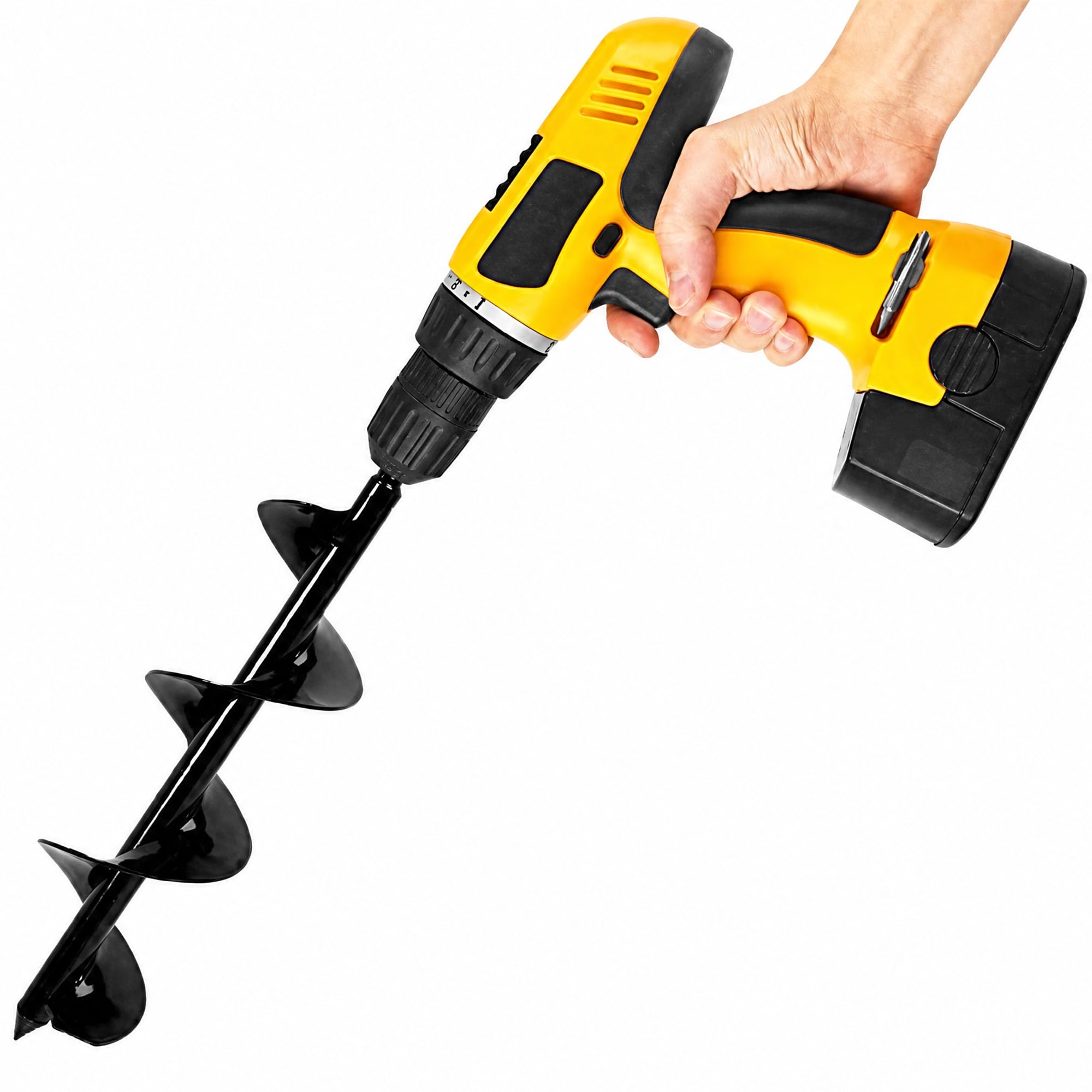
3. ERYTLLY Bulb Planter Auger
A 3×12 inch steel spiral that turns any drill into a hole-digging machine.
If you have a lot of bulbs to plant, this auger is a massive time-saver. It attaches to a standard drill and cuts through regular garden soil with little effort, creating evenly sized holes fast. The machined spear point hits the ground first to keep the bit steady, even on hard ground, so you don’t have to push down hard.
The 3-inch cutting diameter and 12-inch length handle bulbs, small shrubs, and even digging out weed roots. It saved one gardener the effort of digging 60 holes by hand.. The alloy steel construction with a powder-coated finish resists rust, and buyers call it heavy-duty enough to last for years.
The honest limitation is rocky soil — it is not ideal if your ground is full of large stones. You also need a drill, which is an added cost if you don’t already own one. For everyone else, this converts a boring chore into a quick task.
Efficiency boost
- Cuts through small roots without stopping
- 3 flutes make quick work of soil
- Spear point keeps it steady on hard ground
Before you buy
- Not for large or solid rock
- Requires a 5/8-inch or larger drill
Best for: gardeners planting dozens of bulbs or small shrubs in a weekend.
Pass on it if: your soil is pure rock or you don’t own a drill.
4. Omesata Sod Plugger

A 36.6-inch tall plugger that keeps your knees off the ground while you plant.
This tool is for anyone tired of kneeling over a flower bed. The Omesata plugger’s long handle lets you work from a standing position, and the dual-pedal design adds efficiency: step down to dig, then push the raised pedal to release the soil. It weighs 4 pounds, which gives it enough heft to cut through turf without being exhausting to lift.
The upgraded sharp serrated base helps penetrate soil, and the powder-coated iron construction resists rust. Owners mention it made cutting grass plugs for cemetery markers much easier, and at 6’2″ the user didn’t have to bend over much. For loamy soils, it is an “outstanding and well-built” alternative to cutting plugs by hand.
The durable functionality gets mixed reviews, though. It works well on soft soil, but clay soil is a challenge, and one buyer found the metal handle could bend under heavy stress. Use it with care and it will do the job, but treat it as a helper for softer ground, not a jackhammer.
Knee-saver: The long handle and standing position make it the best choice for larger planting sessions.
Heads-up: Soft soil is its home turf; dense clay demands patience.
5. Uyeesi Seedling Transplant Tongs
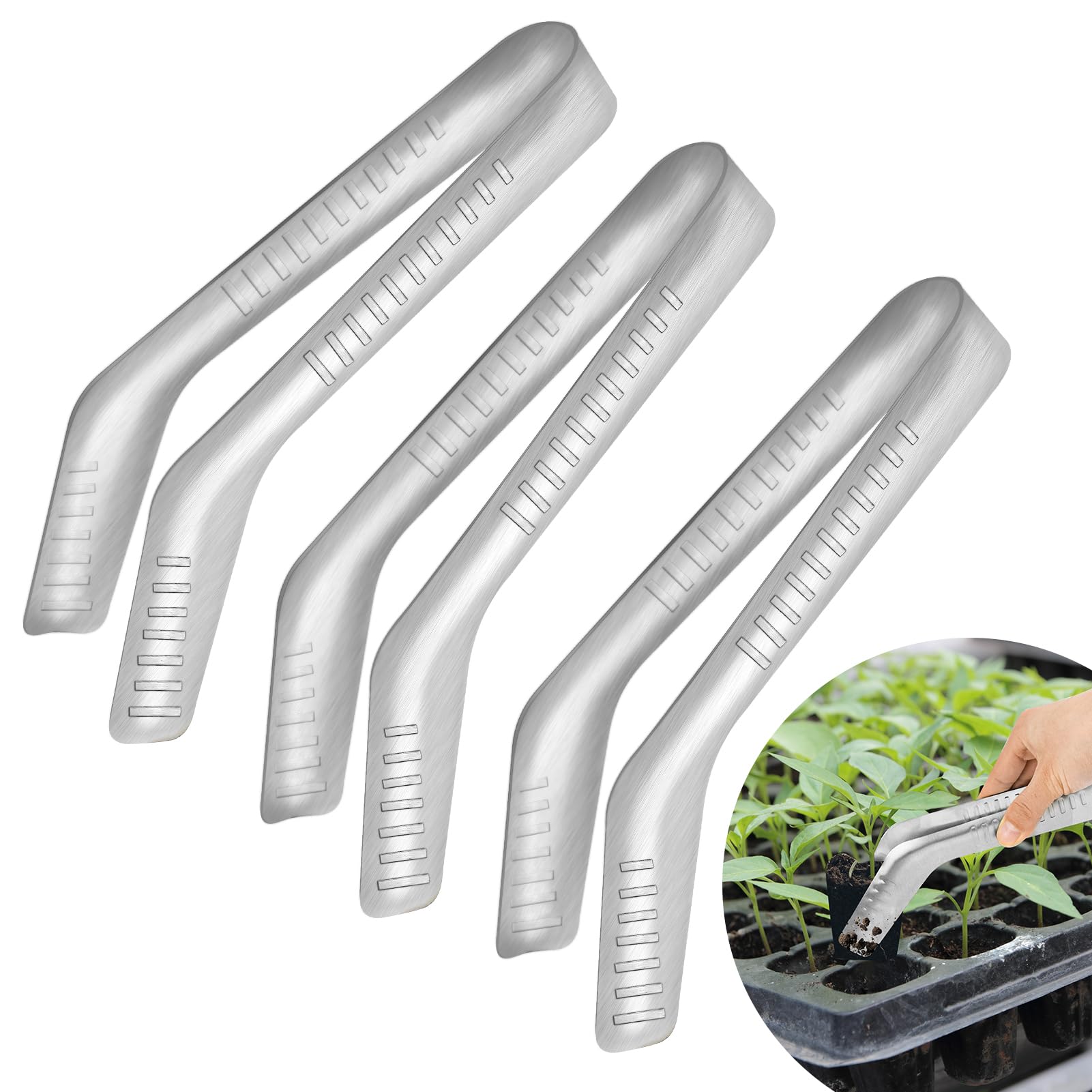
Three stainless steel tongs that lift a whole seedling and its root ball intact.
Pulling a seedling out of a tray by its stem often breaks it. These tongs are designed to slip around the soil plug and lift the entire root system out undamaged. The set of three means you always have a spare, and the grooved tips and grips prevent slipping during use.
The whole body is stainless steel, so it won’t rust and is easy to clean. One gardener reported losing only 2 out of 79 seedlings on the first try. — a huge success rate compared to pulling by hand. They also work well for making transplant holes by squeezing the tongs shut and releasing them in the soil.
Size feedback is mixed; the tongs work with 3-inch pots and standard seedling trays, but may feel large for very tiny cells. Damp soil can stick to the metal, so you may need to tap them clean between pulls. For anyone starting dozens of plants indoors, they are a quiet revolution..
Reach for this if: you want to transplant fragile seedlings without losing a single one.
Look elsewhere if: you only sow direct into the ground and never touch a seed tray.
6. Gardtech Bulb Planter
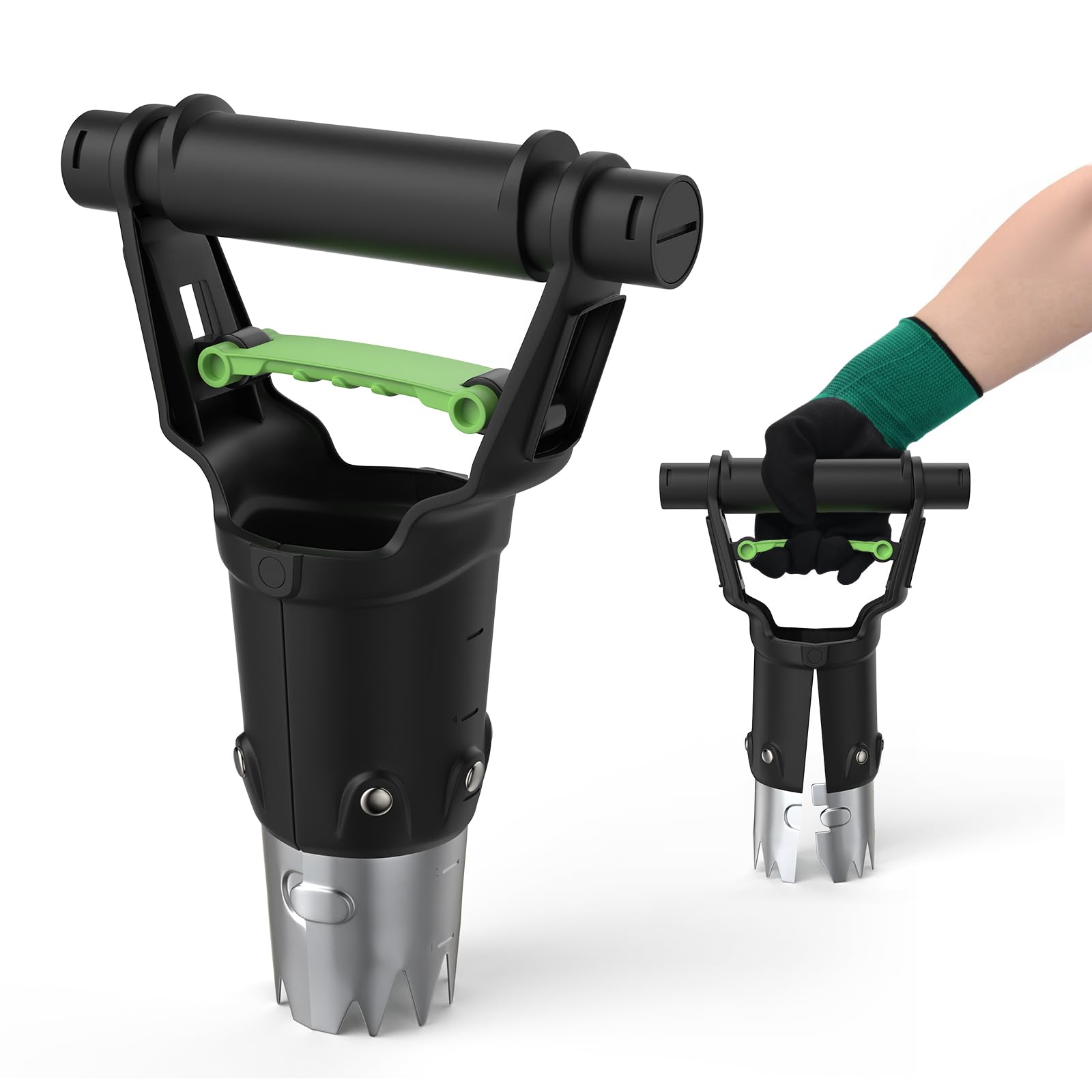
A sturdy hand planter with a one-step plunger for clean, uniform 5-inch holes.
This tool solves the classic bulb planter problem: soil getting stuck inside the cylinder. The Gardtech features a one-step plunger mechanism that releases the soil instantly, so you can dig hole after hole without stopping to poke the dirt out with your fingers. The non-slip, contoured handle reduces hand strain even during long planting sessions.
The heavy-duty stainless steel resists rust and bending, a common failure in cheaper hardware-store versions. Owners with clay soil found it “much sturdier than the local hardware store versions” that bend and deform. It also doubles as a soil release tool for transplanting, making it a versatile addition to the shed.
Performance in dry, hard ground is the trade-off — it works beautifully in wet or soft soil but can struggle to push into drier earth. One reviewer noted the grip isn’t the most ergonomic, but the quality of the steel makes up for it.
Quality build: Leaves flimsy hardware-store planters in the dust with its sturdy steel and plunger design.
Know its limit: Soft soil is where it shines; dry, baked ground requires more effort.
7. Muldale Wooden Dibber

A traditional 8-inch beechwood dibber that feels like a pen in your hand.
This simple tool has been used for centuries because its tapered shape creates perfect holes with minimal effort.. The tapered shape of the Muldale dibber creates perfect holes for large seeds and bulbs, and its comfortable, pen-like grip gives you full control over depth. It is crafted entirely from sustainable natural beechwood and oiled for a soft finish.
Planting garlic becomes easy, as one gardener put it, “a DREAM when planting garlic this fall.” The tapered point pierces the ground easily, and the 8-inch length reaches the correct depth for daffodils, hyacinths, tulips, and crocus without extra digging. At just 0.1 kg, it’s light enough that even gardeners with arthritis in their hands found it easy to grip and use.
This is a one-purpose tool — it pokes holes, and that’s it. You won’t use it for weeding or digging. But for its specific job, it is nearly perfect.
Best for: garlic cloves, spring bulbs, and anyone who wants a comfortable, traditional tool.
Pass on it if: you need an all-in-one digger rather than a dedicated hole maker.
8. C.S. Osborne Planting Dibble

A solid one-piece metal dibble that will outlast every wooden tool in your shed.
If you plant a lot of garlic by hand, this is the upgrade. The C.S. Osborne dibble is made from a single piece of heavy aluminum, which means no handle to snap off and no wood to rot. It weighs 1 pound, and that heft helps it cut into heavy clay soil without bending.
The tapered point quickly makes holes for small bulbs and transplants, and you can widen the hole by circling the tool. One user who used it for 2 seasons for garlic reported it “still looks like it did the day I unboxed it.” The comfortable weight is easy on bad wrists, so it’s a favorite among gardeners who dislike flimsy plastic dibbers.
The metal does absorb heat, which can be an issue for people with circulation conditions like Raynaud’s, and there is no non-slip grip. For everyone else, this is a buy-it-for-life tool..
Built to last
- One-piece heavy metal won’t rust or wear
- Weight helps penetrate clay soil
- Easy to widen holes with a twist
Minor gripes
- Bare metal handle has no grip
- Absorbs heat in direct sun
Choose this if: you want a durable, heavy dibber for garlic and clay soil.
Think twice if: you prefer a softer, wooden handle for comfort.
9. Altdorff Bulb Planter

A 39-inch tall plugger that digs a 3.5-inch hole in a single step.
This is the tool for repairing patches in your lawn or planting a large bed of bulbs without wrecking your back. The Altdorff’s long T-handle lets you work from a standing position, and the dual-pedal design means you step to dig and step again to release the soil. At 3 pounds and 39 inches tall, it is built to save your knees over a long afternoon.
It is genuinely a 5-in-1 tool: bulb planter, sod plugger, grass plugger, transplanter, and hole digger. The serrated edges cut through grass well, and a quick twist helps it bite into the soil. Owners found it excellent for removing weeds along with their roots, and it is rust-resistant thanks to the powder-coated iron.
Longevity is the biggest question mark. It works great on soft ground, but a few buyers found the main pole twisted or the foot tab bent after heavy use on firmer soil. For small jobs and soft lawns, it’s a good value, but heavy-duty users may want a sturdier model.
Reach for this if: you want to plant bulbs and repair grass plugs while standing upright.
skip it if: your entire yard is dense, hard clay and you plant constantly.
Understanding the Specs
Spacing Template vs. Freehand
The main spec that matters on a template is its size. A 12 x 12 inch square like the Seeding Square covers a full square foot, which is the basis of the square foot gardening method. This gives you exact spacing for different plant sizes without measuring tape. Freehand planting often leads to overcrowding, which reduces airflow and invites disease.
Handle Length and Posture
Tool length directly impacts your back. Short hand tools (8-14 inches) require kneeling or bending, while long-handled pluggers (36-39 inches) let you work standing. If you have knee or back problems, a tall tool like the Altdorff or Omesata plugger is worth the extra cost. The trade-off is that long tools are heavier and less precise for delicate transplanting.
FAQ
What is the difference between a dibber and a widger?
Will a bulb planter work in clay soil?
How deep should I plant garlic cloves?
Can I use a drill auger for anything besides bulbs?
Are transplant tongs better than using my hands?
What size drill do I need for a bulb auger?
How do I keep a wooden dibber from rotting?
What is a sod plugger used for?
Is a spacing template worth it for a small garden?
Final Thoughts: The Verdict
If you want one dependable pick, the clear winner in the seed planting tools lineup is the Seeding Square because it takes the guesswork out of spacing and is beloved by tens of thousands of gardeners.. If you want a precision tool for weeding and transplanting in tight spaces, grab the Haliaeetus Widger. And for those planting a large bed of bulbs without kneeling, the Altdorff Plugger is the one to reach for.
How We Picked
We do not accept paid placement. Every pick is matched to a real buyer and a real use-case; we do not hands-on test units.
Sources & Methodology
Specifications: manufacturer listings and product documentation. Review insights: verified customer reviews, as of August 2026. Pricing: not shown on this page (it changes often); check the current price via the retailer link.
As an Amazon Associate, Lawn Gear Lab earns from qualifying purchases. This does not affect which products we feature.