
Specs are compiled from manufacturer listings and verified buyer reviews and can change over time — please confirm the key details on the product page before buying.
Rubber garden edging does one job: it draws a clean, lasting line between your flower beds and your lawn so grass stops creeping where it does not belong. The trick is finding edging that stays in place after a hard rain, bends around curves without cracking, and arrives with pegs that actually survive installation. Skip the flimsy stuff — this guide cuts straight to the rubber edging that works.
I’m Rikta — the founder and writer behind Lawn Gear Lab. This guide is built by comparing the manufacturers’ published specifications and the patterns across verified customer reviews, so you get each pick’s real strengths and trade-offs instead of marketing spin.
Whether you are edging a small flower bed or a full yard perimeter, choosing the right rubber garden edging depends on material thickness, stake quality, and how much ground you need to cover — and that is exactly what these reviews sort out.
Our Picks at a Glance

How To Choose The Best Rubber Garden Edging
Rubber edging is tougher than standard plastic, but the details between models determine whether installation is a 30-minute job or a weekend frustration. Focus on these three things before you buy.
Material and Thickness
Recycled rubber is the gold standard here because it flexes in cold weather, resists cracking under direct sun, and holds its shape against lawn mower bumpers. Thicker rolls, like those around 5.5 inches wide, give you a taller barrier that keeps loose mulch from washing into the grass during a heavy downpour.
Stakes That Actually Hold
The plastic pegs included with many edging kits are the most common weak point — buyers report they snap on the final hammer hit if the ground is hard. Look for edging that either comes with metal stakes or is designed to accept standard 6-inch landscaping spikes. Pre-drilling pilot holes or wetting the soil before installation helps, but good stakes make the difference between a straight line and a frustrating afternoon.
Total Coverage Length
Measure the perimeter of the beds you plan to edge and add about 10 percent for overlaps and curves. A single 100-foot roll covers a large garden in one go, while a 6-piece box of 4-foot sections adds up to 24 feet and works better for smaller borders where you want straight, rigid segments rather than a flexible strip.
Quick Comparison
| Model | Best For | Material | Length | Height/Width | Amazon |
|---|---|---|---|---|---|
| EcoBorder 4ft Sections (6pc)★ Best Overall | Clean, straight borders on small beds | Recycled Rubber | 24 ft (6 x 4ft) | 2.75 inches (width) | Amazon |
| MIXC 100FT Edging Kit | Large curved gardens on a budget | Plastic | 100 ft | 2 inches | Amazon |
| Adnee Rubber Mulch Roll | Mulch retention along fences | Recycled Rubber | 139 inches (11.6 ft) | 5.5 inches (width) | Amazon |
In‑Depth Reviews
1. EcoBorder Black Recycled Rubber 4ft Lawn Edging (6pc Box)
Our pick — over 4.5★ from 800+ verified ratings; the strongest balance of quality and price.
The heavyweight that gives flower beds a finished, professional border.
Each section is 48 inches long and 2.75 inches tall, made from recycled rubber that is heavy enough — 6.8 pounds per 6-piece box — to sit firm without curling. The L-shape design locks into the soil so the top edge stays flush with your lawn, which means the mower can ride right over it without chewing up the edging.
What wins people over is how easy it goes in compared to rigid metal or concrete edging. Buyers across hundreds of reviews call installation straightforward: you lay the sections end to end, connect them with the supplied pegs, and tamp it down. The trade-off is the plastic pegs themselves — owners mention that “plastic pegs broke on final hammer hit” and many recommend swapping them for hook-end rebar or buying metal landscaping spikes separately. That is a minor extra step for edging that owners expect to withstand tractor weight and snow plow hits.
At 6 pieces per box you cover 24 linear feet, making this a smarter fit for small front beds and defined borders rather than sprawling backyard perimeters. One 70-year-old installer found the process manageable and fast, completing six sections in about an hour and a half.
Real-world durability: The rubber itself is the star here — thick, flexible, and heavy enough to hold its line season after season. The stakes are the weak link; plan to replace them with metal pins and you will have a boundary that looks clean and stays put.
One honest caveat: This is not the cheapest edging per foot, and the 24-foot total length means you will need multiple boxes for larger yards. The reviews sum it up: the material is excellent but the plastic pegs demand a gentler touch.
Reach for this if: you want a thick, professional-looking rubber edge for small to medium flower beds and do not mind upgrading the stakes.
Look elsewhere if: you need to edge a very large perimeter on a tight budget, or you want a tool-free install with no extra parts.
2. MIXC Garden Edging Border, 100FT 2 Inch Tall Plastic Landscape Edging with 150 Stakes
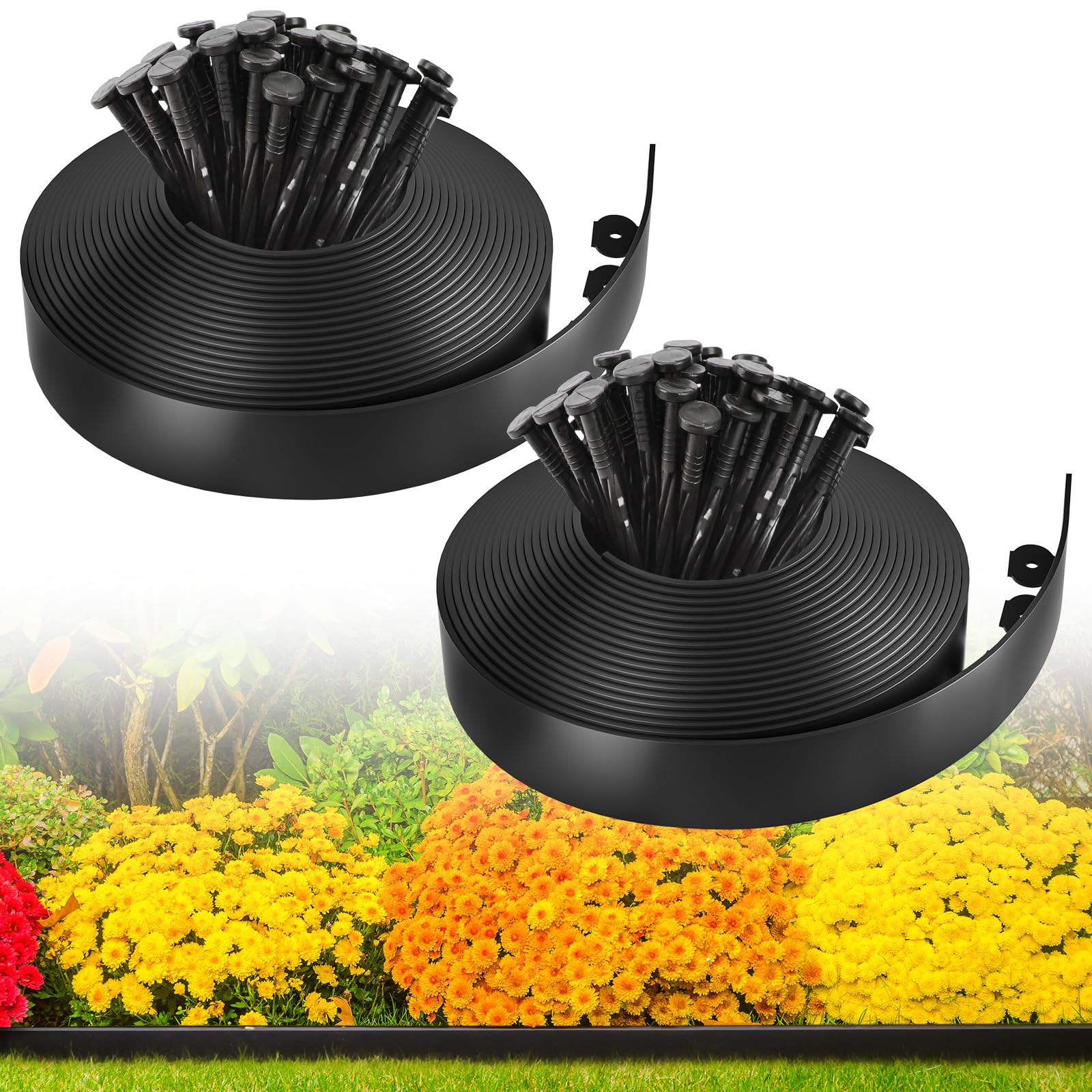
100 feet of flexible border that bends around curves without cutting.
This kit pairs a single 100-foot roll of black plastic edging with 150 spiral anchoring stakes, each 6 inches long. The height is 2 inches — shorter than the EcoBorder — so it creates a low profile that defines the bed edge without looking like a wall. The sheer length means you can edge an entire backyard in one unbroken run, and the flexibility lets you trace winding flower beds and tree rings without fighting the material.
Installation is tool-free in the literal sense: unroll it, let it warm in the sun so the plastic becomes pliable, shape it by hand, then hammer the stakes through the pre-formed slots. The weak point here is again the included pegs — owners note that “the plastic spikes that come with it do break easily” if the ground is hard. Watering the soil first or pre-drilling pilot holes helps, and the kit gives you 150 stakes, so you have plenty of extras for replacements.
Compared to the EcoBorder, this MIXC kit covers about four times as much ground for less money, but it is made of plastic rather than recycled rubber. That means it is lighter and less likely to stay perfectly rigid over uneven soil. The reviews are clear on the quality being good for the price — 46 buyers call out the build quality positively — but the sturdiness is a mixed note: some find it firm, others report that the top of the spikes snap.
What it does well
- 100-foot roll covers large gardens without seams
- Flexible enough for tight curves and slopes
- Kit includes 150 stakes — plenty of extras
Where it cuts corners
- Plastic spikes break if hammered into hard soil
- 2-inch height is lower than rubber alternatives — mulch can wash over top
- Plastic material will eventually become brittle in direct sunlight
Best for: large garden perimeters and curved beds where you want fast, affordable coverage and are comfortable handling brittle stakes.
skip it if: you need a heavy rubber barrier that stands tall against lawn mower bumps and long-term sun exposure.
3. Adnee 139” x 5.5″ Double Sided Rubber Mulch Roll, Black Recycled Rubber

A thick rubber mat that keeps mulch from blowing down the street.
This is a different approach to edging: instead of a narrow strip you stake into the ground, it is a 139-inch-long by 5.5-inch-wide slab of recycled rubber that sits on top of the soil like a permanent mulch mat. At 9.57 pounds, it is noticeably heavier than the EcoBorder (which comes in at 6.8 pounds for the whole 6-piece box), so once you lay it down it stays put. The product is 0.2 inches thick — buyers describe it as a thick roll that is “a little hard to cut but not bad.”
Where this shines is in windy areas where loose bark or wood chips scatter within a week. People who live in exposed locations report that a single knife cut fits the mat against a fence line, and the rubber stays in place instead of blowing away. The 5.5-inch width provides a barrier tall enough to trap a good bed of mulch behind it, so your soil stays moist and weeds struggle to push through. The double-sided design means either face can be the top, giving you a clean black finish no matter which way you roll it out.
The catch is the size: at 139 inches long, it covers only about 11.6 linear feet. If you need to edge a full garden perimeter you will need multiple rolls, which adds up. And while the rubber is durable, some owners note that it can be tough to cut cleanly with regular scissors — a sharp utility knife is the tool that works best. The crowd favorite use case is a single straight run along a fence or a shed base where you want a permanent barrier that never needs replacing.
One strong verdict: For homeowners tired of replacing bark mulch after every storm, this mat solves the problem in one afternoon. The rubber construction is built to last years in direct sun and rain, and the 5.5-inch width gives you real mulch-holding power that a 2-inch strip cannot match.
One honest trade-off: Each roll covers only about 11.6 feet, so it is not a budget pick for large yards. Plan for multiple rolls if you are edging more than one bed.
Reach for this if: you have a windy property or a fence line where mulch disappears weekly — this mat stops that cold.
Look elsewhere if: you need to edge a large curved garden on a budget; the short roll length makes this expensive per foot for big projects.
Understanding the Specs
Material: Recycled Rubber vs Plastic
Recycled rubber edging is heavier, more flexible in cold weather, and resists cracking from UV exposure far longer than standard plastic. Plastic edging is lighter and cheaper per foot, but it will become brittle after a few seasons in direct sun. For a permanent border you want the rubber; for a temporary or seasonal project, plastic works fine.
Section Length and Coverage
Long rolls (100 feet) let you edge a whole garden in one continuous strip with no joints, which gives a cleaner line and fewer spots for grass to push through. Short sections (4-foot pieces) are easier to transport and install, and they create a stiffer, more defined straight edge — better for formal rectangular beds.
FAQ
Can rubber garden edging be cut to fit curves?
Will rubber edging crack in freezing winter temperatures?
Why do the plastic stakes break during installation?
How tall should garden edging be to hold mulch?
Can I use rubber edging against a fence or wall?
How do I install rubber edging on uneven ground?
Is rubber garden edging safe for vegetable beds?
How many 4-foot sections do I need for a standard flower bed?
Final Thoughts: The Verdict
If you want one dependable pick, the rubber garden edging winner is the EcoBorder 4ft Sections because its recycled rubber construction and L-shape design deliver a clean, durable line that survives mower hits and weather swings — just budget for metal stakes. If you are edging a large curved garden at a low cost, grab the MIXC 100FT Kit. And for windy properties where loose mulch blows away each week, the Adnee Rubber Mulch Roll with its tall 5.5-inch barrier is the one to reach for.
How We Picked
We do not accept paid placement. Every pick is matched to a real buyer and a real use-case; we do not hands-on test units.
Sources & Methodology
Specifications: manufacturer listings and product documentation. Review insights: verified customer reviews, as of July 2026. Pricing: not shown on this page (it changes often); check the current price via the retailer link.
As an Amazon Associate, Lawn Gear Lab earns from qualifying purchases. This does not affect which products we feature.