
Specs are compiled from manufacturer listings and verified buyer reviews and can change over time — please confirm the key details on the product page before buying.
You’ve built the beds, sown the seeds, and watched the first green shoots appear. Then a surprise frost rolls in, or a flock of birds decides your lettuce is a buffet, and it all vanishes overnight. A breathable fabric draped over crops extends the growing season and shields against pests.
I’m Rikta — the founder and writer behind Lawn Gear Lab. This guide is built by comparing the manufacturers’ published specifications and the patterns across verified customer reviews, so you get each pick’s real strengths and trade-offs instead of marketing spin.
From frost blankets to ultra-fine insect barriers, here are the best row covers for raised beds that protect your investment through every season.
Our Picks at a Glance


How To Choose The Best Row Covers For Raised Beds
A row cover is a protective blanket for your plants, but not all blankets are created equal. Match the fabric to your primary threat: frost cloth for cold, insect netting for pests, or shade cloth for heat.
Match the Material to the Threat
Frost cloth is a non-woven fabric designed to trap heat from the soil and keep it close to your plants overnight. Insect netting, on the other hand, is a woven mesh with holes small enough to block bugs while letting sunlight and rain pass through. Shade cloth, often darker in color, blocks a percentage of sunlight to prevent heat stress during the hottest months. Since no single cover excels at all three jobs, prioritize your main threat before purchasing.
Understand Fabric Weight
The thickness of a row cover is measured in ounces per square yard (oz/yd²). A lighter cover around 0.9 oz/yd² is good for light frosts and insect protection — it lets through more light and air. A heavier cover like 1.5 oz/yd² traps more heat and offers better protection against harder freezes, but it blocks more light, so it’s not ideal for long-term use on sunny days. A mid-weight fabric (around 1.1 oz/yd²) offers the best balance for season-long use in most raised beds.
Think About Support
Some covers are meant to float directly on top of your plants, held down at the edges with soil or stakes. Others work best draped over a frame of hoops, which creates a little greenhouse around your crops and keeps the fabric from crushing delicate leaves. If you grow tall plants like tomatoes or peppers, or you need protection for a long stretch of the season, a cover that pairs with hoops will serve you much better than a free-floating sheet.
Quick Comparison
| Model | Best For | Fabric Weight | Size | Material | Amazon |
|---|---|---|---|---|---|
| Plant Freeze Protection Cover 10×50★ Best Overall | Large beds & light frost | 0.9 oz/sq | 10 x 50 FT | Non-woven | Amazon |
| Plant Covers Freeze Protection 10×20Budget Champion | Budget-friendly coverage | 0.9 oz/sq.yard | 10 x 20 FT | Polypropylene | Amazon |
| Garutom Plant Covers 10×33Season Extender | Light transmission | 1.1 oz/sq.yd | 10 x 33 FT | Polypropylene | Amazon |
| KLEWEE Garden Mesh Netting | Bird & insect barrier | 0.8mm mesh | 10 x 50 FT | Polyethylene (PE) | Amazon |
| RIFNY Garden Netting 2-Pack | Two beds at once | 0.04in mesh | 2 x 10 x 33 FT | Polyethylene (PE) | Amazon |
| Harvest Guard Frost Blanket | Seed germination | — | 5 x 25 FT | Non-woven | Amazon |
| Garden Mesh Netting Kit | Hoops included | 0.8 x 1mm mesh | 10 x 30 FT | Polyethylene (PE), Steel | Amazon |
| Gardzen 1.5 oz Plant Covers | Hard freeze protection | 1.5 oz/yd² | 10 x 50 FT | Polyethylene (PE) | Amazon |
| Abimars Black Garden Mesh | Durability & shade | 1.33 oz/yd² | 10 x 33 FT | Nanometer PPT | Amazon |
In-Depth Reviews
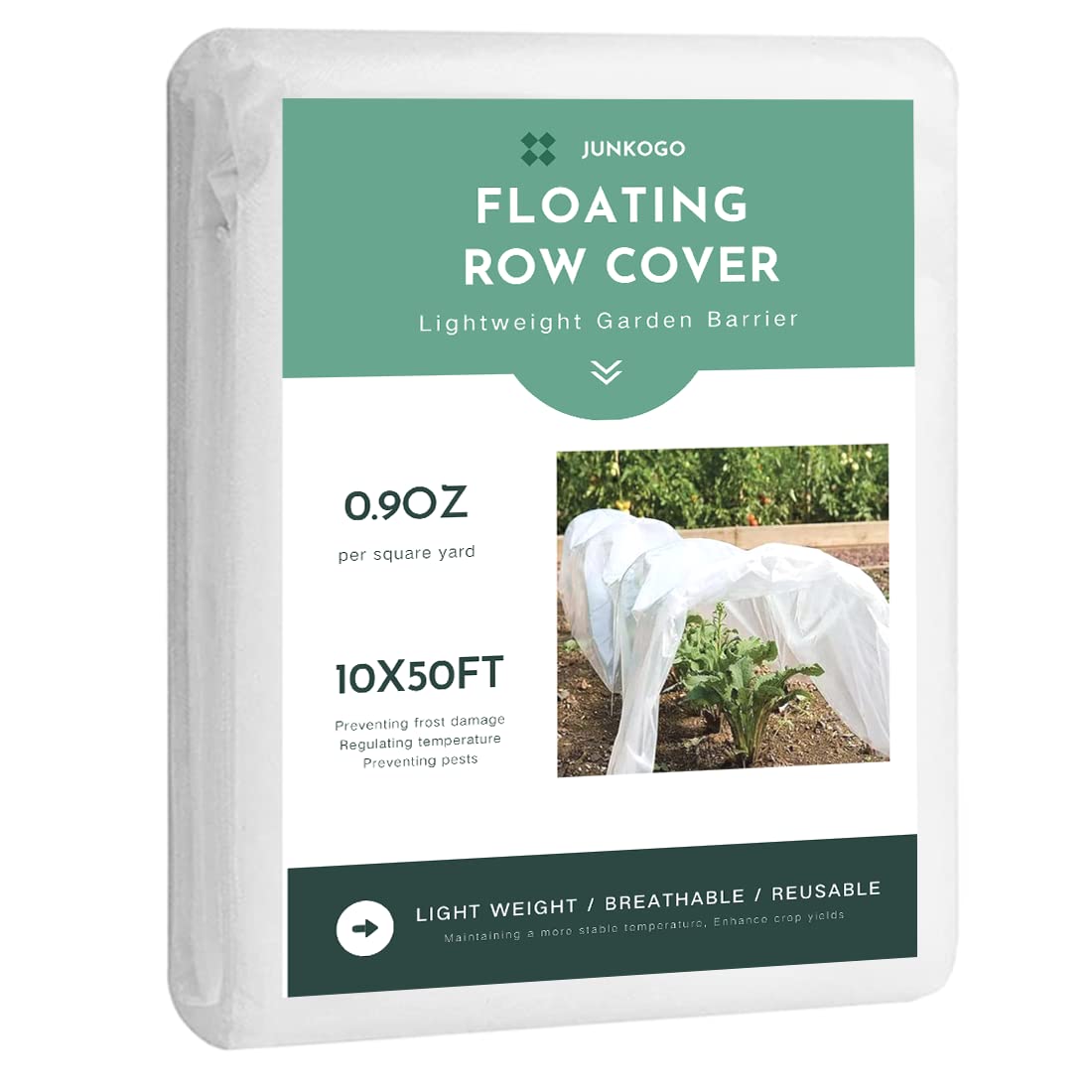
1. Plant Freeze Protection Cover, 10×50 FT Floating Row Cover
Our pick — over 4.5★ from 250+ verified ratings; the strongest balance of quality and price.
The all-around blanket that earned its place with real winter survivors.
You want a cover that actually protects your plants when frost hits, and buyers report this one delivers. They report it “worked great this winter in 2 different freezes” and kept plants alive and green. This 10 x 50 FT sheet of 0.9 oz/sq non-woven fabric (a breathable, felt-like material) blocks cold while letting air and moisture through, so your greens stay healthy. At just 2.33 pounds, you can drape it over a long raised bed without wrestling with a heavy roll.
The generous 10-foot width is a standout. One owner who loves the extra width noted they usually struggle with the standard 3-4 foot wide pieces, and this lets you cover far more ground in a single pass. Thanks to its breathable floating design, you can lay it directly over crops, securing the edges with stones or stakes, and leave it in place through cold nights.
This cover is best if you want one product that handles frost, wind, and even insects and birds. The maker positions it as a multi-season tool — use it in late fall and winter for freeze protection, then flip it to shade duty in spring and summer. The recurring advice from owners is simple: anchor it properly against high winds.
What owners cheer
- Functionality is the #1 praise — over 20 buyers call it out for doing exactly what it promises
- Extra-wide 10 ft breadth means fewer pieces to manage
- Reusable and cuttable to any shape you need
The trade-off
- Fabric is thin compared to heavier frost blankets, so it’s best for light-to-moderate freezes
- Arrives folded, not on a roll — one owner found the package unwieldy to manage
Reach for it if: you want a big, proven frost blanket for a large raised bed and you’re okay with light anchoring work.
Think twice if: you’re facing deep, prolonged sub-zero temperatures and need maximum cold protection — a heavier fabric will serve you better.
2. Plant Covers Freeze Protection 10x20ft Frost Cloth
A feather-light workhorse that outperforms straw and sheets for a modest outlay.
At 1.26 pounds, this 10 x 20 FT UV-stabilized polypropylene cover is noticeably lighter than the 2.33-pound larger blanket above, making it an easy pick for gardeners who want quick, no-fuss coverage of up to 200 square feet. On a calm evening, one owner found it “pretty easy to cover your plants” — the light material drapes without a fight.
Real-world reports back it up. In a Houston freeze, owners mention the cover “works as intended for native plants,” surviving wind, dogs, ice, and rain. But it’s thin enough to need bricks holding it down, and it “failed for sub-tropical plants.” So the honest verdict: this is a dependable budget cover for established plants in a moderate freeze, not a heavy-duty arctic blanket. skip it if you face hard freezes or tender tropical species.
Its versatility extends beyond winter. You can use this same cloth as a garden shade cover in summer to block harsh sun, or as a screen against birds and small animals. After the cold weather passes, it folds up small for storage. The most common advice in reviews is to weigh down the edges well on windy nights.
Best value pick: the sheer number of owners who mention plant protection — the single most-discussed aspect — confirms this crowds the top of the budget tier for good reason. Durability gets mixed feedback, with a few reporting wear over time, which is the fair trade for the lower cost.
Perfect for: a first-time gardener or someone covering a small-to-mid raised bed who wants proven frost protection without spending much.
Not the pick if: you need a rugged cover that will survive years of heavy wind and brutal freezes.
3. Garutom Plant Covers Freeze Protection 10ft x 33ft
The 85% light transmission makes it a spring-and-fall all-rounder.
This 10 x 33 FT cover stands out for a single spec that changes how you garden: it transmits 85% of available light. That means you can leave it on for weeks at a time, not just overnight, because your plants still get the sunshine they need to grow. The 1.1 oz/sq.yd. polypropylene fabric is a step up in density from the 0.9 oz covers, giving you a bit more cold resistance.
Owners consistently describe it as lightweight, breathable, and easy to cut or fold, with one extending pepper growth into late November (slug damage limited the yield). Another fit a full garden and flower beds under a single sheet, calling it sturdy. The mix of frost protection and summer shade duty makes it a genuinely versatile tool.
It handles wet weather well and is not water-resistant by design — you can water your garden right through the material without lifting it. Like the budget pick, it’s not very thick, so treat it with care and it will reward you with multiple seasons of use. Customers note it handled Pacific Northwest rains without issue.
Why this one: plant protection is the outright top mentioned aspect by a wide margin, and the ability to keep growing through rain without lifting the cover is a genuine convenience. The main caveat is thickness — it’s not built for the hardest freezes.
Pick this if: you want one cover that earns its keep from early spring through late fall, including summer shade.
Skip if: you’re in an area with deep, hard frosts and need maximum cold protection.
4. KLEWEE 10 x 50 FT Garden Mesh Netting

The ultra-fine weave that turns your berry bushes into a bird-proof vault.
This is a completely different tool from the frost cloths above — it’s a mesh barrier, not a blanket. The 0.8mm x 0.8mm ultra-fine weave, packing 80 mesh per inch, is dense enough to keep out birds, deer, rabbits, and cicadas while still letting sunlight, rain, and air reach your plants. The transparent design means you can check on your crops without lifting the cover.
Bird protection is the thing owners praise most by a wide margin. The review pages sum it up: “you actually get cherries and berries to harvest using this net. The birds are not happy.” One gardener uses it over strawberry and tomato beds as a sun screen, and another credits it with keeping cabbage loopers and fruit flies out of the garden entirely.
The honest trade-off is durability — some reviewers point out the PE material lasts only a season or two. It’s also not fully transparent, so it can look a bit odd in the garden and will billow in strong winds without a supportive frame. Use it with PVC hoops or stakes for the best results.
Swipe right for: anyone fighting an endless battle with birds and insects over their fruit and vegetables. The mesh lets water through on a shower setting and allows good airflow to prevent mildew.
Your best bet when: the enemy is winged or hopping, not freezing. It’s a pest barrier first and a sun screen second.
Look elsewhere if: your primary need is cold protection — this mesh adds no meaningful warmth.
5. RIFNY Garden Netting for Raised Beds, 2 Pcs 10x33Ft

Two full sheets that together guard more ground than any single roll.
This 2-pack gives you two separate 10 x 33 FT sheets of ultra-fine polyethylene mesh. That’s a huge advantage if you have multiple raised beds — you can cover one bed and the next without buying a second roll. The 0.04in mesh keeps out birds, squirrels, chipmunks, rabbits, and even mosquitoes while letting air, water, and light pass through.
Shoppers say impressive strength for such a light material. One was “very surprised” that the netting “held up through hail and high winds” without ripping — and if something snags it, the fibers move apart at the snag but can be tugged back into place, almost self-healing. The see-through design lets you watch your crops develop at every stage.
The most common grouse is that it stretches and tears over time, with some owners finding it worth a yearly replacement for the bug-free vegetables it provides. One noted that while it blocks birds, it also excludes pollinators — so you’ll want to lift it during flowering if you grow squash and other insect-pollinated crops.
The upside
- Two rolls for the price of one — covers separate beds or a long row
- Self-healing fibers resist tearing at snags
- Blocks small bugs that coarser nets miss
Watch for
- Material stretches and degrades over time
- Excludes pollinators, so lift it during bloom
Grab this if: you have more than one bed to protect and want a lightweight, high-permeability barrier.
Pass if: you’re looking for a single, ultra-durable net that will last for many years.
6. Harvest Guard Freeze Protection Plant Cover, 5′ x 25′

The lightweight blanket that turns a frozen lawn into a grassy triumph.
Made in the USA from non-woven fabric, this 5 x 25 FT cover is remarkably light at just 6.4 ounces. Its signature move is promoting seed germination — it traps heat and moisture to create a warm microclimate that gets grass seed and vegetables sprouting faster. One owner finally got their lawn to grow, crediting the cover with stopping birds from eating the seed and shielding the young grass from frost.
The versatility here is real. In Northern California, a gardener uses it year-round, reporting that lettuce survives both deep freezes and 100°F heat with a water spray, and it lets them start warm-season seeds a full month early. It works with soaker hoses, deters birds, slugs, and snails, and holds up for seasons when secured with 2x4s over drip-tube hoops.
The main drawback is its tendency to tear, especially at staple points in strong wind. One owner in Central Texas found rabbits sneaked under when the wind blew the fabric away. It’s a cover that rewards careful anchoring — use plenty of staples and weights along the edges.
Crowd favorite for: seed starting and grass seeding, where the heat-trapping design creates real growth benefits. The tear-resistance is the recurring caveat, so treat the edges kindly.
Choose it when: your project is new seed — grass, lettuce, or warm-season crops — and you want a boost in early spring.
Not ideal if: you need a tough, wind-proof cover for a large exposed bed.
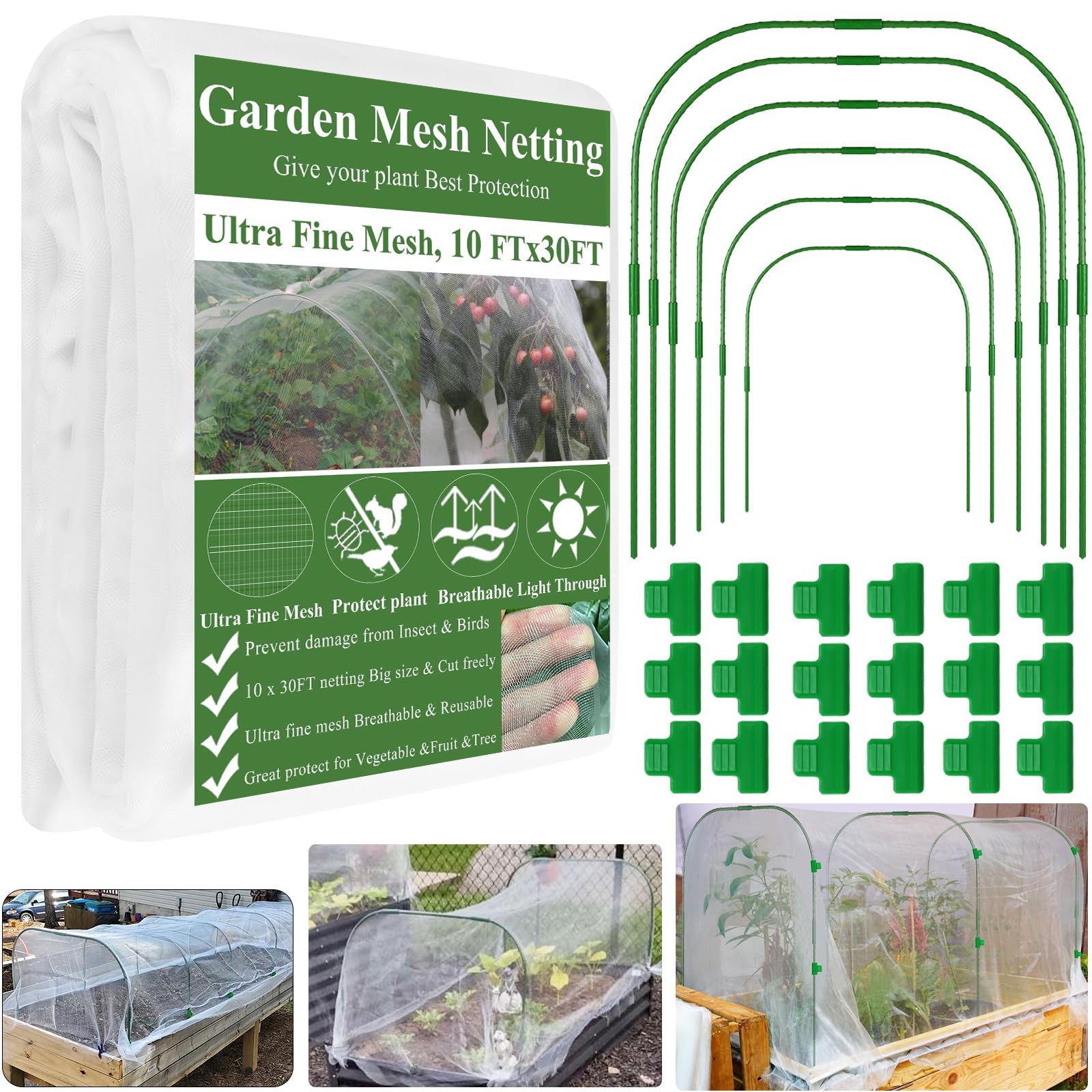
7. Garden Mesh Netting Kit with 6Pcs Hoops & 18 Clips
Everything you need to build a pest-proof tunnel goes in one box.
This set saves you a second shopping trip because it includes everything you need to build a protective arch. It bundles a 10 x 30 FT ultra-fine polyethylene mesh (a lightweight plastic netting) with 6 adjustable garden hoops and 18 clips. You arch the hoops over a raised bed, drape the net, and clip it down in under five minutes. The hoops are plastic-coated steel pipes, pointed at both ends to stick into the soil without extra stakes.
Owners love the simplicity. “Easy to set up” is a recurring phrase, and one gardener says it “has kept whatever critter that was eating my plants away” — rabbits were the main culprit and the net put a stop to it. The hoops create enough headroom that your plants aren’t crushed, which is a major upgrade from free-floating covers for taller crops.
The trade-off is the hoop quality. A few owners found the poles a little flimsy and one reported the netting snagged during setup. The mesh held up for two seasons for one gardener, who described it as budget-friendly and great for beginners, though not a permanent structure.
The big win: a complete, beginner-friendly system that’s ready to install right from the start. The net is sufficient for most jobs; just be gentle with the hoops.
Pick this if: you want a fast, complete solution for protecting a raised bed from pests without buying hoops separately.
Look elsewhere if: you need a heavy-duty frame that will stand up to years of harsh weather.
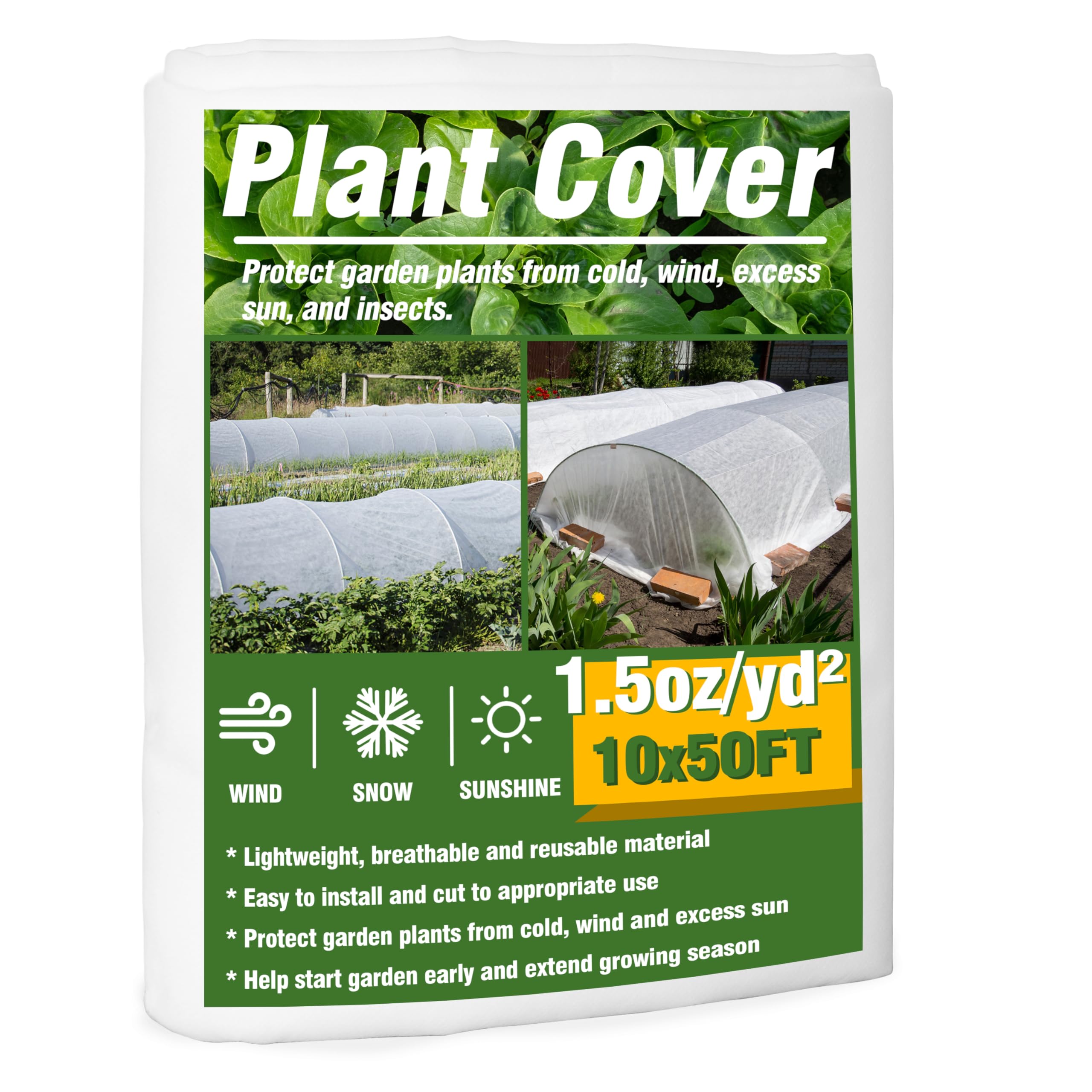
8. Gardzen 1.5 oz Plant Covers Freeze Protection, 10ft x 50ft
The thickest frost fabric here, built for nights that dip well below freezing.
At 1.5 oz/yd², this is the heaviest frost cloth in the lineup — a meaningful step up from the 0.9 oz and 1.1 oz fabrics above. That extra density translates directly into more heat retention on cold nights, making it the pick for gardeners who face hard freezes rather than just a light dusting of frost. The 10 x 50 FT sheet covers a long raised bed or a series of smaller beds in one go.
The reviews show a pattern of years-long loyalty. One owner on their third order calls these “the greatest covers ever,” while another who used it on 5-foot-tall lemon and lime trees says it did a great job protecting the citrus through winter. The breathable fabric still lets air and light through, so it protects without cooking your plants.
Compared to the 0.9 oz blankets, this is noticeably heavier to handle and blocks more light, so it’s best used for winter protection rather than as a long-term spring cover. A few buyers report durability issues over time, though one long-time user notes this white fabric held up far better than a thicker green alternative after a full summer outdoors.
Built for the deep cold: plant protection is the most-mentioned aspect by far, and the heavier fabric gives you real headroom on temperature. Use it when the forecast looks truly grim.
Reach for it when: your winters bring hard frosts and you want a thicker barrier that traps meaningful warmth overnight.
Think twice if: you need a light, see-through cover for all-season insect and sun protection.
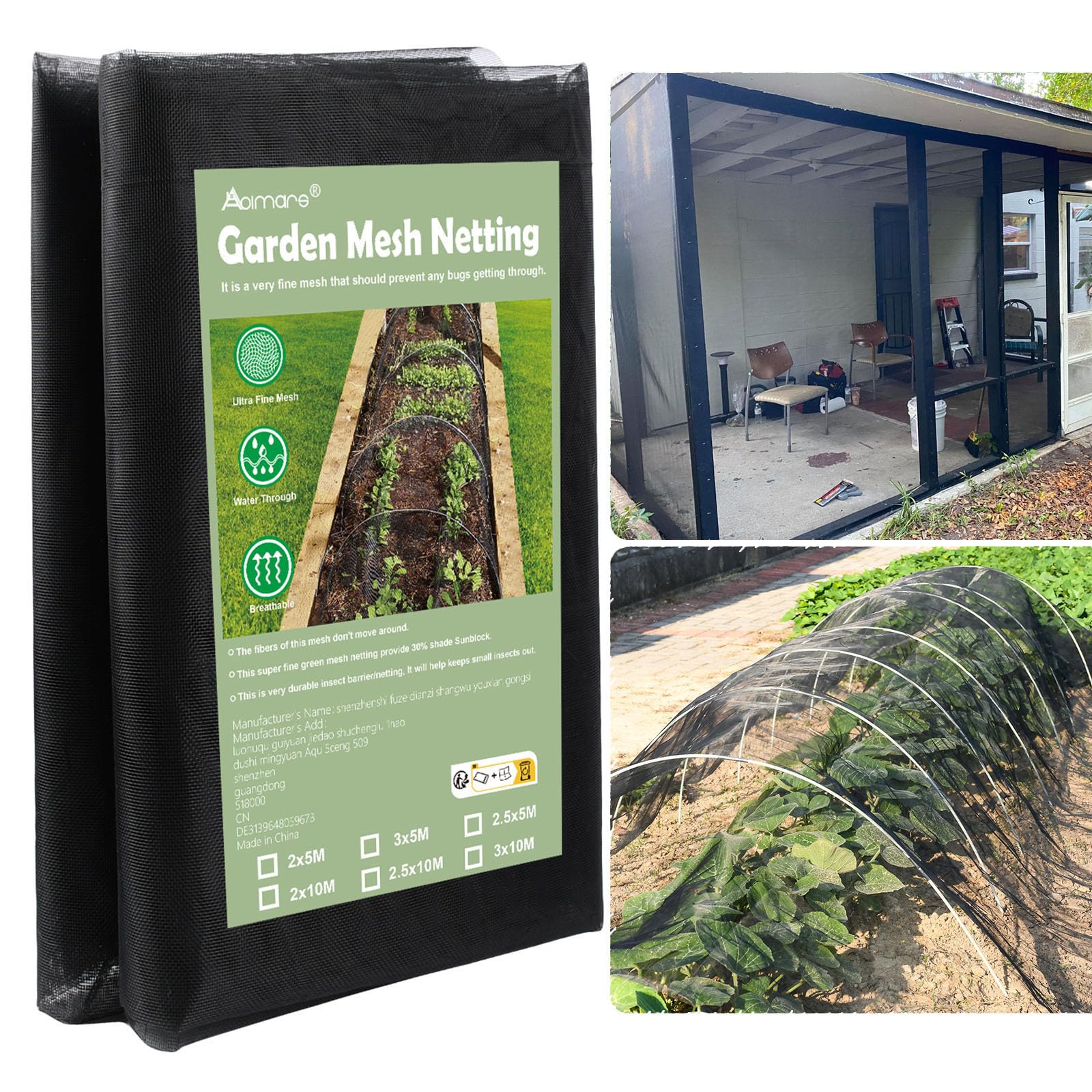
9. Abimars 10′ x 33′ Ultra Fine Black Plant Row Covers
The nano-fiber mesh that walked through a hail storm without a scratch.
This black 10 x 33 FT netting is made from a novel Nanometer PPT material that the maker says is more tear-resistant than standard PE. The durability claim is backed by an owner’s field report: it “held up during first hail storm with 60+ mph winds” with no rips or tears, protecting vegetables perfectly while secured with landscape pins. It also helped prevent sun scorching.
Beyond toughness, the 30% shade factor is its second superpower. In summer heat, the black mesh blocks a chunk of sunlight, keeping plants cooler and helping prevent bolting and drying — which can also reduce how often you need to water. Every wire is fixed in place, so cut edges stay clean and never fray, and it won’t unravel if you trim it to fit any bed shape.
Because the mesh is super lightweight at 1.33 oz/yd², you’ll want a support system — a trellis or stakes — so it doesn’t lay heavily on plants and bend stems. Owners also use it as mosquito netting for a camper van and to block vine borers on squash. The 2-year warranty adds a little confidence, and it’s a better value than buying hoops and netting separately.
Why it stands out
- Durability is the #1 praise — owners confirm it shrugs off wind and hail
- Clean, non-fraying cuts make custom sizing easy
- Dual duty as insect barrier and 30% shade cloth
Keep in mind
- So light it needs support hoops or stakes to avoid crushing plants
- Black color isn’t for gardeners who want a natural look
Your pick if: you want the most durable mesh available and need both bug protection and summer shade from one roll.
Not for you if: you prefer a free-floating cover you can toss directly over plants without building a frame.
Understanding the Specs
Fabric Weight (oz/yd²)
This number tells you how much cold protection a frost blanket offers. A 0.9 oz/sq cover is light and breathable, good for insect screens and light frosts. A 1.5 oz/yd² fabric traps more heat and stands up to harder freezes, but it blocks more light, so it’s not meant for long-term sunny-day use. A 1.1 oz/sq.yd sits in the middle, letting 85% of light through while adding a bit more warmth.
Mesh Size (mm)
For insect and bird netting, the mesh opening size decides what gets kept out. A 0.8mm x 0.8mm weave is dense enough to block tiny pests like cabbage loopers and fruit flies while still passing water and air. A 0.04in ultra-fine mesh offers similar protection with a slightly different weave. The finer the mesh, the more bugs it stops — but the less visible your garden becomes.
Light Transmission & Shade %
Row covers that let through a high percentage of light can stay on for long stretches without stunting growth. A fabric transmitting 85% of light is ideal for season-extending. A black mesh with a 30% shade rate is the opposite — it’s designed to block a portion of sun to keep plants cool in summer heat, preventing bolting and reducing watering frequency.
Coverage Area & Dimensions
Coverage area determines how many beds you can protect in one pass. A 10 x 50 FT roll covers a long row or multiple raised beds in one pass, while a 10 x 20 FT sheet handles a modest bed. Before buying, measure your beds and remember that you’ll need extra fabric at the edges to leave a few inches for anchoring with soil, stones, or staples.
FAQ
How much cold protection does a row cover really add?
Can I water my plants while the cover is on?
Will a row cover block the sunlight my plants need?
Do I need support hoops or can the cover rest on the plants?
What’s the difference between frost cloth and insect netting?
How long will a row cover last?
Will a fine mesh net keep pollinators away from my vegetables?
Can I cut a row cover to fit my specific raised bed?
Is a thicker fabric always better?
How do I keep a row cover from blowing away in the wind?
Final Thoughts: The Verdict
For most raised bed gardeners, the row covers for raised beds winner is the Plant Freeze Protection Cover because it pairs a proven freeze record with a huge 10 x 50 FT sheet at a fair price. If you’re watching your budget, the Plant Covers Freeze Protection 10×20 delivers dependable frost protection for a small investment. And if your battle is with birds and bugs rather than cold, the KLEWEE Garden Mesh Netting is the one to reach for — just be ready to build a simple frame to keep it taut.
How We Picked
We do not accept paid placement. Every pick is matched to a real buyer and a real use-case; we do not hands-on test units.
Sources & Methodology
Specifications: manufacturer listings and product documentation. Review insights: verified customer reviews, as of August 2026. Pricing: not shown on this page (it changes often); check the current price via the retailer link.
As an Amazon Associate, Lawn Gear Lab earns from qualifying purchases. This does not affect which products we feature.