
Specs are compiled from manufacturer listings and verified buyer reviews and can change over time — please confirm the key details on the product page before buying.
Getting cuttings to root is the most anxious part of propagation. You dip, you wait, and the wrong medium turns those hopeful stems into a mushy mess. The secret is giving new roots the exact air and moisture balance they need — not too wet, not too dry — and a handful of products make that job almost simple to use.
I’m Rikta — the founder and writer behind Lawn Gear Lab. This guide is built by comparing the manufacturers’ published specifications and the patterns across verified customer reviews, so you get each pick’s real strengths and trade-offs instead of marketing spin.
Whether you are cloning a favorite houseplant, starting vegetable seeds indoors, or running a small hydroponic setup, the best rooting medium for cuttings depends on how much hands-on time you have and how many plants you need to support.
Quick Picks
- Coast of Maine Sprout Island Blend Seed Starter — Top Performer
- Hormex Rooting Cubes (50 Pack) — Best Overall
- Jiffy Natural & Organic Seed Starting Mix (10 QT) — Great Value
- GARDENWISE Organic Fine Vermiculite (5 qt) — Budget Pick
How To Choose The Best Rooting Medium For Cuttings
A rooting medium is simply the material you stick your cutting into while it grows new roots. The goal is a steady supply of moisture and oxygen — no drowning, no drying out. The right choice depends on the plant, your setup, and how much babysitting you want to do.
Texture and Particle Size
Fine-textured mediums hug the stem without leaving air gaps, but they can also compact and suffocate roots if they are too dense. A particle size around 2 mm (about the thickness of a credit card) and smaller — like fine vermiculite — gives roots a gentle path to push through while still holding enough water.
Moisture Retention vs. Aeration
Roots need both water and air. Peat moss can soak up to 20 times its weight in water, and vermiculite can absorb 3 to 4 times its own volume, which keeps the area around the cutting damp for days. But if the medium holds too much water without draining, cuttings rot before they root. A blend or a structured plug balances the two.
Form Factor: Loose Mix vs. Pre-formed Plugs
Loose mixes (like a bag of seed-starting soil or straight vermiculite) give you flexibility — you fill your own trays and adjust depth. Pre-formed rooting plugs, on the other hand, come as individual cubes or pucks that you simply insert the cutting into. Plugs are neater and reduce handling, but loose mixes are more economical if you are starting a lot of seeds or many varieties at once.
Unit Count and Volume
Think about how many cuttings you plan to root at one time. A 50-count bag of plugs gives you exactly 50 starts from one package. A 5-quart bag of loose medium can fill several trays but does not come with a guaranteed number of spots — you decide how many cuttings fit. If you propagate in batches, the unit count tells you upfront whether you are buying enough.
Quick Comparison
| Model | Best For | Form | Volume / Count | Weight | Amazon |
|---|---|---|---|---|---|
| Coast of Maine Sprout Island Blend | Premium organic seed starting | Loose mix | 16 Quarts | 12 Pounds | Amazon |
| Hormex Rooting Cubes | Cloning cuttings in plugs | Pre-formed cubes | 50 Count | — | Amazon |
| Jiffy Seed Starting Mix | Reliable all-purpose starting mix | Loose mix | 10 Quarts | 1 Pounds | Amazon |
| GARDENWISE Fine Vermiculite | Adding aeration to soil blends | Loose granules | 5 Quarts | — | Amazon |
In‑Depth Reviews
1. Coast of Maine Sprout Island Blend Seed Starter
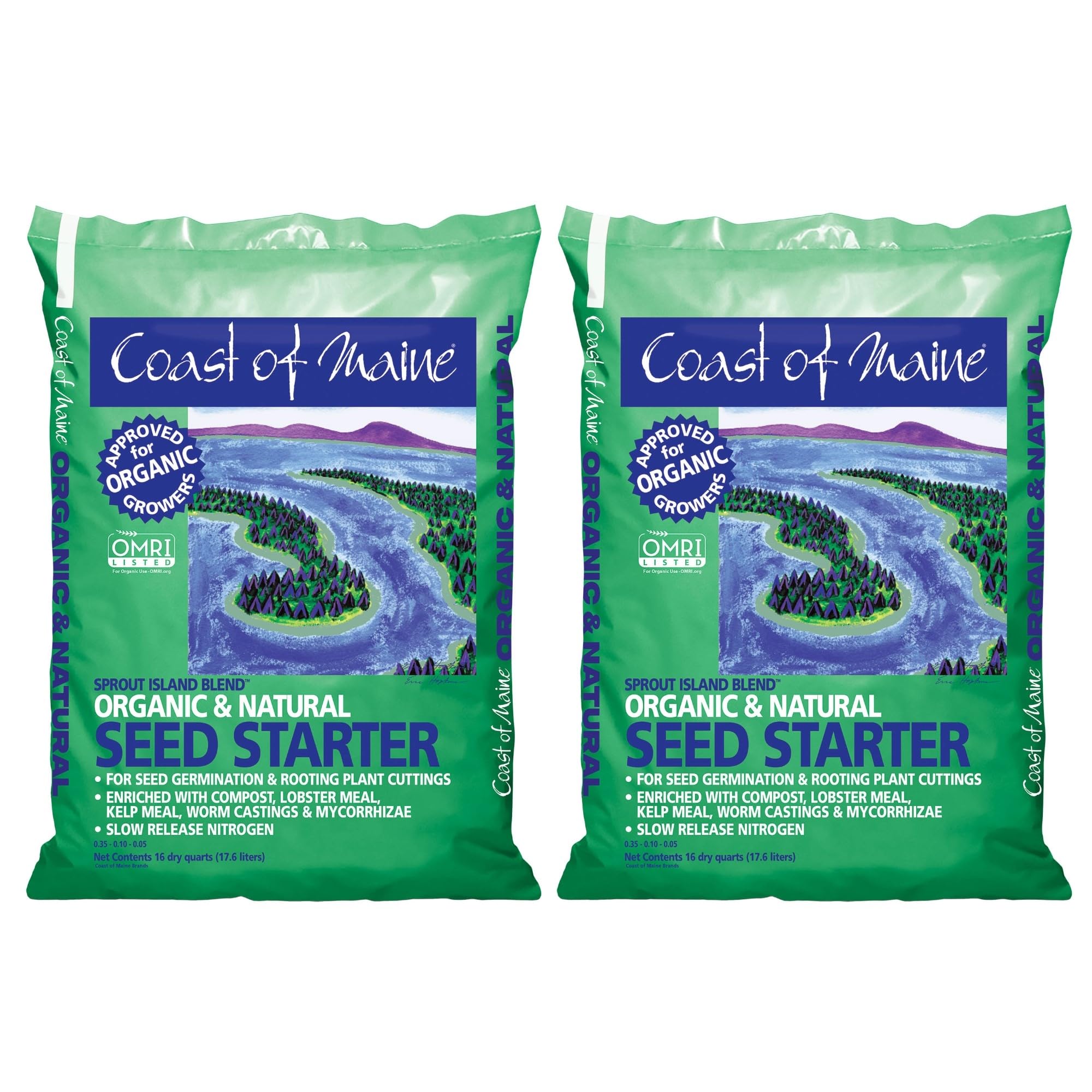
A nutrient-dense loose mix for growers who want premium organic results from the first leaf.
This 16-quart bag is built around sphagnum peat moss, compost, perlite, lobster and crab shell meal, and kelp meal — a lineup that feeds the cutting while it roots, unlike the Hormex plugs or plain vermiculite which only give structure. Buyers report it is pricey but call it “the best seed starting mix I’ve ever used,” with seedlings turning out noticeably healthier.
The texture leans loose and fluffy, so air moves freely around the stem. That matters because a cutting sitting in a too-dense mix often rots before roots form. At 12 pounds for 16 quarts, this is by far the heaviest option here — at 12 pounds for 16 quarts versus the Jiffy bag at 1 pound for 10 quarts — which means you pay for the weight in shipping, but you get a lot of actual medium for the money.
It is not a plug or a single-ingredient additive; it is a complete, ready-to-use blend. One reviewer did note sifting out a few twigs and clumps, so expect a quick pick-through before you fill trays.
Nourishing foundation: The compost, kelp, and shell meal give cuttings a slow-release food source that loose mixes like Jiffy do not provide, so you can delay fertilizing for weeks.
Heavy bag, premium price: The 16-quart volume is generous, but at this price point, the bag is for the committed gardener who values organic ingredients over pure cost per quart.
Reach for this if: You want an organic, all-in-one mix that feeds as it roots and you are starting a large batch of seeds or cuttings.
Look elsewhere if: You only need a few starts or want the lowest — the smaller Jiffy bag or a bag of vermiculite will stretch further for occasional use.
2. Hormex Rooting Cubes (50 Pack)
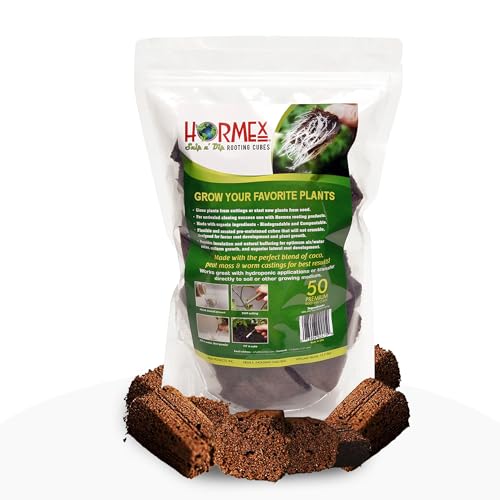
Pre-formed cubes that take the guesswork out of moisture — dip, insert, and walk away.
These 50 individual cubes are made from a peat moss and coco coir blend with worm castings already mixed in. Unlike loose mediums where you have to judge how wet the whole batch is, every Hormex cube arrives with a consistent structure that holds moisture without getting soggy. The cubes are tune for cuttings, so you can skip the rooting hormone step if the plug is pre-soaked.
One downside: a buyer reported the cubes arrived “filled with fungus gnat larvae,” which is a known risk with organic peat-based products that are stored damp. That is a real headache if you are starting indoors. Still, many reviewers call them the best rooting plugs they have used and praise how fast cuttings pop roots in the cubes.
Compared to the Coast of Maine loose mix, which gives you 16 quarts of medium, the Hormex cubes give you exactly 50 spots. That makes these far more practical if you are cloning several plants at once.
What works well
- Pre-formed shape makes handling cuttings mess-free.
- Coco and peat blend balances air and water without guesswork.
- 50-count gives you a full batch out of one package.
Watch out for
- Wet organic material can harbor fungus gnat larvae.
- Higher cost per cutting than using a loose bag mix.
Perfect for: Cloning a batch of cuttings with minimal setup — each cube is a self-contained rooting station.
skip it if: You prefer a sterile starting point or you are starting seeds rather than cuttings, where a loose mix is easier to handle.
3. Jiffy Natural & Organic Seed Starting Mix (10 QT)

The classic bagged mix that generations of gardeners trust for dependable germination.
This 10-quart bag is a simple three-ingredient blend of peat moss, vermiculite, and lime. The peat moss can hold up to 20 times its weight in water, and the vermiculite prevents the soil from compacting — two features that make this a reliable home for a cutting while it develops roots. The lime keeps the pH in a healthy range, which is especially useful if you are using tap water that tends to be alkaline.
Owners mention “an excellent germination rate” and say the texture is fine enough for seeds without large bark chunks. At just 1 pound for 10 quarts, this mix is far lighter than the 12-pound Coast of Maine bag — at 1 pound versus 12 pounds — so shipping costs stay low and the bag is easy to carry.
Note that this mix has no added fertilizer, unlike the Coast of Maine blend. That is fine for rooting because young roots are sensitive to strong nutrients, but you will need to start feeding once true leaves appear.
Light and fine: The texture is consistent and soft, so tender roots push through without resistance — a key advantage over chunkier mixes that can trap air around the stem.
No food included: Because it lacks compost or worm castings, you have to add fertilizer after rooting, which means one more step later.
This is for: The budget-conscious propagator who wants a reliable, lightweight mix without premium ingredients.
Not ideal for: Anyone who wants an all-in-one mix that feeds as it roots — you will need to supplement after a few weeks.
4. GARDENWISE Organic Fine Vermiculite (5 qt)
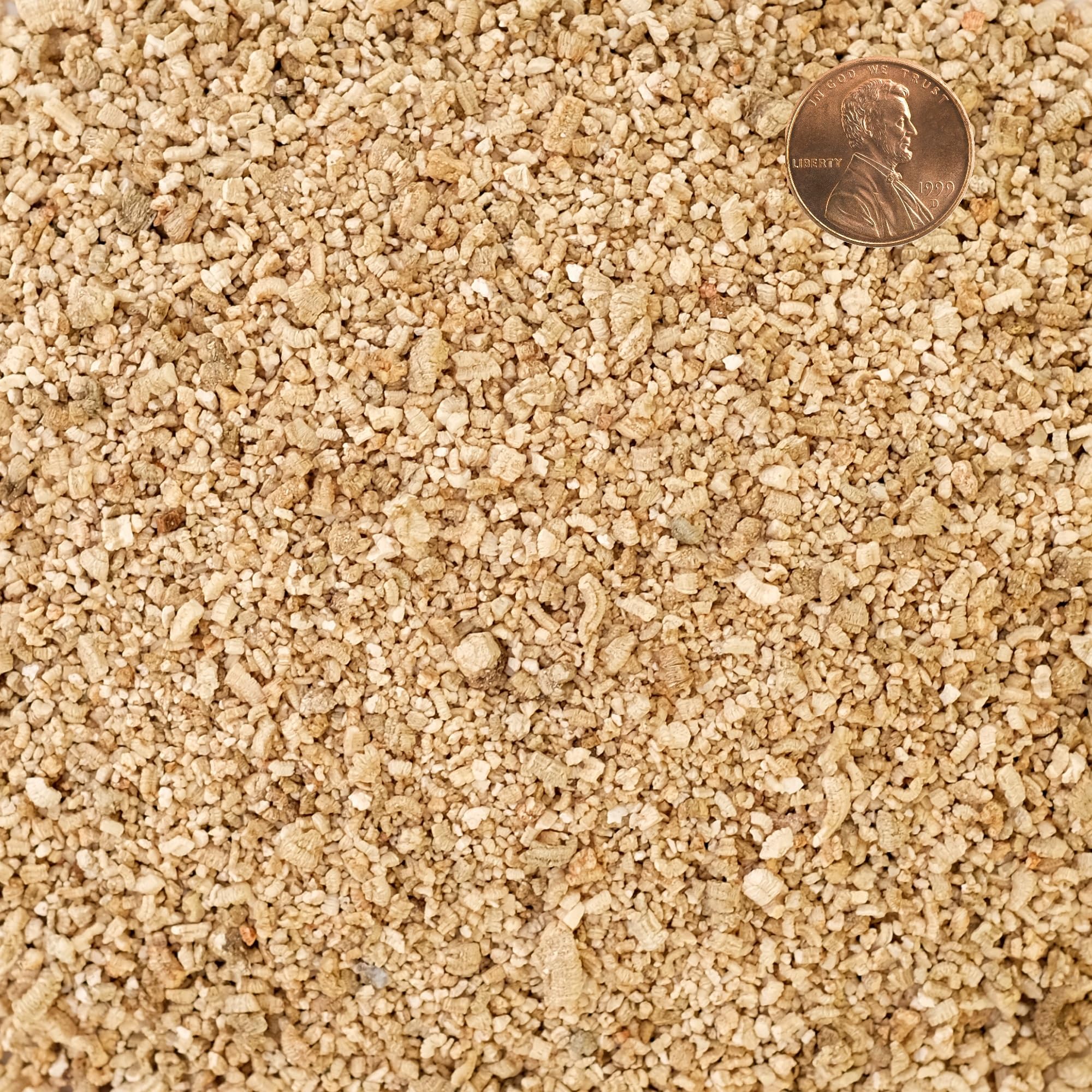
A single-ingredient granular medium for growers who want to customize their own blend.
This is fine-grade vermiculite with a particle size of 2 mm and smaller. Unlike the pre-mixed Jiffy or Coast of Maine bags, this is a loose, lightweight mineral that you use on its own for rooting cuttings or mix into other mediums to improve aeration and moisture holding. One reviewer noted, “I love the size of this vermiculite,” noting it is slightly chunkier than the flaky stuff from big-box stores, so it stays in the soil instead of washing away.
The 5-quart volume is small — at 5 quarts versus the Coast of Maine’s 16 quarts — and one reviewer felt it was not a huge amount for the money. But for rooting a few cuttings or amending a batch of potting soil, the fine texture makes it a precise tool. It has no nutrients, no pH adjusters, just the mineral itself.
Other options like the Jiffy mix already contain vermiculite, so buying this separately only makes sense if you want to control the exact ratio in your own blend or if you are using it in a hydroponic setup where a sterile medium is preferred.
Why it stands out
- Fine, consistent granules (2 mm and smaller) hold moisture without compacting.
- Organic and chemical-free — safe for any plant or mushroom cultivation.
- Versatile: use alone for cuttings or mix into potting soil to lighten the texture.
Why it is not for everyone
- 5 quarts is a small volume for large propagation projects.
- No added nutrients or pH buffer — you must supply both yourself.
Best for: DIY mixers who want a pure, fine-grade mineral for precise control over aeration and moisture.
Not for: Beginners who want a ready-to-use medium — you will need to add nutrients and monitor pH yourself.
Understanding the Specs
Moisture Retention
This tells you how much water the medium can hold. Peat moss can absorb up to 20 times its weight in water, and vermiculite can soak up 3 to 4 times its own volume. High moisture retention means you water less often, but too much water around a cutting (without air) leads to rot. A blend or structured plug strikes a middle ground that keeps the stem damp but not swimming.
Particle Size and Texture
Fine texture (like 2 mm and smaller vermiculite) creates a uniform bed that makes good contact with the stem. Coarse or chunky mediums leave air gaps that can dry out the cutting’s base. A fine or medium-fine texture is ideal for rooting because roots need consistent moisture at the cut end. Oversized particles work better for established plants that need drainage, not for fragile new roots.
Volume vs. Unit Count
Loose mediums are sold by volume (quarts or gallons), so you decide how many cuttings fit. Pre-formed plugs are sold by unit count, giving you exactly that many rooting spots. If you clone 50 cuttings at once, a 50-count plug bag lines up perfectly. If you start seeds in a 10″ x 20″ tray, a 10-quart bag of loose mix will fill it about one inch deep — enough for dozens of starts. Match the form to your tray size and batch habit.
Organic Certification
An organic label means the medium is free from synthetic fertilizers and pesticides. That matters for cuttings because young roots are sensitive to chemical burns. Organic mixes like peat moss, coco coir, and vermiculite provide a neutral, clean base that does not interfere with the cutting’s natural rooting hormones. For edible plants, organic certification is an extra layer of safety.
FAQ
Can I use regular potting soil for rooting cuttings?
What is the difference between vermiculite and perlite for cuttings?
How long do rooting plugs stay moist before I need to water again?
Can I reuse the same rooting medium for another batch of cuttings?
Do I need to add rooting hormone if I use a pre-fertilized plug?
Is a loose seed-starting mix or a pre-formed plug better for cuttings?
How do I prevent fungus gnats in my rooting medium?
Can I use a rooting medium for both seeds and cuttings?
Final Thoughts: The Verdict
If you want one dependable pick, the best rooting medium for cuttings is the rooting medium for cuttings that fits your propagation style. The Hormex Rooting Cubes are our top pick because each pre-formed plug removes the moisture guesswork and gives you exactly 50 cuttings to start. If you prefer a loose mix that feeds as it roots, the Coast of Maine Sprout Island Blend delivers premium organic ingredients. And for a lightweight, budget-friendly bag that works for seeds and cuttings alike, reach for the Jiffy Seed Starting Mix.
How We Picked
We do not accept paid placement. Every pick is matched to a real buyer and a real use-case; we do not hands-on test units.
Sources & Methodology
Specifications: manufacturer listings and product documentation. Review insights: verified customer reviews, as of July 2026. Pricing: not shown on this page (it changes often); check the current price via the retailer link.
As an Amazon Associate, Lawn Gear Lab earns from qualifying purchases. This does not affect which products we feature.