
Propagating your own plants from cuttings is one of the most rewarding skills in gardening, but low success rates from failed rootings can quickly drain both your budget and your patience. A dependable rooting hormone is the single variable that turns a 20% survival rate into a nearly guaranteed outcome, converting a snipped stem into a thriving clone every time.
I’m Rikta — the co-founder and writer behind Lawn Gear Lab. My approach to this guide involves cross-referencing the active-ingredient concentrations (IBA percentages), formulation types (powder, gel, liquid, paste), and real-world propagation results from hundreds of verified buyer reports to isolate which rooting compounds deliver the highest strike rates for the widest range of plant varieties.
After analyzing seven of the most trusted formulations on the market, from heavy-duty powders for hardwood species to gentle gels for soft tissue cuttings, this guide presents the definitive analysis of the best rooting hormone for improving your cloning success across all growing skill levels.
How To Choose The Best Rooting Hormone
Selecting the right rooting hormone is less about the brand name and entirely about matching the formulation and IBA strength to your target plant’s woodiness. A soft-tissue stem cutting and a hardwood branch cutting require completely different chemistry.
IBA Concentration — Matching Strength to Woodiness
The active ingredient in almost every rooting hormone is Indole-3-Butyric Acid (IBA), a synthetic auxin that stimulates root initiation. Low-concentration formulas (0.1% to 0.3% IBA) are formulated for softwood and semi-hardwood cuttings from plants like roses, mums, and coleus. High-strength powders (0.8% to 1.6% IBA) are reserved for stubborn hardwood cuttings from trees, evergreens, and dormant leafless canes. Applying a 1.6% IBA formula to a tender herb cutting can actually inhibit rooting or burn the stem tissue.
Formulation — Powder, Gel, Liquid, or Paste
The physical form of the rooting hormone determines how well it adheres to the cutting and how long it stays in contact with the cambium layer. Powders are the most shelf-stable and affordable, but they can easily flake off dry cuttings. Gels provide a thick, tenacious coating that maintains prolonged contact with the stem, making them ideal for smooth-stemmed vegetables and houseplants. Liquids penetrate substrates quickly and work excellently in water-propagation setups. Pastes (keiki pastes) are specialized for dabbing onto exposed nodes on orchids and leggy houseplants to force branch or keiki growth from dormant buds.
Application Method and Safety
Every rooting hormone containing IBA is classified as an EPA-registered pesticide, and the safety data sheet will recommend gloves and eye protection during use. Powders require you to dip the dampened cutting end into the jar and tap off the excess — never return unused powder to the jar to avoid contamination. Gels allow you to squeeze exactly as much as needed onto a clean surface. Liquids are dosed by the drop into the propagation water or substrate. Understanding these protocols ensures both plant health and user safety, especially when using high-strength formulas on edible crops.
Quick Comparison
On smaller screens, swipe sideways to see the full table.
| Model | Category | Best For | Key Spec | Amazon |
|---|---|---|---|---|
| Hormex #16 | Premium Powder | Difficult hardwood cuttings | 1.6% IBA | Amazon |
| Clonex Gel | High-End Gel | Soft tissue & vegetable propagation | 0.31% IBA | Amazon |
| Root Drops | Liquid | Water propagation & transplant shock | Liquid with vitamins | Amazon |
| Hormodin Compound | Bulk Powder | Large-scale greenhouse propagation | 0.8% IBA / 17,500 cuttings | Amazon |
| Berkland Keiki Paste | Paste | Orchid node stimulation & houseplant branching | Cytokinin-based 0.5 oz | Amazon |
| Garden Safe Take Root | Entry Powder | General rose & flower cuttings | 0.1% IBA | Amazon |
| FoxFarm Happy Frog | Fertilizer | Flowering boost & fruit development | 1-12-0 NPK (guano) | Amazon |
In‑Depth Reviews
1. Hormex Rooting Powder #16 (1.60 IBA)

Hormex’s #16 formulation carries the highest IBA concentration in this lineup at 1.6%, placing it squarely in the territory of difficult-to-root hardwood cuttings, junipers, and dormant leafless canes. The powder is free of alcohol, dyes, and preservatives — a clean formula that experienced propagators value when working with rare ornamentals and fruit tree scions.
Verified buyers report striking success with previously stubborn species: sugar apple cuttings that leafed out within two weeks in plain water, and pear tree air layers that produced fast, vigorous root growth with a 100% success rate. The included instructions reference a plant list to match the correct IBA strength to the variety, which reduces guesswork for the user.
The 0.75-ounce container is small, but a single jar lasts many seasons because only the cut end needs a light dusting. Several long-time gardeners noted that this powder enabled cuttings they had never been able to root before, citing it as a daily-carry item for spontaneous propagation in the garden.
What works
- High 1.6% IBA tackles even the most stubborn hardwood cuttings
- Clean, dye-free formula preferred for sensitive ornamentals
- Proven results on pear, rose, and sugar apple cuttings
What doesn’t
- Excessively strong for softwood or herbaceous cuttings
- Small bottle size relative to the price premium
2. Clonex Rooting Gel – High-Performance Rooting Compound

Clonex is the industry-standard gel for propagation, trusted by nurseries and serious home growers since 1988. Its water-based, tenacious gel formula contains 0.31% IBA — a moderate strength ideal for soft tissue plants, herbaceous perennials, and vegetable cuttings. The thick consistency ensures the active ingredient stays in prolonged contact with the cambium layer, unlike powder that can dislodge during planting.
Users consistently report faster and more reliable root initiation compared to powder alternatives. One detailed propagation guide documented cloning Black Magic roses using Clonex with consistent success, emphasizing the clean application and enhanced coverage. The 100 ml bottle is compact yet economical for a medium propagation volume.
One important consideration is the product’s EPA-registered status — it contains 0.31% IBA classified as a pesticide, so users handling edible crops or aquaponics setups should wear gloves and eye protection. A small number of buyers reported damaged caps during shipping, but the inner seal typically protects the gel from contamination.
What works
- Tenacious gel adheres to cuttings better than loose powder
- Trusted by professional nurseries for consistent propagation results
- Effective on a wide range of soft tissue and herbaceous plants
What doesn’t
- Fragile cap/container sometimes arrives cracked in transit
- Requires safety precautions due to pesticide classification
3. Root Drops – Liquid Rooting Hormone by Southside Plants

Root Drops takes a distinct approach by combining rooting hormones with vitamins in a liquid formula designed specifically for water propagation, LECA, pon, and sphagnum moss. The dropper bottle delivers two drops per cup of water, which makes it nearly effortless to use compared to measuring powders or squeezing gels.
Reviews from houseplant propagators highlight its performance on monsteras, peperomia, and baby rubber plants, with visible water root growth appearing within two weeks. The 4-ounce bottle is concentrated enough to last through many propagation cycles, and the inclusion of vitamins is marketed to reduce transplant shock when moving cuttings from water to soil.
The liquid nature makes it unsuitable for dipping as a gel or coating applied directly to dry stems. It works best when added to the propagation medium rather than dabbed onto the cut end. For newbies focused on indoor water propagation, this is the most beginner-friendly option in the roundup, though experienced propagators may want a higher IBA concentration for woody species.
What works
- Extremely simple dosing — just two drops per cup of water
- Works in water, soil, LECA, and sphagnum moss propagation
- May reduce transplant shock during repotting
What doesn’t
- Not suitable as a direct dip-and-stick powder substitute
- Lower IBA impact compared to concentrated gels and powders
4. Hormodin Rooting Compound (1/2 Pound)

Hormodin is a bulk-powder rooting compound containing 0.8% IBA, the middle tier between standard softwood concentrations and the heavy-duty 1.6% formulas. The 8-ounce jug is rated to treat up to 17,500 cuttings, making it the most cost-efficient option for greenhouse operators or gardeners propagating large trays of woody perennials, dahlias, and rhododendrons at scale.
Buyers with dahlia propagation setups reported roots visible in root riot cubes, while a seasoned gardener noted it makes cloning of already-easy plants nearly 100% reliable. The “1:1” mixing ratio on the label suggests it can also be diluted, though most users simply dip the cutting directly into the powder from the lid as directed.
The product is less refined than the Hormex powders — it lacks the detailed plant-list labeling and multiple IBA-strength options. However, for anyone propagating dozens of cuttings at once, the sheer quantity per dollar drives this choice. The easy-to-use cap-dip method works well for woody stems, though the powder can clump in humid conditions if the lid is left loose.
What works
- Extremely high value at 17,500 cuttings per 8-ounce jug
- Effective mid-range IBA for many woody and semi-hardwood species
- Simple dip-and-plant process with no mixing required
What doesn’t
- Powder can clump if exposed to humidity or moisture
- No strength-variety reference list included with the package
5. Berkland Keiki Paste for Plants
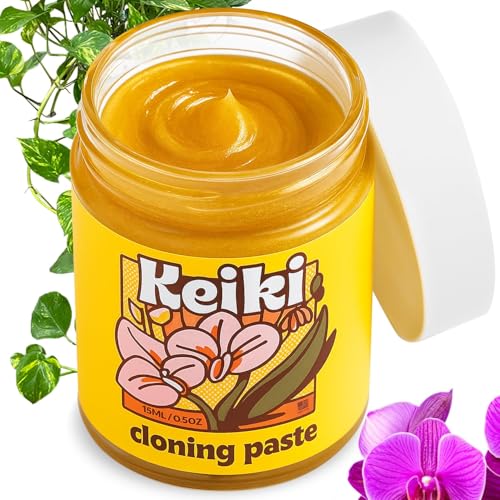
Keiki paste is a fundamentally different product from conventional rooting hormones. Instead of IBA-driven root initiation on cut stems, Berkland’s paste uses cytokinins — plant growth regulators that stimulate dormant nodes to produce new shoots, keikis (baby plants), or additional bloom spikes on orchids. This 0.5-ounce jar is labeled for “100+ nodes” and is formulated with growth nutrients alongside the cytokinin blend.
Reviewers report dramatic results on monstera, jade plants, rubber plants, and phalaenopsis orchids. One verified buyer documented four new sprouts on a single monstera vine after two months, rescuing a plant suffering from root rot. Another saw new branches sprouting on jade and rubber plants within just a few weeks after applying paste to scraped nodes. The application method — scrape the bark off a node and apply a rice-grain-sized dab — is simple and requires no special tools.
The jar is small and paste is sticky, so users should apply with a q-tip and avoid skin contact. Some users noted that results can be slow on certain species, with one fiddle leaf fig taking over seven months to show new growth. This is not a replacement for dip-and-plant rooting hormones; it is a specialized tool for forcing growth on existing plants where you want more branches or keikis from a spent flower spike.
What works
- Stimulates new growth from dormant nodes on leggy houseplants
- Excellent for orchid keiki propagation and reblooming spikes
- Two times the paste vs competing keiki pastes at similar cost
What doesn’t
- Results can take months on slow-growing species
- Sticky, messy application; not for rooting stem cuttings
6. Garden Safe Take Root Rooting Hormone (2-Pack)

Garden Safe’s Take Root is a budget-friendly entry-level powder containing 0.1% IBA, making it suitable for softwood cuttings like roses, mums, and common herbaceous garden plants. The two-pack (4 ounces total) is one of the most affordable ways to get started with propagation, and its low IBA concentration means beginners are unlikely to burn their cuttings by over-applying.
Verified buyers report consistent results on rose cuttings, and one detailed review described using it in combination with Clonex gel to create a rooting paste that achieved a 100% success rate. Others noted it dissolved well in water with minimal clumping when mixed as a liquid soak for holly and fig trees — indicating the powder can work both as a dip and a dissolve-and-water treatment.
Several reviews point out that as a standalone product, especially for harder-to-root species, the results are “mediocre at best.” The 0.1% concentration lacks the hormonal punch needed for woody perennials or dormant cuttings. For casual gardeners propagating easy-to-root annuals and flowers, this is a solid, low-risk starting point. For serious propagators working with difficult species, the higher-strength formulas further up this list deliver significantly better strike rates.
What works
- Very forgiving low IBA concentration safe for beginners
- Double-pack provides solid value for softwood propagation
- Can be dissolved in water for use as a liquid soak
What doesn’t
- Underwhelming results on hard-to-root species and woody cuttings
- Best used in combination with a gel rather than as a standalone
7. FoxFarm Happy Frog Cavern Culture Bat Guano Fertilizer

FoxFarm Happy Frog Cavern Culture is not a rooting hormone — it is a high-phosphorus organic bloom fertilizer (1-12-0 NPK) derived from bat guano, seabird guano, and rock phosphate. Its inclusion in this guide is relevant for growers who want to accelerate bloom development and fruit set after the cutting has already rooted and entered its vegetative stage.
The 4-pound bag of powder is suitable for in-ground plantings, containers, and row crops as a top-dressing or soil mix amendment. The 12% phosphorus content specifically targets flower bud development and fruit flavor. Home gardeners using this in conjunction with a rooting hormone can transition successfully from clone phase to bloom phase without changing their soil strategy.
Customer feedback emphasizes consistency and reliable performance across vegetable and flower gardens. One verified buyer lost the initial shipment but noted that the replacement arrived quickly and the product itself delivered “great results.” If your propagation pipeline extends beyond rooting into the full life cycle of fruiting plants, this guano-based fertilizer is a complementary companion — but it will not initiate roots on its own.
What works
- High phosphorus (12%) strongly supports flowering and fruit development
- Organic guano composition works well with organic soil systems
- Versatile application as top-dressing or soil mix
What doesn’t
- Not a rooting hormone — does not initiate root growth on cuttings
- Strong odor from natural guano ingredients
Hardware & Specs Guide
IBA Concentration — The Universal Metric
Indole-3-Butyric Acid (IBA) is the active compound that signals plant cells to differentiate into root primordia. Concentrations range from 0.1% (gentle, for softwood cuttings) to 1.6% (aggressive, for hardwood and dormant cuttings). Choosing the wrong IBA level can lead to either no root development or chemical damage to the cutting’s stem tissue. Always match the IBA percentage on the label to the woodiness level of your target plant.
Formulation Vehicle — Adhesion and Application
Powders are the most traditional form — they are shelf-stable, inexpensive, and easy to use by simply dipping a damp cutting. Gels provide superior adhesion for stems with smooth bark or waxy coatings, keeping the IBA in direct contact with the cambium. Liquids work best for passive propagation where the cutting sits in water, LECA, or moss, as the hormone diffuses into the medium. Pastes (keiki paste) are a specialized niche for node-targeted application, not general stem dipping.
FAQ
Do I need a different rooting hormone for succulents vs roses?
Can rooting hormone expire or lose effectiveness over time?
Is rooting hormone safe for edible plants and vegetables?
Final Thoughts: The Verdict
For most gardeners tackling a mix of softwood and hardwood cuttings, the rooting hormone winner is the Hormex #16 because its 1.6% IBA concentration handles the widest range of difficult species while still being controllable for careful application. If you want a gel that provides superior adhesion and clean application for soft tissue plants, grab the Clonex Rooting Gel. And for water propagators and houseplant enthusiasts who prioritize ease of use and minimal mess, nothing beats the Root Drops liquid formula.