
Propagating from cuttings can feel like a coin toss—dip, stick, and hope the stem doesn’t rot before roots appear. The difference between wilting failure and lush success often comes down to one bottle of auxin-based chemistry applied at the right moment.
I’m Rikta — the co-founder and writer behind Lawn Gear Lab. I’ve stacked spreadsheets of propagation science against thousands of verified owner reports to find which rooting hormones deliver measurable root initiation and which are just diluted hype.
Every gardener deserves a propagation method that turns cuttings into established plants reliably, and this guide ranks seven formulas that do exactly that. After cross-referencing active-ingredient percentages, user-success rates across species, and real-world application ease, I’ve built a clear roadmap to the best rooting hormone for cuttings money can buy.
How To Choose The Best Rooting Hormone For Cuttings
Rooting hormones are not a one-size-fits-all booster. The right choice depends on your cutting type—softwood, semi-hardwood, or hardwood—and the medium you plan to root in. Beginners often reach for powder first because it’s cheap and shelf-stable, but gels and liquids each bring specific advantages that can tilt success rates from 60% to 90%.
Active Ingredient Strength: IBA vs. NAA
Indole-3-butyric acid (IBA) is the gold-standard auxin for most home propagators. It stimulates root initiation without the toxicity risk of stronger synthetics. Naphthaleneacetic acid (NAA) is more potent and often blended with IBA in professional gels. For tough-to-root species like rhododendrons or conifers, look for IBA concentrations around 0.8% or higher. Soft cuttings from houseplants like pothos or philodendron need far less—0.1% IBA is plenty and reduces the chance of stem burn.
Form Factor: Gel, Powder, or Liquid
Gel adheres tenaciously to the stem, maintaining prolonged contact with the cambium layer—ideal for woody cuttings that take weeks to callus. Powder is messier but stays active indefinitely if kept dry, making it the budget-friendly pick for large batches. Liquid formulas are the cleanest option for water propagation; a few drops per cup move auxin into the cutting through transpiration pull, which can kick-start roots faster in species that root readily in water.
Quick Comparison
On smaller screens, swipe sideways to see the full table.
| Model | Category | Best For | Key Spec | Amazon |
|---|---|---|---|---|
| Clonex Rooting Gel (2-Pack) | Gel | Woody & soft-tissue cuttings | 100 ml per bottle, IBA gel | Amazon |
| Hormodin Rooting Compound | Powder | Hard-to-root evergreens | 0.8% IBA, 17,500 cuttings/jug | Amazon |
| Stash Blend Premium Plant Additive | Powder | Bio-diverse soil building | Humic acid + mycorrhizae mix | Amazon |
| Smart Grower Mycorrhizal Fungi | Powder | Transplants & soil microbe revival | 8 oz makes 100 gal | Amazon |
| Racgrul Propagation Drops | Liquid | Houseplant water rooting | 4.06 oz, 1-2 drops per cup | Amazon |
| Southside Plants Root Drops | Liquid | Monstera & philodendron clones | 4 oz, all-natural vitamin formula | Amazon |
| Garden Safe Take Root (2-Pack) | Powder | Budget rose & shrub cuttings | 2 oz per canister, 4 oz total | Amazon |
In‑Depth Reviews
1. Clonex Rooting Gel (2-Pack)
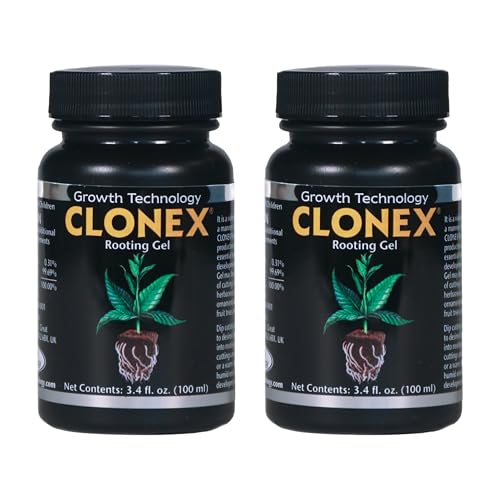
Clonex has been the nursery industry’s go-to rooting gel since 1988, and this 100 ml twin pack delivers the same lab-formulated IBA concentration that college plant labs and BLM propagation programs trust. The gel clings to the cutting even when you insert it into coarse perlite or rockwool, maintaining uninterrupted auxin contact with the cambium layer for the full root-initiation window.
Users report noticeably faster root emergence on fig trees, grape vines, and California natives compared to powders that can slough off during insertion. The tenacious formula also seals the cut end against airborne pathogens, reducing rot risk during the critical first week. Each bottle yields roughly 200 to 400 dips depending on stem thickness, making the two-pack a season-long supply for serious propagators.
One common theme among reviewers is that Clonex performs best when applied with a small brush or Q-tip to ensure full coverage without wasting gel. Some users who followed the instruction to simply dip and plant still saw success, but the brush method consistently produced callus formation three to four days faster in harder woody stems.
What works
- Gel stays on the cutting during insertion into coarse media
- Trusted by university labs for native-plant propagation
- Two 100-ml bottles cover hundreds of cuttings per pack
What doesn’t
- Gel can dry out if the cap is left loose between uses
- Premium price point versus entry-level powders
2. Hormodin Rooting Compound (1/2 lb)

Hormodin is the production propagator’s weapon for tackling notoriously stubborn species—the label calls out evergreens and dormant leafless cuttings, and the 0.8% IBA concentration backs that claim with real auxin density. A single half-pound jug contains enough powder for roughly 17,500 cuttings, which makes it the most cost-effective option per cutting in this lineup for anyone running a greenhouse or large nursery.
Users report excellent callus formation on dahlia starts and rhododendron cuttings when they dip the stem end and tap off the excess. The powder dissolves well when mixed into a slurry for soaking stressed cuttings, a technique commercial growers use for extra-stubborn wood. The jar is simple—no measuring, no mixing—but the flip side is that the powder can clump if moisture gets inside, so storing it with a silica packet in a dry shed is wise.
Reviewers note that the 0.8% IBA level is strong enough to burn soft-wood cuttings if left dipped too long, so a light tap to remove excess is essential. For anyone propagating 50 or more woody cuttings per season, Hormodin’s raw active-ingredient percentage and sheer volume per dollar make it the high-efficiency choice.
What works
- 0.8% IBA handles hard-to-root evergreens effectively
- One jug yields thousands of dips for large-scale work
- Can be mixed into a slurry for soaking stressed cuttings
What doesn’t
- Powder clumps if moisture enters the jar
- Too strong for softwood houseplant cuttings without dilution
3. Stash Blend Premium Plant Additive
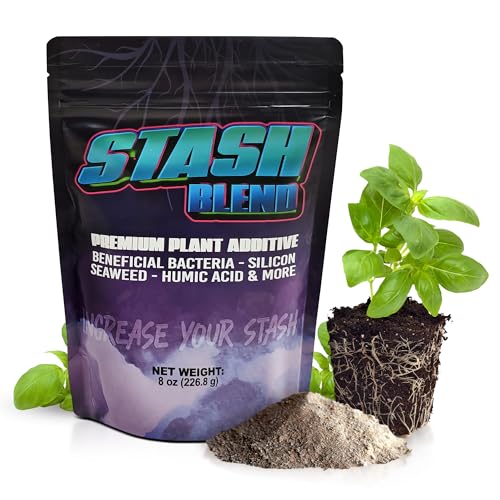
Stash Blend is a different animal from straight synthetic auxins. It layers corn-steep liquor, seaweed powder, humic acid, mycorrhizae, soluble silicon, and microbial bacteria into a single 8 oz powder that builds soil biology while nudging root development. The corn-steep liquor acts as a mild natural rooting promoter, while the mycorrhizae and bacteria colonize the root zone for sustained nutrient uptake long after the cutting transitions to a mature plant.
Gardeners who grow from cuttings often mix Stash Blend into their watering routine at a 1:32 ratio and see improved root density on kale, winter greens, and houseplants within two to three weeks. The seaweed powder adds potassium that feeds mycorrhizal fungi, creating a feedback loop that strengthens the cutting’s immune response against transplant shock. Users with multiple strains in a single grow report using it as a weekly feed to replace several individual additives.
The trade-off is that Stash Blend is not a quick dip for last-minute cuttings—it works best when integrated into a regular watering schedule that builds soil life over time. For propagators who want a rooting hormone that also improves long-term tilth and microbial diversity, this is the formula that keeps giving.
What works
- Adds mycorrhizae and beneficial bacteria for long-term soil health
- Replaces multiple additives with one weekly feeding
- Corn-steep liquor provides a natural rooting boost
What doesn’t
- Not a fast dip-style rooting hormone for immediate propagation
- Requires measuring and mixing into a watering routine
4. Smart Grower Mycorrhizal Fungi Supercharge (8 oz)
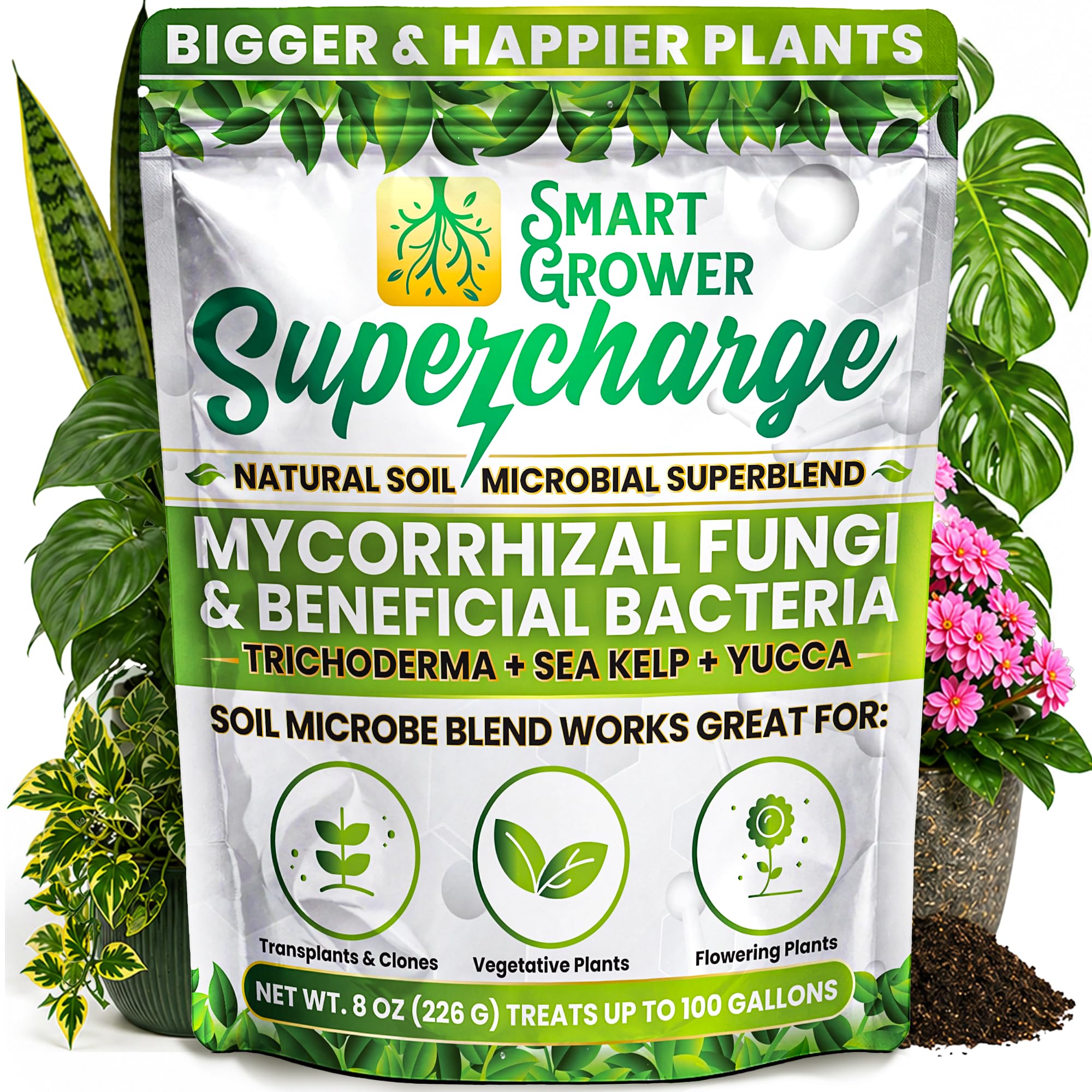
Smart Grower’s 8 oz super concentrate is built around live mycorrhizal fungi, trichoderma, and bacillus bacteria—not synthetic auxin. This powder is designed to be mixed with water and poured into the root zone, where the organisms attach to root hairs and extend the plant’s nutrient-absorption network. The included sea kelp and molasses feed the microbes, keeping the colony alive through the critical transplant phase.
Owners of vegetable gardens report that cuttings and seedlings treated with Smart Grower show faster leaf expansion and deeper green color compared to untreated controls within two weeks. The concentrated 8 oz pouch makes up to 100 gallons of solution, which is enough for an entire season of weekly watering in a substantial raised bed or greenhouse. Users also praise its ability to revive plants that were stalled from root compaction or poor soil biology.
The catch is that this product requires a short preparation time—the powder needs to dissolve fully before application—and it should be used within a day after mixing to keep the beneficial organisms alive. It’s not a shelf-stable dip that you grab for a quick cutting session, but for building a resilient root microbiome, it works.
What works
- Live mycorrhizae and trichoderma colonize roots for ongoing nutrient exchange
- Single 8 oz pouch covers 100 gallons of watering solution
- Sea kelp and molasses feed microbes and reduce transplant shock
What doesn’t
- Must be used shortly after mixing to maintain live organisms
- Not a direct-dip rooting hormone—best applied as a soil drench
5. Racgrul Propagation Drops (4.06 oz)
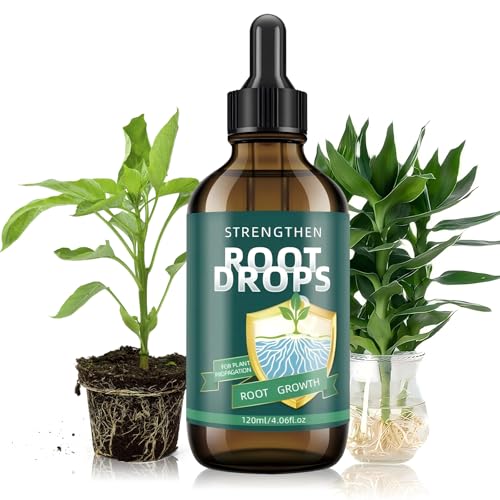
Racgrul’s liquid rooting hormone concentrates IBA into a dropper bottle that delivers just one to two drops per cup of water. The ultra-low dosing requirement means a 4.06 oz bottle lasts through dozens of propagation sessions, making it an economical entry for houseplant enthusiasts who root cuttings in water, LECA, or sphagnum moss on a regular basis.
Reviewers saw roots emerge on citronella cuttings within the first week after switching to this product—cuttings that had sat for months with no development. Pothos and monsteras responded similarly fast, and users appreciated not having to dip stems into powder, which can fall off in water. The liquid simply diffuses into the medium and is absorbed through the cut end, eliminating the need to reapply.
The liquid form is best suited for water propagation and for adding to the water used when transitioning rooted cuttings into soil. Several owners noted that the dropper design makes it easy to over-concentrate if you don’t measure carefully, and the bottle does not include a measuring cup—just the built-in dropper. Still, for clean, mess-free auxin delivery to houseplant cuttings, this is a standout formulation.
What works
- Ultra-concentrated—2 drops per cup lasts for dozens of sessions
- Works perfectly in water, soil, LECA, and moss propagation
- IBA formula triggered roots on citronella within one week
What doesn’t
- No measuring cup included—only the dropper
- Not ideal for woody outdoor cuttings that need gel adhesion
6. Southside Plants Root Drops (4 oz)
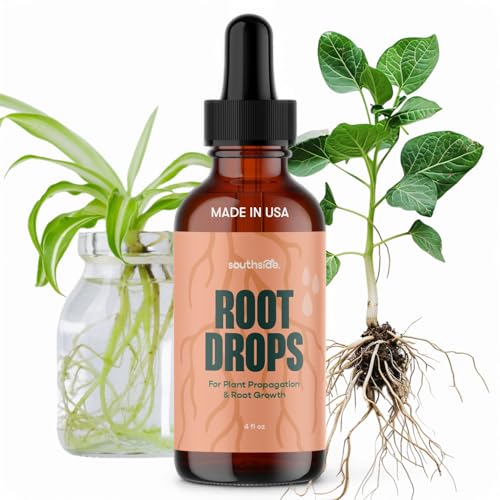
Southside Plants Root Drops bring a handcrafted approach to liquid propagation, formulated with all-natural rooting hormone and added vitamins to support cuttings at every growth stage. The 4 oz bottle uses a simple two-drops-per-cup ratio that works across water, soil, LECA, pon, and sphagnum moss propagation, making it one of the most versatile liquids in this lineup. The company’s “sisters on a mission” backstory adds a personal touch, but the real story is in the results.
Users report that monstera cuttings show dense water-root growth within two weeks, and a marble peperomia leaf rooting in the same timeframe. The formula also helps when repotting established plants—a dropperful added to the watering can reduces the wilting and leaf drop that often follows transplanting. Several reviewers mentioned the bottle lasting months because the concentrated dosing keeps usage low per session.
The drawback is that all-natural ingredient lists can vary slightly from batch to batch, and some users who expected instant synthetic auxin activity were disappointed by the slightly gentler root emergence. For houseplant collectors who prioritize organic methods and want a single bottle that handles both propagation and post-transplant recovery, Root Drops is the cleanest option available.
What works
- All-natural formula with vitamins supports gentle root initiation
- Works in water, soil, LECA, pon, and sphagnum moss
- One bottle lasts months due to concentrated dosing
What doesn’t
- Gentler than synthetic IBA—not ideal for stubborn woody cuttings
- Batch variability can occur with all-natural ingredient sourcing
7. Garden Safe Take Root Rooting Hormone (2-Pack)

Garden Safe Take Root is the most wallet-friendly powder in this review, sold as a two-pack of 2 oz canisters for a combined 4 oz total. It dissolves quickly in water—one reviewer mixed half a canister per half gallon for four young trees—and the fine powder coats cuttings evenly without clumping. Rose growers and shrub propagators consistently report reliable rooting with this product when used as a simple dip-and-tap method.
Some advanced users combine it with Clonex gel to create a rooting paste that boosts otherwise mediocre standalone results, but even on its own the powder works well for softwood cuttings like pencil holly and fig trees. The product is uncomplicated: no mixing ratio to memorize for the dip method, just insert the stem, tap off the excess, and plant. The two-pack gives backup canister for the next propagation wave without needing to reorder immediately.
The biggest limitation is that several reviewers note mediocre success as a standalone treatment for harder wood or species that require high IBA concentrations. It also lacks the microbial additives or gel adhesion of more advanced formulas. For the gardener propagating common shrubs, roses, and houseplant cuttings on a modest scale, however, this twin pack provides the best cost-per-cutting ratio in the lineup.
What works
- Great price for a two-pack—covers many propagation sessions
- Dissolves well in water for liquid applications on transplants
- Simple dip-and-tap method works reliably on softwood cuttings
What doesn’t
- Mediocre results on hardwood or tough-to-root species
- Powder can splash off the stem during insertion into dry media
Hardware & Specs Guide
Active Ingredient (IBA/NAA)
The most critical spec on any rooting hormone label. IBA (indole-3-butyric acid) is the standard auxin for home and nursery use. Concentrations range from 0.1% for softwood houseplant cuttings up to 0.8% for hard-to-root evergreens. NAA is stronger and appears more often in professional-grade gels. Always match the concentration to your cutting’s woodiness—over-application can burn the stem tip and reverse root formation.
Form Factor & Adhesion
Gel stays on the cutting through insertion into coarse perlite or rockwool, providing 360-degree contact with the cambium. Powder is cheaper per cutting but can fall off when you push the stem into dry media. Liquid is absorbed through the cut end in water propagation, bypassing adhesion issues entirely. Choose gel for woody outdoor cuttings, liquid for indoor water propagation, and powder for high-volume softwood batches where cost matters most.
FAQ
What is the difference between IBA and NAA in rooting hormones?
Can I use rooting hormone on succulents and cacti?
How long does an open bottle of rooting hormone stay effective?
Final Thoughts: The Verdict
For most gardeners, the rooting hormone for cuttings winner is the Clonex Rooting Gel (2-Pack) because its tenacious gel adherence and professional-grade IBA formula achieve the highest success rate across both woody and soft-tissue propagations. If you need high-volume, cost-effective powder for hard-to-root evergreens, grab the Hormodin Rooting Compound. And for clean, mess-free water propagation of houseplants like monstera and pothos, nothing beats the concentrated simplicity of the Racgrul Propagation Drops.