
Specs are compiled from manufacturer listings and verified buyer reviews and can change over time — please confirm the key details on the product page before buying.
Kneeling on hard floors for tile, painting, or car repairs punishes your knees and your back every time you stand up. A rolling knee pad lets you glide across the surface while your knees stay cushioned and your back stays straight, so you work longer without the ache. Here are seven options, from pro-style creepers with tool trays to strap-on pads with wheeled bases, so you can pick the one that fits your job.
I’m Rikta — the founder and writer behind Lawn Gear Lab. This guide is built by comparing the manufacturers’ published specifications and the patterns across verified customer reviews, so you get each pick’s real strengths and trade-offs instead of marketing spin.
Here is how to pick the right one for your knees and your task, with the key specs and real-owner insights spelled out for the best Rolling Knee Pads worth your money.
Our Picks at a Glance

How To Choose The Best Rolling Knee Pads
Rolling knee pads solve a simple but painful problem: the wear and tear of kneeling on hard floors. But not all of them work the same way. Some are rigid creepers you kneel on top of, some strap to your legs, and some fold into a seat. Your pick hinges on job type, body weight, and floor surface. Here are the key factors to think through before you buy.
Caster Count and Wheel Size
Before you buy, focus on the wheels. Most rolling knee pads use five swivel casters (one at each corner plus one in the middle) to spread your weight evenly and let you glide in any direction. Wheel size changes where you can work: 2-inch casters are standard on most creepers and roll smoothly on tile or hardwood, while larger wheels with deeper treads (around 4.7 inches) grip grass, crushed rock, and uneven ground far better.
Weight Capacity and Frame Material
The frame has to hold your weight without flexing. ABS high-impact plastic is the common choice — it’s lightweight and rugged, but heavy users sometimes find it bends. Steel frames with a rust-resistant coating are heavier but far more rigid and can support up to 400 lbs. If you’re over 220 lbs or you work on rough surfaces, look for a steel frame or a creeper with a high stated weight limit and positive owner feedback from larger users.
Tool Tray and Built-in Storage
A built-in tray or holder keeps screws, wedges, and small wrenches within arm’s reach, which saves a huge amount of getting up and down. Some models also include a removable pouch, a magnet strip, or side handles for carrying. If you work on long projects, the convenience of a tray is worth the small amount of extra width.
Knee Cushioning and Comfort
Knee foam comes in different densities. Basic foam pads get the job done, but thickened EVA foam (about 11 inches wide and 13.78 inches long on one model) offers better shock absorption. Some strap-on pads use tapered gel that molds to the contour of your knee. If you have knee pain or spend eight hours a day kneeling, prioritize the thickest, most contoured cushion you can find.
Height Adjustability
This is where rolling knee pads diverge sharply. Simple creepers sit at one fixed height, which works for kneeling but not for sitting. More versatile models adjust between roughly 16 and 19.3 inches across three settings, letting you kneel, sit, or work at a slightly improve position. Adjustable height also means less deep bending, which reduces back strain for taller users.
Quick Comparison
| Model | Best For | Casters | Weight Capacity | Frame Material | Amazon |
|---|---|---|---|---|---|
| Racatac Kneeling Creeper★ Best Overall | Professional all-day flooring work | Five 2″ swivel | — | Rugged lightweight frame | Amazon |
| WINTOOLS Rolling CreeperBest Value | Budget-conscious DIYers | Five 2″ swivel | — | ABS high-impact plastic | Amazon |
| MaxWorks MaxxHaul 50916 | Sturdy support for larger users | Five 2″ swivel | — | ABS high-impact plastic | Amazon |
| M-AUTO Rolling Creeper | Garage and auto work on a budget | Five swivel | 200 lbs | Polypropylene (PP) | Amazon |
| Magshion Flooring Knee Pad | Painting, cleaning, and light flooring | Five 360° swivel | 200 lbs | Polypropylene (PP) | Amazon |
| NIUXX Garden Kneeler & Seat | Gardening and outdoor tasks | Four 4.72″ all-terrain | 400 lbs | Rust-resistant steel | Amazon |
| Milescraft 1603 KneeBlades | Flooring pros who want to stand up fast | Three casters per knee (80 lbs each) | — | Plastic with gel cushion | Amazon |
In‑Depth Reviews
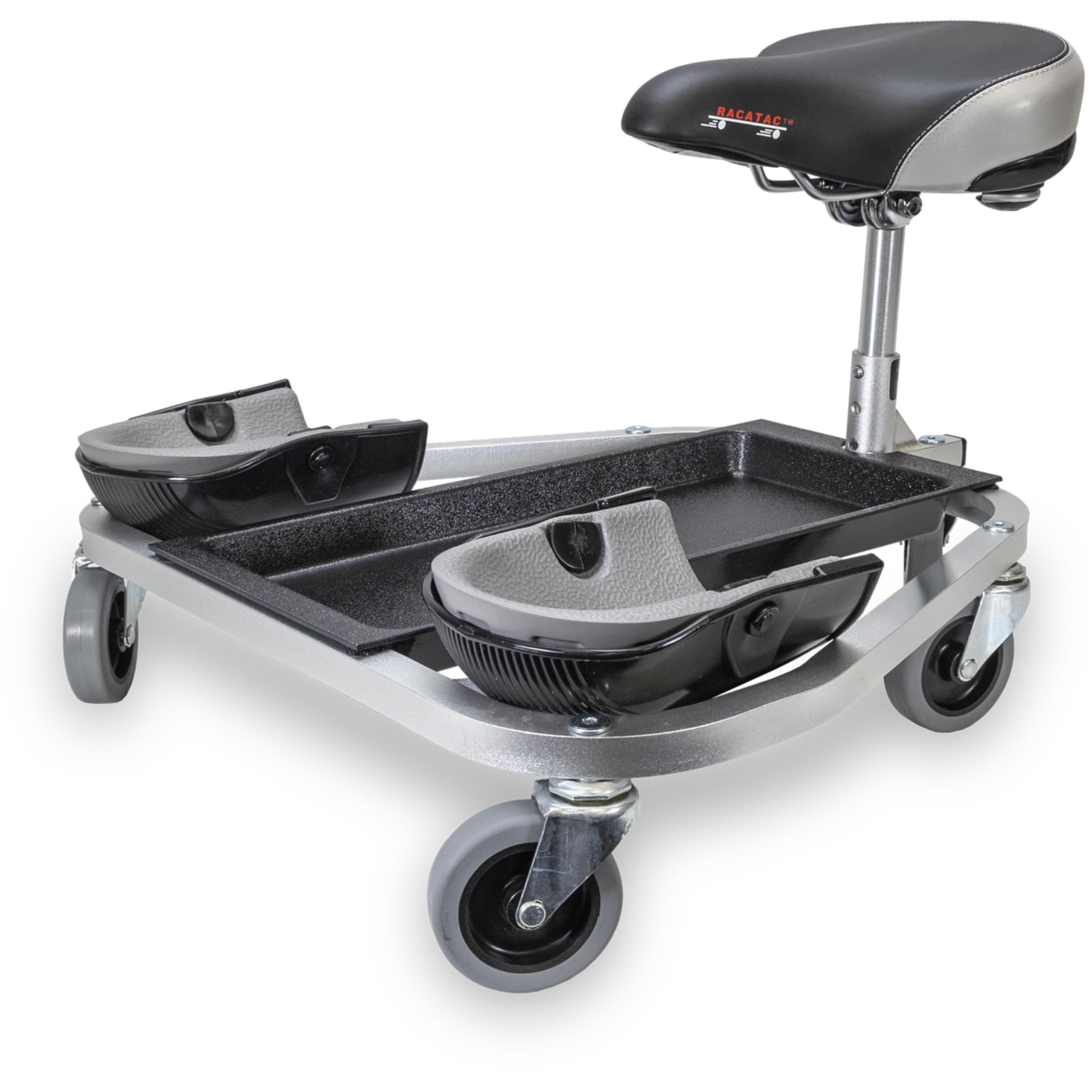
1. Racatac Kneeling Creeper
Our pick — over 4.5★ from 650+ verified ratings; the strongest balance of quality and price.
The professional’s creeper that saves your back on month-long tile jobs
The standout feature here is the adjustable seat height that ranges from 11.5″ to 15.5″, so you can kneel or sit while keeping your body improve above wet, dirty, or dusty floors. That adjustability is why flooring installers, plumbers, and HVAC techs reach for this one — it lets you match the working height to the task instead of hunching over a fixed platform. It weighs 9.73 pounds, which is considerably heavier than the flimsier ABS creepers, and that heft translates directly into a stable, confidence-inspiring platform.
The five 2-inch swivel casters give you smooth 360-degree movement across the jobsite, and the cushioned knee pads mean you can work in shorts without bulky strapped-on pads. A built-in tool tray keeps fasteners, wedges, and hammers within reach — one owner noted the basket saved roughly 1,000 steps during a month-long demo and tile project. The payoff: no more crawling, bending, or losing tools.
Knee support is the thing owners praise most, with quality and construction closely behind. The overwhelmingly positive feedback sums it up: users say it saves your back and that an 8-hour day rolling around leaves them far better off than crawling to set tile. It’s proudly assembled in the USA, which adds to the confidence in the welds and the soft seat. The single honest caveat is comfort — the knee pads are fine but not luxurious, and some owners wished for gel padding on longer days.
What wins owners over
- Adjustable seat height (11.5″ to 15.5″) suits kneeling or sitting
- Five 2-inch swivel casters glide smoothly in any direction
- Integrated tool tray keeps gear within reach
- Replaceable knee pads extend the creeper’s life
The trade-offs
- Heavier than budget creepers at 9.73 pounds
- Stock knee pads are comfortable but not gel-plush
The daily driver: this is the one for pros who kneel all day and want adjustable height, a tool tray, and a frame that won’t flex on concrete.
Think twice if: you want feather-light portability — at 9.73 pounds, this is a worksite tool, not a carry-around gadget.
2. WINTOOLS Rolling Knee Creeper
The budget creeper that glides through baseboard cleaning and painting
The rugged ABS high-impact plastic frame keeps the price low while still cushioning your knees during a project. Its five 2-inch non-marring swivel castors give you maximum maneuverability from side to side, and the built-in tray and holder keep your small tools and parts handy. It suits weekend DIYers painting, laying tile or vinyl, or detailing cars—tasks it makes far easier.
Knee protection is what owners highlight most, and quality and mobility follow close behind. The real-world stories back this up: someone used it to clean baseboards and glided right through, and a son got his flooring job done more quickly and comfortably. The creeper works well in most spaces, though one owner found it a little tight in closets — a fair note if your projects are in narrow rooms.
The honest downside is durability, which gets mixed feedback. One owner reported a break and “had to order two to get the job done.” Frame that against the price: this is an entry-level tool built for occasional use, not a professional daily workhorse. If your projects are infrequent and your floors are smooth, it’s an outstanding value.
Why it’s a bargain
- ABS high-impact frame cushions knees without the premium price
- Five non-marring swivel castors protect your floors
- Built-in tray keeps screws and parts within reach
Keep in mind
- Durability draws mixed feedback — best for occasional use
- Tight in closets and narrow spaces
The weekend pick: grab this for painting, baseboard cleaning, and light DIY flooring where the budget matters more than daily abuse.
Reach for something else if: you’re a professional flooring installer who needs a creeper to survive years of daily use.
3. MaxWorks MaxxHaul 50916 Rolling Knee Creeper

The 4-pound creeper that holds a 6’3″ 230-pound owner without flexing
At just 4 pounds, this is dramatically lighter than the Racatac above — a 2.4x weight gap — yet buyers report it feels stable and solid under load. The ABS high-impact plastic frame rolls on five 2-inch non-marring swivel castors, and the cushioned pads keep your knees comfortable through tiling, painting, or auto detailing. The built-in tray keeps pencils and small tools handy while you work.
The defining owner story here is a big one: a 6’3″, 230-pound user called it “stable and doesn’t feel like it’s going to break,” and it works as advertised. That is the single most valuable trait in a knee creeper — confidence that it holds your weight. The versatility also shines: one owner bought it for installing baseboards but now uses it for cleaning and playing with the kids.
Owners consistently praise its knee-saving comfort and durable feel. The trade-off is the build quality — a few owners note the plastic body and wheels feel a little cheap, and the wheel edges are sharp. For the balance of weight, stability, and price, this is a strong mid-range pick for anyone who wants a creeper that won’t let them down.
The build read: the 4-pound frame is remarkably light while still feeling solid under a 230-pound owner — a rare combination at this level.
The honesty note: the plastic construction draws a “feel little cheap” comment from some, so it rewards careful handling over rough treatment.
4. M-AUTO Rolling Knee Creeper
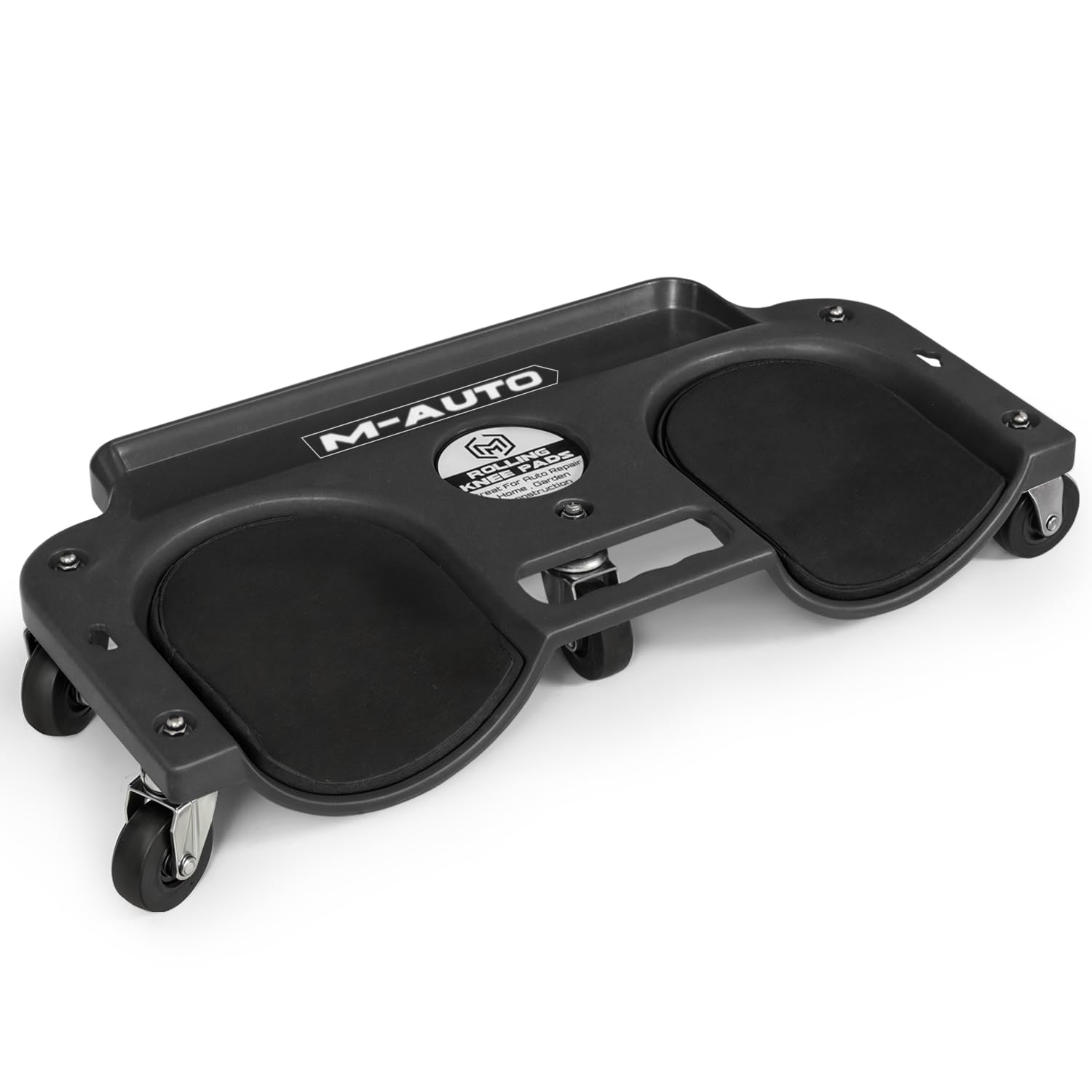
The garage creeper with a 200-pound capacity and 360-degree glide
Built on a rugged polypropylene (PP) board, this creeper carries a stated 200-lb weight capacity and rolls on five swivel casters that deliver smooth, precise movement around a garage. Its weight capacity makes it a solid match for car detailing, auto repair, painting, and laying tile. The built-in tray keeps small tools and parts handy, and the waterproof board (the listing confirms it’s waterproof) shrugs off spills and wet surfaces.
Knee support is what owners praise most, with comfort and mobility close behind. The owner stories are vivid: one user built a mirror frame on the floor and rolled around easily, and another found it worth buying for commercial baseboard installation because it reduces knee strain during long floor-level work. Someone even noted it glides well on concrete or asphalt, which speaks to the caster quality.
The recurring negative is stability under heavier loads. A larger owner (over 250 lbs) found the frame flexed heavily and the casters went “all wacky” under the distortion, and another noticed it bends under 150 lbs. At or under 200 lbs it’s sturdy and comfortable; beyond that, expect flex. This is a well-priced garage tool, not a heavy-duty pro frame.
The strengths
- Waterproof PP board shrugs off garage spills
- 200-lb weight capacity suits most DIYers
- Five swivel casters glide on concrete and asphalt
- Built-in tray keeps parts within reach
The caution
- Frame flex reported over 200 lbs — not for heavy users
- Plastic could be thicker for rough jobsite abuse
The garage essential: pick this for auto detailing, painting, and floor work if you’re within the 200-pound limit and want smooth rolling at a fair price.
skip it if: you’re well over 200 pounds — the frame flex under heavier weight is a real limitation.
5. Magshion Flooring Knee Pad
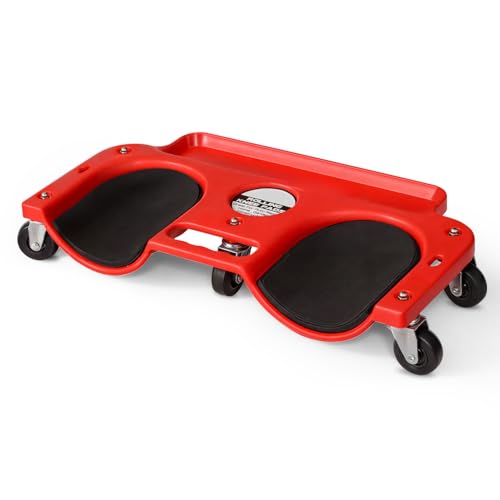
The 4.4-pound roller that cuts painting time in half on hard floors
You can carry this one under your arm: the 10″ x 20″ x 3.5″ platform weighs about 4.4 pounds, making it among the most portable creepers here, and it supports up to 200 pounds (the stated maximum load). Five 360-degree swivel castors let you roll in any direction, while the cushioned seat keeps your knees comfortable during long sessions. The built-in tool tray holder keeps brushes, screws, and accessories within arm’s reach, so you don’t have to get up for every small part.
The defining owner story is about painting: one user found it great for cutting in and painting baseboards, rolling right around the room (as long as there’s no carpet) and cutting time down while saving their knees. That’s the exact use case — smooth, hard floors where you want to move continuously without getting up. The cushioned seats and sturdy polypropylene construction hold up for extended periods.
The honest trade-off is that it sits very low to the floor. One owner found it “not for me personally” because of that low profile, and a single harsh review called the material unsuitable for heavy real use. Frame that against the strong positive stories: this is a lightweight, versatile tool for painting, cleaning, and gardening — not a heavy-duty professional frame. It’s also the only model here with a stated 200-lb capacity in its compact form, making it a smart travel-friendly pick.
The quick verdict: a light, low-profile creeper that shines for painting and cleaning on hard floors, with the 200-lb capacity to cover most home users.
Who it’s not for: anyone needing a higher working position or a frame built for daily professional abuse.
6. NIUXX Garden Kneeler and Seat
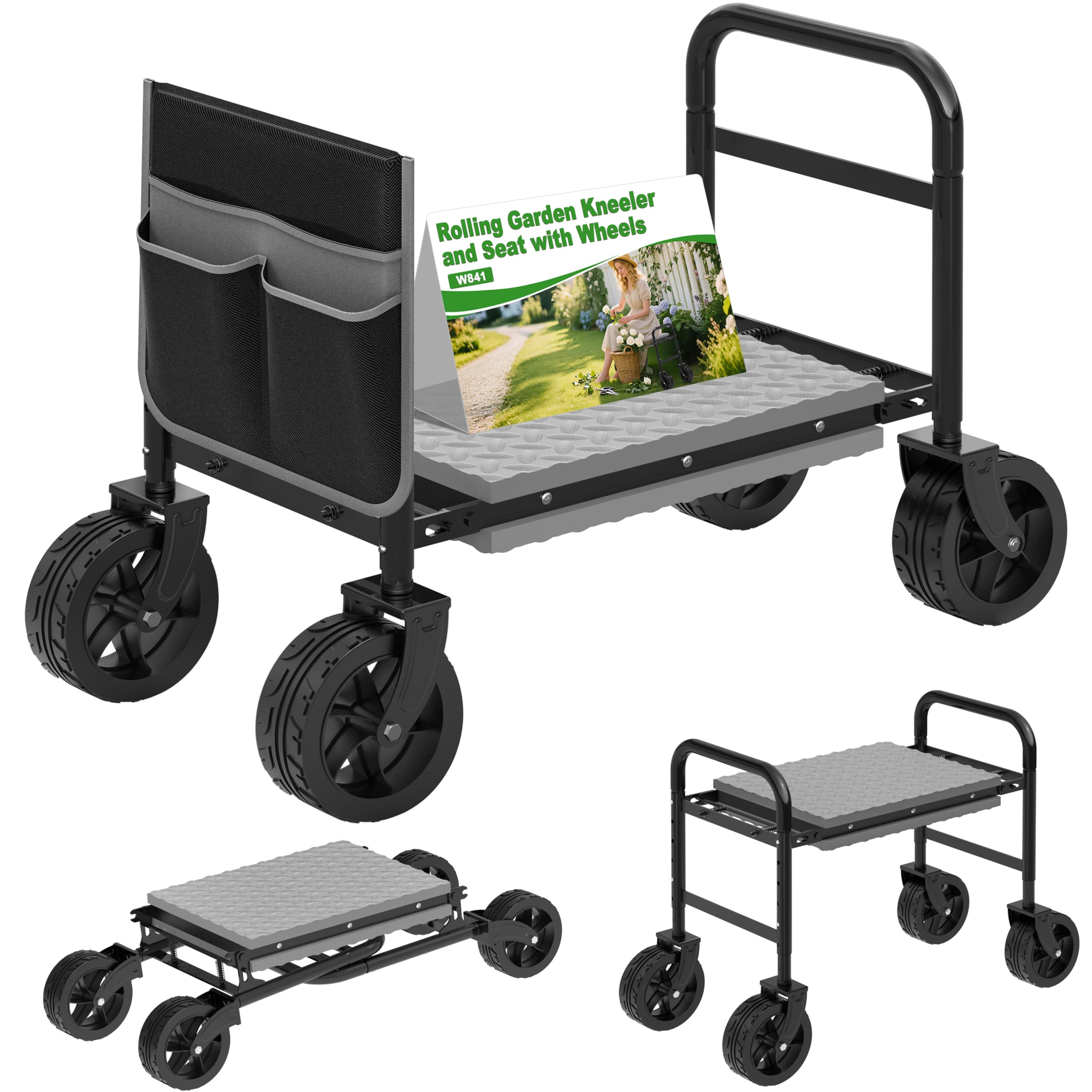
The 400-pound steel garden seat that rides over grass and crushed rock
This is the only true outdoor specialist in the lineup, and it’s built for exactly that. Four heavy-duty 4.72-inch all-terrain wheels with deep treads provide reliable traction on wet grass or mud — a completely different wheel philosophy from the smooth-floor casters on the creepers above. The rust-resistant steel frame supports up to 400 lbs, and the extra-large thickened EVA cushion measures 11″ W x 13.78″ L to support your knees and back during extended planting sessions.
The 3-level adjustable height (ranging from 16 to 19.3 inches) is the standout feature — it lets you kneel, sit, or work at an improve position without deep bending, which directly reduces back strain. Gardeners with knee pain say it lets them tend beds without the usual ache. The removable tool pouch and side handles add real convenience, and the steel frame holds up well even with 200 lbs on board.
The honest catch is terrain-dependent mobility. While one owner rolls easily on crushed rock, others report it doesn’t move well on uneven grass or rock — and it may roll on inclines, so choose your slope carefully. A defective handrail was reported on one unit, and the tool holder slips off easily. This is a senior-friendly garden tool with real versatility, but it rewards flat, prepared ground.
What it does best
- All-terrain 4.72″ wheels with deep treads handle grass and mud
- Rust-resistant steel frame holds up to 400 lbs
- 3-level height adjustment from 16 to 19.3 inches
- Extra-large 11″ x 13.78″ EVA cushion supports knees and back
The limitations
- Rolls well on crushed rock but poorly on uneven ground
- Tool holder slips off easily
The garden companion: choose this for planting, weeding, and outdoor work on prepared ground, especially if you have knee pain or need help getting up.
Look elsewhere if: your garden is steep or deeply uneven — the wheels need relatively flat terrain to shine.
7. Milescraft 1603 KneeBlades
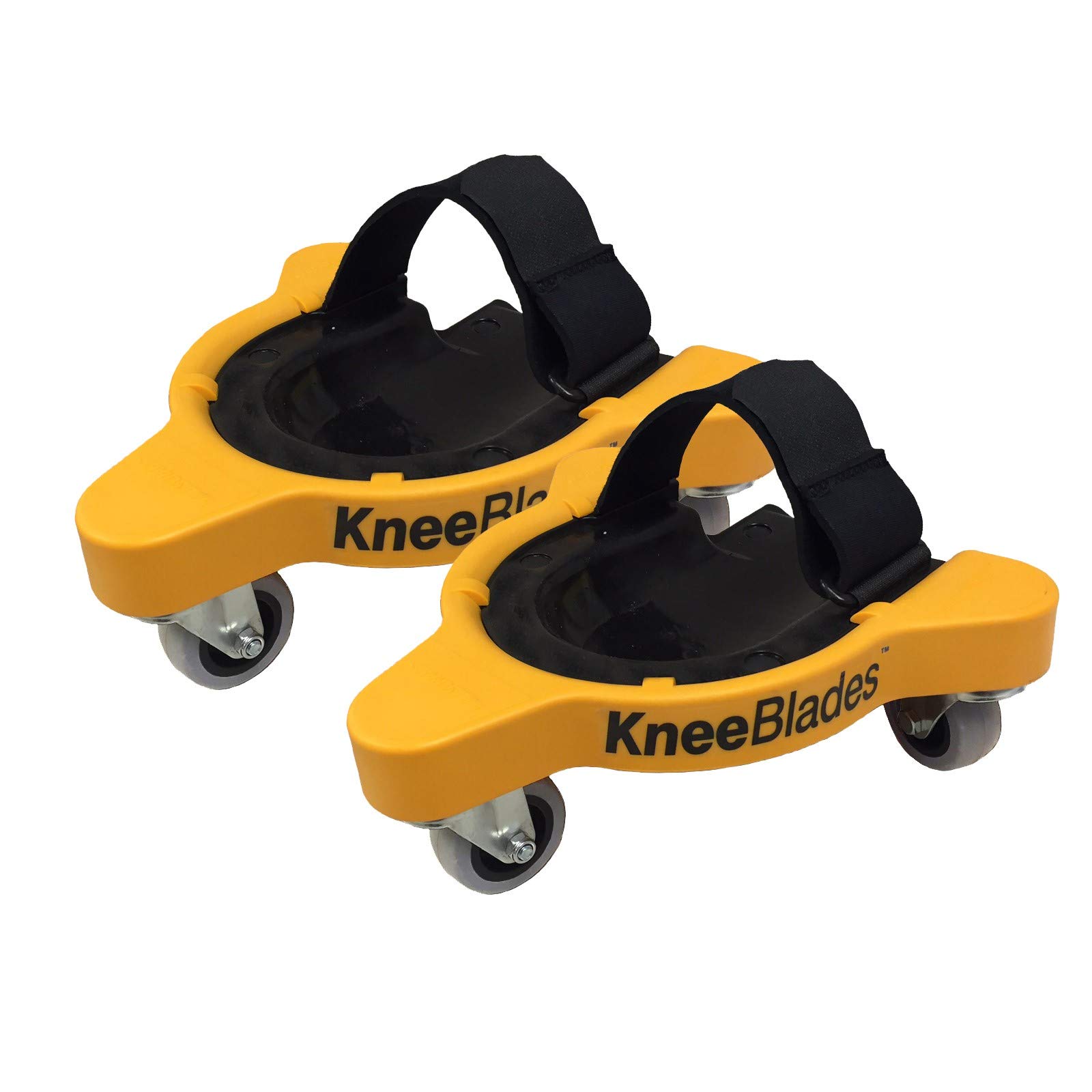
The strap-on pads with casters that let you stand up in a second
These are completely different from every other pick here: instead of kneeling on a platform, you strap the KneeBlades to your legs and they roll with you. Each knee gets three durable casters with a load rating of 80 lbs per caster, giving you full 360-degree turn capability without lifting from the floor. The tapered gel pad spreads weight evenly and molds to the knee, earning cloud-like comfort reviews.
This is the choice of flooring professionals, and the reviews show it. Flooring pros report zero knee soreness on laminate, hardwood, vinyl, tile, and glue, with no roller marks. The single hook-and-loop strap secures the pad with less tension on the back of your knee, and a simple release button lets you detach the pad from the base for multiple uses. Owners mention thousands of square feet of work with the pads holding up well even at 220 lbs.
Mobility is the headline — owners say it saves crawling and the fast rolling lets you move like you’re on a skateboard. The honest negatives: comfort draws mixed feedback, with some reporting pain behind the knees, and durability has occasional reports of pads breaking away from the base. A strap can bunch behind the knee for some users, and the pads are heavy to walk in. This is a specialty tool for pros who kneel for a living and value standing up instantly over the tray-carrying convenience of a creeper.
The pro advantage
- Tapered gel pad fits the knee contour and displaces weight
- Three casters per knee with 80-lb load rating each
- Full 360-degree turn without lifting from the floor
- Release button removes pad for multiple uses
The trade-offs
- Comfort is mixed — some feel pain behind the knee
- Pads occasionally break away from the base
- Heavy to walk in when not rolling
The pro’s tool: this is the pick for flooring installers and tilers who want to stand up instantly and roll smoothly across hard floors all day.
Reconsider if: you work on carpet (pads don’t roll well on it) or you want a tool tray for carrying parts.
Understanding the Specs
Caster Count and Wheel Diameter
The number of wheels and their size determines how stable and maneuverable the pad feels. Five casters (one in the middle) spread your weight evenly and allow true 360-degree movement — the standard for indoor creepers. Larger wheels like the 4.72-inch all-terrain type on the garden kneeler handle grass and crushed rock, while 2-inch casters glide best on smooth floors like tile, hardwood, and concrete. Non-marring wheels matter if you’re working on finished floors — they won’t leave marks.
Weight Capacity
This spec tells you who the pad is built for. Lightweight polypropylene creepers typically state a 200-lb limit, which suits most home users but flexes under heavier loads. Steel-frame models like the garden kneeler hold up to 400 lbs, making them the right choice for larger users or anyone who wants extra confidence. If you’re over 220 lbs, look for a steel frame or check owner feedback from bigger users before buying a plastic creeper.
Tool Tray and Storage
Most creepers include a built-in tray or holder to keep screws, wedges, and small wrenches within reach — a feature that saves constant getting up and down. The Racatac’s integrated tray was credited with saving roughly 1,000 steps during a month-long project. The garden kneeler takes a different approach with a removable tool pouch. If your work involves many small parts, prioritize a model with a tray or pouch.
Knee Cushioning
Cushioning comes in two main forms: platform foam and strap-on gel. Platform creepers use cushioned pads built into the board, with thickness and density varying by model. Strap-on pads like the KneeBlades use tapered gel that molds to the contour of your knee for more direct pressure relief. Thickened EVA foam (around 11″ x 13.78″) offers good shock absorption on the garden model. If you kneel all day, seek out the thickest cushioning available.
FAQ
Are rolling knee pads better than traditional knee pads?
Will a rolling knee pad work on carpet?
How much weight can a rolling knee creeper hold?
Can I sit on a rolling knee pad or is it kneel-only?
How many casters should a rolling knee pad have?
Are rolling knee pads good for gardening?
How do strap-on rolling knee pads work?
How should I care for the wheels on a rolling knee pad?
Final Thoughts: The Verdict
For most buyers, the Racatac Kneeling Creeper is the best overall pick because its adjustable height, tool tray, and replaceable knee pads make it a complete all-day solution — and owners consistently report it saves their backs on real jobs. If you want a budget-friendly creeper for painting and light flooring, the WINTOOLS Rolling Knee Creeper is a solid choice. For gardening on uneven ground, the NIUXX Garden Kneeler and Seat with its 400-lb steel frame and all-terrain wheels is the one to grab.
How We Picked
We do not accept paid placement. Every pick is matched to a real buyer and a real use-case; we do not hands-on test units.
Sources & Methodology
Specifications: manufacturer listings and product documentation. Review insights: verified customer reviews, as of August 2026. Pricing: not shown on this page (it changes often); check the current price via the retailer link.
As an Amazon Associate, Lawn Gear Lab earns from qualifying purchases. This does not affect which products we feature.