
Specs are compiled from manufacturer listings and verified buyer reviews and can change over time — please confirm the key details on the product page before buying.
Trimming a tree branch should not leave your arms feeling like you just wrestled a bear. The wrong lopper turns a quick yard cleanup into a frustrating battle against thick wood, dull blades, and handles that sap your strength. The right one, however, makes a clean 2-inch cut feel almost easy, letting you finish the job without sore hands or a tired back.
I’m Rikta — the founder and writer behind Lawn Gear Lab. This guide is built by comparing the manufacturers’ published specifications and the patterns across verified customer reviews, so you get each pick’s real strengths and trade-offs instead of marketing spin.
Here is where the science of leverage meets the reality of your overgrown yard, and the goal is simple: find the rated loppers that actually live up to the promise of a sharp, powerful, and comfortable cut.
Our Picks at a Glance

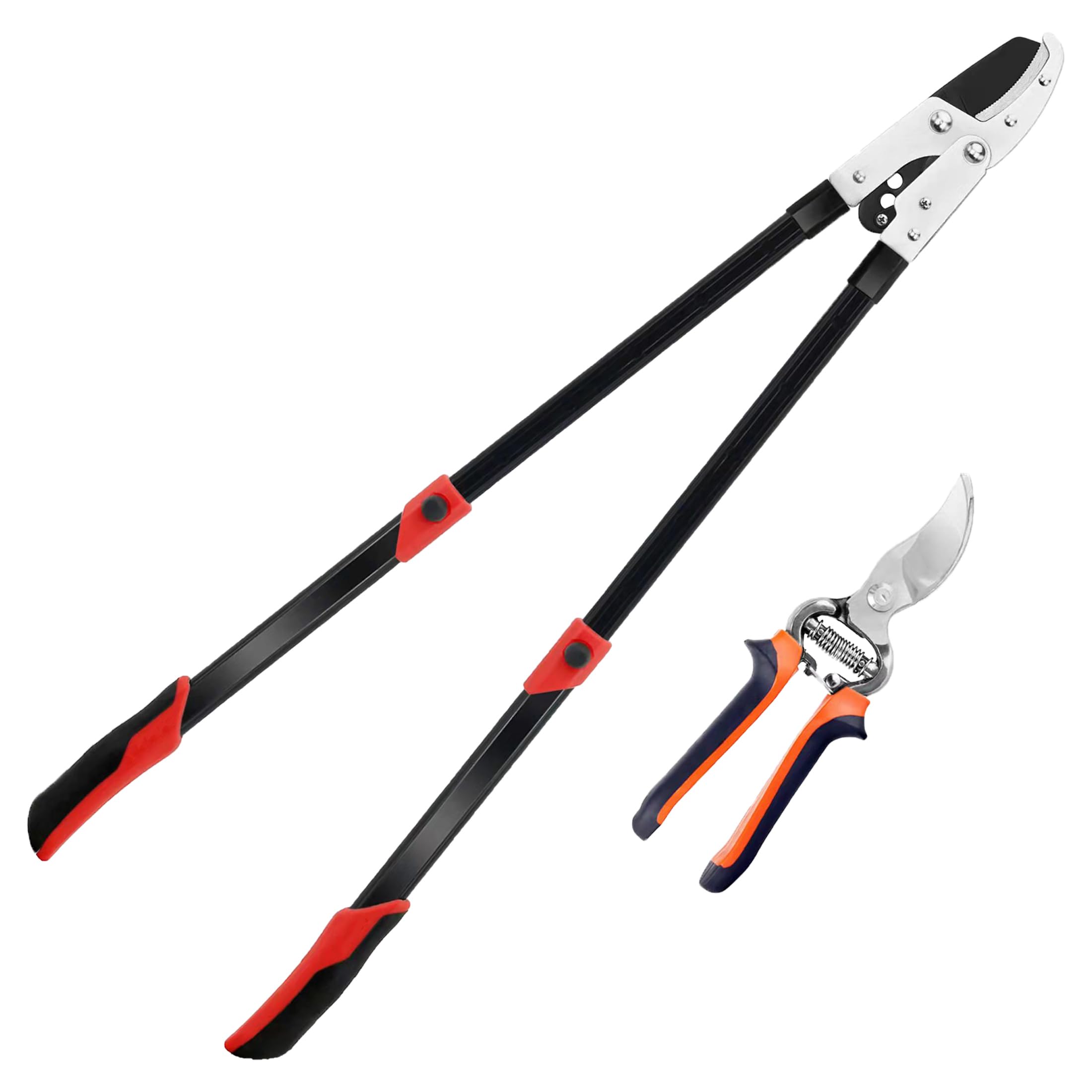
How To Choose The Best Rated Loppers
Every lopper has a job, and picking the wrong one means more work for you. Here are the key specs that separate a tool you will reach for every season from one that sits in the shed.
Bypass vs. Anvil: The Blade Decision
A bypass blade works like a pair of scissors, gliding past a lower jaw to make a clean, precise slice. This style is best for cutting living, green wood because it does not crush the branch, which helps the tree heal faster. An anvil blade, by contrast, has a single straight blade that chops down onto a flat metal surface (the anvil). It is built for dry, dead, or thick hardwood branches where a little crushing is fine, and you need pure chopping force.
The Mechanics of Power: Ratchet, Gear, and Compound Action
These are the technologies that save your strength. A ratchet mechanism cuts in stages: you squeeze, the blade bites partway, the ratchet clicks, and you squeeze again to cut deeper — great for thick or stubborn wood without needing one massive push. A gear mechanism, like PowerGear2, uses a set of interlocking gears to multiply the force you apply, making the cut feel easier through the entire stroke. Compound action uses a system of pivots to increase leverage, often found on long-handled loppers for extra reach.
Handle Length and Weight: The Reach vs. Fatigue Trade-Off
Longer handles give you better leverage for cutting thicker branches and let you reach higher without a ladder. But they also add weight. A 32-inch lopper can weigh over 4 pounds, which will tire your arms during a long afternoon of trimming. Shorter handles are lighter and easier to control for close-up work but require more strength to cut the same branch. Think about the work you do most — reaching high branches or clearing waist-high shrubs — and choose your length accordingly.
Cutting Capacity and Blade Quality
Cutting capacity tells you the maximum branch thickness the lopper can handle (usually 1.6 to 2 inches). Exceeding that risks bending the blade or handles. For the blade itself, look for hardened steel (SK5 or alloy steel) for long-lasting sharpness and a low-friction coating (like Teflon) that prevents sap and debris from gumming up the cut, which also adds rust protection.
Quick Comparison
| Model | Best For | Blade Type | Cutting Capacity | Handle Length | Amazon |
|---|---|---|---|---|---|
| Fiskars 32-Inch PowerGear2★ Best Overall | Best Overall | Bypass | 2 Inches | 32 Inches | Amazon |
| YRTSH Extendable 28-41″Best Reach | Best Reach | Anvil | 2 Inches | 28-41 Inches | Amazon |
| Fiskars 32-Inch Ratchet Anvil | Best for Tough Dead Wood | Anvil | 2 Inches | 32 Inches | Amazon |
| Kings County Tools Double Ratcheting | Best Extendable Bypass | Bypass | 2 Inches | 26-40 Inches | Amazon |
| Corona Tools 33″ DualLINK | Highest Build Quality | Bypass | 2 Inches | 33 Inches | Amazon |
| Jardineer Ratchet Anvil | Best Budget Anvil | Anvil | 2 Inches | 30 Inches | Amazon |
| WORKPRO 27″ Bypass | Best Entry-Level Bypass | Bypass | 1.6 Inches | 27 Inches | Amazon |
In‑Depth Reviews
1. Fiskars 32-Inch PowerGear2 Bypass Lopper
Our pick — over 4.5★ from 7,500+ verified ratings; the strongest balance of quality and price.
The lopper that makes a 2-inch branch feel like a butter knife through a ripe tomato.
This is the lopper that wins nearly every conversation about tree trimming for a reason. Its 32-inch steel bypass blade is designed to cut through branches up to 2 inches thick, but the real star is the PowerGear2 mechanism — a set of gears and a cam that multiply your leverage so the toughest part of the cut, the branch’s middle, takes notably less force. The blade also has a low-friction coating, which buyers report helps it “glide through wood, prevents gumming up with sap and debris, and adds rust resistance.”
Compared to the shorter WORKPRO 27-inch, the Fiskars gives you a full 5 inches more handle length, which translates to better leverage and reach without needing a ladder. One buyer was “blown away by how well these work,” noting they cut through overhanging branches like butter with almost no effort. The rounded ergonomic handles with SoftGrip make extended use more comfortable, though at 3.9 pounds, it is not the lightest choice for overhead work. Some users noted the plastic grip can come loose under heavy use, so a dab of extra glue is a smart precaution.
What lifts it ahead
- PowerGear2 leverage system drastically reduces effort on thick cuts
- Low-friction coating keeps the blade clean and rust-resistant
- Lifetime warranty backs a well-tested design
What to watch
- Plastic grip can shear off under heavy-use torque
- Heavy enough to tire arms during a long pruning session overhead
Who reaches for this: Homeowners and gardeners who want the most reliable, power-multiplying bypass lopper for daily use on green wood up to 2 inches thick.
One honest limit: If you are exclusively cutting dry, dead branches, an anvil style will serve you better and avoid blade binding.
2. YRTSH Extendable 28-41″ Compound Action Lopper
Extends your reach by over a foot to tackle high branches from solid ground.
If you are tired of balancing on a ladder just to trim an overhead limb, this lopper solves the problem directly. Its aluminum handles telescope in six steps from 28 to 41 inches, turning a standard reach into a towering one. The cutting head uses compound action technology, which multiplies the force you apply — so even when working at full extension, you are not fighting the cut as much as with a simple lever. The alloy steel blade has a Teflon coating for a low-friction, long-lasting sharp edge.
Owners mention this works especially well for a 1/2-acre property, with one 73-year-old user reporting they easily cut hibiscus branches and dry banana leaves. However, the 2-inch cutting capacity is best for green, living wood. Customers note that when cutting a 2-inch green branch while fully extended overhead, the handles tend to bend — it is better suited for limbs around 1.25 inches in that scenario. Unlike the fixed-length Fiskars options, this gives you flexibility, but that extra reach and compound mechanism add noticeable weight.
Why it stands out
- Telescoping from 28 to 41 inches eliminates ladder work
- Compound action multiplies cutting power
- Teflon-coated blade resists sap and rust
The trade-offs
- Handles can bend when cutting full 2-inch wood at max extension
- Heavier than fixed-length loppers, leading to fatigue overhead
Pick this for: Anyone with tall trees, high shrubs, or branches they want to reach without a ladder — the extension is the key feature.
Skip it for: Heavy-duty dead wood removal at height, where handle flex becomes a problem.
3. Fiskars 32-Inch Ratchet Anvil Lopper

A ratcheting anvil that chews through dry, thick wood in easy stages instead of one hard crunch.
This Fiskars model takes a different approach than the bypass PowerGear2 above. It uses a ratchet mechanism, so instead of forcing through a 2-inch dry branch in one painful squeeze, you pump the handles in a few smaller squeezes — each one clicks the blade deeper until the branch snaps. This is a huge advantage for anyone with arthritis, weaker grip strength, or simply a lot of dead wood to clear. The anvil blade style is purpose-built for dry, dead hardwood, crushing it cleanly without binding like a bypass blade would.
The fully hardened, precision-ground steel blade also features a low-friction coating for smooth cuts and rust resistance. One buyer who pruned 80 fruit trees in a single winter reported the blades held up incredibly well and kept their sharpness. The riveted steel handles add strength, though the overall feel is heavy-duty — it is not a delicate tool. Unlike the Jardineer ratchet anvil, this Fiskars version uses a single ratchet stage, but the build quality and brand reliability mean it is less likely to suffer early mechanical issues. A few buyers wished they had chosen a bypass style for green wood, so stick to dry branches here.
What works well
- Ratchet mechanism cuts tough dry wood in stages, saving strength
- Anvil design handles dead, thick hardwood without jamming
- Long-lasting sharpness through heavy seasonal use
What to note
- Long handles can feel awkward in tight spaces
- Not ideal for green, living wood — bypass is better there
Best suited for: Gardeners dealing with lots of dead, dry branches, especially if hand strength is a concern.
Look elsewhere if: Most of your trimming is on green branches — the bypass version of this brand is a better fit.
4. Kings County Tools Double Ratcheting Bypass Lopper
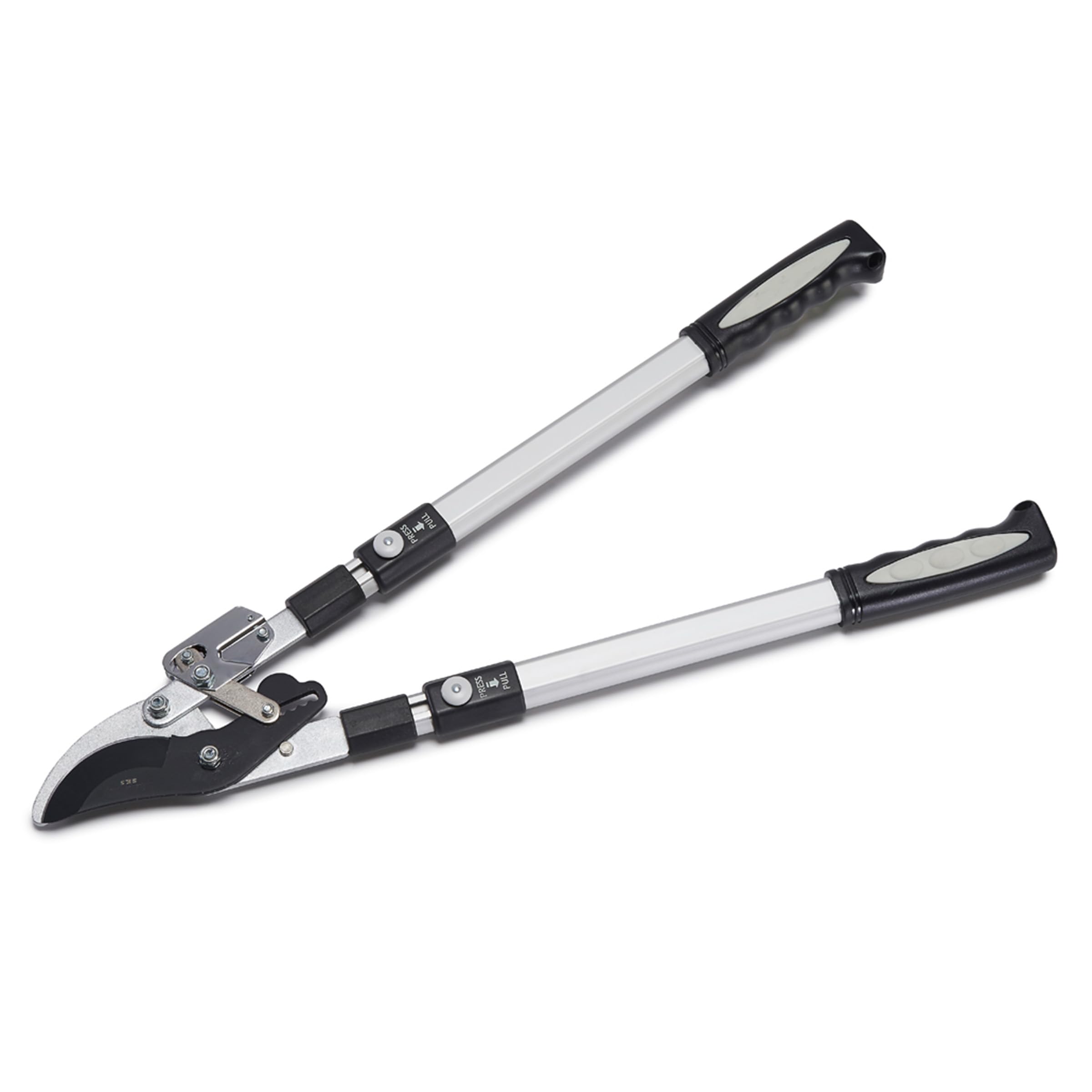
A bypass blade with a double ratcheting system and handles that grow from 26 to 40 inches.
This is a rare combination: a bypass-style blade (designed for clean cuts on living wood) paired with a double ratcheting mechanism that multiplies your force over several squeezes. The handles telescope from 26 to 40 inches using six pin-locked positions, giving you both a compact storage size and a long reach for high, green branches. The cutting jaw opens to a 2-inch capacity, making it suitable for most overgrown trees and shrubs. At 3.75 pounds, it is lighter than the YRTSH extendable, which helps reduce fatigue.
One long-time user mentioned they still have a similar model from the late 80s that remains functional, pointing to solid build quality. Buyers describe it as “heavy-duty yet lightweight” and praise the ratcheting action for providing extra torque. However, there is a durability caveat: a buyer reported the blade broke on the third use cutting a 1-inch dead branch, though the manufacturer later replaced the entire lopper. This suggests it works best on green wood as designed, and you should avoid using it as a dry-wood crusher.
Unique strengths
- Bypass blade with double ratchet for clean cuts on green wood
- Extendable handles from 26 to 40 inches for high branches
- Lightweight aluminum build at 3.75 pounds
Potential issues
- Blade can break on dead wood if used beyond its intended design
- Side-to-side handle design feels heavier than similar options
Choose this for: The unique bypass-plus-ratchet combo, ideal for living green wood that needs a staged cut and a long reach.
Steer clear for: Dense, dead hardwood — the anvil-style Fiskars ratchet is more durable for that work.
5. Corona Tools 33″ DualLINK MAXFORGED Bypass Lopper

A long-reach bypass lopper with forged steel and a mechanism that feels like it was machined, not stamped.
Corona has a reputation for building tools that outlast their owners, and this 33-inch bypass lopper backs that up. The DualLINK MAXFORGED mechanism uses a precision-ground, fully forged alloy steel blade that stays sharp longer and resists bending. It multiplies your cutting force like a gear system, making 2-inch cuts feel far easier than with a standard lopper. The length gives you both extended reach for high branches and extra leverage for ground-level thick limbs.
A reviewer who researched for nearly a year before buying said these are the “perfect pair of loppers,” praising the gearing for delivering full cutting power with less muscle input. The cushioned, non-slip grips and impact-reducing bumpers add comfort. But it is not a miracle worker — one long-time Fiskars user noted that while the Corona is well-built, it did not blow them away compared to their old, unsharpened Fiskars. At 4.3 pounds, it is also one of the heavier fixed-length options, so be prepared for arm fatigue during extended overhead use.
What makes it premium
- Fully forged alloy steel blade for superior durability and sharpness
- DualLINK mechanism multiplies cutting force efficiently
- Ergonomic handles with impact-reducing bumpers for comfort
Honest drawbacks
- Heavy at 4.3 pounds, tiring overhead
- High price may not feel justified if coming from a quality mid-range model
Ideal for: The serious gardener or property owner who wants a long-term investment in build quality and cutting power.
Not for: A budget-conscious buyer or someone who needs a lightweight tool for occasional light trimming.
6. Jardineer Ratchet Anvil Lopper with Spare Blade

A heavy-duty ratchet anvil that comes with a spare blade and a four-year track record from real owners.
For the price, this lopper delivers a surprising amount of value. The ratchet anvil mechanism lets you cut through branches up to 2 inches thick in stages, just like the more expensive Fiskars ratchet version. The blade is made from SK5 carbon steel with an anti-rust Teflon coating, and the package includes a matching spare blade to extend the tool’s life — a rare bonus at this price point. The 30-inch solid steel handles provide a good balance of leverage and weight, and the soft rubber grips help with control.
The most telling endorsement comes from a buyer who owned these loppers for four years on a large property in the Florida Keys with over 100 trees and plants. They reported using them year-round and simply sharpening the blade on a grinder or file, calling it “a great tool and a good price.” Another reviewer with arthritis found them “very easy to use.” The main concern reported is that a bolt can come loose, requiring a return or a simple tightening. At 4.99 pounds, the Jardineer is heavier than the Fiskars 32-inch bypass (4.99 pounds vs 3.9 pounds), making it a workhorse for ground-level dead wood, not a tool for extended overhead trimming.
Why it wins on value
- Includes a spare SK5 carbon steel blade
- Ratchet mechanism helps with tough, dry wood
- Proven long-term durability from real owners over years
What holds it back
- Heaviest pick at 4.99 pounds, causing fatigue
- Occasional bolt loosening reported by buyers
Reach for this if: You need a budget-friendly ratchet anvil for clearing dead wood and appreciate the extra blade for longevity.
Look elsewhere if: You prioritize light weight and will be working overhead for long periods; the 3.9-pound Fiskars is a better fit.
7. WORKPRO 27″ Garden Bypass Lopper

A clean-cutting bypass lopper that proves you do not need a big budget for a sharp, comfortable tool.
WORKPRO has made a name for itself by delivering solid function at a friendly price, and this 27-inch bypass lopper fits that pattern. The SK5 high-carbon steel blade has a low-friction coating to keep cuts smooth and prevent rust, and it is rated for branches up to 1.6 inches thick. This 1.6-inch capacity is perfectly adequate for most routine yard work like trimming shrubs, roses, and small tree limbs. The built-in shock-absorbing bumper reduces vibration, which makes a real difference for comfort during a long pruning session.
One reviewer noted testing it at its maximum cutting width on a pine tree and found it “cuts cleanly,” calling it a “solid well made product.” The soft-grip handles made from PP and TPR material provide a comfortable, non-slip hold. With a 27-inch handle length, it is shorter than the 32-inch Fiskars, meaning less leverage for thick branches, but it also feels much nimbler for close-up shaping work. It is a great place to start if you are new to loppers or only need light-to-medium duty cutting.
What it does well
- Sharp SK5 steel blade cuts cleanly at its 1.6-inch capacity
- Shock-absorbing bumper reduces arm fatigue
- Light and nimble for close trimming work
What to know
- Only handles 1.6-inch branches vs. 2-inch on premium picks
- Shorter handle means less leverage for thick wood
Best for: A new gardener or homeowner who needs a reliable, sharp bypass lopper for regular trimming without spending a lot.
Not for: Heavy-duty clearing of 2-inch thick dead wood — step up to a ratchet anvil or a longer bypass model for that job.
Understanding the Specs
Blade Type: Bypass vs. Anvil
This is the single most important decision for a lopper. A bypass blade slides past a lower jaw, giving a clean, scissor-like cut that helps living trees heal faster. It is the go-to for green, growing branches. An anvil blade is a straight blade that chops down onto a flat metal surface. It crushes the wood as it cuts, which is fine for dead, dry branches but can damage living wood. Match the blade to the job: bypass for green, anvil for dead.
Cutting Capacity (Inches)
This number tells you the maximum branch thickness the lopper can handle, typically between 1.6 and 2 inches. The most common standard for heavy-duty loppers is a 2-inch capacity. Going beyond that risks bending the blade or handles, and it will make the cut much harder. If you have very thick limbs, a pruning saw is a better second tool.
Ratchet, Gear, and Compound Action
These mechanisms multiply your strength by changing the mechanics of the cut. A ratchet cuts in stages — squeeze, click, squeeze again — making it ideal for weaker hands or stubborn wood. A gear system (like PowerGear2) uses interlocking gears to apply more force through the handle stroke. Compound action uses extra pivot points in the handle to increase leverage, often found in extendable loppers. All three reduce the effort you need personally.
Handle Length and Weight
Longer handles give you more leverage for cutting thick branches and help you reach higher. But they add weight — a 33-inch lopper can weigh over 4.3 pounds, which will tire your arms and shoulders if you work overhead for an hour. Shorter handles are lighter and better for close, precise cuts. Do not just look at length; the weight in pounds tells you how much fatigue to expect.
FAQ
What is the difference between bypass and anvil loppers?
Can an anvil lopper cut green wood?
How does a ratchet lopper make cutting easier?
What handle length is best for loppers?
How heavy is too heavy for loppers?
Can I cut branches thicker than 2 inches with loppers?
Do I need a low-friction coating on the blade?
Are telescoping loppers worth the extra weight?
Final Thoughts: The Verdict
For most people, the rated loppers winner is the Fiskars 32-Inch PowerGear2 Bypass Lopper because it combines the most effective leverage system with a durable, low-friction blade that handles 2-inch green branches with ease. If you need to reach high branches without a ladder, grab the YRTSH Extendable 28-41″ Compound Action Lopper for its telescoping handles. And for clearing dead, thick wood where raw crushing power matters more than a clean cut, the standout is the Fiskars 32-Inch Ratchet Anvil Lopper.
How We Picked
We do not accept paid placement. Every pick is matched to a real buyer and a real use-case; we do not hands-on test units.
Sources & Methodology
Specifications: manufacturer listings and product documentation. Review insights: verified customer reviews, as of July 2026. Pricing: not shown on this page (it changes often); check the current price via the retailer link.
As an Amazon Associate, Lawn Gear Lab earns from qualifying purchases. This does not affect which products we feature.