
Landscape fabric is often sold as a cure-all for weeds, but the reality is that most rolls on the market are too thin to block perennial weeds or withstand a single season of foot traffic. The difference between a fabric that fails within months and one that delivers a decade of service comes down to weight, weave density, and UV stabilization — not the brand name on the label. This guide ranks only the highest-rated rolls by analyzing owner feedback from thousands of installation projects against measurable fabric specs.
I’m Rikta — the co-founder and writer behind Lawn Gear Lab. I spend my time comparing geotextile specifications, studying horticultural drainage data, and cross-referencing aggregate owner reviews to cut through marketing claims and identify which fabrics genuinely suppress weeds without suffocating the soil underneath.
Whether you’re laying stone pathways or lining a vegetable bed, the right barrier saves hours of hand-pulling. This is the definitive analysis of the best rated landscape fabric for every type of ground-cover project.
How To Choose The Best Rated Landscape Fabric
Selecting the wrong fabric weight for your specific application is the most common mistake. A 3-ounce woven sheet might stop annual weeds under thin mulch, but it will tear under the weight of river rock and let through aggressive rhizome grasses within a single growing season. Matching the fabric’s tensile strength and permeability to the surface load and drainage needs of your site is the only way to avoid re-digging the entire bed next year.
Fabric Weight and Thickness
Measured in ounces per square yard (oz/yd²), this is the single most important spec. Budget rolls at 3.2 oz work for light-duty flower beds with 2 inches of mulch. Mid-range 5 oz fabrics handle gravel paths and moderate foot traffic. Premium 8 oz non-woven geotextiles are rated for driveways, retaining walls, and erosion control where tensile strength exceeds 200 pounds. Thicker fabric also resists punctures from staples, roots, and digging tools.
Woven vs. Non-Woven Construction
Woven polypropylene fabrics (common at big-box stores) use a grid of flat strips that can unravel when cut and often have lower water flow rates because the weave compresses under weight. Non-woven geotextile fabrics are needle-punched from continuous polypropylene fibers, creating a felt-like mat with consistent pore size. Non-woven fabric typically delivers 6 to 10 times better water permeability and does not fray at cut edges — a significant advantage for drainage-intensive projects.
UV Stabilization and Lifespan
All landscape fabrics degrade under direct sunlight, but UV-stabilized rolls resist embrittlement for 5 to 12 years when exposed. Fabrics buried under 3 inches of mulch or gravel last significantly longer because the UV threat disappears entirely. Check the manufacturer’s stated lifespan for exposed conditions if your installation leaves edges or seams visible. Premium rolls often include UV inhibitors that triple the lifespan of standard polypropylene.
Permeability and Drainage
A fabric that blocks water creates puddling, soil oversaturation, and root rot. Look for flow rates listed in gallons per minute per square foot (GPM/ft²). Non-woven fabrics typically achieve 100 to 140 GPM/ft², while tight woven fabrics may drop below 20 GPM/ft² under load. For vegetable gardens and areas with drip irrigation, high permeability is non-negotiable. Hydro-philic surface treatments also help draw water through the fabric instead of beading on top.
Quick Comparison
On smaller screens, swipe sideways to see the full table.
| Model | Category | Best For | Key Spec | Amazon |
|---|---|---|---|---|
| Sandbaggy 8 oz Non-Woven | Geotextile | Drainage & erosion control | 205 lb tensile strength | Amazon |
| Dewitt 12-Year Non-Woven | Non-Woven | Long-term flower beds | 12-year UV warranty | Amazon |
| Vanver Grid Weed Barrier | Woven | Planting-aligned vegetable gardens | 13.4″ x 13.4″ grid pattern | Amazon |
| Snail 5oz Pro Barrier | Woven | Heavy rock & gravel paths | 5 oz/sq yd weight | Amazon |
| VIVOSUN 5oz Dual-Layer | Dual-Layer | Raised beds & vegetable patches | Needle-punched dual layer | Amazon |
| Pattiumo 3.2oz Woven | Woven | High-volume area coverage | 3.2 oz, 300 ft roll | Amazon |
| UWIOFF 3.2oz PE Fabric | PE Woven | Budget flower bed lining | 3.2 oz polyethylene | Amazon |
In‑Depth Reviews
1. Sandbaggy 8 oz Non-Woven Geotextile Fabric – 3×25 ft
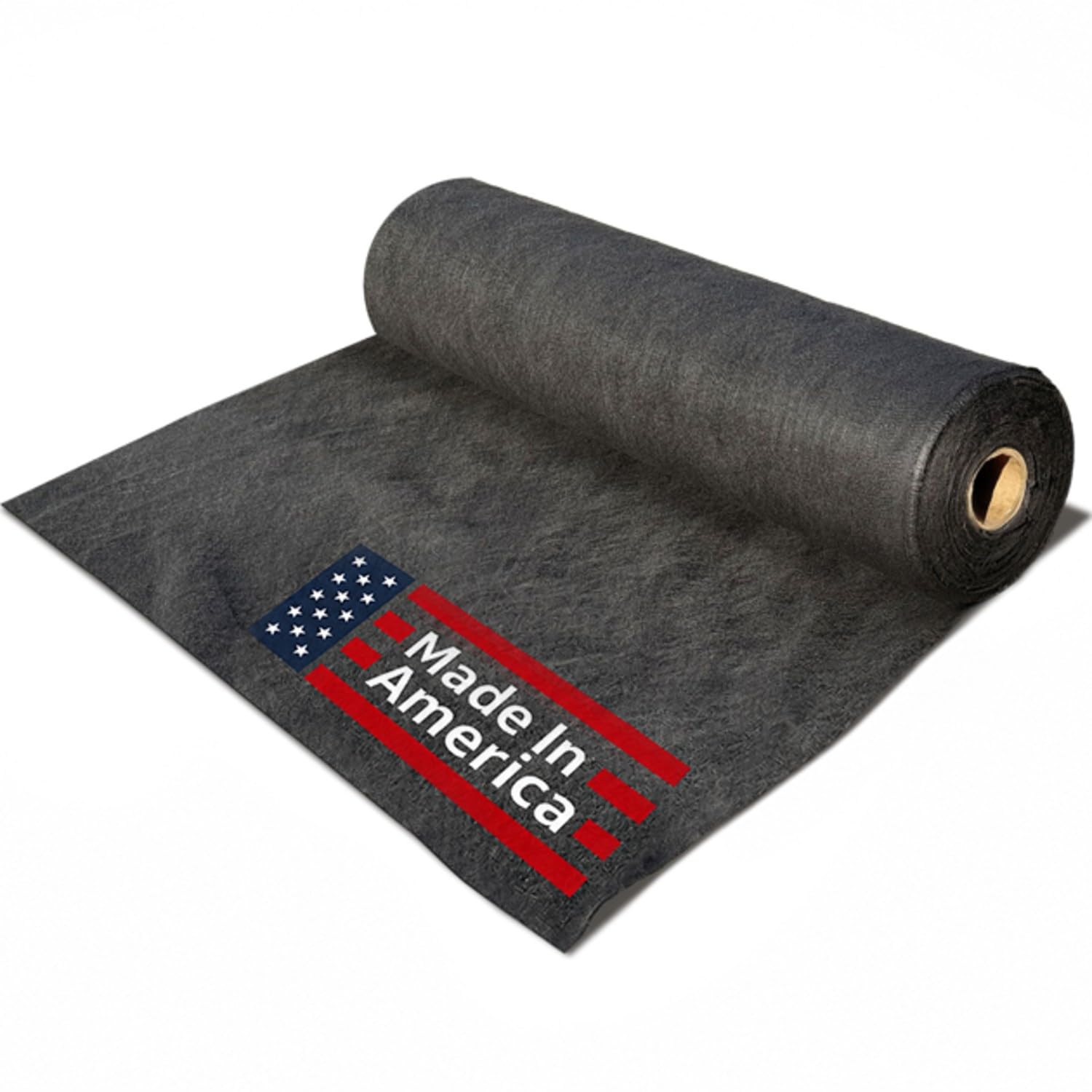
The Sandbaggy 8 oz non-woven geotextile sits at the top of the weight class with a tensile strength rating of 205 pounds — more than double the average 5 oz woven fabric. This density translates directly to puncture resistance against sharp drainage rock and heavy foot traffic. The non-woven polypropylene construction delivers 140 GPM per square foot of flow, making it the most permeable option in the roundup and ideal for french drains, retaining walls, and erosion-prone slopes.
Owner reports consistently highlight that the fabric remains flexible and conforms to uneven ground without buckling, unlike rigid woven sheets that create air gaps. The 50-year lifespan applies only when buried under at least 3 inches of cover, but even exposed edges show minimal degradation compared to standard UV-stabilized rolls. The USA-made manufacturing adds a reliability layer that import fabrics rarely match in consistency.
This is over-engineered for a simple flower bed — the 8 oz thickness makes cutting and stapling more labor-intensive than lighter options. The roll is also noticeably bulky and heavy, requiring two people to handle the 93-kilogram package. For tasks where maximum drainage and structural integrity are required behind stone or concrete, no other fabric in this list competes.
What works
- Exceptional puncture resistance for heavy stone installations
- Highest water flow rate of any fabric reviewed
- American-made with consistent quality control
What doesn’t
- Extremely heavy roll requires two people to handle
- Overkill and harder to cut for light-duty garden beds
- Edge fraying reduced but not eliminated with non-woven construction
2. Dewitt 3-Foot by 100-Foot Non Woven 12-Year Landscape Fabric 12YR3100

Dewitt’s 12-year non-woven fabric stands apart because of its hydro-philic surface treatment, which actively pulls water through the material rather than relying solely on pore size. In practice, this means less beading and faster soil recharge during rain or drip irrigation — a critical advantage for flower beds and vegetable rows where even moisture distribution matters. The 3-ounce weight keeps the fabric light enough to cut and staple without muscle strain.
The non-woven construction prevents the unraveling that plagues cut edges of woven polypropylene rolls. Owner feedback from high-humidity climates like Florida confirms the fabric holds up for 3-plus years under pea gravel and heavy rain without tearing or separating at seams. The UV stabilizers embedded in the polypropylene deliver the 12-year warranty, though actual lifespan varies based on sun exposure and cover depth.
The 3-foot width is narrower than the 4-foot standard, which means more seams and overlapping for wide beds. Some users report that the fabric can snag on rough gravel edges during installation if not laid with care. For gardeners who prioritize permeability and long-term weed suppression without the bulk of an 8 oz geotextile, the Dewitt 12-year is the balanced middle ground.
What works
- Hydro-philic fabric actively pulls water through the material
- Non-woven design does not unravel when cut to shape
- 12-year UV warranty provides long-term peace of mind
What doesn’t
- 3-foot width requires more overlapping for standard 4-foot beds
- Thinner fabric may puncture under heavy angular rock
- Not suitable for high-traffic gravel driveways
3. Snail Weed Barrier Landscape Fabric Premium 5oz Pro Heavy Duty, 4ft x 100ft

The Snail 5oz Pro Barrier strikes the best balance between weight, permeability, and ease of installation for the widest range of residential landscaping projects. At 5 ounces per square yard, the woven polypropylene is thick enough to block sunlight entirely while remaining flexible enough to contour around tree rings and curved bed edges. The fabric’s UV stabilization holds up under direct exposure better than budget 3oz rolls, and owners report effective weed suppression under river rock and shredded hardwood mulch through multiple seasons.
Water permeability is adequate for moderate rainfall and standard drip irrigation, though the woven nature means flow rates drop slightly compared to non-woven alternatives. Users consistently note that the material feels like a heavy-duty tarp — durable enough to stand up to repeated foot traffic without tearing. The 4-foot by 100-foot roll covers large areas efficiently, and the green alignment stripes simplify plant spacing for rows.
Snail’s 5oz fabric sits in the mid-range price tier but delivers performance that often exceeds expectations. The primary trade-off is that woven fabric edges will unravel if cut with scissors — owners recommend melting edges with a torch or using duct tape to seal cuts. For the typical homeowner laying stone paths or mulching perennial beds, the Snail Pro is the most versatile single option available.
What works
- Heavy-duty 5oz weight blocks sunlight and resists tearing
- Smooth surface allows gravel and mulch to stay on top without tangling
- Generous 4x100ft coverage for large-scale projects
What doesn’t
- Cut edges unravel quickly without sealing or torching
- Woven construction limits water flow compared to non-woven alternatives
- Staples may require extra force to penetrate dense weave
4. Vanver 4ft x 300ft Landscape Fabric with Visual Planting Grid

The Vanver grid-design fabric solves the problem of uneven plant spacing with printed 13.4-inch by 13.4-inch grid lines directly on the material. This eliminates the need for tape measures or string lines when laying out rows of vegetables, flowers, or shrubs. The commercial-grade woven polypropylene is tear-resistant and weather-proof, holding up under heavy foot traffic and extreme temperature swings without losing structural integrity.
The narrow weave construction creates micro-porous openings that allow air and water to move through while maintaining a physical barrier against weed emergence. Owner reviews confirm the fabric handles the weight of gravel base layers for driveways and patio underlayment without shifting. The 300-foot length is sufficient for extended runs along fence lines or multiple raised bed bottoms without splicing additional rolls.
The bulky 25.8-pound roll can be cumbersome to position solo, and the woven edges require sealing to prevent fraying, similar to other woven options. The grid pattern is printed on one side only, so orientation matters during installation. For gardeners who value precision spacing and need high-volume coverage, the Vanver grid fabric reduces setup time significantly compared to standard unmarked rolls.
What works
- Printed grid eliminates measuring for precise plant spacing
- Long 300-foot roll reduces splicing on large-scale projects
- Durable commercial weave withstands vehicle and foot traffic
What doesn’t
- Heavy and bulky roll requires two people to unroll
- Woven edges fray if cuts are not sealed
- Grid is one-sided and must be oriented correctly during installation
5. VIVOSUN Premium Weed Barrier Landscape Fabric Heavy Duty, 4ftx50ft 5oz Dual-Layer

VIVOSUN’s dual-layer construction combines a woven base layer with a needle-punched non-woven top layer, creating a hybrid fabric that delivers the tear resistance of woven polypropylene with the water-drawing capability of non-woven fibers. The manufacturer claims water permeability is six times higher than standard woven ground covers, and owner reviews confirm that puddling is minimal even after heavy rain. The felt-like backside grips the soil surface, preventing the fabric from shifting during mulch installation.
The 5-ounce total weight puts it in the heavy-duty category, yet the needle-punched layer keeps the fabric pliable enough to cut with standard scissors. Owners report fraying is reduced compared to all-woven rolls because the non-woven fibers hold the cut edges together. The green line guides at 1-foot intervals simplify plant alignment for vegetable rows and ornamental beds.
The 4-foot by 50-foot roll is a practical size for moderate-sized yards, but larger properties may need multiple rolls, which introduces seam management. Some users note that the non-woven fibers can snag on rough stone if dragged during placement. For vegetable gardens and raised beds where both drainage and weed suppression are equally critical, the VIVOSUN dual-layer is the best value-per-dollar option in the mid-range.
What works
- Dual-layer hybrid improves water flow over standard woven fabrics
- Felt-like underside grips soil and prevents shifting
- Cut edges fray less than all-woven alternatives
What doesn’t
- 50-foot length is short for large-scale landscaping projects
- Non-woven fibers can snag on rough gravel during installation
- Not rated for high-traffic driveway underlayment
6. Pattiumo Weed Barrier Fabric 3x300FT, 3.2oz Woven Polypropylene

The Pattiumo 3.2oz woven fabric offers the lowest cost per square foot in this roundup, making it a practical choice for covering large areas where budget is the primary constraint. The polypropylene weave is opaque enough to block sunlight effectively, and owner reports confirm three years of weed suppression under wood mulch and river stone. The 300-foot roll is not folded, which simplifies unrolling and reduces crease-related weak points that can split under tension.
The lightweight 3.2oz material requires careful handling during installation — it tears more easily than heavier grades, especially when pulled taut across uneven ground. Owners recommend using a landscape stapler with extra staples to prevent the fabric from lifting in windy conditions. Water permeability is adequate for moderate rainfall, but the tight woven structure can cause beading during heavy downpours, especially if the ground underneath is compacted.
The lack of a felt underside means roots can occasionally find purchase in the weave, though this is less common when the fabric is topped with 3-plus inches of mulch. For temporary installations or annual beds where the fabric will be replaced within a few seasons, the Pattiumo roll delivers acceptable performance at a minimal cost. It is not suitable for permanent stone pathways or areas requiring high puncture resistance.
What works
- Excellent cost per square foot for large-area coverage
- Unfolded roll reduces creasing and weak spots
- Blocks sunlight effectively for weed suppression
What doesn’t
- Thin material tears easily during installation
- Water may bead on surface during heavy rain
- Not puncture-resistant enough for heavy gravel or rock
7. UWIOFF 4ft x 100ft Garden Weed Barrier, 3.2oz PE Fabric
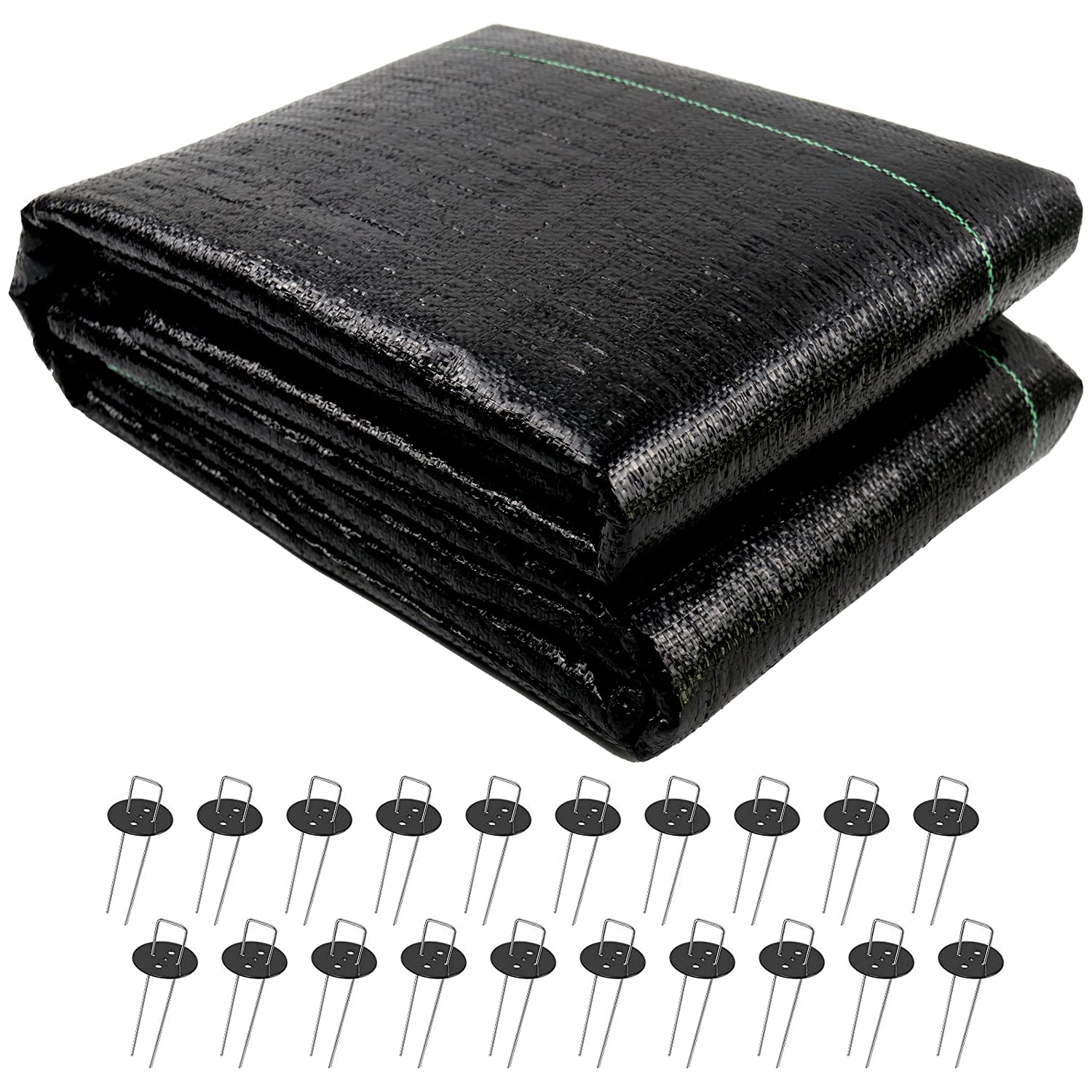
The UWIOFF landscape fabric uses polyethylene (PE) rather than standard polypropylene, which gives the material a distinctly different feel — more flexible and less prone to cracking in cold weather. The 3.2oz weight is comparable to other budget woven fabrics, but the PE construction is noted by owners as being more aging-resistant in direct sunlight compared to standard PP weaves. The fabric is permeable enough to prevent puddling while blocking most weed species.
Installation feedback from owners is mixed — the fabric is flexible and easy to shape around curves, but cut edges unravel aggressively. Several reviewers specifically recommend using a butane torch to melt cut edges or applying black duct tape to stop the unraveling. The green alignment stripes are printed at regular intervals, aiding plant spacing. The fabric works well as an underlayer for artificial grass, gravel walkways, and flower beds where the surface load is light.
The primary limitation is the weave density — aggressive perennial weeds like Bermuda grass and nutsedge can eventually push through the 3.2oz openings, especially if the fabric is not paired with a thick mulch cap. The PE material also feels slick compared to felt-backed fabrics, which can cause it to slide on slopes if not adequately stapled. For light-duty applications with moderate weed pressure and a preference for flexibility, the UWIOFF roll is a functional entry-level choice.
What works
- Flexible PE material conforms easily to curves and uneven ground
- UV-resistant formulation holds up better than basic PP fabrics in sun
- Large 4x100ft roll covers substantial garden area
What doesn’t
- Cut edges unravel severely without sealing or torching
- Lightweight weave can be penetrated by aggressive perennial roots
- Surface is slick and may shift on slopes without extra staples
Hardware & Specs Guide
Fabric Weight (oz/yd²)
This spec determines puncture resistance, weed-blocking density, and lifespan under load. Light-duty 3.2 oz fabrics handle flower beds with 2-3 inches of mulch. Mid-range 5 oz fabrics resist tearing under river rock and foot traffic. Heavy-duty 8 oz non-woven geotextiles are engineered for drainage fields, retaining walls, and erosion control where tensile strength must exceed 200 pounds. Always match the weight to the surface pressure your installation will endure.
Water Permeability (GPM/ft²)
Listed in gallons per minute per square foot, this measures how fast water passes through the fabric. Non-woven geotextiles like the Sandbaggy 8 oz achieve 140 GPM/ft². Woven polypropylene fabrics at 3-5 oz typically fall between 20 and 60 GPM/ft². For vegetable gardens, drip-irrigated beds, and areas with clay soil that drains slowly, higher permeability prevents root rot and surface puddling. Hydro-philic treatments further improve flow in non-woven rolls.
UV Stabilization & Lifespan
UV exposure degrades polypropylene and polyethylene over time, causing embrittlement and tearing. Fabrics labeled as UV-stabilized incorporate inhibitors that extend exposed lifespan to 5-12 years. Buried under 3 inches of mulch or gravel, UV stabilizers become irrelevant and the polypropylene itself can last decades. Check the manufacturer’s stated exposed lifespan — the Dewitt 12-year fabric is treated for long-term sun contact, while budget rolls may degrade within one season of direct exposure.
Construction: Woven vs Non-Woven
Woven fabrics (snail, pattiumo, uwioff) use flat polypropylene strips in a grid pattern. They are rigid, unravel when cut, and have lower permeability under load. Non-woven geotextiles (sandbaggy, dewitt) use needle-punched continuous fibers in a felt-like mat. They do not fray, conform to uneven surfaces, and maintain high flow rates even when compressed by stone. Dual-layer fabrics (vivosun) combine both constructions to balance tear resistance and drainage — a smart compromise for general gardening use.
FAQ
Can landscape fabric be used under artificial grass?
How do I stop cut edges from fraying?
Will landscape fabric kill established weeds?
What is the difference between landscape fabric and weed matting?
Final Thoughts: The Verdict
For most gardeners and homeowners, the best rated landscape fabric winner is the Snail 5oz Pro Barrier because it delivers the ideal balance of weed-blocking density, water permeability, and install-friendly handling for flower beds, rock paths, and vegetable gardens. If you need a non-woven fabric with maximum drainage for retaining walls or french drains, grab the Sandbaggy 8 oz Geotextile. And for budget-conscious large-area coverage where the fabric will be replaced every few seasons, nothing beats the low cost-per-foot of the Pattiumo 300-foot roll.