
Specs are compiled from manufacturer listings and verified buyer reviews and can change over time — please confirm the key details on the product page before buying.
Pruning thick branches usually means wrestling with stiff shears, fighting with wood that refuses to snap, and ending the day with an aching palm. Ratchet pruners solve this by breaking a single hard cut into a few gentle squeezes — each one clicks forward, chipping away at the branch without demanding all your strength at once. This guide separates the seven top-rated models by real specs and owner experiences, so you pick the pair that actually lightens your workload.
I’m Rikta — the founder and writer behind Lawn Gear Lab. This guide is built by comparing the manufacturers’ published specifications and the patterns across verified customer reviews, so you get each pick’s real strengths and trade-offs instead of marketing spin.
Whether you have arthritis, weak hands, or just want a smarter way to trim shrubs and small trees, finding the right pair of ratchet pruners means matching the cutting capacity, handle comfort, and blade quality to the branches you actually face in your yard.
Our Picks at a Glance


How To Choose The Best Ratchet Pruners
The central job of a ratchet pruner is to multiply your hand strength through a stepped clicking mechanism. Instead of one big squeeze, you give several short squeezes — each click locks the blade deeper into the branch. Three specs separate the easy-cutters from the frustration-makers: the blade type (anvil vs bypass), the cutting capacity (the thickest branch it can sever), and the overall weight of the tool.
Anvil vs Bypass Blade
Most ratchet pruners use an anvil blade — a single sharp edge that presses down onto a flat metal surface (the anvil) like a knife on a cutting board. This design crushes the branch as it cuts, which works well on dead or dry wood. Bypass blades, by contrast, slide past each other like scissors, giving a cleaner slice through green, living growth. If you prune mostly live stems and flowers, a bypass ratchet pruner leaves a neater wound; if you tackle dead branches and thick shrubs, an anvil is simpler and stronger.
Cutting Capacity
This number tells you the maximum branch diameter the pruner can handle. Most models top out at 3/4 inch to 1 inch. A 1-inch capacity handles most shrub work, rose canes, and small tree limbs. Going beyond that spec forces the ratchet to strain and may chip the blade — buyers of one 0.75-inch model reported the blade chipped and fell apart when pushed too hard. Match the capacity to the thickest branch you regularly cut; there is no benefit in oversized capacity you never use.
Weight and Handle Feel
Ratchet pruners range from about 4.8 ounces to 220 grams (about the weight of a small apple to a full can of soda). Heavier tools feel more solid but tire your wrist faster during long trimming sessions. Aluminum bodies (like the 193-gram Durox or the 4.8-ounce Ironwood) keep weight low while staying durable. Handle loops and cushion grips also matter: if you have arthritis or smaller hands, a contoured, non-slip handle makes repeated squeezing less painful.
Quick Comparison
| Model | Best For | Blade Type | Cut Capacity | Weight | Amazon |
|---|---|---|---|---|---|
| The Gardener’s Friend Ratchet Pruner★ Best Overall | All-around heavy duty | Anvil | 1 in | 220 g | Amazon |
| Ironwood Tool Company H107Arthritis Pick | Arthritis & weak hands | Bypass | 1 in | 4.8 oz | Amazon |
| Tiger Jaw P3 | Heavy duty & landscapers | Hybrid anvil/bypass | 1 in | — | Amazon |
| Garden Power Premium Ratchet Pruner | Women & seniors | Ratchet (anvil) | 0.75 in | 7 oz | Amazon |
| Durox DGR-01 Ratchet Pruner | Replaceable blade value | Anvil | 0.75 in (20 mm) | 193 g | Amazon |
| Kings County Tools 5″ Ratchet Pruner | Compact & portable | Parrot Beak | 0.75 in | — | Amazon |
| Kenossion Ratchet Pruning Shears | Budget-friendly | Anvil | 1 in | — | Amazon |
In‑Depth Reviews
1. The Gardener’s Friend Ratchet Pruning Shears
Our pick — over 4★ from 5,000+ verified ratings; the strongest balance of quality and price.
An anvil pruner that holds a branch still while you click through it in stages.
What sets this model apart from options like the Durox, which weighs 193 grams, is its sturdy 220-gram build and the neoprene insert in the anvil — a soft pad that grips the branch so it does not slide sideways when you squeeze. It handles tree branches up to 1 inch thick (depending on wood type and your strength), which matches the top capacity in this roundup. The serrated carbon steel blade snags the bark rather than slipping, a detail that matters when you are cutting dry or knobby wood.
Buyers report that the ratcheting and locking mechanisms work flawlessly, and one 72-year-old user with larger-than-average hands found the handle comfortable in both left and right grips. The trade-off is size: the wide jaw opening requires two hands for someone with smaller stature, and the snap-on oiler pad is easy to lose. At 7.95 inches long, it is not a pocket tool — it is a garden-shed companion for serious trimming sessions.
Why it earns the top spot
- 1-inch cutting capacity handles the thickest branches in this lineup
- Neoprene anvil insert stops branches from slipping mid-cut
- Sturdy alloy steel construction with a large blade for incremental cuts
- Ambidextrous handle works for left- or right-handed users
The real limitations
- Wide jaw opening makes one-handed use tough for small hands
- Snap-on oiler pad is easily misplaced during transport
Best for most yards: If you need one pruner that tackles everything from flower stems to 1-inch tree branches without slipping, this is the balanced pick.
Not for small grips: The wide jaw and 220-gram weight make it less ideal for petite hands or one-handed operation.
2. Ironwood Tool Company Ratchet Pruning Shears H107
A bypass ratchet that glides through live wood without crushing the stem.
This is the lightest model in the lineup at just 4.8 ounces — versus The Gardener’s Friend at 220 grams — which matters when your wrist is already sore from arthritis or carpal tunnel. Instead of the standard anvil design that smashes the branch, Ironwood uses a bypass blade that slices cleanly past a counter-edge, leaving a smoother wound on green, living growth. The ratchet mechanism still breaks the cut into steps, but the non-stick coating on the high-carbon steel blade reduces friction so you need fewer squeezes per branch.
Owners mention it cuts a 5/8-inch branch in just two squeezes, and one owner reported the tool still works after 8 years. The aluminum handles and hand guard help you reach into tight shrub interiors without scraping your knuckles. The catch is the 1-inch maximum — fine for most shrubs and roses, but not for the thickest tree limbs. Buyers also praise the 5-year warranty and lifetime half-price replacement policy from the manufacturer.
What makes it special
- Bypass blade gives a clean cut on live branches without crushing tissue
- At 4.8 oz it is the lightest pick — less strain during long sessions
- Non-stick coated blade reduces friction and resists sap buildup
- Hand guard protects fingers when working in dense shrubs
What to watch for
- 1-inch max capacity limits it to lighter pruning work
- Bypass design may struggle on thick dry or dead wood compared to anvil
Reach for this if: You have arthritis or weak hands and need a featherlight bypass pruner that still gives you the ratchet advantage on live shrubs.
Look elsewhere if: You regularly cut dry or dead branches thicker than 1 inch — an anvil model handles that better.
3. Tiger Jaw P3 Ratcheting Hybrid Bypass Hand Pruner

A hybrid blade that marries the crush power of an anvil with the clean slice of a bypass.
The P3 from Tiger Jaw uses a hybrid bypass-anvil design — the blade slides past a counter-edge like a bypass (cleaner on live wood) but the opposing jaw functions similarly to an anvil, so it also handles dry and dead branches without jamming. Tiger Jaw rates this model for green or dead wood up to 1 inch, and positions it as the heavy-duty option for landscapers, ranches, and farms rather than casual flower pruning. The ratchet mechanism works like a PVC pipe cutter — four distinct clicks that reduce trauma to the plant and to your hand.
Buyers with both the P2 and P3 say the P3 is built to last with metal (not plastic) construction and a bigger capacity that justifies the higher cost. One reviewer noted that the safety lock is extremely tight and required a screwdriver to open up at first, a common complaint that seems to loosen with use. Designed for medium to large hands, this is not the best fit for someone with petite fingers.
Why pros pick this
- Hybrid anvil/bypass blade handles both green and dead wood up to 1 inch
- Full metal construction feels solid and durable for heavy use
- Ratcheting action reduces plant trauma and hand fatigue
- Knuckle guard adds protection during dense pruning
The real friction point
- Safety lock is famously stiff from the start — needs working in
- Large grip size may overwhelm small hands
Best for serious trimmers: If you prune mixed green and dead wood regularly and want a rugged metal tool that will last seasons, the P3 delivers.
Not for small hands: The medium-to-large handle and stiff lock make it frustrating for users with petite grips or limited hand strength.
4. Garden Power Premium Heavy Duty Ratchet Pruning Shears

A 7-ounce pruner that multiplies your squeeze force by three via the ratchet.
Garden Power markets these directly at women and senior gardeners, and the design choices back that up: it weighs only 7 ounces (about 198 grams); the Durox weighs 193 grams, and the ratchet mechanism is designed to increase cutting force up to 3 times, so you are not fighting the branch with raw strength. The blade is forged from heat-treated high-carbon SK-5 steel, and the cast aluminum body keeps the tool light without feeling flimsy. The non-slip cushioned grips help when your hands are sweaty or sore.
Customers note it cuts stems easily on green and dry wood up to 1-1.5 inches with clean, smooth cuts — exceeding its stated 0.75-inch capacity in practice. The locking mechanism, however, is hard to slide closed, and the green color blends into grass (one owner called it easy to lose). It comes with a storage case, which is a bonus the cheaper Kenossion does not include. The main limitation: at 7.5 inches long, it is slightly shorter than some competitors, which can reduce leverage on the thickest branches.
What works well
- Ratcheting mechanism is designed to multiply hand force for easier cuts on thick wood
- Light 7-oz body with cushioned grips reduces fatigue
- SK-5 high-carbon steel blade stays sharp through repeated use
- Comes with a storage case for safe transport
What could improve
- Lock mechanism is stiff to operate
- Green handle color makes the tool easy to misplace in the yard
Best for older hands: If you have arthritis or reduced grip strength, the 3x force multiplier design and cushioned handles make this a comfortable daily cutter.
skip it if: You need a tool with a smooth, easy-to-slide lock — this one fights back at first.
5. Durox Ratchet Pruning Shears DGR-01
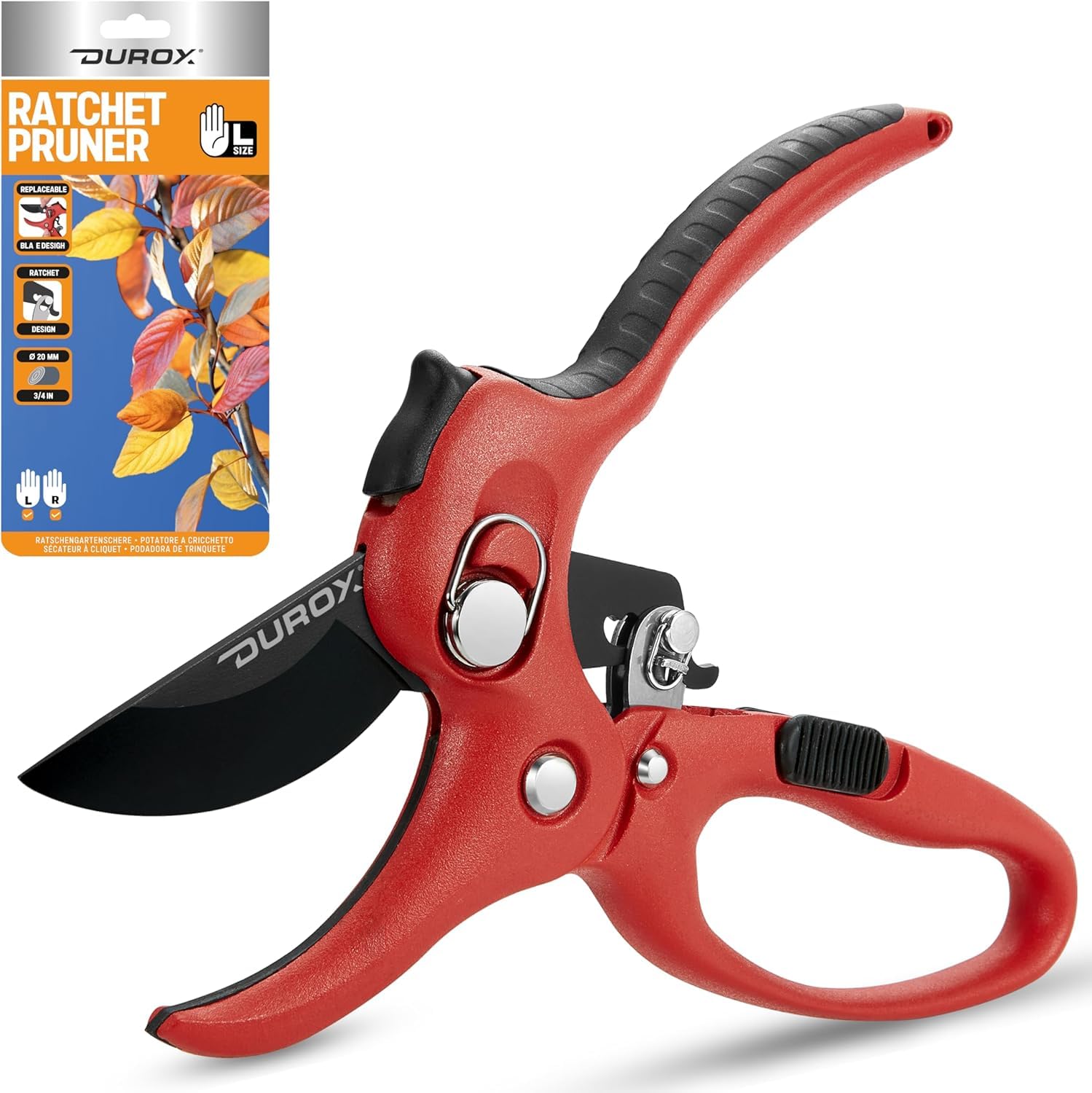
A lightweight aluminum pruner that saves you money by swapping only the blade when it dulls.
The Durox weighs 193 grams; The Gardener’s Friend weighs 220 grams, yet it still cuts branches up to 20mm (roughly 3/4 inch). The standout feature here is the replaceable blade system: you turn a pull ring and swap the blade with no tools required — a genuine cost saver since you do not throw away the whole tool when the edge goes. The heat-treated high-carbon steel blade is convex-edged, meaning it is sharpened on both sides for a cleaner cut, and the cast aluminum body resists rust better than plain steel.
Reviewers point out these shears work great on oak bushes and that the ratchet mechanism helps cut through branches up to half an inch or more with less hand strain. One 78-year-old petite reviewer used them for hours trimming frost-damaged plants and praised the extra strength the ratchet provides. The catch: a few users note the blade dulls fairly quickly, though the built-in blade cleanser (a sponge that oils the blade as you cut) helps maintain the edge longer if you use it.
Why it stands out
- Replaceable blade system means cheaper long-term ownership
- Cast aluminum body keeps weight low at 193 grams
- Built-in oil sponge cleans and lubricates the blade during use
- Ambidextrous non-slip grips suit both left and right hands
What holds it back
- Blade dulls faster than some competitors — the sharpener helps but needs regular use
- 0.75-inch (20mm) capacity limits it to lighter pruning
Grab this if: You want a lightweight tool with a lower long-term cost because you can swap blades instead of buying new shears each season.
Pass if: You need a 1-inch capacity for thick tree limbs — this tops out at 20mm.
6. Kings County Tools 5″ Ratchet Anvil Pruning Shears
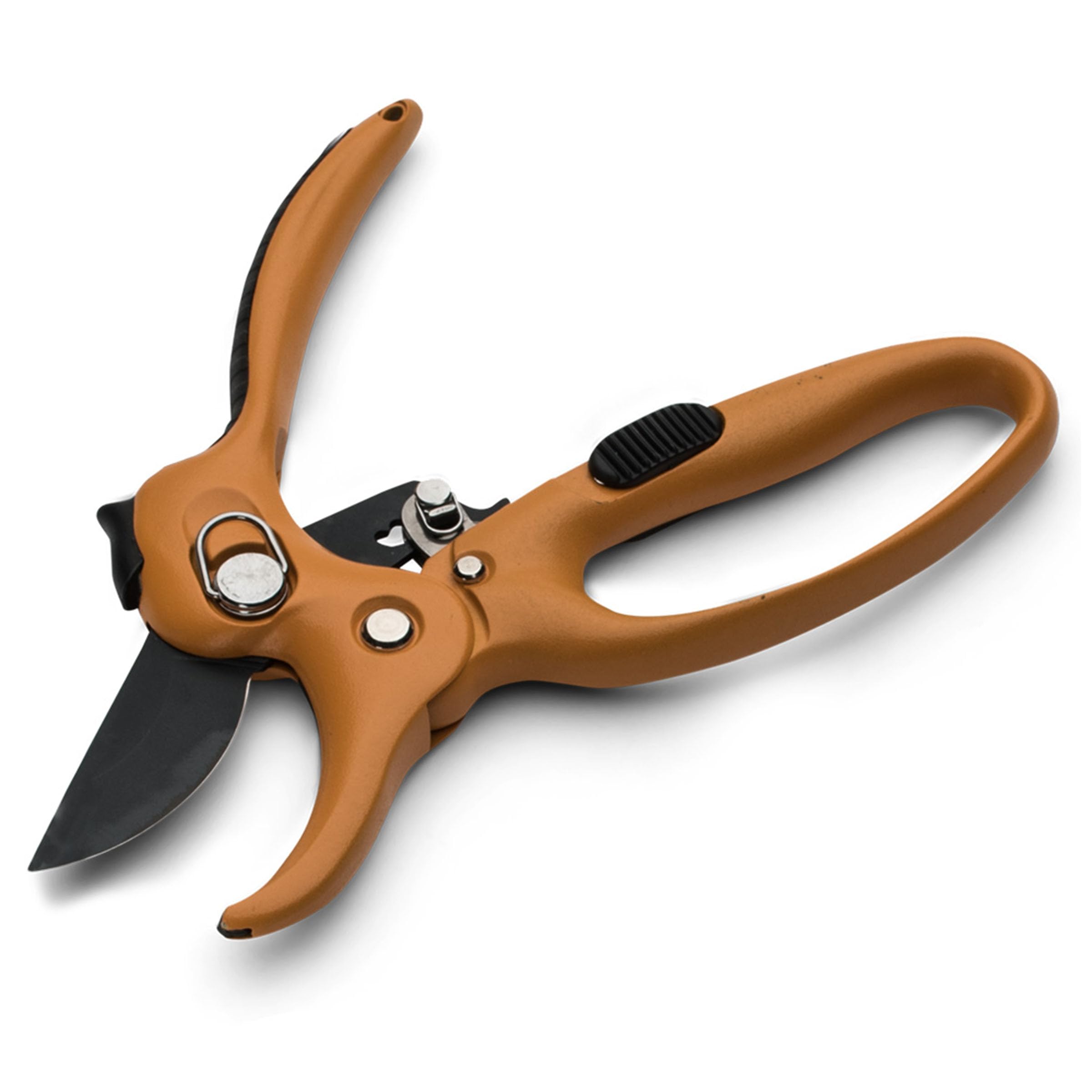
A stubby 5-inch pruner that fits in a pocket but still ratchets through 3/4-inch wood.
Most ratchet pruners run 7 to 8 inches long, but the Kings County Tools model is a compact 5 inches from tip to tail — the smallest in this comparison. That makes it easy to stow in an apron or tool belt, and the parrot-beak blade style (a curved anvil shape) helps you get into tight corners around trellises and dense shrubs. The cast aluminum body with rubber grips keeps the weight reasonable, and the thumb-slide locking mechanism secures the blade when closed.
Buyers love how smoothly it cuts and that replacement blades are available, but one reviewer experienced a serious issue: the blade chipped and fell apart almost immediately when pushed on thicker branches. The 0.75-inch cutting capacity is fine for roses, crepe myrtle, and small stems, but the durability concern means this is best reserved for lighter-duty tasks rather than daily heavy pruning. The detachable oil pad in the handle is a nice touch for on-the-go cleaning.
What makes it useful
- 5-inch size fits in a pocket or tool pouch easily
- Parrot-beak anvil blade works well in tight spaces
- Replaceable blade extends the tool’s life
- Detachable oil pad simplifies blade maintenance
Watch out for
- Blade chipping reported on thicker branches — stick to stems under 0.75 inches
- Some users question long-term robustness
Pick this if: You need a compact pruner for quick snips on roses and small shrubs, and pocketability matters more than brute force.
Avoid if: You regularly cut branches near the 3/4-inch limit — the blade may not hold up to sustained heavy use.
7. Kenossion Ratchet Pruning Shears

An anvil pruner that matches the 1-inch capacity of premium models at a fraction of the cost.
The Kenossion delivers a 1-inch cutting capacity with a serrated anvil blade — the same max capacity as The Gardener’s Friend and Tiger Jaw P3, but at a price that makes it the most accessible entry point in this lineup. It uses chrome vanadium steel for the handle (a step up from basic carbon steel in terms of rust resistance) and includes a slide button that switches between single-cut mode (for thin stems) and ratchet mode (for thicker branches). That dual-mode feature saves you from clicking through four squeezes on every tiny flower stem.
Buyers are split: some call it the best pruner they have used in years, praising the ratchet anvil feature as a hand-saver for arthritis, while others report it fell apart within a month — the safety catch stopped working and the tool would not close completely. One buyer mentioned the switch from single-cut to ratchet mode was nearly frozen from the start and required forceful effort to move. The safety lock and soft handle cover also drew complaints about sliding off over time. This is a high-value pick if you get a good unit, but inconsistent quality control is a real gamble.
Why budget buyers like it
- 1-inch cutting capacity matches expensive models
- Dual-mode (single-cut + ratchet) avoids over-clicking on small stems
- Serrated anvil blade grips branches during the cut
The downsides
- Inconsistent build quality — some units fail within weeks
- Ratchet mode switch is stiff and hard to operate initially
Consider this if: You are on a tight budget but still want a ratchet pruner with a 1-inch capacity for light to medium yard work.
Skip if: You need reliable daily performance — the quality gamble makes it risky for heavy or commercial use.
Understanding the Specs
Cutting Capacity
This is the maximum branch diameter the pruner can sever in one ratchet sequence, measured in inches or millimeters. A 1-inch capacity handles most rose canes, small tree limbs, and thick shrub branches. Staying within this limit prevents blade chipping and mechanism strain. If your yard has branches larger than 1 inch, you need a lopper, not a hand pruner.
Anvil vs Bypass Blade
An anvil blade presses a sharp edge onto a flat metal surface, crushing the branch as it cuts — effective on dead or dry wood. A bypass blade slides two sharp edges past each other like scissors, leaving a cleaner wound on live green growth. Some models (like the Tiger Jaw P3) use a hybrid design that combines both actions for versatility.
Weight and Handle Material
Weight ranges from about 4.8 ounces to 220 grams. Lighter tools (aluminum bodies) reduce fatigue during long pruning sessions but may feel less durable than heavier alloy-steel builds. Cushioned rubber grips reduce vibration and prevent blisters. For arthritic hands, a lighter tool with a larger grip surface reduces the force needed per squeeze.
Replaceable Blade
A replaceable blade lets you swap out a dull edge instead of discarding the entire pruner. Look for tool-free replacement systems (like the pull-ring on the Durox) that do not require screwdrivers or wrenches. This feature extends the tool’s life significantly and lowers long-term cost, especially if you prune frequently.
FAQ
Are ratchet pruners better for arthritis?
What is the difference between anvil and bypass ratchet pruners?
How thick of a branch can ratchet pruners cut?
Can left-handed people use ratchet pruners?
How do I maintain the blade on my ratchet pruners?
Do ratchet pruners work on green (live) wood?
How long do ratchet pruner blades stay sharp?
Is the safety lock important on ratchet pruners?
Can I replace the blade on my ratchet pruners?
Are heavier pruners more durable?
Final Thoughts: The Verdict
Across the board, the best ratchet pruners winner is the The Gardener’s Friend because it pairs a 1-inch cutting capacity with a neoprene anvil insert that holds branches steady through every ratchet click. If you have arthritis and want the lightest option that still cuts cleanly on live wood, grab the Ironwood Tool Company H107. And for heavy-duty mixed pruning where you need a hybrid blade that handles both green and dead branches, the Tiger Jaw P3 is the rugged choice that professional landscapers reach for.
How We Picked
We do not accept paid placement. Every pick is matched to a real buyer and a real use-case; we do not hands-on test units.
Sources & Methodology
Specifications: manufacturer listings and product documentation. Review insights: verified customer reviews, as of July 2026. Pricing: not shown on this page (it changes often); check the current price via the retailer link.
As an Amazon Associate, Lawn Gear Lab earns from qualifying purchases. This does not affect which products we feature.