
Grass rakes fail the same way every time — tines buckle under wet debris, the head snaps off at the ferrule, or the handle splinters mid-swing. A truly effective design resists that abuse through material choice, tine count, and connection strength. Whether you are dethatching a Bermuda lawn, clearing oak leaves from a fescue patch, or leveling soil after overseeding, the structural integrity of the tool determines how long your arms last and how clean the yard looks.
I’m Rikta — the co-founder and writer behind Lawn Gear Lab. I compare tine gauges, handle construction methods, head-to-handle connection designs, and hundreds of verified owner reports to separate tools built for the long haul from those destined for the recycling bin after one season.
After cross-referencing over 1,500 owner reviews across seven models, the most reliable rake for grass balances a wide enough head to cover turf quickly with stiff enough tines to handle embedded thatch without bending.
How To Choose The Best Rake For Grass
Not every rake labeled for yard work performs equally on turf. The specific demands of grass — stiff blades, embedded thatch, soil-leveling resistance — require a tool that does not flex on impact. Here are the decision factors that separate a one-season tool from a ten-year companion.
Tine Count and Gauge
More tines spread the load but reduce penetration into dense grass. A 24-tine thatching rake, like the Bully Tools 24-Tine, uses tempered steel to slice through thatch without tearing sod. For general leaf removal on grass, 25 tines offer enough surface area without excessive drag. Gauge matters: 10-gauge steel heads resist bending where thinner metal buckles under wet debris.
Handle Material and Length
Fiberglass handles with polyester veil coating prevent splintering and survive years of damp storage better than wood. Steel handles are rust-resistant but conduct cold and add weight. Length determines posture — a 65-inch adjustable handle lets shorter users avoid stooping, while tall users benefit from a full 72-inch reach to keep the head flat against the ground.
Head-to-Handle Connection
The ferrule joint is the failure point on most grass rakes. Overwelded connections and through-bolt fasteners outlast friction-fit or single-rivet designs. Bully Tools robotically overwelds its bow rake head to the handle — a detail that explains why owner reviews consistently report years of heavy use without separation.
Quick Comparison
On smaller screens, swipe sideways to see the full table.
| Model | Category | Best For | Key Spec | Amazon |
|---|---|---|---|---|
| Bully Tools 24-Tine Thatching Rake | Thatch Rake | Heavy dethatching & large lawns | 24 tempered steel tines | Amazon |
| Bully Tools Bow Rake 16″ Tines | Bow Rake | Soil leveling & gravel spreading | 10-gauge American steel | Amazon |
| AMES Leaf Grabber Rake | Leaf Grabber | Low-bending debris pickup | Dual serrated poly blades | Amazon |
| INFLATION 65″ Adjustable Rake | Leaf Rake | Family use & adjustable height | 25 metal tines | Amazon |
| Union Tools 64309 Poly Leaf Rake | Poly Leaf Rake | Broad leaf collection | 24-inch wide poly head | Amazon |
| GreatBuddy 72″ Expandable Rake | Expandable Leaf Rake | Narrow spaces & compact storage | 18-inch head, 4 lengths | Amazon |
| Joyhalo 65″ Adjustable Rake | Lawn Rake | Rubber comfort grip & portability | 8.7-inch rubber handle | Amazon |
In‑Depth Reviews
1. Bully Tools 24-Tine Thatching Garden Rake

The 24-tine head measures 23.5 inches wide, covering large lawn areas with fewer passes while the tempered steel resists bending even when the thatch layer is thick. The fiberglass handle uses triple-wall construction with a polyester veil coating that prevents the splintering common on wooden handles after wet-season storage.
Owners report using this rake for fire mitigation clearing forest debris and pulling deep pine needles without a single tine failure. The overwelded head-to-handle connection eliminates the ferrule separation that kills budget rakes after one heavy session.
The powder-coat finish resists rust across seasons, and assembly takes under a minute with two Phillips screwdrivers. It is heavier than plastic tine rakes — roughly 3.85 pounds — so expect a core workout during extended use.
What works
- Tempered steel tines do not bend under heavy thatch
- Overwelded connection prevents head separation
- Fiberglass handle resists splintering
What doesn’t
- Heavier than typical leaf rakes at nearly 4 pounds
- Hand length could be longer for taller users to avoid stooping
2. Bully Tools Bow Rake 16″ Tines
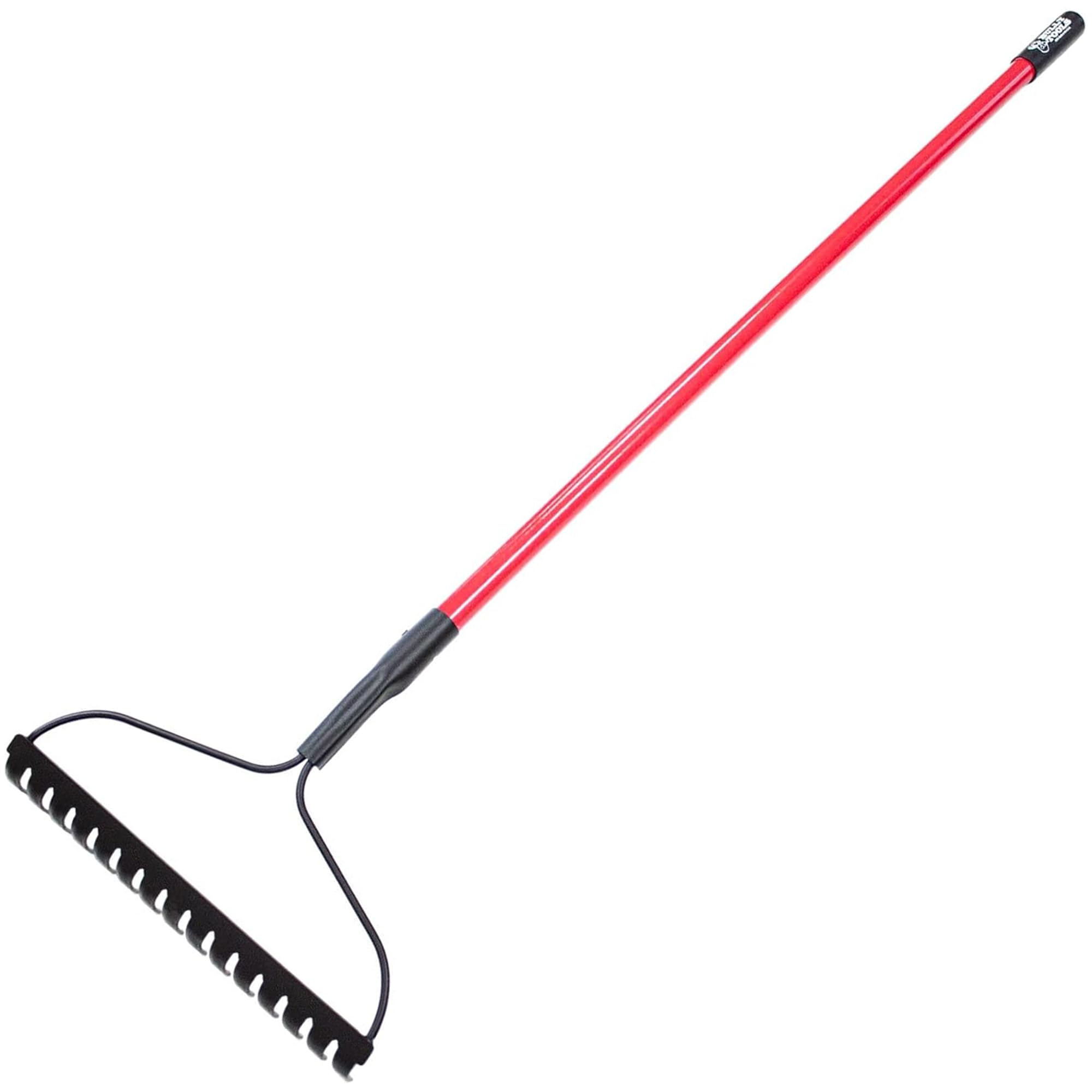
The 16-inch bow rake head is forged from true 10-gauge American steel — up to 30% thicker than imported alternatives — with robotically overwelded connections that keep tines locked under repeated digging and scraping. The ribbed teeth and reinforced ridges add structural strength for breaking up compacted soil and spreading gravel.
Owner reviews consistently highlight the lack of splintering thanks to the fiberglass handle’s polyester veil coating. The 58-inch length suits users around six feet tall, and the rubber grip reduces hand fatigue during extended leveling sessions.
At 3.45 pounds this is a heavy tool, and the all-metal construction means it pulls double duty as a soil cultivator and debris rake. It requires a Phillips screwdriver for assembly but is operational in under a minute.
What works
- 10-gauge steel head resists bending under heavy loads
- Triple-layer fiberglass handle prevents splintering
- Made in the USA with overwelded connections
What doesn’t
- Significantly heavier than plastic or poly rakes
- Not ideal for light leaf collection on delicate turf
3. AMES Leaf Grabber Rake

This scissor-style grabber uses dual wide polypropylene blades with serrated edges that clamp onto debris without bending over. The steel handles are painted and fitted with cushioned angled grips that reduce wrist strain during repetitive pickup cycles.
Owner feedback from elderly users and those with back issues consistently reports that the 2.5-pound tool eliminates the constant stooping required by traditional rakes. The tool assembles in about two minutes without any tools.
The plastic blades flex under heavy loads — some owners note the jaws separate near the hinge point when filled to capacity. It works best for light to moderate leaf collection rather than wet, compacted debris or thatch removal.
What works
- Eliminates bending for users with back pain
- Lightweight at 2.5 pounds
- Tool-free assembly in minutes
What doesn’t
- Plastic blades flex and separate under heavy loads
- Not suitable for thatching or soil leveling
4. INFLATION 65″ Adjustable Long Handle Rake
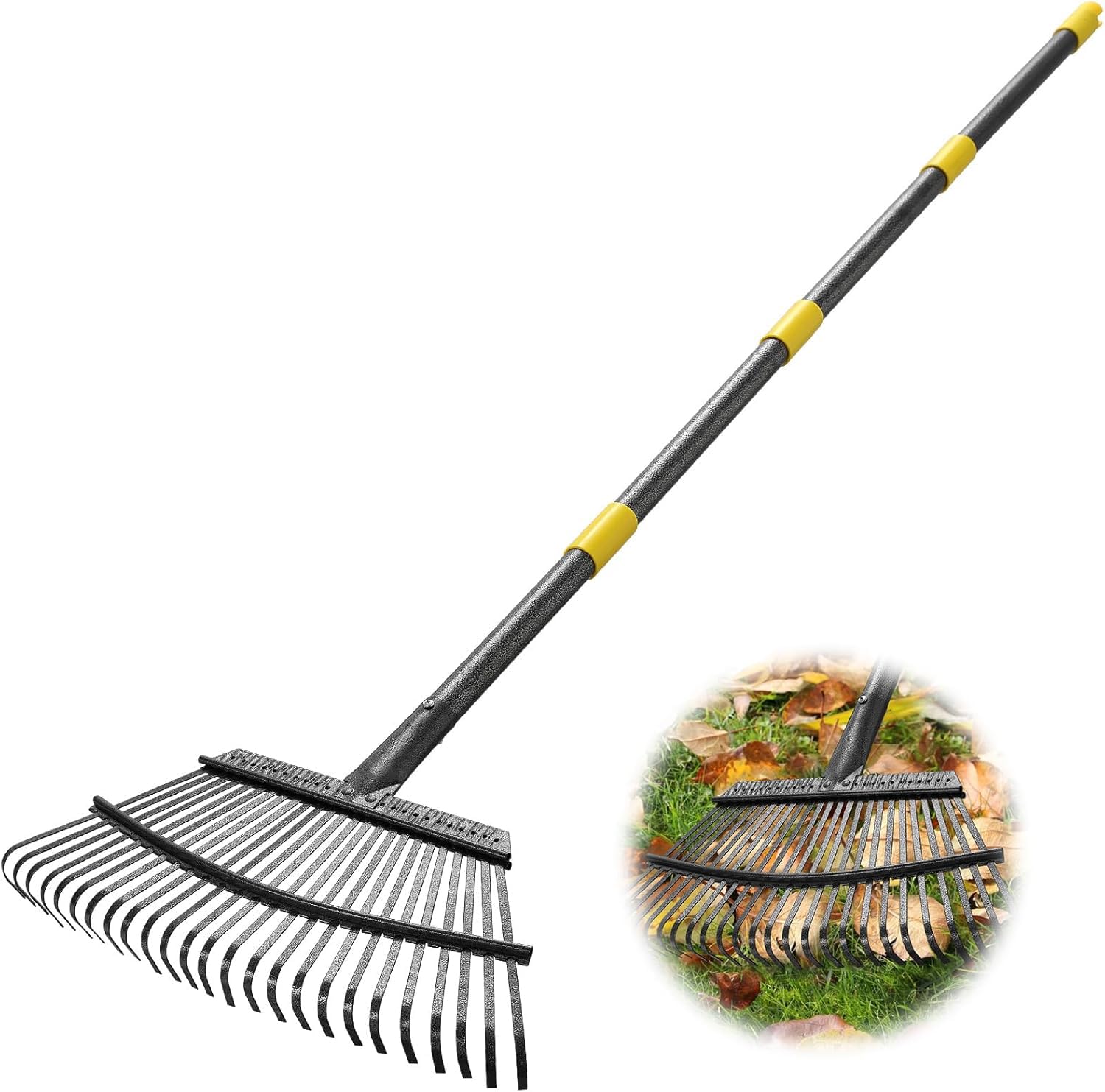
The 18-inch head with 25 metal tines provides a compact sweep area that works well between shrubs and around garden beds. The steel handle segments screw together to adjust overall length from a child-friendly short configuration up to 65 inches for full-height adult use.
Owner reviews note the rake is lightweight for an all-metal build and works as a dog waste scoop and campsite clearing tool. The simplified rod-screw assembly means no tools are required for setup or breakdown.
Some users report that the tines can bend under heavy wet leaf loads, and the steel handle sections may loosen during aggressive use. It is a solid entry-level option for households with multiple users of varying heights.
What works
- Adjustable length suits children to tall adults
- All-metal construction with 25 tines
- Tool-free assembly and breakdown
What doesn’t
- Tines can bend under heavy wet debris
- Handle sections may unscrew during heavy raking
5. Union Tools 64309 Poly Leaf Rake 24-in

The 24-inch wide poly head covers substantial ground per pass and weighs only 1.08 pounds, making it one of the lightest rakes in this comparison. The wooden handle provides a traditional feel and flex that experienced gardeners prefer for flicking leaves without damaging turf.
Multiple owner reviews note that the rake head arrives unsecured and requires the user to remove a screw from the head holder and reinstall it into the handle — a step that is not documented in the packaging. The lack of a pre-secured head frustrates some buyers.
Once properly assembled, the rake performs well for dry leaf collection but the plastic tines lack the stiffness needed for dethatching or wet debris. It is a straightforward, low-cost tool for light seasonal cleanup.
What works
- Extremely lightweight under 1.1 pounds
- Wide 24-inch head clears large areas fast
- Traditional wood handle with natural flex
What doesn’t
- Head requires separate screw installation
- Plastic tines lack stiffness for thatch removal
6. GreatBuddy 72″ Expandable Leaf Rake
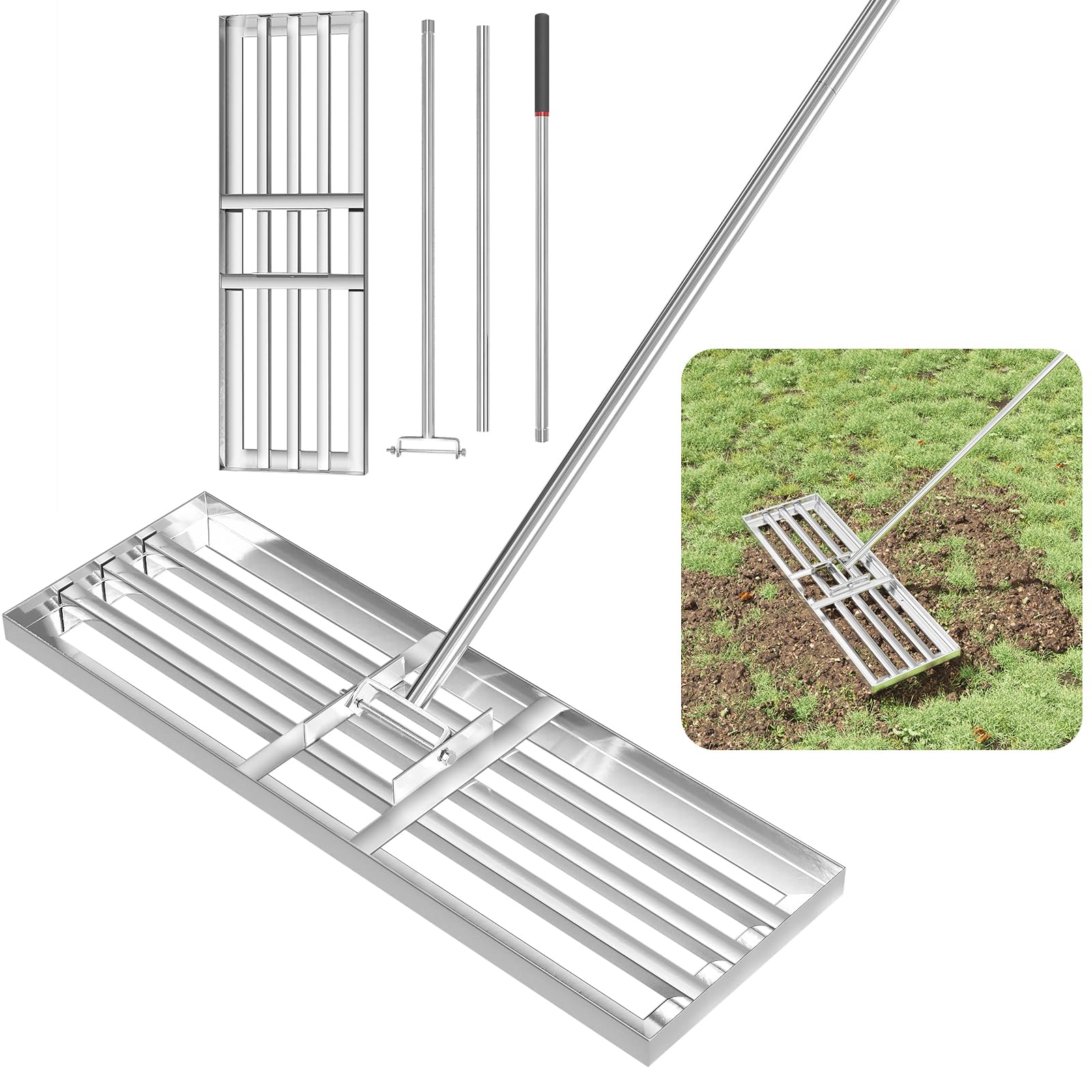
The 18-inch head width is narrower than standard rakes, allowing access between dense shrubs and around raised beds. The stainless steel handle telescopes to four lengths — 29, 43, 57, and 72 inches — so the same tool fits different users and storage constraints.
Owners who used this rake for leveling over a ton of topsoil reported the handle stayed rigid when fully extended and the tines survived without breakage despite visible thinness in some welds. The metal head with aluminum coating resists rust.
The narrow head means more passes are required for large open lawns, and the screw-together sections can loosen during aggressive use. It is a strong choice for campsite clearing or tight garden spaces rather than wide-open turf.
What works
- Four adjustable lengths for versatile fit
- Narrow head fits tight garden spaces
- Stainless steel handle resists rust
What doesn’t
- Narrow head requires more passes on large lawns
- Handle sections can loosen during heavy use
7. Joyhalo 65″ Adjustable Rake for Leaves

The 18-inch metal head with 25 tines and a 65-inch adjustable handle offers a good reach-to-width ratio for general grass cleanup. The extended 8.7-inch rubber grip reduces hand fatigue during longer sessions compared to bare-metal or wood handles.
Owner feedback notes that the tines are stiff enough for pine needles and mulching but some users experienced handle sections pulling apart during regular use — a common issue with screw-together designs. The metal head carries a protective coating to resist rust.
Assembly is tool-free and the collapsible design fits into a backpack or bike rack for campsite use. It is a functional entry-level rake for small to medium yards but may not withstand heavy thatching or wet debris loads over multiple seasons.
What works
- Long rubber grip reduces hand fatigue
- Collapsible for portable storage
- Tool-free assembly
What doesn’t
- Handle sections can separate during use
- Not built for heavy thatching or wet debris
Hardware & Specs Guide
Tine Count and Gauge
Tine count directly affects how a rake interacts with turf. A 24-tine thatching head uses spaced, stiff prongs to penetrate thatch without grabbing healthy grass. A 25-tine leaf rake spreads the load across more contact points, which prevents gouging but reduces penetration into compacted debris. Gauge — the thickness of the steel — determines bend resistance. True 10-gauge heads (Bully Tools) withstand repeated soil-scraping work, while thinner stamped-steel heads on budget models deform under wet leaves or gravel.
Handle Material and Connection Type
Fiberglass handles with a polyester veil coating (Bully Tools) resist moisture absorption and splintering, making them the most durable option for year-round grass maintenance. Stainless steel handles (GreatBuddy) are rust-resistant but can loosen at threaded joints over time. Wood handles (Union Tools) offer natural flex but require seasonal sealing to prevent decay. The connection method matters most: overwelded heads or through-bolt fasteners outlast friction-fit or single-rivet designs that fail when lateral force is applied during thatching.
FAQ
Which rake type is best for dethatching grass?
How does tine gauge affect performance on grass?
What handle length is ideal for grass raking?
Final Thoughts: The Verdict
For most gardeners, the best rake for grass winner is the Bully Tools 24-Tine Thatching Rake because its tempered steel tines and overwelded fiberglass construction handle both dethatching and leaf collection without failure. If you need a dedicated soil-leveling and gravel-spreading tool, grab the Bully Tools Bow Rake for its 10-gauge American steel head. And for users who want to eliminate bending during leaf pickup, nothing beats the AMES Leaf Grabber Rake with its scissor-action poly blades.