
Specs are compiled from manufacturer listings and verified buyer reviews and can change over time — please confirm the key details on the product page before buying.
Wooden raised beds rot in a few years and flimsy plastic planters crack in the summer sun. A metal garden bed solves both problems: it is built from galvanized steel (steel coated with zinc to resist rust) that stands up to rain, snow, and heat without falling apart. But not all metal beds are the same — the thickness of the steel, the height of the walls, and the ease of assembly vary wildly between brands.
I’m Rikta — the founder and writer behind Lawn Gear Lab. This guide is built by comparing the manufacturers’ published specifications and the patterns across verified customer reviews, so you get each pick’s real strengths and trade-offs instead of marketing spin.
This guide breaks down the best raised metal garden beds by comparing steel thickness, soil capacity, assembly ease, and real-world durability so you can buy with confidence.
Quick Picks
- Plant & Plot Galvanized Raised Garden Bed — Best Overall
- Ohuhu 8x3x1.9 ft Metal Raised Garden Bed — Premium Build
- EDOSTORY Metal Raised Bed 6x3x2 ft — Sturdy Value
- Best Choice Products 8x2x2 ft Metal Raised — Modular Pick
- Pattiumo Galvanized Raised Garden Bed 8x2x1.5 ft — Budget Champion
- A ANLEOLIFE 8x4x2 ft Galvanized Raised Garden — Massive Capacity
How To Choose The Best Raised Metal Garden Beds
Picking the right metal raised garden bed means looking past the marketing and focusing on a few specs that define how long it lasts and how easy it is to use. Here is what actually matters.
Steel Thickness and Coating
The thickness of the steel panels — usually measured in millimeters or gauge (a lower number means thicker steel) — determines whether the bed will bow out under heavy wet soil. Look for steel described as heavy-duty galvanized with a zinc coating that resists rust. A powder-coated finish (a baked-on painted layer) on top of the galvanization adds another layer of protection against scratches and weather.
Bed Height and Depth
Taller beds — around 24 inches — are easier on your back because you do not have to bend as far. They also give deep-root plants like tomatoes, carrots, and potatoes room to grow. Lower beds around 12 to 18 inches work fine for shallow-root greens and flowers, but you will kneel more.
Assembly Design
Some metal beds require tools and a lot of patience; others snap together with wing nuts (large nuts you tighten by hand) in under an hour. Check whether the bed uses corner brackets for stability and whether the edges are rolled or have protective edging to keep you safe from sharp metal. A tool-free design can save you a headache.
Quick Comparison
| Model | Best For | Dimensions | Soil Capacity | Steel Thickness | Amazon |
|---|---|---|---|---|---|
| Plant & Plot 8x2x2 ft | Overall value, easy setup | 96 x 24 x 24 in | — | 0.6 mm | Amazon |
| Ohuhu 8x3x1.9 ft | Deep root vegetables | 94.5 x 35.4 x 23.6 in | 341 gal | — | Amazon |
| EDOSTORY 6x3x2 ft | Compact, sturdy corner brackets | 72 x 36 x 24 in | — | — | Amazon |
| Best Choice Products 8x2x2 ft | Modular configuration | 96 x 24 x 24 in | 215 gal | — | Amazon |
| Pattiumo 8x2x1.5 ft | Budget-friendly, rust-resistance | 96 x 24 x 18 in | — | — | Amazon |
| A ANLEOLIFE 8x4x2 ft | Maximum capacity, large gardens | 96 x 48 x 24 in | 478 gal | 0.8 mm | Amazon |
In‑Depth Reviews
1. Plant & Plot Galvanized Raised Garden Bed 8x2x2 ft

The one you can set up alone in 30 minutes with no tools.
A tall 24-inch height saves your back — you barely bend to weed or harvest, and the 2-foot depth gives deep-root plants like tomatoes and carrots plenty of room. The steel panels are 0.6mm thick with a galvanized zinc coating and a powder-coated finish (a baked-on painted layer), so the bed resists rust and holds its shape under heavy wet soil without bowing. At 8 feet long and 2 feet wide, it holds a generous amount of soil without wasting space in a typical backyard.
Buyers report they were able to put it together by themselves without tools, which is rare for a bed this size. The patented tool-free design uses interlocking panels and wing nuts — no screwdriver or drill required. A few owners mention that the rubber edging for the rim can be tricky to install, but most say the bed looks and works fine without it. Unlike the Pattiumo below, which has an 18-inch height, the Plant & Plot gives you 24 inches of depth — a meaningful 6-inch difference for root vegetables and back comfort.
The company backs it with a free 3-year warranty, and a portion of every sale goes to funding garden beds for schools. It is a sturdy, practical pick that avoids the common headaches of metal bed assembly.
Standout feature: Tool-free assembly in under 30 minutes saves you the hassle of digging out tools or wrangling loose hardware.
The honest caveat: The rubber rim strip is difficult to seat properly — some owners skip it entirely without issues, but if you want a perfect finished edge, be prepared to wrestle with it.
Reach for this if: you want the easiest large metal bed to assemble, with a solid warranty and a height that is kind to your knees.
Hold off if: you do not mind a lower bed or you prefer rounded corners — the silver finish is minimalist but lacks the soft curled edges of premium beds.
2. Ohuhu 8x3x1.9 ft Metal Raised Garden Bed
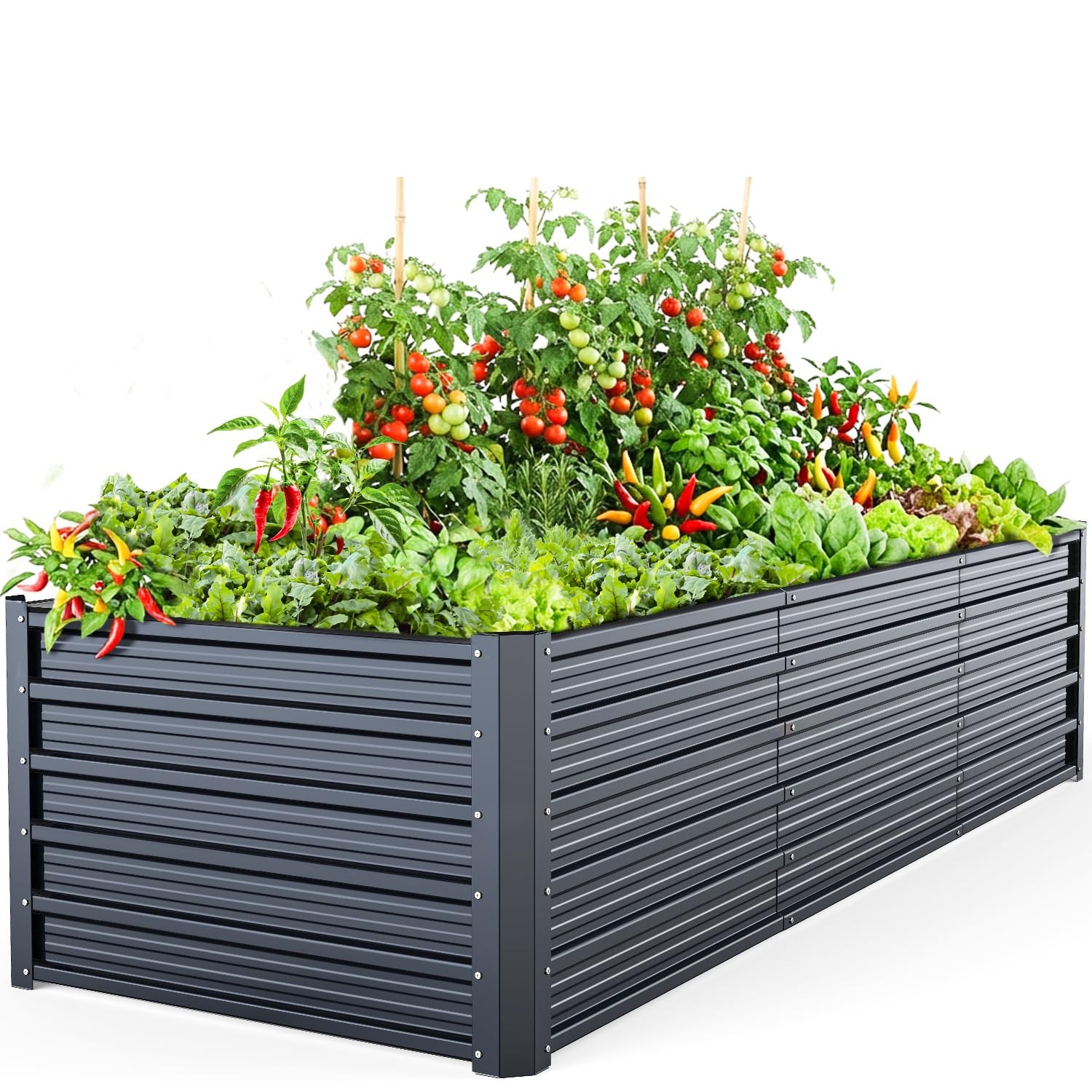
A deep 1.9-foot bed for serious root vegetables and organic gardeners.
This bed is 0.9 feet taller than standard shallow beds, holding up to 341 gallons of soil — enough space for carrots, potatoes, and sprawling tomato vines. The open base drains naturally so roots do not rot, and the improve height means less bending for anyone with back sensitivity. The heavy-duty galvanized steel gets an eco-coating that, according to the maker, is 100% non-toxic and certified under CA65 and REACH standards (regulations that limit harmful chemicals), so you can grow organic produce without worrying about chemical leaching.
It comes with 8 stable bracing rods and 4 thickened corner brackets to prevent the walls from bowing when filled. One reviewer noted the metal is on the thinner side but the supports do their job well. Unlike the Best Choice Products bed that uses multiple small panels and a tedious fastener count, the Ohuhu uses pre-drilled panels with wing nuts for tool-free assembly. Owners mention the charcoal grey color still looks like new after two years of outdoor use, with no paint chipping.
Assembly takes about an hour and is easier with two people because the panels can be flimsy until the braces lock in.
Why it stands out
- Holds up to 341 gallons of soil for deep-root planting
- 100% non-toxic with CA65 and REACH certifications
- 8 bracing rods and thickened corner brackets prevent warping
What to watch
- Metal panels feel thinner than some premium beds
- Two-person assembly recommended for easier handling
Best for: organic growers and anyone planting deep-root vegetables who also wants a certified non-toxic bed.
Not ideal if: you need the thickest possible steel — the panels are adequate but not the beefiest on this list.
3. EDOSTORY Metal Raised Bed 6x3x2 ft
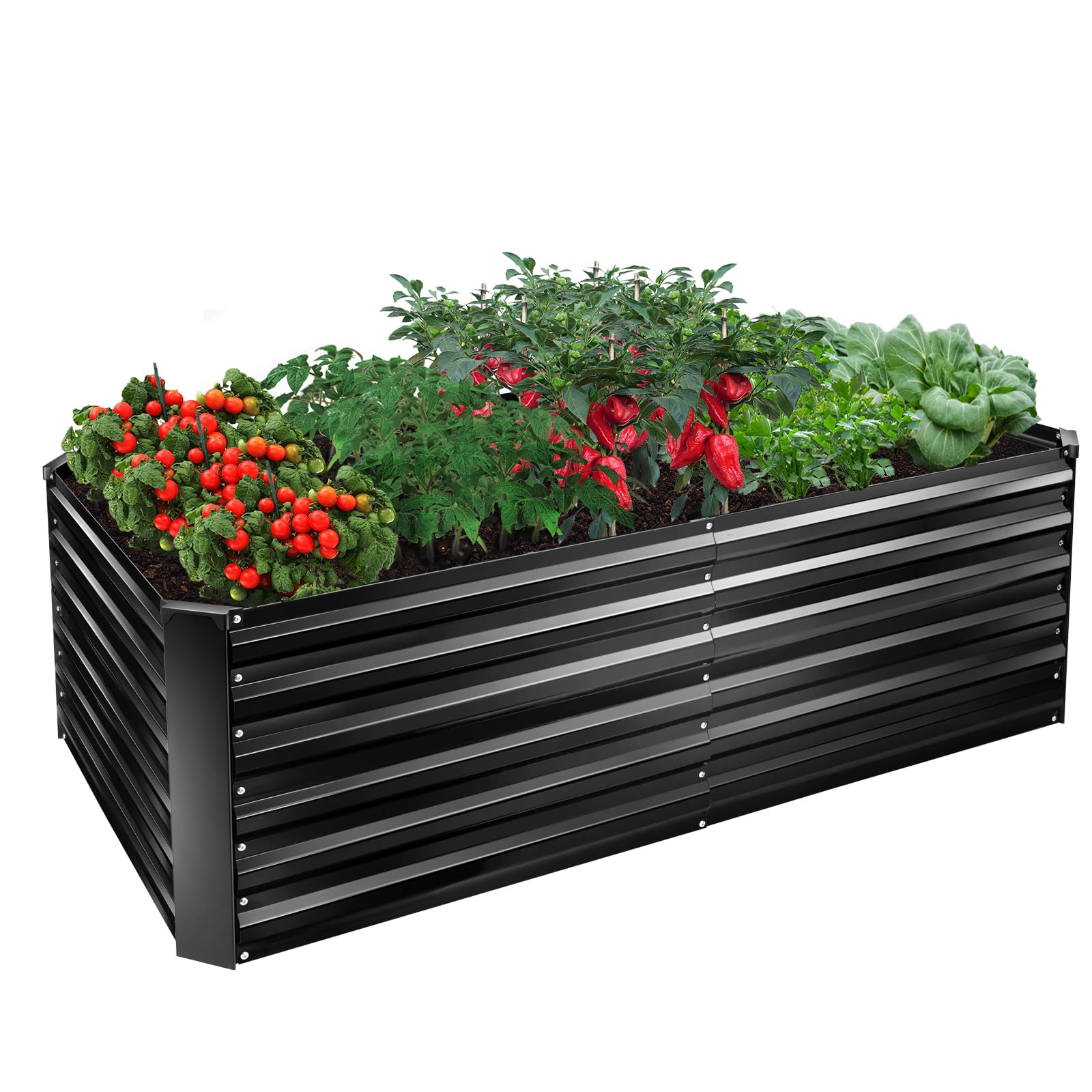
A compact 6-by-3-foot bed that fits tight corners without sacrificing depth.
Not every yard has room for an 8-foot bed — the EDOSTORY measures 6 feet by 3 feet with a full 24-inch height, making it a smart fit for awkward corners or smaller garden plots. The heavy-duty galvanized steel uses a three-layer design: a steel core inside a galvanized protective layer, topped with a durable colored coating. That adds up to solid resistance against sunlight, rain, and snow.
The corner brackets are a real strength here — they are crafted to fortify and stabilize the structure so the walls do not bow outward when filled. Customers note it is sturdy and easy to assemble, though the instructions can be unclear about the corner pieces and braces. It uses a more straightforward design than the modular Best Choice Products bed, going together faster once you figure out the bracket placement. One owner mentioned it is surprisingly spacious for its footprint — you can fit a good mix of vegetables and flowers.
Reviewers point out the black finish looks smart in any yard, and the steel feels substantial. If you want the depth of a 2-foot bed but do not have the length of a full 8-foot run, this is the one to grab.
Why it works: The reinforced corner brackets give you confidence that the sides will not bulge, even after heavy rain.
The small pain point: The assembly instructions are borderline useless on the corner pieces — you will need to puzzle through that part yourself or watch the listing photos closely.
Perfect for: gardeners who need a deep 2-foot bed in a smaller or irregular-shaped space.
Not the best if: you want tool-free assembly — this bed requires hardware and some patience with the instructions.
4. Best Choice Products 8x2x2 ft Metal Raised Garden Bed

A modular bed you can shape into six different layouts to fit odd spaces.
This one stands out for its flexibility. It comes with 8 curved panels and 16 straight panels that you can arrange in one-foot or two-foot variations — giving you six possible configurations. The 24-inch height holds up to 215 gallons of soil, which is plenty for tomatoes, cucumbers, and broccoli, and the 2-foot width keeps everything within easy reach from either side so you are not stretching into the middle.
The powder-coated steel panels are decently thick, though some shoppers say that the finish can start to fade after two seasons and that the top rubber edging tends to detach. The tool-free assembly uses wing nuts and bolts, but buyers report it is tedious — the instructions are bare-bones and a few units have arrived missing hardware. Unlike the Plant & Plot bed that assembles quickly in 30 minutes, this one takes longer and benefits from a second pair of hands to hold panels in place.
Still, you get a lot of growing space in a shape that can wrap around a patio corner or fit a narrow side yard. The charcoal grey color blends into most garden settings.
The upside
- Six different configurations fit unusual yard shapes
- 2-foot height is easy on the back
- 215-gallon capacity for serious planting
The downside
- Assembly is tedious with many fasteners
- Some units have missing bolts or wing nuts
Best for: creative gardeners who need to fit a raised bed around existing landscaping or a patio edge.
Skip if: you want a quick, low-maintenance setup — this one requires patience and maybe a trip to the hardware store for extra bolts.
5. Pattiumo Galvanized Raised Garden Bed 8x2x1.5 ft
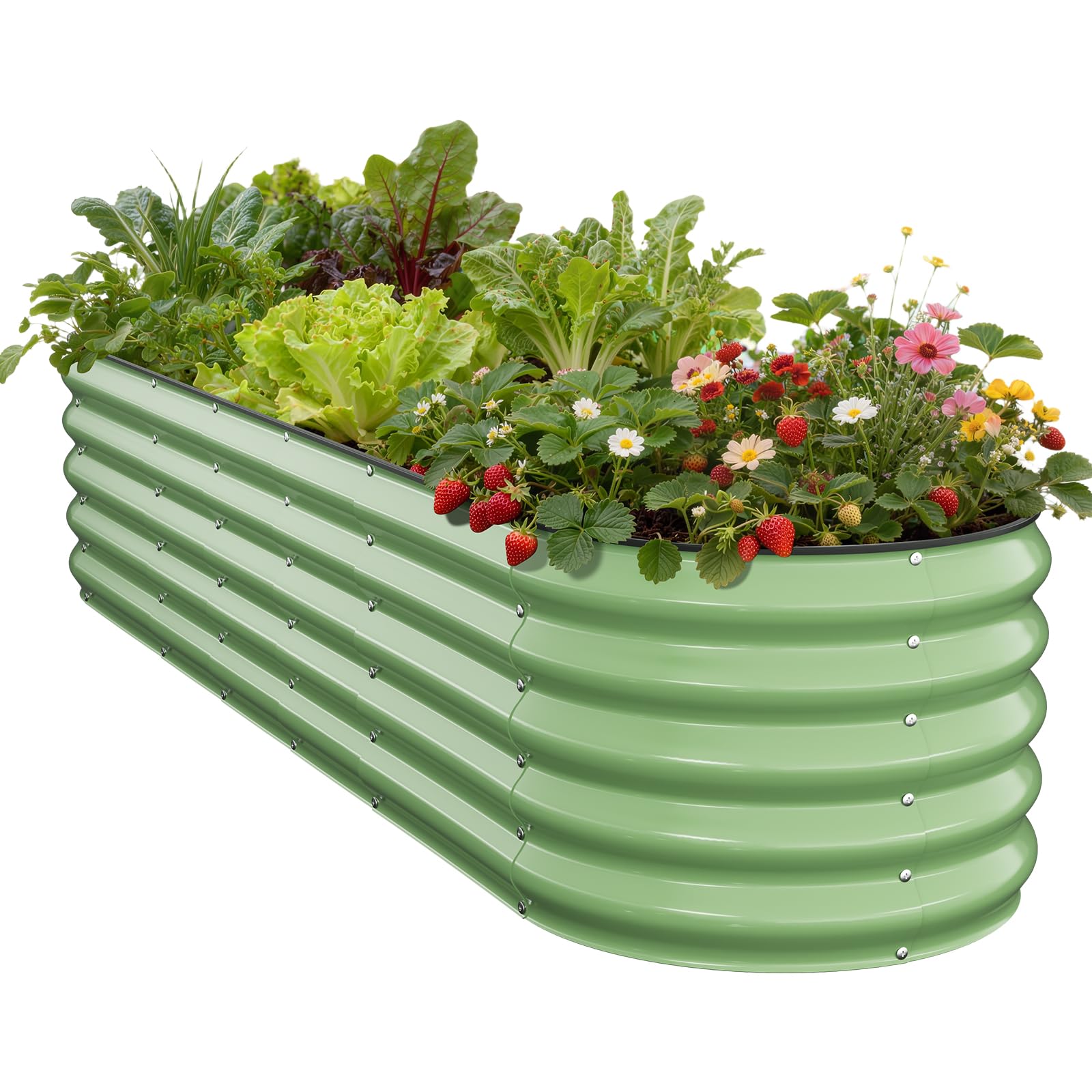
A lower-cost metal bed that survived a harsh winter with no damage.
This is the bed to choose if you want a metal raised planter at a friendly price without worrying about rust. At 18 inches tall, it is 6 inches shallower than the Plant & Plot bed above — but that lower profile still works well for greens, herbs, and shallow-root flowers. The galvanized steel panels are painted green, and the open bottom lets roots drain naturally into the ground below.
Owners mention this bed is “durable and is still holding strong after a harsh winter” — it survived an ice storm with no scratches and looked new in the second season. The protective edging on the rim helps reduce sharp edges during setup, and the included hardware makes assembly straightforward, though it does require tools. One reviewer says the 18-inch height is barely adequate for blueberries, so keep that in mind if you plan deep-root crops.
This is your most affordable entry point into a galvanized metal bed that is proven to weather the seasons.
The key takeaway: Real-world buyers confirm it holds up through ice storms and snow without rust or scratches — strong evidence of long-term durability at a low cost.
The trade-off: At only 18 inches tall, it is not ideal for deep-root plants like potatoes or for gardeners who want to avoid bending.
Grab this if: you want the lowest-cost metal bed that is proven to survive tough winter weather without rusting.
Hold off if: you grow deep-root vegetables or have back trouble — the 18-inch height means more bending.
6. A ANLEOLIFE 8x4x2 ft Galvanized Raised Garden Bed
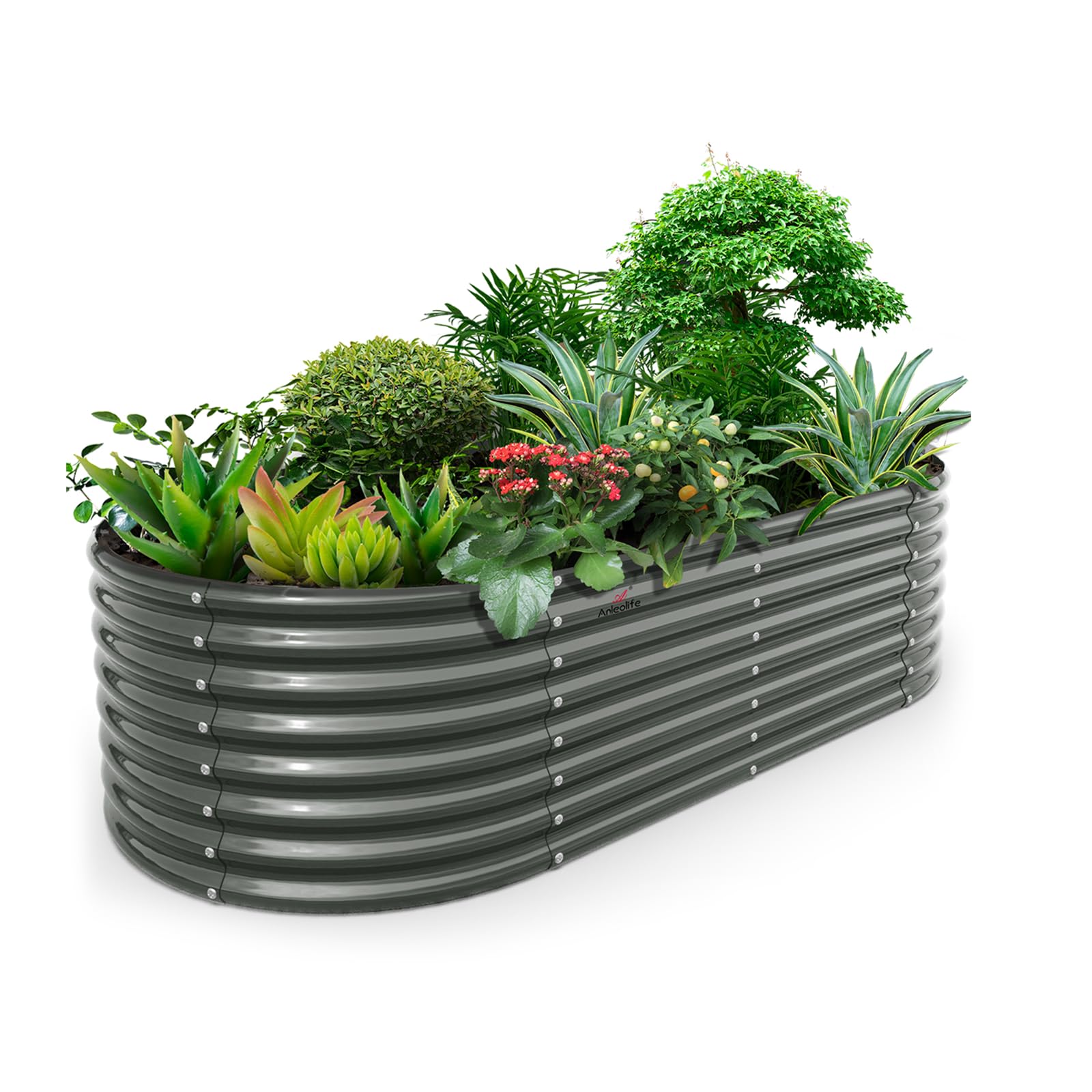
An 8-by-4-foot giant with thick 0.8mm steel for serious growing operations.
This is the largest bed in the lineup — 8 feet long by 4 feet wide by 2 feet deep, holding a massive 478 gallons of soil. That gives you room for sprawling squash vines, rows of corn, or a full herb and vegetable garden in one single structure. The steel is 0.8mm thick — noticeably thicker than the 0.6mm found on the Plant & Plot bed — with corrugated panels that resist bowing even under all that wet soil weight. The multi-layer eco-friendly powder coating adds extra rust protection.
The rounded corners and smooth curled edges are designed to prevent cuts, and the kit includes garden gloves for safety. Assembly takes about 1.5 hours with a drill, and center support rods help keep the long sides from bulging. One 83-year-old reviewer said they assembled it without trouble, which says a lot about the clarity of the instructions and the fit of the parts. Because the bed is 4 feet wide, you can reach the middle from either side without stepping into the soil.
If you have a large garden plot and want a single bed that can handle a serious harvest, this is the one.
Biggest strengths
- 478-gallon capacity — the largest on this list
- 0.8mm corrugated steel is thicker than most competitors
- Curled edges and included gloves for safe handling
Consider these
- Requires a lot of soil to fill — budget for that upfront
- Center support rods could be sturdier, per some owners
Ideal for: committed gardeners with ample space who want one large, thick-walled bed for a full vegetable garden.
Probably too much if: you only need a small herb patch or have limited yard space — this bed dominates the landscape.
Understanding the Specs
Steel Gauge and Thickness
This is the single biggest factor in how long your bed will last. Thicker steel — measured in millimeters — resists bowing when the bed is full of wet soil and holds up better against dents and corrosion. Most budget beds use around 0.6mm steel, while premium beds go up to 0.8mm or thicker. Look for galvanized steel, which has a zinc coating that prevents rust, ideally with an additional powder-coated finish (a baked-on painted layer) for extra weather protection.
Soil Capacity and Bed Height
Soil capacity is measured in gallons or cubic feet and tells you how much growing medium you need to fill the bed. Taller beds — 24 inches — hold more soil and give deep-root vegetables room to thrive, plus they reduce back strain. The two most common heights are 18 inches and 24 inches. An 18-inch bed is fine for greens and flowers, but if you grow tomatoes, carrots, or potatoes, go for the 24-inch depth.
Assembly and Hardware
Some beds use a tool-free design with pre-drilled panels and wing nuts that you tighten by hand, while others require a screwdriver or drill. Look for beds with corner brackets — those add stability and prevent the walls from separating over time. Protective edging or rolled rims are important because the edges of galvanized steel can be sharp. A bed that comes with a few extra bolts and gloves is a sign of good packaging.
Open Base vs. Solid Bottom
Most metal raised garden beds have an open bottom, meaning the base sits directly on the ground. That allows excess water to drain naturally and lets plant roots extend into the native soil for extra nutrients. A solid bottom is rare in this category and usually only appears in portable planters. Open base is generally better for in-ground gardening, while solid bottom suits patios or balconies where you cannot dig into the ground.
FAQ
Will a raised metal garden bed rust over time?
How much soil do I need for an 8x2x2 ft bed?
Is a 2-foot tall bed better than an 18-inch bed?
Do I need to line the bottom of a metal raised bed?
Can I put a raised metal garden bed on grass or concrete?
What gauge steel is best for a raised garden bed?
How long does a galvanized steel raised bed last?
Can I grow vegetables in a metal raised bed?
Is a curved oval bed better than a rectangular bed?
What is the difference between galvanized steel and powder-coated steel?
Final Thoughts: The Verdict
For most buyers, the best raised metal garden beds winner is the Plant & Plot 8x2x2 ft because it combines a full 24-inch depth, tool-free assembly, 0.6mm galvanized steel, and a 3-year warranty at a mid-range price that delivers real value. If you want a massive 478-gallon capacity with the thickest 0.8mm steel on this list, grab the A ANLEOLIFE 8x4x2 ft. And for a budget-friendly metal bed that has proven itself through harsh winters, the Pattiumo 8x2x1.5 ft is a solid entry point.
How We Picked
We do not accept paid placement. Every pick is matched to a real buyer and a real use-case; we do not hands-on test units.
Sources & Methodology
Specifications: manufacturer listings and product documentation. Review insights: verified customer reviews, as of July 2026. Pricing: not shown on this page (it changes often); check the current price via the retailer link.
As an Amazon Associate, Lawn Gear Lab earns from qualifying purchases. This does not affect which products we feature.