
Specs are compiled from manufacturer listings and verified buyer reviews and can change over time — please confirm the key details on the product page before buying.
Your vegetables are a rabbit buffet, and the only way to close the kitchen is mesh with openings too small to squeeze through — typically 1 inch or smaller. The right fence depends on your plot’s size, so you will find big rolls for wrapping whole beds, low no-dig panels for borders, and heavy cloth for permanent runs below. Since this list uses flexible, human-like matching for rabbit-specific fencing, if a roll here is not the exact length or height you searched, the nearest same-type size serves the same purpose.
I’m Rikta — the founder and writer behind Lawn Gear Lab. This guide is built by comparing the manufacturers’ published specifications and the patterns across verified customer reviews, so you get each pick’s real strengths and trade-offs instead of marketing spin.
Every option below must stop rabbits at the border and last for years — that is the real test of any rabbit fencing for gardens, and it is the standard every pick here had to meet.
Our Picks at a Glance
How To Choose The Best Rabbit Fencing For Gardens
Rabbits are small, persistent, and excellent diggers, so the fencing that stops them has to close two gaps at once: the mesh squares on the face and the open soil at the bottom edge. A fence that handles one but not the other will fail by morning.
Match the mesh opening to the rabbit
The opening size is the single most important number on the box. A 1-inch square opening blocks most adult rabbits, while a 1/2-inch opening closes the door on young kits and even squirrels — if you have ever watched a small rabbit squeeze through a chain-link fence, you know why smaller is safer. The trade-off is cost: finer mesh costs more per roll.
Pick a gauge for the job
Gauge is the thickness of the wire, and lower numbers mean thicker wire. A 16-gauge fence is stiff enough to stand between posts, while a 19-gauge wire is lighter, easier to cut with scissors, and better suited to wrapping beds or lining an existing fence. Thicker wire also resists rust and bending longer, which matters if raccoons or dogs will test the barrier.
Decide between galvanized and vinyl-coated
Galvanized steel gets a zinc coating that resists rust, and hot-dip galvanizing (where the wire is dipped after welding) protects the joints too. Vinyl-coated wire adds a black plastic layer on top — it hides better against dark soil and landscaping, but the coating can rub off on your hands during installation. Both are fine for several seasons outdoors.
Quick Comparison
| Model | Best For | Mesh Opening | Wire Gauge | Roll Size | Amazon |
|---|---|---|---|---|---|
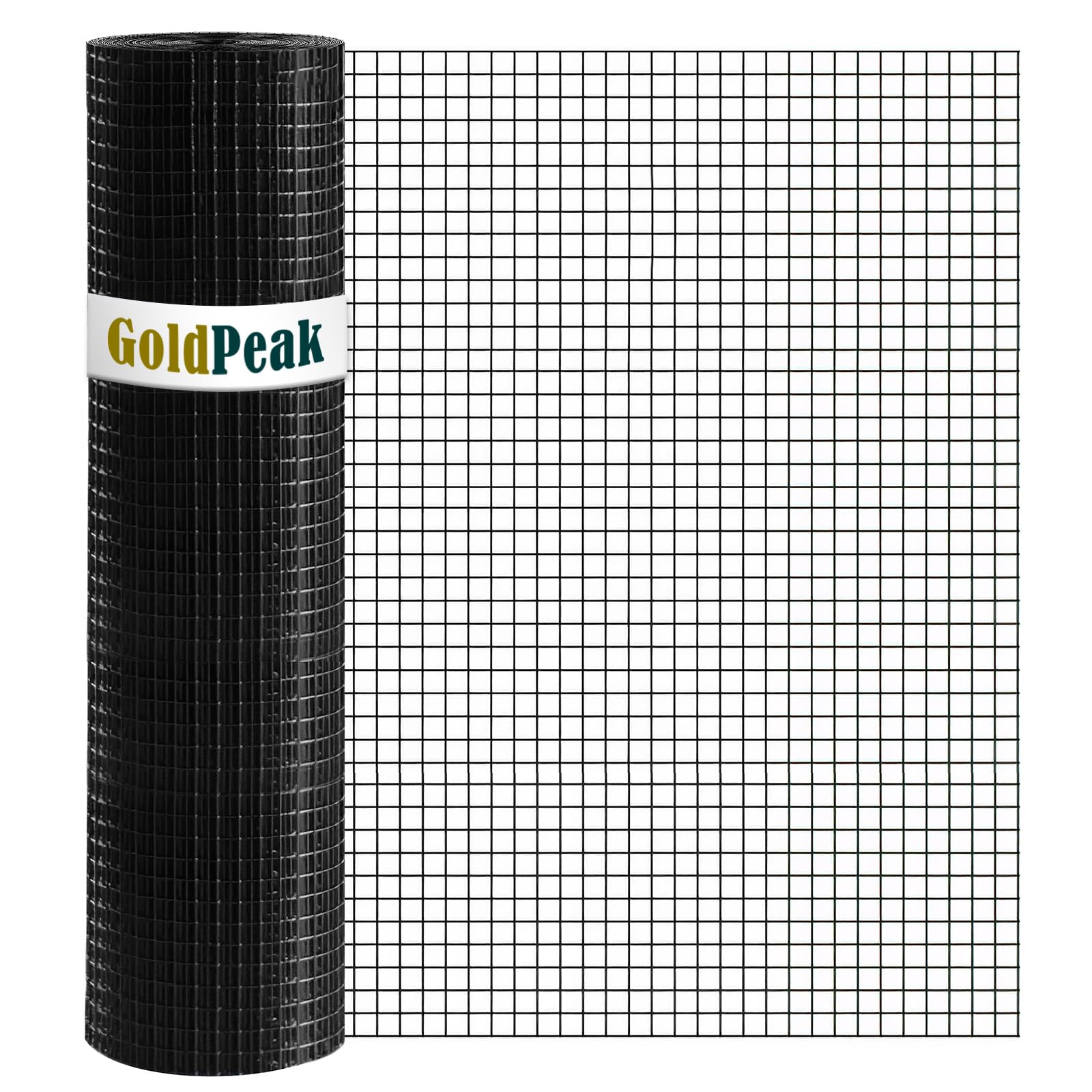
| GoldPeak Black Hardware Cloth★ Best Overall | Large, discreet garden wraps | 1/2 inch | 19-gauge | 48 in x 50 ft | Amazon |
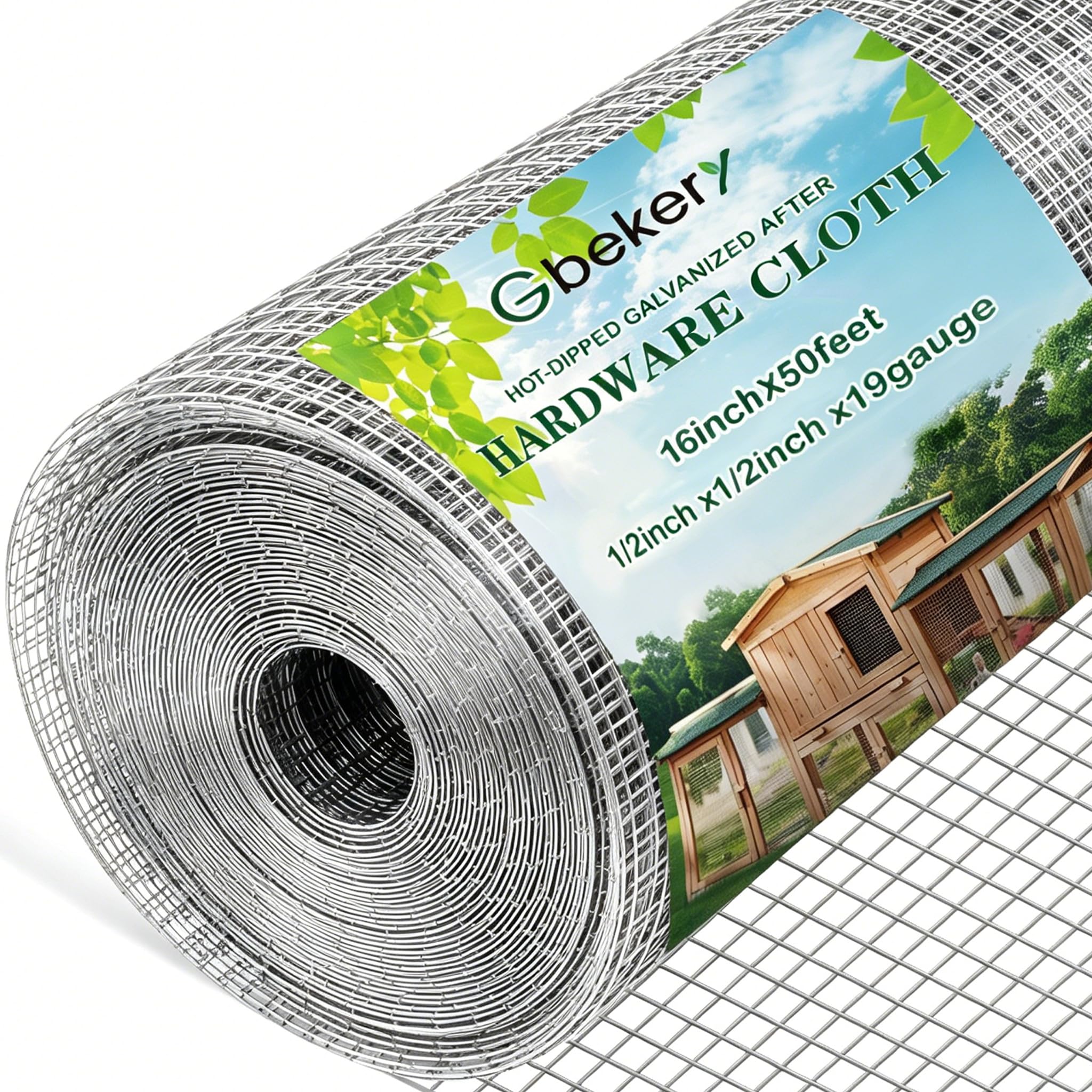
| Gbekery Hardware ClothBudget Champion | Budget-wide coverage | 1/2 inch | 19-gauge | 16 in x 50 ft | Amazon |
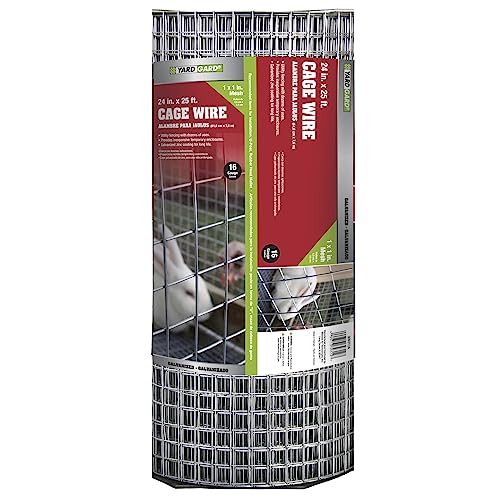
| YARDGARD 1 in. MeshSturdy Standalone | Raised beds and cages | 1 inch | 16-gauge | 24 in x 25 ft | Amazon |
| YARDGARD 1/2 in. Mesh | Fine-mesh all-rounder | 1/2 inch | 19-gauge | 24 in x 25 ft | Amazon |
| forimo 1 in. Black Vinyl | Long, low borders | 1 inch | 16-gauge | 24 in x 50 ft | Amazon |
| AVELOTUUG No Dig Panels | Instant, no-post borders | 1.25 in gap | Metal wire | 17 in x 27 ft | Amazon |
| Salmut Hardware Cloth | Large permanent runs | 1/2 inch | 19-gauge | 48 in x 100 ft | Amazon |
| Garden Tailor 1/4 in. Mesh | Maximum small-pest defense | 1/4 inch | 23-gauge | 48 in x 100 ft | Amazon |
In-Depth Reviews
1. GoldPeak Black Hardware Cloth
Our pick — over 4.5★ from 700+ verified ratings; the strongest balance of quality and price.
The big black roll that disappears into the garden while it quietly blocks every rabbit.
This is the pick for anyone who wants one roll to do a lot of work: 48 inches wide and 50 feet long, with 1/2-inch square openings that stop rabbits, young kits, and even squirrels. The 19-gauge wire is wrapped in a black vinyl coating over galvanized steel, so it resists rust in wet, humid conditions — and because it is black, it nearly vanishes against soil and shadow when you look across the yard.
What wins people over here is the build quality — it is the most-praised trait by a wide margin, with durability close behind — and owners lean on it for chicken coops, garden rings, and tree guards alike. It cuts and bends easily for a clean finish, and a heavy-duty carton keeps the roll from arriving crushed. The honest caveat is that the black coating can rub off on your hands, so wear gloves, and a few buyers report it feels lighter than true 19-gauge — fine for garden duty, not for holding back a determined large predator.
At 48 inches wide versus 16 inches for the Gbekery roll below, this one covers far more ground per pass, which makes the higher price make sense if you are fencing a full bed rather than a border strip. Owners mention it delivers on time even when the carrier posts a delay notice, and the review pages sum it up: “Worked great for our chicken coop!”
Why owners choose it
- 48-inch width covers big areas in one pass
- Black vinyl coating hides well and resists rust
- Easy to cut and shape for custom wraps
What to watch
- Coating can rub off on hands — wear gloves
- Some feel it runs lighter than 19-gauge
Reach for this if: you want one versatile, good-looking roll to wrap a raised garden or coop area with minimal visibility.
Look elsewhere if: you need a fence stiff enough to stand alone between posts — this cloth wants a frame or existing fence to attach to.
2. Gbekery Hardware Cloth
The 50-footer that costs little and cuts like butter for border rows.
When your job is a long, low strip — a row of lettuce, a flower bed edge, a gutter guard — this 16-inch by 50-foot roll of 1/2-inch, 19-gauge hardware cloth is the budget answer. The wire is hot-dip galvanized after welding, which means the joints get the rust protection too, and at this length you can fence a surprising amount of garden for the money.
Owners lean on it for chicken coops and rabbit runs, and the standout feedback is how easy it is to work with — it cuts cleanly with shears, shapes without fighting you, and holds its form once bent. The most-praised trait is functionality, with quality right behind, and the galvanized coating draws steady compliments for outdoor use. The recurring nuance is sturdiness: some call it heavy-duty while others note it is not the stiffest wire, so treat it as a wrap-and-attach mesh rather than a self-supporting barrier.
At 19-gauge it is the same thickness as the GoldPeak above but at 16 inches wide versus 48 inches for the GoldPeak above, so it suits tight spaces and smaller budgets. The height is a real plus for low borders — owners call it a nice height for coop edging and pet barriers, and the review pages sum it up: “Chicken wire worked well for our coop.”
Why it wins on value
- 50-foot length stretches a budget far
- Cuts easily with shears, no fighting
- Galvanized after welding protects joints
Keep in mind
- 16-inch width means more passes on big beds
- Not the stiffest wire for free-standing runs
Best for: gardeners who need a long, affordable strip of fine mesh for borders, gutters, or wrapping young plants.
Think twice if: you are fencing a tall, permanent run — pair this with a frame or sturdier wire.
3. YARDGARD 1 in. Mesh Welded Wire Fence
The thickest wire here, built to stand tall between posts and shrug off weather.
If you want a fence that holds its own shape — no frame required — this 24-inch by 25-foot roll of 1-inch mesh is the one, because the 16-gauge wire is noticeably thicker than the 19-gauge rolls on this list and stiff enough to stretch between posts. The galvanized coating earns the durability praise, and at 1-inch spacing it blocks adult rabbits cleanly, which is exactly what the buyers fencing pineapple plants were after.
Quality is the trait owners praise most, with sturdiness close behind — it holds up to all kinds of weather and stands firm for cages, trellises, and garden barriers. “I used this to fence in my pineapple plants so that rabbits would not eat it,” the review pages report, and it worked great. The honest catch is installation: this is a stiff, tightly rolled wire with sharp ends, and some owners found it hard to unroll solo — one stretched it overnight before it would lie flat, and plastic posts pulled out of soft soil, so metal posts and anchors are the safer bet.
At 24 inches by 25 feet, it covers a length of 25 feet versus the GoldPeak roll’s 50 feet but in a thicker, self-supporting wire — the right trade if you are building cages rather than wrapping beds. The mixed notes on welded joints suggest checking a few intersections before a big build.
What stands out
- 16-gauge wire is the stiffest on this list
- Holds up in all weather, resists rust
- Stands between posts without a frame
The trade-off
- Tight roll and sharp ends make solo install tough
- Occasional welded joints are imperfect
Grab this if: you are building a freestanding cage, trellis, or plant barrier that needs to hold its shape.
skip it if: you want a quick, pliable wrap — the stiff 16-gauge wire prefers posts and patience.
4. YARDGARD 1/2 in. Mesh Welded Wire Hardware Cloth

The 1/2-inch mesh that does double duty as pest blocker and soil sifter.
This 24-inch by 25-foot roll splits the difference neatly: 1/2-inch openings that stop rabbits and squirrels, in a 19-gauge galvanized mesh that is easy to cut but sturdy enough for real enclosures. It is the kind of all-rounder that shines for chicken coops, rabbit pens, and garden borders — and owners even bolt a sheet to a 2×4 frame to sift stones out of fresh garden soil.
Value for money is the trait owners praise most, with quality close behind — the consensus is a dependable, weather-resistant mesh that protects plants from birds and squirrels and holds up against raccoons and possums when built into a coop. The 2-foot height stacks neatly, so you can layer two courses for a taller wall. The recurring gripe is that the wire quality and ease of use draw mixed notes — some find the roll easy, others wrestle with it — so give yourself a helper for long runs.
It matches the Gbekery roll on gauge (both 19-gauge) but offers 24 inches of height versus 16 inches per run, making it the better fit for a true rabbit enclosure rather than a low border. Lightweight and flexible, it bends around corners and frames without a fight.
Why it earns its keep
- 1/2-inch mesh blocks kits and squirrels too
- Stackable 2-foot layers build taller walls
- Flexible and easy to cut and assemble
Heads up
- Mixed feedback on ease of unrolling
- Occasional wire-quality complaints
Choose this if: you need one fine-mesh roll that works for coops, pens, and garden beds with minimal fuss.
Look past it if: you want the stiffest possible wire — the flexible 19-gauge prefers a frame or posts.
5. forimo 1 in. Black Vinyl Coated Hardware Cloth

A 50-foot strip of black 16-gauge wire that hides against the yard while it works.
For long, low boundaries — the edge of a lawn, a vegetable row, a shed surround — this 24-inch by 50-foot roll pairs 16-gauge galvanized steel with a black vinyl coating, so it is both stiffer than most and nearly invisible against dark soil and lattice. The 1-inch square openings stop rabbits and are still small enough to cover squirrels, and the double coating is designed to boost rust resistance in damp weather.
Functionality is what owners praise most, and it earns steady notes for being easy to install and genuinely rabbit-proof — buyers use it to keep both rabbits and dogs out of the garden, often fixing it to a wooden framework with zip ties and ground staples. The black finish gets specific love for blending in: behind lattice on a shed it reads as invisible, and folded at the bottom it extends coverage against diggers.
The honest caveat is that quality, sturdiness, and rust resistance all draw mixed feedback, and wire thickness is the most common complaint — several owners feel it runs thinner than a true 16-gauge and note it is too flimsy to stand alone stretched between posts. It is flexible and easy to work with, but it wants a frame or an existing fence to lean on.
The upside
- 50-foot length covers long borders in one roll
- Black coating disappears against landscaping
- 16-gauge core is stiffer than 19-gauge
The catch
- Some report wire runs thinner than claimed
- Too flimsy to stand alone between posts
Reach for this if: you want a long, low, good-looking barrier that attaches to wood or an existing fence and blends in.
Look elsewhere if: you expect the wire to hold itself up between posts without support.
6. AVELOTUUG No Dig Garden Fencing Panels
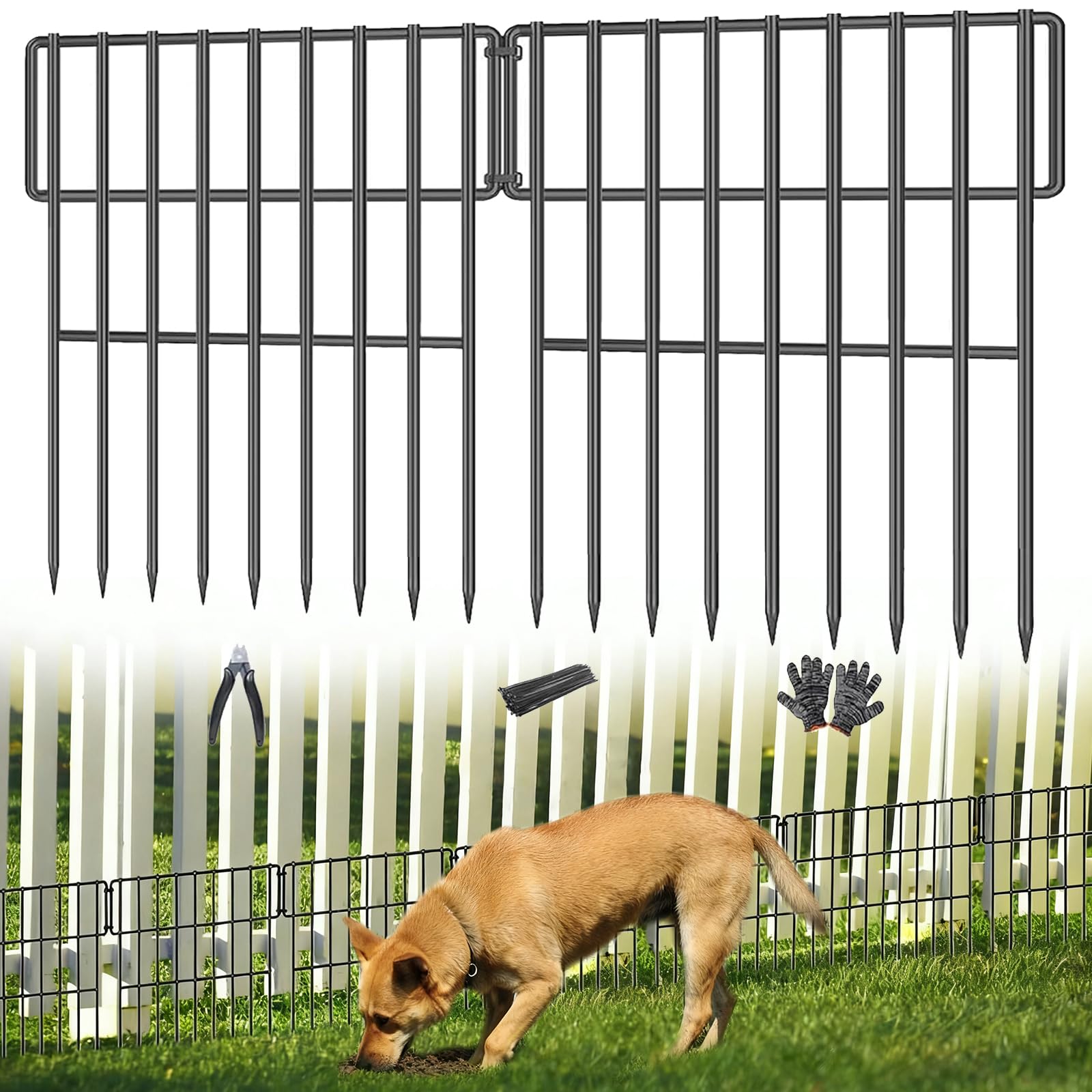
Twenty-five panels that hammer into the soil and stop diggers with zero posts.
This is the no-tools answer for the rabbit that tunnels under your fence: 25 metal panels, each 17 inches tall, that push straight into the ground along an existing border — no digging, no posts, no unrolling. The 1.25-inch gap between rods blocks rabbits and small rodents while staying low enough to read as a decorative garden border around flower beds, walkways, and vegetable patches.
Functionality is the trait owners praise most, with easy installation right behind — the panels go into the ground without bending, and the sharp bottom tips plus double horizontal rods keep them stable even when a determined animal leans on them. The baked paint finish resists rust, and the kit arrives with cable zip ties, cutting pliers, and a pair of gloves so you can install right away.
The honest limits: the 17-inch height is a deterrent, not a vault — a motivated jumper could clear it, and the gaps are wide enough that some owners are skeptical about the smallest critters squeezing through. Rust resistance draws mixed notes, and in hard, dry soil the rods can bend on the way in, so a 2×4 block and a mallet help. One owner found them perfect for keeping 35-pound tortoises off the porch.
What makes it easy
- No digging or posts — just hammer in
- Panels connect into any shape you need
- Baked paint finish resists rust
Know before you buy
- 17-inch height won’t stop jumpers
- Rods can bend in hard, dry soil
Perfect for: anyone closing the gap under an existing fence, or fencing a flower bed fast without tools.
Not for: tall, jump-prone rabbits or full enclosure runs — this is a low barrier, not a pen.
7. Salmut Hardware Cloth 1/2 in. x 48 in. x 100 ft.
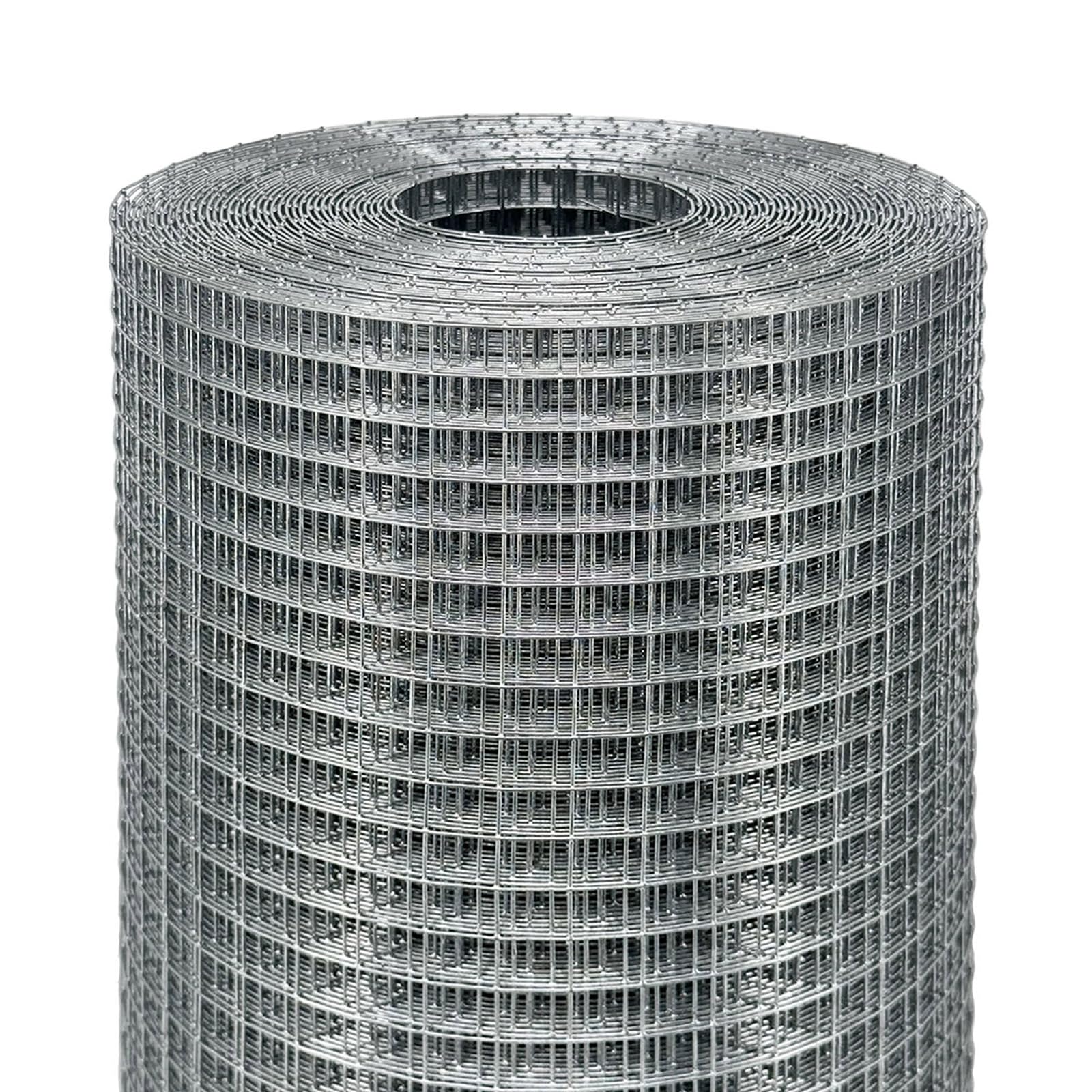
A 100-foot, 48-inch-wide roll that fences a serious garden in one shot.
When your garden is measured in acres of worry, this is the roll that ends the math: 48 inches wide by 100 feet long of 1/2-inch, 19-gauge hardware cloth, hot-dip galvanized for rust and corrosion resistance that holds up even when buried underground. It is the kind of coverage that lets you wrap a whole vegetable plot, line a chicken run, or ring young fruit trees without piecing together short rolls.
Quality is the trait owners praise most — by a wide margin — with value for money second, and the feedback is consistent: it is sturdier and more reliable than standard chicken wire, keeps deer, rabbits, and other creatures out of gardens and off fruit trees, and holds up in the field. The roll arrives in a sturdy carton with a pair of gloves included, and the wire cuts cleanly with scissors for custom shapes.
At 100 feet long versus 50 feet for most rolls here — and the same 48-inch width as the GoldPeak, this is the premium choice for large, permanent setups where you do not want seams. It is not the lightest mesh to wrestle into place solo, but for a big project the coverage is worth the handling.
The big wins
- 100-foot length covers huge areas smoothly
- 48-inch width wraps tall beds and runs
- Hot-dip galvanizing survives burial
Consider this
- Large roll is heavy to handle solo
- 19-gauge needs a frame to stand alone
Invest in this if: you are fencing a large garden, coop, or tree line and want one smooth, long-lasting roll.
pass on it if: your job is a small bed — you will be storing most of a 100-foot roll for years.
8. Garden Tailor 1/4 in. Hardware Cloth

The 1/4-inch mesh that closes the door on rabbits, rats, mice, moles, and snakes alike.
This is the mesh you reach for when “rabbit-proof” is not fine enough: 1/4-inch openings in a 48-inch by 100-foot roll of 23-gauge galvanized wire, galvanized after welding so every joint is protected. At this mesh size, young kits, rodents, and even snakes are physically locked out, which is why owners trust it around chicken coops, rabbit runs, and vegetable gardens that need maximum small-pest defense.
Quality is the trait owners praise most, with value for money close behind — the feedback is that it is sturdy enough to hold against repeated dog encounters and has kept chicken runs predator-free for a full season. It cuts easily with scissors, arrives in sturdy carton packaging, and carries a 3-year warranty with every unit manually inspected before shipping.
The honest trade-off: at 23-gauge, this is the thinnest wire here, and durability gets mixed notes because some owners found it could tear with bare hands under heavy strain. It is excellent as a rodent-blocking liner — owners recommend pairing it with sturdier horse fencing to stop coyotes and raccoons — but it is not a stand-alone barrier against large determined predators.
The defense it offers
- 1/4-inch mesh blocks rodents and snakes
- 100-foot length covers a full run
- 3-year warranty on every roll
The limitation
- Thin 23-gauge wire can tear under strain
- Best as a liner, not a solo barrier
Choose this if: you need the finest mesh possible to lock out small rodents and snakes, especially as a coop liner.
Look past it if: you need thick, self-supporting wire — pair this with sturdier fencing for large predators.
Understanding the Specs
Mesh Opening Size
The opening size is the distance between parallel wires, and it decides exactly what gets through. A 1-inch square blocks adult rabbits; a 1/2-inch square blocks young kits and squirrels; a 1/4-inch square even stops rodents and snakes. Smaller is safer, but finer mesh usually costs more per roll and can be thinner wire.
Wire Gauge and Coating
Gauge measures wire thickness — lower numbers are thicker and stiffer, so a 16-gauge fence stands between posts while a 19-gauge or 23-gauge mesh wraps and bends easily. Coating is the rust defense: galvanized steel adds a zinc layer, hot-dip galvanizing protects the welded joints too, and vinyl coating adds a black, low-visibility plastic layer on top.
FAQ
What mesh size actually stops rabbits from getting through?
How tall does rabbit fencing need to be?
Will a fence stop rabbits from digging underneath it?
What is the difference between 16-gauge and 19-gauge wire?
Is galvanized or vinyl-coated fencing better for a garden?
Can I cut hardware cloth to fit odd-shaped garden beds?
How long does galvanized hardware cloth last outdoors?
Can I use chicken wire instead of hardware cloth for rabbits?
Will these rolls rust in the rain?
What is the best way to attach fence mesh to wooden posts?
Final Thoughts: The Verdict
Across the board, the winner is the GoldPeak Black Hardware Cloth because its 48-inch width and 50-foot length cover serious ground with 1/2-inch mesh in a low-visibility black coating, and its build quality is the most-praised trait among owners. If you want a long, affordable border strip, grab the Gbekery Hardware Cloth. And for a quick, no-tools fix at the bottom of an existing fence, the AVELOTUUG No Dig Panels are the ones to reach for.
How We Picked
We do not accept paid placement. Every pick is matched to a real buyer and a real use-case; we do not hands-on test units.
Sources & Methodology
Specifications: manufacturer listings and product documentation. Review insights: verified customer reviews, as of August 2026. Pricing: not shown on this page (it changes often); check the current price via the retailer link.
As an Amazon Associate, Lawn Gear Lab earns from qualifying purchases. This does not affect which products we feature.