
Specs are compiled from manufacturer listings and verified buyer reviews and can change over time — please confirm the key details on the product page before buying.
The wrong pair of bypass pruners makes every cut a chore — dull blades crush stems, stiff springs wear out your wrist, and cheap metal rusts after one wet season. The right pair, by contrast, slices through a 1-inch branch with minimal effort and feels like a natural extension of your hand. This guide ranks the pruners serious gardeners actually keep reaching for, based purely on manufacturer specs and the real-world consensus of thousands of owners.
I’m Rikta — the founder and writer behind Lawn Gear Lab. This guide is built by comparing the manufacturers’ published specifications and the patterns across verified customer reviews, so you get each pick’s real strengths and trade-offs instead of marketing spin.
For this roundup, I focused on the models where the sharpness, ergonomics, and build quality genuinely justify their reputation, giving you a clear verdict on the true quality bypass pruners that belong in your shed this season.
Our Picks at a Glance
How To Choose The Best Quality Bypass Pruners
You want a clean cut that keeps your plants healthy, and a bypass pruner delivers that by working like scissors — a sharp blade passes by a thicker counter-blade or hook. To pick the right one, match the tool to your hand size, the thickness of what you cut, and how much comfort matters during long sessions. These factors separate a tool that lasts a decade from one that disappoints after a few months.
Blade Steel and Hardness
You want fewer trips to the sharpening stone, so focus on the blade. High-carbon steel holds a sharper edge longer than softer stainless steel. Check the blade’s hardness, often measured on the Rockwell scale (HRC); a higher number like 59 HRC means a very hard blade that resists dulling, while a lower number may mean easier sharpening but a shorter edge lifespan.
Ergonomics and Handle Design
If you prune for more than an hour, comfort is a necessity, not a luxury. Handles that rotate your wrist into a natural position reduce strain and fatigue dramatically. Look for options like a swivel handle or an angled cutting head; both keep your wrist straight and let the tool do the work, which is especially helpful if you have any hand weakness or arthritis.
Cutting Capacity and Weight
Every pruner has a rated maximum branch thickness, usually between 3/4 inch and 1 inch. If you mostly trim roses and soft growth, a lighter model with a smaller capacity is easier to use all day. If you tackle woody shrubs and small tree branches up to an inch thick, you need the higher cutting capacity and the leverage that comes with a slightly larger, heavier tool.
Quick Comparison
| Model | Best For | Cutting Capacity | Blade Length | Weight | Amazon |
|---|---|---|---|---|---|
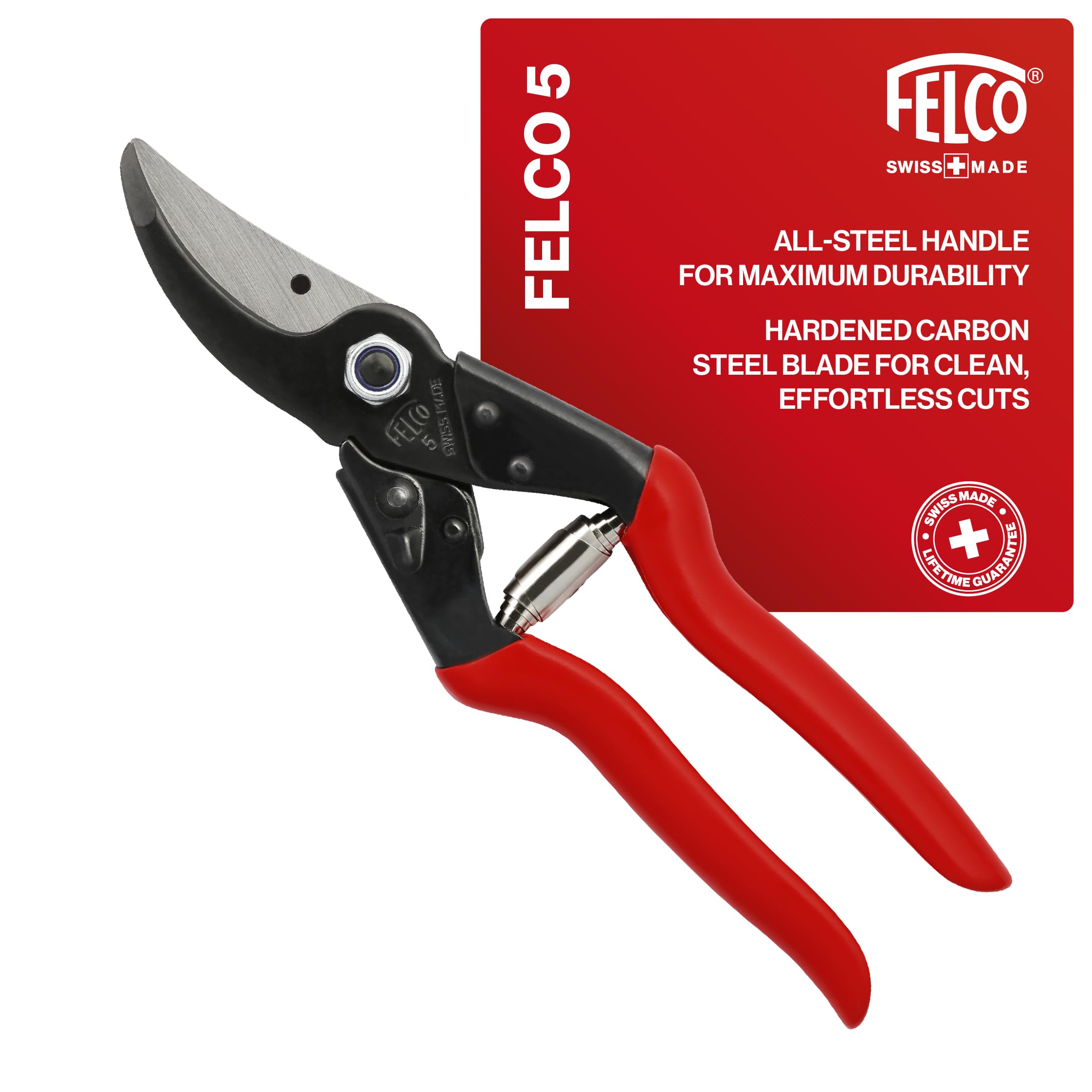
| Felco F5★ Best Overall | Serious gardeners wanting max durability | 1 inch | 2.25 inches | — | Amazon |
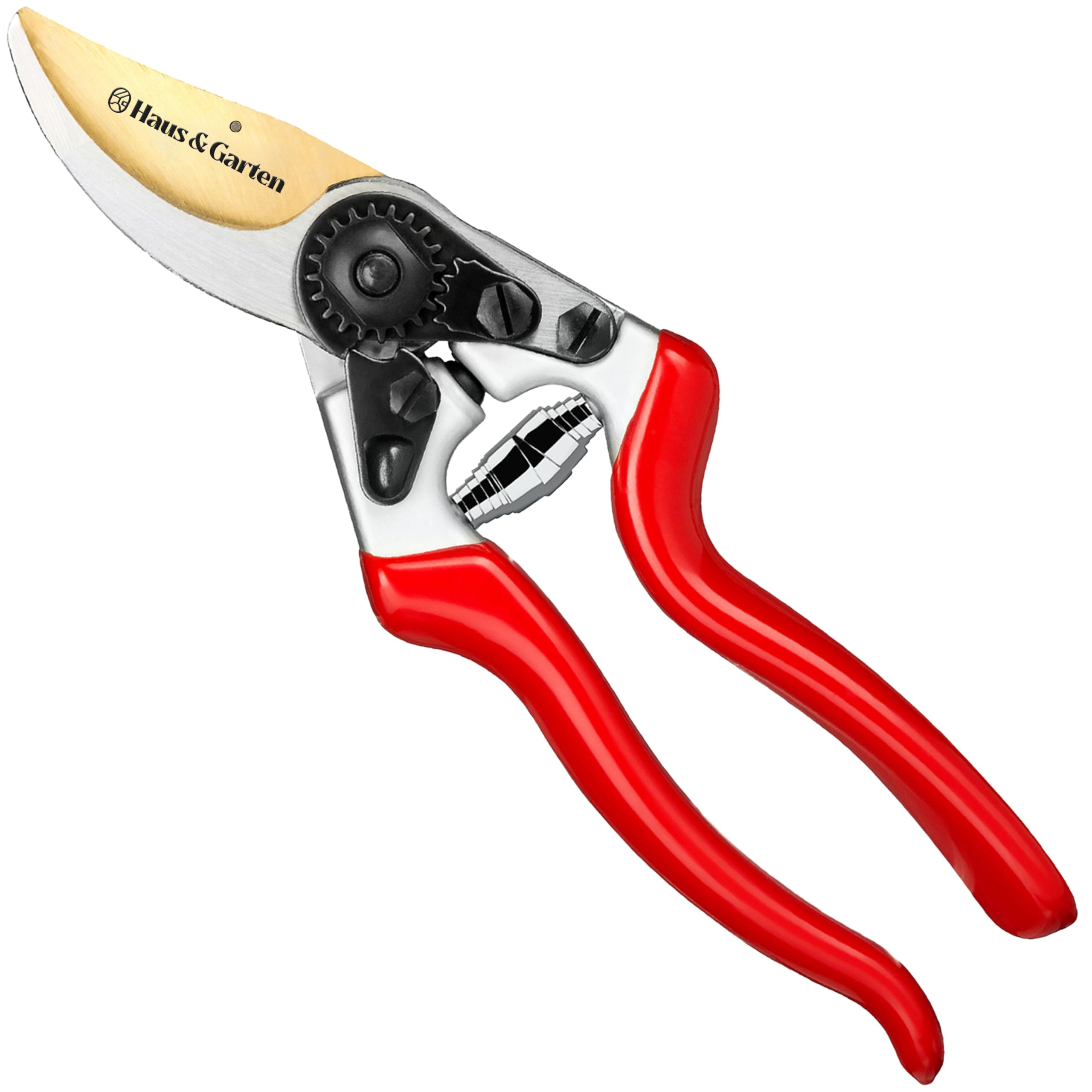
| Haus & Garten EnduroPRORazor Sharp | Budget-conscious buyers wanting razor sharpness | 1 inch | 2.06 inches | 8.8 oz | Amazon |
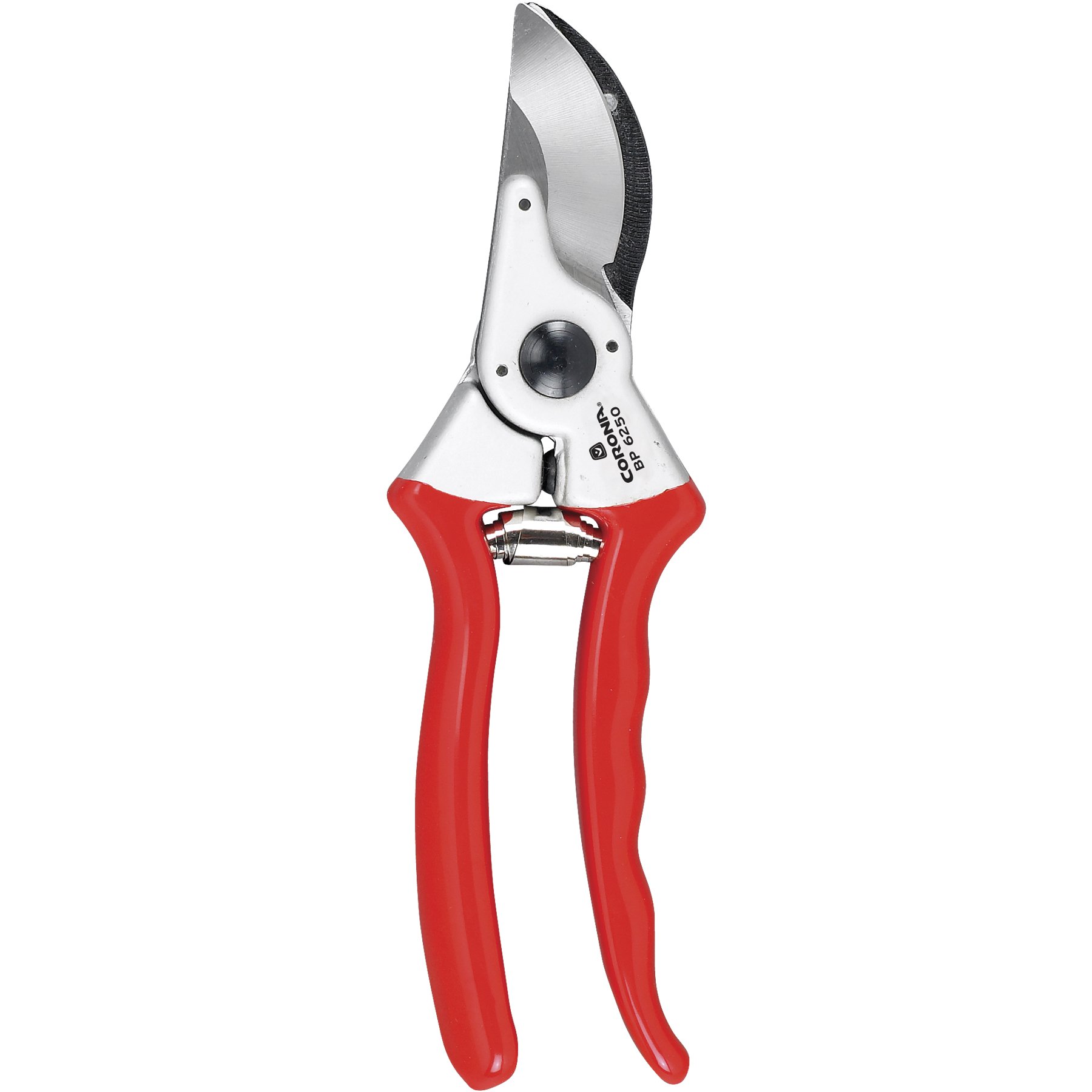
| Corona BP 6250Pro Grade | Value hunters needing 1-inch cuts on a budget | 1 inch | — | 9.6 oz | Amazon |
| TONMA TP-1 | Those wanting precision with a 1-inch cut capacity | 1 inch | — | 244 g | Amazon |
| Original LÖWE | Delicate pruning of roses and flowers | 0.87 inch | — | 6.35 oz | Amazon |
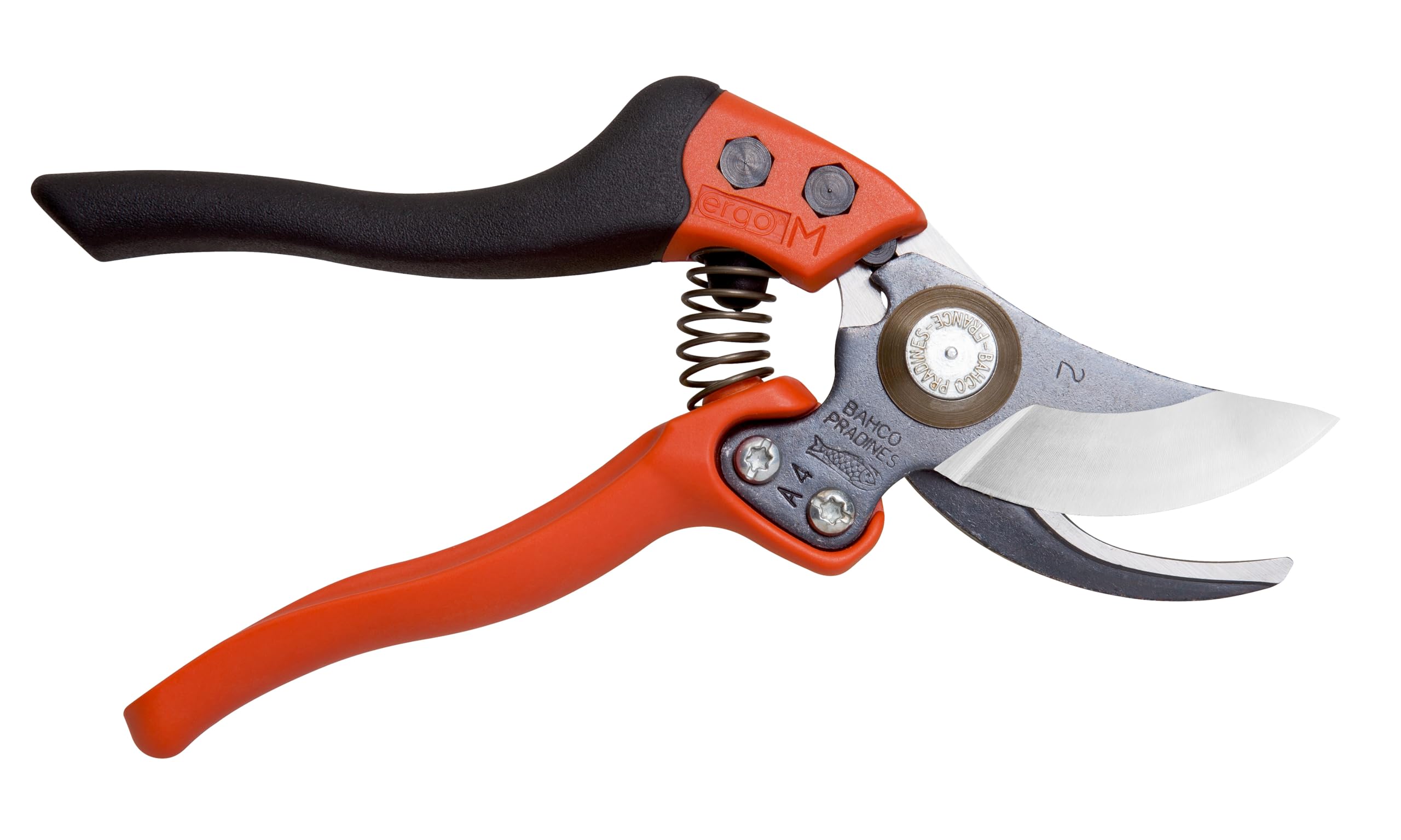
| Bahco PX-L2 | Pros needing wrist-friendly ergonomics | 3/4 inch | 2.2 inches | 284 g | Amazon |
| WOLF Garten RR5000 | Those wanting German build with adjustable tension | 3/4 inch | — | 350 g | Amazon |
| Fiskars L11 | High-reaching cuts on fresh wood | 38 mm | — | 1.25 kg | Amazon |
| Gardena 298 | Using with a Gardena pole for tall branches | 35 mm | — | 1070 g | Amazon |
In‑Depth Reviews
1. Felco F5 Pruning Shears
Our pick — over 4.5★ from 2,000+ verified ratings; the strongest balance of quality and price.
The gold-standard Swiss shears that serious gardeners swear by for their legendary edge retention.
The defining feature is the 2.25-inch alloy steel blade, which buyers report needs minimal sharpening even after years of use. This is the longest blade in the lineup, giving you extra reach and leverage compared to a shorter 2.06-inch blade like the Haus & Garten. The forged aluminum body keeps the tool sturdy yet comfortable for long sessions, and the overall 8.9-inch length suits medium to large hands.
What wins people over is the overall quality — the single most-praised aspect in owner feedback, far ahead of sharpness. The design is ambidextrous, and every part, from the blade to the spring, is replaceable and maintainable, so this is effectively a buy-it-for-life tool. As owners mention, it offers “excellent ergonomic design; no hand fatigue after an hour,” which speaks directly to its comfort during extended trimming.
The one honest trade-off is the straight handle design. The generous sizing suits many, but a few owners with arthritis found the lack of an ergonomic curve caused discomfort during very long use; one preferred a more contoured grip despite admitting the blade was superior. For most, this remains the benchmark, but if you have significant hand joint pain, you may want a handle that swivels.
Why it leads: You get class-leading blade quality and a 1-inch cutting capacity, plus a design where every worn part can be replaced rather than throwing the tool away.
The honest fit: A premium investment for the dedicated gardener who appreciates a precise, lasting edge and doesn’t mind straight handles.
Reach for this if: You want the industry benchmark in blade sharpness and durability, and plan to keep the same shears for a decade.
Look elsewhere if: You need a contoured, ergonomic curve specifically to ease arthritic hand pain during marathon pruning days.
2. Haus & Garten EnduroPRO
The titanium-coated blade that slices through twigs and branches with genuinely surprising ease.
The standout spec is the 2.06-inch blade made from Japanese high-carbon steel with a titanium coating, designed to reduce friction and resist rust. At 8.8 ounces, it is noticeably lighter than the 9.6-ounce Corona, making it a touch easier to wield for quick, repetitive cuts. The anodized aluminum body and drop-forged handles give it a “built like a tank” feel that belies its price point.
Sharpness is the most-cited positive in the feedback, just edging out functionality. The ergonomic design is built to align your wrist for maximum comfort, and the red anti-slip soft grips keep your hand secure even when things get damp. As customers note, the tool is “incredibly sharp goes through twigs snd branches easily,” and one owner even found it easier on their carpal tunnel than their previous Fiskars.
The recurring gripe here is the locking mechanism, which draws some mixed feedback; it works, but a few owners find it a bit fiddly to engage one-handed. Also, while the handle fits most well, some with larger or arthritic hands wished the grip were bigger. If you want a razor-sharp cutter that outperforms shears costing twice as much, this is a compelling pick.
Standout trait: Exceptional out-of-the-box sharpness in a lightweight, durable frame that handles 1-inch cuts with minimal effort.
Who it beats: Offers a sharper bite than many pruners in a higher price tier, making it a serious value play.
Confident verdict: The best pick for value-focused gardeners who want a professional-grade cut without the premium price tag.
Minor caveat: The locking catch is not universally loved, so test it if you rely on a fast, one-handed flick to close your shears.
3. Corona Tools BP 6250 MAXFORGED
A featherlight forged-aluminum pro tool that punches far above its weight class on 1-inch cuts.
Corona’s claim to fame is its 1-inch cutting capacity delivered through a precision-honed forged steel blade, all wrapped in lightweight aluminum handles. At 9.6 ounces, it provides excellent balance and leverage, and while it is heavier than the 8.8-ounce Haus & Garten, the extra weight translates into confident power on thicker woody stems. The ergonomic non-slip red grips are easy to spot if you drop them in the grass.
The build quality earns high marks for solid construction and cutting performance — the consensus is that it cuts wood “like melted butter.” Smart touches include a wire cutting notch, a self-cleaning sap groove, and a shock-absorbing bumper. Reviewers point out it “cuts 1″ branches easily; 4hrs trimming with no hand fatigue,” specifically noting it is friendly for arthritic hands, which is high praise for a straight-handle tool.
The honest catch is maintenance — the carbon steel blade will rust if you do not oil it regularly, and a few owners noted this needs liberal cleaning and lubrication before and after use. There is also a rare mention of a slightly tweaked closure lock on arrival, though replacements resolved it quickly. This is a top-tier tool for those who don’t mind a little upkeep for a great price.
Strengths on the bench
- Matches high-end performance at a budget-friendly price
- Comfortable enough for four hours of trimming without fatigue
- Replaceable, sharpenable steel blade extends tool life
Maintenance demands
- Carbon steel blade rusts quickly without regular oiling
- Some owners needed a replacement due to a crooked closure lock
Best for: Part-time pros and serious home gardeners who want 1-inch cutting power and forgiving ergonomics without spending Felco money.
Think twice if: You want a maintenance-free tool — this one demands regular oiling and cleaning to stay in top shape.
4. TONMA TP-1 Pruning Shears

The lightweight Japanese import with a 59 HRC blade that stays sharp longer than the rest.
The defining spec is the Japanese SK5 steel blade, hardened to 59 HRC on the Rockwell scale, which is why owners say it holds an edge longer than Fiskars or Corona. Weighing just 244 grams, it is light in the hand but fully capable of snipping branches up to 1 inch thick. The full vinyl-coated aluminum handles are comfortable and balanced, working well even for those with small hands.
Overall quality is the most-praised aspect here, with sharpness close behind — the feedback is that it “cuts like a razor through butter” and delivers a perfectly smooth cutting surface that is kind to plants. The Japanese precision safety lock is a standout feature, designed with a tight clip that stays put during use and won’t slide accidentally. One owner specifically praised how it cut through 1-inch thick boxwood wood with ease.
The trade-off is that this is high-carbon steel, not true stainless, so it has lower chromium content and needs rust care just like the Corona. A few sharp-eyed owners also noted the counter-blade is a bit thin, which can risk bark crush on very large hardwoods. If you want a razor-sharp, precise Japanese cutter and don’t mind a little maintenance, this is a superb choice.
The sharpness story: A 59 HRC blade that cuts cleanly and stays sharp for a long time between sharpenings — a real edge over softer steel rivals.
The fit note: Perfect for detail work on bonsai, roses, and shrubs where a smooth, plant-friendly cut matters most.
Who it suits: Enthusiasts who value a hard, long-lasting edge and want precision cutting without heavy weight.
Who it doesn’t: Those who want a low-maintenance, stainless blade that can be neglected — this one needs rust care.
5. Original LÖWE Bypass Pruner

A featherlight German pruner, barely over six ounces, that feels like an extension of a florist’s hand.
At just 6.35 ounces, this is the lightest pruner in the lineup, and it is specifically designed for delicate work on rose bushes, soft wood, and cut flowers. The compact 7.48-inch length is ideal for navigating hard-to-reach areas without snagging neighboring growth.
Owners are passionate about how sharp and clean the cuts are, with a retired florist and avid gardener calling it a “gentle sharp extension of my 65yr old hand” and praising the lightweight, soft open-close action. The sliding lacquer coating provides corrosion protection and reduces friction, keeping the action smooth. The standard handle is a good fit for medium to large hands, and the one-hand safety lock is easy to engage.
The honest risk here is longevity — one disappointed owner reported the spring broke at the 20-month mark and found it non-replaceable, a stark contrast to the multiple happy owners. This is a niche tool: it is not built for heavy 1-inch hardwood, but for the rose gardener and flower cutter, its gentle precision is class-leading. For heavy pruning duty, you would want the Felco instead, but for delicate work, this shines.
The precision case: A featherlight, super-sharp tool specifically engineered for roses, flowers, and soft growth where a clean, gentle cut is critical.
The honest limit: Not a heavy-duty branch cutter, and the non-replaceable spring is a durability question mark for some owners.
Grab it for: Florists, rose lovers, and anyone who prunes delicate plants for hours and wants almost no weight in hand.
Skip it for: Thick woody branches over 0.87 inches — this is a precision instrument, not a brute-force cutter.
6. Bahco PX-L2 ERGO Secateurs
The angled-head specialist that keeps your wrist naturally straight to banish pruning fatigue.
The defining spec is the angled head, inclined both vertically and laterally, which is designed through a scientific ERGO process to keep your wrist in a natural position. This is the pruner for anyone with old wrists or a history of strain — it fundamentally changes how the tool transmits force. The 2.2-inch high-carbon steel blade cuts branches up to 3/4 inch, and the elastomer-coated grip ensures a secure hold even in damp conditions.
Quality is what wins people over here — it is the most-praised aspect, followed by cutting performance that requires little effort. Owners consistently report it is more comfortable and effective than Felco pruners for wrist strain, with one medium-sized user noting it fits their large hands at 6’2″ well. The cutting power is a standout, handling up to 1/2-inch hard wood and 3/4-inch soft wood with “minimal effort,” keeping blades sharp for years when maintained.
The honest caveat is maintenance and durability, which draws mixed feedback. It needs frequent cleaning and lubrication to perform at its best, and a few owners reported blades rusting to the point of sticking if neglected. One long-term user even found their older Felco outperformed it on thicker branches despite the ergonomic claims. This is a specialist tool — brilliant for wrist comfort, but it demands a disciplined cleaning routine.
The ergonomic win: The angled head genuinely reduces wrist strain better than straight-handled rivals, as confirmed by owners who prune for over an hour comfortably.
The maintenance price: Rewards regular cleaning with excellent cuts, but punishes neglect with rust and sticking blades.
Perfect for: Professionals and gardeners with wrist or hand strain who prioritize ergonomic comfort above all else.
Not for: Those who want a low-maintenance tool — this one demands a regular cleaning and lubrication routine to stay reliable.
7. WOLF Garten RR5000

The premium German pruner with a 30-degree non-stick blade and a 10-year peace-of-mind guarantee.
The standout feature is the adjustable blade tension, a feature rarely found on bypass pruners, letting you dial in the exact feel you prefer for different cutting tasks. The non-stick, replaceable blade cuts branches up to 3/4 inch, and its 30-degree cutting angle is designed to protect the joint from stress. The quick locking device works for both left and right-handers, and a wrist strap keeps the tool within reach when you are up a ladder.
The German engineering earns consistent praise for quality and durability, with the spring mechanism singled out as outstanding and the locking system easy to operate. One owner switched to WOLF after cheaper Chinese-made pruners literally “break apart in my hands,” specifically citing the superior German build quality. The 350-gram weight is substantial, giving it a solid, professional heft that inspires confidence on 3/4-inch cuts.
The recurring gripe is that the blades don’t always open automatically after a cut — one owner found the spring needs a manual nudge to re-open, even after lubrication. It is an annoyance rather than a dealbreaker, and the pivot tension can be adjusted, though it may require a special tool. If you want a tough, long-lasting pruner with adjustability and a brand that stands behind it, this delivers.
The durability case: A professionally-built pruner with a 10-year guarantee, designed to outlast cheaper alternatives that break in hand.
The adjustment bonus: Blade tension you can tune to your preference is a rare and genuinely useful feature for consistent cuts.
Choose this if: You value German build quality, a 10-year warranty, and want to fine-tune the blade tension to your exact liking.
Be aware: The blade may need a manual assist to spring open between cuts, which some owners find mildly annoying.
8. Fiskars Bypass Tree Pruner L11

A long-reach limb lopper that brings 38mm fresh-wood branches down to your level without a ladder.
This is a completely different tool from the hand pruners above — at 81 cm long with a 38 mm cutting capacity, it is a two-handed bypass lopper built for overhead work on branches, hedges, and bushes. The plastic lever arms are light and sturdy, with non-slip handles that make overhead cutting feel easy. The non-stick coating on the hardened precision steel blade ensures smooth, clean cuts that don’t bind.
The long reach is the whole point here, letting you trim high branches while keeping both feet on the ground. The hook-shaped counter-blade secures a strong grip on the branch, preventing slippage during the cut. Owners praise it as “sharp and easy to handle,” with a good size that is long enough to reach but not so long that it becomes unwieldy.
The important caveat, stated clearly by Fiskars, is that this is designed for fresh wood only — it is “not suitable for dry and hard wood.” One owner also noted that very thick branches can get slightly crushed. This is a specialist tool for shaping live trees and bushes from the ground, not for demolition work on dead limbs. For that specific job, nothing here reaches as high.
The reach advantage: An 81 cm lever arm that lets you prune overhead branches comfortably from the ground, saving ladder trips.
The material limit: Purpose-built for fresh, green wood — reach for a saw for dry or dead hardwood.
Reach for it if: You need to keep tall hedges and high tree branches in check without dragging out a ladder or a pole saw.
Pass on it if: Your work involves dry, dead wood — this tool is explicitly not designed for that material.
9. Gardena 298 Combi System Pruner

A modular pruning head that turns any Gardena combi pole into a powerful high-branch cutter.
This is the head of a pole pruner system — it mounts onto a Gardena combi pole to let you reach high branches, with a cutting capacity of 35 mm. The tune blade geometry delivers clean bypass cuts, and the design is lightweight to keep the pole balanced and easy to control. The convex blade edge is specifically ground for efficient slicing through green wood.
The modular approach is the key advantage: it is part of the Gardena combi system, so it pairs with a telescopic pole and even a pruning saw to give you a full high-reach toolkit. Owners who use it with a 4-meter pole rave about its cutting efficiency, noting the pulley system provides excellent mechanical advantage that makes cutting high branches much easier than older models. In Spanish, French, and Japanese reviews, the identical consensus emerges: the sharpness is exceptional and it handles thick branches “without any problem.”
The critical thing to know is that this is just the pruner head — the pole is sold separately, and a few owners were confused, expecting the pole to be included based on the product imagery. It is also a niche tool; you only need it if you already have or plan to buy the Gardena combi pole system. If you do, this is a brilliantly engineered add-on that makes high pruning a one-handed task.
The system strength: Pairs with a Gardena pole to extend your reach, using multiple pulleys to multiply your cutting force on thick branches.
The buying note: The pole is not included — this is a modular head for the Gardena combi system, so factor that into your plan.
Ideal for: Owners of the Gardena combi system who want a high-quality bypass head for easy high-branch pruning.
Not ideal for: Anyone without a Gardena pole — this head is useless on its own and needs the system to function.
Understanding the Specs
Blade Material and Hardness
High-carbon steel is the gold standard for pruner blades because it holds a sharp edge far longer than basic stainless steel. Some manufacturers specify the hardness on the Rockwell scale (HRC), where a number like 59 indicates a very hard blade that resists dulling but is harder to sharpen. A titanium coating adds a layer of protection against rust and friction, while a non-stick coating prevents sap from gluing the blade shut.
Cutting Capacity and Ergonomics
Cutting capacity, measured in inches or millimeters, tells you the maximum branch thickness the pruner can handle — typically 3/4 inch for lighter models and 1 inch for heavier duty tools. Ergonomics is about how the handle geometry affects your wrist: an angled or swivel head keeps your wrist straight, while straight handles can cause strain. A cushioned, non-slip grip (like elastomer) also helps you maintain control and reduces palm fatigue during long pruning sessions.
FAQ
What is the difference between a bypass and an anvil pruner?
What does a 1-inch cutting capacity mean for me?
How do I keep my pruner blades from rusting?
Is a harder blade (higher HRC) always better?
Are ergonomic pruners worth the extra cost for arthritis?
Can I use a pole pruner head on any pole?
What is the difference between a pruner and a lopper?
Why do my cuts look crushed instead of clean?
Are replaceable parts a feature I should look for?
Can left-handed people use these pruners?
Final Thoughts: The Verdict
If you want the absolute benchmark for blade quality and longevity, the Felco F5 is the crowd favorite — its 2.25-inch alloy steel blade and fully replaceable parts make it the pruner that serious gardeners buy once and keep for decades. For the best balance of razor-sharp performance and value, the Haus & Garten EnduroPRO is the one to beat, delivering professional cuts without the premium price. And if your priority is cutting 1-inch branches without hand fatigue on a budget, the Corona BP 6250 is the clear winner, proving you don’t need to spend Felco money to get a pro-grade tool.
How We Picked
We do not accept paid placement. Every pick is matched to a real buyer and a real use-case; we do not hands-on test units.
Sources & Methodology
Specifications: manufacturer listings and product documentation. Review insights: verified customer reviews, as of August 2026. Pricing: not shown on this page (it changes often); check the current price via the retailer link.
As an Amazon Associate, Lawn Gear Lab earns from qualifying purchases. This does not affect which products we feature.