
Specs are compiled from manufacturer listings and verified buyer reviews and can change over time — please confirm the key details on the product page before buying.
The moment a freeze warning hits, you know the panic: sheets, towels, plastic bins, anything to keep the tomatoes alive until morning. The right frost cloth traps heat while letting light and air through, and it survives more than one season. This guide separates durable performers from one-season covers so your garden survives the freeze.
I’m Rikta — the founder and writer behind Lawn Gear Lab. This guide is built by comparing the manufacturers’ published specifications and the patterns across verified customer reviews, so you get each pick’s real strengths and trade-offs instead of marketing spin.
Breathable, reusable frost blankets are the smart protectors for winter gardens, so here is the practical breakdown of the best protection for plants options available right now.
Our Picks at a Glance


How To Choose The Best Protection For Plants
A frost cover must trap heat while letting air in, or plants can overheat or suffocate. The two key specs are fabric weight (thickness) and cover shape (fit over plants).
Match the Fabric Weight to Your Climate
Most frost cloth is measured in ounces per square yard — the higher the number, the denser the weave and the more cold protection it offers. A lighter 0.9 oz cloth handles a light frost, while a heavier 1.5 oz or 2.36 oz blanket buys you a few more degrees of safety and holds up to more reuse.
Row Cover vs. Plant Bag
You’re choosing between two different tools. A large row cover lays flat over a bed or row, weighed down at the edges — brilliant for vegetable patches and raised beds. A plant bag with a drawstring cinches closed around a single shrub or small tree, which handles wind far better but covers less ground per dollar.
Quick Comparison
| Model | Best For | Fabric Weight | Coverage | Design | Amazon |
|---|---|---|---|---|---|
| Frost Cloth 10x20ft★ Best Overall | Versatile row coverage | 0.9 oz/sq yd | 10ft x 20ft | Open sheet | Amazon |
| Gardzen 1.5 ozBest Value | Thicker cold protection | 1.5 oz/sq yd | 10ft x 30ft | Open sheet | Amazon |
| Amazon Basics 10x30ft | Big beds on a budget | 0.9 oz/sq yd | 10ft x 30ft | Open sheet | Amazon |
| Garutom 10x33ft | Light transmission | 1.1 oz/sq yd | 10ft x 33ft | Open sheet | Amazon |
| LYDTICK 8 Pack | Individual shrubs & trees | 2.36 oz/sq yd | 47.2″ x 31.5″ each | Drawstring bag | Amazon |
| NuVue Snow Covers | Snow & ice on shrubs | Synlap material | 22″ x 22″ x 22″ each | Structured cube | Amazon |
In‑Depth Reviews
1. Plant Covers Freeze Protection 10x20ft Frost Cloth
Our pick — 4.5★ from 800+ verified ratings; the strongest balance of quality and price.
The all-rounder that blankets a whole bed and still lets light through.
This is the one-cover-does-all pick for gardeners. It’s a 10ft x 20ft sheet of UV-stabilized polypropylene that reaches about 200 square feet of coverage, so it swallows a full raised bed or a long row of vegetables without breaking a sweat. You can trim it to any size with scissors when you need a smaller piece for a pot.
At 0.9 oz per square yard it is a light cloth, which means it shines in a light frost or early spring cold snap rather than a deep freeze. Buyers report it held up through a Houston freeze, withstanding wind, dogs, ice, and rain — though they note it’s thin enough that you’ll want bricks or soil on the edges. The breathable non-woven fabric lets air and light reach the plants, so you are not trading one problem for another.
Nearly fifty owners bought it specifically for plant protection. The one honest catch: durability gets mixed reviews, with a few covers starting to fall apart rather than lasting many seasons.
What Owners Applaud
- Large 10ft x 20ft sheet covers beds and rows in one throw
- Breathable fabric lets light and air pass through
- Easy to trim and fold flat for summer storage
The Honest Trade-offs
- Thin enough that windy nights demand heavy anchoring
- Lighter weight suits light frosts better than hard freezes
Grab it for: a big, flexible frost blanket that covers a vegetable patch or raised bed and doubles as a shade cloth come summer.
Think twice if: your winters drop into deep single digits and you need a seriously dense blanket.
2. Gardzen 1.5 oz Plant Covers Freeze Protection
Thicker than the budget sheets, this blanket earns its keep in a real frost.
If you want more cold-fighting muscle than a 0.9 oz cloth without jumping to a specialty product, this is the upgrade. The 1.5 oz per square yard fabric is the densest of the open-sheet options here, giving you a couple of extra degrees of protection while staying light enough to drape over plants without crushing them. It comes in a 10ft x 30ft sheet, so it covers a serious stretch of garden.
Owners put it to work protecting potted plants, citrus trees, and shrubs through winter, and the reviews sum it up as effective and easy to install. The one thing they all note is it gets great protection from winter cold and deer — a double win if pests are part of your problem.
Over fifty owners praise its plant protection through the cold. There are echoes of the same durability mixed bag as the cheaper cloths — some covers hold up for years, others start to come apart — plus a few voices noting it struggles in a hard freeze.
Your Money’s Worth: The thicker 1.5 oz (ounces per square yard) weave gives you extra protection for a small price increase, and you can fold it over for even more warmth on the coldest nights.
Best suited for: gardeners with bigger beds or citrus trees who want a denser blanket without stepping into premium territory.
Look elsewhere if: your winters regularly hit hard freezes well below freezing — you’ll want a heavier option.
3. Garutom Plant Covers Freeze Protection 10ft x 33ft

The long roller that lets 85% of sunlight keep your crops growing underneath.
This cloth lets your plants keep growing while it’s on. The 1.1 oz per square yard polypropylene (a type of plastic fabric) lets through 85% of sunlight, so your vegetables can still photosynthesize (make food from light) under the cover—something other open-weave sheets only claim, but this one proves with a number. At 10ft x 33ft, it’s the longest row cover here, versus the 10x20ft runner-up.
Owners mention it saved their veggies from the cold, and that it handled Pacific Northwest rains while extending pepper growth into late November. It’s not water-resistant, which is actually a benefit: you can water your garden straight through the material without lifting it. The fabric is easy to cut without ripping, and owners plan to reuse it season after season.
Nearly sixty owners cite plant protection, the highest count here. The honest caveat, echoed across many reviews: it is not very thick, so it’s more of a frost-deflector than a deep-freeze shield, and durability depends on how carefully you store it.
Why It Stands Out
- 85% light transmission keeps plants growing under the cover
- Longest single sheet at 10ft x 33ft
- Water passes through, so you can irrigate without lifting it
What To Know
- Thinner weave means less protection against a hard freeze
- Longevity depends on how gently you fold and store it
Choose this for: an extra-long run of beds where you want plants to keep growing under cover, not just survive.
Pass if: you’re facing weeks of deep freeze and want maximum insulation.
4. NuVue Products Winter Snow and Ice Covers

A structured cube that shrugs off snow loads instead of sagging onto your shrubs.
Unlike the flat sheets above, these are two cube-shaped covers that stand over your plants—each 22″ x 22″ x 22″—made from a synthetic Synlap material (a man-made fabric) that won’t rot, mold, or mildew like burlap eventually will. This is for gardens that get real snow, not just a light frost.
Owners in Buffalo, New York report it held up through blizzards, and that it folds flat for easy summer storage. The structured shape keeps snow and ice off the branches, which is the whole point — no crushed shrubs under a heavy load. It also protects against winter burn, freezing rain, road salt, and pests, so it pulls guard duty on several fronts at once.
Ease of installation is the thing everyone raves about, with over fifty owners calling it out. The one recurring gripe is the plastic stakes: they can break or bend when you push them into hard or rocky ground, so it pays to have sturdier anchors on hand if your soil is tough.
Built for Snow Country: the rigid cube design is the standout here — nothing else in this list keeps heavy snow from crushing your shrubs.
Reach for these if: you have individual shrubs or small trees that get buried under snow and ice every winter.
Skip them if: you need to cover a wide vegetable bed — the 22″ cubes only fit one plant each.
5. LYDTICK 8 Pack Plant Covers Freeze Protection
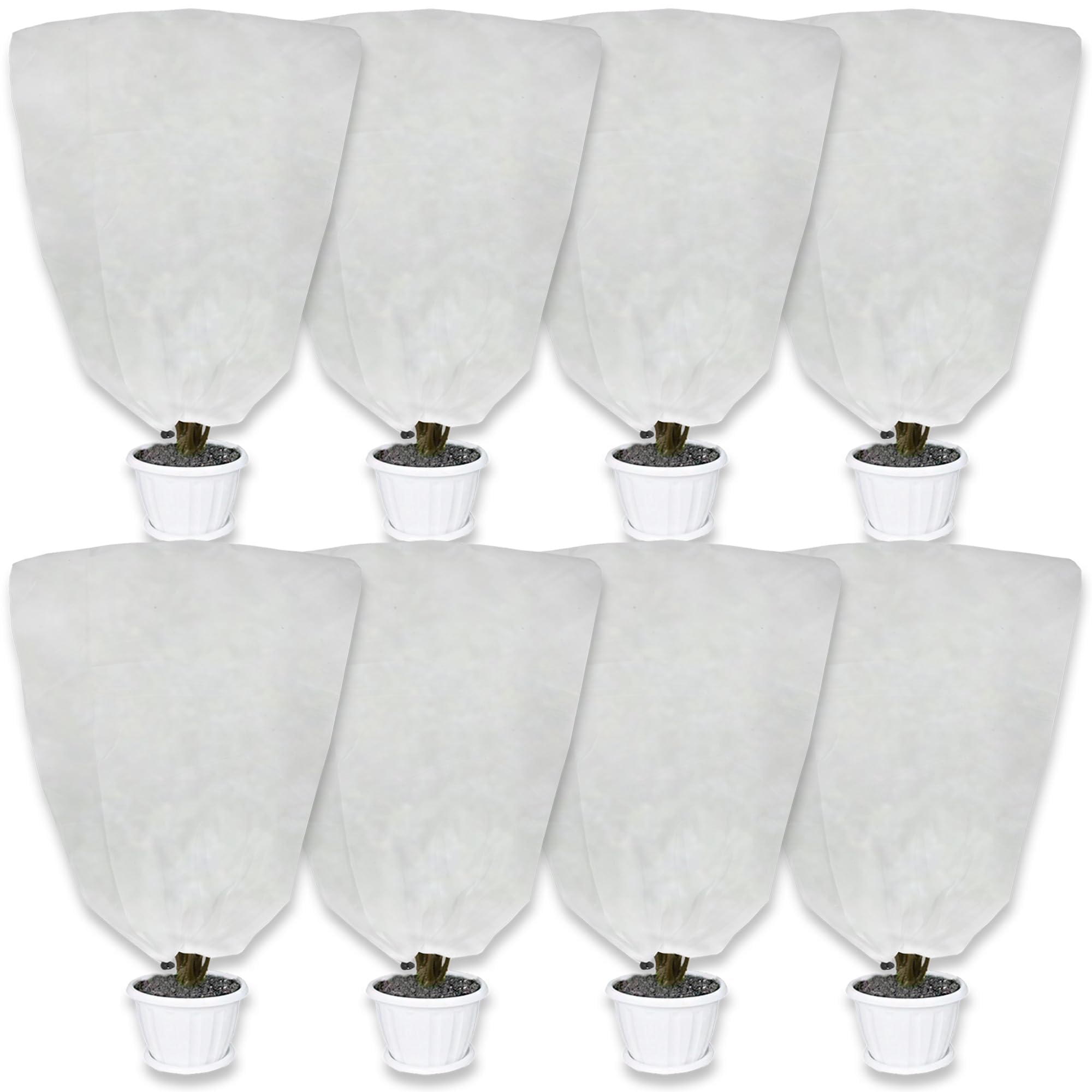
Eight cinch-top bags that stay put in wind and wrap a whole orchard in minutes.
When your plants are scattered — a citrus tree here, a rose bush there — a giant sheet is overkill. This 8-pack gives you individual covers, each 47.2″ x 31.5″, with a drawstring that cinches tight around the base so wind can’t lift them off. The fabric is a dense 2.36 oz per square yard, the heaviest of the non-woven options here, which means more insulation per layer.
Owners in South Georgia wrapped their citrus, peach, and apple trees with these and reported solid frost and freezing-temp protection through the winter. A Montana gardener said they saved tomatoes from a freeze and stored the covers away for reuse the next year. The drawstring is the feature people mention most — it makes the covers secure even in blustery weather.
Functionality is the thing everyone raves about, with nearly twenty owners calling it effective. The honest catch: the 47.2″ length is generous, and a few buyers found the bags too large for their small plants — a real fit note if you’re covering compact shrubs rather than taller trees.
The Appeal
- Heaviest fabric here at 2.36 oz/sq yd
- Drawstrings keep covers secure in strong wind
- Eight covers in one pack for multiple plants
The Fit Catch
- 47.2″ length is too large for small or compact plants
- One cover per plant adds up if you have long rows
Get these for: a yard full of individual trees and shrubs that each need their own wind-proof wrap.
Not ideal if: you’re covering a vegetable bed — a single large sheet serves you better there.
6. Amazon Basics Plant Covers for Frost Protection
A no-frills 30-foot roll that saves hydrangeas without emptying your wallet.
The name says it all — this is the plain, dependable workhorse of frost cloth. It’s a 10ft x 30ft roll of non-woven 0.9 oz per square yard polypropylene, which gives you more linear feet than the best-overall pick at a similar cost. You cut what you need for the night, and you’re done.
The review pages sum it up: “This material saved my hydrangeas from a late season frost.” Owners also report it saved early-planted tomatoes and extended their growing season into the cold months. It’s built for light frost, light snow, and mild cold — not a deep freeze — and the breathable material lets light, air, and moisture pass through so your plants keep breathing underneath.
What people notice first is ease of use, with five owners calling it simple to work with and effective at the job. There’s not much negative noise here, which is what you want from a budget pick — the biggest limitation is simply the light 0.9 oz weight if your winters turn severe.
Fuss-Free Frost Help: for the price of a couple of coffees you get a long, cuttable sheet that handles the average light frost with zero drama.
Pick this if: you want the most coverage per dollar for light frosts and early-spring protection.
Step up if: your area sees hard freezes or heavy snow — this light cloth isn’t built for that.
Understanding the Specs
Fabric Weight (oz/sq yd)
This is the single most important number on a frost cloth. It tells you how dense the weave is: lighter 0.9 oz cloths handle a light frost, while 1.5 oz and 2.36 oz fabrics buy you extra degrees of protection and survive more seasons of handling. Heavier isn’t always better though — denser cloth lets less light through, so match the weight to your climate.
Coverage Area
The dimensions tell you how much ground you can protect in one throw. A 10ft x 20ft sheet covers a 200 square foot bed, while a 10ft x 33ft roll stretches further and a 10ft x 50ft option covers serious ground. Bigger rolls cost more but cover more plants per dollar — unless you only need to wrap a few shrubs, where individual bags win.
FAQ
Will frost cloth protect plants in a hard freeze?
Is frost cloth better than using old sheets or plastic?
Can I water my plants through the frost cloth?
Should I choose a row cover sheet or individual plant bags?
How do I keep frost cloth from blowing away in the wind?
Can frost cloth be reused next year?
Will frost cloth work as a summer shade cover too?
Does frost cloth stop pests like deer and rabbits?
How much frost protection do I get per degree of fabric weight?
Can I cut frost cloth to fit my plants?
Final Thoughts: The Verdict
For most gardens, the protection for plants winner is the Plant Covers Freeze Protection 10x20ft—it gives you 200 square feet of coverage, lets air through, and is easy to handle. If you need a thicker fabric for colder nights, choose the Gardzen 1.5 oz cover. For individual trees and shrubs, the LYDTICK 8-pack is the one—it’s a crowd favorite with 4.4 stars from 254 ratings, but your garden layout will decide which fits best.
How We Picked
We do not accept paid placement. Every pick is matched to a real buyer and a real use-case; we do not hands-on test units.
Sources & Methodology
Specifications: manufacturer listings and product documentation. Review insights: verified customer reviews, as of August 2026. Pricing: not shown on this page (it changes often); check the current price via the retailer link.
As an Amazon Associate, Lawn Gear Lab earns from qualifying purchases. This does not affect which products we feature.