
Specs are compiled from manufacturer listings and verified buyer reviews and can change over time — please confirm the key details on the product page before buying.
Professional garden shears should feel like a natural extension of your hand — sharp enough to slice through a stem without crushing it, light enough to use for an hour without your wrist aching, and built to stay that way season after season. The wrong pair leaves you fighting with sap-sticky blades, bruised plants, and a nagging fatigue that turns a quick trim into a full-body chore.
I’m Rikta — the founder and writer behind Lawn Gear Lab. This guide is built by comparing the manufacturers’ published specifications and the patterns across verified customer reviews, so you get each pick’s real strengths and trade-offs instead of marketing spin.
After digging through the specs and what real buyers report, I’ve narrowed the field to five distinct shears that each solve a different side of the pruning puzzle — here is the honest breakdown of the best professional garden shears.
Quick Picks
- Saboten Japanese Bypass Pruning Shears — Best Overall
- GARTOL 23-Inch Hedge Shears — Best Value
- Kimura Pro Heavy Duty Hedge Shears — Top Performer
- ARS HS-KR1000 Professional Hedge Shears — Premium Pick
- SUIZAN Hedge Shears 22.6″ — Artisan Pick
How To Choose The Best Professional Garden Shears
Choosing the right professional garden shears means focusing on three key areas: the blade’s ability to resist sap and rust, the cutting width that matches your thickest branch, and the handle’s grip and weight for all-day comfort. Ignore any one of these, and you will likely end up frustrated with a tool that either blunts too fast, cannot handle the job, or leaves your hands sore.
Blade Material and Coating
Carbon steel blades hold a sharp edge the longest, which makes them the go-to for professional-grade shears. However, uncoated steel rusts quickly in damp conditions. A fluorine coating or non-stick PTFE coating helps sap slide off the blade rather than gluing the jaws shut, which means you spend less time cleaning and more time cutting. The two best options here are Japanese SK5 steel for edge retention and high-carbon steel with a rust-resistant finish.
Cutting Capacity (Width in Millimeters)
This single spec tells you the thickest branch the shear can cut cleanly. Professional garden shears typically range from a 12mm cutting width up to 25mm. If your yard has mostly thin stems, roses, and tender shrubs, a smaller cutting width of around 20mm is lightweight and nimble. If you regularly tackle thicker, woody branches, look for a 25mm capacity to save yourself from crushing the stem with repeated squeezes — a bypass blade is safer here because it slices rather than smashes.
Quick Comparison
| Model | Best For | Blade Material | Cutting Width | Weight | Amazon |
|---|---|---|---|---|---|
| Saboten Japanese Bypass Pruning Shears | Everyday precision pruning | Carbon Steel with Fluorine Coating | 20 mm | 0.24 kg | Amazon |
| GARTOL 23-Inch Hedge Shears | Light hedge shaping on a budget | High Carbon Steel | — | 500 g | Amazon |
| Kimura Pro Heavy Duty Hedge Shears | Heavier stems with less force | Japanese SK5 Steel | 25 mm | 750 g | Amazon |
| ARS HS-KR1000 Professional Hedge Shears | Precision leafy trimming | Alloy Steel | 180 mm | — | Amazon |
| SUIZAN Hedge Shears 22.6″ | Traditional craftsmanship | Japanese Steel | 12 mm | 0.75 kg | Amazon |
In‑Depth Reviews
1. Saboten Japanese Bypass Pruning Shears

A crisp, sap-shedding pruner that makes dead wood feel like soft butter.
The Saboten shears are the most versatile pick here because they balance professional-level sharpness with a comfortable weight that works for both a florist trimming stems all day and a home gardener shaping roses. The fluorine coating on the high-quality carbon steel blades does the heavy lifting — it resists sap and rust, which means sticky resin from pines or maples wipes off with a cloth instead of gumming up the pivot joint after five cuts. At just 0.24 kg, these shears are noticeably lighter than the Kimura Pro (750 g), making them the obvious choice for detailed work like bonsai or deadheading where precision matters more than raw power.
Reviewers report it “cuts live and dead wood with little effort,” which directly matches its 20mm cutting capacity — enough for most orchard and yard pruning. The Duracon safety lock keeps the blades closed when you toss them in a tool bag, and the rubber grip helps you maintain control during longer sessions. Unlike the GARTOL shears which owners mention “cannot cut thick branches,” the Saboten handles that mid-range thickness with a reinforced riveted joint that keeps the blades aligned for clean bypass cuts. It is sharp enough from the start that a florist reviewer wrote “I love them!!!!!” — and that enthusiasm translates to a tool that simply makes the job easier.
Pick for the pro: If you need one shear that does roses, fruit trees, and light orchard pruning without gumming up, grab the Saboten.
One honest limit: The 20mm width cannot handle thick, woody branches over 0.8 inches — reach for a lopper for those.
Reach for this if: You want a single, sharp, lightweight pruner that handles 90% of daily garden trimming without frustration.
Look elsewhere if: You mostly cut thick, woody branches over 20mm, or you prefer a full-size hedge shear over a hand pruner.
2. GARTOL 23-Inch Hedge Shears

A budget-friendly hedge shear built for light, fast shaping without the vibration.
The GARTOL is the pick for anyone who needs to clean up boxwoods, trim ornamental shrubs, or manicure hedges on a regular basis without spending a premium. Its 23-inch overall length and 9-inch high-carbon steel wavy blades are designed to trap twigs rather than letting them slide off the edge, which reduces the frustration of chasing a branch across the blade. The wavy edge also means you get a serrated cutting action that is ideal for leafy growth — but as reviewers point out, it “cannot cut thick branches,” so stick to stems under the thickness of a pencil.
At 500 grams, it is 250 grams lighter than the Kimura Pro (750 g), and the built-in shock-absorbing bumpers help dull the jarring impact you feel in your wrists after an hour of trimming. That said, one reviewer noted the handle grips “lack cushioning” and the center pivot has no cushioning, so it is not as plush as more expensive shears. The adjustable blade tension lets you loosen the pivot for faster snips on thin leaves or tighten it for more control on denser material. For the price, you get a solid workhorse that arrives ready to use with no assembly required — a genuine bargain for basic yard maintenance.
Why it stands out
- Wavy blade traps twigs to prevent slipping during cuts.
- Shock-absorbing bumpers reduce hand fatigue on extended jobs.
- Adjustable tension pivot lets you tune the action for light or dense material.
Where it falls short
- Cannot cut thick branches — strictly for light trimming and shaping.
- The grips lack cushioning, according to some reviewers.
Best for the budget-conscious: Grab the GARTOL if you mostly shape hedges and bushes with thin growth and want a sharp, ready-to-use tool without the heavy price tag.
skip it if: You need to cut woody branches or work with dense overgrowth — this shear is too light for that.
3. Kimura Pro Heavy Duty Hedge Shears

A geared powerhouse that multiplies your cutting force on thick, woody stems.
The Kimura Pro is the right choice when you regularly face branches up to 25mm in diameter and want to cut them without feeling every ounce of resistance in your hands and arms. The patented gearing technology is the defining feature here — it amplifies your squeezing force, making it feel like you have three times the power without changing your grip. The Japanese SK5 steel blades with a PTFE low-friction coating slice through sap-heavy vegetation without gumming up, though a reviewer noted the edge “gets dull after using for a few months though,” so expect to sharpen it if you are a heavy user.
Compared to the lighter Saboten, the Kimura Pro weighs 750 grams — noticeably heavier, but it also cuts thicker stock (25mm vs 20mm). The wavy blades help grip larger stems, and the soft TPR grips on the lightweight aluminum handles make the extra weight manageable. A reviewer mentioned it is “good for deadheading roses, salvia, border grass” and called it a “good lightweight all-purpose sheer” — but also said it “needs oiling to prevent rust,” which is standard for any high-carbon steel tool. It arrives sharp from the start and, unlike the GARTOL, includes a lifetime warranty.
What you gain
- Patented gearing gives you extra cutting force on thick stems without extra effort.
- SK5 steel blades with PTFE coating resist rust and sap buildup.
- Wavy blade design helps handle stems up to 25mm in diameter.
What to watch for
- Heavier than expected at 750 g — not the best for all-day lightweight work.
- Blade sharpness fades after a few months of regular use, per reviewer feedback.
Grab it for: Gardeners who cut thicker shrubs and want mechanical leverage to reduce hand strain over a full afternoon of pruning.
pass on it if: You do lightweight trimming only — the heavier weight and extra gearing are unnecessary for thin stems.
4. ARS HS-KR1000 Professional Hedge Shears
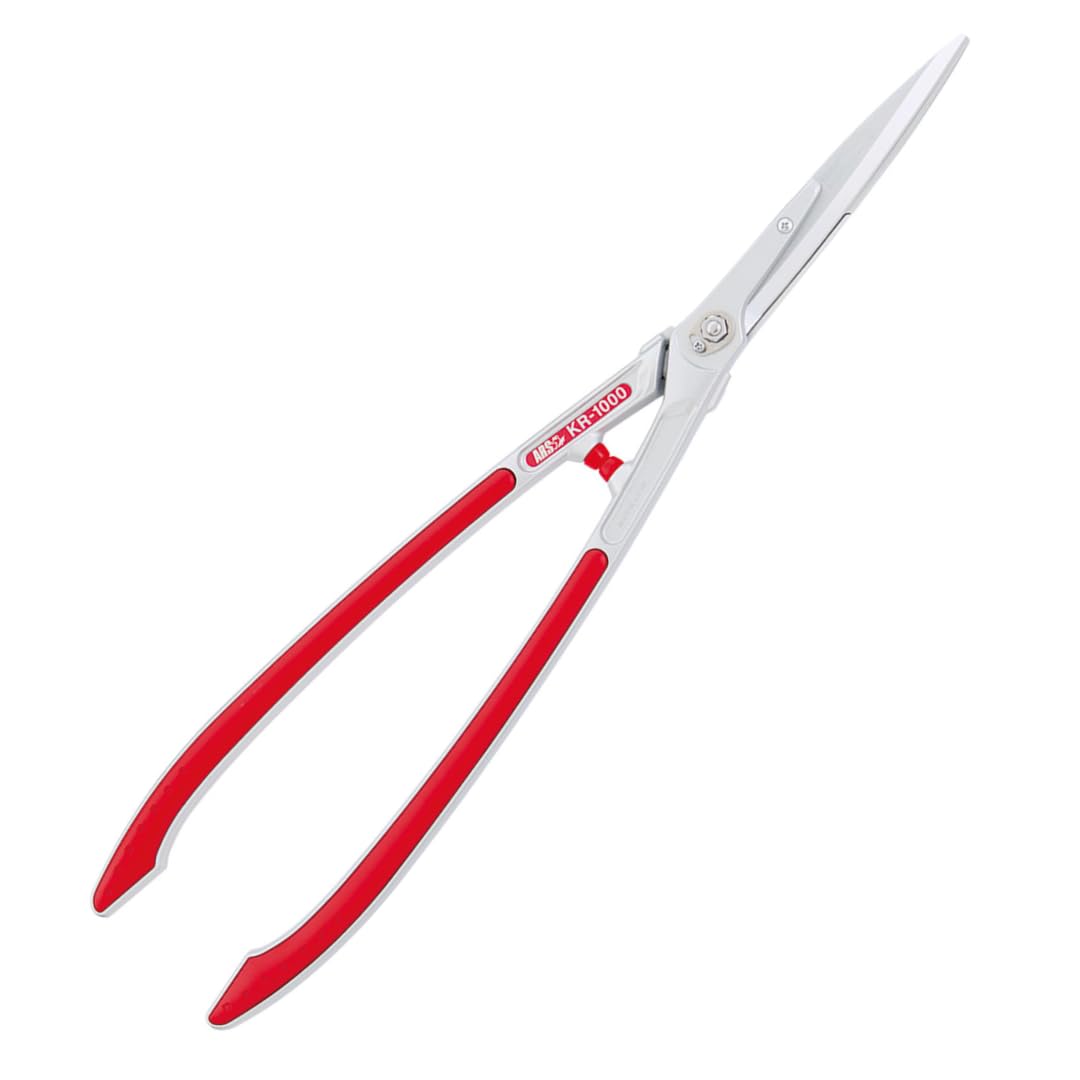
A remarkably light, precision-tuned shear for leafy growth that feels like an extension of your arm.
The ARS HS-KR1000 is what you buy when you want the absolute lightest professional hedge shear that still cuts like a scalpel. At 25.71 inches long, it is longer than the GARTOL (22.6 inches), yet multiple reviewers describe it as “astonishingly light” — thanks to the magnesium aluminum alloy handle and alloy steel blade. The 180mm cutting width is in a different league from the Kimura Pro’s 25mm width (a 9.0x gap), but do not confuse that with capacity for thick branches: the ARS is designed specifically for leafy growth and twigs under 1/8 inch, as one buyer mentioned. This is a specialist tool for shaping hedges and roses with surgical precision, not for chopping wood.
The replaceable blades are a standout feature that the Saboten and Kimura Pro lack — when the edge finally goes dull after a season or two, you swap the blade rather than buy a whole new shear. An owner reported it is “better than ARS K-800 due to replaceable blades and continuous metal handle.” The pivot bolt allows blade adjustments to maintain that tight cutting alignment, and the brushed finish on the steel resists sap. One reviewer summed it up: “Best hedge clippers that cut like a knife through butter.” It does require regular cleaning with alcohol and oiling to prevent rust in humid conditions, but for a professional landscaper who wants the best feel for foliage, this is the pair.
The defining spec: The replaceable blades and featherlight magnesium aluminum alloy handles make this shear feel easy for precise, leafy trimming.
The honest trade-off: It is not built for thick, woody branches — stick to twigs under 1/8 inch and save the Kimura for heavier jobs.
Reach for this if: You do fine hedge shaping, rose pruning, or topiary work and want the lightest, most precise tool available.
Look elsewhere if: You need to cut thick branches — the ARS is a specialist, not a generalist.
5. SUIZAN Hedge Shears 22.6″

Hand-forged Japanese shears with a natural oak grip that feels alive in your hand.
The SUIZAN hedge shears exist at the intersection of function and tradition. The 12mm cutting width is the smallest on this list, which makes sense because these shears are not meant for thick, woody stems — they excel at careful, controlled cuts on tender shoots, bonsai, and ornamental shrubs where every snip matters. One owner reported they are “SO Much better that what you get at Home Depot” and praised their lightweight feel and sharpness.
The real differentiator here is the ergonomic oak wood handle. Unlike the rubber grips on the GARTOL or the alloy handles on the ARS, the SUIZAN gives you natural wood that shapes to your hand over time and reduces fatigue during extended sessions. A reviewer called them “well made and look nice” and appreciated that they are “made of wood and steel. No composites.” At 0.75 kg they weigh the same as the Kimura Pro, but the wood handle distributes the weight differently, making them feel balanced rather than heavy. They are not the right tool for aggressive hedge trimming or thick branches, but for the gardener who values craftsmanship and precise work, the SUIZAN delivers a connection to the task that plastic and aluminum cannot match.
Why choose SUIZAN
- Hand-forged Japanese steel provides incredibly sharp, precise cuts.
- Oak wood handle offers natural grip comfort and reduces fatigue.
- Beautiful craftsmanship that makes the tool a pleasure to use and own.
The catch
- 12mm cutting width limits it to fine trimming and branches under 1/2 inch — not for wood.
- Heavier than the ARS (0.75 kg) for its size, though the wood handle offsets the feel.
Perfect for: The gardener who wants a beautifully made, traditional tool for meticulous trimming and shaping of tender plants.
Not for: Heavy-duty hedge work or cutting thick, woody stems — this is a precision instrument, not a brute force tool.
Understanding the Specs
Cutting Width (Measured in Millimeters)
This tells you the thickest branch the shear can cut cleanly. The spec is usually the diameter of the thickest stem the blades can sever without crushing it. A 20mm shear handles most standard yard pruning; a 25mm shear steps up for thicker, woody growth. If your yard only has thin stems and roses, 12mm shears like the SUIZAN are lighter and more precise for that delicate work.
Blade Coatings — Fluorine vs PTFE vs None
Coatings exist to solve one problem: sticky sap buildup that glues the blade shut. A fluorine coating (like on the Saboten) or a non-stick PTFE coating (like on the Kimura Pro) helps sap slide off the blade rather than curing on it, making cleanup faster and keeping the cut smooth. Uncoated steel blades cut excellently but require wiping with alcohol and oil after each use to prevent rust. If you prune a lot of pines, maples, or fruit trees, a coated blade saves you real time.
FAQ
What is the difference between bypass and anvil shears?
How often do professional garden shears need sharpening?
Can I use hedge shears to cut thick tree branches?
What does cutting width mean in millimeters?
Why do my shears keep getting stuck with sap?
Are heavier shears better than lighter ones?
How do I prevent rust on my shears?
What handle material is best for comfort during long use?
Final Thoughts: The Verdict
For most gardeners, the best professional garden shears winner is the Saboten Japanese Bypass Pruning Shears because it combines a fluorine-coated, sap-resistant blade with a lightweight feel and 20mm cutting width that handles the vast majority of daily pruning tasks without fatigue. If you regularly cut thicker, woody branches and want mechanical leverage to reduce hand strain, grab the Kimura Pro Heavy Duty Hedge Shears with its patented gearing and 25mm capacity. And for precise, leafy hedge shaping where every cut matters, the ARS HS-KR1000 Professional Hedge Shears with its replaceable blades and featherlight feel is the specialist’s choice.
How We Picked
We do not accept paid placement. Every pick is matched to a real buyer and a real use-case; we do not hands-on test units.
Sources & Methodology
Specifications: manufacturer listings and product documentation. Review insights: verified customer reviews, as of July 2026. Pricing: not shown on this page (it changes often); check the current price via the retailer link.
As an Amazon Associate, Lawn Gear Lab earns from qualifying purchases. This does not affect which products we feature.