
Specs are compiled from manufacturer listings and verified buyer reviews and can change over time — please confirm the key details on the product page before buying.
Your pressure-treated deck starts with a fresh, golden glow, but sun and rain will slowly turn it gray and splintery. A water repellent (a protective coating that blocks moisture) sits between your wood and the weather, so you control the look and how often you reapply. Knowing a few basics now saves you a weekend of frustration and a prematurely weathered board.
I’m Rikta — the founder and writer behind Lawn Gear Lab. This guide is built by comparing the manufacturers’ published specifications and the patterns across verified customer reviews, so you get each pick’s real strengths and trade-offs instead of marketing spin.
You’ll see everything from milky water-based sealers to deep-penetrating oils in this rundown of the pressure-treated wood water repellent market, matched to how you use your deck and how much time you want between coats.
Our Picks at a Glance


How To Choose The Best Pressure-Treated Wood Water Repellent
Pressure-treated lumber resists rot from the inside out, but the surface still needs help shedding moisture and blocking the sun’s rays.
Match the finish to the look you want
A clear repellent keeps the wood’s natural tone, while a semi-transparent or tinted stain adds warmth and color while still letting the grain show through.
Check the coverage math before you buy
Coverage varies widely, from 100-300 square feet per gallon on one product to 200-400 sq ft on another — a bigger spread can mean fewer gallons to lug home from the store.
Weigh reapplication against your free time
Some formulas hold up for years with minimal upkeep, while others demand a fresh coat every couple of seasons to keep the beading action going.
Quick Comparison
| Model | Best For | Base | Coverage | Finish | Amazon |
|---|---|---|---|---|---|
| Tenino Copper Naphthenate★ Best Overall | Code-compliant protection | Copper | 100-300 sq ft | Copper tint | Amazon |
| TWP 101 Pro-SeriesTop Performer | Long-term deck protection | Oil-based | 250-400 sq ft | Semi-transparent | Amazon |
| Evolve Semi-Transparent | Color and water beading | Acrylic | 200-400 sq ft | Chestnut Brown | Amazon |
| Flood CWF-UV | UV defense on sunny docks | Oil-based | 250 sq ft | Honey Gold | Amazon |
| STF Clear Sealer | Clear, flexible coating | Water-based | 150-250 sq ft | Glossy clear | Amazon |
| RainCoat Water Repellent | Quick single-coat jobs | Oil-based | 250 sq ft | Clear | Amazon |
| Outlast Q8 Log Oil | Large decks and log homes | Oil-based | High coverage | Natural flat | Amazon |
In‑Depth Reviews
1. Tenino Copper Naphthenate 17%
Our pick — over 4.5★ from 450+ verified ratings; the strongest balance of quality and price.
The code-compliant guardian for the cuts that touch the ground.
Every builder knows the weak spots on pressure-treated lumber are the freshly sawed end-cuts, where the preservative never reached. This copper naphthenate solution is the answer required by building codes (IBC 2303.1.9 & IRC R317.1.1) on those exact spots, meaning it’s not just a nice-to-have but a boxes-to-check step. It delivers ready-to-use Copper Naphthenate 17% (2% copper as metal) that meets the AWPA M4 Standard.
A half cup covers a 16-square-foot plank with two coats from a four-inch brush. One gallon covers 100-300 sq ft, stretching across ground-contact posts and trailer boards. It resists leaching and is labeled toxic to termites and other wood-destroying insects.
The strong band-aid tin odor demands a respirator, nitrile gloves, long sleeves, and glasses. The top leaks after opening, so transfer it to a leak-proof bottle.
Why it wins
- Meets AWPA M4 Standard and building code requirements
- Repels water and termites in one application
- 100-300 sq ft per gallon coverage
Real-world caveats
- Strong odor demands full protective gear
- Container top leaks after opening
- Needs agitation before each use
Grab it if: you’re doing a build where end-cuts need code-required protection or you want a single product that handles both water and bugs.
Think twice if: you’re chasing a pretty finish — this is a functional preservative, not a cosmetic stain.
2. TWP 101 Pro-Series Cedartone
A semi-transparent stain that earned decades of loyalty from deck owners.
Buyers report trusting this stain for over 30 years. The oil-based formula sinks deep into the wood fibers to lock out moisture and fight the warping, cracking, and splitting that winter freezes cause. Its mildew-resistant surface is a real bonus for covered, damp spots that turn lesser sealers into a green mess.
One gallon covers 250-400 sq ft, and a covered deck held strong for 4 years before needing a refresh. Water beads up and rolls away for years, ideal before winter snow. It’s a cautious reapplication story too — when the color starts to lighten, a straightforward new coat brings it back.
There are two honest catches. First, stricter VOC rules mean this formula isn’t shipped to CA, CO, CT, DC, DE, IL, IN, ME, MD, MA, NH, NJ, NY, OH, PA, RI, UT, or VA. Second, it’s messy to apply — expect to wear gloves and protect your concrete because the tint will find everything.
Long-haul pick: TWP 101 is the set-and-forget option for decks in freeze-thaw climates, provided you can buy it in your state.
Best for: homeowners who want a semi-transparent color that keeps water beading for years without constant re-coating.
Not for: anyone in the listed VOC-restricted states, where a low-VOC 1500 Series alternative would be needed.
3. Flood CWF-UV Honey Gold

The oil-based warrior that takes on blistering sun and salty docks.
For coastal and high-sun areas, this is the stain that gets the job done. The CWF-UV formula uses alkyd oil resin with a Penetrol additive that drives protection below the surface, so the finish doesn’t just sit on top like a waxy film. The honey gold tone adds a warm cast while letting the natural grain show through. Owners in Florida report it holds up well on docks and decks constantly exposed to intense sun, and that it beats the common alternatives in both how it looks and how it performs.
That performance comes with a maintenance rhythm — expect to pressure wash and re-treat every 2 years to keep it fresh. Coverage is 250 sq. ft. per gallon, which is more efficient than the 200-400 sq ft spread of the Evolve stain above. It goes on easily with a sprayer, brush, or roller, and clean-up is just soap and water.
The few complaints center on packaging rather than the product itself, with cans occasionally shipped on their side. One note from the pros: the color can look darker and more orange in the can than it appears on the wood, so test a small area first.
Sun-beaten surfaces
- Penetrol additive soaks below the surface
- Easy soap-and-water cleanup
- Mildew, moisture, and UV resistant
Maintenance notes
- Needs a fresh coat roughly every 2 years
- Wet cans ship poorly without padding
- Color may look darker in the container
Reach for this if: your deck faces relentless sun or lives near the coast where fading and moisture are constant enemies.
Look elsewhere if: you want a no-maintenance finish — this one asks for a two-year upkeep cycle.
4. STF Clear Marine Penetrating Sealer
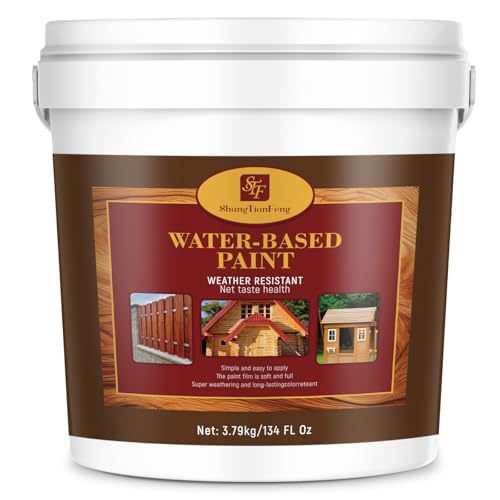
A non-toxic, water-based shield that flexes with the wood.
This sealer answers the biggest complaint people have with rigid coatings — they crack when the wood moves. The flexible formula expands and contracts with temperature swings, which prevents peeling and extends the time between maintenance coats. It’s a standout for high-moisture environments, promising that fully cured wood can be immersed in water for up to three months without softening or turning sticky.
The clear, glossy finish lets the natural grain shine through, whether you’re sealing a pressure-treated fence or a set of garden cabinets. One gallon covers 150-250 square feet in a single coat on rough surfaces. Owners were initially nervous because the liquid looks milky in the container, but it dries to a subtle shimmer in about 2 hours. The ultra-low VOC, non-toxic formula keeps the odor down, which makes it a comfortable choice indoors or in smaller spaces.
Because it’s clear, it won’t add color to hide existing stains on an older deck. It’s best on wood that already looks good or as a top coat over a stain.
Flexible shield: STF is the pick for moisture-prone spots where you want full waterproofing without changing the wood’s color.
Best for: projects near water or in humid climates where a clear, flexible, low-odor barrier matters more than added pigment.
Skip if: you’re trying to hide gray, weathered wood behind a tinted finish.
5. RainCoat Water Repellent Clear
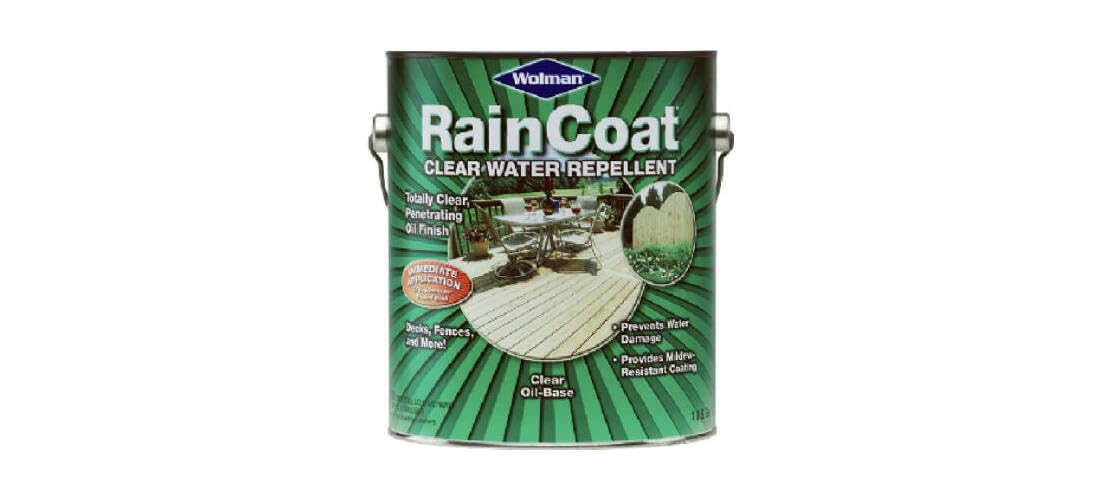
The single-coat, next-day solution for fresh pressure-treated decks.
When you want the job done with minimal fuss, this clear oil-based repellent is built for speed. It’s designed for a single-coat application on fresh pressure-treated lumber — meaning you can seal new wood right away without the preparation dance of sanding and stripping. The NeverWet technology inside boosts the water resistance, and the clear formula preserves the wood’s natural color so it looks the way it did the day you built it. Owners mention the deck stays free of the gray haze season after season.
Cleanup is simple because it’s oil-based and penetrates deep, and a mitt or brush makes quick work of lattice fences and spindles. Coverage is up to 250 sq ft per gallon with that one coat, and it’s ready to use in 48 hours — a fast turnaround for a weekend project. It’s also mildew resistant, which keeps mold at bay in shaded sections.
A single coat offers protection, but heavy-traffic or ground-contact areas will eventually need a refresh. The clear finish means it offers no UV color blocking, so it’s about water management, not sun defense.
Speed first
- One coat on fresh pressure-treated wood
- Ready in 48 hours
- Clear oil finish preserves natural look
Limits
- No tinted UV protection
- May need re-coating on heavy-traffic zones
Choose it for: new pressure-treated decks where you want water beading with a single, quick coat and no color change.
Pass on it if: you’re recoating old gray wood that needs pigment to look fresh again.
6. Evolve Semi-Transparent Chestnut Brown
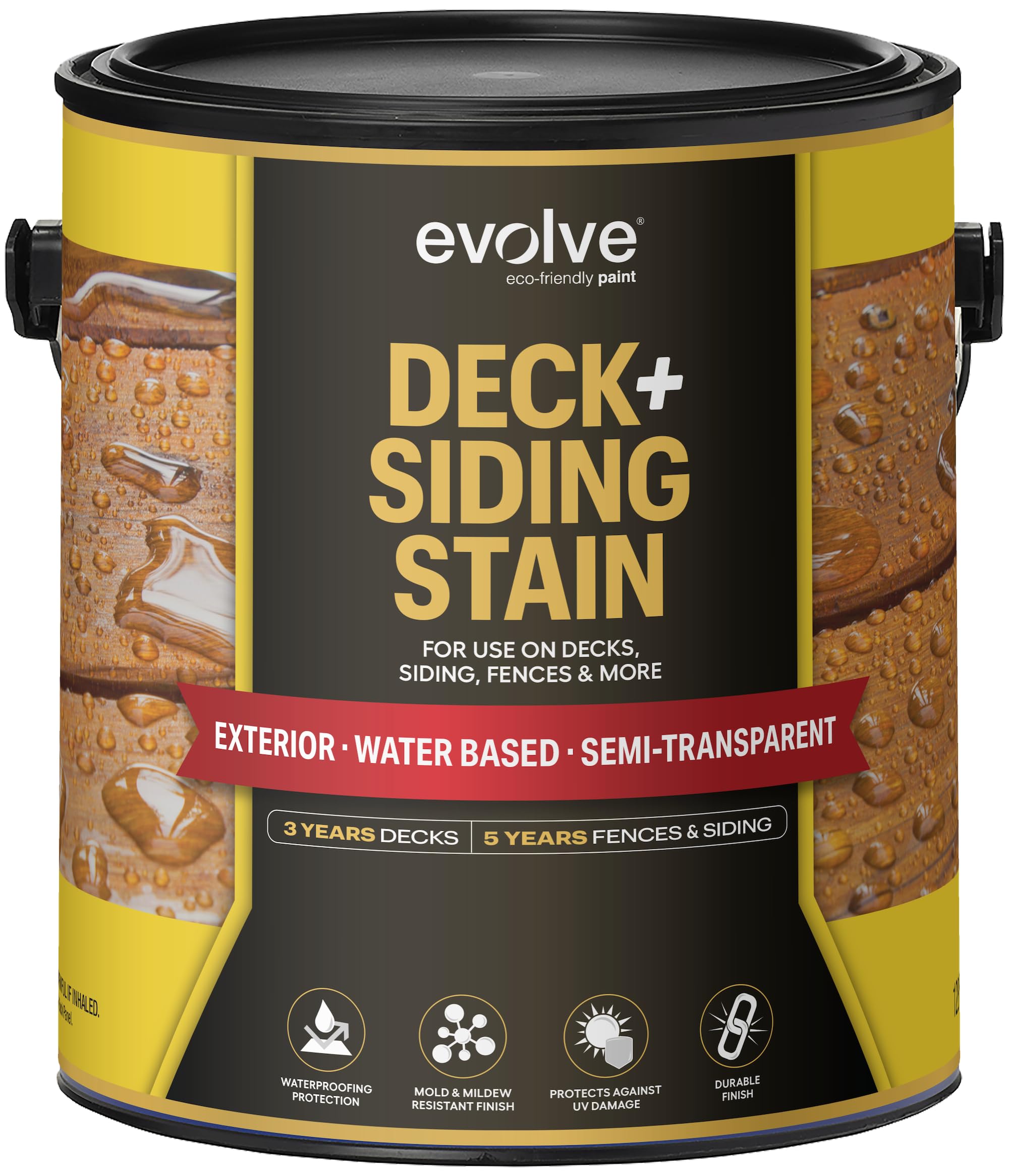
A stain-and-sealer combo that adds rich color while repelling water.
If your pressure-treated deck is looking tired but structurally sound, this Chestnut Brown stain breathes new life into it. It works as both a deep-penetrating stain and a professional-grade sealer, with advanced UV blockers to fight graying and premature fading. The acrylic-based formula creates a water-repellent barrier that helps prevent warping, swelling, and rot — the trio of moisture problems that ends decks early.
It’s made for all exterior wood, including pressure-treated lumber, cedar, redwood, and pine, so it’s a flexible option for a whole yard of projects. Coverage runs 200-400 sq ft per gallon. Owners describe water rolling right off the finished surface, and the fade-resistant technology keeps the chestnut tone looking sharp. It’s a fast-drying, low-odor, USA-made formula comfortable to brush or roll on without harsh fumes.
The honest notes: a couple of owners found the finish more like paint than a true penetrating stain, and durability reports are mixed after harsh rain and snow. Shipping mishaps like dented cans without handles have also shown up, so inspect your delivery before you start. It’s the best value for a big color change at a reasonable price.
Value color: Evolve gives you the most dramatic visual refresh per dollar, best on wood that can handle a film-forming finish.
Best for: reviving a faded deck with a rich color change and solid water beading in a single weekend.
Not for: purists who want a true penetrating oil, or decks that see brutal freeze-thaw exposure.
7. Outlast Q8 Log Oil 5 Gallon

The bulk-buy oil that saturates wood to the point of refusal.
For a large deck, a log home, or a fence with exposed end cuts, this 5-gallon jug is the volume play. The oil formula is meant to be applied with a pump sprayer until the wood simply won’t take anymore — the self-leveling action means drips blend away and lap marks disappear. Because it’s designed to validate warranties on pressure-treated lumber, including Outdoor and Wolmanized applications, it’s a serious, spec-minded choice.
Customers note serious water repellency that lasts. One buyer re-purchased three times, noting a catwalk treated in September 2020 still repelled rain years later. Application is fast — a pump sprayer and roller covered 50 feet of deck in 30 minutes. It can be applied to old, pressure-washed wood, though a sanded surface is recommended for logs with dark staining.
Two honest warnings: cleanup requires mineral spirits rather than soap and water, and the natural formula can turn some cedar a yellow-green tint that surprises some owners. It also takes a while to dry, so plan your curing time.
Serious coverage
- 5 gallons for large projects
- Repels water for multiple years
- Validates pressure-treated lumber warranties
Big-jug realities
- Needs mineral spirits for cleanup
- Can alter light cedar’s color
- Long drying time
Choose it for: big surfaces — entire decks, log homes, and timber frames — where a 5-gallon volume and lasting repellency justify the upfront cost.
skip it if: you’re sealing a small patio (the 5-gallon size is overkill) or you dislike mineral-spirit cleanup.
Understanding the Specs
Oil-Based vs. Water-Based
The base determines how deep the repellent sinks. Oil-based formulas like TWP and Flood penetrate the wood fibers for longer-lasting protection. Water-based formulas like STF sit closer to the surface, forming a flexible film that’s lower in odor.
Coverage per Gallon
This number tells you how many gallons to buy and how heavy the project feels. A spread of 100-300 sq ft per gallon on the Tenino means you’ll use it faster, while 200-400 sq ft on the Evolve covers more ground per can.
FAQ
How often do I need to reapply a water repellent to pressure-treated wood?
Should I treat the end-cuts of pressure-treated lumber with a preservative?
Can I put a water repellent on fresh pressure-treated wood?
Will a clear repellent stop my deck from turning gray?
What’s the difference between a stain and a water repellent?
Is a low-VOC water repellent as effective as an oil-based one?
How much area does one gallon of water repellent actually cover?
Does a water repellent protect against termites?
Why is my sealer drying milky but then turning clear?
Is a 5-gallon bucket worth it for a big deck?
Final Thoughts: The Verdict
For most people, the pressure-treated wood water repellent winner is the Tenino Copper Naphthenate because it’s the only one that meets code requirements and doubles as a termite repellent. If you want rich color that lasts years, grab the TWP 101 Pro-Series. And for a quick, clear single-coat on fresh lumber, the RainCoat Water Repellent is the one to reach for.
How We Picked
We do not accept paid placement. Every pick is matched to a real buyer and a real use-case; we do not hands-on test units.
Sources & Methodology
Specifications: manufacturer listings and product documentation. Review insights: verified customer reviews, as of August 2026. Pricing: not shown on this page (it changes often); check the current price via the retailer link.
As an Amazon Associate, Lawn Gear Lab earns from qualifying purchases. This does not affect which products we feature.