
Specs are compiled from manufacturer listings and verified buyer reviews and can change over time — please confirm the key details on the product page before buying.
Choosing a mix that compacts into a waterlogged mass is the fastest way to suffocate roots. A balanced peat-perlite blend retains moisture while keeping roots aerated, separating thriving plants from struggling ones. This guide breaks down the best options by what they actually do — whether you’re growing vegetables, fussy African violets, or desert cacti.
I’m Rikta — the founder and writer behind Lawn Gear Lab. This guide is built by comparing the manufacturers’ published specifications and the patterns across verified customer reviews, so you get each pick’s real strengths and trade-offs instead of marketing spin.
Whether you’re repotting a single houseplant or filling a whole container garden, the right foundation matters, so here is a practical look at the best potting soil with peat moss for your specific plants and growing style.
Our Picks at a Glance


How To Choose The Best Potting Soil With Peat Moss
Peat moss is the workhorse ingredient in many potting mixes because it holds water and loosens heavy soil. But it doesn’t work alone — it needs partners like perlite and compost to create a balanced home for your plant’s roots.
Match the Mix to Your Plant Type
A cactus that grows in the desert needs fast-draining soil, while a vegetable plant in a container wants steady moisture and nutrients. The bags here are formulated for specific needs, so starting with the wrong type is the most common way to end up with a struggling plant.
Check the Ingredient List, Not Just the Brand
Look for the balance between peat moss (which holds water) and perlite or pumice (which creates air pockets). A mix with extra compost or worm castings feeds your plants from the start, while a plain peat-perlite blend gives you full control over fertilizing.
Quick Comparison
| Model | Best For | Volume | Key Ingredients | Primary Use | Amazon |
|---|---|---|---|---|---|
| Coast of Maine Bar Harbor★ Best Overall | Vegetables & flowers | 1 cu ft | Peat, Compost, Perlite | Containers & baskets | Amazon |
| Midwest Hearth Premium MixBest Value | General purpose | 8 Dry Quarts | Peat, Perlite, Vermiculite | Indoor & outdoor plants | Amazon |
| Coast of Maine Tomato BlendTop Performer | Tomatoes & veggies | 20 Quarts | Sphagnum Peat, Composted Manure | Ground & containers | Amazon |
| Espoma African Violet Mix | African violets | 4 Quarts | Peat, Humus, Perlite | Indoor flowering plants | Amazon |
| Perfect Plants African Violet Mix | African violets | 8 Quarts | Pine Bark, Peat, Garden Lime | Indoor & outdoor | Amazon |
| Midwest Hearth Cactus Mix | Cacti & succulents | 4 Dry Quarts | Peat, Perlite, Vermiculite | Desert plants | Amazon |
| Duspro 7-in-1 Mix | Tropical houseplants | 2 Quarts | Peat, Pine Bark, Worm Castings | Aroids & tropical plants | Amazon |
| Baby Violets All Purpose | Houseplants | 2 Quarts | Peat & Perlite | General indoor plants | Amazon |
| Baby Violets Carnivorous Mix | Carnivorous plants | 2 Quarts | Peat & Perlite | Flytraps & pitchers | Amazon |
In-Depth Reviews
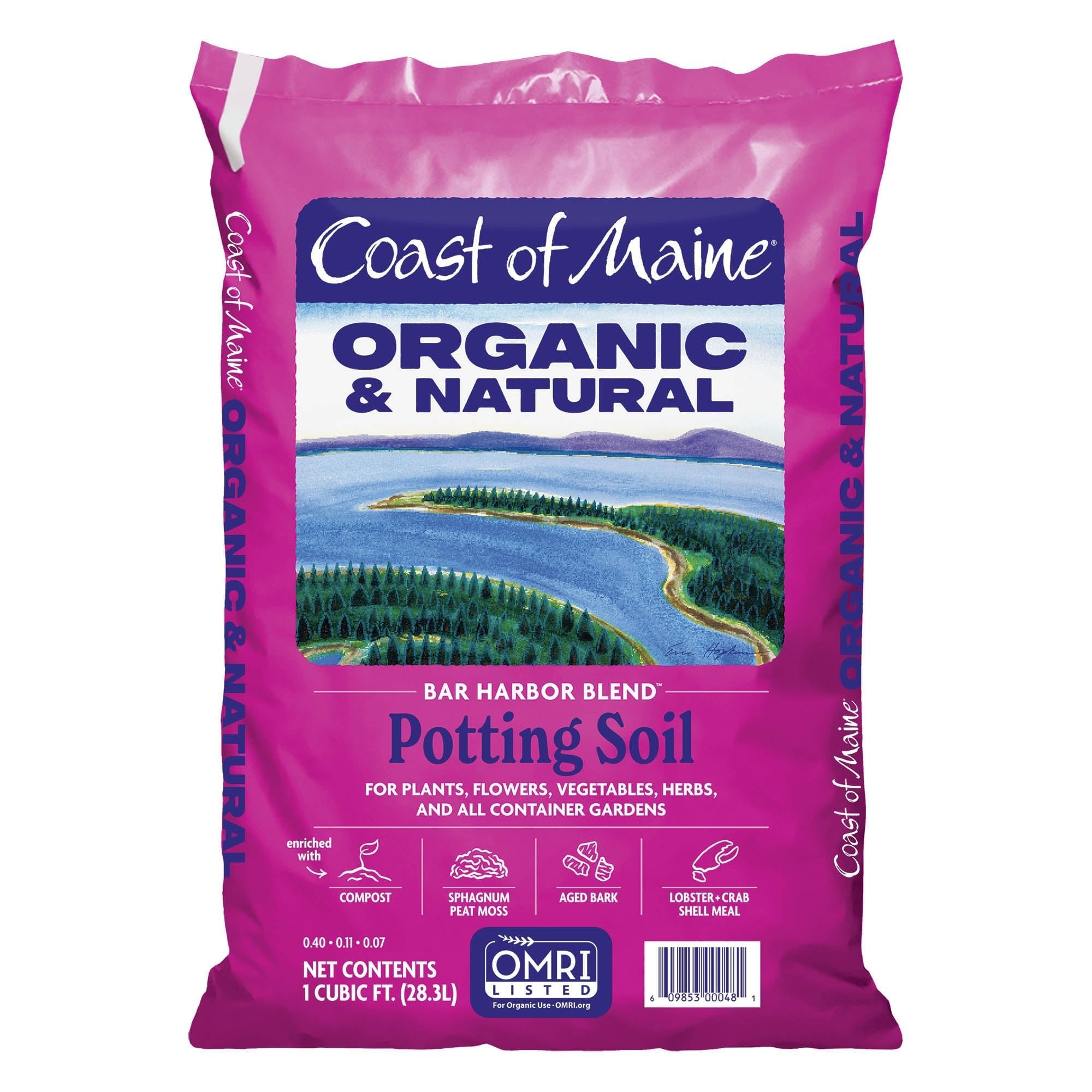
1. Coast of Maine Bar Harbor Blend Potting Soil
Our pick — over 4.5★ from 450+ verified ratings; the strongest balance of quality and price.
The heavily organic blend that makes container tomatoes and herbs look their absolute best.
This is the bag to reach for when your container garden deserves more than plain brown dirt. It combines sphagnum peat moss with compost, perlite, lobster and crab shell meal, and kelp meal — a lineup that feeds plants steadily while keeping the soil light and airy. The natural slow-release nitrogen keeps nourishing your plants over time, so you are not constantly chasing them with liquid fertilizer.
What wins people over here is the soil quality — far and away the most-praised feature in the feedback. Owners describe it as rich and moisture-retentive, noting it doesn’t dry out fast like cheaper blends. The dark color comes from the compost, which means a heavier organic presence and less reliance on peat alone for structure.
Buyers report the results plainly: “My tomatoes never looked so good!” The versatility is the real strength — it works for vegetables, indoor plants, hanging baskets, and window boxes all from one bag. At 17 pounds for a full cubic foot, it is a substantial investment in your garden’s foundation, and it holds up to that promise.
What Owners Praise
- Nutrient-rich organic ingredients feed plants for weeks
- Holds moisture well, meaning less frequent watering
- No weeds sprouting from the bag
The Honest Trade-offs
- A few plants have reacted poorly, so results can vary by species
- Darker color from compost may surprise peat purists
The crowd favorite: If you grow edibles or flowering annuals in containers and want a single reliable bag, this is the one to beat.
Think twice if: You need a plain peat-perlite base for a specialty plant like a carnivorous species — you want full control over additives there.
2. Midwest Hearth Premium Potting Soil Mix
A professionally-formulated all-rounder that keeps young trees and vines thriving without overspending.
If you want the same kind of mix professional growers use without the premium markup, this 8-quart bag delivers. It pairs peat moss, perlite, and vermiculite in a ready-to-use ratio, with the vermiculite (a mineral that soaks up water like a sponge) boosting moisture retention while the perlite keeps air flowing to the roots.
The pH is controlled for a broad spectrum of plant types, which makes it a forgiving choice when you are potting a windowsill full of different species. Owners mention that plants thrive in it — especially young trees and vines — and that it holds moisture perfectly without turning soggy.
The feedback loop here is strong, with quality being the standout theme in dozens of owner experiences. One seasoned gardener put it simply: the blend of peat, vermiculite, and perlite is “absolutely spot-on.” The main gripe is that the 8-quart bag runs out fast for serious gardeners, so buy two if you have a big project.
Solid all-rounder: A reliable, ready-to-use mix for a wide range of plants, praised for holding moisture without waterlogging.
Size note: The bag goes quickly — this shines for indoor pots and small projects, not full garden beds.
3. Coast of Maine Tomato & Vegetable Planting Soil
The heavy-feeding tomato blend that pushes out fruit fast, even in a short northern season.
This is the specialized sibling of the Bar Harbor blend, tuned specifically for tomatoes and vegetables that need a bigger nutrient punch. It mixes sphagnum peat moss with composted manure, creating a rich, dark soil that buyers describe as “black as coal.” The organic compost blend keeps the mix lightweight while supporting abundant growth.
Tomato plants love the steady supply of nutrients. Customers note fast growth with tomatoes fruiting within a month in a short northern season — a serious win for cooler climates. It is OMRI listed for organic use, so you can feel good about what goes into your vegetable garden.
Digging into the feedback, soil quality and plant health lead the way, with people calling it the best soil they’ve tried for edibles. The recurring note is that gnats or bugs can sometimes appear, so opening the bag outside as a precaution is a smart habit. It is also pricier than supermarket blends, so it makes sense for a few prized plants rather than a whole farm.
Why Gardeners Switch
- Composted manure feeds heavy-feeding tomato plants
- Dark, rich color indicates high organic content
- Works for both in-ground beds and containers
Watch For
- Potential for gnats — open and air it out before use
- Premium price means it’s best for a few key plants
Grow with it: This is your pick if tomatoes and vegetable production are the whole point of your garden.
Pass if: You’re on a strict budget for dozens of plants — a cheaper general mix will stretch further.
4. Espoma Organic African Violet Mix

The life-saving blend that brings decades-old neglected violets back from the brink.
African violets are famously picky, and this mix is built for exactly one job: keeping them happy. It blends sphagnum peat moss, humus, perlite, and yucca extract — the yucca extract acts as a natural wetting agent, helping the peat absorb water evenly instead of repelling it. There are no synthetic plant foods or chemicals in the bag.
The proof is in the revival stories. One owner had a 20+ year old African Violet left sad and neglected, and this mix “worked wonderfully to revive my poor plant.” That is the kind of result that turns casual growers into loyal fans of the Espoma brand, which has been making natural organics since 1929.
Owners consistently report their plants perking up significantly after repotting, and the quality of the soil is the most frequent praise. The honest trade-off is the bag size — at 4 quarts, it is perfect for a few pots but feels small if you have a whole collection, and some buyers find it pricey for the volume.
Revival recipe: The go-to for African violets and indoor flowering plants, with a nutrient blend that visibly revives struggling plants.
Value check: You are paying for specialty formulation — this is not the bag for filling large planters.
5. Perfect Plants African Violet Potting Soil
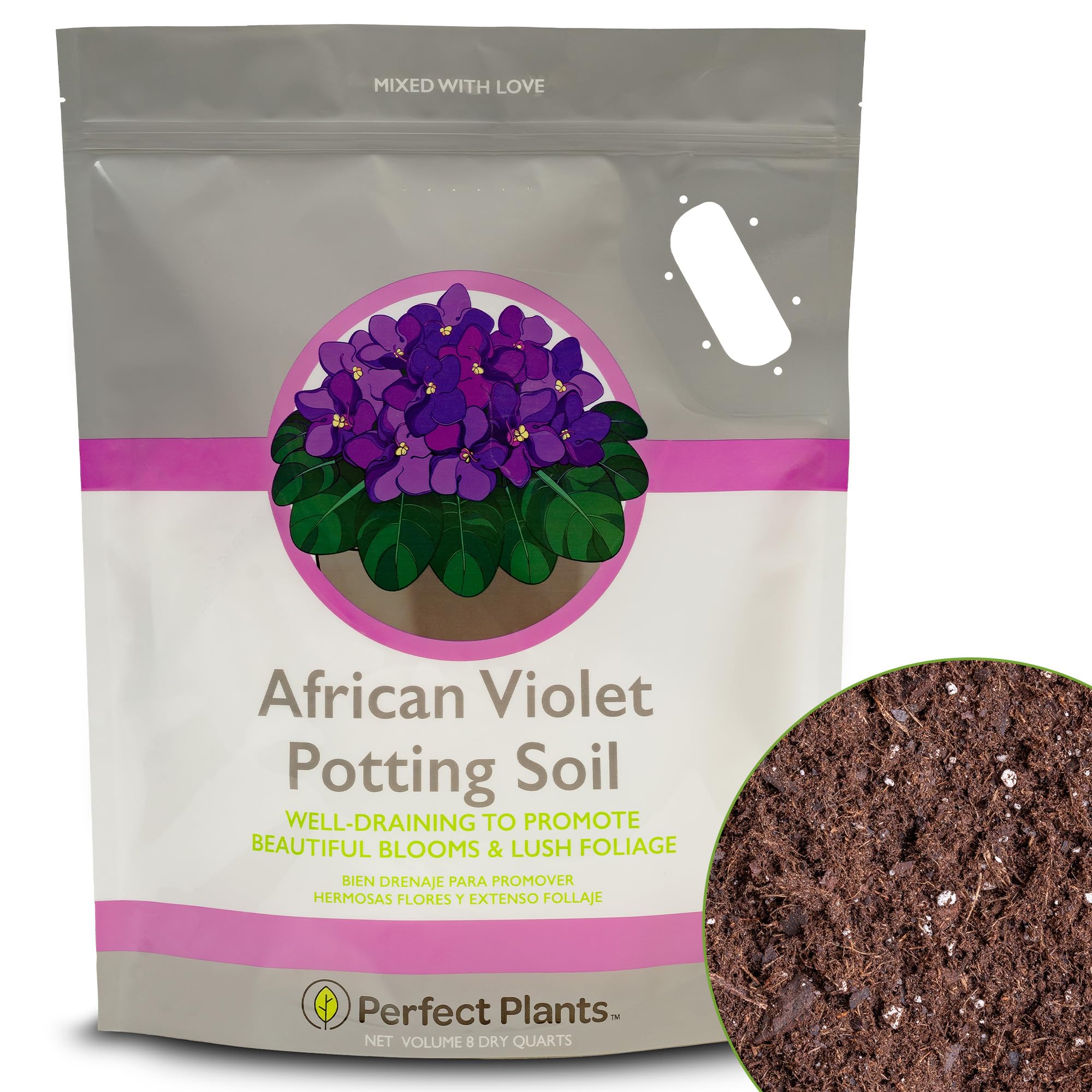
A slightly-acidic, fast-draining mix that revives fading violets and boosts bloom color.
This mix takes a slightly different route to happy African violets, using pine bark compost alongside perlite, peat moss, and garden lime. The garden lime (a soil amendment that raises pH) is the clever part — it keeps the blend slightly acidic, which is exactly the environment African violets crave for steady growth.
The composted ingredients are packed with plant foods that owners say boost flower color, producing more vibrant purple and blue blooms each season. Its ability to drain excess water quickly makes it forgiving in small decorative pots where overwatering is a common risk.
Quality is the dominant theme in owner feedback, with several describing how the mix turned around dying plants — one “fading” gifted violet is now doing better after repotting. The 8-quart size gives you nearly double the volume of the Espoma bag, making it a smarter buy if you have multiple violets. Reviewers point out it is “very basic” compared to specialty blends, but for the price per quart, it’s a strong value.
The Strengths
- 8-quart bag gives better value per pot
- Drains fast, great for small decorative pots
- Composted nutrients boost flower color
The Limitations
- Some call the mix very basic, not a premium upgrade
Best for: African violet owners with several plants who want a bigger bag of quality mix at a sensible price.
Not for: Those wanting a heavily fortified premium soil — this is a solid, no-frills performer.
6. Midwest Hearth Cactus & Succulent Mix
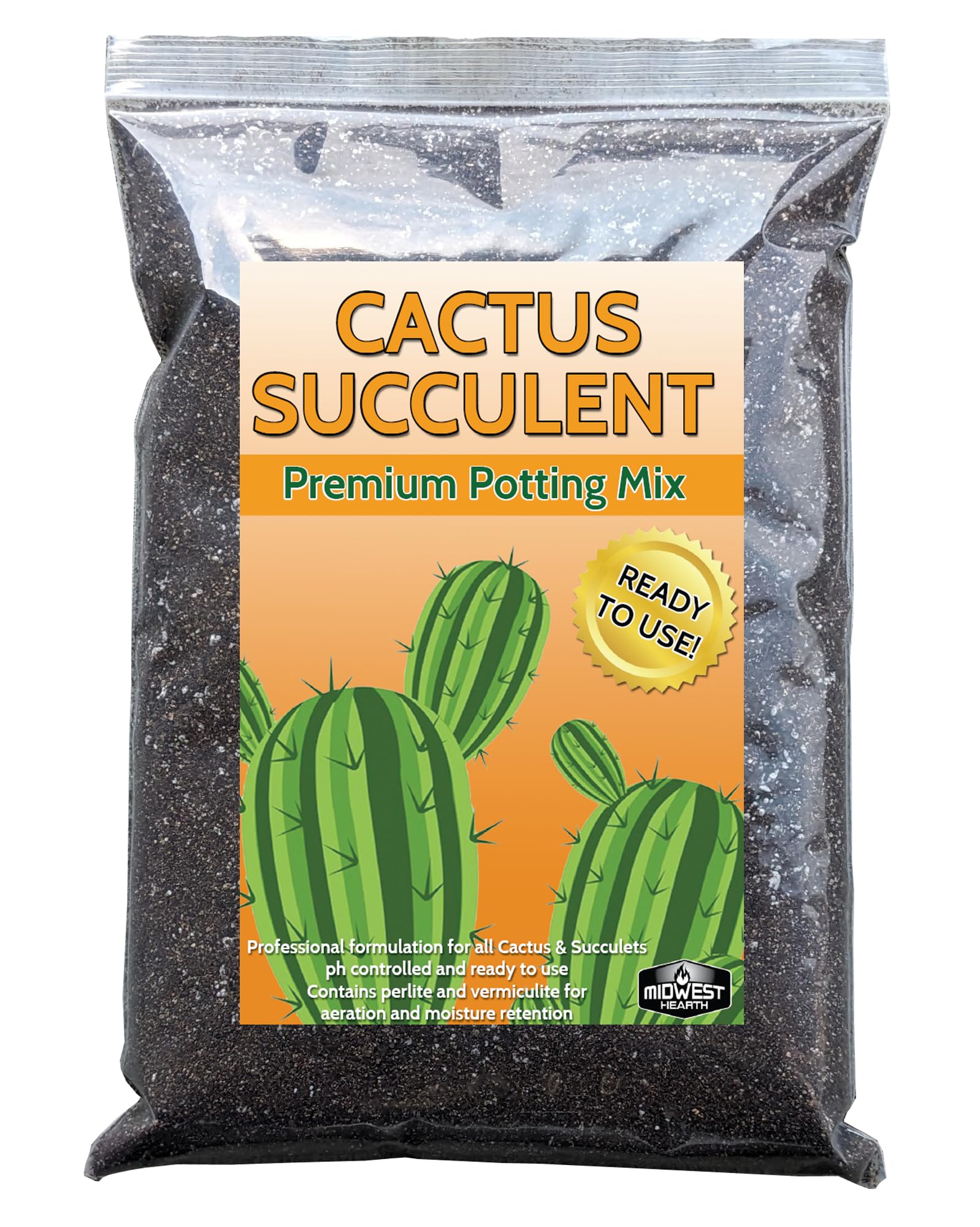
A fast-draining desert blend that turns a sluggish succulent into a thriving one in 90 days.
Cacti and succulents have one hard rule: their roots cannot sit in soggy soil. This mix respects that with a blend of peat moss, perlite, and vermiculite designed to move excess moisture through quickly, preventing root rot before it starts. It is pH-controlled to match what drought-tolerant plants naturally expect.
The mix is ready straight from the bag — no mixing or extra amendments needed. That convenience matters when you are repotting a collection of jade plants, aloe vera, or Christmas cactus. The resealable 4-quart bag fills 2-3 standard pots, and an 8-quart size is available if your collection grows.
The delight in owner feedback is hard to miss. One grower repotted a tiny plant and watched it transform — “a whole different plant in just 90 days.” The quality is the top praise, but there is a caveat: the mix is very dry and can be dusty, and some owners wish the drainage were faster. Wetting it lightly before use helps settle the dust.
Desert-tough performer: A well-loved, ready-to-use mix for cacti and succulents that visibly revives plants within months.
Handle with care: It arrives very dry and dusty — pre-moisten before potting and expect some mess.
7. Duspro 7-in-1 Houseplant Potting Mix
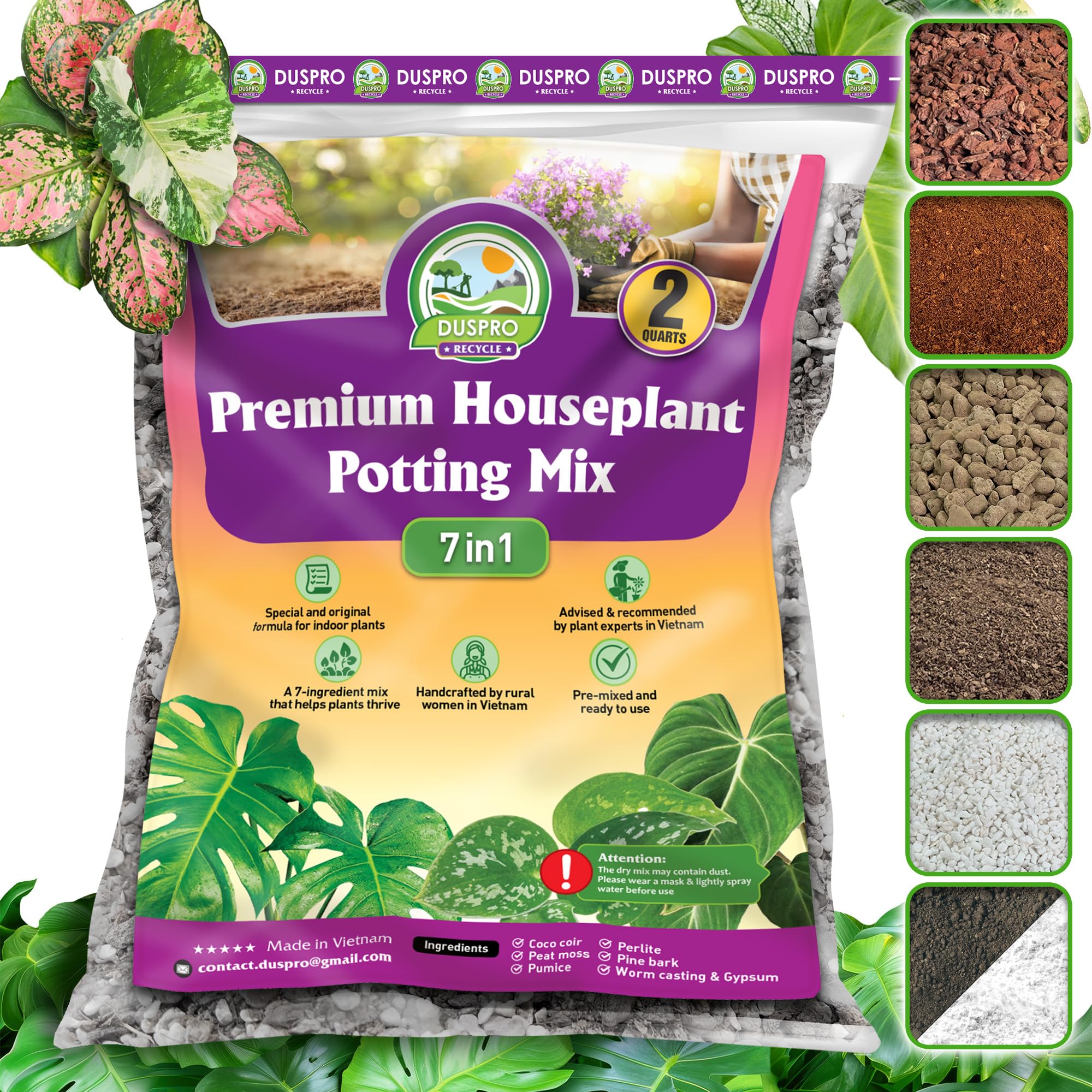
The chunky, airy tropical blend that aroids and monsteras clearly approve of with fresh growth.
Tropical plants like monstera and pothos want air around their roots, not dense, water-holding dirt. This 7-in-1 mix delivers that with pine bark, pumice, coco coir, perlite, worm castings, gypsum, and peat moss — a lineup that creates a chunky, well-draining texture while the coco coir and peat keep moisture balanced.
The worm castings and gypsum contribute nutrients and minerals, so your plants get a gentle feed right from the start. Owners of monsteras report watering only every two weeks thanks to the moisture retention, with new growth appearing in weeks. The 2-quart size fits about two 6-inch pots, so it’s perfect for a couple of repots.
The chunky consistency is the most-praised feature by far — one enthusiast called it the “best chunky soil” they have tried. The catch? This mix is extremely dusty, and owners recommend shaking the bag before use to redistribute settled rocks. A misting of water over your scoop helps control the dust clouds.
What It Does Well
- Chunky texture creates airflow around tropical roots
- Worm castings and gypsum feed plants naturally
- Holds moisture — monsteras need water only every 2 weeks
Be Ready For
- Very dusty out of the bag — mist before scooping
- Small 2-quart bag feels pricey for one project
Reach for this if: You own aroids, monsteras, or any tropical plant that craves a chunky, airy home.
Look elsewhere if: You need a large volume of soil on a budget — the size is for focused repotting.
8. Baby Violets All Purpose Indoor Mix

A simple, honest peat-perlite base for houseplants when you want nothing extra in the mix.
Sometimes you want a clean slate — soil that is exactly two things and nothing more. This hand-blended mix is 50% peat moss and 50% perlite, with no added fertilizers or additives. That makes it a controlled base for African violets, peace lilies, spider plants, and ivy where you prefer to manage feeding yourself.
The super-coarse perlite provides extra drainage while staying chemically inert and sterile, keeping the mix lightweight and airy rather than dense. It arrives in a resealable clear bag, and the 2-quart size fills 24 two-inch pots or six four-inch pots — flexible for a range of small projects.
Owners appreciate the straightforward quality, noting drainage is good and plants are happy. The key instruction to follow: this peat is hydrophobic when dry, so you must wet it completely before potting. Those who skipped this step found the soil didn’t absorb water properly and thought they got less than promised.
Clean-slate base: A no-frills, no-fertilizer peat-perlite blend that gives you total control over feeding your houseplants.
Remember to: Always moisten the mix before repotting — dry peat repels water and leads to frustration.
9. Baby Violets Carnivorous Plant Mix

The specialized 50/50 peat-perlite blend that keeps fussy flytraps and pitchers alive and growing.
Carnivorous plants are a different world — they need nutrient-free soil because they get their food from insects, not the dirt. This mix is exactly 50% peat moss and 50% perlite with no extra additives and no fertilizers, which is precisely what a Venus flytrap or pitcher plant needs to avoid root burn.
The super-coarse perlite provides the drainage these bog-dwellers want while staying chemically inert and sterile. The 2-quart bag fills up to 24 two-inch pots, or fewer larger ones, with the soil packed in a resealable clear zip bag for long-term storage.
Shoppers say good results across sundews, pitchers, and flytraps, praising the quality and effectiveness for raising these demanding plants. This mix demands patience: the peat is highly hydrophobic, so you should soak it for 30-60 minutes before potting, and those who skip wetting risk a frustrating mess. It is a niche buy for a specific plant family, but it does that job well.
Why It Works
- No fertilizers — safe for insect-eating plants
- Coarse perlite gives the drainage bogs plants need
- Effective across flytraps, sundews, and pitchers
Handle Correctly
- Dry peat is hydrophobic — soak for 30-60 min before use
- Specialist mix, not for ordinary houseplants
Get this for: Anyone serious about keeping Venus flytraps or pitcher plants genuinely healthy long-term.
skip it if: Your plants aren’t carnivorous — a standard mix gives you more for the money.
Understanding the Specs
Peat Moss vs. Perlite
Peat moss is the moisture-holding sponge in your soil — it soaks up water and releases it slowly to roots. Perlite is the white, popcorn-like volcanic rock that creates air pockets for drainage. The ratio between them is the single biggest factor in whether your plant gets too much or too little water.
Bag Volume and Coverage
Potting soil is sold by volume — quarts or cubic feet — not weight. A 2-quart bag fills about 24 two-inch pots or 6 four-inch pots. A full 1 cubic foot bag handles much bigger jobs like window boxes and large containers, so match the volume to your project before you buy.
FAQ
Why is my peat-based potting soil repelling water instead of absorbing it?
What is the difference between peat moss and sphagnum peat moss?
Can I use the same peat-based mix for both cacti and tropical houseplants?
Why should I wet the soil before repotting my plant?
Is peat moss in potting soil good for vegetables in containers?
How do I know if my African violet needs a special potting mix?
Why is there no fertilizer in a carnivorous plant soil mix?
How much soil do I need to repot a standard 6-inch houseplant pot?
Is a dusty bag of potting soil a sign of low quality?
Final Thoughts: The Verdict
For most buyers, the potting soil with peat moss winner is the Coast of Maine Bar Harbor Blend because it pairs rich organic nutrition with the moisture-holding structure of sphagnum peat moss across such a wide range of plants. If you want a quality general-purpose mix for indoor pots and young plants, grab the Midwest Hearth Premium Mix. And for thriving tomato plants in containers, the Coast of Maine Tomato Blend is the one to reach for.
How We Picked
We do not accept paid placement. Every pick is matched to a real buyer and a real use-case; we do not hands-on test units.
Sources & Methodology
Specifications: manufacturer listings and product documentation. Review insights: verified customer reviews, as of August 2026. Pricing: not shown on this page (it changes often); check the current price via the retailer link.
As an Amazon Associate, Lawn Gear Lab earns from qualifying purchases. This does not affect which products we feature.