
Specs are compiled from manufacturer listings and verified buyer reviews and can change over time — please confirm the key details on the product page before buying.
You pick a tomato off the vine, warm from the sun, and bite into it. That taste starts with the soil you put in the pot. The wrong potting mix can drown roots, lock out air, or run out of food right when your plant needs it most.
I’m Rikta — the founder and writer behind Lawn Gear Lab. This guide is built by comparing the manufacturers’ published specifications and the patterns across verified customer reviews, so you get each pick’s real strengths and trade-offs instead of marketing spin.
Whether you are potting a single beefsteak or a deck full of cherry tomatoes, the right soil makes all the difference. This breakdown of the best potting soil for tomatoes covers every option from budget-friendly entry-level bags to premium organic blends so you can match the mix to your garden.
Our Picks at a Glance

How To Choose The Best Potting Soil For Tomatoes
Picking the right soil for container tomatoes depends on a few key factors. Here are the most important things to look for before you fill your first pot.
Texture and Drainage
Tomato roots need oxygen just as much as they need water. A good mix feels light and fluffy when you squeeze it, with visible perlite or pumice to create air pockets. Heavy, dense soil compacts quickly and drowns the roots, leading to stunted growth and yellow leaves.
Nutrient Content and Feeding
Tomatoes are heavy feeders, especially once they start setting fruit. Pre-mixed soils that include compost, worm castings, or a slow-release fertilizer give your plants a strong start. Some mixes include enough nutrients for months, while others rely on you adding liquid fertilizer throughout the season.
Organic vs. Conventional
Organic mixes use natural ingredients like peat moss, coir, and composted manure instead of synthetic fertilizers. They are gentler on the soil ecosystem. If you plan to eat the tomatoes right off the vine, an OMRI-listed (Organic Materials Review Institute) organic mix — meaning it is approved for certified organic production — is a solid choice.
Quick Comparison
| Model | Best For | Volume | Nutrient Source | Organic | Amazon |
|---|---|---|---|---|---|
| Miracle-Gro Potting Mix (3-Pack)★ Best Overall | Best Overall | 24 qt (3 x 8 qt) | Feeds up to 6 months | No | Amazon |
| Coast of Maine Tomatoes & Veggies | Premium Organic Value | 20 qt | Composted manure, peat moss | Yes (OMRI listed) | Amazon |
| Espoma Organic Potting Mix | Indoor Seed Starting | 16 qt | Earthworm castings, kelp meal | Yes | Amazon |
| GARDENERA Premium Organic | Small Space / Single Plant | 2 qt | Coco coir, worm castings | Yes | Amazon |
In‑Depth Reviews
1. Miracle-Gro Potting Mix (3-Pack)
Our pick — over 4.5★ from 850+ verified ratings; the strongest balance of quality and price.
You get low-maintenance feeding for half a year, without having to mix another fertilizer.
This mix saves you effort because it feeds your plants for up to 6 months from a built-in fertilizer, so you skip the weekly liquid feeding. According to the manufacturer, it grows plants twice as big compared to unfed plants — a useful claim if you are looking for a strong head start. The 3-pack gives you three 8-quart bags, totaling 24 quarts, each bag filling two 8-inch containers. That makes it easy to use one bag at a time without opening a massive 2-cubic-foot bale that will sit open in the garage.
Buyers report that it drains well and does not pack down into a hard, compacted mass. One owner mentioned: “I love this soil for both outdoor and indoor planting. It is well draining and doesn’t tend to pack down enough to be hard.” That loose texture helps water reach the roots instead of pooling on top. Unlike the Coast of Maine mix below, this is not an organic product — it uses synthetic slow-release fertilizer — so if you are committed to organic growing, you will want to look elsewhere.
Another advantage over the Gardenera option is the sheer volume: at 24 total quarts spread across three easy-to-handle bags, this is a strong mid-range value for anyone planting several containers.
What stands out
- Feeds plants for up to 6 months — less effort once the plant is in the pot
- Loose, well-draining texture that owners mention does not compact
- Convenient 3-pack of smaller bags for easy handling
The trade-off
- Not organic — uses synthetic fertilizer
- No mycorrhizae or premium biological additives found in pricier organic blends
Grab this if: you want a low-maintenance mix that feeds your tomatoes for months without extra fertilizing, especially for several containers.
Look elsewhere if: you require certified organic ingredients or need a mix specifically formulated for heirloom tomatoes with sensitive drainage needs.
2. Coast of Maine Organic & Natural Planting Soil for Vegetables & Tomatoes (20 Qt)

This 20-quart bag of organic soil gives you enough for several big pots without the synthetic additives of the Miracle-Gro pick.
This OMRI-listed organic blend uses composted manure and sphagnum peat moss to create a lightweight mix that balances moisture retention with drainage. Customers note that one bag fills a single 5-gallon pot perfectly, and that plants show visible growth within days of potting. One reviewer called it “Lightweight, quality foil for potting,” while another said their plants were “thriving, no stress.” The 20-quart volume stands out in this lineup — it holds 10 times as much soil as the Gardenera 2-quart bag, giving you plenty of material for several large containers or an entire raised bed.
While the texture is praised, a few buyers mention the occasional undecomposed twig that needs to be picked out, especially for fine-rooted plants. The mix also includes aromatic wood material that some reviewers point out helps deter insects — a clever bonus. Compared to the Espoma mix below, this one is built more for outdoor containers and in-ground use, making it a versatile choice if you split your garden between pots and a plot. It is also noticeably lighter than a standard heavy bag of garden soil, which makes hauling it around the yard easier.
For organic gardeners who want a substantial amount of soil without paying a premium per quart, this is the balance in this list.
What stands out
- Generous 20-quart bag — enough for several large pots or one raised bed
- OMRI-listed organic — no synthetic fertilizers or chemicals
- Lightweight texture that shoppers say helps plants thrive with good drainage
The trade-off
- May contain small twigs that need to be removed before planting delicate seedlings
- Some buyers find the bag heavy despite the light soil texture
Best for: organic tomato growers who want a large, versatile bag of soil that works in containers and in-ground gardens alike.
Not ideal for: anyone who needs a precisely sifted, fine-textured mix for starting tiny seeds indoors.
3. Espoma Organic Potting Soil Mix (16 Qt)

Its fine, fluffy texture and added mycorrhizae (beneficial fungi that help roots absorb water) make it a top choice for seed trays, giving young tomatoes a head start that the chunkier Coast of Maine mix cannot match.
Espoma’s organic mix is a rich blend of sphagnum peat moss, humus, and perlite, further enriched with earthworm castings, alfalfa meal, kelp meal, and feather meal. It also contains Myco-Tone, a blend of endo and ecto mycorrhizae (beneficial fungi that form a partnership with plant roots, helping them absorb more water and nutrients). This makes it among the most nutrient-dense options here, especially for the price point. The 16-quart bag is a generous size that fits a variety of container needs.
Buyers specifically praise its texture: “Light, fluffy, plenty of perlite, no large wood/plastic,” one reviewer noted. That clean, consistent mix works well for seed germination under lights and for transplanting into larger containers. One reviewer compared it directly against the Miracle-Gro mix above, suggesting it is a common point of comparison for shoppers who want organic without sacrificing performance. If the chunkiness that some report in the Coast of Maine bag bothers you, the finer texture of the Espoma mix is a welcome alternative.
That said, one reviewer who tried both called it “acceptable” and said they went back to Coast of Maine, noting it was “much better quality.” So while Espoma is a strong organic choice, it may not have the same richness of compost as the Maine blend for heavy-feeding tomatoes in outdoor containers.
Why it shines
- Fine, consistent texture with no large wood or plastic pieces — ideal for seed starting
- Packed with natural nutrients including worm castings, kelp meal, and feather meal
- Includes Myco-Tone beneficial mycorrhizae for better root health
The catch
- Some veteran gardeners find it less nutrient-dense than the Coast of Maine option
- Price per quart is higher than some conventional alternatives
Reach for this if: you start tomatoes from seed or transplant seedlings indoors and want a clean, fine-textured organic mix with added biological boosters.
Consider something else if: you are filling large outdoor containers and want a denser, compost-rich organic soil that holds moisture longer.
4. GARDENERA Premium Organic Potting Soil for Tomatoes (2 Qt)
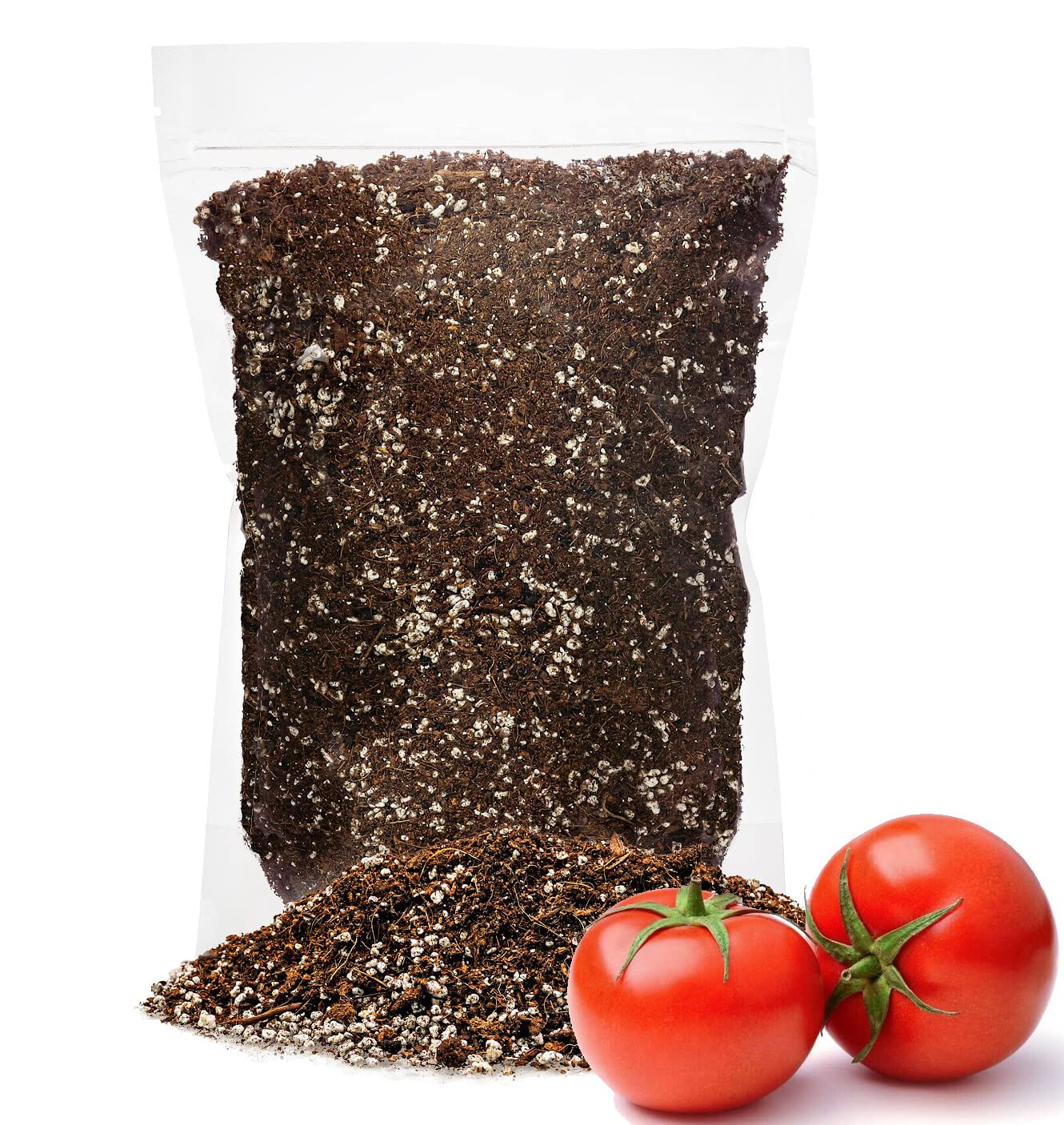
Hand-blended on a small family farm, this targeted organic mix is the opposite of the bulk-focused Coast of Maine bag — you pay more per quart for a precise recipe that is made for just one tomato plant.
This small-batch organic potting soil from Gardenera is hand blended in the USA with coco coir, Canadian peat moss, perlite, and worm castings. With extra perlite and low-salt coconut coir, it promotes rapid root development by draining away excess water while retaining enough moisture for nutrient retention. It is crafted specifically for tomatoes, making it the most targeted mix in this roundup. One buyer mentioned that it produced “really nice tomatoes beef steak big and juicy,” while another said their plant “looks stronger, almost doubled in height and has multiple flowers” after transplanting.
The main trade-off to know: at just 2 quarts, this is a very small bag. One owner reported that “needs at least three bags for one plant thus not economical.” For a standard 5-gallon container, you will need to buy multiple bags or use it as a top-dressing. Compared to the Coast of Maine bag which holds 20 quarts — a 10x gap — this is clearly a specialty product for a single small pot or for enriching a larger batch of your own base soil. The price per quart is also much higher than the bulkier bags, but the quality of the hand-mixed ingredients and the focused formulation for tomatoes is tough to top for a single-plant project.
If you are potting just one or two tomato plants and want the best organic ingredients without buying a massive bag, this is a smart pick. For a full deck of tomatoes, the Coast of Maine bag makes more sense financially.
Why it works
- Hand-blended organic mix specifically formulated for tomatoes
- Extra perlite and coco coir for fast drainage and rapid root development
- Buyers report dramatic plant growth and big, juicy fruit
The limitation
- Very small 2-quart bag — you will need several bags for a standard 5-gallon pot
- Cost per quart is significantly higher than larger, bulk options
Pick this for: a single tomato plant in a small container or as a premium soil amendment to boost a larger batch of cheaper base soil.
skip it if: you are planting multiple large containers and want a budget-friendly option in one bag.
Understanding the Specs
Perlite and Aeration
Perlite (tiny white volcanic glass particles) is the key ingredient that creates air pockets in the soil. Without it, potting soil compacts into a dense, waterlogged mass that suffocates tomato roots. More perlite means faster drainage and more oxygen reaching the root zone.
Mycorrhizae
Mycorrhizae are beneficial fungi that attach to plant roots and extend their reach into the soil, helping tomatoes absorb more water and nutrients. A mix with added endo and ecto mycorrhizae, like Espoma’s Myco-Tone, gives your plants a head start on building a strong root network.
FAQ
Can I use regular garden soil for container tomatoes?
How much potting soil do I need for one tomato plant?
Should I choose organic potting soil for tomatoes?
How often do I need to fertilize tomatoes in potting mix?
What is the difference between potting mix and potting soil?
Can I reuse potting soil from last season for new tomatoes?
Does the pH of the potting mix matter for tomatoes?
What does OMRI listed mean on a bag of potting soil?
Can I mix different brands of potting soil together?
How do I know if my potting soil has good drainage?
Final Thoughts: The Verdict
Across the board, the potting soil for tomatoes winner is the Miracle-Gro Potting Mix (3-Pack) because its 6-month feeding window and balanced texture make it a low-maintenance choice for multiple containers. If you want organic ingredients in a larger bag, grab the Coast of Maine Organic & Natural Planting Soil. And for starting seeds indoors or potting a single heirloom plant with premium hand-mixed organic soil, the Espoma Organic Potting Soil Mix is your best bet.
How We Picked
We do not accept paid placement. Every pick is matched to a real buyer and a real use-case; we do not hands-on test units.
Sources & Methodology
Specifications: manufacturer listings and product documentation. Review insights: verified customer reviews, as of July 2026. Pricing: not shown on this page (it changes often); check the current price via the retailer link.
As an Amazon Associate, Lawn Gear Lab earns from qualifying purchases. This does not affect which products we feature.