
Specs are compiled from manufacturer listings and verified buyer reviews and can change over time — please confirm the key details on the product page before buying.
You plant a tomato in a container, and within a month the soil turns into a hard brick that drowns roots. The wrong mix gets dense, traps water, and kills your harvest before it starts. This guide shows you which blends stay fluffy enough to drain and still hold nutrients inside a pot, so you get fruit instead of a mud cake.
I am Rikta, the writer behind Lawn Gear Lab. This guide compares each product’s published specs and patterns from verified customer reviews. The goal is to give you real strengths and trade-offs, not marketing spin.
Below are seven options for the best potting soil for tomatoes in containers. They are ranked by drainage, nutrition, and how they handle root space inside a limited pot volume.
Quick Picks
- FoxFarm Happy Frog Potting Soil with 2 Plant Tags — Best Overall
- Vermont Compost Company Fort Vee Organic Potting Mix — For Heavy Feeders
- Espoma Organic Potting Soil Mix (2 Cubic Foot bag) — Top Organic Blend
- Coast of Maine Organic & Natural Planting Soil for Vegetables & Tomatoes — Lightweight & Focused
- Miracle-Gro Potting Mix (3-Pack, 8 qt each) — 6-Month Feeder
- Espoma Organic Potting Soil Mix (16qt, Pack of 4) — Organic 4-Pack
- Lambert Potting Mix (8 Quarts) — Budget Starter
How To Choose The Best Potting Soil For Tomatoes In Containers
Tomato roots hate sitting in water, but they also hate drying out completely inside a small pot. The soil you choose must be fluffy enough to drain excess water yet heavy enough with organic matter to hold onto moisture and nutrients for weeks of fruit production. Pay attention to three things: texture, feeding schedule, and total volume.
Texture: Drainage vs Moisture Retention
A good container mix for tomatoes contains perlite (volcanic glass that creates air pockets) or vermiculite (a mineral that holds water) plus fibrous material like peat moss or coir. If the bag feels heavy and dense, it will likely compact in a pot and suffocate roots. If it feels light and crumbly, it will drain well but may need more frequent watering.
Nutrient Load and Fertility
Tomatoes are heavy feeders—they pull a lot from the soil to produce fruit. Some mixes come pre-loaded with compost, earthworm castings, bat guano, or slow-release fertilizer that can feed the plant for months. Others are “starter” mixes that need you to add fertilizer after a few weeks. Check the bag for phrases like “feeds up to 6 months” or “compost-based” to understand what the soil brings to the pot.
Organic vs Synthetic
Organic mixes rely on natural ingredients like kelp meal, bone meal, and composted manure to feed the soil microbes that then feed the plant. Synthetic mixes often use coated chemical fertilizers that release on a timer. Both can grow great tomatoes; the main difference is how you manage the nutrient cycle and whether OMRI (Organic Materials Review Institute) certification matters to you.
Quick Comparison
| Model | Best For | Volume | Weight | Nutrient Type | Amazon |
|---|---|---|---|---|---|
| FoxFarm Happy Frog | Premium root development | 2 cu ft | 42 lbs | Microbes & Humic Acids | Amazon |
| Vermont Compost Fort Vee | Seed-starting & heavy feeders | 20 Quarts | — | Compost-based | Amazon |
| Espoma Organic AP2 | Organic indoor/outdoor | 2 Cubic Feet | — | Myco-Tone blend | Amazon |
| Coast of Maine Vegetables & Tomatoes | Heirloom tomatoes in pots | 20 Quarts | 21 lbs | Composted manure | Amazon |
| Miracle-Gro Potting Mix | All-purpose container feeding | 8 qt. (3-Pack) | — | Feeds up to 6 months | Amazon |
| Espoma Organic AP16-4 | Multi-pack organic gardening | 16 Quarts | — | Myco-Tone blend | Amazon |
| Lambert Potting Mix | Budget-friendly everyday | 8 Quarts | 1.75 kg | Standard peat/perlite | Amazon |
In-Depth Reviews
1. FoxFarm Happy Frog Potting Soil with 2 Plant Tags
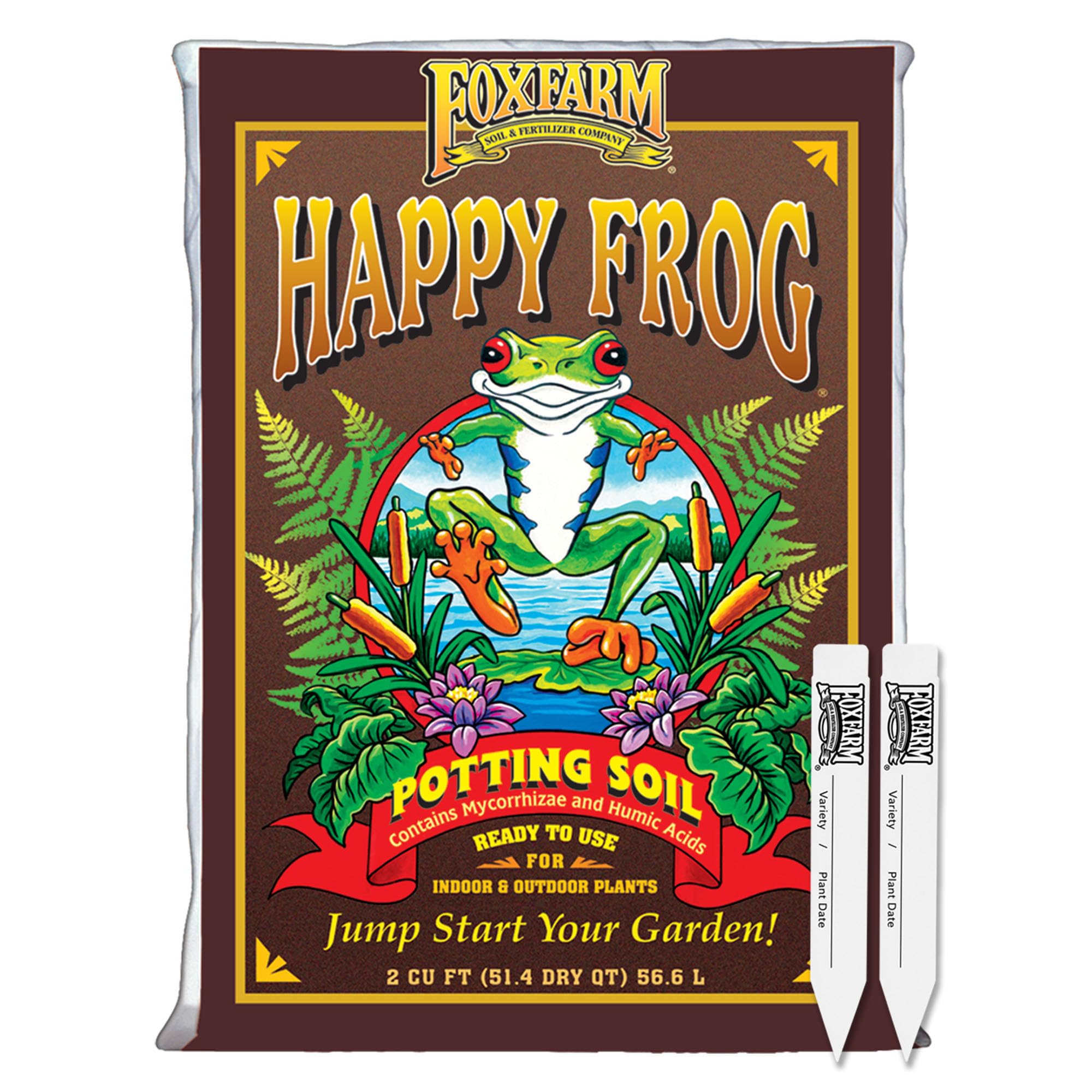
You get mycorrhizal fungi and microbes that expand your tomato’s root reach inside a tight pot, so it drinks and feeds more efficiently.
FoxFarm Happy Frog contains beneficial soil microbes and mycorrhizal fungi (a root-friendly fungus that attaches to roots and pulls more water and nutrients from the soil). That means your tomato plant gets a bigger reach inside a confined space. The bag weighs a hefty 42 pounds versus the 21-pound Coast of Maine bag below, so you are paying for real, dense organic matter.
The formula uses aged forest products (the manufacturer says the blend is 50-60% aged forest materials), sphagnum peat moss, perlite, and fertilizers derived from earthworm castings, bat guano, oyster shell, and dolomite lime. Reviewers report using it “from start to finish” for high-yield plants and say plants respond “noticeably better” than with basic soils.
One catch: the 42-pound bag is heavy to carry and expensive per bag. For a single large pot it may be more than you need, but if you have multiple containers this makes a strong one-bag buy.
Why it wins in a pot
- Mycorrhizal fungi that expands root efficiency inside a tight container.
- Microbe-rich formula so you do not need fertilizer as often.
- Loose, aerated texture that prevents compaction in containers.
The real trade-offs
- At 42 lbs versus 21 lbs for the Coast of Maine bag, it can be difficult to move for smaller gardeners.
- Premium cost per bag; not a budget option for large beds.
Grab this if: you have several large containers and want a biologically active, ready-to-use soil that cuts down on extra feeding. Look elsewhere if: you only need one small pot or your budget is tight—a smaller bag with added compost works fine.
2. Vermont Compost Company Fort Vee Organic Potting Mix

This compost-heavy blend packs more food per quart than any other pick here, making it ideal for seedlings that need strong starts.
Vermont Compost Fort Vee is built specifically for heavy feeders like tomatoes, peppers, corn, and squash. The mix contains composted manure and plant materials, sphagnum peat moss, crushed granite, crushed basalt (which release slow minerals and trace elements), blood meal, kelp meal, steamed bone meal, and vermiculite. That is a lot of food packed into 20 quarts versus the 8-quart Lambert mix.
Buyers highlight the fluffy texture with vermiculite that looks like gold flakes, calling it “superb for seed starting” and noting it holds water well even in 90°F Florida heat. One reviewer noted 100% germination on seeds started in this mix.
Downsides: the compost base means you may get occasional bark or twigs, and the bag is not sealed as tightly as synthetic mixes, so you may see moisture loss during storage.
Ideal for seed-starters: the vermiculite and granite give excellent aeration for tiny roots in pots, while the compost feeds them from day one without burning.
Not for casual gardeners: it needs to be used within a season and stored dry, and it costs more per quart than basic mixes.
Reach for this if: you start tomatoes from seed and transplant them into bigger containers—the 20-quart volume covers multiple sizes. skip it if: you want a mix that sits on the shelf for months without drying out, or you only have one small pot to fill.
3. Espoma Organic Potting Soil Mix (2 Cubic Foot bag)

You get loamy, chunky texture that resists crusting, plus Myco-Tone mycorrhizae for root absorption—no separate root booster needed.
Espoma AP2 combines sphagnum peat moss, humus, perlite, earthworm castings, alfalfa meal, kelp meal, and feather meal into a 2-cubic-foot bag. It also includes Myco-Tone, a proprietary blend of endo and ecto mycorrhizae that help roots absorb more from the pot. That matters for tomatoes in containers, where the root system is confined and needs every advantage.
One reviewer with 25-year-old sentimental houseplants switched to this soil and reported the plants “seem to be doing extremely well.” Buyers also note it has a loamy, chunky texture that does not get dense or crusty, and they have not seen fungus gnat infestations, which is a bonus for indoor container growers.
The downside: several reviewers mention the bag is pricey compared to other organic options. At 2 cubic feet, however, it gives you a lot of volume for the money—enough for several large tomato pots.
what separates it
- Myco-Tone mycorrhizae built in—no need to buy a separate root booster.
- Earthworm castings and kelp meal provide gentle, slow-release feeding.
- Reviewers consistently report no fungus gnats, a common issue with indoor containers.
What to watch for
- Some bags may contain small sticks or wood pieces (buyers report they are minimal).
- Cost is higher than non-organic blends; a budget-conscious grower may skip it.
Best for the organic purist: every ingredient is natural, and the Myco-Tone gives container tomatoes a real root advantage. Pass if: you want the cheapest way to fill pots—basic mixes with added fertilizer work fine for tomatoes on a budget.
4. Coast of Maine Organic & Natural Planting Soil for Vegetables & Tomatoes
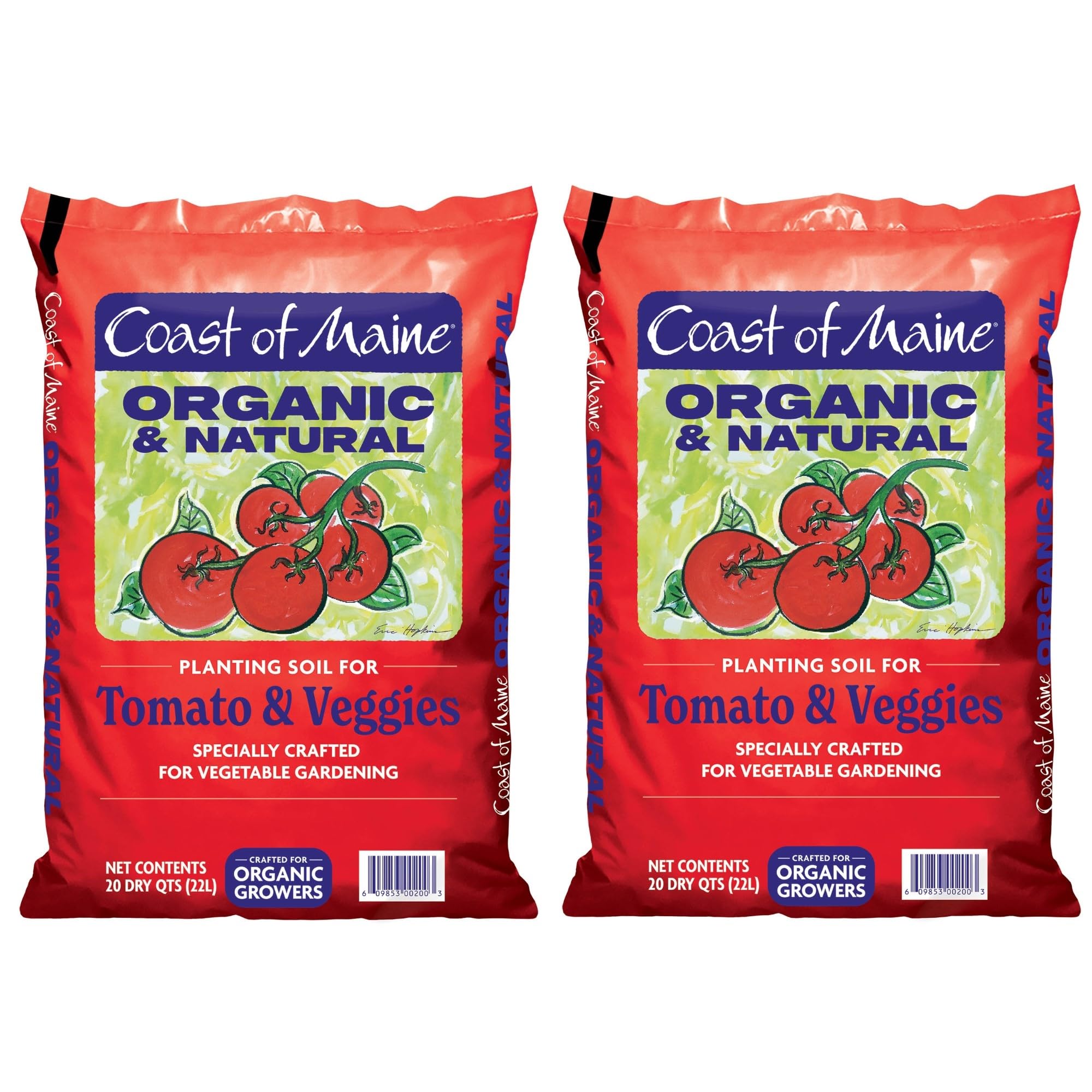
At 21 pounds versus 42 pounds for FoxFarm Happy Frog, this bag is easier to haul—and the composted manure keeps heirloom tomatoes draining well.
Coast of Maine is formulated specifically for vegetables and tomatoes, with composted manure and sphagnum peat moss as the base. The 20-quart bag weighs just 21 pounds—making it much easier to carry than the 42-pound FoxFarm Happy Frog bag—so you can handle the bag without a second person. Owners mention tomatoes and zucchini “thrive in 5-gallon pots with no stress,” and they praise the moisture retention and drainage balance.
The OMRI listing (Organic Materials Review Institute) confirms it meets organic standards. Buyers also mention a pleasant cedar/aromatic scent that deters insects, an unexpected bonus for container growers on a patio.
On the flip side, some bags contain undecomposed twigs, which makes it less ideal for fine-seed crops like carrots. For tomatoes, though, the chunky texture actually helps aeration.
Why container growers like it
- Lightweight at 21 lbs—easy to move and pour into pots.
- High nutrient load creates “rapid visible growth” according to buyers.
- Aromatics in the mix naturally repel some insects.
The small annoyance
- May include twigs and larger organic pieces; you may want to sift if you use it for tiny seeds.
- Some customers note the bag feels “heavy” despite the 21-lb weight claim on the listing.
Pick this for: anyone growing heirloom tomatoes in pots where drainage is critical—the composted manure keeps roots healthy without getting soggy. Look elsewhere if: you need soil that looks polished and uniform; the twiggy texture may bother you.
5. Miracle-Gro Potting Mix (3-Pack, 8 qt each)

The manufacturer claims it feeds all potted plants up to 6 months, so you can fill a container and forget about fertilizer for half a season.
Miracle-Gro Potting Mix is the most familiar name in the category, and for a reason: it “feeds all types of potted plants up to 6 months,” according to the manufacturer, and is formulated specifically for outdoor containers. The 3-pack gives you three 8-quart bags, so you can fill several pots or use one bag at a time without a large storage commitment.
Buyers appreciate that it is “well draining and doesn’t pack down hard,” and they note the small bags are easier to carry than a single giant bag. The manufacturer claims the mix grows plants “Twice As Big! (vs. unfed plants),” which is a marketing statement, but the consistent rating suggests real results.
Caveat: the product is not organic—it uses synthetic timed-release fertilizer. If you avoid chemical feeds, this is not your choice. Also, the listing shows a volume notation of 0.66 alongside three 8-quart bags, so each bag is still quite small and you may need multiple packs for a large container.
What the 3-pack solves
- Fertilizer built in for up to 6 months—one less thing to remember.
- Small individual bags are manageable for apartment gardeners or small pot setups.
- Widely available and consistently rated by home gardeners.
What it lacks
- Synthetic fertilizer; not suitable for organic gardening.
- Each bag is only 8 quarts—you may need 3-4 packs for a single large tomato pot.
Reach for this if: you want a straightforward, predictable soil that comes with its own fertilizer built-in and you are not worried about organic certification. pass on it if: you are growing heirlooms organically or need a large single-bag volume—you will end up with a lot of small bags.
6. Espoma Organic Potting Soil Mix (16qt, Pack of 4)
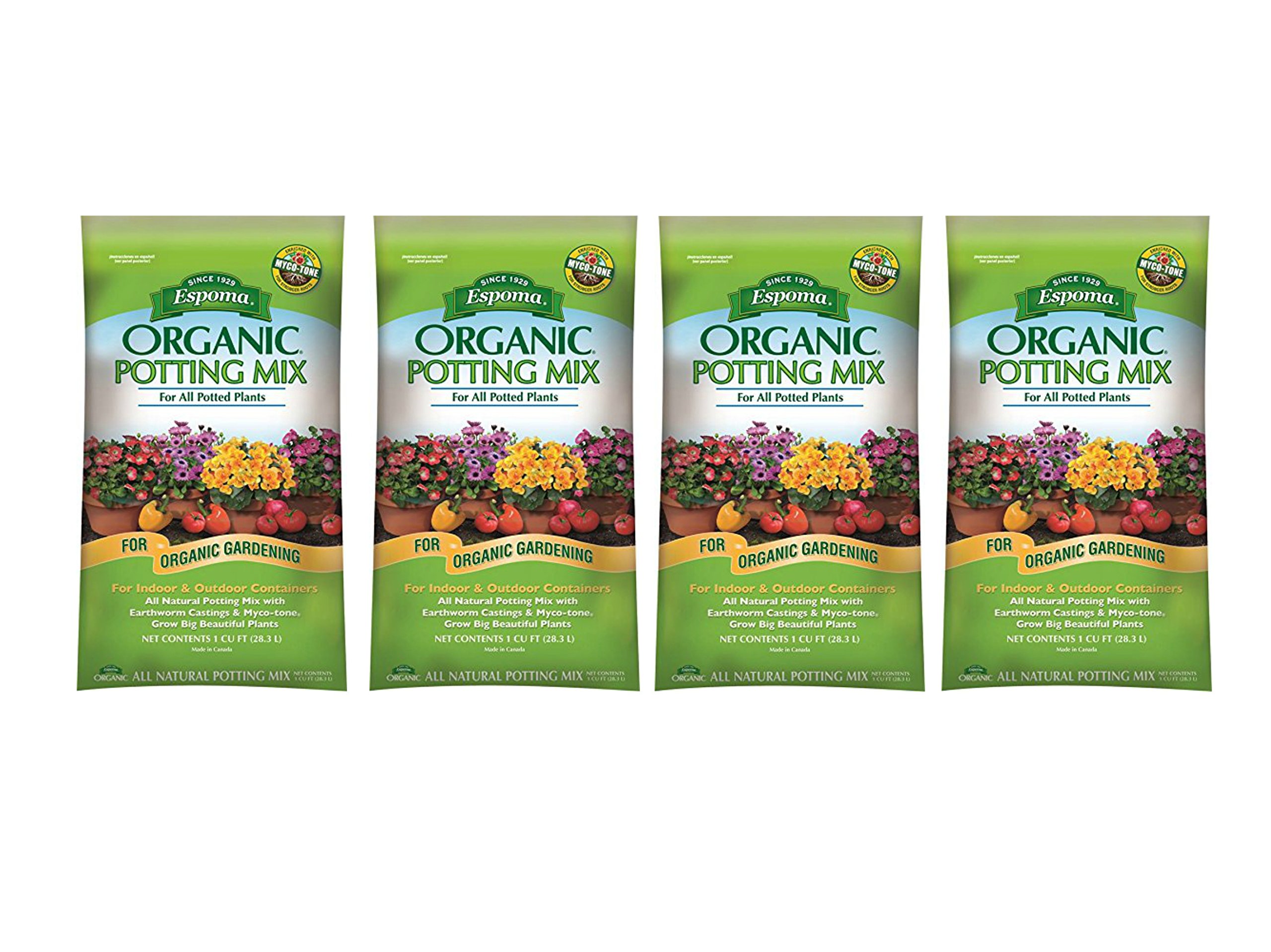
Four smaller bags of the same Espoma organic formula let you open one at a time, keeping the rest sealed and fresh for later planting.
This is the multi-pack version of the Espoma AP2 formula (sphagnum peat moss, humus, perlite, earthworm castings, alfalfa meal, kelp meal, feather meal, and Myco-Tone) but in 16-quart bags instead of the single 2-cubic-foot bag. The four-pack gives you flexibility—you can open one bag at a time and keep the others sealed for later use.
Reviews are mixed: several reviewers point out it is “high quality” and “one of the best,” but there is a notable complaint that some bags are hydrophobic (they repel water) and do not absorb moisture easily. One reviewer gave it 1 out of 5 stars for that exact reason. Another mentioned the pictures are misleading because they show 1-cubic-foot packages while the listing is actually 16-quart bags.
The multiple bags at a reasonable per-unit price can make this a good option for gardeners starting several containers at once, but the hydrophobicity issue means you should wet the soil slowly before planting.
Why buy the 4-pack
- Same well-regarded Espoma organic formula with Myco-Tone.
- Individual 16-quart bags are easier to carry than a single 2-cubic-foot bag.
- Good for multiple container projects without one giant open bag.
The catch you need to know
- Some shoppers say hydrophobic soil that repels water—requires slow, careful watering to rehydrate.
- Packaging photos can mislead buyers about the bag size.
Best if: you trust the Espoma organic formula and want the convenience of four smaller bags for staggered planting. Pass if: you are worried about hydrophobic soil or want a single larger bag—the single 2-cubic-foot option may suit you better.
7. Lambert Potting Mix (8 Quarts)
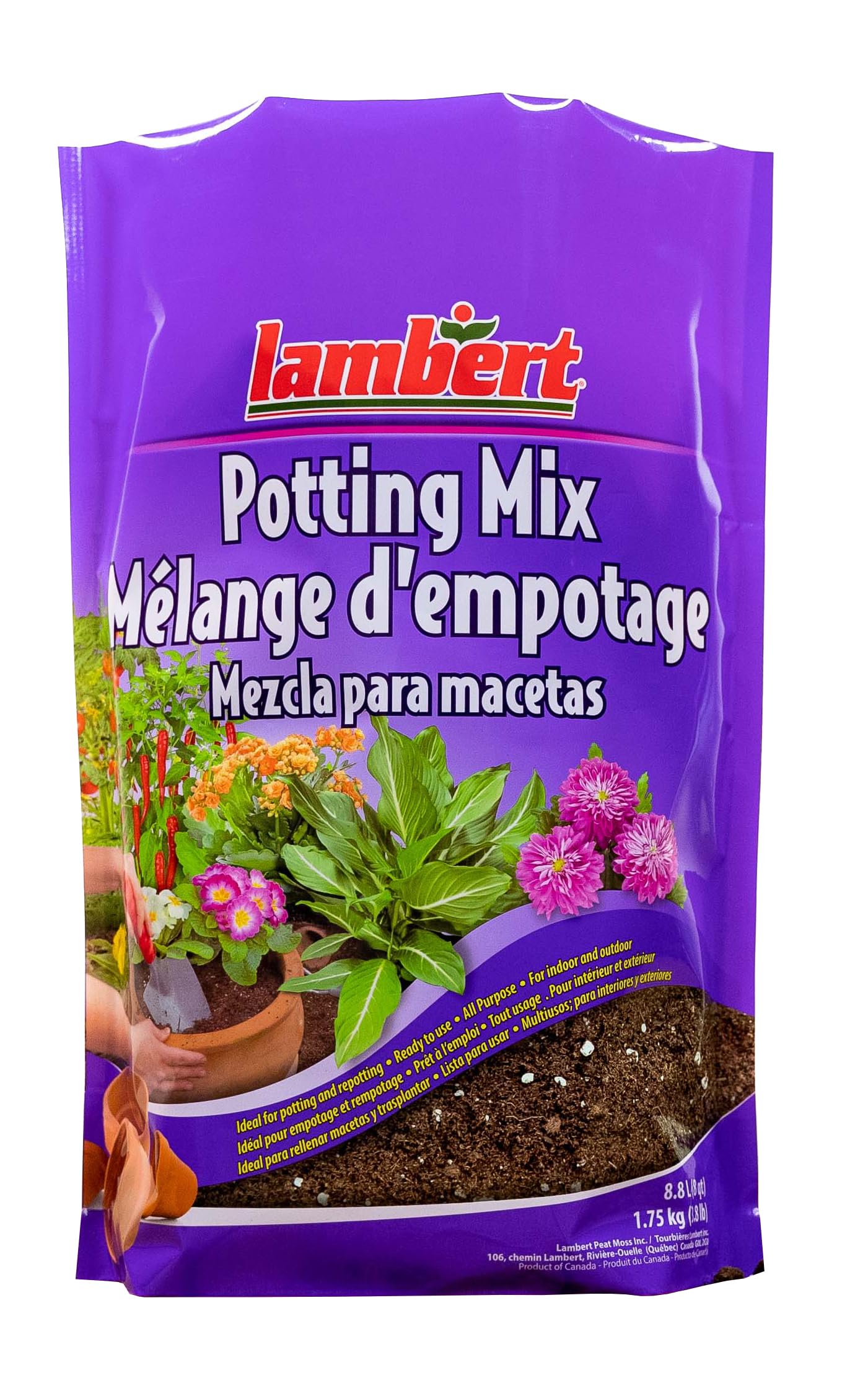
At 8 quarts and 1.75 kg, this is the smallest and lightest bag here—perfect for a single pot or window box, but you will need to add your own fertilizer.
Lambert Potting Mix is a straightforward all-purpose blend: peat moss and perlite, ready to use straight from the bag. At 8 quarts versus the 20-quart Vermont Compost bag, it fits small pots and window boxes. It weighs just 1.75 kg (about 3.9 pounds), making it the lightest option here.
One buyer mentioned their houseplants were “weak and hanging lifeless” before repotting; after using Lambert they came back “to life and are thriving.” Other buyers report it is “clean and consistent with no cheap fillers” and works well for seed starting, though they recommend sifting if you use it for tiny seeds. The catch is that this mix needs added fertilizer for sustained tomato growth—it is a “starter” soil, not a complete feed. Plan to add a balanced tomato fertilizer after the first few weeks.
The value proposition is clear: for a single pot or a small patio container, this is the cheapest way to get quality drainage without buying a giant bag you will not use.
What you get for the money
- Clean, consistent texture with no cheap fillers—reviewers praise the quality.
- Lightweight at 1.75 kg—easiest bag to carry and pour.
- Quick plant recovery: one buyer saw “weak and hanging lifeless” plants revive in just days.
What it does not do
- No added fertilizer—you must feed your tomatoes separately.
- Only 8 quarts, which is small for a single large tomato pot.
Best for: a single container or for gardeners who like to control their own fertilizer mix and want a clean, affordable base. Not the right choice if: you want a “fill and forget” soil that feeds for months or need to fill multiple large pots.
Understanding the Specs
Volume: How Much Do You Actually Need?
A standard 5-gallon tomato pot needs about 12-16 quarts of soil to fill. An 8-quart bag fills a 3-gallon pot, while a 20-quart bag fills a 5-gallon pot with room to spare. The bigger the volume, the fewer bags you need. Compare the Vermont Compost at 20 quarts versus Lambert at 8 quarts—you will feel that difference when filling multiple pots.
Weight: What “Lightweight” Really Means
A 42-pound bag (FoxFarm Happy Frog) is a workout to carry and pour. A 21-pound bag (Coast of Maine) is much easier. The Lambert at 1.75 kg (about 3.9 lbs) is the lightest. If you have mobility limits or carry soil up stairs, weight matters as much as volume.
Mycorrhizae vs Myco-Tone
Both are fungi that attach to roots and help the plant absorb more water and nutrients from the soil. Some bags (Espoma, FoxFarm) add them pre-mixed, so you get the benefit without buying a separate root booster. If your bag does not have them, you can buy a powder to mix in—but having them built in is simpler.
Compost Base vs Peat Base
Compost-based soils (Vermont Compost, Coast of Maine) release nutrients steadily as microbes break down organic matter. Peat-based soils (Lambert, Miracle-Gro) rely on added fertilizer or on you to feed the plant. Compost-heavy mixes often hold more moisture but can be chunkier; peat mixes are cleaner but need more frequent feeding.
FAQ
Can I use garden soil from my yard in a container for tomatoes?
How much potting soil do I need for one tomato plant in a 5-gallon pot?
Do I need to add fertilizer right away or is it already in the soil?
What is the difference between potting soil and potting mix?
Can I reuse old potting soil from last year for new tomatoes?
Why does some potting soil smell like manure?
Is organic potting soil better for tomatoes in containers?
Will FoxFarm Happy Frog work for seeds, or is it only for transplants?
Final Thoughts: The Verdict
For most container tomato growers, the best potting soil for tomatoes in containers is the FoxFarm Happy Frog because its mycorrhizal fungi and microbe-rich formula give confined roots the best chance to expand and absorb nutrients without extra work from you. If you want a lightweight, compost-based option that is easier to carry and handles heirloom varieties well, go for the Coast of Maine Vegetables & Tomatoes. And for budget-conscious gardeners who just need a clean base and plan to add their own fertilizer, the Lambert Potting Mix delivers on the basics for a single small pot.
How We Picked
We do not accept paid placement. Every pick is matched to a real buyer and a real use-case; we do not hands-on test units.
Sources & Methodology
Specifications: manufacturer listings and product documentation. Review insights: verified customer reviews, as of July 2026. Pricing: not shown on this page (it changes often); check the current price via the retailer link.
As an Amazon Associate, Lawn Gear Lab earns from qualifying purchases. This does not affect which products we feature.