
Snake plants are nearly indestructible until you drown them in standard potting soil that packs too dense and holds water like a sponge. The single most common killer of Sansevieria isn’t neglect — it’s compaction and moisture retention in a mix designed for ferns. Choosing a substrate that stays chunky, drains rapidly, and dries out between waterings is the difference between a plant that merely survives and one that pushes new pups every season.
I’m Rikta — the co-founder and writer behind Lawn Gear Lab. For this guide, I’ve analyzed the ingredient lists, particle sizes, pH ranges, and hundreds of verified owner reports across seven commercial mixes to isolate the ones that actually match the skeletal root system of a snake plant.
Whether you are repotting a thirty-year-old Laurentii or propagating a handful of cuttings, the right medium keeps the roots breathing and prevents yellowing leaves. This is the definitive guide to the potting soil for snake plants.
How To Choose The Best Potting Soil For Snake Plants
Snake plants store water in their thick rhizomes and fleshy leaves, meaning they tolerate drought far better than wet feet. The right potting soil must physically resist compaction and allow water to pass through quickly rather than pooling around the root zone. Below are the four criteria that separate a proper Sansevieria mix from a generic one.
Texture and Particle Size
Standard peat-based mixes collapse over time, turning into a dense paste that starves roots of oxygen. Look for a mix that contains visible chunks: perlite, pumice, coarse sand, pine bark fines, or coconut coir chips. The grains should feel sharp and gritty between your fingers, not silty or flour-like. A chunky structure creates macro-pores that let water drain within seconds and air circulate freely.
Moisture Retention vs. Drainage
You need a formula that holds enough moisture for the roots to drink but releases the excess within minutes. Ingredients like peat moss and vermiculite lean toward high water-holding capacity, which can be risky without a heavy dose of perlite or sand. Coco coir offers a better middle ground: it retains moisture yet remains airy. The best mixes tip the scale toward drainage rather than retention for Sansevieria.
pH and Nutrient Profile
Snake plants prefer a slightly acidic to neutral pH range between 5.5 and 7.0. Most pre-blended succulent soils land in that band. Avoid mixes that contain slow-release synthetic fertilizers; snake plants are light feeders and can develop burned leaf tips from high salt levels. Organic amendments like worm castings or compost provide gentle nutrition without the risk of chemical overload.
Bag Size and Value Per Quart
Sansevieria root systems are shallow and compact, so a 4-quart bag typically fills one 8-inch pot with some leftover for top-dressing. Larger bags make sense if you have multiple plants, but the smallest bag is often the smart buy for a single repotting. The key metric is cost per quart relative to ingredient quality — premium hand-blended mixes cost more but save you from the expense of root rot treatments later.
Quick Comparison
On smaller screens, swipe sideways to see the full table.
| Model | Category | Best For | Key Spec | Amazon |
|---|---|---|---|---|
| Perfect Plants Organic Snake Plant Soil | Mid-Range | Dedicated snake plant care | Coco coir, bark, perlite, sand | Amazon |
| rePotme Snake Plant Imperial (Standard) | Premium | Largest bag, conservatory-grade | 8 quarts handcrafted mix | Amazon |
| Rosy Soil Cactus & Succulent Mix | Premium | Peat-free living soil | Microbes, worm castings, chunky | Amazon |
| Jessi Mae Potting Soil | Mid-Range | Organic slightly acidic blend | Perlite, hand-mixed in USA | Amazon |
| Hoffman Organic Cactus & Succulent Soil Mix | Budget | Best-selling, widely available pick | Ready-to-use, pH balanced formula | Amazon |
| Midwest Hearth Premium Potting Mix | Budget | Multi-purpose with added perlite | Peat, perlite, vermiculite | Amazon |
| Miracle-Gro Succulent Potting Mix | Budget | Entry-level ready-to-use | Peat moss, forest products, food | Amazon |
In‑Depth Reviews
1. Perfect Plants Organic Snake Plant Soil

This mix was formulated specifically for Sansevieria, and it shows in the ingredient breakdown. Coconut coir provides a lighter base than peat moss, while pine bark chips, perlite, and coarse sand create the sharp drainage snake plants demand. The absence of slow-release fertilizer is a deliberate strength — you control feeding, and the roots never sit in a salt bath. Owners consistently report that plants push new growth within weeks of repotting.
The texture stays airy even after multiple waterings, resisting the collapse that turns many commercial succulents mixes into mud. A 4-quart bag is enough for one standard 8-inch nursery pot or two smaller containers. The resealable pouch keeps leftover mix fresh for top-dressing or future propagation projects.
Some users note that the price per quart is higher than general-purpose soils, but the targeted formulation eliminates the need to buy extra perlite or sand to amend it. For anyone who wants a grab-and-go solution that requires zero mixing, this is the most reliable option on the shelf.
What works
- Exact particle size for snake plant aeration
- No synthetic fertilizer to burn roots
- Consistent, repeatable quality across batches
What doesn’t
- Small bag size feels expensive per quart
- Not ideal for plants that like consistently moist soil
2. rePotme Snake Plant Imperial Houseplant Mix (Standard)
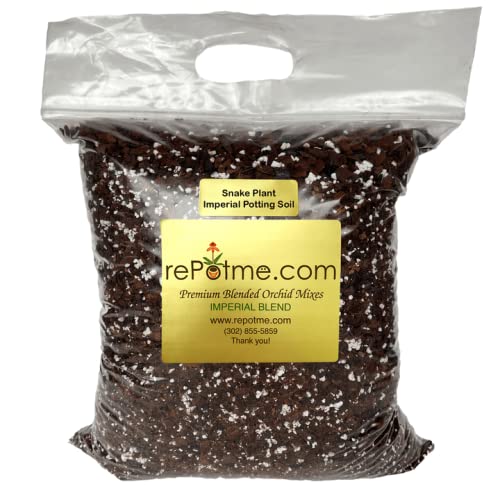
rePotme blends its Imperial mix fresh in small daily batches, sourcing what the brand describes as “the finest ingredients from all over the world” rather than publishing a fixed recipe on the listing. The strongest selling point is trust rather than a specific formula: rePotme markets this line as the same mix used by some of the largest conservatories and botanic gardens in the world, and the resealable, high-quality pouch is built to keep unused substrate viable for future top-dressing or propagation.
The 8-quart standard bag is unusual in the snake plant category, where most specialty soils cap at 4 quarts. If you have a collection of larger pots or want to standardize your soil across multiple Sansevieria species, this single bag eliminates the need to buy duplicate small pouches. The resealable packaging includes a plant care tag and a small butterfly clip as a thoughtful extra.
The biggest hesitation for most buyers is the upfront investment. A single standard bag costs roughly what you would pay for two to three bags of mid-range mix. However, for growers who value ingredient transparency and who have experienced root rot from cheaper soils, the long-term plant health gains justify the premium.
What works
- Botanical-garden grade ingredients and mixing consistency
- Large 8-quart volume for multi-plant households
- Exceptional drainage with no need for amendments
What doesn’t
- Highest price point in this comparison
- Bag size may be excessive for a single small pot
3. Rosy Soil Cactus & Succulent Potting Mix
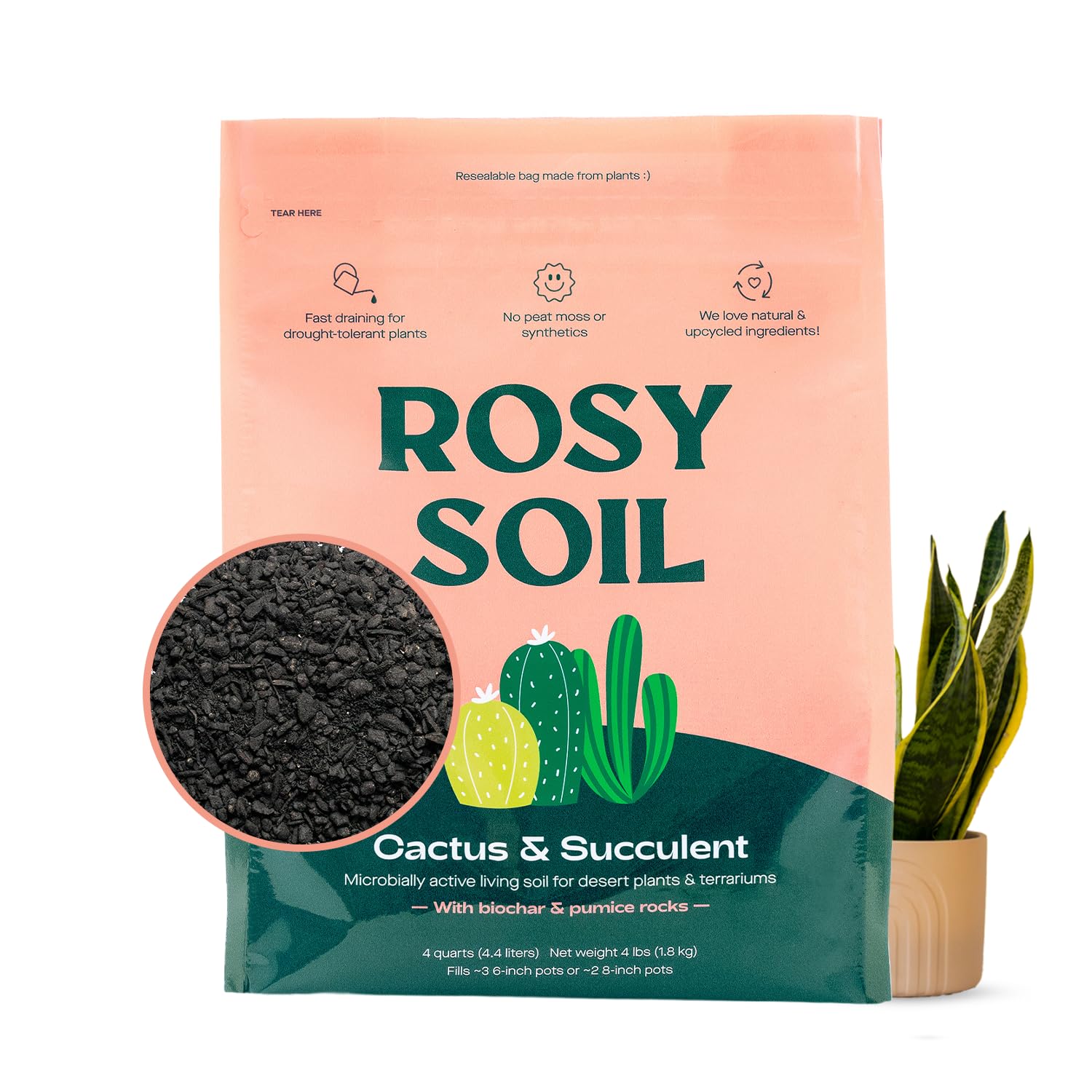
Rosy Soil completely omits peat moss, replacing it with a chunky blend of coco coir, pumice, and horticultural grit that feels almost like a gritty succulent mix rather than a traditional potting soil. The inclusion of live beneficial microbes and worm castings means this mix actively supports root health without synthetic additives. Owners who have dealt with fungus gnats from peat-heavy bags often find this formula keeps the soil surface dry enough to break the gnat life cycle.
The texture is aggressive — coarse enough that water runs through in seconds rather than pooling. For snake plants, this is exactly the right characteristic. Reviews consistently mention that even chronic over-waterers see yellow leaves stop appearing after switching to this mix. The 4-quart bag is plastic-neutral and printed with clear instructions, making it friendly for first-time repotters.
A small percentage of users add extra perlite or bonsai soil to increase grit further for very old, thick-rooted specimens. Straight out of the bag, however, the mix works well for the vast majority of Sansevieria varieties. The microbial activity means the soil stays biologically alive rather than inert, which can help buffer minor pH shifts.
What works
- Peat-free formula drains fast and resists compaction
- Pre-loaded microbes and worm castings feed roots naturally
- Clean, no-bug reputation from verified buyers
What doesn’t
- May need extra grit for very mature or thick-rooted specimens
- Resealable bag tab can be tricky to close fully
4. Jessi Mae Organic Potting Soil

Jessi Mae’s mix is hand-mixed in small batches with a texture that feels noticeably lighter and fluffier than mass-produced bagged soil. The inclusion of ample perlite creates air pockets that snake plant roots can spread through without resistance, and the brand markets the blend as slightly acidic, a pH lean that mirrors the native soil conditions where Sansevieria grow in the wild and can help roots absorb micronutrients like iron and manganese more efficiently.
One quirk that multiple reviewers mention is a strong earthy smell upon opening the bag. The odor dissipates within a day or two after potting, and it is simply a byproduct of the fresh organic matter rather than a sign of spoilage. The soil is free of synthetic chemicals, which makes it suitable for peace lilies and ivy as well as snake plants if you keep a few different houseplants.
The 4-quart bag is compact, and some first-time buyers are surprised by the small footprint. For a single snake plant repotting it is exactly the right amount. The price per quart sits in the middle tier, offering organic credentials without reaching the top-tier premium of the rePotme line.
What works
- Light, fluffy texture with plenty of perlite
- Slightly acidic pH good for Sansevieria nutrient uptake
- Hand-mixed quality with batch-to-batch consistency
What doesn’t
- Strong organic smell for the first 24-48 hours
- Small bag volume surprises some buyers
5. Hoffman Organic Cactus & Succulent Soil Mix

Hoffman is one of the most widely reviewed cactus and succulent soils on Amazon, and the listing markets it as a ready-to-use, pH-balanced formula professionally formulated for jungle and desert cacti. It ships prime-eligible with a consistently active buy box, so availability has never been the issue with this one — popularity has kept it a fixture on garden center and Amazon shelves alike.
Because Hoffman’s formula is built as a general cactus and succulent mix rather than a snake-plant-specific blend, it leans slightly denser out of the bag than the dedicated Sansevieria mixes higher on this list. Growers repotting snake plants should stir in extra perlite or pumice before use to push the drainage profile closer to what a skeletal rhizome system wants.
Where it wins is accessibility and track record: a huge base of verified buyers, frequent restocks, and a price point that undercuts most of the specialty bags here. For a first repotting or for gardeners who want a dependable, easy-to-find base mix they can amend themselves, it’s a sensible budget entry point.
What works
- One of the best-selling, most-reviewed cactus mixes on Amazon
- Ready-to-use and pH balanced straight from the bag
- Widely stocked with reliable availability
What doesn’t
- General-purpose cactus formula, not tuned to snake plant particle size
- Benefits from added perlite or pumice for ideal Sansevieria drainage
6. Midwest Hearth Premium Potting Mix

Midwest Hearth uses a classic three-part blend of sphagnum peat moss, perlite, and vermiculite, which gives the mix a light, fluffy feel straight from the bag. The pH is balanced to a neutral range, making it safe for a broad spectrum of plants. For snake plants, this mix works best when you monitor watering closely — the vermiculite component increases water retention compared to pure peat-and-perlite blends.
Several reviewers use this as their standard all-purpose soil, amending it with extra perlite for succulents and cacti. If you prefer a single soil for multiple houseplant types, this bag gives you the flexibility to adjust the ratio yourself. The 4-quart bag is resealable and made in the USA, and the texture stays workable even after opening.
The main drawback for snake plant owners is the inherent moisture-holding capacity of the vermiculite. In a pot without excellent drainage or in the hands of an over-waterer, this mix can stay damp longer than a dedicated succulent blend. Adding a handful of coarse sand or pumice before potting solves that issue cheaply.
What works
- Light, fluffy texture with good initial aeration
- Versatile base for blending your own custom mix
- Made in the USA with resealable packaging
What doesn’t
- Vermiculite holds too much moisture for snake plants alone
- Needs amendment (perlite/sand) for ideal Sansevieria drainage
7. Miracle-Gro Succulent Potting Mix

Miracle-Gro’s succulent mix is arguably the most widely available bag on the shelf, and its low barrier to entry makes it a common first purchase for new snake plant owners. The blend is primarily sphagnum peat moss and processed forest products with added fertilizer. The texture is finer than dedicated snake plant soils, and the peat base tends to hold water longer than coco coir or bark-heavy blends.
Many experienced growers add perlite or coarse sand to this mix before potting Sansevieria to improve drainage. Proper watering technique — waiting until the soil is completely dry — can compensate, but beginners often find this mix leaves little margin for error.
On the positive side, the price is hard to beat for a quick repotting job. The bag fills one 8-inch container, and the included plant food provides a small nutrient boost for the first month. For someone who waters infrequently and already understands the dry-cycle needs of snake plants, this is a functional starting point.
What works
- Extremely accessible and widely available
- Affordable price point for a single pot
- No odor and easy to work with straight from the bag
What doesn’t
- Peat-based formula retains too much moisture for snake plants
- Requires added perlite or sand to prevent root rot
- Included fertilizer can burn sensitive roots over time
Hardware & Specs Guide
Coco Coir vs. Peat Moss Base
Coco coir wets faster, holds air longer, and does not form a hydrophobic crust the way peat moss does after drying out. For snake plants, a coir-based mix provides more consistent moisture release and resists compaction during the year-long period between repottings. Peat-moss bases are cheaper but require more frequent amending with perlite to achieve the same drainage profile.
The Role of Perlite and Pumice
Perlite and pumice create physical air pockets that allow excess water to exit the root zone within seconds. The ideal volume of these components in a snake plant mix is roughly 30 to 40 percent of the total volume. Bagged soils that list perlite near the bottom of the ingredients likely contain less than 15 percent, which is insufficient for Sansevieria.
FAQ
Can I use regular potting soil for snake plants?
How often should I repot my snake plant into fresh soil?
What is the ideal pH range for snake plant potting soil?
Final Thoughts: The Verdict
For most gardeners, the potting soil for snake plants winner is the Perfect Plants Organic Snake Plant Soil because it uses coco coir, bark, perlite, and sand in the exact proportions Sansevieria needs and contains no synthetic fertilizer that could burn roots. If you want a peat-free living soil with microbial benefits, grab the Rosy Soil Cactus Mix. And for a large-volume conservatory-grade option, nothing beats the rePotme Imperial Standard Bag.