
Specs are compiled from manufacturer listings and verified buyer reviews and can change over time — please confirm the key details on the product page before buying.
Your Monstera’s roots need air just as much as they need water. But the wrong mix — dense garden soil that traps moisture — quickly turns leaves yellow, rots roots, and leaves you with a drooping plant that is hard to fix. You need a chunky, fast-draining aroid mix that mimics the tree bark and forest floor where Monsteras grow wild.
I’m Rikta — the founder and writer behind Lawn Gear Lab. This guide is built by comparing the manufacturers’ published specifications and the patterns across verified customer reviews, so you get each pick’s real strengths and trade-offs instead of marketing spin.
After looking at the specs and real owner experiences, these six mixes stand out as smart choices for keeping your Monstera healthy. This is your complete guide to the best potting soil for monstera plants on the market today.
Quick Picks
- Rosy Soil Aroid Soil Mix — Top Performer
- Top Tier Genetics AROID Matrix (4 QT) — Best Value
- Gardenera Premium Monstera Potting Soil — Compact Pick
- Top Tier Genetics Premium AROID Soil Blend — Growth Boost
- Grow Queen Craft Aroid Potting Mix (2 QT) — Eco Choice
- Grow Queen Craft Aroid Potting Mix (8 QT) — Collection Size
How To Choose The Best Potting Soil For Monstera
Monsteras are epiphytic aroids — in the wild, they grow up trees with their roots exposed to constant airflow. The main job of a potting mix is to recreate that breathable, fast-draining environment. Here is what to check before you buy.
Chunkiness and Aeration
The single most important quality is texture. A good Monstera mix has visible chunks — pine bark fines, pumice (a volcanic rock that adds air pockets), lava rock, or coco husk — that create air pockets. If the mix looks like fine coffee grounds, water will pool around the roots and rot them.
Moisture Control Ingredients
You need ingredients that hold some water without staying soggy. Coco coir (fiber from coconut husks) and peat moss (partially decomposed sphagnum moss) are common choices, but too much of either turns the mix into a swamp. Look for balances like coir plus bark, or coir plus pumice. Some premium mixes use biochar (a charcoal-like material), which holds onto nutrients and releases them slowly.
Volume Per Bag
Monstera soil is sold in quarts and ounces, and the difference is significant. A 1-quart bag fits a small 5-inch pot nicely, while an 8-quart bag handles multiple large repots. Check the unit count — 37 ounces versus 128 ounces — before you order, especially if you have a big plant or several pots to fill.
Quick Comparison
| Model | Best For | Volume | Texture | Key Ingredient | Amazon |
|---|---|---|---|---|---|
| Rosy Soil Aroid Mix | Premium all-around performance | 4 Quarts | Chunky (pine bark, pumice) | Biochar, mycorrhizae | Amazon |
| Top Tier Genetics Aroid Matrix 4QT | Large pots and multiple plants | 4 Quarts | Chunky (orchid bark, pumice) | Worm castings, mycorrhizae | Amazon |
| Gardenera Premium Monstera Soil | Budget single-plant repot | 1 Quart | Chunky (bark, perlite, coir) | Biochar, worm castings | Amazon |
| Top Tier Genetics Aroid Matrix 2QT | Smaller aroids | 2 Quarts | Chunky (orchid bark, pumice) | Worm castings, mycorrhizae | Amazon |
| Grow Queen Craft Aroid Mix 2QT | Peat-free, small pot collection | 2 Quarts | Chunky (fir bark, lava rock) | NZ tree fern fiber | Amazon |
| Grow Queen Craft Aroid Mix 8QT | Large collection peat-free | 8 Quarts | Chunky (fir bark, lava rock) | NZ tree fern fiber | Amazon |
In‑Depth Reviews
1. Rosy Soil Aroid Soil Mix
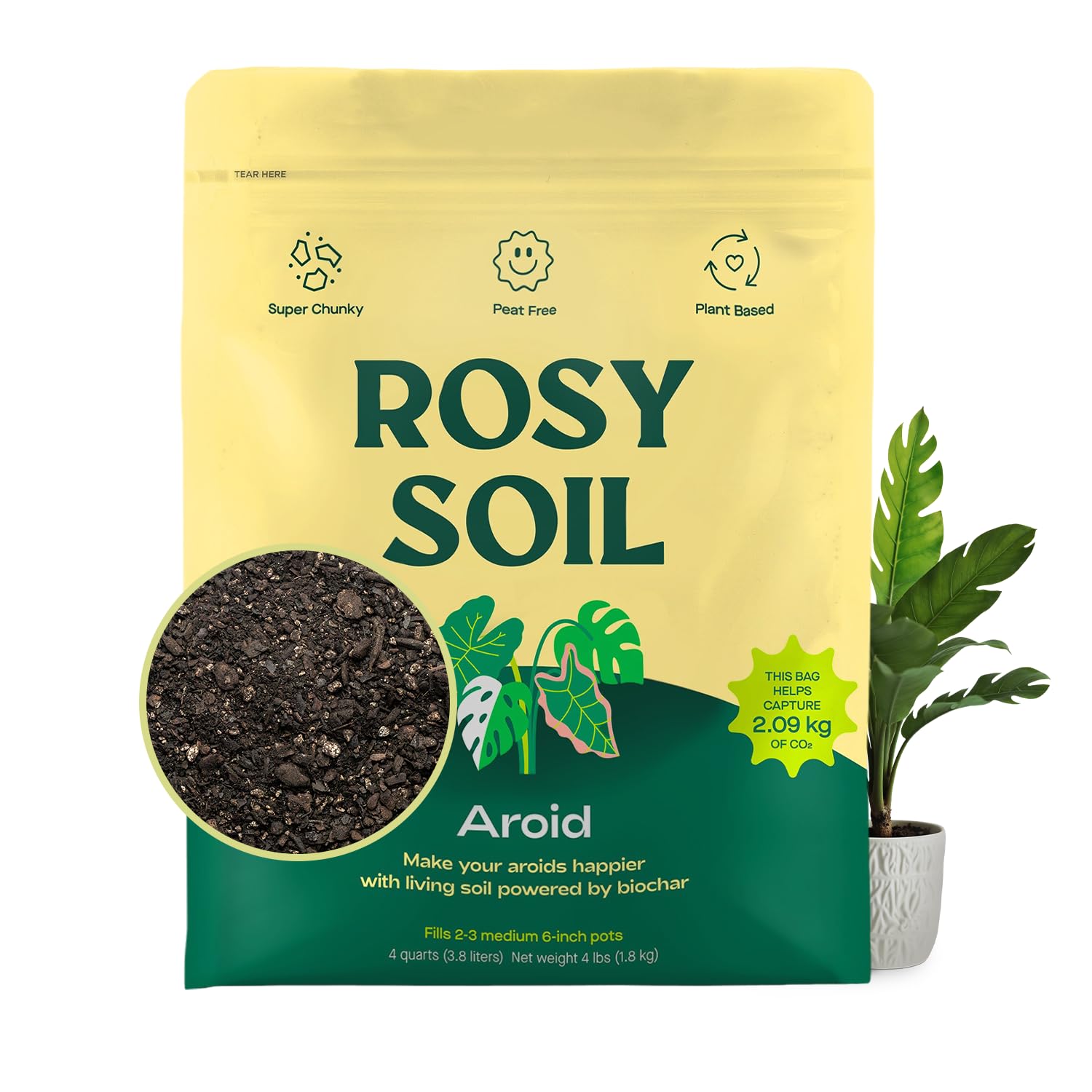
A living, breathing soil that feeds roots long after the bag is sealed.
Your Monstera’s roots get constant airflow here because the chunky texture uses pine bark fines, pumice (volcanic rock that lightens the mix), and biochar (a charcoal-like material). The biochar is not just filler — the brand says it is carbon-negative by design and boosts nutrient retention by holding onto nitrogen and phosphorus longer, so you water less often without starving the plant.
Buyers report that their plants “put out new growth & NO gnats to be seen” within two weeks of switching to this mix. Several note that even after switching from premium brands like Ocean Forest, they saw immediate improvement. One owner mentions the resealable bag is “really hard to close” — a small hassle versus the strong plant results.
Rosy Soil skips peat entirely, using biochar and volcanic pumice instead, making it among the most eco-conscious picks here while still delivering the fast drainage Monsteras demand. Unlike the Gardenera 1-quart bag, this 4-quart bag handles a medium Monstera plus a backup repot.
Why it stands out
- Microbially active with biochar and mycorrhizae (beneficial root fungi) for long-term root health
- Peat-free and carbon-negative by design
- Chunky texture drains fast without staying soggy
The small trade-off
- Resealable bag is tricky to close properly
- May feel pricey for a single small pot
Reach for this if: You want a premium, eco-friendly mix that keeps your Monstera thriving without guesswork.
Look elsewhere if: You only need a tiny amount for a single small pot and want to spend less.
2. Top Tier Genetics AROID Matrix (4 QT)
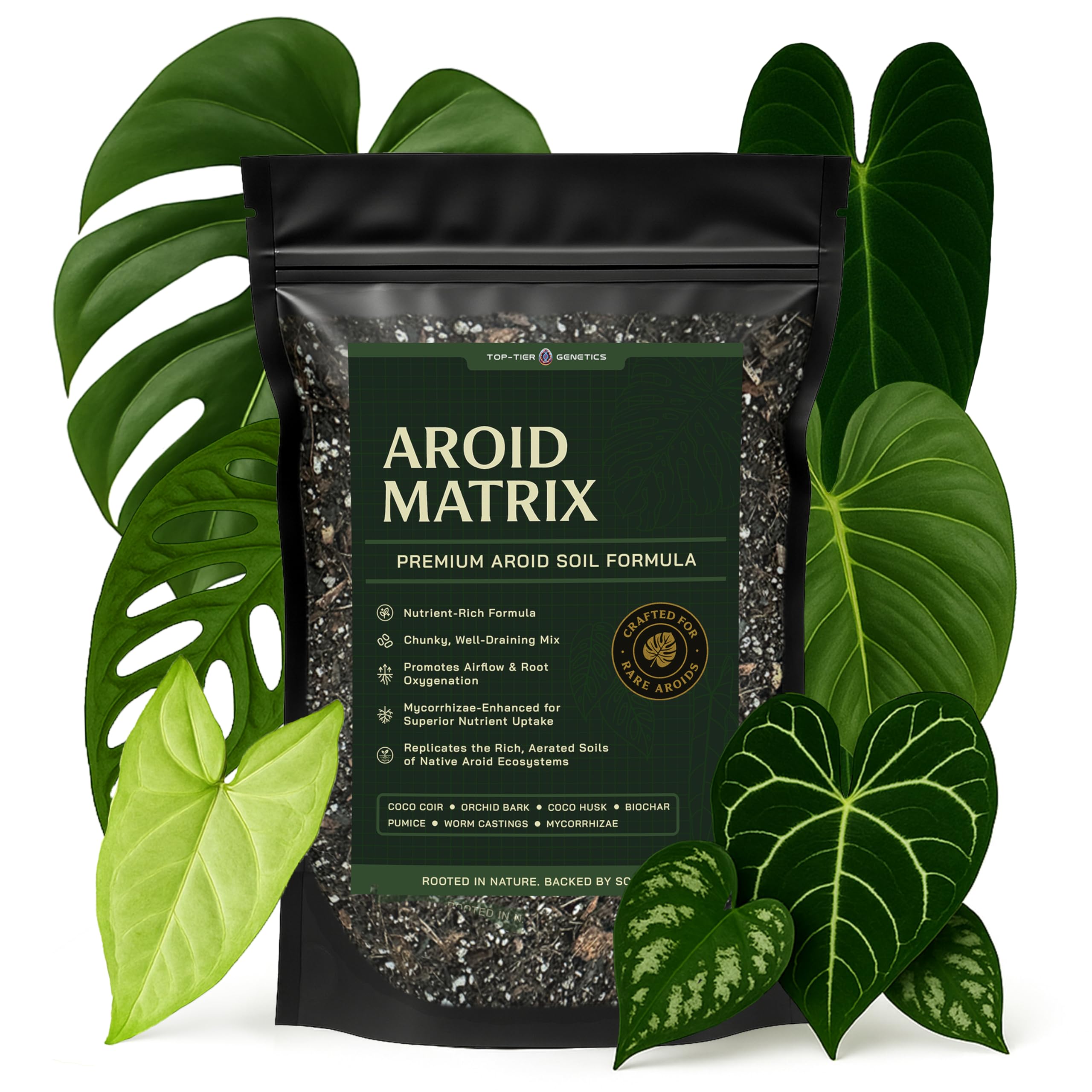
The big bag that keeps your whole aroid collection fed and aired.
This 4-quart bag handles multiple repots or one large Monstera upgrade — 73% more volume than the 2-quart version from the same brand. The blend uses orchid bark, coco husk, and pumice for drainage, plus worm castings (composted worm waste rich in nutrients) and mycorrhizae (root-benefiting fungus) to fuel root growth. Unlike the 1-quart Gardenera mix, this gives you enough soil for larger containers without needing two or three bags.
Buyers point out that “plants take off after repotting in this mix,” and one owner with a large collection noted that the mix is “airy, fresh-smelling, and perfectly textured.” It comes ready to use straight from the bag, so you skip mixing your own perlite and bark.
One honest note from reviews: if you are repotting extra-large containers, a single 4-quart bag may not be enough — you might need a second or third bag. But for most medium Monsteras, this is the balance of volume and price.
The big perks
- Generous 4-quart volume at a mid-range cost
- Balanced moisture control with coco coir and pumice
- Worm castings and mycorrhizae for strong foliage growth
Watch out for
- One bag may not fill extra-large pots
- Same formula as the smaller bag, no unique upgrade
Best for: Medium to large Monstera plants and anyone repotting several aroids at once.
skip it if: You only have a single small plant and want the smallest possible bag.
3. Gardenera Premium Monstera Potting Soil

The small-bag specialist that fits a single pot and a tight budget.
At just 1 quart (37 ounces), this bag is 73% less volume than the Top Tier Genetics 2QT bag (64 ounces), so it suits a single pot up to about 5 inches. One buyer reports: “This bag gave me enough to fill a 5 inch pot and then some.” The mix blends organic aged bark, coco coir, perlite (a volcanic glass that improves drainage), and IBI-certified biochar (a charcoal-like material certified by the International Biochar Initiative) to prevent brown spots and root rot.
What sets Gardenera apart from generic bagged soil is the sterilization — each bag is certified sterile and non-toxic, so you are not introducing pests or pathogens to your plant. Buyers consistently say their Monsteras are “thriving” after repotting and that “water absorption is phenomenal.”
If you have a larger Monstera in an 8-inch or 10-inch pot, this bag will leave you short and needing a second bag. Keep it for starter plants or small upgrades.
What works
- Sterilized bag prevents pests and pathogens
- Resealable bag stores easily for future use
- Balanced drainage from bark, perlite, and coir
The catch
- Small 1-quart volume does not suit large pots
- Peat moss in the blend may be heavier than bark-only mixes
Perfect for: A single small Monstera repot or a budget-friendly first bag to test a mix.
Not for: Large established Monsteras or anyone repotting multiple plants at once.
4. Top Tier Genetics Premium AROID Soil Blend (2 QT)
A targeted aroid formula that owners mention turns foliage vibrant in days.
This is the same Aroid Matrix blend as the 4-quart bag above, but in a 2-quart size that is easier to store and more affordable for single-plant owners. With 64 ounces of mix, it holds 73% more material than the 37-ounce Gardenera bag, giving you a meaningful volume advantage when repotting a medium Monstera.
The breakout reviewer quote here is telling: “Since switching to Aroid Matrix, I’ve noticed explosive root growth and healthier, more vibrant foliage on my Monstera, Philodendrons, and Anthuriums.” Multiple buyers mention the mix is “ready to use right out of the bag” with no mixing needed, thanks to a balanced blend of orchid bark, coco husk, pumice, biochar, and worm castings.
A fair word from buyers: if you are repotting large containers, one 2-quart bag will not cut it — you may need two or three. For most standard 6-inch to 8-inch pots, this is the right amount.
Why it wins
- Buyers consistently report explosive root and foliage growth
- Excellent drainage and airflow from bark and pumice
- Biochar increases microbial life and nutrient retention
Limitation
- Not enough volume for large repots or multiple plants
- Same blend as the 4QT version, just smaller
Go for it if: You want a ready-to-use, growth-boosting mix for a single medium Monstera.
Choose something else if: You need to repot several plants or a very large specimen.
5. Grow Queen Craft Aroid Potting Mix (2 QT)
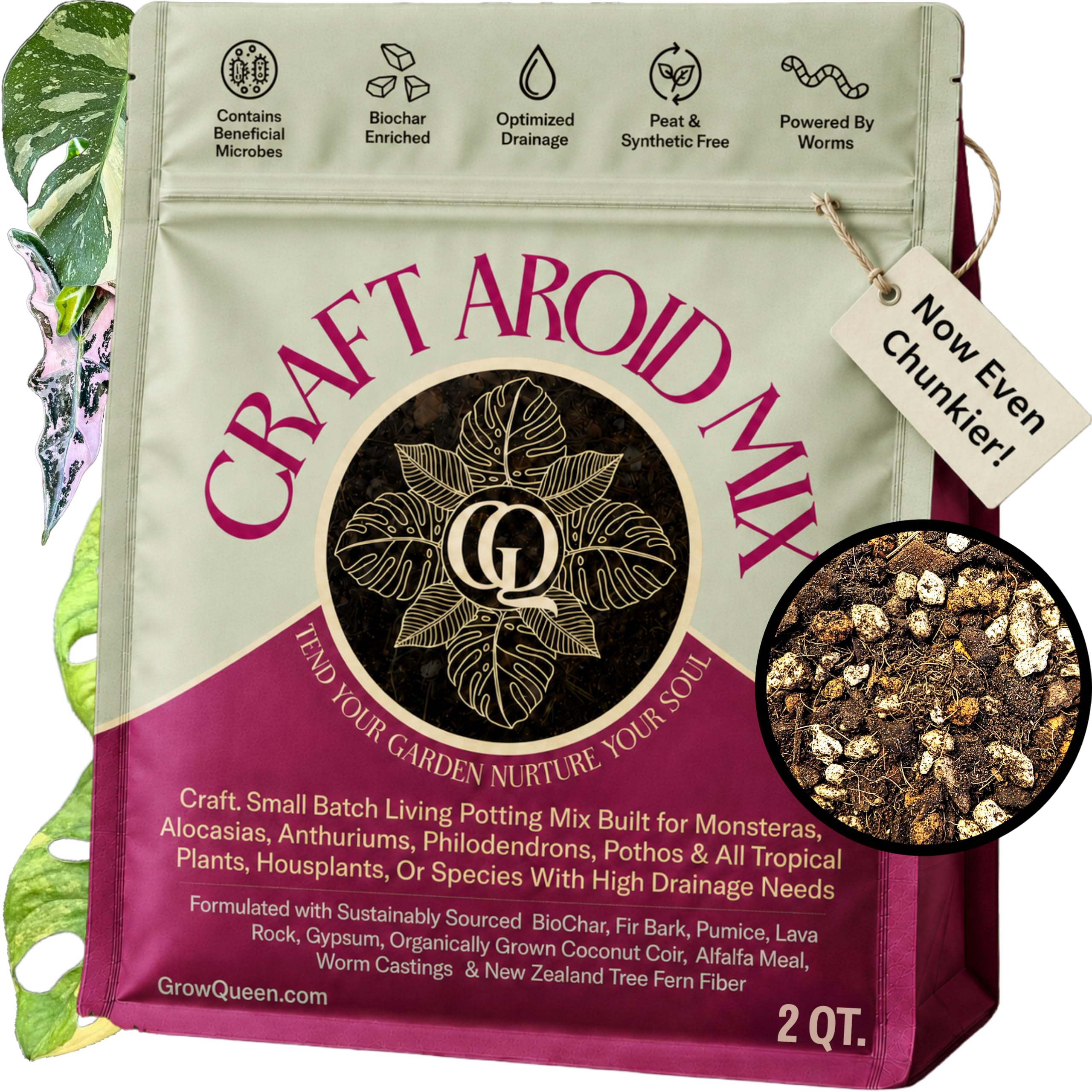
Peat-free and perlite-free, with a secret ingredient from New Zealand.
Grow Queen’s Craft Aroid Mix skips both peat and perlite, using Douglas fir bark fines, lava rock, and pumice for aeration, plus New Zealand Tree Fern Fiber (a natural soil conditioner from tree ferns) to neutralize pH down to 6.0 — mimicking the natural pH of tropical soil. The 2-quart bag is comparable in size to the Top Tier Genetics 2QT version, but the ingredient focus is different: eco-friendly, sustainably sourced coco coir that is washed more times than competitors to remove salt. It is peat-free, so it drains faster and avoids the environmental impact of peat harvesting.
Buyers rave about the texture: “The mix is light yet chunky, drains well, and keeps my plants healthy and happy.” One owner with multiple orders says they have “no bugs, no mold, perfectly chunky and breathable” across five separate purchases. That consistency is backed by the peat-free and perlite-free recipe, which the brand says reduces the carbon footprint compared to traditional mixes.
The honest catch from one reviewer: “I repotted a large alocasia and philodendron and it never dried out fully after the first watering.” That buyer recommends avoiding this mix for pots larger than 6 inches, as it may hold too much moisture for big, thirsty plants.
Standout features
- Peat-free and perlite-free with lava rock and pumice
- New Zealand Tree Fern Fiber neutralizes pH naturally
- Consistently bug-free across multiple buyer orders
Heads-up
- May hold too much moisture for pots larger than 6 inches
- One reviewer noted root rot after two months with large plants
Ideal for: Smaller Monstera pots (6 inches or less) and eco-conscious growers who avoid peat.
Skip for: Big established Monsteras in 8-inch or larger pots where faster drying is critical.
6. Grow Queen Craft Aroid Potting Mix (8 QT)
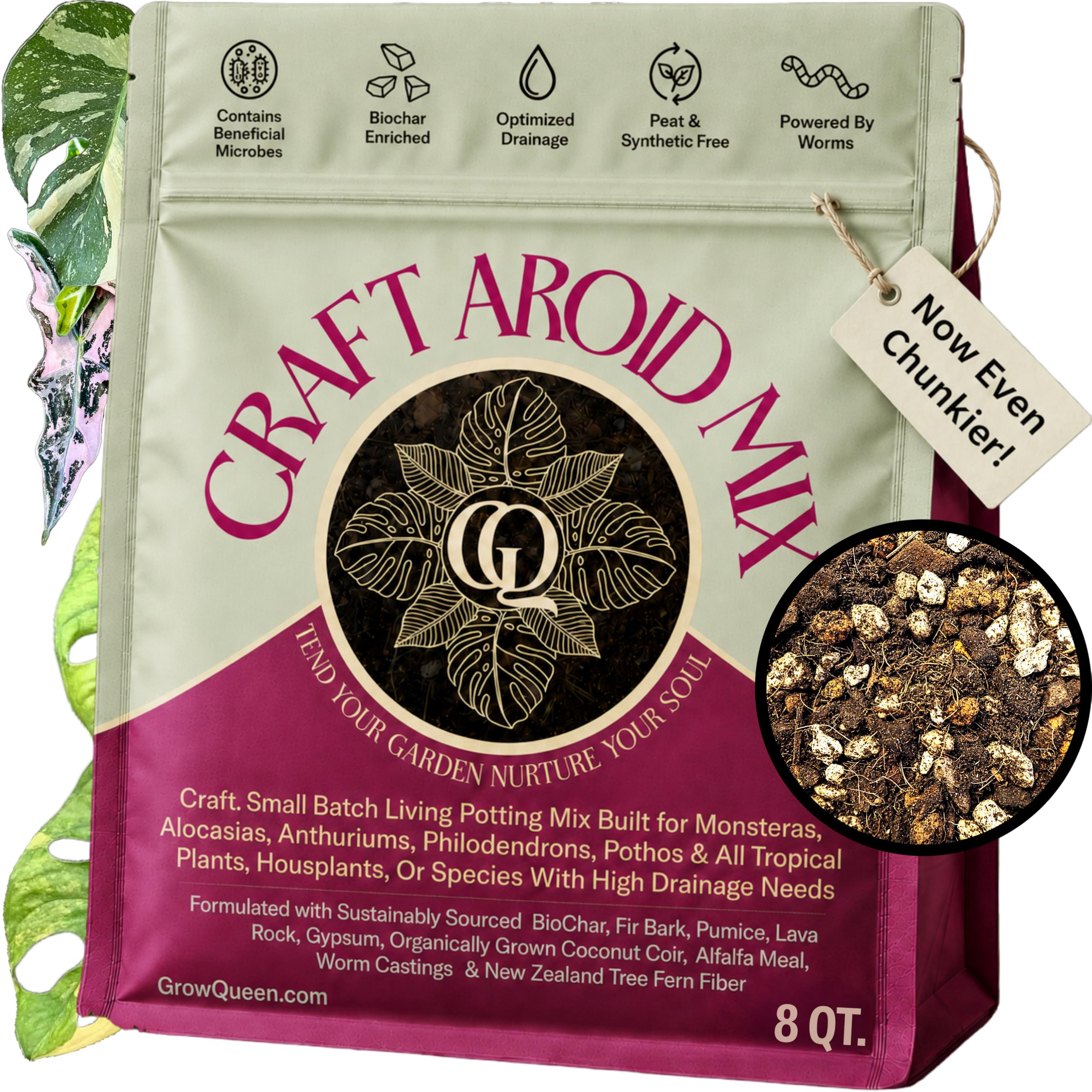
The giant bag for a whole jungle of peat-free aroids.
This is the same Grow Queen Craft Aroid blend as the 2-quart version above, scaled up to 8 quarts — the biggest bag in this lineup by a wide margin. With 8 quarts of mix, you can repot multiple Monsteras, Philodendrons, and Alocasias without running out, or handle a large mature Monstera in a 10-inch or 12-inch pot. The formula remains peat-free and perlite-free, using Douglas fir bark, lava rock, pumice, and NZ Tree Fern Fiber.
Buyers who have used the brand across multiple orders note that the texture stays “perfectly chunky and breathable” and that “my roots always look healthy and my plants seem way happier after repotting.” The mix comes pre-moistened and ready to use straight from the bag, saving you the step of wetting it yourself.
The same moisture-holding caveat from the 2QT version applies here: for pots larger than 6 inches, some reviewers found the mix did not dry out fully after the first watering, leading to root rot in one case. Use it for smaller pots or mix in extra pumice if repotting a giant Monstera. The 8-quart volume means you get 4 times the mix of the 2-quart bag — better value per quart if you have multiple plants.
What you get
- Massive 8-quart volume ideal for large collections
- Peat-free, perlite-free, and pet-friendly
- Pre-moistened and ready to use out of the bag
What to watch
- Holds moisture longer than bark-only mixes
- One reviewer had root rot with large plants after two months
Best for: Plant parents with multiple small-to-medium aroids who want a single bulk bag.
Avoid if: Your Monstera is very large and needs a fast-drying, extra-chunky mix.
Understanding the Specs
Volume (Quarts vs Ounces)
The volume tells you how many pots a single bag fills. A 1-quart bag suits a 5-inch pot. A 4-quart bag handles two to three 6-inch pots. An 8-quart bag covers a whole collection. Check the unit count in ounces too — 37 ounces versus 128 ounces is a real difference in how much soil you get.
Chunkiness and Drainage
The words “chunky” and “well-draining” are not marketing fluff. They mean the mix has visible pieces of bark, pumice (a light volcanic rock), or lava rock that create air pockets. Without those pockets, water pools at the bottom and rots the roots. Pine bark fines, orchid bark, and coco husk are the common chunky ingredients.
FAQ
Can I use regular potting soil for my Monstera?
How much soil does one Monstera need?
What does “chunky” mean in a potting mix?
Is peat-free soil better for Monsteras?
What is biochar and why is it in some soils?
How often should I repot my Monstera?
Can I mix different aroid soils together?
What is the difference between 1 quart and 4 quarts?
Final Thoughts: The Verdict
For most buyers, the potting soil for monstera winner is the Rosy Soil Aroid Mix because it combines chunky aeration, living biochar microbes, and a peat-free formula that keeps roots healthy with no guesswork. If you want big volume for multiple plants at a smart price, grab the Top Tier Genetics 4QT Aroid Matrix. And for a single small Monstera on a budget, the Gardenera 1-Quart Mix gets the job done with zero waste.
How We Picked
We do not accept paid placement. Every pick is matched to a real buyer and a real use-case; we do not hands-on test units.
Sources & Methodology
Specifications: manufacturer listings and product documentation. Review insights: verified customer reviews, as of July 2026. Pricing: not shown on this page (it changes often); check the current price via the retailer link.
As an Amazon Associate, Lawn Gear Lab earns from qualifying purchases. This does not affect which products we feature.