
The difference between a houseplant that merely survives and one that pushes out new leaves every week often comes down to what is happening below the soil line. Generic garden dirt or a random bag of topsoil will compact in a container, suffocate roots, and hold water long enough to trigger rot. A specialized mix designed for indoor containers must balance water retention with fast drainage, provide a steady supply of nutrients without burning tender root tips, and remain light and airy over months of regular watering.
I’m Rikta — the co-founder and writer behind Lawn Gear Lab. I’ve spent countless hours cross-referencing bag labels, comparing ingredient lists, breaking down moisture-retention claims, and analyzing verified owner feedback from hundreds of repotting sessions to identify the mixes that actually deliver on their promises for indoor plants.
Whether you are repotting a Monstera, refreshing a Pothos, or starting an indoor herb garden, the right medium sets the foundation for every leaf that follows. This guide breaks down the best options for every scenario to help you find the best potting soil for houseplants without guessing which bag to grab.
How To Choose The Best Potting Soil For Houseplants
Houseplant root systems live in a confined space with no natural drainage field below them. The wrong texture or ingredient balance turns a container into a swamp or a desert within days. Three factors separate a high-performing indoor mix from a bag you will regret buying.
Aeration and Drainage: The Texture Test
Indoor potting soil needs large, irregular particles — perlite, pumice, pine bark fines, or coarse sand — to create pore spaces where oxygen can reach roots and excess water can escape. A mix that feels dense or clumps in your hand when dry is too heavy for most houseplants. Look for a “chunky” consistency if you are growing aroids, monstera, or philodendrons; a finer but still loose texture works for ferns and peace lilies.
Moisture Retention Without Waterlogging
Sphagnum peat moss and coconut coir are the two primary moisture-holding ingredients. Peat is acidic and retains water effectively, while coir is more pH-neutral and rewets more easily after drying out. Too much of either causes root rot; too little forces you to water twice as often. A well-balanced mix holds moisture evenly throughout the container while still allowing the top inch to dry out between waterings.
Nutrient Source and pH Level
Most houseplants prefer a slightly acidic pH between 5.5 and 6.5. Mixes with added garden lime buffer the pH upward if the base ingredients are too acidic. For nutrient delivery, choose between organic options (worm castings, compost, kelp meal) that release slowly with microbial activity and synthetic time-release fertilizers that feed for a set number of months. Organic blends reduce the risk of salt buildup, while synthetic formulas offer more predictable feeding schedules.
Quick Comparison
On smaller screens, swipe sideways to see the full table.
| Model | Category | Best For | Key Spec | Amazon |
|---|---|---|---|---|
| Grow Queen Craft Organic Houseplant Potting Mix | Premium Chunky | Monstera, Pothos, sensitive aroids | Biochar & worm castings | Amazon |
| FoxFarm Ocean Forest Potting Soil | Premium Organic | Heavy feeders, container gardens | 1.5 cu ft bag | Amazon |
| Perfect Plants Indoor Plant Soil | All-Purpose | General repotting, low-light plants | Pine bark & coco coir | Amazon |
| DUSPRO Pre-Mixed House Plant Soil | Hand-Crafted Blend | Aroids, herbs, climbing plants | 7-in-1 with pumice & pine bark | Amazon |
| Midwest Hearth African Violet Natural Potting Mix | Specialty | African Violets, Gesneriads | pH balanced for violets | Amazon |
| Miracle-Gro Organic Indoor Potting Mix | Organic Value | Starter plants, budget repotting | Moisture-regulating coir | Amazon |
| Miracle-Gro Indoor Potting Mix for All Plants | Time-Release | Quick results, high-volume planting | Feeds for 6 months | Amazon |
In‑Depth Reviews
1. Grow Queen Craft Organic Houseplant Potting Mix
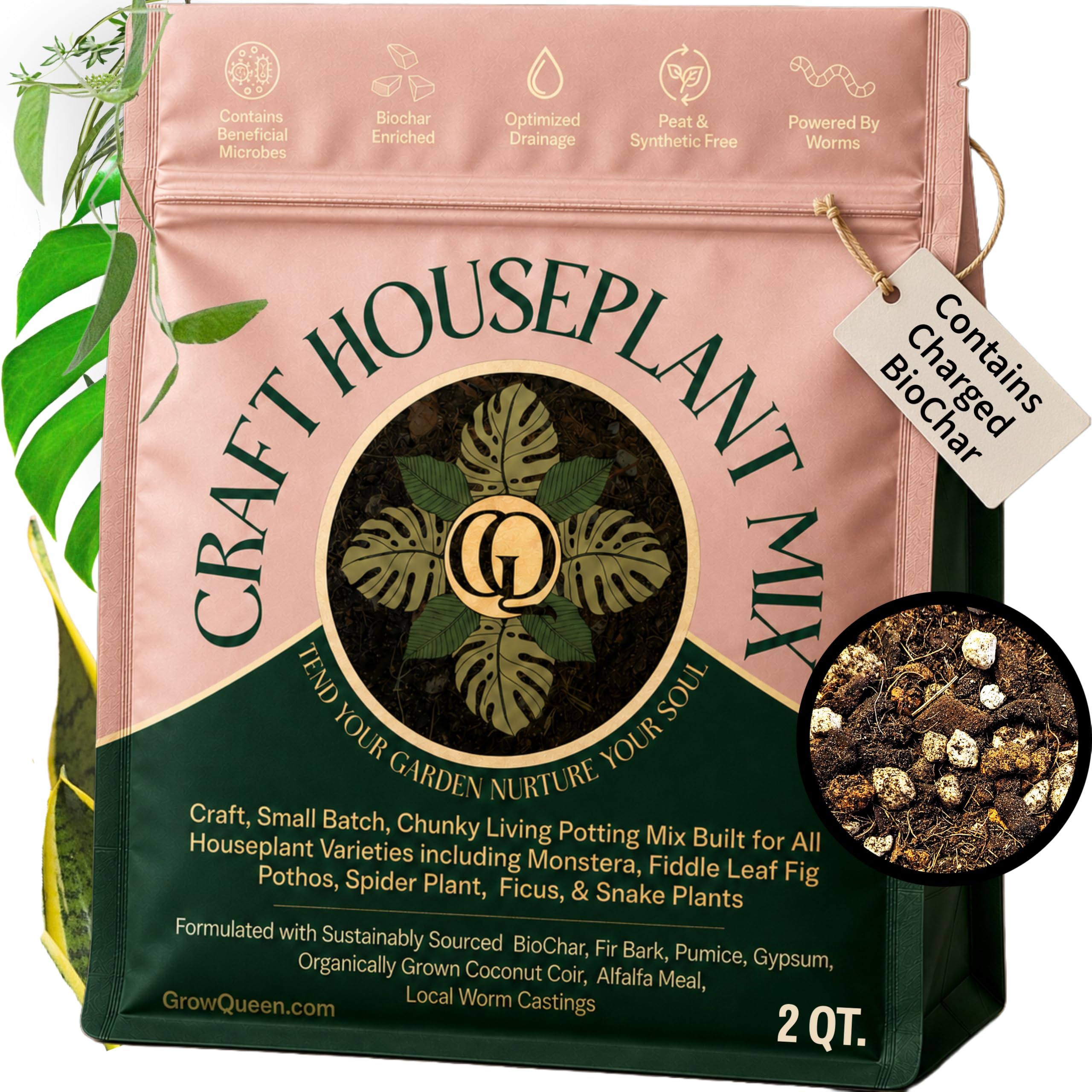
Grow Queen’s Craft Organic mix is the most thoughtfully engineered indoor blend on this list. It arrives pre-moistened, which eliminates the water-repelling “dry peat” problem that forces you to soak a bag repeatedly before use. The texture is genuinely chunky — large Douglas fir bark fines, lava rock, and pumice create visible air pockets that allow roots to spread aggressively and water to drain in seconds.
The omission of peat and perlite is a deliberate design choice: perlite floats to the surface over time and peat collapses into a dense mat after a few months. Charged biochar provides permanent pore structure that does not degrade, while premium organic worm castings deliver a steady flow of micronutrients without the risk of synthetic salt burn. The mix is also formulated to resist fungus gnats because it lacks the soggy compost-heavy base that gnats need to breed.
Owners of Monstera Thai Constellation, Hoya, and sensitive Philodendron varieties consistently report vigorous new root growth and unfolded leaves within weeks. The 2-quart bag is compact, but the nutrient density means you need less volume per pot compared to filler-heavy alternatives. This is the set-and-forget mix for growers who prioritize root health above all else.
What works
- Pre-moistened out of the bag — zero hydrophobic issues
- Biochar maintains permanent aeration without decomposition
- Gnat-resistant formulation ideal for indoor living spaces
What doesn’t
- Smaller bag size may require multiple units for batch repotting
2. FoxFarm Ocean Forest Potting Soil
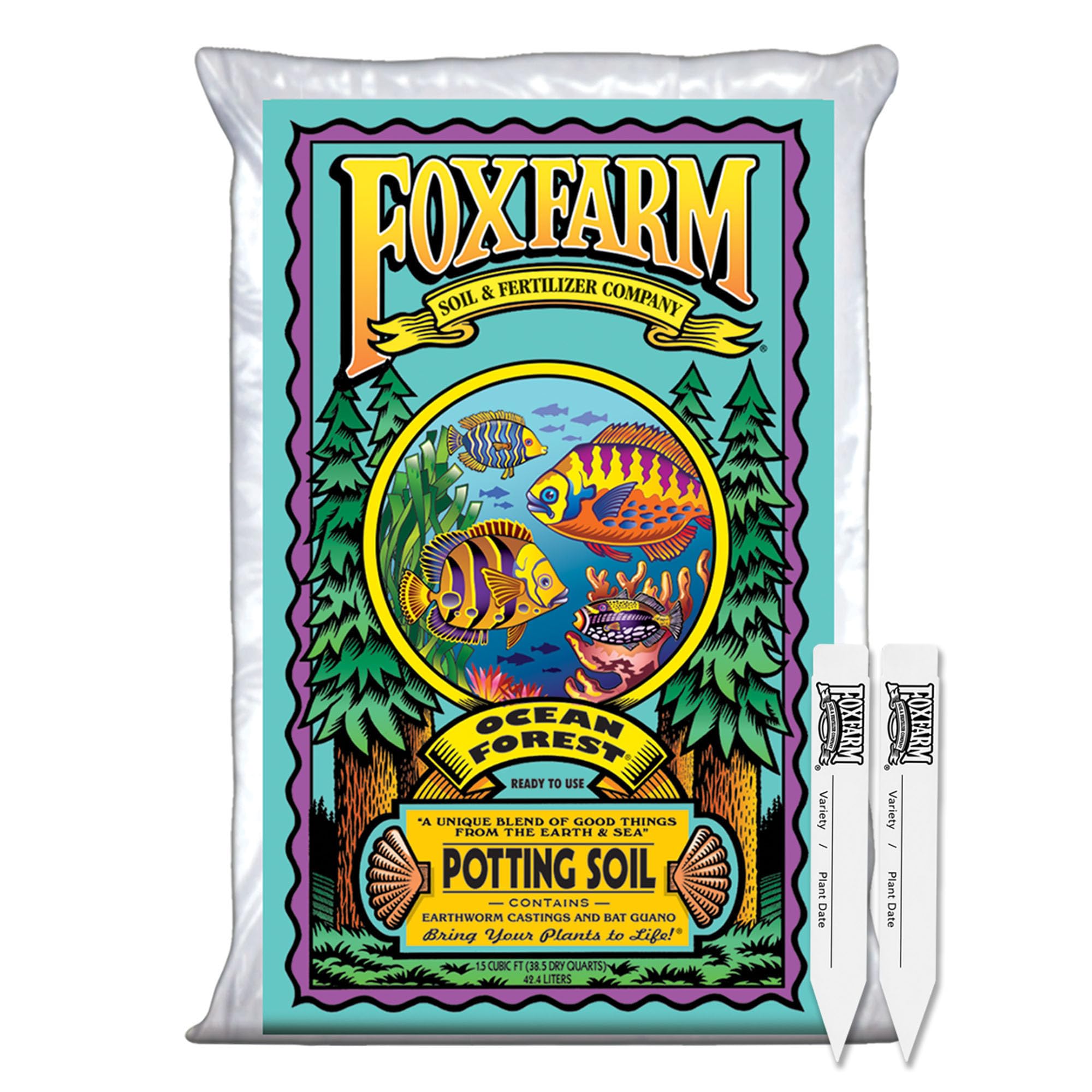
FoxFarm Ocean Forest is the largest-volume premium mix in this roundup, and its ingredient list reads like a soil fertility textbook: aged forest products, sphagnum peat moss, perlite, sandy loam, plus a fertilizer charge derived from fish emulsion, crab meal, shrimp meal, earthworm castings, kelp meal, and oyster shell. The inclusion of oyster shell provides a natural calcium source and a mild pH buffer that keeps the mix stable between 6.0 and 6.5.
The texture is lighter and fluffier than standard bagged soils because the aged forest products create a spongy matrix that holds moisture without collapsing. Sandy loam gives the mix enough weight to anchor larger container plants, while perlite handles the drainage side. The bag also comes with two customizable plant tags — a small but thoughtful addition for labeling varieties or planting dates.
Seasoned gardeners consistently note that Ocean Forest absorbs water immediately upon the first watering, unlike many blends that require repeated soaking before the peat rehydrates. The 1.5-cubic-foot bag is enough to fill multiple large containers, making it the go-to choice for anyone repotting several plants at once or maintaining a serious indoor garden. Keep in mind that the pre-added fertilizer is potent, so very sensitive seedlings may benefit from a 50/50 blend with a neutral filler.
What works
- Large bag size ideal for multiple pots or heavy feeders
- Immediate water absorption — no hydrophobic delay
- Rich organic nutrient charge supports vigorous growth
What doesn’t
- Pre-added fertilizer may be too strong for some seedlings
3. Perfect Plants Indoor Plant Soil

Perfect Plants Indoor Plant Soil is formulated specifically to break the fungus-gnat cycle that plagues so many houseplant owners. The blend uses pine bark fines and coco coir as its structural base instead of compost or heavy forest humus, which means the organic matter content stays high enough to feed the plant but low enough to avoid the soggy, anaerobic conditions that attract gnats. Sand and perlite provide the drainage backbone, and garden lime adjusts the pH to a houseplant-friendly range around 6.0.
The texture is noticeably light and airy compared to generic indoor mixes. Owners who switched from larger commercial brands report that gnats disappeared within one or two watering cycles after repotting. The mix drains fast enough to protect moisture-sensitive plants like aglaonema and snake plants, yet the coco coir retains enough water that you are not watering every other day. The bag itself is heavy-duty with a resealable zipper, which matters if you only use part of the mix at a time and do not want it to dry out or attract pantry pests.
The 4-quart size is not huge, and several reviewers noted that repotting multiple 8-inch pots consumed most of a bag. For a small collection of houseplants or a single large repotting session, the quantity is appropriate; for a multi-plant overhaul, order two bags. The lack of synthetic fertilizer means you will need to start a liquid-feeding routine after about six to eight weeks.
What works
- Proven gnat reduction — multiple owners report gnats disappearing
- Excellent drainage for moisture-sensitive varieties
- Resealable bag keeps unused mix fresh
What doesn’t
- No slow-release fertilizer included
4. DUSPRO Pre-Mixed House Plant Soil
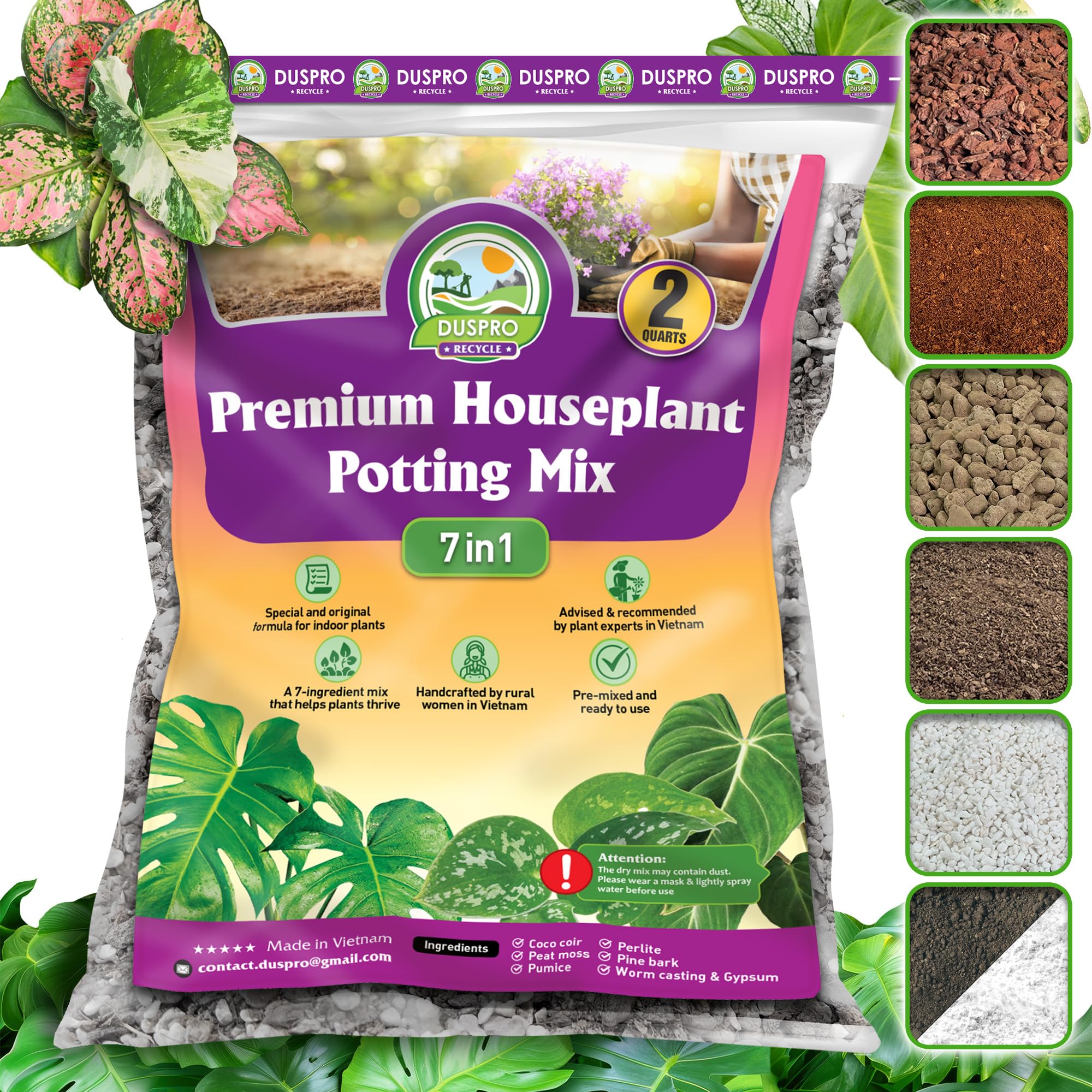
DUSPRO’s 7-in-1 blend is hand-crafted in Vietnam using seven distinct ingredients: coco coir, peat moss, perlite, pumice, worm castings, pine bark, and gypsum. The combination of pumice and pine bark creates a genuinely chunky structure that aroid enthusiasts seek out — the particles are large enough that you can see individual components when you pour the mix into a pot. Gypsum is an uncommon additive in consumer potting soils and serves a dual purpose: it supplies calcium without raising pH aggressively, and it helps break up heavy clay particles in the soil structure.
Moisture behavior in this blend is unique. The worm castings and coir hold water in the middle of the root zone, while the pumice and bark create rapid drainage channels along the sides. Owners of monstera, philodendron, and pothos reported seeing new leaf growth within two to three weeks after repotting, and several noted that the mix stayed moist for up to two weeks in larger containers without developing mold or mildew. The bag is dusty when first opened, but a light misting of water before use settles the fines.
The 2-quart size is small; the manufacturer offers larger increments up to 20 quarts, which is a better value if you are potting multiple plants. The hand-crafted nature means consistency can vary slightly from batch to batch, but the overall formula remains well-balanced for tropicals and climbing plants. This is a strong choice for anyone who wants a ready-to-use aroid mix without measuring and blending components themselves.
What works
- Chunky aroid-optimized texture with visible pumice and bark
- Gypsum supplies calcium and improves soil structure
- Excellent moisture retention for tropical species
What doesn’t
- Small bag size runs out quickly for multiple pots
5. Midwest Hearth African Violet Natural Potting Mix

African Violets have specific needs that general-purpose mixes rarely satisfy: they require a consistently acidic root zone around pH 6.0, excellent aeration for their shallow root systems, and moisture that stays evenly damp without becoming saturated. Midwest Hearth addresses all three with a blend of sphagnum peat moss, perlite, and vermiculite. Vermiculite holds more water than perlite and releases it slowly, which mimics the steady moisture African Violets prefer in nature.
The texture is soft and light without being dusty — the perlite fraction is large enough to create visible air pockets, but the overall feel is finer than a chunky aroid mix. Owners of miniature violet varieties reported that the small particle size allowed delicate root systems to establish quickly without being pushed around by large bark chunks. The pH is pre-balanced, so you do not need to test or adjust before use.
The 4-quart bag is generous for the price point, and the resealable feature is useful given that most violet owners repot in smaller 2-inch to 4-inch pots. This is a narrow-use product — it is not suitable for succulents, cacti, or plants that require coarse, fast-draining mixes. But for its intended audience, the performance is consistent and the ingredient quality is well above generic specialty soils found in big-box garden centers.
What works
- Pre-balanced pH eliminates guesswork for violet growers
- Vermiculite provides steady moisture for shallow roots
- Soft texture suits small or delicate pots
What doesn’t
- Too moisture-retentive for succulents or cacti
6. Miracle-Gro Organic Indoor Potting Mix

Miracle-Gro’s organic indoor mix is built around responsibly sourced sphagnum peat moss, coconut coir, and a quick-start natural fertilizer. The coir fraction is the star here — it regulates moisture by absorbing water quickly and releasing it slowly, which protects plants against both overwatering and underwatering. The OMRI listing confirms that the ingredients meet organic standards, making this a viable option for growers who want a certified organic medium at a budget-friendly price point.
The two-pack format delivers 16 total quarts, which is enough to fill approximately four 8-inch containers. Owners switching from conventional Miracle-Gro blends noted a significant reduction in fungus gnats after moving to this organic formulation, likely due to the absence of compost and the moisture-regulating behavior of the coir. The texture is lighter than standard garden soil but not as chunky as dedicated aroid mixes — it strikes a middle ground that works for general foliage plants, pothos, and peace lilies.
Some users found the moisture retention to be slightly higher than expected for plants like snake plants or ZZ plants. Adding a handful of perlite or coarse sand before potting helps adjust the drainage for species that prefer drier conditions. For the price and volume, this two-pack offers the best cost-per-quart ratio among the organic blends in this guide.
What works
- OMRI certified organic — meets strict input standards
- Coir-based moisture regulation reduces watering errors
- Large two-pack volume at a low cost per quart
What doesn’t
- May retain too much moisture for succulents or cacti
7. Miracle-Gro Indoor Potting Mix for All Plants
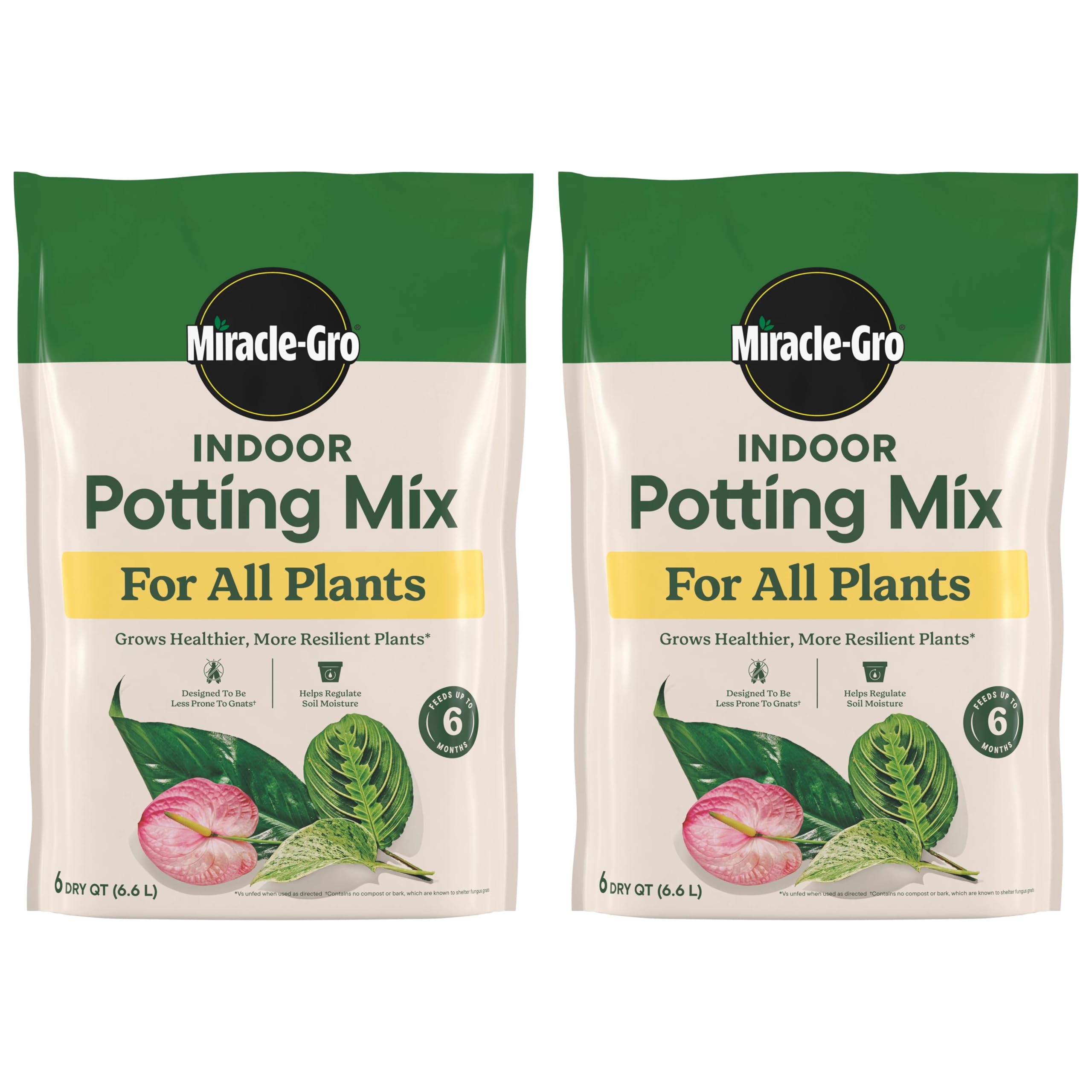
This is the original formula that made Miracle-Gro a household name in indoor gardening. It blends sphagnum peat moss, coconut coir, and perlite with a water-soluble synthetic fertilizer that feeds continuously for up to six months. The explicit exclusion of compost and bark is a deliberate choice — those ingredients are common shelter spots for fungus gnat larvae, and the clean base keeps the mix gnat-resistant straight out of the bag.
The texture is light and fluffy when dry, and the perlite content is generous enough to prevent compaction over the feeding period. Compared to the organic version, this mix drains faster and dries out more quickly between waterings, which makes it a better match for plants that prefer to dry out partially between waterings. Owners reported healthy green growth within days of repotting, and the six-month feeding window removes the need to remember a liquid fertilizer schedule.
The dustiness of this mix is a recurring complaint — the fine peat particles kick up noticeably during pouring. Wearing a dust mask or pouring outdoors solves the issue. The 6-quart two-pack offers decent volume, but the cost per quart is slightly higher than the organic twin-pack. For growers who want predictable results, fast establishment, and no guesswork around when to start fertilizing, this formula remains the industry benchmark.
What works
- Continuous feeding for six months reduces maintenance
- No compost or bark — minimizes gnat attraction
- Light texture with ample perlite for drainage
What doesn’t
- Dusty consistency during pouring
Hardware & Specs Guide
Peat Moss vs. Coco Coir
Peat moss is harvested from sphagnum bogs and has a naturally acidic pH around 3.5 to 4.5, which requires lime buffering for most houseplants. Coco coir is a byproduct of coconut processing with a neutral pH around 5.5 to 6.5 and rewets much more easily after drying out. Coir is more sustainable, but peat provides a more consistent moisture-holding structure over long periods. Many premium mixes combine both to get the benefits of each without the drawbacks of relying on a single base.
Perlite vs. Pumice vs. Lava Rock
Perlite is expanded volcanic glass that is lightweight, cheap, and effective for drainage, but it floats to the surface over time and breaks down into dust after repeated freeze-thaw cycles. Pumice is heavier, does not float, and maintains its pore structure indefinitely, making it the preferred choice for semi-hydroponic setups and long-term container plants. Lava rock is the heaviest option and provides the most permanent aeration, but takes up more volume and can make pots too heavy for hanging baskets.
FAQ
Can I reuse potting soil from a dead houseplant for a new plant?
What causes white fuzzy mold on top of potting soil in my houseplant pot?
Why does my potting soil smell like rotten eggs after watering?
Final Thoughts: The Verdict
For most gardeners, the potting soil for houseplants winner is the Grow Queen Craft Organic Houseplant Potting Mix because it combines biochar-enhanced aeration, pre-moistened consistency, and gnat-resistant formulation into a single ready-to-use bag. If you want the largest volume and a rich organic nutrient charge for heavy feeders, grab the FoxFarm Ocean Forest Potting Soil. And for targeted fungus-gnat prevention and a balanced general-purpose texture, nothing beats the Perfect Plants Indoor Plant Soil.