
Dahlias demand a growing medium that strikes a precise balance between rapid drainage and steady moisture retention — too heavy and the tubers rot, too light and the blooms won’t size up. The wrong mix turns staking into a weekly chore and turns vibrant petals into a memory.
I’m Rikta — the co-founder and writer behind Lawn Gear Lab. I’ve spent hundreds of hours analyzing soil chemistry, comparing aeration profiles, and cross-referencing owner feedback to find the mixes that actually support heavy-feeding dahlia tubers through a full bloom cycle.
Whether you grow in raised beds, fabric pots, or decorative containers, finding the right potting soil for dahlias means understanding how pH, particle size, and nutrient density interact with a tuber’s unique growth pattern.
How To Choose The Best Potting Soil For Dahlias
Dahlias are heavy feeders with fleshy tubers that rot in waterlogged conditions. The ideal mix delivers oxygen to roots, holds enough moisture to fuel rapid growth, and supplies a steady stream of nutrients from sprouting through the first frost. Here’s what to check before you buy.
Drainage & Aeration
A mix loaded with perlite, pumice, or coarse sand creates air pockets that let excess water escape and roots breathe. Look for a blend that includes at least two of these components — a single drainage agent often isn’t enough for the dense root mass dahlias develop in containers.
pH and Nutrient Profile
Dahlias thrive in slightly acidic soil with a pH between 6.2 and 6.8. At that range, tubers can absorb phosphorus for bloom development and potassium for stem strength. Avoid mixes with high peat content unless they also contain garden lime, because pure peat can push pH below 5.5.
Organic Content and Feeding Schedule
Worm castings, compost, and aged forest products provide a slow-release nutrient base that supports dahlias from tuber to flower. Even the best organic mix will need supplemental feeding every 2-3 weeks during the growing season — look for a soil that holds liquid fertilizer well without leaching it out the bottom.
Bag Size and Value
A single large dahlia tuber needs about 1 to 1.5 cubic feet of soil in a 10-inch pot. Smaller bags under one cubic foot work for bedding and small planters, but if you’re filling multiple containers, a 1.5- or 2-cubic-foot bag saves money and reduces the number of bags you haul.
Sterility and Pest-Free Guarantee
Sterilized or pasteurized soil eliminates fungus gnat larvae and weed seeds that compete with your dahlias. Check the label for terms like “sterilized,” “pasteurized,” or “heat-treated” — especially if you’re growing indoors or in a greenhouse where pests spread quickly.
Quick Comparison
On smaller screens, swipe sideways to see the full table.
| Model | Category | Best For | Key Spec | Amazon |
|---|---|---|---|---|
| FoxFarm Ocean Forest | Premium | Container-grown dahlias | 1.5 cu ft / sandy loam & aged forest | Amazon |
| FoxFarm Happy Frog | Premium | Heavy-feeding tubers | 2 cu ft / mycorrhizae & bat guano | Amazon |
| Miracle-Gro Potting Mix (3-Pack) | Mid-Range | Large container gardens | 8 qt x 3 / feeds for 6 months | Amazon |
| Midwest Hearth Premium | Mid-Range | Seed-starting & young tubers | 8 qt / peat + vermiculite + perlite | Amazon |
| Smart Grower Organic | Mid-Range | Pet-safe indoor dahlia pots | 3 lb / mycorrhizae & kelp | Amazon |
| Soil Sunrise Peace Lily Mix | Budget | Single small planters | 8 qt / pine bark + peat + sand | Amazon |
| Gardenera Monstera Mix | Budget | Small dahlia pots | 2 qt / biochar + aged bark | Amazon |
In‑Depth Reviews
1. FoxFarm Ocean Forest Potting Soil
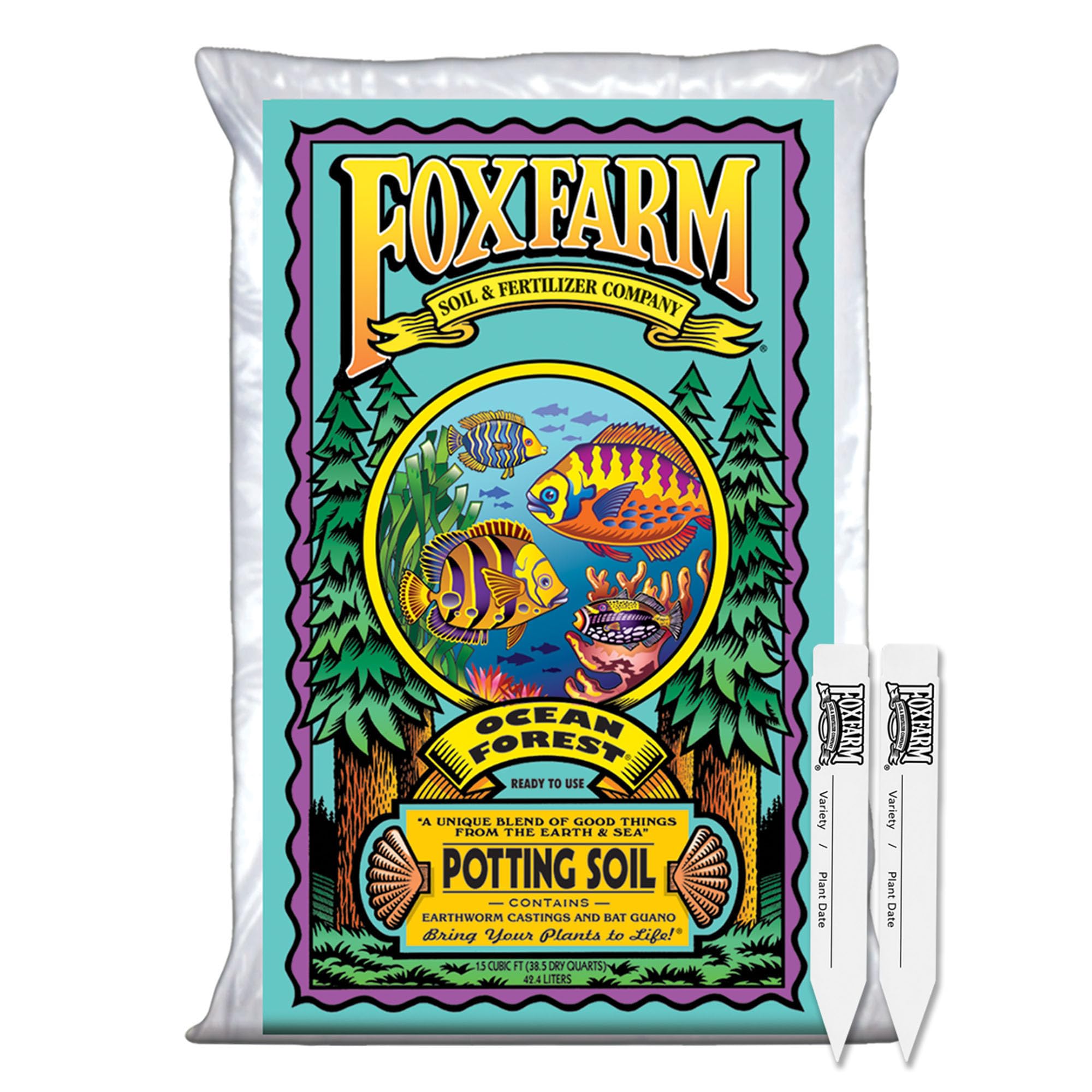
FoxFarm Ocean Forest combines aged forest products, sphagnum peat moss, perlite, and sandy loam to create a light, aerated texture that drains quickly enough for dahlia tubers while holding moisture for several days between waterings. The 1.5-cubic-foot bag provides enough volume to fill three 10-inch pots or one large raised bed section, and the soil arrives ready to use straight from the bag without additional amendments. Ingredients like fish emulsion, crab meal, shrimp meal, earthworm castings, and kelp meal supply a broad spectrum of nutrients that support deep root development and sustained flowering through late summer.
The sandy loam component is the standout feature for dahlia growers — it prevents the compaction that often occurs with peat-dominant blends after a few weeks of watering. Owner reports consistently note that water absorbs immediately upon application rather than pooling on the surface, which reduces the risk of tuber rot in containers without drainage trays. The inclusion of oyster shell also provides a slow-release calcium source that strengthens cell walls and helps dahlias resist blight.
Although the price per cubic foot is higher than basic garden soil, the nutrient density means you can delay supplemental feeding for the first 3-4 weeks after potting. Some users report that the bag’s moisture retention requires careful monitoring during rainy weeks — but for hot, well-drained containers, this mix outperforms nearly every competing brand in flower size and stem thickness.
What works
- Excellent drainage prevents tuber rot in containers
- Rich nutrient profile delays need for liquid fertilizer
- Light, fluffy texture stays aerated for weeks
What doesn’t
- Premium price per cubic foot adds up for large gardens
- Moisture retention can be too high in cool, wet climates
2. FoxFarm Happy Frog Potting Soil
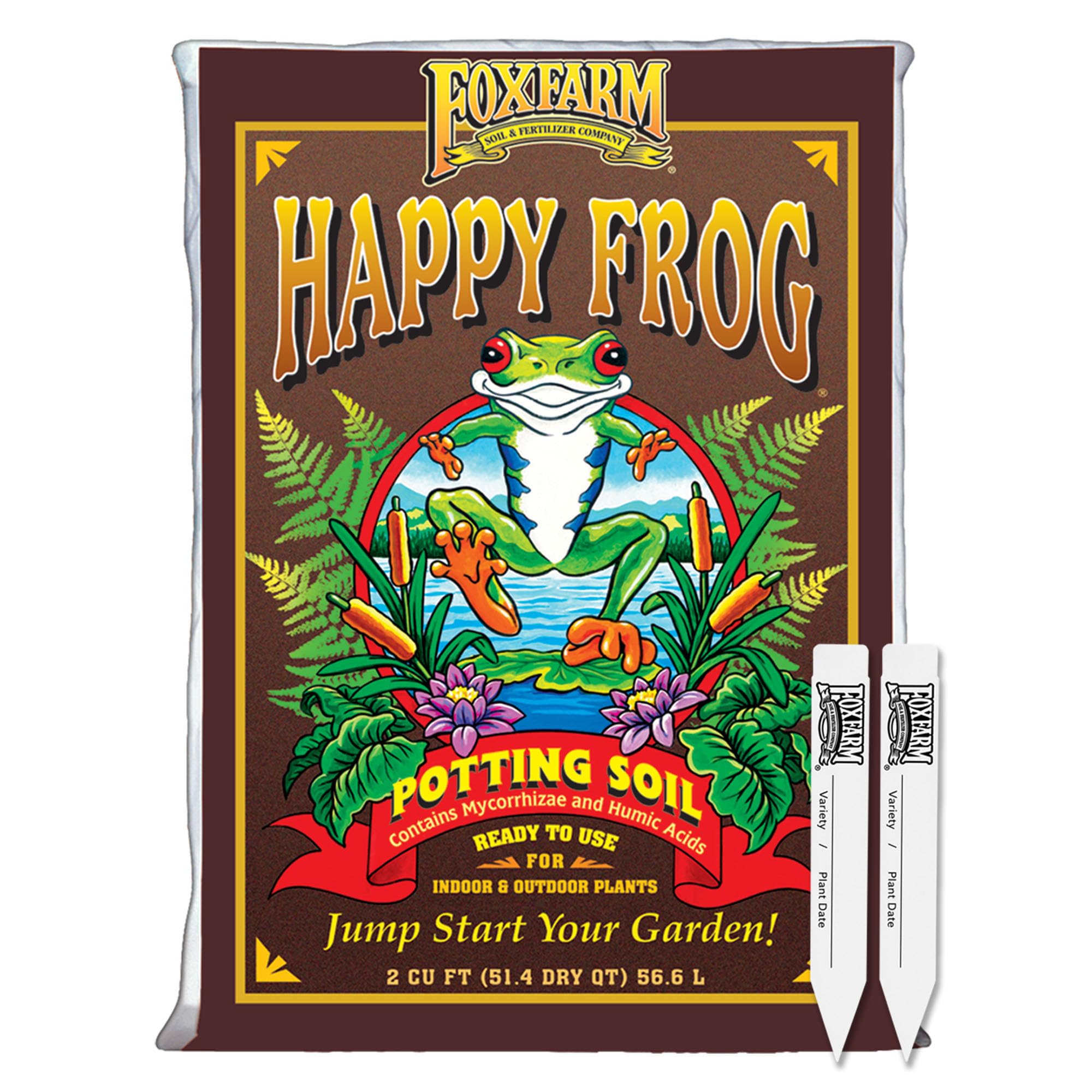
FoxFarm Happy Frog is formulated specifically for container plants that demand high nutrient availability, making it a strong match for dahlias grown in pots. The 2-cubic-foot bag delivers the largest volume in this lineup, and the blend includes aged forest products, sphagnum peat moss, perlite, earthworm castings, bat guano, oyster shell, and dolomite lime. The added mycorrhizal fungi colonize dahlia root systems within the first week, expanding the root surface area and improving uptake of phosphorus and micronutrients that drive flower production.
The dolomite lime buffers the naturally acidic peat moss, stabilizing pH in the 6.2–6.8 sweet spot that dahlias need for nutrient absorption. Owner reports consistently mention that plants grow noticeably larger when transplanted into Happy Frog compared to standard potting mixes — the bat guano provides an immediate nitrogen boost while the worm castings supply slow-release organic matter over several months. The texture is slightly denser than Ocean Forest but still light enough to prevent waterlogging when used in containers with drainage holes.
This mix works best for gardeners who want to minimize fertilizing during the season — the combination of guano, castings, and mycorrhizae typically sustains dahlias for 6-8 weeks before any supplemental feed is necessary. The main trade-off is the cost: it’s a premium product that runs higher per cubic foot than most bulk options. For anyone planting a dozen or more containers, blending Happy Frog with a cheaper base soil can stretch the budget without losing performance.
What works
- Mycorrhizae boost root efficiency for larger blooms
- Dolomite lime keeps pH in the ideal 6.2–6.8 range
- 2 cu ft bag covers multiple large containers
What doesn’t
- Premium price requires budget-conscious scaling
- Denser texture may need extra perlite in heavy clay climates
3. Miracle-Gro Potting Mix (3-Pack)

The Miracle-Gro Potting Mix three-pack bundles 24 total quarts (8 quarts per bag) of a well-established formula that works for dahlias in both containers and raised beds. The mix contains sphagnum peat moss, coco coir, and perlite, creating a texture that holds moisture without becoming waterlogged — important for dahlias that need consistent hydration during bloom formation. The built-in fertilizer feeds container plants for up to six months, which means you can plant tubers in spring and not worry about liquid feed until mid-summer.
Each 8-quart bag fills one 10-inch pot with room for a single dahlia tuber, so the three-pack is ideal for gardeners planting a small collection of three to six pots. The formulation has a pH in the 5.8–6.2 range, slightly acidic but within a workable window — adding a small handful of dolomite lime per bag will push it into the ideal dahlia range. Users consistently report that the feed lasts the full six months in containers, reducing the guesswork around side-dressing or liquid fertilizer schedules.
The primary downside is that the mix contains synthetic fertilizers rather than purely organic ingredients, which may matter to growers aiming for an organic certification. Additionally, the smaller 8-quart bags mean you’ll need multiple purchases for a large dahlia bed. Still, for the per-bag price, this delivers reliable results with minimal effort and is widely available at most garden centers.
What works
- Built-in feed lasts a full growing season
- Good moisture retention with reliable drainage
- Three smaller bags are easy to handle and store
What doesn’t
- pH slightly acidic — may need lime for ideal 6.2–6.8
- Synthetic formulation not suitable for strict organic growers
4. Midwest Hearth Premium Potting Soil Mix

Midwest Hearth’s premium blend uses sphagnum peat moss, horticultural vermiculite, and perlite to create an exceptionally light, fluffy texture that promotes rapid root penetration — a critical advantage for young dahlia tubers forming their first feeder roots. The 8-quart bag is a practical size for starting a small collection of dahlias in 6- or 8-inch nursery pots before transplanting them into larger containers or the ground. The pH is controlled to fall within a balanced range suitable for most plants, and the mix contains no added synthetic fertilizers, giving you full control over feeding.
The combination of vermiculite and perlite offers dual moisture management: vermiculite holds water for consistent hydration, while perlite creates air channels that prevent the soil from becoming compacted. This makes the mix an excellent choice for growers who tend to overwater or for climates with high humidity where standard mixes stay wet too long. Users report that the soil does not harden around roots after repeated watering cycles, which helps maintain oxygen flow throughout the growing season.
The trade-off is the relatively small bag size — you’ll need three to four bags to fill a single 12-inch dahlia pot. There’s also no added nutrient charge, so you must begin liquid feeding within the first two weeks of planting. However, for a base mix that you can customize with your own compost, lime, and slow-release fertilizer, this is a clean, consistent option that delivers professional-grade aeration.
What works
- Very light, fluffy texture prevents root compaction
- Vermiculite and perlite balance water and air well
- No synthetic fertilizers — complete control over feed
What doesn’t
- Small bag volume requires multiple purchases for pots
- No built-in nutrients — must start feeding early
5. Smart Grower Organic Potting Soil
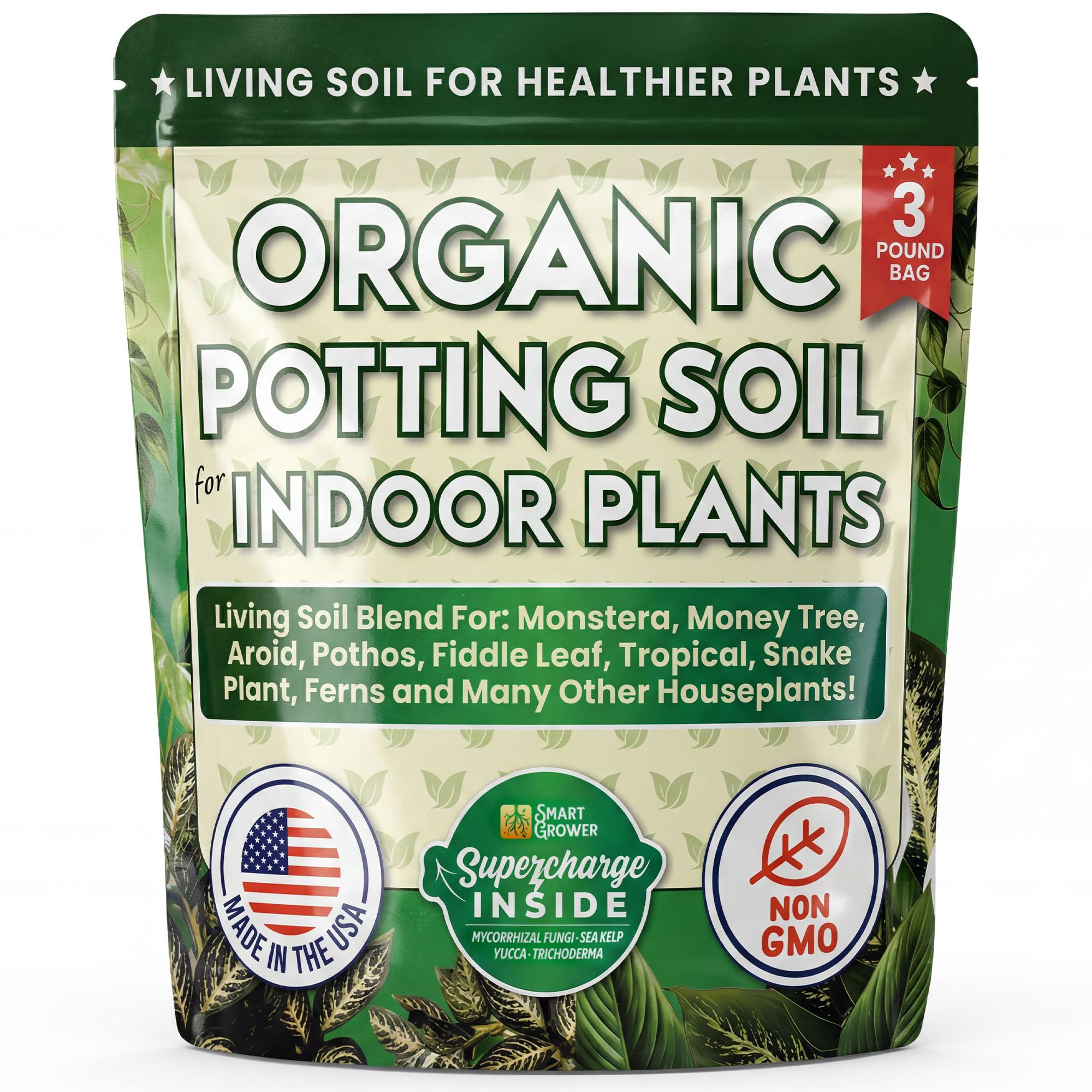
Smart Grower’s organic indoor potting soil is a USDA-friendly option for dahlia growers who want a completely pet-safe, cruelty-free mix without animal-derived ingredients like bone meal or fish byproducts. The blend combines organic compost, peat, biochar, worm castings, and coco coir with a root-enhancing package of mycorrhizal fungi, sea kelp, molasses, yucca extract, Trichoderma, and beneficial Bacillus microbes. The 3-pound bag is compact but dense with active biological life that jump-starts the soil food web immediately after planting.
For dahlias growing in a greenhouse or on a sunny porch, the biochar component helps retain nutrients that would otherwise leach out during frequent watering — a common problem with very porous mixes. The yucca extract works as a natural wetting agent, improving water penetration in the root zone without creating a soggy top layer. Users who are allergic to standard bagged soils report no respiratory irritation with this mix, which is pasteurized and free of dust and mold spores.
The bag size is the main limitation — 3 pounds of soil fills only one 6-inch pot, making this an option for a few special specimen plants rather than a whole dahlia bed. The price per pound is high compared to larger bags, but for a single prized dahlia grown in a decorative container, the biological boost and clean ingredients can make a noticeable difference in flower quality and plant vigor.
What works
- Rich biological blend with mycorrhizae and Bacillus microbes
- Pet-safe, dust-free, and non-GMO formulation
- Biochar helps retain nutrients during frequent watering
What doesn’t
- Very small bag — not cost-effective for multiple pots
- Premium per-pound price limits bulk use
6. Soil Sunrise Peace Lily Potting Soil Mix
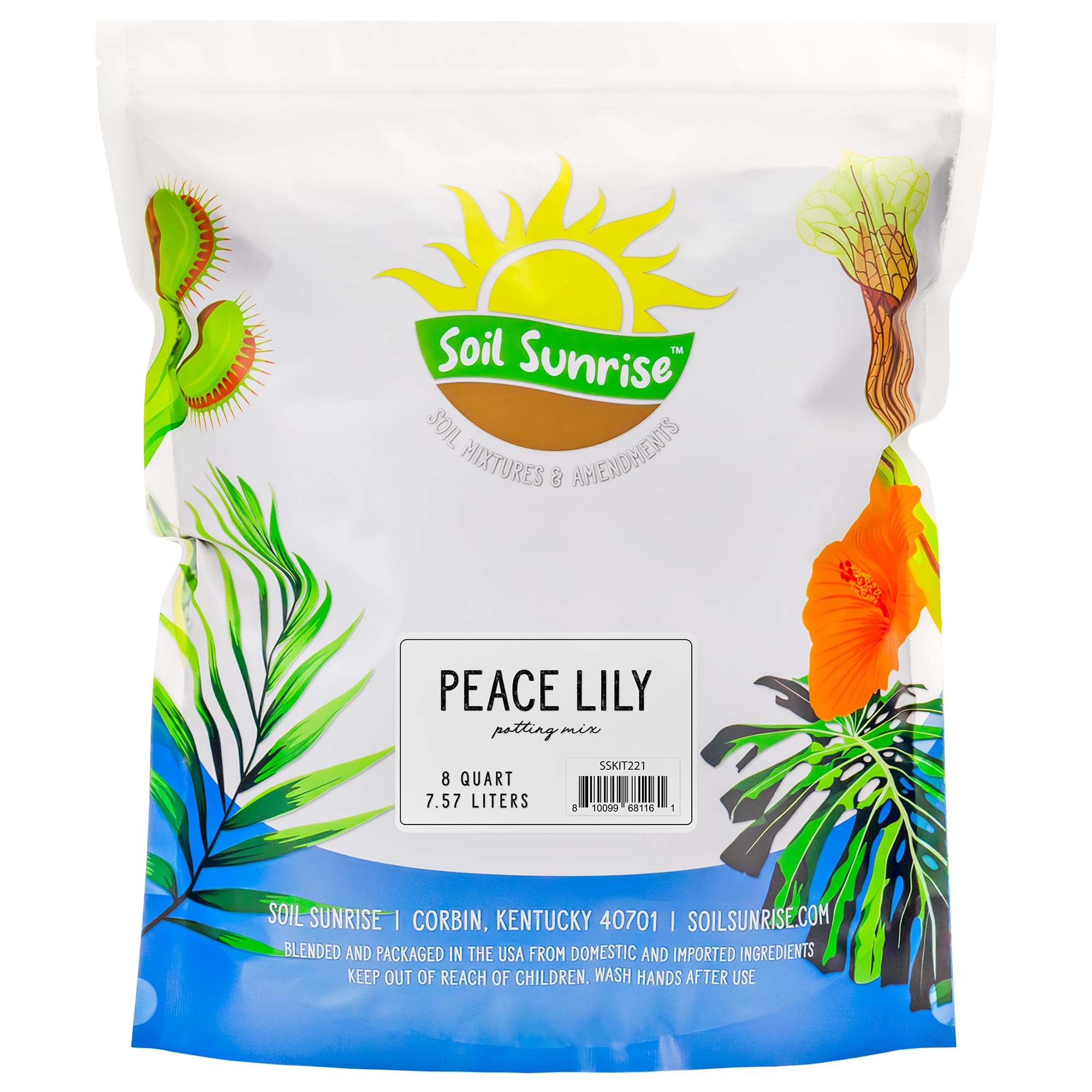
Soil Sunrise’s Peace Lily mix is a 100-percent natural blend of pine bark, peat moss, perlite, sand, and lime that provides a well-structured base for dahlias grown in small containers. The 8-quart bag is lightweight and easy to carry, and the inclusion of sand adds a gritty drainage element that mimics the loose, rocky soil dahlias naturally prefer. The lime adjusts the pH toward the neutral side, which helps keep acidity from climbing too high as the peat decomposes over time.
The coarse bark pieces create large air pockets that prevent the soil from settling into a dense mass, so roots can spread freely through the container. This mix is particularly useful for compact dahlia varieties like the Gallery or Mignon series, which have smaller root systems and don’t need the volume of a full-size bag of premium soil. The sand component also adds weight to the pot, helping to anchor top-heavy dahlia stems without requiring extra staking.
The downside is the relatively high per-quart cost compared to bulk potting soils — and the mix is lightly fertilized, so you’ll need to supplement with a balanced 5-10-10 fertilizer by the third week after planting. For a few dahlias on a balcony or patio, the convenience and clean formulation justify the expense, but it’s not the most economical route for filling a large raised bed.
What works
- Sand and bark create excellent drainage for tubers
- Lime included to buffer pH into the neutral zone
- Lightweight bag makes handling easy
What doesn’t
- Small volume at a premium per-quart price
- Light nutrient load requires early supplemental feeding
7. Gardenera Premium Monstera Potting Soil

Gardenera’s Monstera potting mix is designed for aroid plants that require rapid drainage and high oxygen exchange, which aligns closely with what dahlia tubers need to avoid rot. The 2-quart bag is the smallest in this roundup, but the chunky texture — a combination of aged organic bark, coco coir, perlite, peat moss, biochar, and worm castings — provides a structure that keeps water moving through the root zone without pooling. The biochar acts as a nutrient reservoir, trapping nitrogen and phosphorus and releasing them slowly as the plant feeds.
The mix is sterilized and certified non-toxic, making it safe for indoor dahlia starts or for gardeners who want to avoid soil-borne pathogens. The resealable bag is a practical detail for those who only need a small quantity at a time. Users who have repotted dahlias into this mix note that the soil holds moisture without waterlogging — a direct benefit of the chunkiness that prevents the particles from collapsing together.
The main drawback is the extremely small volume — at just 2 quarts, you’d need more than 10 bags to fill a single 12-inch dahlia pot, making this impractical for anything beyond a few small starter pots. The per-quart price is also the highest in this listing. For a single special dahlia grown in a compact 6-inch pot, the drainage and biochar benefits are real, but the value proposition drops sharply for larger plantings.
What works
- Chunky texture provides top-tier drainage for tubers
- Biochar improves nutrient retention over time
- Sterilized and dust-free for indoor use
What doesn’t
- 2-quart bag is very small — high cost per volume
- Not economical for standard dahlia container sizes
Hardware & Specs Guide
Drainage Particle Size
The ratio of perlite, pumice, sand, or bark chips determines how fast water moves through the soil. For dahlias, look for a mix where coarse particles make up at least 25-30 percent of the volume — this prevents the tuber zone from staying wet longer than 24 hours after watering. Mixes with fine peat or compost as the primary ingredient need additional perlite to avoid rot.
pH Buffering Components
Dolomite lime or oyster shell flour can raise pH in peat-heavy blends. Dahlias prefer 6.2–6.8, so check the label for a pH range or buffering agents. Mixes that list “lime” or “dolomite” among the ingredients will hold pH stable through the season, while lime-free peat mixes tend to drift below 5.5 within a month of watering.
Nutrient Source & Longevity
Organic amendments like worm castings, bat guano, kelp meal, and fish emulsion provide slow-release feeding that lasts 4-8 weeks. Synthetic controlled-release fertilizers can feed for up to 6 months. Dahlias are heavy feeders, so a mix with a higher nutrient charge (either organic or synthetic) delays the need for liquid fertilizer — a real advantage during the busy early-summer growth spurt.
Bag Volume vs. Container Size
A 10-inch dahlia pot requires roughly 0.8 to 1.0 cubic feet of soil. A 12-inch pot needs about 1.2 to 1.5 cubic feet. Know your pot dimensions before buying — a 1.5-cu-ft bag is ideal for one large pot, while 8-quart bags (0.27 cu ft) work for one 6-inch pot. For multiple containers, larger bags almost always deliver better per-quart value.
FAQ
What happens if the pH of my dahlia soil is too low?
Can I use general-purpose potting soil for dahlias?
How often should I replace potting soil for container dahlias?
Is it okay if the soil mix contains synthetic fertilizer?
Can I mix two different potting soils together for dahlias?
Final Thoughts: The Verdict
For most gardeners, the potting soil for dahlias winner is the FoxFarm Ocean Forest because its sandy loam base and nutrient-dense formula deliver the drainage, aeration, and feeding power that dahlias need for massive blooms and healthy tuber storage. If you want a mycorrhizal boost and top-tier root development, grab the FoxFarm Happy Frog. And for a budget-friendly option that feeds your container dahlias all season without extra mixing, nothing beats the Miracle-Gro Potting Mix 3-Pack.