
Most bagged potting soil is engineered for generic houseplants, not for the specific root demands of culinary basil. A mix that stays wet too long suffocates the fine root hairs, turning leaves yellow instead of producing that pungent, clove-like aroma. The wrong blend doesn’t just limit growth—it fundamentally alters the flavor profile of your harvest.
I’m Rikta — the co-founder and writer behind Lawn Gear Lab. I’ve spent dozens of hours cross-referencing pH levels, aeration components, and organic certifications while analyzing thousands of owner reports to isolate what actually drives vigorous basil development in containers.
After comparing drainage rates, nutrient profiles, and real-world germination outcomes, I’ve identified the specific blends that consistently produce thick stems and dark green leaves without the guesswork. This is the definitive guide to choosing the right potting soil for basil.
How To Choose The Best Potting Soil For Basil
Basil is a warm-season annual that demands a soil structure distinct from succulents or ferns. Three factors determine whether your plants will bolt or bush out.
Drainage and Aeration
Basil roots are sensitive to prolonged saturation. A mix that holds water like a sponge encourages root rot and fungal diseases. Look for visible perlite, coarse sand, or coco coir in the ingredient list. These create air pockets that let roots breathe and excess water escape within minutes.
Organic Matter and Nutrient Profile
Basil is a moderate feeder. It needs a steady supply of nitrogen for leaf growth but doesn’t require heavy phosphorus or potassium levels until flowering. Compost, worm castings, or kelp meal provide slow-release nutrition without burning tender seedlings. Avoid mixes with synthetic time-release fertilizers unless you plan to repot frequently.
pH Range
Sweet basil performs best in a slightly acidic to neutral range of 6.0 to 7.0. Outside this band, nutrient uptake becomes erratic regardless of fertilizer quality. Many premium mixes include dolomitic lime or garden lime specifically to buffer the pH into this sweet spot.
Quick Comparison
On smaller screens, swipe sideways to see the full table.
| Model | Category | Best For | Key Spec | Amazon |
|---|---|---|---|---|
| Rosy Soil Herb Mix | Organic | Peat-free herb gardens | Biochar + worm castings | Amazon |
| Midwest Hearth Premium | All-Purpose | Seed starting & root growth | 8 qt bag with vermiculite | Amazon |
| Coast of Maine Bar Harbor | Organic | Container vegetables & herbs | Crab + kelp meal blend | Amazon |
| Perfect Plants Indoor Soil | Indoor Mix | General indoor potted herbs | Pine bark + coco coir | Amazon |
| Leaves and Soul Herb Soil | Specialty | Small indoor herb pots | 2.2 qt resealable bag | Amazon |
| Back to the Roots Worm Castings | Amendments | Boosting existing soil | 5 lb pure vermicompost | Amazon |
| Miracle-Gro Potting Mix | Value Pack | High-volume container gardening | Feeds up to 6 months | Amazon |
In‑Depth Reviews
1. Rosy Soil Herb Mix
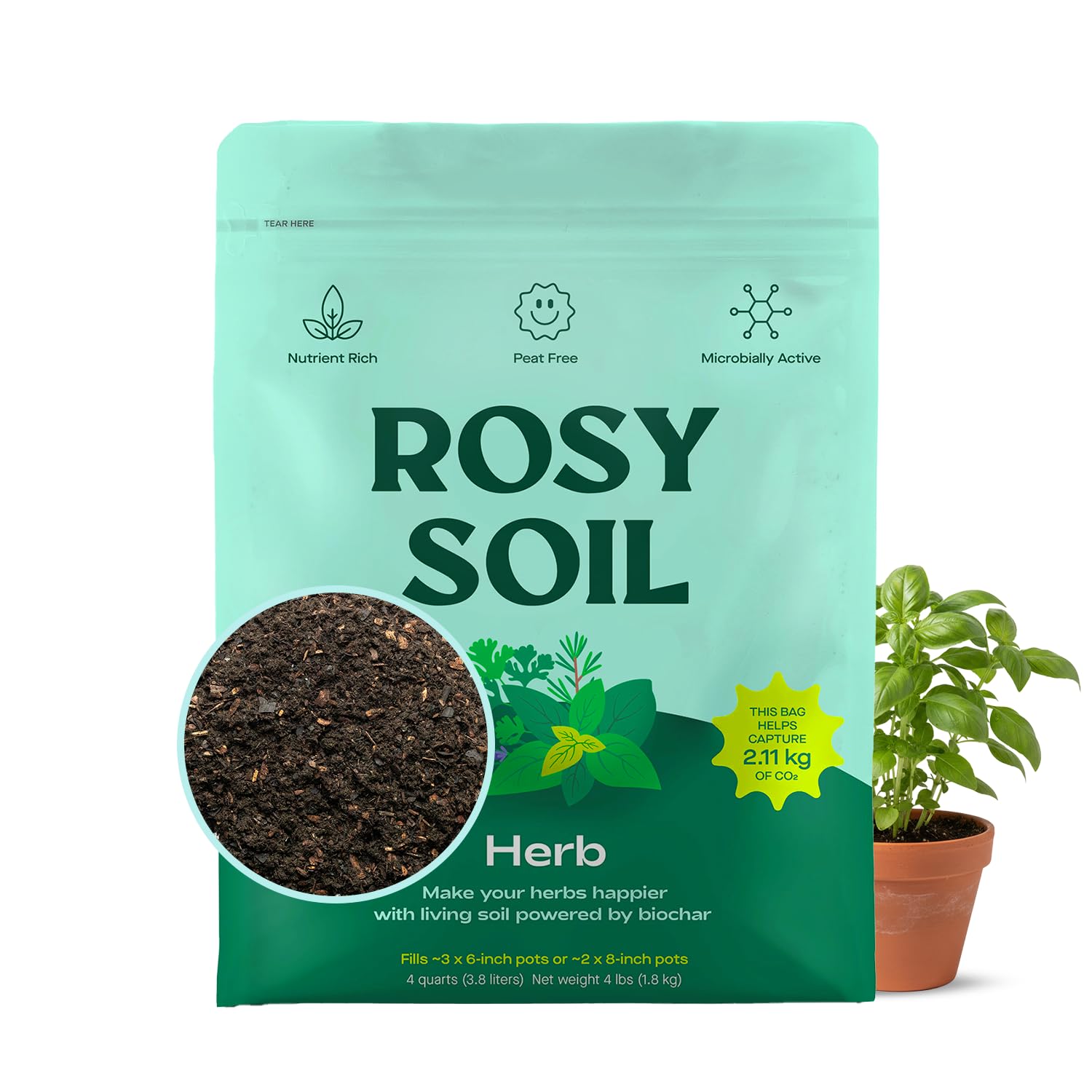
Rosy Soil built this mix specifically for culinary herbs like basil, and the ingredient list shows it. Biochar acts as a microscopic sponge, holding water and nutrients while hosting mycorrhizae that extend root reach. The worm castings provide gentle nitrogen without the burn risk of synthetic feeds. In real-world use, testers reported basil seedlings sprouting faster than in standard peat-based blends, and the fluffy texture prevents the crusting that blocks emergence.
The peat-free formulation is a practical advantage for indoor gardeners who struggle with overwatering. Without dense peat, the mix drains quickly enough to allow daily misting without waterlogging. The 4-quart bag fills two to three 6-inch pots, which is ideal for a windowsill herb collection. Owners using it for Thai basil noted slower drying in ceramic pots compared to plastic, so match your pot material accordingly.
One reviewer mentioned the bag arrived with significant empty headspace, making the first scoop awkward, and that it doesn’t actively repel existing fungus gnat infestations. The value proposition is strong for organic growers who want a complete ecosystem in the bag rather than a bare base they must amend themselves.
What works
- Biochar improves nutrient retention without compaction
- Fast-draining structure ideal for indoor basil pots
- Certified organic with no peat moss or synthetic fillers
What doesn’t
- Bag size feels smaller than labeled due to settling
- Not treated for insects — existing gnats may persist
2. Coast of Maine Bar Harbor Blend Potting Soil
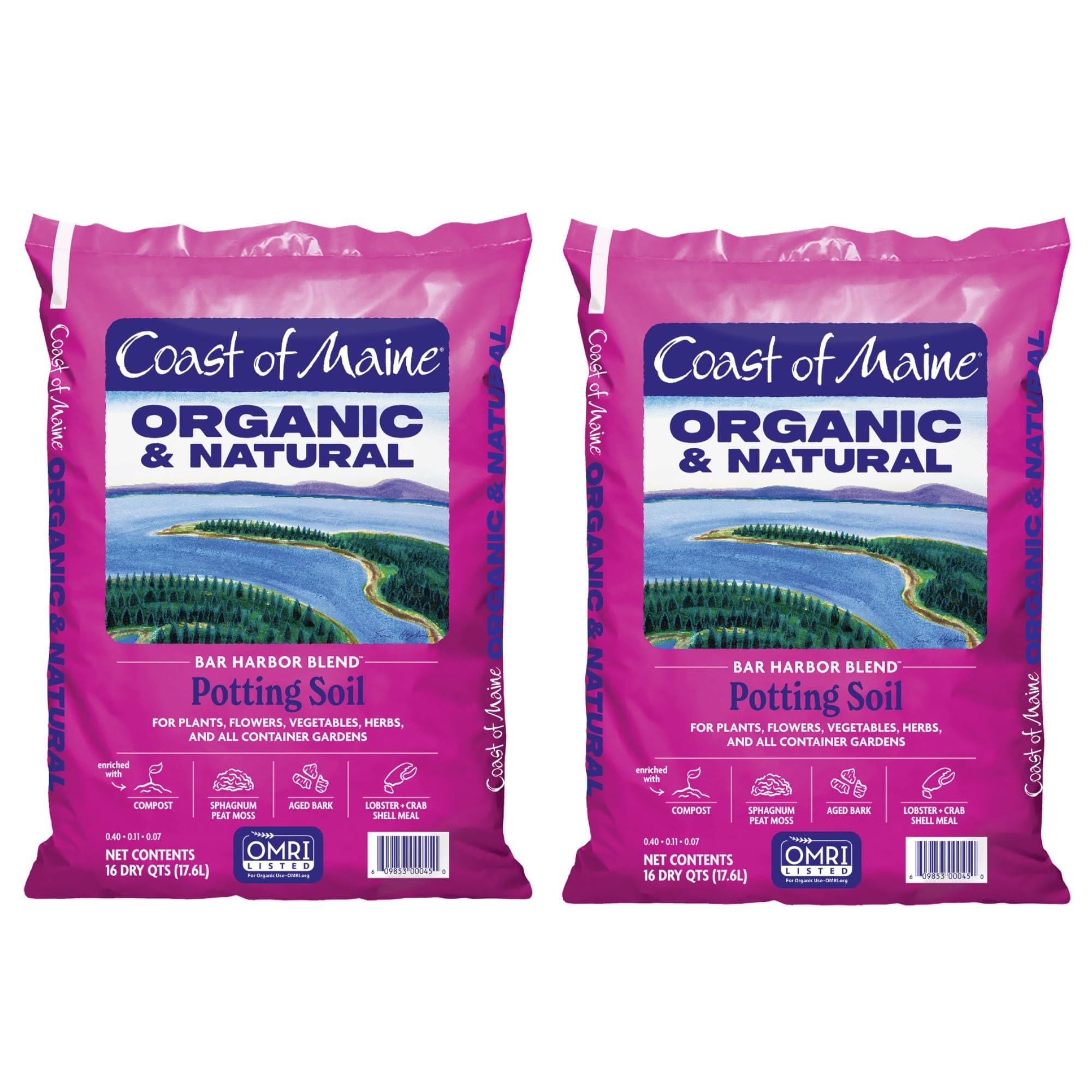
Coast of Maine’s Bar Harbor Blend is a nutrient-dense organic mix that reads like a recipe for a thriving basil plant. The lobster and crab shell meal supply slow-release calcium and chitin, which soil microbes convert into natural fungicidal compounds. Kelp meal delivers trace minerals and growth hormones that promote lateral branching — exactly what you want for a bushy basil plant rather than a single leggy stalk.
The texture is noticeably darker and richer than standard peat-based blends, with visible perlite chunks and compost fines. Owners consistently report that this mix outperforms mass-market brands in side-by-side container tests, with tomato and basil plants outgrowing their counterparts by a wide margin. The 16-quart bag is substantial enough for multiple large containers or an entire window-box herb garden without needing to supplement.
A few users noted the initial moisture retention is slightly higher than expected, so watering should be tapered during the first week after transplant. The higher price point reflects the premium marine-sourced ingredients and the company’s regenerative farming practices, making it a smart choice for organic purists who want maximum flavor concentration in their harvest.
What works
- Crab and kelp meal provide unique trace nutrient profile
- Encourages dense, bushy basil growth over leggy stems
- Large bag size reduces per-pot cost for serious gardeners
What doesn’t
- Holds moisture longer than average — reduce water initially
- Premium price may be overkill for single small pots
3. Midwest Hearth Premium Potting Soil Mix

Midwest Hearth delivers a no-nonsense formulation built around the classic trio of peat moss, perlite, and vermiculite. The vermiculite addition sets it apart from basic potting mixes — it increases water-holding capacity without sacrificing aeration, which is a critical balance for basil that needs consistent moisture but hates wet feet. The pH is pre-buffered to a broad 6.0–7.0 range, covering basil’s preferred zone without requiring additional lime.
Users consistently praise the light, fluffy texture that doesn’t compact after repeated watering cycles. Several reviewers used it as a seed-starting medium for petunias and herbs, reporting fast germination and minimal damping-off. The 8-quart resealable bag is convenient for apartment dwellers who don’t have space to store a 2-cubic-foot bale. One jade plant owner noted their specimen looked noticeably happier after transplant, which aligns with the mix’s versatility beyond just basil.
The bag is priced near the top of the mid-range bracket, but the inclusion of vermiculite — which most budget blends skip — justifies the cost. Some users felt the 8-quart bag was smaller than expected for the price, though the actual volume is standard. For basil growers who want a reliable, ready-to-use base without organic certification premiums, this is a strong middle-ground pick.
What works
- Vermiculite improves moisture retention without waterlogging
- Pre-buffered pH saves the step of testing and amending
- Light texture prevents root binding in small basil pots
What doesn’t
- Not organic — contains synthetic peat moss processing
- Bag volume feels small relative to the price point
4. Perfect Plants Indoor Plant Soil

Perfect Plants designed this indoor blend specifically for the houseplant market, but its ingredient profile — pine bark, coco coir, perlite, sand, and garden lime — aligns well with basil’s requirements. The pine bark fines provide slow-decaying organic matter that improves structure over weeks, while the sand fraction ensures rapid drainage that basil seedlings need. Multiple verified buyers emphasized that this soil arrived completely free of fungus gnats, a common frustration with mass-market bags that sit in damp warehouse conditions.
The 4-quart size is practical for a small indoor herb garden of three to four pots. Owners praised the light, airy texture that doesn’t compact or form a hard crust on the top layer. One reviewer who had lost several aglaonema plants to root rot saw immediate improvement after switching to this mix, noting the soil dried faster in terracotta pots. The inclusion of garden lime directly addresses the pH buffering that basil requires, preventing leaf tip burn from acidic peat-heavy mixes.
The bag is compact, and some users felt the 4-quart volume was barely enough for a single repotting project when filling larger 10-inch containers. The blend is not optimized specifically for edible herbs — it’s a general indoor formula — so basil growers may want to supplement with a light nitrogen feed after three to four weeks. For small-scale container basil with zero pest introduction, it’s a clean and reliable option.
What works
- Consistently reported as gnat-free and pest-free
- Sand and bark create excellent drainage for basil roots
- Garden lime buffers pH into the ideal 6.0–7.0 range
What doesn’t
- 4-quart bag is small for multiple large containers
- General formula may need nitrogen boost for heavy feeders
5. Leaves and Soul Professional Indoor Herb Soil

Leaves and Soul markets this as a professional indoor herb soil, and the ingredient list backs up the claim. The blend combines peat moss, coco coir, perlite, and dolomite lime — the same core components that commercial greenhouse growers use for basil propagation. The dolomite lime provides both calcium and magnesium while stabilizing pH, addressing two common deficiencies that cause basil leaves to yellow between veins.
At 2.2 quarts, this is a small batch product designed for the home windowsill gardener rather than a large container operation. Owners who used it for bonsai and orchids noted that the texture was well-balanced and that the resealable bag kept unused soil fresh for months. One reviewer successfully revived a nearly dead orchid after transplanting, which speaks to the mix’s ability to support root recovery. The bag’s compact footprint makes it easy to store in a kitchen cabinet alongside gardening tools.
The volume is the primary constraint. A single bag barely fills one 8-inch pot, so growers with multiple basil plants will need to buy several bags. Some customers felt the price per quart was high compared to larger bulk options. For a single basil plant on a sunny apartment windowsill where you need zero waste and a perfectly pre-formulated mix, this is a tidy solution.
What works
- Dolomite lime prevents calcium/magnesium leaf deficiencies
- Small resealable bag fits tight kitchen storage spaces
- Proven to support root recovery in stressed plants
What doesn’t
- 2.2 quarts is very small — only enough for one pot
- Premium per-quart cost compared to standard blends
6. Back to the Roots Organic Worm Castings

This is not a standalone potting soil — it is a pure vermicompost amendment designed to be blended into your existing base mix. Back to the Roots provides 5 pounds of screened worm castings with a fine, uniform texture that integrates easily into coco coir, peat, or bark-based soils. For basil, mixing a 1:4 ratio of castings to base soil delivers a slow-release nitrogen source that fuels leaf production without the salt burn of chemical fertilizers.
Users report visible results within two weeks: darker leaf color, thicker stems, and more vigorous branching. The castings also introduce beneficial microbes that break down organic matter in the root zone, creating a living soil ecosystem. One reviewer specifically noted its safety for monarch caterpillars on milkweed, confirming the absence of synthetic residues. The 5-pound bag goes a long way — it can amend dozens of basil pots or be used as a top dressing throughout the growing season.
Because it is an amendment, it requires a base potting mix to work effectively, adding an extra step and cost for new growers. The product holds significant moisture, so gardeners with heavy watering habits should adjust their schedule to prevent compaction. For experienced basil growers who already have a preferred base blend, this is the most cost-effective way to boost organic fertility.
What works
- Pure organic nitrogen without synthetic chemical burn
- Introduces beneficial soil microbiology to the root zone
- Large 5-pound bag provides many amendment doses
What doesn’t
- Requires a separate base potting mix to be usable
- High moisture retention can compact if overwatered
7. Miracle-Gro Potting Mix (3-Pack)

Miracle-Gro’s standard potting mix is the most widely recognized name in container gardening, and this 3-pack of 8-quart bags delivers enough volume to fill a half-dozen basil pots at a low per-quart cost. The formula is built around processed forest products, sphagnum peat moss, and a wetting agent that rehydrates quickly even if the bag dries out in storage. It also contains a polymer-coated fertilizer that releases nutrients over a six-month window, which simplifies feeding for casual growers.
In practice, basil grown in this mix tends to produce rapid early growth thanks to the embedded fertilizer. The texture is lightweight and easy to handle, and the 3-pack format avoids the heavy lifting of a single large bale. Multiple reviewers noted that the smaller bags are convenient for apartment gardeners who can’t store a 2-cubic-foot bag. The well-draining nature was praised by users growing a mix of herbs and flowers in outdoor containers.
Several experienced growers flagged the presence of fungus gnats in some bags, a well-known issue with mass-produced warehouse-stored mixes. The fertilizer feed can also be slightly aggressive for basil seedlings — growers should wait two weeks after germination before relying on the built-in nutrients. For a low-cost, high-volume solution where you don’t mind monitoring for pests, this 3-pack provides the best raw material coverage per dollar.
What works
- Three separate bags provide excellent value for volume
- Built-in fertilizer feeds basil for six months
- Lightweight texture is easy to carry and pour
What doesn’t
- Fungus gnats reported in some batches
- Fertilizer strength may overwhelm young seedlings
Hardware & Specs Guide
pH Buffering
Basil demands a soil pH between 6.0 and 7.0 for optimal nutrient uptake. Blends containing dolomitic lime or garden lime automatically adjust pH into this range. Without a buffering agent, peat-heavy mixes can drift below pH 5.5, locking out calcium and causing leaf tip burn. Always check the ingredient list for a lime component or plan to test and amend separately.
Organic vs Synthetic Fertilizer
Organic mixes rely on compost, worm castings, kelp, or bone meal for slow-release nutrition that builds soil biology over weeks. Synthetic fertilizer mixes provide an immediate nutrient surge but can burn tender roots if overused. For basil, organic options produce stronger flavor compounds, while synthetic blends prioritize rapid leaf expansion — choose based on whether speed or taste matters more to you.
FAQ
Can I use succulent or cactus soil for basil?
How often should I repot basil into fresh potting soil?
Does the soil mix affect the taste of homegrown basil?
Final Thoughts: The Verdict
For most gardeners, the potting soil for basil winner is the Rosy Soil Herb Mix because it combines biochar, worm castings, and mycorrhizae in a peat-free formula that drains fast and feeds steadily. If you want maximum organic nutrient density for container vegetables and herbs, grab the Coast of Maine Bar Harbor Blend. And for the best value per quart with a pre-buffered pH, nothing beats the Midwest Hearth Premium Potting Soil Mix.