
Specs are compiled from manufacturer listings and verified buyer reviews and can change over time — please confirm the key details on the product page before buying.
Picking the right mix for your tomato plants is the single biggest decision you’ll make this season. Get it wrong, and you’ll fight wilting leaves, blossom-end rot, or compacted, waterlogged soil that strangles the roots. The right mix yields a steady patio harvest of flavorful tomatoes.
I’m Rikta — the founder and writer behind Lawn Gear Lab. This guide is built by comparing the manufacturers’ published specifications and the patterns across verified customer reviews, so you get each pick’s real strengths and trade-offs instead of marketing spin.
Here are the potting mixes that consistently give container tomatoes the drainage, aeration, and steady feeding they need to thrive. Use this breakdown to find the best potting mix for tomatoes before you buy a single bag.
Our Picks at a Glance


How To Choose The Best Potting Mix For Tomatoes
A tomato mix must balance moisture retention, nutrient supply, and aeration for deep roots. It must retain moisture without waterlogging, feed steadily, and stay loose for root growth.
Prioritize Drainage and Aeration
Look for ingredients like perlite and pumice — those small white or gray volcanic rocks — which create air pockets in the soil. These pockets let excess water drain away from the roots and allow oxygen to reach them. Proper drainage prevents root rot in container tomatoes.
Check the Nutrient Content
Tomatoes are hungry plants. The mix should contain compost, worm castings, or a controlled-release fertilizer to feed them over time. A mix that feeds for up to 6 months will spare you from having to fertilize as often. If you choose an organic mix, the nutrients may require a bit of work from soil microbes to become available to the plant.
Match the Bag Size to Your Pots
Sizes range from small 5-quart bags to big 3-cubic-foot bales. A single 8-quart bag roughly fills two 8-inch containers, so you need to know how many pots you’re planting. If you’re growing more than a couple of plants, buying the largest bag you can manage will save you money and a second trip to the store.
Quick Comparison
| Model | Best For | Volume | Key Ingredients | Feed Duration | Amazon |
|---|---|---|---|---|---|
| Miracle-Gro Potting Mix (3-Pack)★ Best Overall | All-around container growing | 8 qt. per bag | Fertilizer blend | Up to 6 months | Amazon |
| Coast of Maine Organic Planting SoilPro Pick | High-fruiting organic harvests | 20 quarts | Composted manure, peat moss | Organic | Amazon |
| Premium Potting Soil MixBest Value | Simple, balanced container mix | 8 quarts | Peat moss, vermiculite, perlite | Not specified | Amazon |
| Miracle-Gro Moisture Control | Forgetting to water | 16 qt. per bag | Sphagnum peat moss, coir | Up to 6 months | Amazon |
| Coast of Maine Bar Harbor Blend | Getting an earthy, rich mix | 1 cubic foot | Compost, lobster shell, kelp meal | Slow-release nitrogen | Amazon |
| Brut Organic Potting Soil | Purists wanting filler-free soil | 1 cubic foot | Worm castings, perlite | Organic | Amazon |
| Espoma Organic Potting Mix | Versatile container gardening | 2 cubic feet | Peat moss, humus, perlite | Organic | Amazon |
| Gardenera Tomato Potting Mix | Single-plant gardeners | 5 quarts | Coco coir, perlite, worm castings | Organic | Amazon |
| Roots Organics Formula 707 | Committed growers | 3 cubic feet | Peat, compost, coco, castings | Not specified | Amazon |
In‑Depth Reviews
1. Miracle-Gro Potting Mix – 8 qt. (3-Pack)
Our pick — over 4.5★ from 850+ verified ratings; the strongest balance of quality and price.
The most-praised all-rounder that takes the guesswork out of feeding.
This mix wins because it removes the hardest part of growing tomatoes — remembering to fertilize. The formula feeds your plants for up to 6 months, which means you can focus on watering and sunlight without worrying about a weekly feeding schedule. It eliminates the worry of under-fertilizing.
Buyers consistently praise the soil’s texture and performance. Buyers report it works beautifully for both outdoor and indoor planting, and it drains well without packing down into a hard mass, keeping water flowing to the roots. You get three bags at once, and each 8-quart bag fills two 8-inch containers, so you have enough on hand for a few pots or to refresh one larger planter. This is also the crowd favorite here — it holds 4.7 stars across 800+ owners.
The trade-off is the bag size. Owners often describe the bags as small, and if you’re planting a whole row of containers, you’ll need to order more than one pack. The value is also a point of debate — some call it decent for the price, others say it’s very pricey per quart, especially when you compare it to the larger options below.
What it lets you do
- Skips a 6-month feeding schedule so you can plant and water
- Versatile enough for containers, flowers, and vegetables
- Easy to keep loose so water reaches roots
What to measure first
- Each bag is only 8 qt., so plan on multiples
- Value debate for the price per bag
Grab it for: the gardener who wants a trusted, no-thinking-required mix for a few containers.
Pause if: you’re planting a large container garden, where the cost per quart adds up quickly.
2. Coast of Maine Organic Planting Soil for Vegetables & Tomatoes
The organic blend that gets tomatoes fruiting fast, even in short seasons.
If you want organic results that you can see, this is the mix to buy. It’s built specifically for tomatoes and vegetables, with composted manure and sphagnum peat moss to balance moisture and drainage. Unlike the Miracle-Gro above, this one is OMRI listed for organic use, so it fits a nature-conscious gardening routine.
You get visible results fast. In a short northern growing season, tomatoes were fruiting within a month, and owners describe the soil as so dark it looks “black as coal.” Quality is the #1 thing buyers praise. The 20-quart bag holds 20 quarts, while the 8-quart Premium Potting Soil Mix holds 8 quarts, so you restock less often.
The main concern across reviews is pests. Some owners mention fungus gnats or bugs in the soil, while others had no issues at all, which suggests opening and prepping the bag outside is a smart precaution. A few also say the price feels high if you’re filling many containers — for a small number of tomato plants, it’s worth it; for a big garden, it gets costly.
Payoff you’ll notice
- Fast growth and fruiting within a month in short seasons
- Rich, dark color you can see is good for roots
- Organic and OMRI listed for natural gardening
Watch for
- Occasional gnats or bugs, so open with caution
- Pricey for large-scale container gardens
Your pick if: you grow a few organic tomato plants and want to see fast, tangible fruiting.
Reconsider if: you’re planting a large number of containers where the cost per bag starts to hurt.
3. Premium Potting Soil Mix with Peat Moss, Vermiculite, Perlite
A simple, professional-style blend that keeps moisture without getting soggy.
This one is for the gardener who wants a dependable, no-nonsense base for their tomatoes. It uses the same formulation as professional growers, combining peat moss, perlite, and vermiculite for aeration and moisture control. The pH is balanced for a broad spectrum of plant types, so you don’t have to overthink whether your tomatoes will take to it.
The quality here is the standout, drawing the highest praise among all its aspects. Customers note their plants thrive in it, holding moisture perfectly without getting waterlogged or soggy. It is easy to use right out of the bag for young trees, vines, and potted perennials. The simple three-ingredient blend keeps it honest and predictable compared with the more complex organic mixes.
The honest trade-off is the volume. At 8 quarts, it’s the same size as the winner above, and you’ll need multiple bags for a real container garden. Buyers are split on the value — some call it a good deal, others consider it low value for the soil you get. It is also the smallest bag among the mid-range options here, so it may suit a single pot or a transplant best.
Why pick this one
- Professional grower formulation with a balanced pH
- Holds moisture without getting soggy
- Great for potted perennials and container plants
Keep in mind
- 8 quarts is small — buy multiples for more than one pot
- Value is a point of debate among owners
Choose this for: a simple, affordable blend for a starter pot or a single tomato plant.
Look elsewhere if: you need a big volume of soil for a larger container setup.
4. Miracle-Gro Moisture Control Potting Mix – 16 qt. (2-Pack)

For the gardener whose plants wilt when life gets busy.
This mix rescues plants from heat-stress wilting. It holds more water than standard mixes lacking sphagnum peat moss, coir, and a wetting agent., so your pots stay moist longer between waterings. It actively protects against both over- and under-watering, which is the most common way potted tomatoes die.
Gardeners in hot climates swear by it during heat waves, noting it really helped keep moisture in the pots when they otherwise would have had to water daily during drought conditions. The plant health benefits draw the most praise, and the two 16-quart bags give you more usable volume than the 8-quart packs, with each bag filling one 12-inch container. The value is a real strength here, too, with owners calling the price great for the money.
The trade-off is the price. It’s not the cheapest soil, and the extra cost only pays off if you often forget to water. If you water daily without fail, a standard mix feeds your tomatoes just as well for less money.
What it protects against
- Over- and under-watering stress
- Dried-out pots during heat waves and drought
- Frequent daily watering in summer
Think about
- Costs more than a standard mix
- Two 16 qt. bags fill fewer pots than a big bale
Reach for this if: you’re prone to missing a watering day or live in a hot, dry climate.
skip it if: you water on a strict schedule and want the cheapest soil per quart.
5. Coast of Maine Bar Harbor Blend Potting Soil
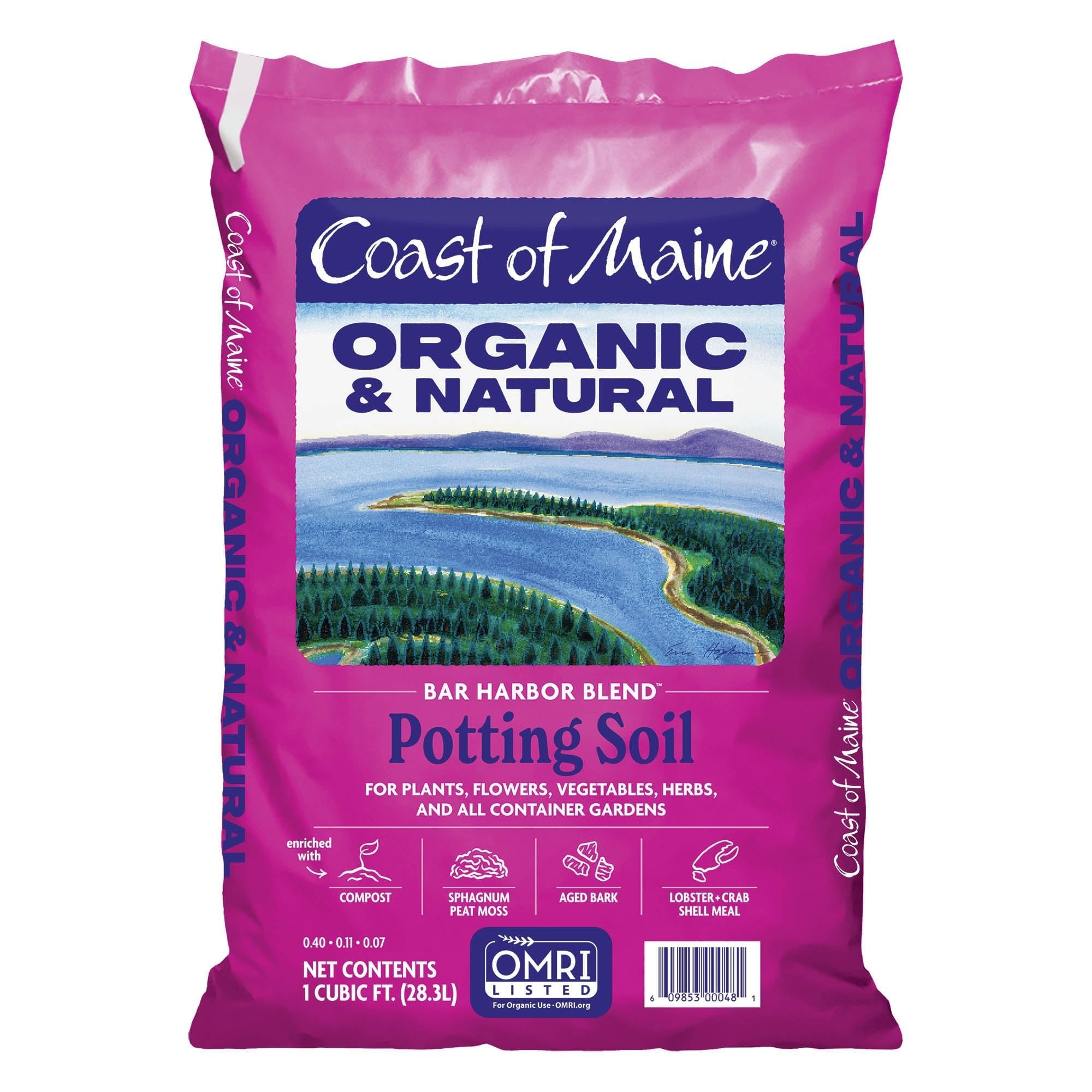
The coastal blend that makes container tomatoes look their best ever.
This mix reads like a superfood smoothie for plants. It’s formulated with sphagnum peat moss, compost, perlite, lobster and crab shell meal, and kelp meal, giving it a dark, rich color from the compost and a nutrient base most standard mixes lack. For tomatoes specifically, the results speak for themselves — owners say their tomatoes never looked so good in container gardens.
The soil quality is the big draw, earning the most praise of any aspect. It holds water well and doesn’t dry out as fast, so you’ll find yourself watering less often. The natural slow-release nitrogen feeds consistently over time, and it’s approved for organic gardening. The 1-cubic-foot bag is a solid middle-ground size, bigger than an 8-quart bag but easier to manage than a 3-cubic-foot bale.
The honest split here is on plant health. While many owners see vibrant growth, a real minority report it killed their plants completely — this is the most-discussed risk in the reviews. It’s a heavier, denser mix, so if you’re growing in small pots, you may want to add extra perlite for drainage, as some experienced gardeners recommend.
What makes it stand out
- Nutrient-rich with lobster, crab, and kelp meals
- Holds moisture well, reducing watering frequency
- Approved for organic gardening with natural slow-release nitrogen
Proceed with care
- A minority of reviewers point out poor plant health
- Denser mix may need extra perlite for small pots
Pick this for: container gardeners who want a rich, nutrient-dense organic blend for impressive tomato health.
Be cautious if: you’re wary of a dense mix in small pots without adding your own drainage.
6. Brut Organic Potting Soil – 1 Cubic Foot
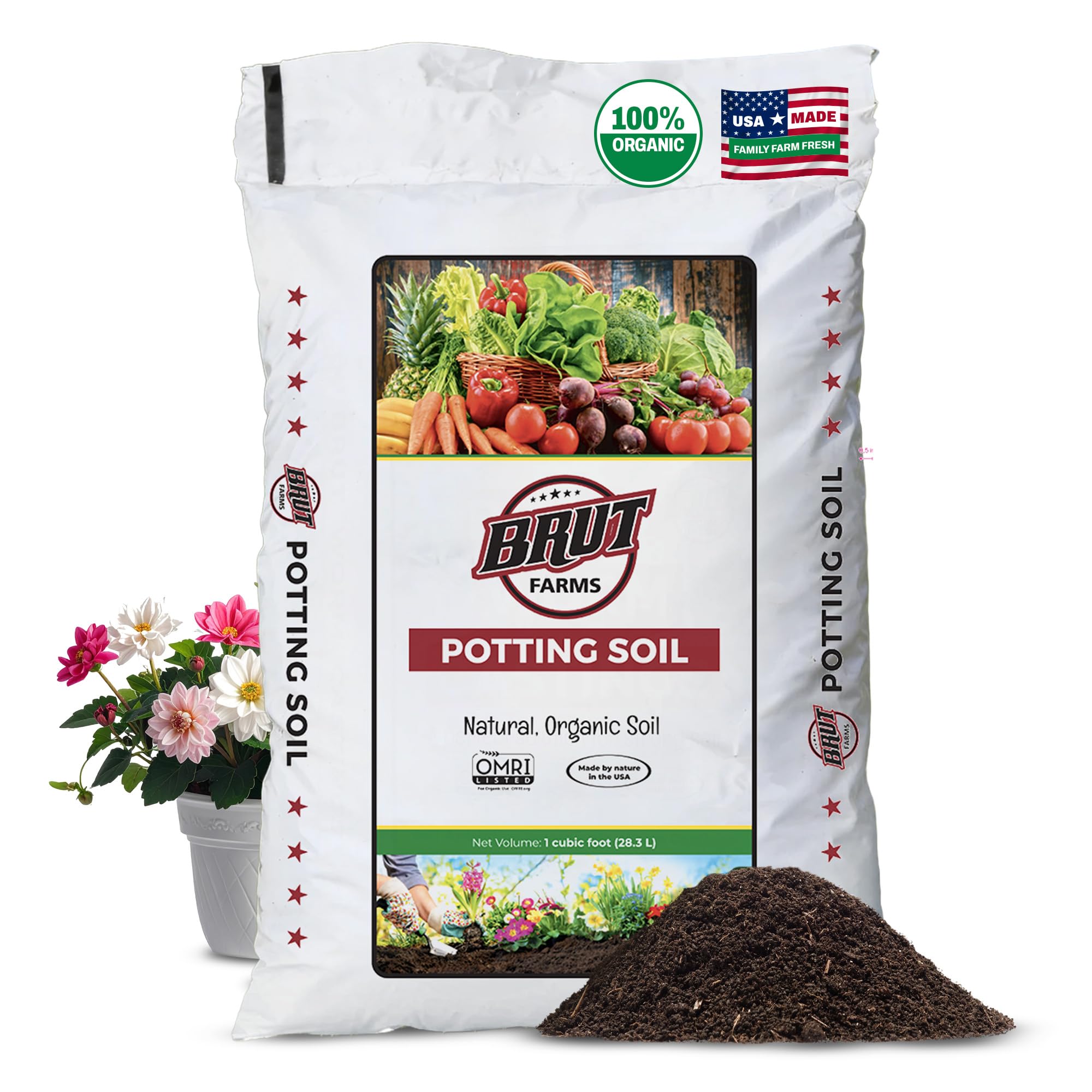
A filler-free, microbe-rich mix that turns leaves deep green in days.
Don’t let the small family-farm branding fool you — this is a serious mix for serious growers. It’s packed with microbe-rich worm castings and trace minerals like Azomite and kelp, feeding plants directly at the root level. It’s 100% organic, filler-free, with no sticks or wood chips, so you’re not paying for junk you can’t use.
You see proof within days. Shoppers say leaves turning deep green and new growth appearing just 2 days after planting. The dark color reflects the rich nutrient content, and the pH sits naturally between 6.3 and 6.5, ideal for most plants. The 1-cubic-foot bag is clean, light, and easy to handle.
The biggest complaints revolve around two things: the price and the pests. A number of buyers report fungus gnats, and there are concerns about poor germination in some batches. The value is a mixed bag — some call it worth the price, others say it’s too expensive. If you’re on a budget or sensitive to gnats, proceed with the same open-outside precaution as with other organic mixes.
Why it’s worth a look
- Filler-free with no sticks or wood chips
- Microbe-rich worm castings for fast green growth
- Naturally pH balanced between 6.3 and 6.5
Consider first
- Some owners mention fungus gnats
- Price is a common point of debate
Your mix if: you want a clean, organic, filler-free soil and are willing to pay for it.
Pass if: you’re on a tight budget or have had bad experiences with gnats.
7. Espoma Organic Potting Mix – 2 Cubic Feet

The chunky, loamy base that thrives across all your containers.
Sitting in the premium tier, this 2-cubic-foot bag is the versatile workhorse for the gardener with a mixed collection of pots. It’s a rich blend of sphagnum peat moss, humus, and perlite, enriched with earthworm castings, alfalfa meal, kelp meal, and feather meal. It’s about as complete a base as you can buy for containers.
What wins people over is how clean and effective it is. Owners describe it as a chunky, loamy base they can adjust by adding bark, perlite, or sand as needed. It doesn’t crust, holds water well, and comes without the large wood chunks some competitors ship. The quality and versatility get the most praise, and owners find it more effective than other brands for growing vegetables. It’s a favorite for houseplants too, even ones over 25 years old.
The honest notes: some owners find the bag a bit dry, with very little perlite visible, and the bug resistance draws negative feedback from a subset of buyers. It’s also not the cheapest organic option, though owners note it’s worth the premium price. For a single tomato plant, a 5-quart bag is easier; for a full container garden, this is the one.
What stands out
- Complete organic blend with castings and meals
- Chunky, loamy texture with no large wood chunks
- Versatile for vegetables, herbs, flowers, and houseplants
What to expect
- May arrive dry with minimal visible perlite
- Premium price point
- Some bug resistance complaints
Best for: a multi-plant household that wants one versatile organic bag for everything.
Wait if: you’re just starting with a single tomato seedling and want a smaller bag.
8. Gardenera Premium Organic Tomato Potting Mix
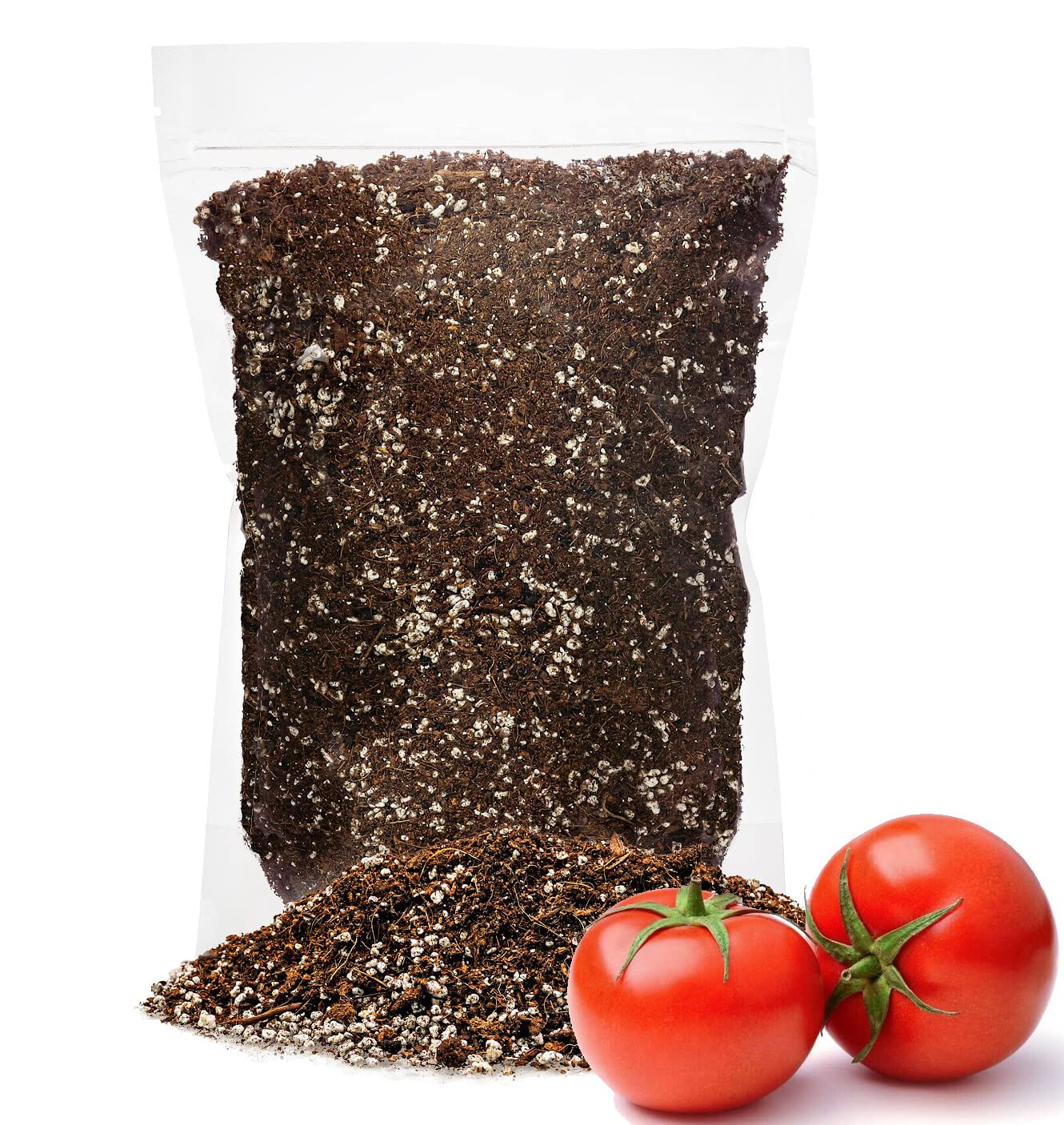
The hand-blended mix for the single-plant grower who wants quality.
If you only have one or two tomato plants, this is your premium, tomato-specific choice. It’s hand-blended on a small family farm in the USA with Coco Coir, Canadian Peat Moss, Perlite, and Worm Castings. It’s a thoughtfully crafted mix designed specifically for the needs of tomato plants, not a generic all-purpose soil.
The results are visible quickly. An owner in Florida reported their Everglades tomato plant looked stronger and almost doubled in height, with multiple flowers after adding this soil. Another gardener grew “big and juicy” beefsteak tomatoes. The extra perlite and low-salt coco coir promote rapid root development and quick drainage, so your plant won’t sit in soggy soil.
The downside is the size. At 5 quarts, it’s the smallest bag here, and one reviewer notes you may need at least three bags for a single full-size plant in a large pot, so it’s not economical for serious growing. It suits the small-scale, quality-focused grower who prefers a hand-crafted mix over bulk value.
Quality you feel
- Hand-blended tomato-specific formula
- Extra perlite for rapid root development
- Visible results in stronger, doubled-in-height plants
Do the math
- 5 quarts is very small
- May need three bags for one plant, so it’s not economical
Right for: a hobbyist who wants a premium, tomato-specific mix for a single high-value plant.
Not for: anyone planting more than one or two tomatoes — the cost per plant is too high.
9. Roots Organics Formula 707 Growing Mix – 3 Cubic Feet
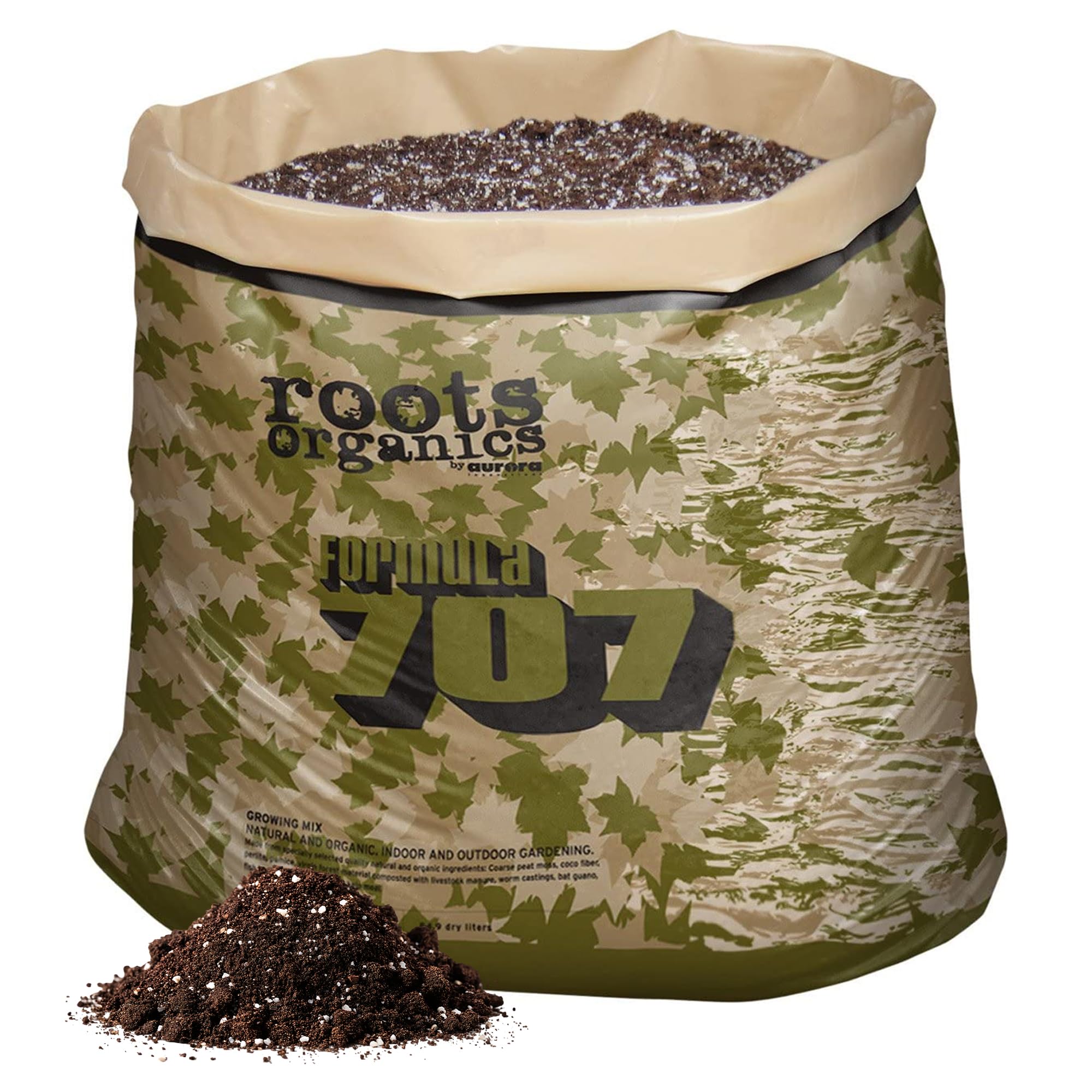
The big-bag grower’s mix that’s ready to go straight out of the package.
This is the heavyweight option for the serious gardener. It comes with 3 cubic feet of nutrient-rich soil packed in a 30-gallon grow bag, so you can plant directly into the bag if you want. It’s crafted with peat moss, coco fiber, worm castings, and manure to deliver a steady supply of nutrients for strong growth.
The standout benefit is the water retention. It contains less perlite and pumice, which is a deliberate choice to promote better water circulation and moisture retention, reducing how often you need to water. Owners describe it as ready to go right out of the bag with no mixing needed, even going seed-to-flower without adding food. The quality gets the top praise, and the included grow bag makes it a flexible option for large container gardens.
The honest feedback is about shipping and value. The bags are heavy, and some customers note their bags arrived damaged or missing a portion due to rough handling in transit. The value is also a split — some call it excellent for the price, others find it overpriced. If you order this, be ready to inspect the bag on arrival.
What you gain
- 3 cubic feet in a 30-gallon grow bag
- Less perlite means better water retention
- Ready to use with no mixing needed
Watch closely
- Heavy bags can get damaged in shipping
- Value is a split decision among owners
Your best bet if: you’re growing in multiple large containers and want the most soil per bag.
Think twice if: you only need a small amount and can’t risk dealing with a damaged heavy bag.
Understanding the Specs
Perlite and Aeration
Perlite is the small white volcanic rock you see in potting mixes. It creates air pockets in the soil, letting water drain away from the roots and allowing oxygen in. For tomatoes in containers, this is critical — without it, soil compacts and suffocates the roots, leading to weak plants and disease.
Peat Moss and Moisture
Sphagnum peat moss or coco coir holds onto water and releases it slowly to the roots. It prevents your pots from drying out too fast between waterings. Finding the right balance between moisture-holding peat and drainage-providing perlite is the secret to happy tomato plants.
FAQ
What is the difference between potting mix and garden soil for tomatoes?
Will a potting mix that feeds for up to 6 months replace all my fertilizing?
How many bags of 8-quart mix do I need for one tomato plant?
What are the benefits of an OMRI listed organic potting mix?
Should I worry about fungus gnats in organic potting soil?
What is the best soil pH range for growing tomatoes?
Can I mix a tomato-specific mix with my regular potting soil?
What does it mean when a potting mix contains worm castings and kelp meal?
Is a 3-cubic-foot bag of potting soil too much for a beginner?
Why does my potting mix stay soggy even when I don’t overwater?
Final Thoughts: The Verdict
For most container gardeners, the potting mix for tomatoes winner is the Miracle-Gro Potting Mix because its 6-month feeding takes the guesswork out of a heavy feeder, and owners praise its quality more than any other. If you want a proven organic mix that gets tomatoes fruiting fast, grab the Coast of Maine Tomato & Veggie blend. And if you tend to forget watering in summer heat, the Miracle-Gro Moisture Control is the one to reach for.
How We Picked
We do not accept paid placement. Every pick is matched to a real buyer and a real use-case; we do not hands-on test units.
Sources & Methodology
Specifications: manufacturer listings and product documentation. Review insights: verified customer reviews, as of August 2026. Pricing: not shown on this page (it changes often); check the current price via the retailer link.
As an Amazon Associate, Lawn Gear Lab earns from qualifying purchases. This does not affect which products we feature.