
The single biggest killer of succulents isn’t neglect — it’s the wrong soil. Standard potting mixes hold moisture against the roots, turning a drought-tolerant plant into a rotting mess. You need a medium that dries fast, breathes freely, and won’t compact into mud.
I’m Rikta — the co-founder and writer behind Lawn Gear Lab. I’ve spent hundreds of hours cross-referencing ingredients, particle sizes, drainage rates, and pH profiles of dozens of retail succulent mixes so you don’t have to guess which bag actually delivers the arid conditions your plants require.
Whether you’re rehabbing an overwatered echeveria or potting a fresh batch of cuttings, this deep dive into the market’s top blends will set you straight. Here is my breakdown of the absolute best potting mix for succulents available today.
How To Choose The Best Potting Mix For Succulents
Not every bag labeled “succulent soil” drains fast enough. The key isn’t the brand name — it’s the particle size distribution and the ratio of water-retentive organic matter to mineral grit.
Particle Size & Drainage Speed
Succulent roots rot when surrounded by fine particles that trap water. The ideal mix uses grit between 1/8 and 1/4 inch — calcined clay, pumice, or crushed lava rock — combined with coarser pine bark or coir. Fine peat moss and sand alone create a slurry that holds moisture for days too long.
Organic Matter vs. Inorganic Grit Ratio
A mix with more than 40% organic matter (peat moss, compost, forest products) stays wet too long for indoor succulents. Look for blends where perlite, pumice, calcined clay, or lava rock make up at least half the volume. Premium gritty mixes often skip peat entirely.
pH Balance & Nutrient Source
Most succulents prefer a slightly acidic to neutral pH range of 5.5 to 7.0. Mixes containing worm castings provide a gentle, slow-release nutrient base without the burn risk of synthetic fertilizers. Avoid blends with added chemical plant food unless you want leggy, weak growth.
Quick Comparison
On smaller screens, swipe sideways to see the full table.
| Model | Category | Best For | Key Spec | Amazon |
|---|---|---|---|---|
| Bonsai Jack Gritty Mix | Premium | Advanced growers, root rot prevention | pH 5.5; 1/4-inch uniform particles | Amazon |
| Rosy Soil Cactus Mix | Premium | Peat-free, living soil with microbes | 4qt bag; chunky texture; peat-free | Amazon |
| Soil Sunrise Blend | Premium | Large pots or multiple plants | 8qt volume; hand-mixed mineral grit | Amazon |
| DUSPRO 7-in-1 Mix | Mid-Range | Value-priced 7-ingredient blend | Perlite, pumice, lava rock, worm castings | Amazon |
| Hoffman Organic Mix | Mid-Range | Budget-friendly, works for desert cacti | 4qt bag; ready-to-use; pH balanced | Amazon |
| Miracle-Gro Succulent Mix | Mid-Range | Entry-level users, aloe and snake plants | 4qt bag; includes slow-release plant food | Amazon |
| Grow Queen Fertilizer | Value | Feeding existing soil, boosting blooms | 7 packets; feeds 28 plants up to 8 months | Amazon |
In‑Depth Reviews
1. Bonsai Jack Jacks Gritty Mix

This is the definitive gritty mix for growers who have lost plants to overwatering and want a bulletproof solution. Bonsai Jack uses calcined clay (Bonsai Block), Monto clay, and pine fines — all sized consistently at roughly 1/4 inch — so water runs straight through rather than pooling in fine crevices. The pH is factory-set to 5.5, ideal for acid-loving succulents and cacti that struggle in alkaline bag soils.
Because the mix contains almost no organic matter, it demands a different watering rhythm: you’ll need to soak the pot weekly and let the particles fully dry between drinks. Lower leaves may desiccate faster than in peat-based blends, but the payoff is zero root rot and zero fungus gnats. The bag is on the smaller side for the cost, but one gallon goes a long way for small pots and rehab projects.
Seasoned succulent collectors and bonsai enthusiasts treat this as their gold standard. If you’ve battled gnats or mushy stems for months, switching to this gritty mix is the single most impactful change you can make.
What works
- Completely uniform particle size prevents compaction and anaerobic pockets
- Zero organic filler means fungus gnats cannot establish
- Optimized pH supports strong root development and vibrant leaf color
What doesn’t
- Expensive per quart compared to peat-based competitors
- Requires more frequent deep watering — beginners may under-water at first
- Small bag size limits use for large planters or multiple pots
2. Rosy Soil Cactus & Succulent Potting Mix
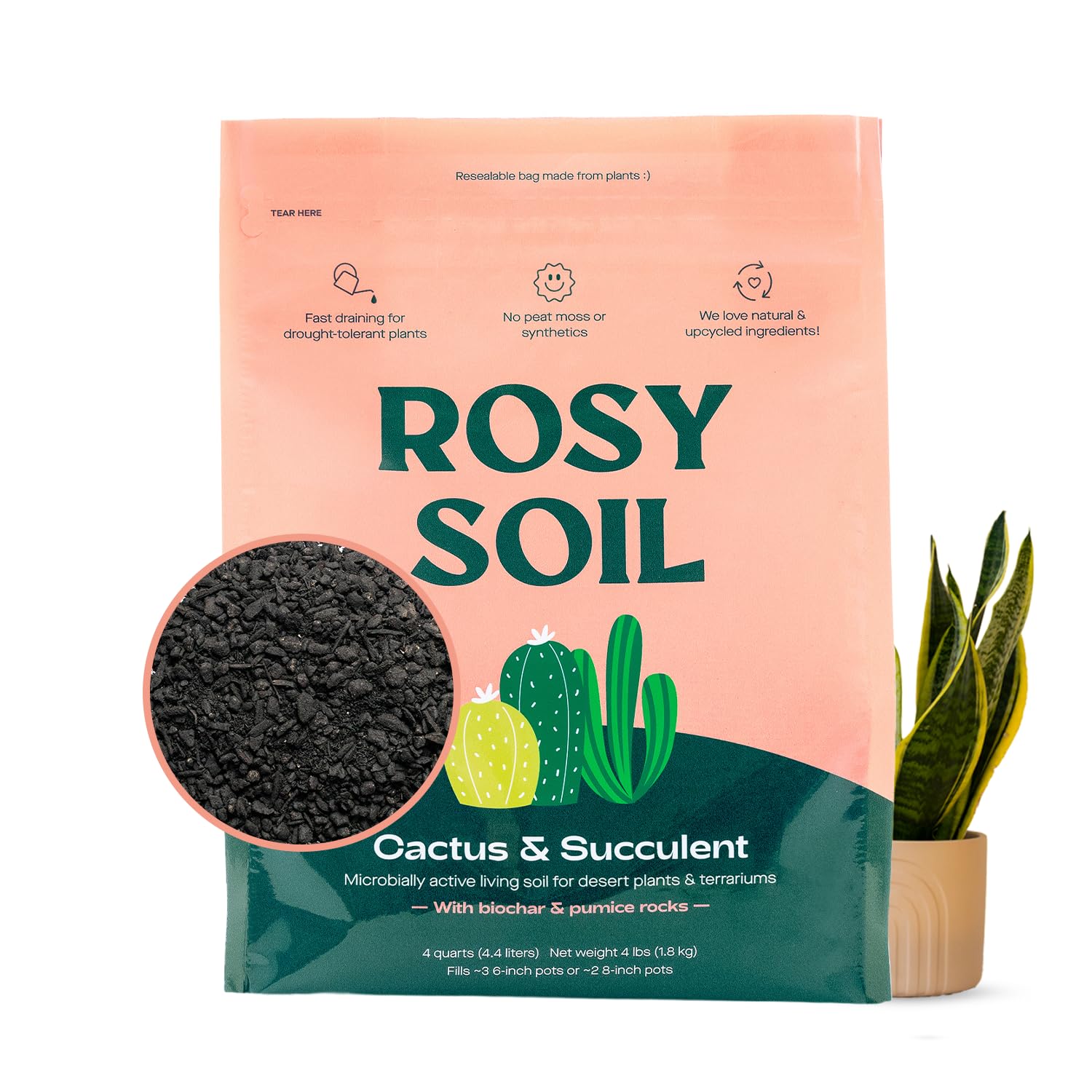
Rosy Soil takes a different approach from the mineral-heavy gritty mixes by building a chunky, fibrous medium enriched with beneficial fungi and worm castings. The texture stays loose and airy even after several watering cycles, so roots never sit in a soggy plug. Because it skips peat moss entirely, the mix drains faster and resists the sour, compacted feel of conventional organic soils.
The pre-inoculated microorganisms actively colonize the root zone, breaking down organic matter into plant-available nutrients without the need for synthetic fertilizers. This living-soil ecosystem is especially beneficial for slow-growing succulents like lithops and haworthia that respond poorly to chemical feeding. The 4-quart resealable bag is plastic-neutral and made in the USA, with planting instructions printed directly on the package.
A few experienced growers note that the mix still benefits from additional perlite or bonsai soil for very sensitive species, but for most aloe, jade, and snake plants, it works straight out of the bag. No gnats, no odor, and consistent results across multiple repottings make this a strong runner-up for eco-conscious plant parents.
What works
- Peat-free construction drains faster than standard organic mixes
- Beneficial microbes and worm castings provide gentle, sustained nutrition
- Plastic-neutral packaging with clear print instructions for beginners
What doesn’t
- Some users feel the mix still needs extra grit for finicky species
- Resealable bag can be difficult to close fully, risking moisture loss
- Slightly wet consistency straight from the bag can surprise first-time buyers
3. Soil Sunrise Cactus & Succulent Potting Mix
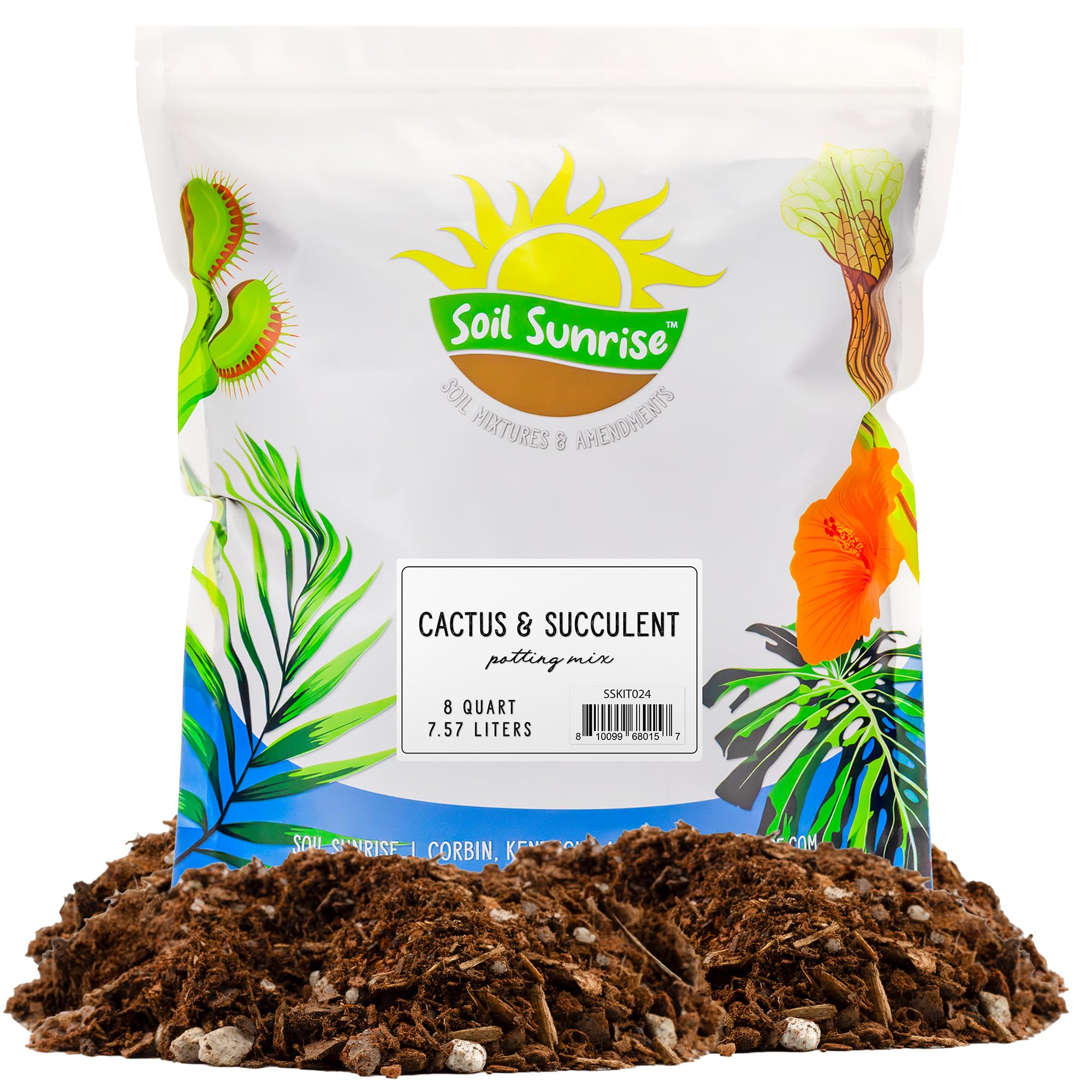
Soil Sunrise offers an 8-quart hand-blended mix built from pine bark, silica sand, calcined clay, and pumice — a distinctly gritty composition that looks and feels nothing like bagged peat. The larger volume makes it practical for filling a 12-inch pot or handling multiple repottings in one go, which is rare among premium succulent blends that typically sell in 2- or 4-quart sizes.
The hand-mixing process ensures the ingredients are evenly distributed, and reviewers consistently praise the absence of bugs, mold, or foul odors. The drainage is immediate — water applied to the surface disappears in seconds and exits the drainage holes clear rather than muddy. For growers who want a true mineral grit without paying for tiny specialty bags, this delivers the best cost-per-quart ratio in the premium tier.
Some users still choose to amend the mix with extra pumice or perlite for extremely sensitive plants like lithops or pleiospilos, but most succulent owners find it works perfectly as a standalone medium. If you have a collection of medium to large pots, this is the most efficient way to get consistent drainage across the board.
What works
- Largest volume (8 quarts) among premium gritty mixes — best value per quart
- Visible, tactile mineral composition with excellent drainage immediately out of the bag
- Hand-mixed with consistent ingredient distribution; no pests or odors reported
What doesn’t
- Pine bark content may break down faster than pure mineral mixes
- Premium price tag puts it above mid-range competitors
- Very sensitive species may still need additional pumice or perlite added
4. DUSPRO Succulents Soil Potting Mix 7-in-1
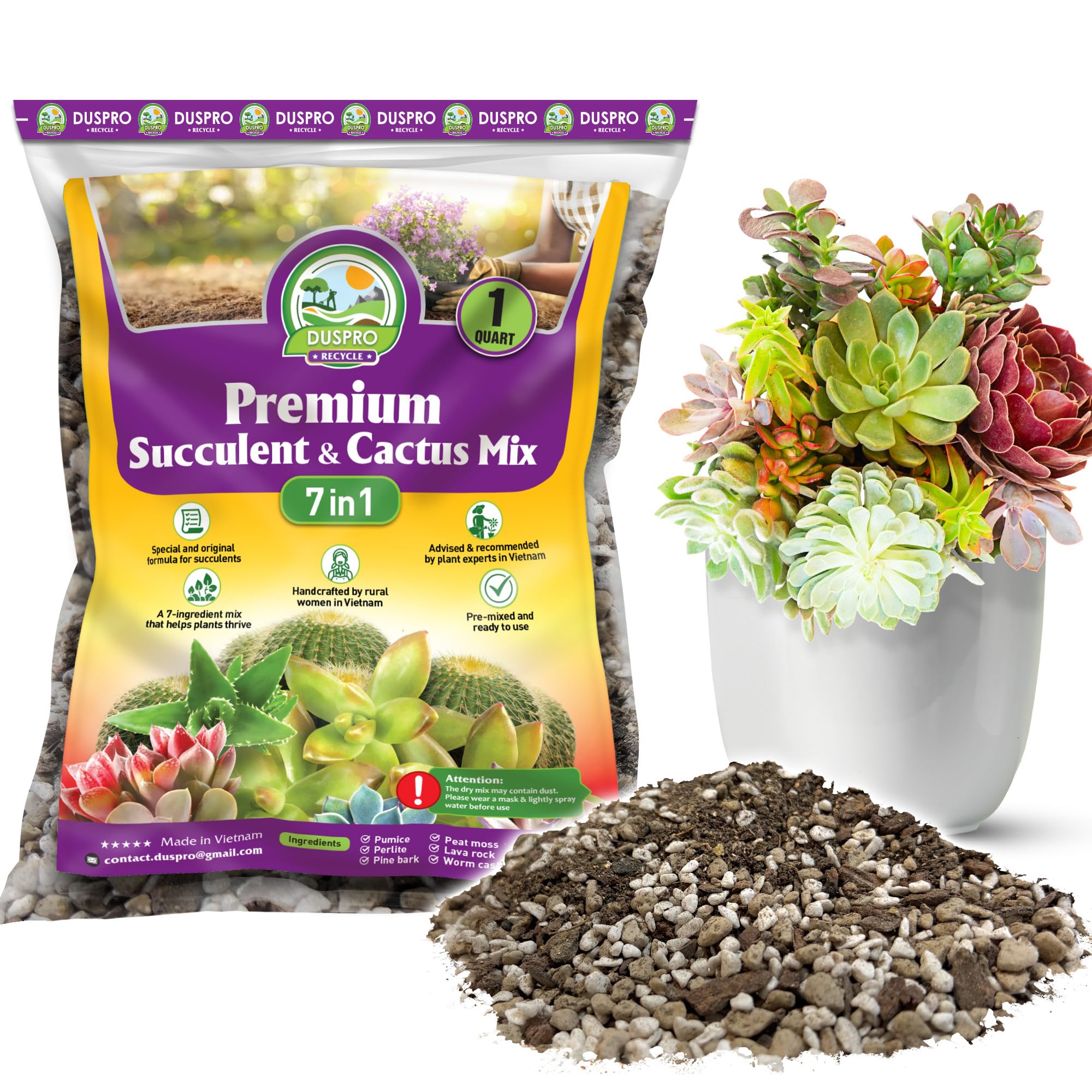
DUSPRO packs seven separate components — perlite, pumice, lava rock, peat moss, pine bark, worm castings, and vermiculite — into a single pre-mixed bag aimed at the mid-range buyer who wants both drainage and a nutrient base. The mineral fraction (perlite, pumice, lava rock) gives roots the airflow they need, while the worm castings supply gentle, slow-release fertility that won’t burn tender cuttings.
The texture is noticeably grittier than standard big-box succulent soils, but the presence of peat moss and vermiculite means it still holds some moisture between waterings. That makes it a solid choice for beginners who worry about under-watering but want better drainage than regular potting soil. The bag is available in 1QT, 2QT, 4QT, and 8QT sizes, so you can scale the purchase to the size of your project.
A few reviewers noted the 1QT bag is smaller than expected, and the peat component means it’s not as fast-draining as the fully inorganic gritty mixes. But for the cost and ingredient diversity, it offers a good balance of performance and accessibility for the average succulent grower.
What works
- Seven-ingredient blend provides both drainage and natural nutrients
- Available in multiple sizes from 1QT to 8QT for different pot volumes
- Worm castings deliver gentle, non-burning fertility ideal for cuttings
What doesn’t
- Small bag sizes can feel expensive for the actual volume received
- Peat and vermiculite retain more moisture than fully gritty alternatives
- Some bags arrive slightly dusty; sifting recommended before use
5. Hoffman 10404 Organic Cactus and Succulent Soil Mix

Hoffman’s Organic Cactus and Succulent Soil Mix has been a staple in the budget-friendly segment for years, and it earned its reputation by delivering reliable drainage at a competitive price point. The blend uses compost and peat moss as its base with added perlite and sand for aeration, and the pH is pre-adjusted to suit both jungle cacti and desert varieties. It’s a ready-to-use formula that requires no mixing or amending for most common succulents.
Several long-term users specifically mention that this mix cleared up persistent fungus gnat problems they experienced with other brands, thanks to the lower content of uncomposted wood chips. The texture is lighter and fluffier than typical cactus soils, which tend to rely too heavily on sand and end up compacted. Snake plants and jade respond particularly well to the Hoffman blend straight from the bag.
The main tradeoff is that the peat and compost base means the mix will still hold more moisture than a gritty mix — growers of lithops or other ultra-sensitive species will want to add extra perlite or pumice. But for everyday echeveria, aloe, and haworthia, this is the most cost-effective ready-to-use option that doesn’t compromise on drainage basics.
What works
- Proven formula eliminates fungus gnats and root rot for most common succulents
- Light, fluffy texture drains better than sand-heavy cactus soils
- Very affordable per quart compared to premium gritty blends
What doesn’t
- Peat base retains more moisture than inorganic mixes
- Requires additional perlite or grit for ultra-sensitive species like lithops
- Some bags may arrive with minor leakage due to packaging
6. Miracle-Gro Succulent Potting Mix

Miracle-Gro’s entry into the succulent category is built on a familiar foundation: sphagnum peat moss and processed forest products fortified with their proprietary slow-release plant food. The blend is designed for beginners who want a one-bag solution for aloe, echeveria, snake plants, and similar common houseplant succulents. It’s widely available, carries a recognizable brand name, and the 4-quart bag fills an 8-inch container with ease.
The main concern with this product is that it is essentially peat moss with a small amount of fertilizer — it lacks the inorganic grit (perlite, pumice, lava rock) that experienced succulent growers consider essential. Reviewers consistently note that the mix stays wetter than ideal and requires strict watering discipline: you must allow the soil to dry completely between waterings or risk root rot. Many users successfully amend it with their own perlite to improve drainage.
For someone picking up their first succulent at a grocery store and needing a quick repotting medium, this works well enough. But anyone building a serious collection will quickly outgrow it and seek a mix with better aeration and less water retention. It’s a passable starting point, not a long-term solution.
What works
- Widely available and immediately recognizable brand for new plant owners
- Slow-release plant food supports early growth without extra fertilizing
- No strong odor and easy to handle straight from the bag
What doesn’t
- Mostly peat moss — stays wet too long for many succulents
- No inorganic aeration ingredients; almost always needs added perlite
- Not suitable for sensitive species or growers prone to overwatering
7. Grow Queen Complete Organic Cactus & Succulent Fertilizer
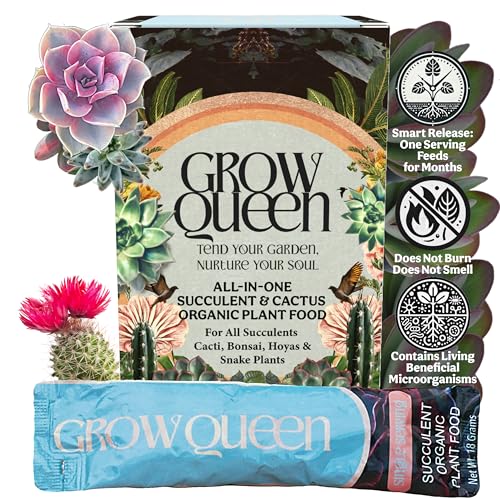
Grow Queen is not a soil mix — it’s a dry, OMRI-listed organic fertilizer formulated specifically for succulents, cacti, bonsai, and snake plants. Each box contains seven single-serving packets, with one packet treating up to 2 gallons of soil or 6 small succulents. The formula combines fast-release nutrients with slow-release organic matter, providing feeding that lasts 2 to 8 months from a single application.
What sets Grow Queen apart from liquid fertilizers is the presence of living beneficial soil microbes. When applied, the powder can produce a harmless, fuzzy-looking layer on the soil surface as the microbes activate — a sign that the soil ecosystem is waking up, not a mold problem. The formula is vegan, pet-safe, and non-burning, so even over-application won’t chemically damage roots. Users report visible improvements in stem strength, leaf color, and bloom production within weeks.
This product is best used as a companion to a high-drainage soil mix rather than as a standalone medium. If your current soil drains well but your succulents look pale, leggy, or stop growing, the Grow Queen packets provide a clean, mess-free way to reintroduce nutrients without the sludge and measurement hassle of liquid concentrates.
What works
- Pre-portioned packets eliminate measuring errors and mess
- Organic, vegan, and pet-safe with beneficial microbes for soil health
- Non-burning formula — over-application won’t kill sensitive plants
What doesn’t
- Not a soil mix — must be applied to an existing potting medium
- Visible microbe activity on the soil surface can alarm new users
- Single-dose packets limit scalability for very large collections
Hardware & Specs Guide
Particle Size Distribution
The most critical spec for succulent soil is particle size. Mixes with particles smaller than 1/16 inch (fine sand and peat) compact and trap water. Premium gritty mixes use particles between 1/8 and 1/4 inch — large enough to create air pockets that let water drain in seconds. A simple test: wet a handful of soil and squeeze it. If it holds its shape like mud, it’s too fine. If it crumbles and water runs free, it’s properly structured.
pH Range
Succulents and cacti generally thrive in a slightly acidic soil pH of 5.5 to 7.0. Below 5.0, nutrient uptake of calcium and magnesium is blocked, causing weak stems and discolored leaves. Above 7.5, iron and manganese become unavailable, leading to chlorosis. Most commercial succulent mixes are pre-adjusted, but if you are blending your own, test the pH with a simple probe meter. Gritty mixes like Bonsai Jack optimize pH to 5.5 specifically to maximize nutrient availability for desert plants.
FAQ
Can I use regular potting soil for succulents if I add perlite?
How do I know if my succulent soil is draining fast enough?
Should I buy a gritty mix or a peat-based mix for my first succulents?
Final Thoughts: The Verdict
For most gardeners, the potting mix for succulents winner is the Bonsai Jack Gritty Mix because its uniform 1/4-inch particles and optimized pH eliminate the two biggest killers of succulents: root rot and nutrient lockout. If you want a peat-free living soil with built-in microbes, grab the Rosy Soil Cactus Mix. And for a high-volume, cost-efficient option that handles multiple pots without amendments, nothing beats the Soil Sunrise 8-Quart Blend.