
Specs are compiled from manufacturer listings and verified buyer reviews and can change over time — please confirm the key details on the product page before buying.
Your jade plant can handle a lot, but one day in soggy soil turns it from a thriving “money tree” into a droopy yellow mess. The fix is the potting mix it sits in. You cannot grab any bag of potting soil off the shelf and expect your jade to forgive you.
I’m Rikta — the founder and writer behind Lawn Gear Lab. This guide is built by comparing the manufacturers’ published specifications and the patterns across verified customer reviews, so you get each pick’s real strengths and trade-offs instead of marketing spin.
What follows are seven of the best mixes judged by drainage speed, ingredient quality, and real customer results, with a clear winner for most people looking for the best potting medium for jade plants.
Quick Picks
- Soil Sunrise Jade Plant Potting Soil Mix — Best Overall
- Rosy Soil Cactus & Succulent Potting Mix — Premium Pick
- Spike & Bloom High Drainage Cactus Soil Mix — Specialty Use
- Hoffman Organic Cactus and Succulent Soil Mix (2 Pack) — Top Value
- Miracle-Gro Succulent Potting Mix — Budget Pick
- Cactus & Succulent Potting Soil Mix (Midwest Hearth) — Simple Starter
- DUSPRO Succulents Soil Potting Mix (7-in-1) — Specialized Blend
How To Choose The Best Potting Medium For Jade Plants
Jade plants (Crassula ovata) are succulents that store water in their thick leaves and stems. Their roots are shallow and rot quickly if the medium stays damp. A good mix for them needs to drain fast — think coarse sand and perlite, not heavy clay or rich garden soil.
Drainage Speed is Everything
Water should pass through the pot as soon as you pour it. If the mix clumps or holds a puddle on the surface for more than a few seconds, it is too dense. Materials like perlite, pumice, lava rock, and coarse sand create air pockets that let excess water run out and keep oxygen flowing to the roots.
Organic Matter Balance
Jades do need some organic content for nutrients, but too much peat moss or compost turns the mix into a sponge. Look for a blend that uses coconut coir or pine bark rather than straight sphagnum peat — coir drains better and does not repel water when dry. Worm castings are a bonus because they feed the plant slowly without holding wetness.
Particle Size and Texture
A chunky mix with visible bits of bark, charcoal, or rock stays aerated much longer than a fine, dusty one. Over time, fine particles settle and compact, trapping moisture near the root zone. If the bag looks like a bag of sand and dust, it will turn into concrete after a few waterings.
Quick Comparison
| Model | Best For | Volume | Key Ingredients | Texture | Amazon |
|---|---|---|---|---|---|
| Soil Sunrise Jade Plant Potting Soil Mix | Dedicated jade owners | 8 Quarts | Coco coir, charcoal, perlite, worm castings | Chunky, airy | Amazon |
| Rosy Soil Cactus & Succulent Potting Mix | Eco-conscious growers | 8 Quarts | Peat-free, worm castings, microbes | Chunky, loose | Amazon |
| Spike & Bloom High Drainage Cactus Soil | Specialty/exotic cacti | 4 Quarts | Clays, sands, mycorrhizal fungi | Gritty | Amazon |
| Hoffman Organic Cactus and Succulent Soil Mix | Fungus gnat recovery | 4 Quarts | Peat moss, perlite, sand | Light, fluffy | Amazon |
| Miracle-Gro Succulent Potting Mix | Budget-friendly starter | 4 Quarts | Peat moss, forest products, plant food | Peat-heavy | Amazon |
| Cactus & Succulent Potting Soil Mix (Midwest Hearth) | Simple repotting (ready to use) | 4 Quarts | Peat moss, perlite, vermiculite | Balanced | Amazon |
| DUSPRO Succulents Soil Potting Mix | Desert native seedlings | 1 Quart | Perlite, pumice, lava rock, worm castings | 7-in-1 blend | Amazon |
In‑Depth Reviews
1. Soil Sunrise Jade Plant Potting Soil Mix
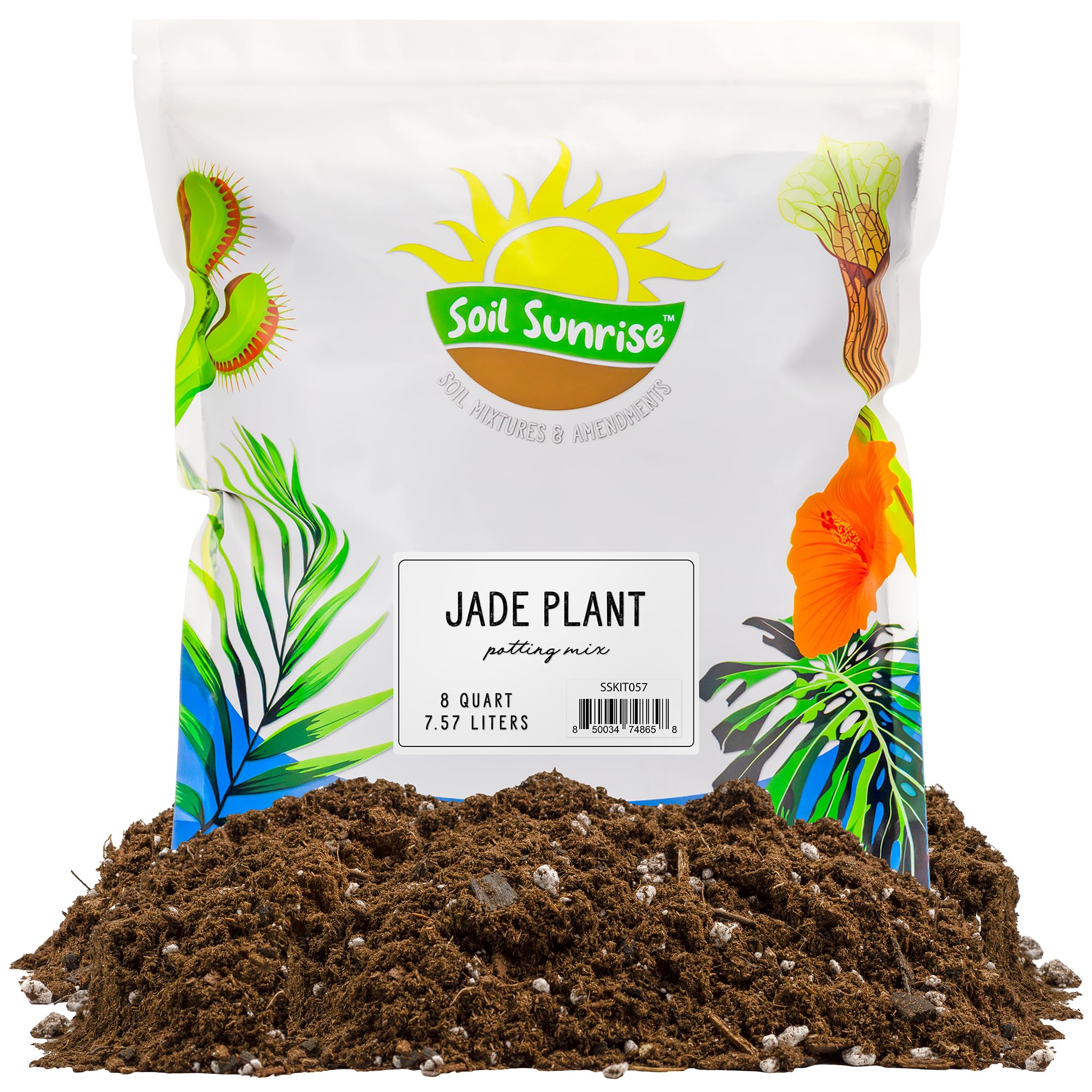
The jade-specific mix with an airy texture that finally fixes soggy roots.
Most succulent soils are general-purpose blends that happen to work for jade. Soil Sunrise made a formula specifically for Crassula ovata, and the ingredient list tells you they thought it through. You get coconut coir (which holds water without getting boggy), pine bark chunks for structure, horticultural charcoal for filtration, worm castings for gentle nutrients, and horticultural perlite for drainage. That is five separate ingredients, each doing a different job, all packed into a 8-quart bag that fills a full 12-inch pot with plenty left over. Compared to the 4-quart bags below, this volume is a full 2x larger, so you are not hunting for a second bag for a single big pot.
Buyers report being “hopeful to grow a healthy jade plant now that I have this particular potting soil for it,” and the feedback consistently highlights how loose and airy the mix stays after watering. One owner specifically mentioned using half the pot with pebbles and the soil draining so well that the jade’s roots never sat wet. The only catch is the bag size — several reviewers noted that for a single small bonsai you only use about 3 cups, making the 8-quart bag more than you need unless you have multiple plants. That is a “too much of a good thing” problem, but an easy one to live with.
What makes it stand out
- Soilless blend formulated specifically for jade plants, not generic succulents.
- Five key ingredients (coir, bark, charcoal, worm castings, perlite) for balanced drainage and feeding.
- Generous 8 Quarts — enough for a 12-inch pot.
One thing to consider
- Large bag is excessive for a single small pot; store the extra in a sealed container.
Reach for this if: you want a jade-dedicated mix with proven ingredients and enough volume for big pots or multiple plants.
Look elsewhere if: you only need a handful of cups for one small bonsai and prefer a smaller bag.
2. Rosy Soil Cactus & Succulent Potting Mix
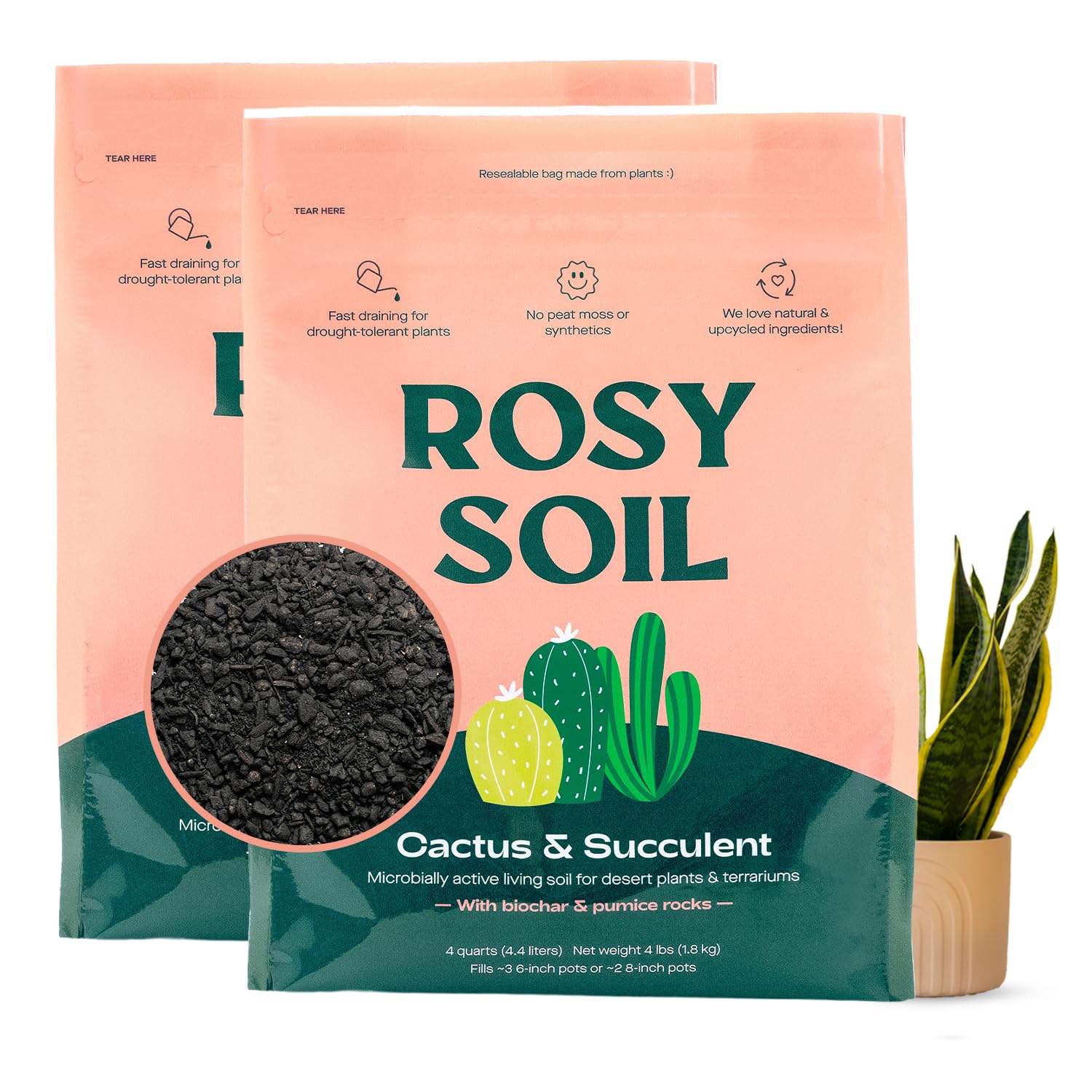
A chunky, peat-free mix loaded with beneficial fungi and worm castings.
Rosy Soil earns its premium status by doing something most others do not: it skips peat moss entirely. The resulting mix stays loose and open, so excess water drains almost immediately — exactly what your jade needs. The bag also comes pre-loaded with beneficial microorganisms and worm castings, building a living soil ecosystem that feeds roots without synthetic fertilizer. One reviewer noted their succulents replanted a month ago look healthy, with clean dark soil and no bugs across six bags. Another customer called it great for “rooting new pups” after adding a bit of gravel. The 4-quart bags come as a pack of two (8 quarts total), giving you the same volume as the Soil Sunrise pick above, though you pay more for the premium ingredients and peat-free guarantee.
Some users do mix it with extra perlite or bonsai soil to make it even grittier for older plants, which is a common tweak for any succulent mix. The resealable packaging is a thoughtful touch, though a few buyers found the seal hard to close and used their own bag instead. If you want an organic formula without peat and with a proven microbial boost, this is your pick.
What elevates it
- Peat-free formula drains better than conventional mixes and is kinder to the environment.
- Contains living beneficial fungi and microorganisms plus worm castings.
- Comes in a pack of two 4-quart resealable bags (8 quarts total).
Worth noting
- Price is higher per quart; some buyers add extra grit or perlite for older plants.
Choose this if: you prefer peat-free formulas and want a living soil mix with natural microbes for healthier roots.
skip it if: you are on a tight budget or want something you can use straight from the bag with no amendments.
3. Spike & Bloom High Drainage Cactus Soil Mix

A gritty, acidic mix designed to prevent root rot in finicky desert plants.
Spike & Bloom calls its formula “death to root rot,” and the science backs it up. The blend uses a custom mix of clays, sands, and a small amount of organic matter — deliberately low in compost and bark — so water runs through fast. It also has a controlled pH of 6.5 (slightly acidic), which aligns with what cactus and jade prefer for nutrient uptake. The standout extra is mycorrhizal fungi powder, which grows a filament network around the roots to pull in water and nutrients far beyond the root’s own reach. Owners mention that their cacti “adjusted quickly with new growth within weeks” and that the gritty, loose texture leaves no room for soggy patches. One enthusiast raved it is “the bees knees of soil.”
The catch is the price per quart, which is the highest in this lineup. One reviewer called it “expensive, but worth it for small exotic cacti in small pots; cheaper brands better for large cacti.” The bag is 8 liters (about 8.45 quarts) but weighs 8 pounds due to the heavy sand and clay content — noticeably heavier than a coir-based mix. For a single jade in a small pot, this is overkill unless you want the premium grit and mycorrhizae (beneficial root fungi).
Its strongest points
- Gritty, sandy texture provides extremely fast drainage — essentially zero risk of root rot.
- Controlled pH of 6.5 matches what jade and cacti need for healthy growth.
- Contains mycorrhizal fungi, which create a vast underground network for water and nutrient uptake.
Heads up
- Highest cost per quart; better suited to smaller exotic plants than large pots.
- Heavy — 8 pounds for 8 liters due to high sand/clay content.
Best for: collectors with small jade bonsai or one-of-a-kind succulents who want the ultimate drain-and-fungi combo.
Not for: someone repotting a large jade in a 10-inch pot — you will blow through the bag too fast.
4. Hoffman Organic Cactus and Succulent Soil Mix (2 Pack)

The two-pack that solved a persistent fungus gnat and root rot problem.
Hoffman’s formula is a classic succulent mix — peat moss, perlite, and sand — but the execution is a cut above typical big-box brands. Customers note it is “light, fluffy, and ready to use” with a texture that stays aerated after watering. One buyer mentioned that this mix “solved persistent fungus gnat infestation and root rot in snake plants after other mixes failed.” They attributed it to the low dead organic matter — no wood chips or pulp that feed gnats — and noted new growth appeared quickly after repotting. For jade owners battling the same issues, that is a compelling story. The 2-pack gives you 8 quarts total (two 4-quart bags), which is a solid value at the mid-range price point.
One bag arrived with a leak in one reviewer’s order, which can happen with any soil purchase, but the soil inside was still described as “great.” Like any peat-based mix, it can compact over time if you do not shake or stir the pot occasionally. For a straightforward, affordable solution that reviewers consistently trust for cacti, succulents, bonsai, aloe, and jade, Hoffman is a safe bet.
Why it earns its spot
- Two 4-quart bags provide 8 quarts of ready-to-use soil at a great per-quart cost.
- Low dead organic matter content helps prevent fungus gnats and root rot.
- Reviewers call it their “favorite succulent/cactus soil” and have used it successfully on jade, echeveria, and lithops.
Possible drawbacks
- Some bags may leak in transit (reported by a small number of buyers).
- Peat-heavy base may need aeration over time to prevent compaction.
Grab this if: you need reliable drainage for multiple pots, especially if you are recovering from fungus gnats or root rot.
Pass it by if: you want a soilless or peat-free mix — this one uses peat moss as a core ingredient.
5. Miracle-Gro Succulent Potting Mix

The familiar-name option that works but needs a handful of perlite.
You know the brand, and the price is the lowest among the picks. The 4-quart bag fills one 8-inch container, and it comes pre-loaded with Miracle-Gro plant food so you do not need to fertilize for the first few weeks. For a beginner grabbing one bag to repot a single jade, the simplicity is appealing — just open, fill a pot with a drainage hole, plant, and water. Many reviewers gave it five stars, noting their succulents “improved growth, color, and health” and that the soil “holds the right amount of water.”
The honest trade-off, confirmed by multiple reviewers, is that this mix is “basically peat moss.” One buyer explicitly said it “stays wetter than ideal” and recommended adding perlite to improve drainage. Peat moss holds moisture well, which is great for moisture-loving plants but less ideal for a succulent that wants to dry out between waterings. If you are careful to water only when the soil is fully dry, it works fine. If you tend to water on a schedule, this mix might keep the roots damp longer than your jade likes.
What works
- Very affordable and widely available — easy to find in stores or online.
- Contains Miracle-Gro plant food for early growth without extra fertilizer.
- No odor and easy to handle, according to buyers.
What to watch for
- Peat-moss base stays wetter than ideal; buyers recommend adding perlite.
- Not the best choice if you overwater — this mix holds onto moisture longer than gritty blends.
Smart for: a first-time succulent owner on a tight budget who waters carefully and lets the soil dry fully.
Not smart for: anyone who has already lost plants to root rot — you need a faster-draining, grittier mix.
6. Cactus & Succulent Potting Soil Mix (Midwest Hearth)
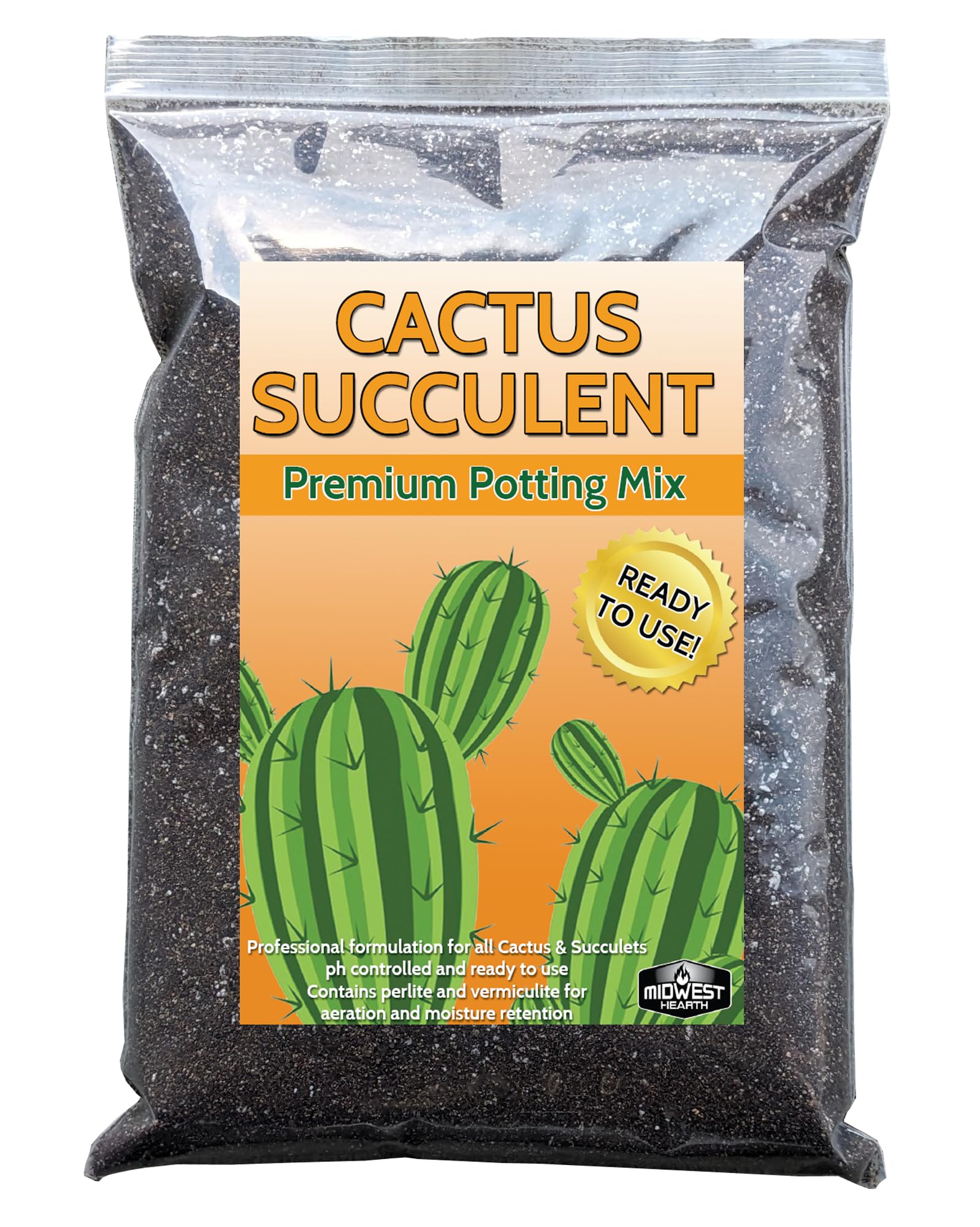
A no-fuss, straight-from-the-bag mix for quick repotting.
Midwest Hearth keeps it simple: a professional, ready-to-use blend of peat moss, perlite, and vermiculite that needs no mixing or amendments. It is pH-balanced for cacti and succulents, and the 4-quart bag (with a resealable top) fills 2-3 standard pots. Buyers who used it for succulent dish gardens reported happy plants, with one noting they “mixed it with another cactus soil” for a custom blend. The primary audience here is someone who wants one bag, one step, done — no measuring, no second trip to the store. The brand is also explicit that it works for jade, Christmas cactus, aloe, and desert rose.
One honest drawback flagged by a reviewer: “dry top particles blow everywhere when window is opened, creating a mess” because the mix is light and dusty when dry. That is a minor annoyance if you keep your pots on a sill near a draft. Overall, it is a solid, straightforward option with no surprises and a price that undercuts most competitors while still delivering good drainage.
Pros
- True “ready to use” — no mixing required, straight from bag to pot.
- Resealable bag keeps the mix fresh for the next repotting session.
- Made in the USA and pH-balanced for succulents.
Cons
- Dry, lightweight particles can blow around if your pot is near an open window.
- Only 4 quarts — you may need two bags for a large jade or multiple pots.
Pick this for: a low-maintenance, single-bag purchase for small to medium repotting jobs.
Pass if: you dislike dusty soil or want a larger bag to avoid buying two.
7. DUSPRO Succulents Soil Potting Mix (7-in-1)
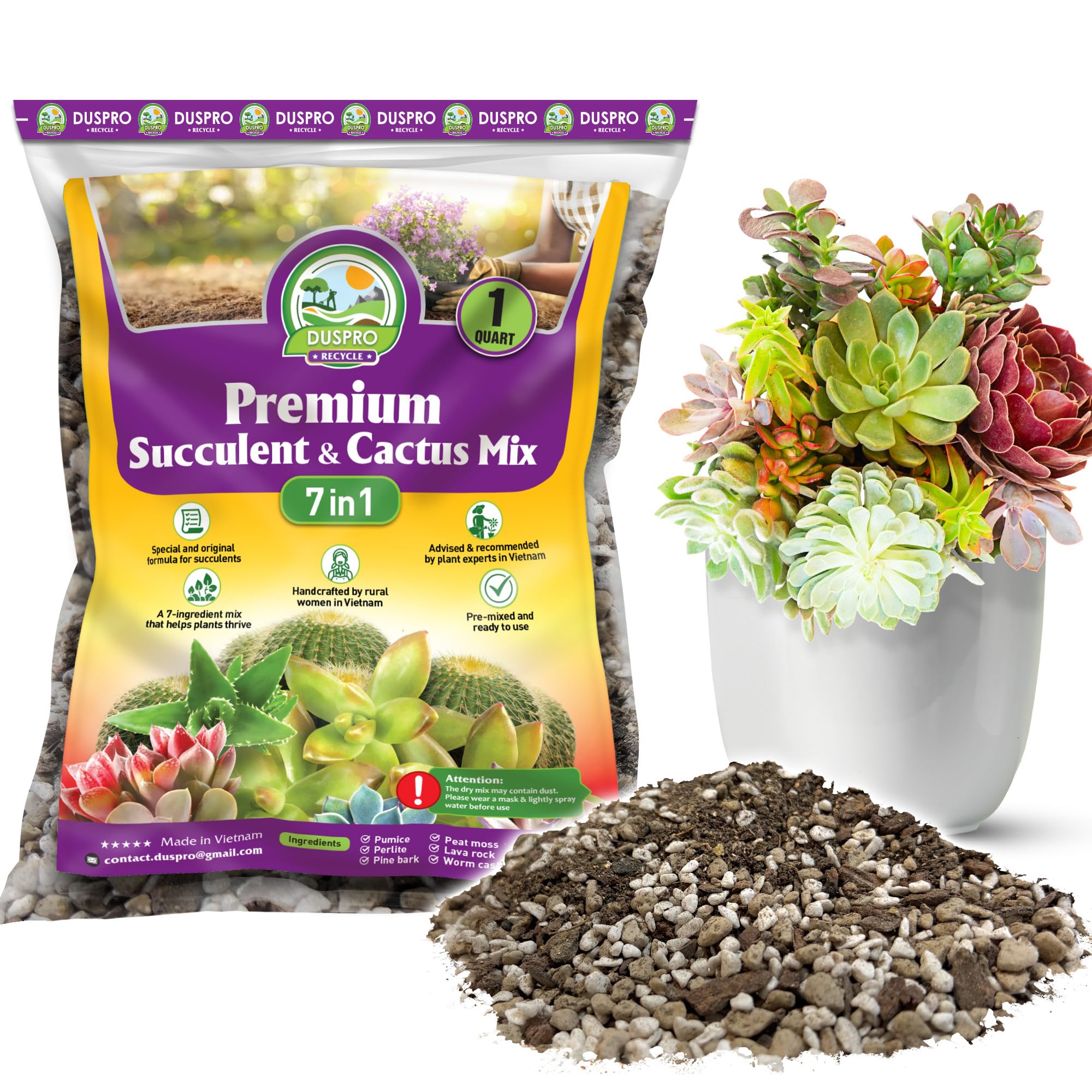
A seven-ingredient cocktail for desert natives like saguaro and yucca.
DUSPRO blends perlite, pumice, lava rock, peat moss, pine bark, worm castings, and vermiculite into one mix. That is a lot of different textures — the pumice and lava rock provide heavy grit, the worm castings add slow-release nutrients, and the pine bark keeps the structure open. One experienced reviewer called it “the best desert plant mix I have ever used” and specifically cited transplanting saguaro and yucca seedlings from their initial peatmoss-perlite stage into this mix. They added about 10-20% more peatmoss-perlite on top, noting it “fills 32 small pots.” For a jade owner who also grows other desert plants, this one bag works for everything.
The biggest complaint is the size: a 1-quart bag at roughly the same price as 4-quart competitors. Several reviewers noted “smaller than expected” and called it “very expensive for what it is.” If you have one small jade in a 4-inch pot, the 1-quart bag is fine (it fills two 4-inch pots). But if you are repotting a larger jade or several plants, the math works against DUSPRO compared to the 8-quart bags above. It is best seen as a specialty test-batch you buy once, not a regular supplier.
Strengths
- Seven distinct ingredients provide exceptional drainage, aeration, and natural nutrients.
- Ideal for desert-native plants like saguaro, yucca, and jade that need gritty conditions.
- Versatile for both small and large succulent pots (1QT covers 2×4″ pots or 1×6″ pot).
Weaknesses
- Small bag (1 quart) costs about the same as larger competitors — poor per-quart value.
- Best used as a specialty supplement rather than a primary potting medium for a large jade.
Try this if: you want a premium, ingredient-dense blend for a single small jade or a collection of mixed desert plants.
pass on it if: you need a cost-effective bag for regular repotting — larger options give you 4-8x more volume for similar money.
Understanding the Specs
Volume (Quarts vs. Liters)
The volume tells you how much soil you get, and more is usually better unless you only have one tiny pot. A 4-quart bag fills about two 6-inch pots or one 8-inch pot. An 8-quart bag fills a 12-inch pot or four 6-inch pots. Always match the bag size to your pot count — buying a tiny 1-quart bag for a set of big pots leaves you scrambling for more.
Drainage Ingredients (Perlite, Pumice, Lava Rock)
Perlite is the white popcorn-like nugget you see in most mixes — it keeps the soil fluffy. Pumice and lava rock are heavier and grittier, providing stronger drainage for desert plants. A mix with all three is better than a mix with just perlite because the different particle sizes prevent the soil from settling into a dense mat.
Organic Matter (Peat Moss vs. Coco Coir vs. Bark)
This is the part that holds a little moisture and feeds the plant. Peat moss holds the most water (good for moisture lovers, risky for jade). Coco coir holds less and re-wets easily after drying out. Pine bark chunks add air pockets and decompose slowly. For jade, coco coir or bark is safer than straight peat moss.
Additives (Worm Castings, Charcoal, Mycorrhizae)
Worm castings are natural slow-release fertilizer that does not burn roots. Horticultural charcoal pulls impurities from the water and keeps the mix fresh. Mycorrhizae are beneficial fungi that partner with roots to increase water and nutrient uptake. None of these are essential for a healthy jade, but they turn a “good enough” mix into a “growth turbo,” especially for smaller pots where root space is limited.
FAQ
Can I use regular potting soil for my jade plant?
How often should I water my jade if the soil drains well?
Is Miracle-Gro Succulent Potting Mix good for jade?
What does “chunky” mean in a succulent soil mix?
Can I mix my own potting medium for jade instead of buying one?
How much soil do I need for a 6-inch jade pot?
Will peat-free soil keep my jade healthier?
Is it worth paying more for a mix with mycorrhizal fungi?
What size bag should I buy for a large jade plant?
Final Thoughts: The Verdict
For the majority of shoppers, the clear winner for potting medium for jade plants is the Soil Sunrise Jade Plant Potting Soil Mix because it is formulated specifically for jade, uses five proven ingredients for drainage and nutrition, and comes in a generous 8-quart bag that fits a large pot or several small ones. If you want a peat-free organic alternative with living microbes, grab the Rosy Soil Cactus & Succulent Potting Mix. And for the absolute fastest drainage on a tight budget, the Hoffman Organic Cactus and Succulent Soil Mix in its 2-pack gives you reliable performance at a great per-quart cost.
How We Picked
We do not accept paid placement. Every pick is matched to a real buyer and a real use-case; we do not hands-on test units.
Sources & Methodology
Specifications: manufacturer listings and product documentation. Review insights: verified customer reviews, as of July 2026. Pricing: not shown on this page (it changes often); check the current price via the retailer link.
As an Amazon Associate, Lawn Gear Lab earns from qualifying purchases. This does not affect which products we feature.