
Specs are compiled from manufacturer listings and verified buyer reviews and can change over time — please confirm the key details on the product page before buying.
If you have ever wrestled a heavy, muddy grow bag just to check if your potatoes are ready, you know the real pain of container vegetable gardening: digging around blindly only to damage the crop or make a mess. The right pot changes that—it gives your vegetables room to spread their roots, lets water drain freely so nothing rots, and makes harvesting feel like a simple lift, not an archaeological dig.
I’m Rikta — the founder and writer behind Lawn Gear Lab. This guide is built by comparing the manufacturers’ published specifications and the patterns across verified customer reviews, so you get each pick’s real strengths and trade-offs instead of marketing spin.
Whether you are starting a patio vegetable patch or expanding an existing garden, knowing which pot holds the most soil without falling apart makes all the difference. With that in mind, we have identified the five best pots for vegetables that balance durability, drainage, and smart harvest features for a rewarding grow season.
Quick Picks
- PAMAZY [Upgraded] 4-Pack 15 Gallon Potato Grow Bags — Best Overall
- RVZHI 10 Gallon Potato Grow Bags (6-Pack) — Most Colorful
- OPPOLIFE 4-Pack 10 Gallon Potato Grow Bags — Best Value
- Usocik 10 Inch Retro Plant Pots (4-Pack) — Space-Saver
- AGOLEAM 4-Pack 10 Gallon Potato Grow Bags — Reliable Starter
How To Choose The Best Pots For Vegetables
The choice depends on two main paths: fabric grow bags that breathe like a garden bed, or rigid plastic pots with saucers that keep a tidy floor. Inside each, you will look for capacity, handle strength, and a way to check what is happening underground without disturbing the plant.
Capacity — more gallons mean bigger vegetables
A pot that is too small chokes the root system and stunts growth. For potatoes, tomatoes, and other heavy-feeding vegetables, look for 10-gallon or 15-gallon containers. Smaller pots around 1.4 gallons work well for herbs, succulents, or shallow-rooted flowers, but they are not built for a full season of potatoes or sprawling tomato vines.
Material — fabric breathes, plastic keeps tidy
Non-woven fabric bags let air reach the roots — a process called “air pruning” that stops roots from circling inside the pot — and drain excess water instantly, preventing root rot. Plastic pots with matching saucers catch drips and keep your deck or windowsill dry, but they lack the same breathability, so you need to watch watering more closely.
Harvest window — the feature that saves you digging
A flap or visible panel on the side or bottom of a grow bag lets you peek at the crop or pull out mature potatoes without dumping the whole bag. The best designs have a hinge that keeps soil in when closed. Some bags skip this entirely, meaning you harvest by turning the whole bag upside down.
Quick Comparison
| Model | Best For | Capacity | Dimensions (D x H) | Material | Amazon |
|---|---|---|---|---|---|
| PAMAZY 15-Gallon (Upgraded) | Maximum root space & dual-window harvest | 15 gallons | 15.74 x 17.71 inches | Polypropylene Non-woven Fabric | Amazon |
| RVZHI 10-Gallon (6-Pack) | Multi-plant variety in colorful heavy bags | 10 gallons | 15.7 x 11.8 inches | Cloth/Fabric | Amazon |
| OPPOLIFE 10-Gallon (4-Pack) | Season-after-season durability at a bargain | 10 gallons | 14 x 18 inches | Fabric | Amazon |
| AGOLEAM 10-Gallon (4-Pack) | Solid all-round fabric bag for first-timers | 10 gallons | 13.8 x 17.8 inches | Fabric | Amazon |
| Usocik Retro Plastic (4-Pack) | Decorative indoor/patio pots for small veggies & herbs | 1.4 gallons | 10 x 6.34 inches | Plastic | Amazon |
In‑Depth Reviews
1. PAMAZY [Upgraded] 4-Pack 15 Gallon Potato Grow Bags

The 15-gallon bag that lets you watch and harvest without wrecking the soil — the RVZHI is simpler.
You get the biggest capacity of any pot here — 15 gallons — so roots spread freely and heavy feeders like potatoes and tomatoes produce more without crowding. The bag measures 15.74 inches in diameter and 17.71 inches tall. The upgraded dual-window design is what separates it from most fabric bags. A clear panel lets you check moisture and root progress right at soil level, while a bottom flap with a hinge opens to let you pull ripe produce out without digging. Buyers report the fabric is “well-stitched” and “sturdy” — one reviewer noted their potato plants were “towering over the tops” by spring. The reinforced extended handles are sewn from the bottom, so lifting a fully loaded 15-gallon bag does not risk tearing the seams. The non-woven polypropylene fabric breathes well to prevent root rot, an advantage over solid plastic pots that trap water.
Compared to the RVZHI 6-pack (which has a 10-gallon capacity and a simpler side hole), the PAMAZY offers more volume per bag and a more refined harvest door. The catch is that if you fill it all at once the sides can slump, so it works best when you add soil gradually as the plants grow. The hinge may also loosen over extended use, as one careful reviewer noted.
Reasons to Choose It
- Largest capacity (15 gallons) of any pick — ideal for heavy feeders like potatoes and tomatoes
- Dual windows: a clear viewing panel and a hinged bottom harvest flap reduce root damage and mess
- Reinforced handles stitched from the base can handle a full bag without tearing
What to Consider
- May need gradual filling in stages to prevent sides from slumping
- Hinges on the harvest window could loosen with repeated seasonal use
Best suited for: Anyone who wants maximum root space per bag and the convenience of checking soil moisture and harvesting without dumping the whole container.
Look elsewhere if: You are planting only small herbs or flowers and do not need a full 15-gallon volume—the Usocik plastic pots are far more compact for a windowsill.
2. RVZHI 10 Gallon Potato Grow Bags (6-Pack)
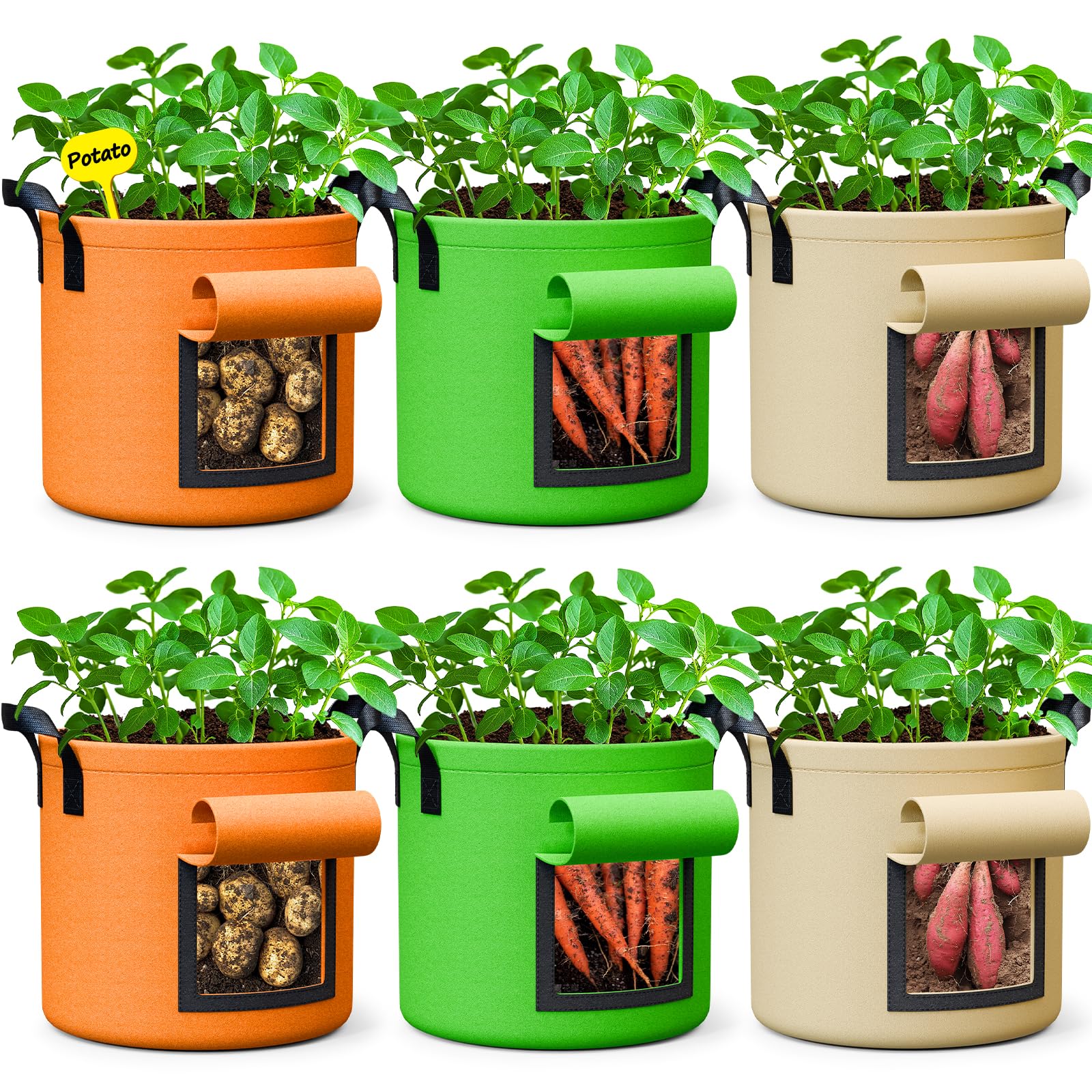
A thick, colorful 6-pack that lets you grow different vegetables side by side — the harvest flap is a weak spot versus the PAMAZY.
You can grow six different vegetables in one season, each in a distinct color bag, so labeling and crop rotation feel easy. Each bag holds 10 gallons, measures 15.7 inches in diameter and 11.8 inches tall, and uses a thicker 350G (grams per square meter) fabric that buyers describe as “durable heavy woven cloth” that holds up under repeated use. The material measures 15.7 inches in diameter versus the Usocik plastic pot at 10 inches, though the Usocik sits on a saucer and is better suited for a clean indoor shelf. The breathable aeration fabric prevents overwatering during heavy rain, and the reinforced handles make moving a full bag simple. Owners mention planting potatoes, okra, beets, corn, and even cucumbers successfully. One experienced reviewer who grows in extreme heat says the bags “stay damp” and perform well. Six plant labels are included, so you can mark each variety without extra gear.
One honest limitation: the side-opening harvest flap lacks a plastic covering, so reviewers warn that “dirt pours out when opened.” Unlike the PAMAZY bag, which has a hinged door, this flap is just a cut in the fabric, so it works best if you plan to tip the bag over for a full harvest rather than reach in for a few potatoes. And at 11.8 inches tall, it has less vertical depth than the 18-inch OPPOLIFE bag.
Standout Features
- Six bags in different colors make crop rotation and labeling easy
- 350G heavy-gauge fabric resists tearing and holds shape season after season
- Excellent drainage and aeration help roots breathe during heavy rain
Watch Out For
- Side flap lacks a plastic cover — soil spills out when you open it for harvest
- At 11.8 inches tall, it has less vertical depth than the 18-inch OPPOLIFE bag
Ideal for the gardener who: Wants a versatile multi-pack for growing different vegetables side-by-side, with fabric thick enough to endure several seasons.
Not the best pick if: You want a clean, no-spill harvest window — the PAMAZY dual-window bag is a better match for tidy harvesting.
3. OPPOLIFE 4-Pack 10 Gallon Potato Grow Bags
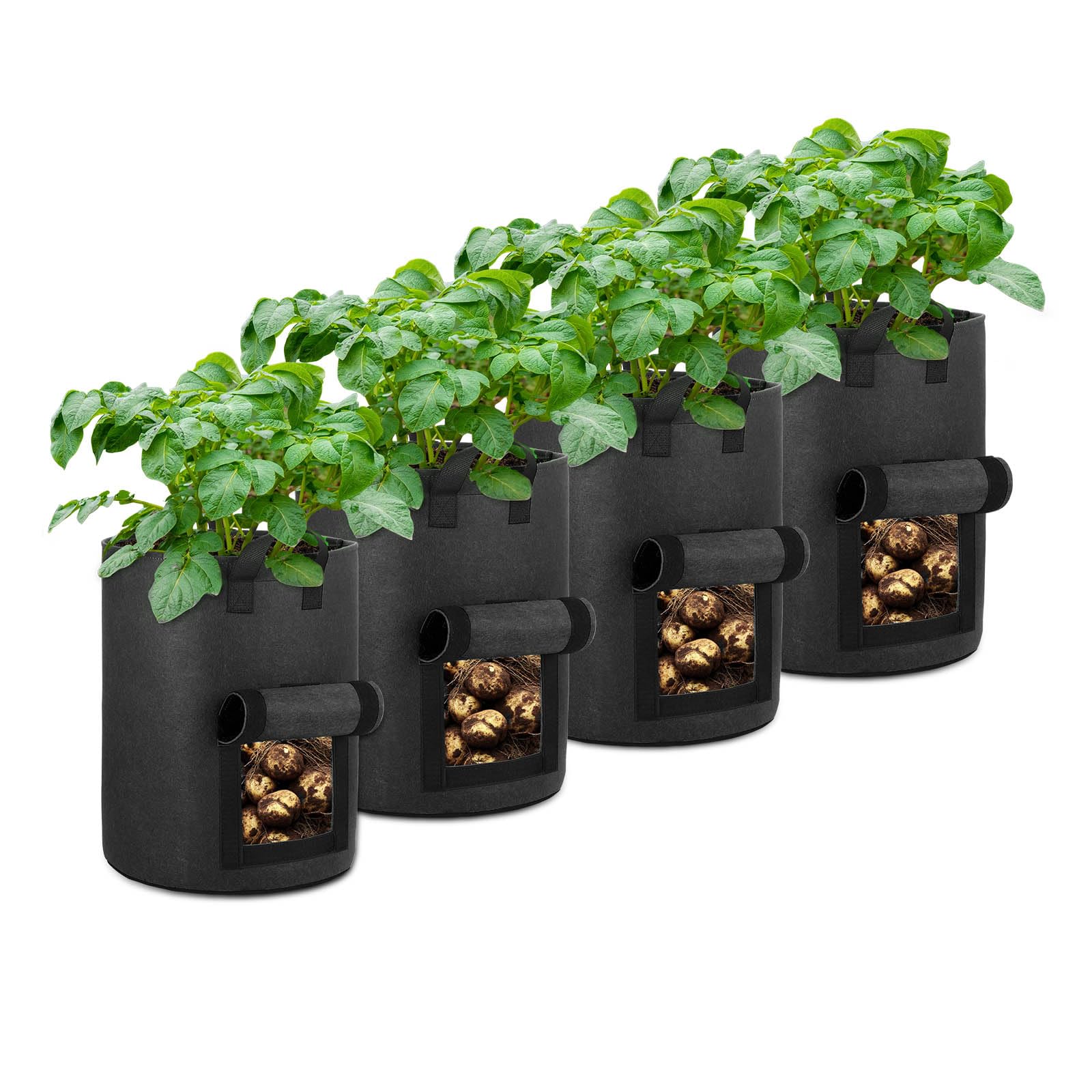
A budget four-pack built to survive mishaps — customers note it handles weed-whacker hits and two seasons.
You get 10 gallons per bag with a 14-inch diameter and 18-inch height — taller than the RVZHI bag (11.8 inches tall), so root vegetables like sweet potatoes get more downward space to develop. The fabric is thickened nonwoven material with anti-ultraviolet protection, and the polypropylene webbing handles are extended with an inner lining reinforcement for safer lifting. Unlike the RVZHI harvest flap issue, these bags include a “harvest visualization window” that lets you see the crop, though reviewers mention it as a viewing panel rather than a full-access door. Real durability here: one buyer reports accidentally hitting the bag with a weed eater multiple times and says they “seem to still be holding up.” Another reviewer confirms they have “used these for two seasons” with no tearing. The manufacturer claims the bags are washable and can be reused for over 5 years. At just 300 grams per bag, they are lightweight and fold flat for off-season storage — a meaningful advantage over rigid plastic pots that take up permanent shelf space.
Compared to the AGOLEAM 10-gallon bags, the OPPOLIFE uses slightly thicker webbing on the handles and has a taller 18-inch body, so you get more vertical root room for the same capacity. The trade-off is that the harvest window is more of a transparent patch than a functional flap — if you want a real door, the PAMAZY 15-gallon is the better upgrade.
Why It Stands Out
- Proven to survive accidental weed-whacker contact and two full growing seasons
- Taller profile (18 inches) gives deep-rooted vegetables more downward space
- Lightweight and foldable, easy to clean and store when not in use
A Minor Drawback
- The harvest visualization window is more a see-through panel than a functional door for extracting vegetables
Great choice when: You want a no-fuss fabric bag at a low price that can handle tough conditions and repeated seasons without falling apart.
Consider another option if: An easy-access harvest door matters to you — the PAMAZY dual-window design is far more practical for reaching the crop.
4. Usocik 10 Inch Retro Plant Pots (4-Pack)

The stylish plastic pot that keeps your windowsill dry — compact enough for a kitchen counter.
You keep surfaces mess-free while growing herbs or small vegetables indoors, thanks to each pot’s built-in saucer that catches overflow water — something no fabric bag offers. At 1.4 gallons per pot, this set is in a completely different league from the fabric 10-gallon and 15-gallon bags above — and that is the point. The Usocik retro pots are designed for compact spaces: a 10-inch diameter and 6.34-inch height fits neatly on a kitchen counter, balcony shelf, or porch table. The copper-toned PP (polypropylene) plastic has a lacquered finish with a filigree pattern that reviewers call “beautiful” and “stylish.” The key functional advantage is the drainage holes plus matching saucers — each saucer catches overflow water and keeps your floor dry. Reviewers point out the pots are “sturdy” and “not flimsy plastic” — one reviewer verified that the “drainage holes and saucers work perfectly, keeping plants healthy and mess-free.” For growing herbs like basil or parsley, small peppers, or compact flowers, these are a cleaner, more decorative solution than the utilitarian black fabric bags. They are weather-resistant and will not crack or fade in direct sun like cheaper resin pots can.
The plastic material also lacks the breathability of non-woven fabric, meaning you need to monitor watering more carefully to avoid soggy roots.
Great For
- Each pot comes with a matching saucer that catches drips and keeps surfaces clean
- Retro copper design adds a decorative touch indoors or on a patio
- Sturdy PP plastic resists fading and cracking in outdoor conditions
Keep In Mind
- 1.4-gallon capacity works for herbs and flowers, not large root vegetables
- Plastic material breathes less than fabric — water carefully to avoid root rot
Reach for these when: Presentation matters — you want a neat, spill-proof pot for herbs or small vegetables on a deck, kitchen window, or balcony.
Skip them if: You plan to grow a full vegetable garden of potatoes or tomatoes — you need the 10-gallon or 15-gallon fabric bags for that kind of production.
5. AGOLEAM 4-Pack 10 Gallon Potato Grow Bags
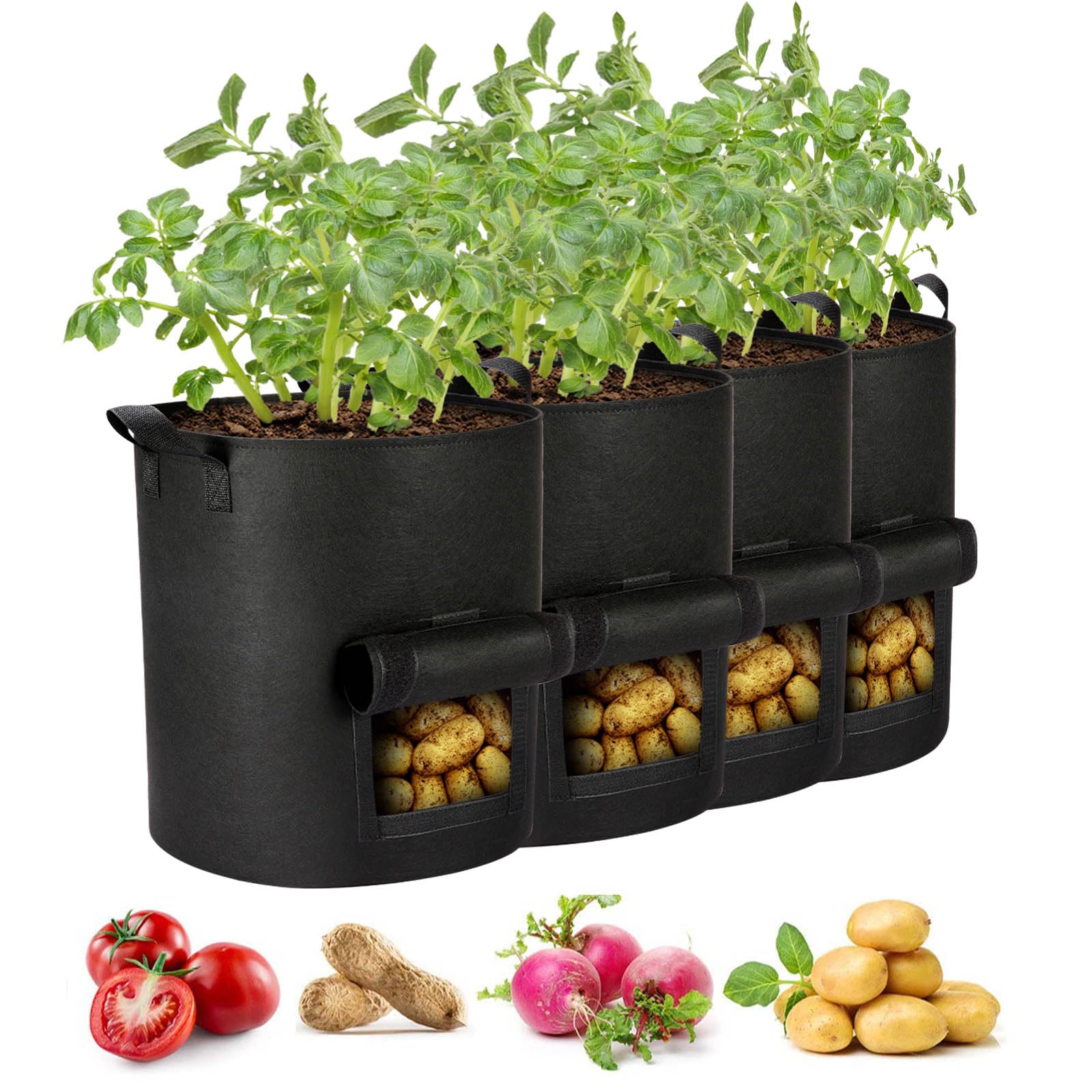
A simple, breathable bag for first-timers — no harvest windows to confuse, just straight-forward growing.
You fill two of these bags with about one large bag of soil, according to a helpful reviewer, giving you a practical buying benchmark. Each bag holds 10 gallons with a 13.8-inch diameter and 17.8-inch height, giving roots plenty of room. The nonwoven fabric lets air and water move through freely to prevent soil from drying out or getting waterlogged. The material is described as “thin but lasts a long time” by a buyer who has used similar bags on their deck. Where this bag shines is simplicity. No harvest windows, no flaps to worry about — the design assumes you will either tip the bag over at harvest time or cut it open. For a first-time gardener, that removes a point of confusion and a potential failure point. Buyers have used these successfully for zucchini, sweet potatoes, and regular potatoes, with one saying they “work great in extreme heat.” The fabric stays damp longer than plastic pots, which helps in dry summers. The handles are sturdy enough to move a fully loaded bag, and the set packs flat for storage between seasons.
Compared to the OPPOLIFE bag, the AGOLEAM is slightly more compact horizontally (13.8 vs. 14 inches wide) and has the same 10-gallon capacity. The main missing feature is the harvest window — if you want to check root progress mid-season without turning the bag over, the OPPOLIFE gives you a visual panel. For the same price point, the AGOLEAM focuses on durable, breathable fabric and straightforward use.
What Works
- Breathable fabric keeps roots cool and prevents overwatering in hot weather
- Sturdy handles support full soil weight for easy repositioning
- Reliable size: two bags require one large bag of soil to fill
What It Lacks
- No harvest window or flap — you must empty the bag to retrieve root vegetables
- Material is thinner than the 350G fabric used in the RVZHI bags
Best fit for a first-timer who: Wants a straightforward, affordable fabric bag that grows vegetables reliably and can be replaced without a big budget hit.
Pick a different bag if: You want to reuse bags for many seasons without worry — the OPPOLIFE has a track record of surviving weed-whacker hits and multiple years.
Understanding the Specs
Capacity (Gallons)
This is the volume of soil the pot holds. More gallons mean more space for roots to spread, which directly translates to bigger vegetables and healthier plants. A 10-gallon bag comfortably grows 3–5 seed potatoes or one large tomato plant. A 1.4-gallon pot is better suited to a basil plant or a few succulents — you will run out of room for heavy feeders fast.
Harvest Window
A flap, door, or clear panel on the side or bottom of a grow bag that lets you check the vegetables’ progress or pull out ripe produce without digging. The best designs have a hinge that keeps soil from spilling when closed. Some bags skip this feature entirely, meaning you must turn the bag over or cut it open at harvest time.
FAQ
How many seed potatoes fit in a 10-gallon grow bag?
Can I reuse fabric grow bags after one season?
Do I need a saucer under a fabric grow bag?
Is plastic or fabric better for growing vegetables?
What is the best size pot for growing potatoes?
How many bags come in the RVZHI 6-pack?
Will a harvest window weaken the bag?
Can I use plastic pots for vegetables on a balcony?
What does “nonwoven fabric” mean for a grow bag?
Do I need to add drainage holes to a fabric grow bag?
Final Thoughts: The Verdict
If you want one dependable pick, the best pots for vegetables winner is the PAMAZY 15-Gallon Upgrade because it offers the largest capacity, a clever dual-window harvest system, and handles built for a full load without tearing. If you want the versatility of tending multiple vegetables in a single season, grab the RVZHI 6-Pack in assorted colors. And for an attractive, spill-free pot that suits a kitchen windowsill or a tidy balcony, the Usocik Retro Plastic Pots deliver style and function in a compact package.
How We Picked
We do not accept paid placement. Every pick is matched to a real buyer and a real use-case; we do not hands-on test units.
Sources & Methodology
Specifications: manufacturer listings and product documentation. Review insights: verified customer reviews, as of July 2026. Pricing: not shown on this page (it changes often); check the current price via the retailer link.
As an Amazon Associate, Lawn Gear Lab earns from qualifying purchases. This does not affect which products we feature.