
Snake plants (Sansevieria) are famously forgiving, but their #1 killer is a pot that holds too much moisture. The difference between a thriving, upright specimen and a yellowing, mushy mess often comes down to one decision: the container it lives in. A pot with proper drainage, breathable material, and the right depth prevents the root suffocation that dooms most indoor snake plants.
I’m Rikta — the co-founder and writer behind Lawn Gear Lab. I’ve spent hundreds of hours studying the interplay between ceramic porosity, drainage hole geometry, and root health specifically for succulent-style houseplants, analyzing manufacturer specs and cross-referencing real-world outcomes reported by thousands of verified buyers to understand exactly which pots deliver the dry-out cycle snake plants require.
Whether you are repotting a crowded nursery pot or looking for a decorative upgrade that won’t sabotage your plant’s health, this guide dissects the seven most effective containers that balance aeration, stability, and style. Use it to find the best pots for snake plants that actually match your watering habits and decor preferences.
How To Choose The Best Pots For Snake Plants
Snake plants store water in their thick rhizomes and leaves, making them drought-tolerant but highly sensitive to soggy soil. The container must allow the potting mix to dry out completely between waterings. Here are the three non-negotiable criteria to evaluate before buying.
Material: Ceramic vs. Terracotta vs. Plastic
Terracotta is the gold standard for snake plants because its unglazed clay body pulls moisture away from the soil through evaporation, speeding up the dry-out cycle. Glazed ceramic offers a middle ground — it retains moisture slightly longer than terracotta but still provides a rigid, root-friendly structure without the flexibility that leads to root circling in plastic pots. Avoid thin plastic nursery pots for long-term display; they trap humidity and lack the weight to anchor a tall snake plant.
Drainage Hole Configuration
A single, wide drainage hole (at least 3/4-inch in diameter) is more effective than several small pinholes that clog easily. The hole must be paired with a mesh pad or screen to keep soil from washing out while still allowing water to escape freely. A pot without a drainage hole is a death sentence for snake plants unless you are prepared to water with surgical precision.
Diameter and Depth Requirements
Snake plants have shallow, spreading root systems that prefer wide containers over deep, narrow ones. Choose a pot diameter that leaves 2 to 3 inches of space between the root ball and the rim. A 6-inch diameter pot works for most single specimens, while larger clumps need an 8-inch or wider container. Depth should be at least as tall as the root ball, but the pot does not need to be deep — 5 to 6 inches of internal depth covers the vast majority of snake plant root systems.
Quick Comparison
On smaller screens, swipe sideways to see the full table.
| Model | Category | Best For | Key Spec | Amazon |
|---|---|---|---|---|
| LE TAUCI 8 Inch Ceramic | Premium Ceramic | Tall snake plants needing stability | 8″D x 6.4″H, glazed ceramic | Amazon |
| D’vine Dev 6 Inch Terracotta | Premium Terracotta | Classic breathable dry-out cycle | 6.1″ interior diam., porous clay | Amazon |
| D’vine Dev Self-Watering Set | Self-Watering | Low-maintenance automated moisture | 6.2″H, terracotta + glass cup | Amazon |
| LE TAUCI Footed Set (2-Pack) | Mid-Range Ceramic | Two-pot versatility with plug option | 5.1″ + 6.4″, reactive glaze white | Amazon |
| YBX YIBOXUAN Floral Pattern | Mid-Range Ceramic | Decorative stamped floral design | 5.91″D x 4.02″H, glazed ceramic | Amazon |
| SQOWL 6 Inch Ceramic | Mid-Range Ceramic | Vibrant peacock blue accent pot | 5.8″D x 4.6″H, glazed ceramic | Amazon |
| Xiaan Jiaju Tuscan Ceramic | Budget Ceramic | Rustic farmhouse aesthetic on a budget | 6.29″D x 5.12″H, crackle glaze | Amazon |
In‑Depth Reviews
1. LE TAUCI Ceramic Pots for Plants, 8 Inch
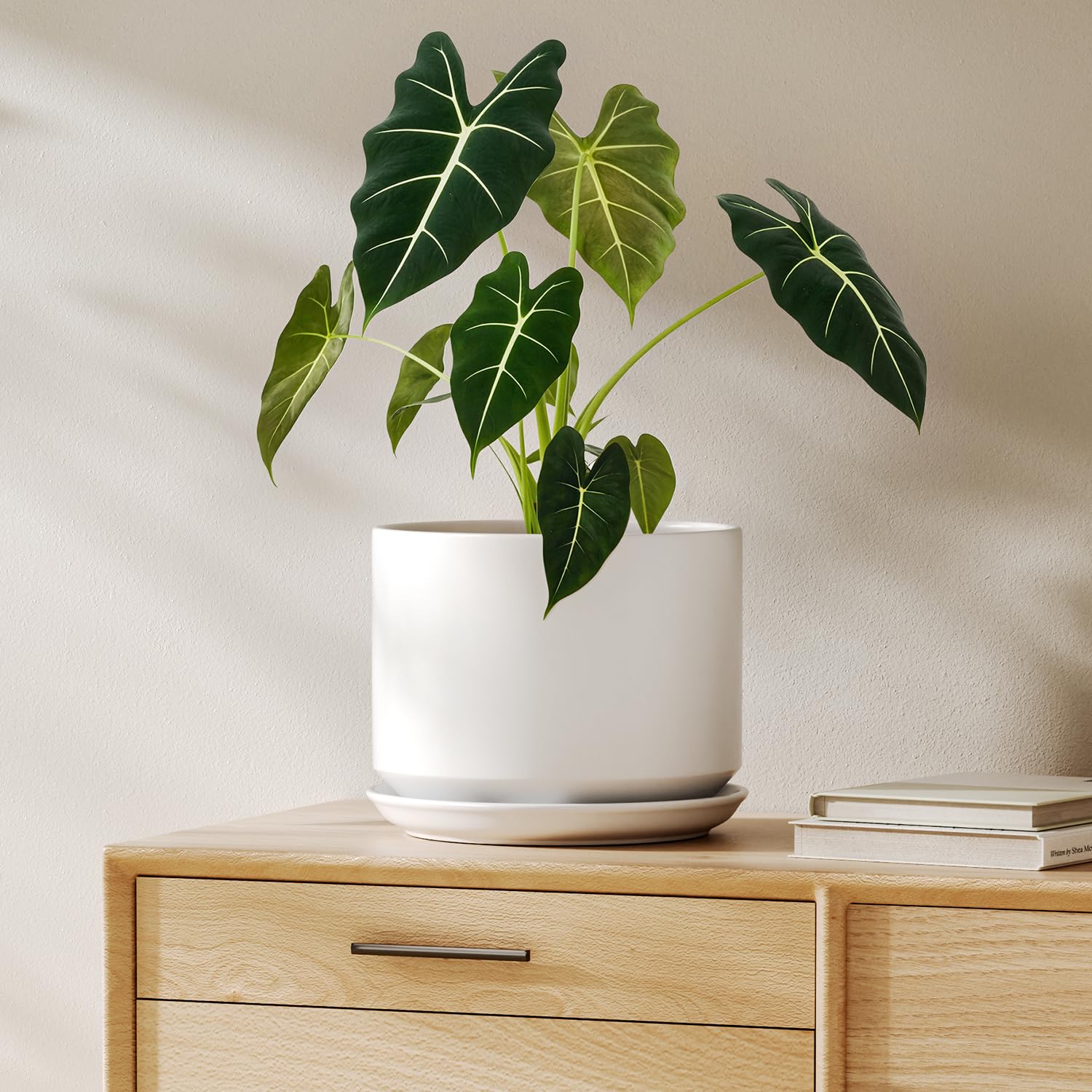
This 8-inch ceramic pot offers the ideal combination of root room and stability for a mature snake plant that has filled out its current container. The 6.4-inch internal depth gives the rhizomes enough vertical space to spread without the pot feeling cavernous, while the wide base prevents the tall leaves from tipping over.
The polished white glaze pairs with any decor style, and the smooth surface wipes clean easily — a practical advantage when dust settles on broad snake plant leaves that overhang the rim. Both a matching saucer and a mesh screen are included, so water overflow never reaches your furniture.
Buyers consistently note the thick, shock-proof packaging and the sturdy weight of the ceramic, which feels substantial without being immovable. The drainage hole is sized correctly to pass excess water quickly, and the neutral finish means this pot will not clash if you later move the plant to a different room.
What works
- 8-inch diameter accommodates large snake plant root balls
- Heavy glazed ceramic prevents tipping from tall foliage
- Includes saucer and drainage mesh out of the box
What doesn’t
- Gap between pot and saucer is minimal, can trap water
- Weight may be too high for lightweight shelving units
2. D’vine Dev Small 6 Inch Terracotta Plant Pot
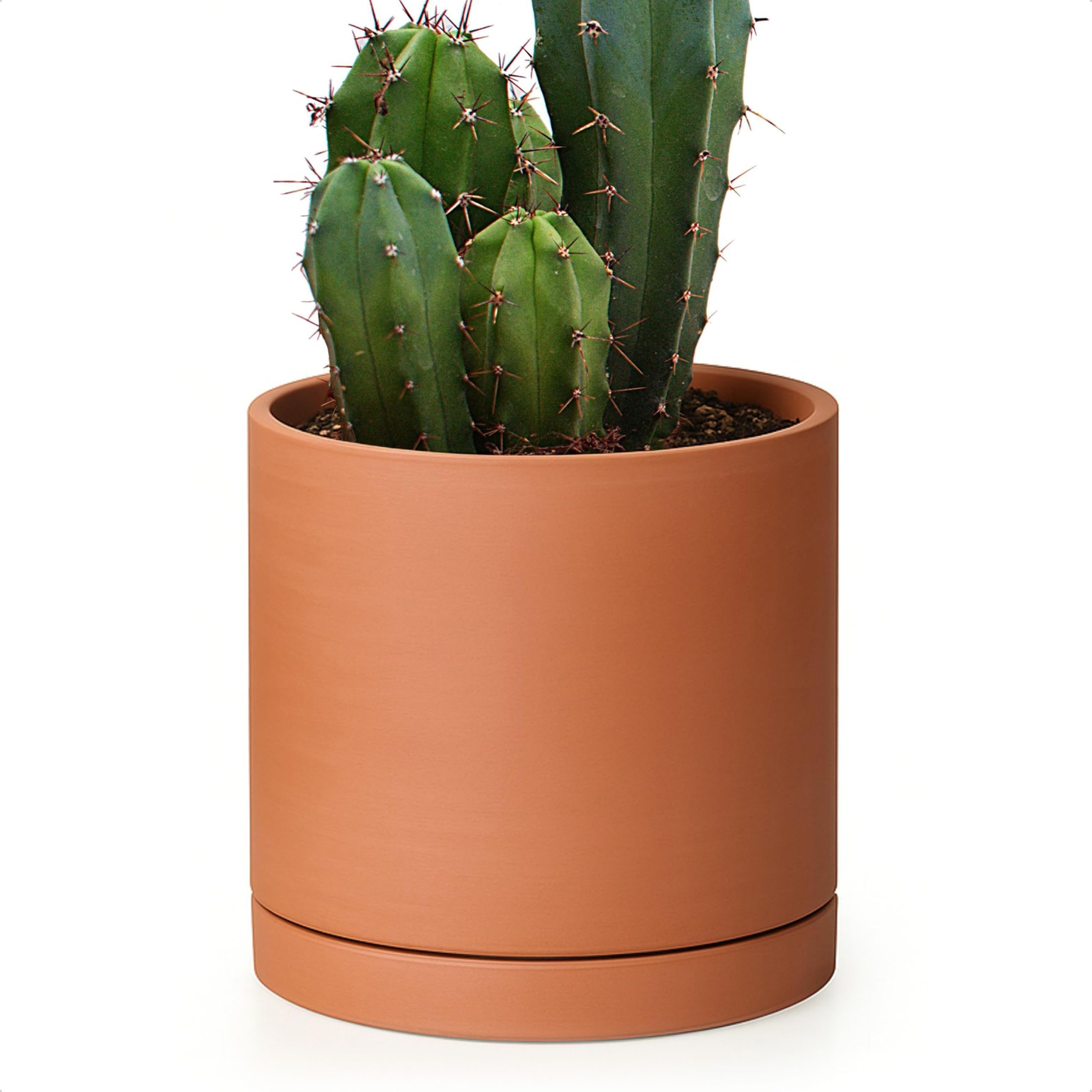
Pure, unglazed terracotta remains the most effective material for snake plants because the clay body actively wicks moisture away from the soil, drastically reducing the risk of root rot. This 6-inch D’vine Dev pot has a 6.1-inch interior diameter and a height of 6.5 inches, providing a snug home for a single mature snake plant while encouraging the fast dry-out cycle the species craves.
Handcrafted with high-temperature firing, the clay has a smooth matte finish that looks clean and modern despite being a centuries-old material. The included stainless-steel drainage mesh prevents soil from washing out, and a protective pad shields table surfaces from scratches — small details that elevate this above standard nursery terracotta.
Verified owners emphasize the weight: at 3.6 pounds empty, this pot stays planted even when the snake plant grows top-heavy. The saucer fits snugly and detaches easily for cleaning. If you want to minimize the margin for watering error, this pot is the most forgiving option available.
What works
- Porous terracotta speeds soil drying between waterings
- Heavy construction anchors tall snake plant foliage
- Stainless-steel mesh and furniture pad included
What doesn’t
- Handcrafted nature leads to slight size variations
- Unglazed clay may develop white mineral deposits
3. D’vine Dev 6 Inch Self Watering Pot, Set of 2
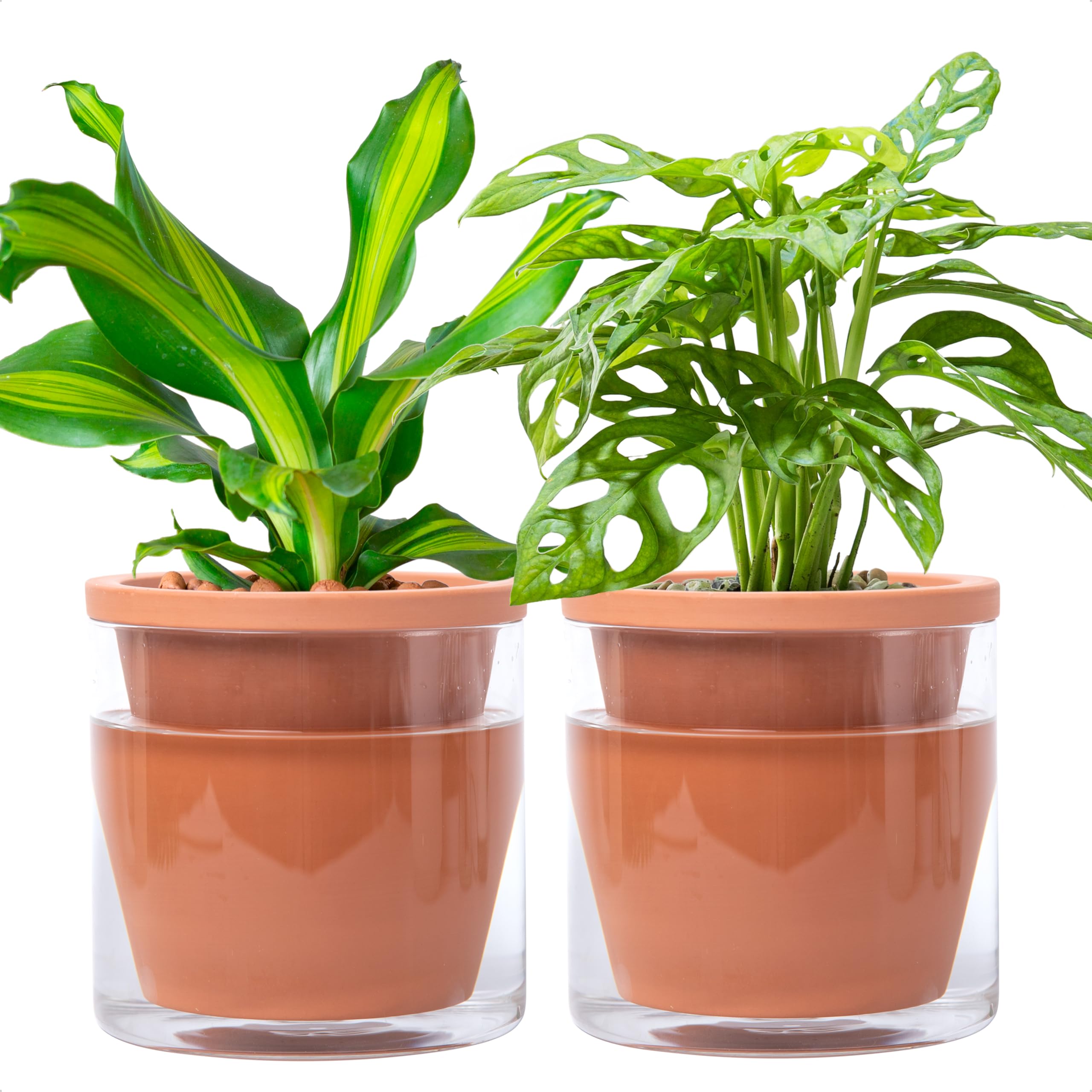
This self-watering system uses the natural porosity of terracotta to deliver moisture on demand without a conventional drainage hole. The unglazed clay pot sits inside a clear glass cup; when you fill the cup halfway, water seeps through the terracotta wall directly into the soil. For snake plants, this means the roots draw exactly the amount they need and never sit in standing water.
The absence of a drainage hole eliminates mess entirely — no saucer to empty, no water rings on furniture. The clear glass cup lets you see the water level at a glance, so you can refill only when the reservoir is nearly empty. This setup works especially well for snake plants on desks or shelves where you want zero leak risk.
Each set includes two 6.2-inch terracotta pots and matching glass cups. Buyers report that plants stay consistently damp without becoming waterlogged, and the glass cup is easy to clean. Note that this system works best for snake plants that prefer to dry out slightly longer than the self-watering cadence provides, so adjust by letting the cup run completely dry before refilling.
What works
- No drainage hole means zero water mess on surfaces
- Visible water level simplifies watering schedule
- Terracotta wicking prevents over-saturation
What doesn’t
- Algae can grow on unglazed terracotta over time
- More expensive per pot than standard terracotta
4. LE TAUCI Ceramic Plant Pots, 5.1 + 6.4 Inch Footed

This two-piece set covers two common snake plant sizes: the 5.1-inch pot fits a small offset pup or compact variety, while the 6.4-inch pot handles a full single specimen. Both pots feature a footed design that lifts the base slightly off the surface, improving airflow underneath and preventing moisture from being trapped against the tabletop.
The reactive glaze white finish has subtle color variation that adds depth without being distracting. Each pot comes with both a silicone plug and a drainage hole net, giving you the flexibility to seal the hole for use as a cachepot or leave it open for direct planting. This dual-accessory system is rare at this price point.
Ceramic construction weighs 1.88 kilograms total for the pair, providing enough heft to keep a 6.4-inch snake plant stable. The smooth glaze is easy to wipe clean, and the feet prevent the pot from scratching finished wood surfaces. A thoughtful option if you are repotting multiple snake plants or planning to propagate.
What works
- Footed base improves air circulation under the pot
- Comes with both silicone plugs and mesh nets
- Two sizes match common snake plant stages
What doesn’t
- Silicone plugs may not seal all hole sizes perfectly
- Reactive glaze finish varies between batches
5. YBX YIBOXUAN Succulent Pots 6 Inch, Green Floral
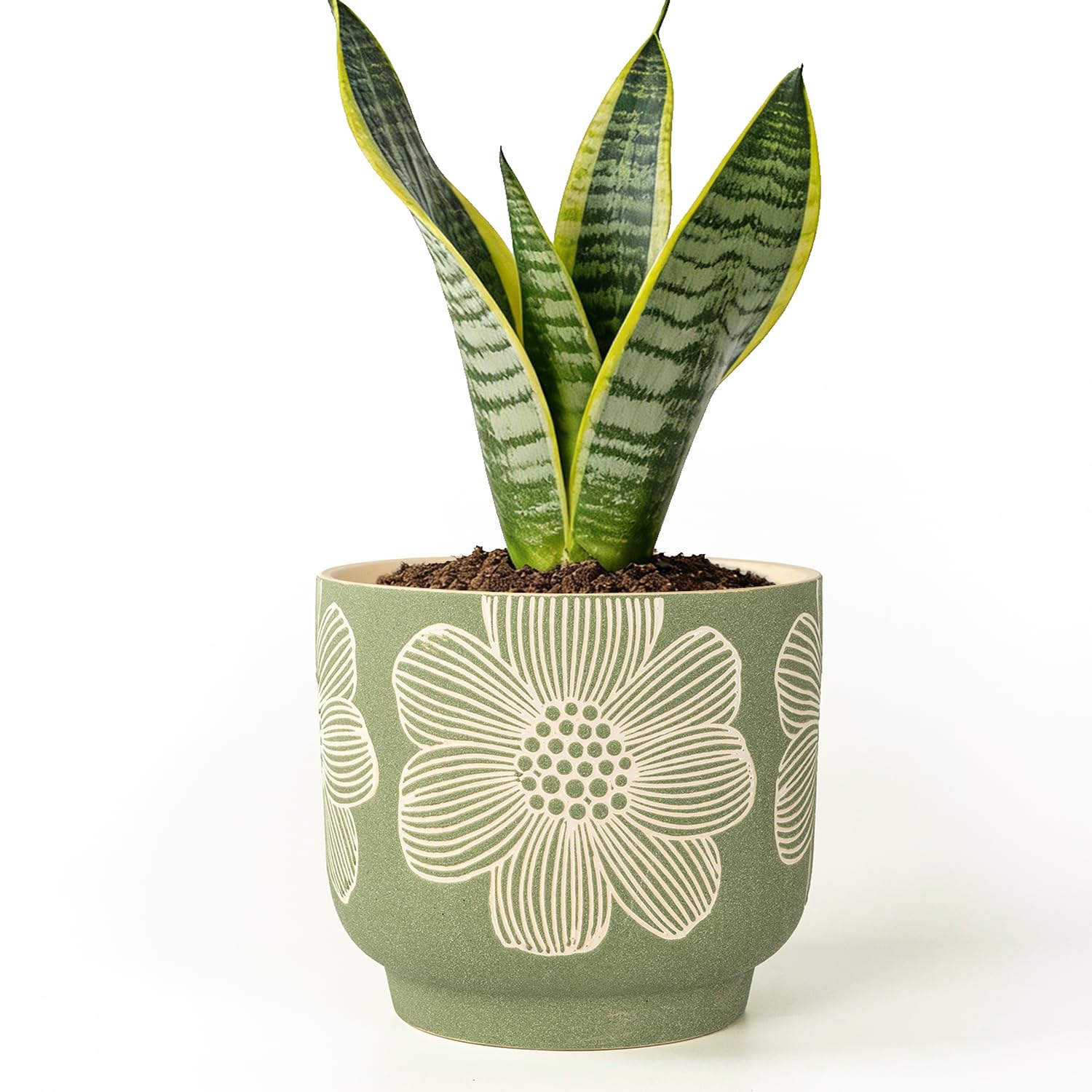
Mid-range ceramic pots often sacrifice visual detail for cost, but this YBX YIBOXUAN option delivers genuine artisan character. The white floral pattern is stamped into the green glaze using a debossing process after 1200°C firing, creating a recessed texture that will not fade or peel over time. The 5.91-inch diameter and 4.02-inch height fit a small to medium snake plant comfortably.
Large drainage holes paired with a mesh pad keep soil contained while allowing unrestricted water flow. A silicone plug is also included for those who prefer to use the pot as a cachepot. The handmade nature means each pot has subtle glaze variations, which adds to the appeal for buyers who want a unique look.
Customer feedback highlights the sturdy feel and the fact that these pots arrive well-packaged with no cracks. The modern green color works well against white or wood-toned furniture, and the floral pattern is subtle enough not to overwhelm the plant itself. A solid mid-range pick for anyone wanting more personality than plain white or terracotta.
What works
- Debossed floral pattern is durable, not painted on
- High-fire ceramic resists outdoor weather if needed
- Comes with mesh pad and silicone plug
What doesn’t
- Height is shallow for deep-rooted snake plants
- Handmade glaze variation may not match images exactly
6. SQOWL 6 Inch Plant Pot, Blue Ceramic

Sometimes the look of the pot matters as much as the function, and the SQOWL planter delivers a striking peacock blue glaze that stands out on any shelf. The 5.8-inch diameter by 4.6-inch height is a standard size for single snake plants, and the glazed ceramic surface holds moisture slightly longer than terracotta — a feature that can actually help if you tend to underwater.
A drainage hole with a mesh pad is included, along with a matching ceramic saucer that catches overflow. The kiln-fired construction resists cracking and weathering, making this pot suitable for indoor or covered outdoor use. The blue color pairs especially well with the light green and yellow variegation of snake plant varieties like ‘Laurentii’.
Buyers consistently praise the vibrant, even glaze and the generous size relative to other 6-inch pots. The weight is moderate at 1.4 pounds, so it is portable but still stable enough for a snake plant. A great option if you want to add a pop of color without compromising on drainage.
What works
- Vibrant blue glaze adds decor-friendly color
- Mesh pad prevents soil washout through drain hole
- Matching saucer included for leak protection
What doesn’t
- Glazed surface holds moisture longer than unglazed clay
- Saucer could be slightly wider for drip protection
7. Xiaan Jiaju Tuscan Ceramic Indoor Plant Pot, 6.29 Inch

The Tuscan-style crackle glaze on this ceramic pot gives it a distressed, weathered look that feels much more expensive than its price suggests. The 6.29-inch diameter and 5.12-inch height are right in the sweet spot for a medium snake plant, and the weighted ceramic body prevents tipping even as the plant grows taller.
A single drainage hole at the bottom promotes healthy water flow, and the floral crackle pattern adds visual interest without being overly busy. The pot works equally well on a tabletop or as part of a shelf arrangement with other rustic decor. Finish types specified as distressed and crackle glaze mean each pot has its own character.
Verified buyers mention the pot looks even better in person than in photos, with the aged finish hiding minor dust and water spots well. The weight of 1.17 kilograms gives it a reassuring solidity. For those on a tighter budget who still want a pot that looks handcrafted rather than mass-produced, this is the strongest entry-level option.
What works
- Rustic crackle glaze looks premium beyond the cost
- Good weight for tall snake plant stability
- Drainage hole supports healthy root conditions
What doesn’t
- Crackle glaze finish may show dirt in grooves over time
- No included saucer or mesh pad
Hardware & Specs Guide
Ceramic vs. Terracotta: What Changes for Snake Plants
Ceramic pots are kiln-fired at temperatures exceeding 1200°C, creating a hard, non-porous shell when glazed. Glazed ceramic holds moisture inside the soil longer than terracotta because the glaze seals the clay. Unglazed terracotta is also kiln-fired but left raw, creating millions of microscopic pores that pull water from the soil and evaporate it on the pot’s outer surface. For snake plants, which evolved in arid regions, terracotta reduces the time soil stays wet by roughly 30-40% compared to glazed ceramic, directly lowering root rot risk. Choose ceramic when you want a specific color or pattern and plan to water infrequently. Choose terracotta when your watering habits tend toward the generous side.
Drainage Hole Size and Placement
The most critical physical spec for any snake plant pot is the drainage hole diameter. A hole smaller than 1/2 inch is prone to clogging with perlite, bark fines, or compacted soil, causing water to pool in the bottom of the pot. The pots in this guide with holes of 3/4 inch or larger, such as the LE TAUCI Footed set and the D’vine Dev terracotta, pass water freely even after multiple watering cycles. Central single holes are more effective than multiple offset holes because water collects at the lowest point of the pot bottom. Mesh pads or stainless-steel screens, included with most of the reviewed pots, are essential for preventing soil loss while maintaining drainage speed.
FAQ
Does a snake plant need a pot with a drainage hole?
What size pot is best for a snake plant?
Final Thoughts: The Verdict
For most gardeners, the pots for snake plants winner is the D’vine Dev 6 Inch Terracotta because its porous clay body actively prevents overwatering, which is the single most common cause of snake plant failure. If you want a larger statement piece for a tall snake plant, grab the LE TAUCI 8 Inch Ceramic. And for a no-mess, self-regulating watering system on a desk or shelf, nothing beats the D’vine Dev Self-Watering Set.