
Orchids are epiphytes, which means in the wild they cling to tree bark with their roots exposed to the open air. Sticking one into a solid plastic nursery pot with no side ventilation is a recipe for suffocated, waterlogged roots and a slow decline. The right container delivers the balance of airflow and moisture retention that mimics a branch in the tropics. For most Phalaenopsis, Dendrobium, and Cattleya growers, switching to a pot with lateral slits or side holes is the single most impactful change you can make for long-term root health.
I’m Rikta — the co-founder and writer behind Lawn Gear Lab. My process for this guide involved cross-referencing drainage-hole diameter, material density, and opening patterns across dozens of listings, then filtering them against hundreds of verified owner reports to isolate the seven sets that genuinely support vigorous orchid root systems.
After hours of comparing air-slot dimensions, plastic thickness, and clay firing temperatures, I landed on the pots for orchids that consistently helped growers avoid root rot and trigger rebloom.
How To Choose The Best Pots For Orchids
The wrong pot traps moisture against Dendrobium and Phalaenopsis roots, encouraging rot before you even see the damage. Three factors determine whether a container helps or hinders your plant: ventilation layout, material breathability, and size relative to the root ball.
Ventilation: Slots vs. Drilled Holes vs. Solid Sides
Side openings are non-negotiable for orchids. Slotted designs (long vertical cuts) provide maximum airflow along the entire root zone, while round-drilled holes offer more controlled evaporation. Solid-sided pots work only if the interior is extremely chunky bark, but even then air exchange is limited. Look for openings at least 3 mm wide so bark doesn’t block the gap, and confirm that the bottom also has drainage holes to prevent a water reservoir.
Material: Plastic, Terracotta, or Ceramic
Clear plastic lets you monitor root color and soil moisture without disturbing the plant — essential for beginners who tend to overwater. Unglazed terracotta wicks moisture away from the potting medium, reducing rot risk for heavy-handed waterers but also drying out faster, which requires more frequent watering. Glazed ceramic is visually appealing but traps moisture; it works best as a cachepot (decorative outer pot) with a clear plastic slotted pot inside. Skip any container that lacks side holes regardless of material.
Size and Bark Retention
Orchids prefer snug quarters. A pot that is too large leaves excess medium that stays wet and can sour. The ideal pot is just wide enough to accommodate the root ball with about a half inch of space on each side. Also examine the width of the side openings: fine bark or sphagnum moss will fall through gaping slots larger than about 5 mm, so match your medium to the hole size or use a liner.
Quick Comparison
On smaller screens, swipe sideways to see the full table.
| Model | Category | Best For | Key Spec | Amazon |
|---|---|---|---|---|
| rePotme 6 Inch | Clear Plastic | Monitoring root health | 6 pack, 6 inch slotted | Amazon |
| JGB 9 Pack 7 Inch | Clear Plastic | Large collections on a budget | 9 pack, 7 inch slotted | Amazon |
| BUYMAX White Ceramic | Glazed Ceramic | Decorative display | 2 pack, 5 & 6 inch leaf holes | Amazon |
| vensovo Terracotta | Clay | Heavy-handed waterers | 3 pack, 6 inch, unglazed | Amazon |
| Orceler Terracotta | Clay | High-heat fired durability | 3 pack, 6 inch, 1922°F fire | Amazon |
| T4U 9 Pack | Clear Plastic | Growing multiple staged orchids | 9 pack, 4.3/5.5/6.3 inch | Amazon |
| YOPIKUU 8 Pack | Clear Plastic | Smallest budget multipack | 8 pack, 3/4/5/6 inch | Amazon |
In‑Depth Reviews
1. rePotme 6 Inch Orchid Pot – Slotted Clear – 6 Pack
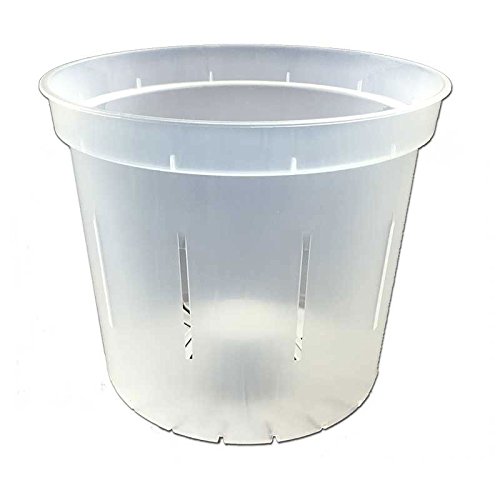
rePotme focuses exclusively on orchid care, and it shows in the engineering of these 6-inch slotted pots. The plastic is noticeably thicker than commodity nursery pots — owners report it holds up across multiple repotting cycles without developing cracks or losing its shape. The vertical slits run the full height of the wall, providing even air exchange from the crown all the way down to the bottom drainage holes. Each pot includes a small butterfly clip and a plant tag, small touches that make repotting less fiddly.
The 6-inch diameter fits standard Phalaenopsis and larger Dendrobium specimens without leaving too much empty medium around the roots. Because the material is crystal clear, you can spot early signs of dehydration (silvery roots) or rot (brown mushy sections) instantly without pulling the plant out. Several reviewers specifically noted that these pots helped them dial in their watering schedule for the first time. The package contains six identical pots, making this a strong buy if you maintain a medium-sized collection or want backups for future rebloom cycles.
One minor caveat: the 6-inch size is the only option in this set, so if you need a variety of small and large containers for different growth stages you will need to supplement with another product. The side slits are wide enough that very fine bark or sphagnum can work its way out, so match your medium to the slot width or use a coarse orchid mix. The lack of included saucers means you will need to source your own drip trays or use these as inner pots inside a cachepot.
What works
- Thick, durable plastic outlasts budget alternatives across multiple repots
- Full-height vertical slits promote even root aeration from crown to base
- Crystal-clear walls let you monitor root moisture without disturbing the plant
What doesn’t
- Only available in one size per pack, limiting staged collection management
- No saucers included, so you need a tray or outer pot for drip control
- Slots are wide enough that fine medium can sift through over time
2. JGB 9 Pack 7 Inches Orchid Pots – Slotted Clear

JGB packs nine 7-inch clear pots with matching saucers into one box, making this one of the highest-value options for growers with a sizable collection. The plastic is thickened to resist deformation — owners describe it as noticeably sturdier than typical thin-walled nursery pots. The side slits are spaced evenly around the circumference, and the bottom features a central drainage hole plus a ring of smaller holes to prevent standing water. Each saucer fits snugly under the pot and catches the runoff from the side vents.
The 7-inch diameter works well for mature Phalaenopsis and Cattleya with established root systems. Because the pots are clear, you can verify that the medium is drying between waterings without guessing. Several reviewers mentioned they use these for indoor orchids on windowsills and appreciate that the saucers prevent water rings on furniture. The modern clear aesthetic blends easily into most decor styles, and the included saucers eliminate the need for a separate purchase.
The side slits are wide enough that perlite or fine bark can escape during watering if your mix leans small. A few owners with heavy watering habits noted that the clear plastic holds heat more than terracotta, so direct afternoon sun can raise root temperatures. The set only comes in one size, so managing seedlings or mini orchids alongside full-size plants requires a second product.
What works
- Nine pots with saucers offer exceptional value for a full collection
- Thickened PP plastic resists cracking better than thinner bargain pots
- Saucers catch side-vent runoff, keeping surfaces dry
What doesn’t
- Slits can allow fine medium particles to wash out during watering
- Clear plastic heats up quicker than clay in direct sun
- Single-size pack limits flexibility for mixed-age plants
3. BUYMAX 5 Inch & 6 Inch White Ceramic Orchid Pots

BUYMAX takes a different approach by offering glazed ceramic pots with leaf-shaped cutouts on the sides rather than slotted plastic. Two sizes come in the set (5 and 6 inch), along with two saucers. The ceramic body is polished with a glossy white finish that resists mineral buildup and wipes clean easily. The leaf vents provide roughly 30% side-wall open area, which is enough air exchange for most Phalaenopsis if you use a coarse bark mix. The bottom drainage hole is paired with a removable tray.
The decorative appeal is the main draw here — these pots look like proper home decor pieces compared to clear nursery plastic. They work well on desks, bookshelves, or as centerpieces where aesthetics matter. The 6-inch pot has enough depth for a mature Phalaenopsis with a solid root ball. Because the glazed interior does not wick moisture like terracotta, you will need to be more mindful of watering frequency to avoid soggy medium at the bottom.
The saucers are on the smaller side relative to the pot diameter. Owners note that water dripping from the side air holes can land outside the tray, so you may want a larger saucer underneath. The glazed surface means condensation forms on the interior, and without the wicking action of clay, the medium at the bottom stays wetter longer. One reviewer received a pot with a small chip despite foam packaging, suggesting the ceramic can be fragile if handled roughly during shipping.
What works
- Glossy ceramic finish looks far more polished than standard plastic orchid pots
- Leaf-shaped side vents provide genuine airflow while maintaining a decorative profile
- Two sizes (5 and 6 inch) fit a range of mature orchid varieties
What doesn’t
- Saucers are too narrow to catch water exiting the side vents
- Glazed interior retains bottom moisture longer than terracotta
- Ceramic is fragile and can chip during shipping despite padding
4. vensovo 6 Inch Terracotta Orchid Pots – 3 Pack
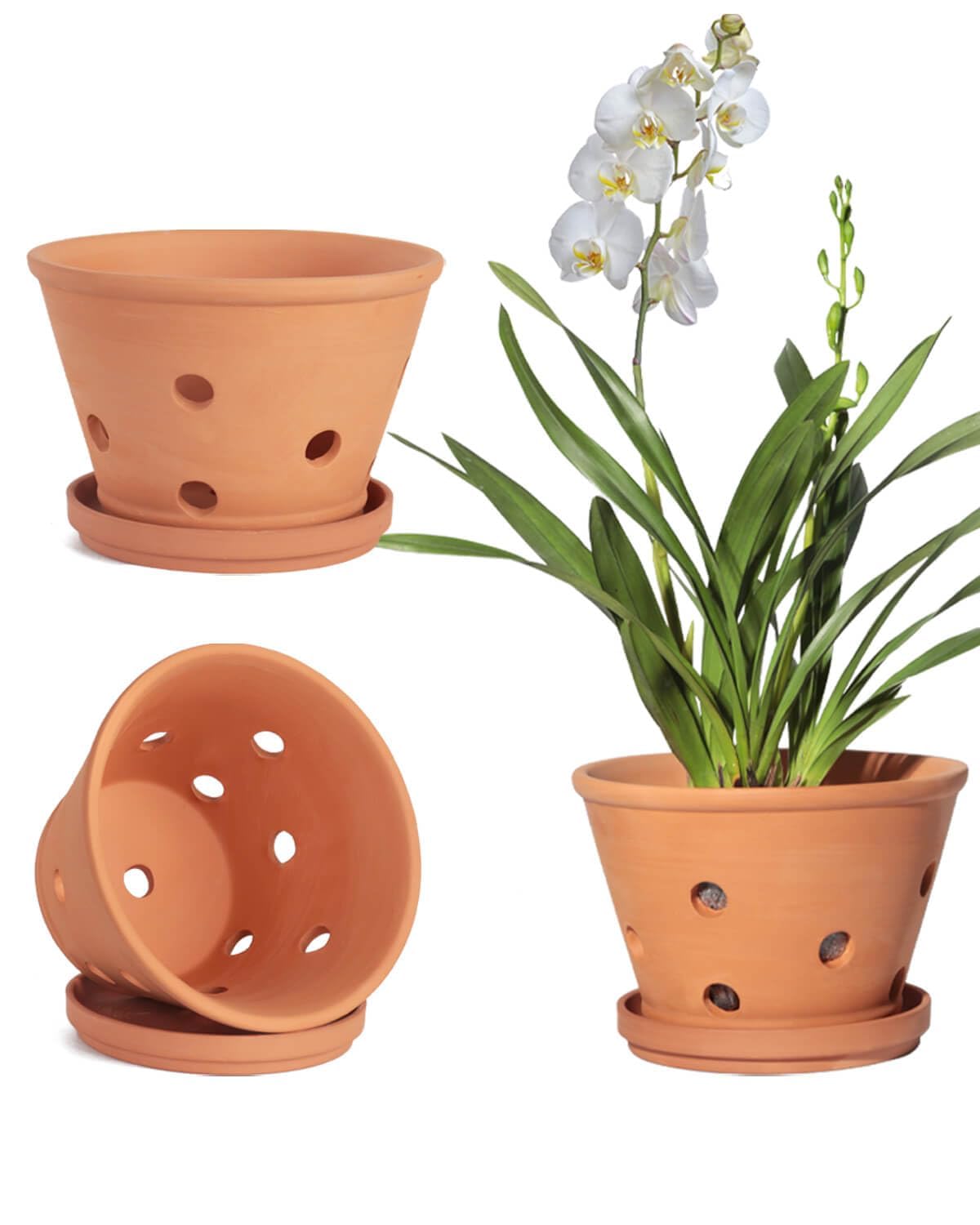
vensovo fires these terracotta pots at 1796°F, which yields a dense, durable clay that resists cracking better than low-fire equivalents. Each 6-inch pot has a ring of round holes around the side wall and a central drainage hole in the base. The unglazed surface absorbs moisture from the medium and releases it through evaporation, creating a natural wicking effect that pulls excess water away from the root zone. This makes the vensovo set particularly effective for growers who tend to water more frequently than necessary.
The set includes three pots with matching saucers, and the packaging is designed to survive a 3-foot drop without breakage — multiple buyers confirmed all pieces arrived intact. The 6-inch size handles typical Phalaenopsis and medium Dendrobium comfortably. Because the clay is porous, the pots feel substantial without being excessively heavy, and the warm terracotta tone blends naturally into sunrooms or greenhouse settings. Owners who repotted struggling orchids into these pots noted visible root improvement within a few weeks.
One experienced reviewer reported that certain orchid varieties (likely moisture-loving types) did not thrive in these pots, as the terracotta wicks moisture too aggressively for plants that prefer consistent dampness. A few pots arrived with hairline cracks that did not affect structural integrity but were noticeable up close. The side holes are wide enough that fine bark can tumble out unless you line the interior with a mesh or use a chunky medium.
What works
- Unglazed clay pulls moisture away from roots, reducing overwatering risk
- High firing temperature produces durable pots that resist cracking
- Well-protected packaging minimizes shipping breakage
What doesn’t
- Terracotta dries too fast for orchids that need consistent moisture
- Side holes allow fine medium to escape during watering
- Occasional hairline cracks reported despite careful packing
5. Orceler 6 Inch Terracotta Orchid Pots – 3 Pack

Orceler pushes the firing temperature to 1922°F, creating terracotta pots that are even more dense and resistant to chipping than the typical clay pot. The 6-inch diameter and 4.7-inch height provide a slightly deeper profile than some competing terracotta designs, which gives larger Phalaenopsis root systems room to grow downward. The side walls feature a staggered arrangement of drilled holes that improve airflow while keeping the structural integrity of the clay intact.
Like the vensovo set, these are unglazed, so they actively wick moisture away from the potting mix. This characteristic makes them a strong choice for anyone who has struggled with root rot in plastic pots. The included saucers match the pot color and catch runoff, though the saucers are relatively shallow. Owners praised the packaging, with many noting that all three pots and saucers arrived without cracks even after long-distance shipping. The natural terracotta color works well in both indoor and outdoor settings.
Some users found the side holes slightly large for their medium of choice, with small bark pieces escaping during watering. One buyer noted that the pot height was slightly less than expected, which affected how their specific orchid variety sat in the container. The terracotta material also means these pots can feel heavy if you frequently move plants for sun exposure. The set is limited to one size, so you cannot accommodate smaller specimens without another purchase.
What works
- Ultra-high firing temperature yields exceptional durability and crack resistance
- Unglazed clay wicks excess moisture effectively for rot-prone growers
- Staggered side-hole layout promotes even aeration around the root ball
What doesn’t
- Side holes can allow fine bark to escape without a liner
- Slightly shallower than some alternatives for certain root structures
- Terracotta weight makes frequent repositioning less convenient
6. T4U 9 Pack Orchid Pots – Clear Plastic – 3 Sizes
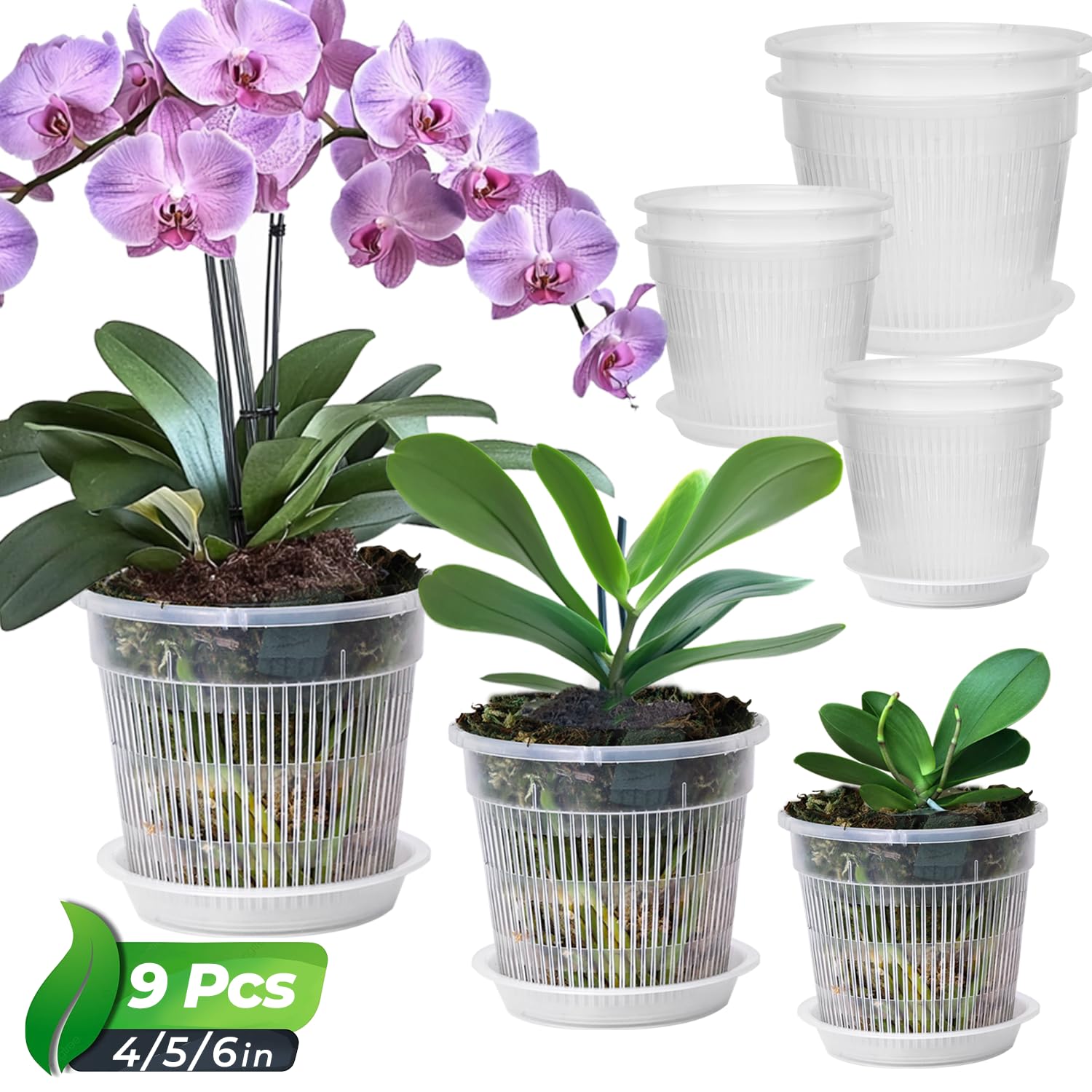
T4U offers nine pots split across three sizes — 4.3, 5.5, and 6.3 inches — with matching saucers for every pot. This is the only set in the roundup that accommodates different growth stages out of one box, so you can pot a small keiki in the 4.3-inch while repotting a mature Phalaenopsis into the 6.3-inch. The clear PP plastic is lightweight yet moderately thick, and the side wall has an array of round holes staggered in rows for 360-degree ventilation. The bottom also features multiple drainage holes.
Owners praised the variety for simplifying repotting when their orchids outgrew smaller containers — no need to buy a separate batch of larger pots months later. The transparent walls allow you to monitor root health and moisture levels, which is especially helpful when moving plants to the next size up. The saucers are deep enough to hold water for bottom-watering sessions, and the plastic does not degrade quickly under normal indoor light. The pots also work well for other plants like peace lilies or succulents when not used for orchids.
A few reviewers noted that the side holes measure about 3 mm wide, which lets fine bark sift through during watering. Users who prefer a very chunky mix found the openings acceptable, but anyone using sphagnum or fine-grade bark will need a liner. The plastic, while adequate, is not as thick as the rePotme or JGB options, so longevity may be shorter under heavy handling. The flat bottom design led one owner to note that roots sometimes grew outward through the side holes instead of circling inside.
What works
- Three distinct sizes in one box support orchids from keiki to mature stage
- Staggered round side holes provide good 360-degree ventilation
- Saucers are deep enough for bottom-watering absorption
What doesn’t
- 3 mm side holes allow fine medium to escape during watering
- Plastic thickness is lower than premium alternatives, affecting longevity
- Flat bottom can encourage roots to grow out through side openings
7. YOPIKUU 8 Pack Orchid Pots – Clear Plastic – 4 Sizes

YOPIKUU delivers eight clear plastic pots in four sizes (3, 4, 5, and 6 inches), each with a matching saucer, making this the most size-diverse entry-level set on the list. The plastic is durable enough to survive accidental drops without cracking, and the drainage holes along the sides and bottom are sized to prevent most orchid mix from falling out while still allowing ample airflow. The clear design lets you check root color and medium moisture at a glance, which is a major help for beginner orchid owners.
Reviewers reported that these pots helped their store-bought Phalaenopsis rebloom after repotting from original nursery containers. The variety of sizes means you can use the 3-inch for mini orchids or rooting cuttings, the 4 and 5-inch for standard Phals, and the 6-inch for larger specimens. The included saucers are a practical addition that keeps water off surfaces, and the set price is low enough that it competes with generic nursery pots that lack side ventilation entirely.
The side holes are slightly larger than the description implies in some spots, and one reviewer noted the 6-inch pot was about 1.5 inches shorter than expected, which affected how much medium it could hold. The plastic, while sturdy for the price, does not match the heft of the JGB or rePotme pots. A few owners found the 3-inch pots too small for most uses, leaving them with fewer usable containers than the pack count suggests.
What works
- Four sizes in one purchase support orchids from mini to full-size
- Well-sized drainage holes balance airflow and medium retention
- Clear plastic simplifies root monitoring for new orchid owners
What doesn’t
- 6-inch pot is shorter than standard depth, limiting medium volume
- Plastic feels noticeably lighter and less rigid than premium options
- Smallest 3-inch pots have limited practical use for most growers
Hardware & Specs Guide
Side Hole Pattern and Width
Not all side holes are equal. Slotted designs (rePotme, JGB) provide continuous vertical airflow along the entire root column, which is ideal for epiphytic orchids that photosynthesize through their roots. Drilled round holes (T4U, vensovo, Orceler) offer more controlled evaporation but can still promote healthy gas exchange if spaced densely. Hole width matters: 3 mm openings allow fine bark to escape, while 5 mm slots require chunky medium or a mesh liner to prevent medium loss.
Firing Temperature of Terracotta
Unglazed clay pots are defined by their firing temperature. Standard low-fire terracotta bisques around 1400-1600°F and can chip or crack under temperature swings. The vensovo set fires at 1796°F and the Orceler set at 1922°F — both above typical thresholds, yielding denser clay that resists breakage during shipping and handling. Higher firing also reduces porosity slightly, so the wicking rate is more moderate than low-fire clay, giving you a broader window between waterings.
FAQ
Should I buy clear plastic or terracotta pots for my first orchid?
How do I prevent bark from falling out of the side holes?
What size pot is best for a standard Phalaenopsis orchid?
Can I use a decorative ceramic pot without side holes for my orchid?
Final Thoughts: The Verdict
For most gardeners, the pots for orchids winner is the rePotme 6 Inch Slotted Clear Pot because its thick plastic, full-height slits, and transparent walls give you complete control over watering and root health from day one. If you want maximum airflow and value for a big collection, grab the JGB 9 Pack 7 Inch Slotted Pots. And for a decorative display that still breathes, nothing beats the BUYMAX White Ceramic Set.