
Specs are compiled from manufacturer listings and verified buyer reviews and can change over time — please confirm the key details on the product page before buying.
Your jade plant needs a pot that drains fast and stays shallow. Its thick leaves store water, so sitting in wet soil for too long leads to root rot — the fastest way to kill it. You want a pot with a hole in the bottom, a saucer to catch drips, and a shape that lets roots spread wide rather than sink deep.
I’m Rikta — the founder and writer behind Lawn Gear Lab. This guide is built by comparing the manufacturers’ published specifications and the patterns across verified customer reviews, so you get each pick’s real strengths and trade-offs instead of marketing spin.
After digging through the specs and real buyer feedback, these seven ceramic pots rise to the top for anyone shopping for a pot for jade plant — from budget-friendly glazed options to wider shallow planters that let roots spread naturally.
Quick Picks
- Eightpot 8 Inch Ceramic Succulent Planter — Best Overall
- EPFamily 8 Inch Ceramic Bonsai Planter — Premium Design
- EPFamily 6.3 Inch Ceramic Bonsai Pot — Compact Specialist
- EPFamily 6 Inch Blue-Glazed Planter — Versatile Mid-Size
- SQOWL 6 Inch Ceramic Planter — Value Standard
- Xiaan Jiaju 6.29 Inch Cottage Rustic Pot — Rustic Charm
- D’vine Dev 4 Inch Embossed Leaves Stoneware Planter — Gift-Ready Small
How To Choose The Best Pot For Jade Plant
Jade plants store water in their leaves and stems, so they need soil that dries out between waterings. The right pot shape and drainage make that easy. Here is what to look for.
Drainage Is Everything
Jade roots rot quickly if they sit in standing water. A pot with at least one drainage hole (an opening at the bottom) is not optional — it is the single most important feature. A matching saucer (a shallow dish) catches the drips so you can place the pot on a desk or shelf without worry. Some pots also include a mesh pad or drainage net to keep soil from washing out of the hole.
Width Over Depth
Jade plants have a shallow, spreading root system. A pot that is wider than it is deep — often called a shallow or bonsai-style pot — gives those roots room to grow outward without drowning in deep, soggy soil at the bottom. A standard 6-inch pot works for many jade plants, but a wider 8-inch option can accommodate larger, older specimens.
Material Matters
Ceramic is a popular choice for jade plants because it is sturdy and comes in many finishes. A glazed ceramic pot (sealed with a glass-like coating) retains a bit more moisture in the soil, so you should water a little less often. Unfinished or unglazed ceramic allows some airflow through the pot walls, which helps the soil dry out faster. Both work — just adjust your watering routine to match.
Quick Comparison
| Model | Best For | Diameter | Height | Material | Amazon |
|---|---|---|---|---|---|
| Eightpot 8 Inch | Wide, shallow planter | 8 in | 3.1 in | Glazed Ceramic | Buy |
| EPFamily 8 Inch Bonsai | Shallow planter + bamboo tray | 8 in | 3.14 in | Glazed Ceramic | Buy |
| EPFamily 6.3 Inch Bonsai | Compact shallow pot | 6.3 in | 2.6 in | Glazed Ceramic | Buy |
| EPFamily 6 Inch Blue-Glaze | Mid-size standard pot | 6.18 in | 6.02 in | Glazed Ceramic | Buy |
| SQOWL 6 Inch Blue | Standard 6-inch ceramic | 5.8 in | 4.6 in | Ceramic | Buy |
| Xiaan Jiaju 6.29 Inch | Farmhouse rustic decor | 6.29 in | 5.12 in | Ceramic | Buy |
| D’vine Dev 4.3 Inch | Small desk or gift pot | 4.3 in | 4.8 in | Stoneware | Buy |
In‑Depth Reviews
1. Eightpot 8 Inch Ceramic Succulent Planter

The wide, shallow shape lets jade roots spread out naturally instead of crowding down — a better match than the deeper EPFamily 6-inch pot.
This Eightpot planter gives you a generous 8-inch top diameter with only 3.1 inches of depth — exactly the shallow profile a jade plant’s root system needs. Compare that to the deeper 6.02-inch height of the EPFamily 6-inch blue pot: the Eightpot means less soggy soil at the bottom. It is also noticeably heavier, at 2.9 pounds versus the 1.4-pound SQOWL, which tells you it is made from dense, high-quality ceramic.
The polished white glazed finish is simple and modern, and the matching saucer catches drainage. One reviewer noted the pot was “perfect for my pothos in depth and width,” but added a practical reminder that you should let the plant drain entirely before placing it back on a wooden surface to avoid water damage. That is a good tip for any glazed pot — the saucer holds water, so just tip it out after watering.
If you have a jade that has outgrown a standard 4-inch nursery pot, this is the upgrade that gives those roots room to breathe instead of staying trapped in a narrow pot.
The Wide-Shape Advantage
- Shallow 3.1-inch depth suits succulent roots perfectly
- Sturdy 2.9-pound ceramic build feels substantial
- Simple white finish blends into any room
One Thing to Watch
- Saucer can hold water against the bottom if you do not empty it after watering
Grab this if: you want the classic wide-and-shallow pot that matches a jade’s natural root spread and looks clean on a tabletop.
Look elsewhere if: your jade is very small (under 4 inches) or you prefer an unglazed pot for faster soil drying.
2. EPFamily 8 Inch Ceramic Bonsai Planter

A wide glazed ceramic pot paired with a natural bamboo tray instead of a standard ceramic saucer — a lighter alternative to the Eightpot.
Like the Eightpot, this planter gives you an 8-inch diameter and a shallow 3.14-inch height — the same ideal proportions for a jade. The key difference is the bamboo saucer. At 6.1 inches across, it is wide enough to catch drips and has a natural texture that adds a warm, organic feel under the glazed brown ceramic. Buyers report the tray “fits nicely with no wobbles,” which is a common complaint with saucer-pairings on other pots.
The glazed finish is easy to wipe clean, and reviewers consistently mention that the pot looks “very beautiful and well made” and feels “sturdy and durable.” One buyer specifically mentions using it for their jade plant and calling it a “quality product.” For someone who wants the same wide shape as the Eightpot but prefers a look that feels more natural and costs less, this EPFamily pot is the better value.
If you like the look of natural wood against ceramic and want an 8-inch shallow pot that feels a little lighter, this is a solid alternative to the Eightpot.
Bamboo boost: The bamboo tray is a nice design touch that drains freely without trapping water like a ceramic saucer sometimes does.
Best for: anyone who wants a wide, shallow bonzai-style pot with a natural wood saucer and a beautiful glazed finish.
3. EPFamily 6.3 Inch Ceramic Bonsai Pot
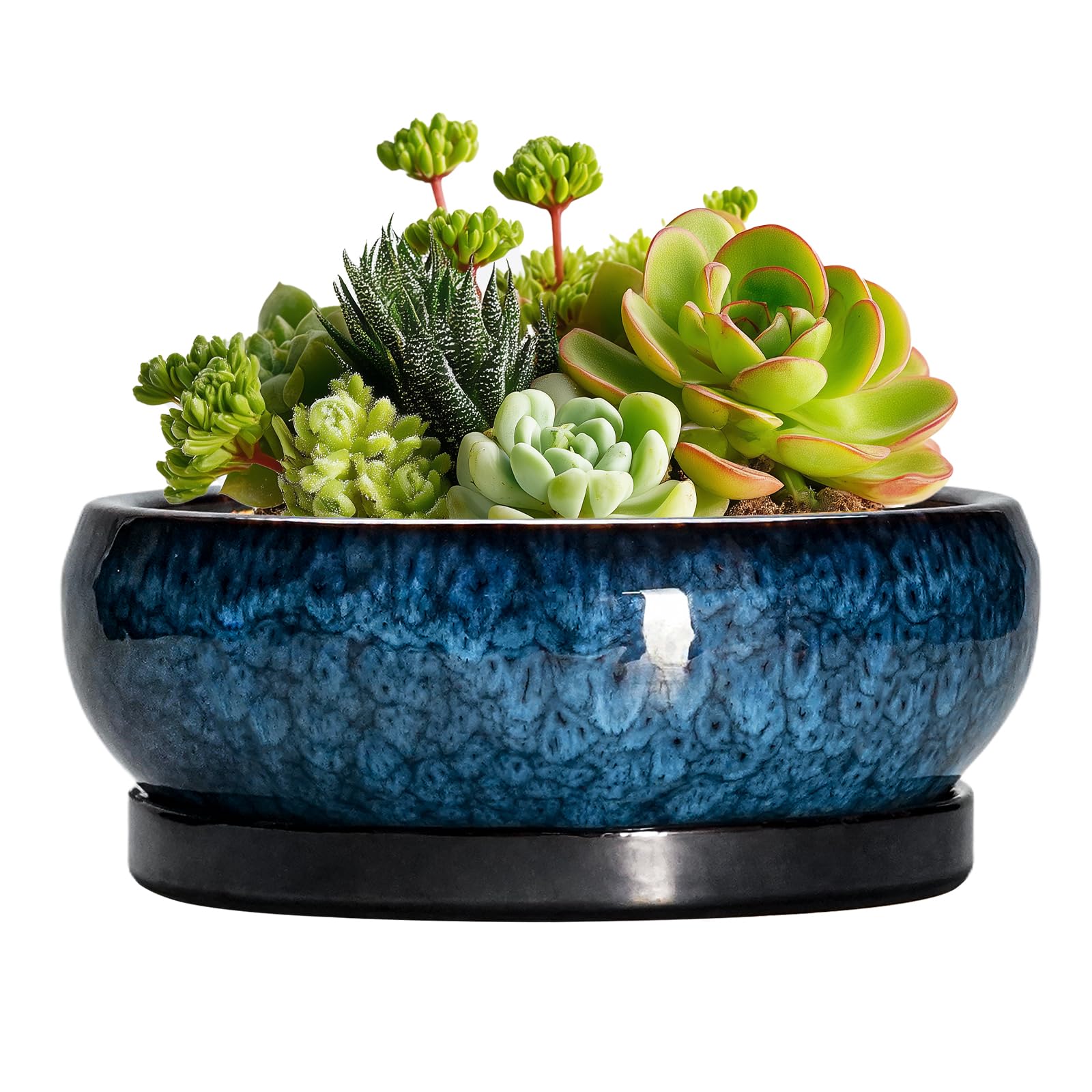
A very shallow 2.6-inch-tall pot, compared with the Eightpot at 3.1 inches tall, built for small jade cuttings or compact bonsai-style plants.
This blue-glazed pot from EPFamily is the shallowest option on this list, with a height of just 2.6 inches. That is ideal if your jade is still a small plant in a 4-inch nursery pot and you want to move it into a decorative container without burying it in too much soil. The outer diameter is 6.3 inches, but the inner opening is 5.3 inches, so your jade’s root ball will sit in a compact, well-draining space.
It includes a 9mm mesh pad over the drainage hole to keep soil from washing out, and the matching blue ceramic saucer catches excess water. Owners mention the pot is “very well-made with large drainage hole” and that the “drainage tray fits nicely with no wobbles.” It is light at 0.39 pounds, so you can move it around easily. Some buyers did feel the pot was smaller than expected for the price, so check the 2.6-inch height against the size of your jade before buying.
The product description explicitly lists jade plant as a recommended species, so it is a targeted fit.
Why It Works for Small Jade
- Extremely shallow at 2.6 inches — prevents overwatering
- Includes mesh pad and matching ceramic saucer
- Beautiful blue glazed finish adds color
When It Falls Short
- Smaller than some expect for the price point
Ideal for: a small jade cutting, a compact bonsai-style jade, or anyone who wants a very shallow pot to prevent soggy soil.
4. EPFamily 6 Inch Blue-Glazed Planter
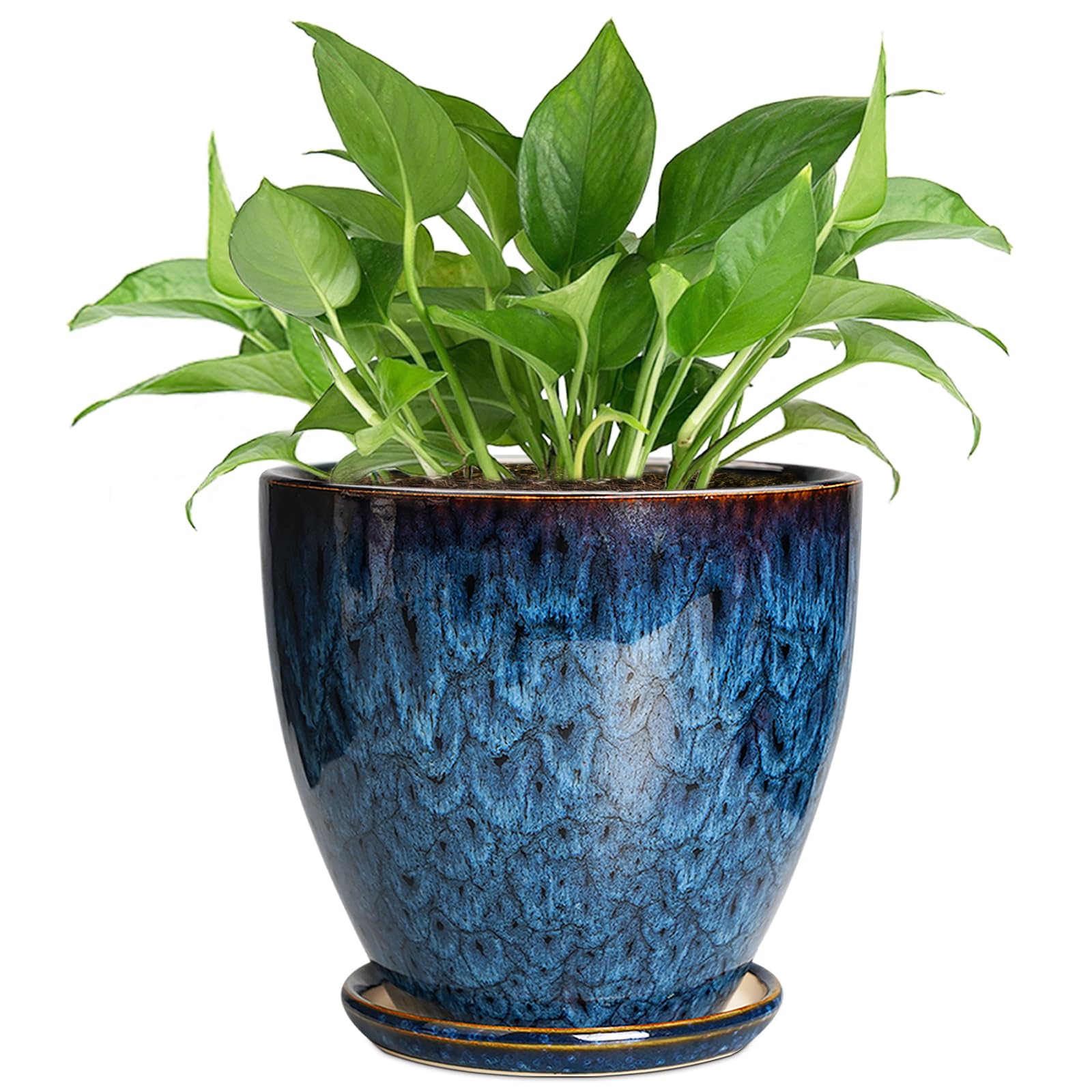
A standard 6.18-inch-wide pot with a 6.02-inch height — deeper than the shallow options, so it fits a jade that already has a decent root ball.
This pot is 6.18 inches across and 6.02 inches tall — a standard, balanced shape. It is deeper than the shallow options above, so it works best for a jade that has already developed a decent root ball and needs vertical space, not just width. The glazed ceramic is kiln-fired at high temperature, so it resists fading and weather damage, and it is rated for both indoor and outdoor use.
The drainage hole comes with a net, and the saucer matches the flowing blue glaze. Customers note it is “beautiful and well made” and that the color “contrasts nicely to the green leaves of my plant.” One reviewer specifically noted the “good drainage.” If you prefer a classic pot shape that does not sacrifice depth for width, this is a strong pick for a jade that is past the cutting stage.
It is not as wide as the 8-inch options, so a large, top-heavy jade may need more room, but for a medium-sized plant, it fits neatly on a desk or shelf. This is the pot to buy if your jade is already in a 4- or 5-inch nursery pot and you need a simple upgrade to a classic shape.
Standard shape call: This is a traditional pot, not a shallow one — good for a mid-sized jade, but water a bit less often due to the extra depth.
Good for: anyone who wants a classic 6-inch ceramic pot with a beautiful glazed finish and a saucer for their medium jade plant.
5. SQOWL 6 Inch Ceramic Planter

A solid 5.8-inch-diameter ceramic pot with a peacock blue glaze that weighs 1.4 pounds, versus the Eightpot at 2.9 pounds.
At 5.8 inches in diameter and 4.6 inches tall, this SQOWL pot is a touch shorter than the standard EPFamily 6-inch, which gives it a slightly wider-in-proportion look. The peacock blue glazed finish is a central feature — buyers call it “stunning” and note that it “blends well with any decor.” One reviewer specifically said their “snake plant loves it,” and with ceramic retaining moisture, they water “every 2 weeks” — a similar watering cadence you could expect for a jade.
It weighs 1.4 pounds, making it noticeably lighter than the 2.9-pound Eightpot, but buyers still describe it as “heavy, well-made ceramic” with a “mesh-covered drainage hole and separate saucer.” One small criticism from a buyer: the drip tray could be about an inch larger, as it is snug against the pot’s base. That is not a dealbreaker, but it means you need to be careful emptying it so water does not spill over the edge. For a compact pot that looks richer than its price suggests, this is a safe bet.
Why It Works
- Stunning peacock blue finish
- Mesh pad keeps soil in while water drains
- Reviewers point out it feels well-made for the price
The Trade-Off
- Drip tray is on the small side — be careful emptying it
Reach for this if: you want an attractive, standard 6-inch pot with a beautiful glaze and a mesh drainage protector.
Think twice if: you prefer a wider saucer with a larger water-catching capacity.
6. Xiaan Jiaju 6.29 Inch Cottage Rustic Pot

A sage-yellow pot with a crackle glaze (an intentionally aged, cracked finish) that gives it a farmhouse look — it weighs 2.1 pounds.
This Xiaan Jiaju pot stands out for its appearance. The “sage yellow” color has a distressed, crackle glaze finish that buyers describe as a “beautiful rustic, weathered Tuscan finish.” It measures 6.29 inches in diameter and 5.12 inches tall — a standard depth that accommodates a jade plant that has some root development. The drainage hole has a removable plastic plug, so you can choose whether to keep it sealed (if using as a cachepot, a decorative outer pot) or open for drainage.
Buyers consistently praise the look and feel. One buyer mentioned it has a “good weight” and looks “more expensive than it is.” Another noted it comes with a “drainage hole with removable plastic plug” and is “very well made and sturdy.” At 0.96 kilograms (about 2.1 pounds), it has a solid feel on a table. The crackle glaze means the finish is intentionally textured — if you prefer a perfectly smooth, glossy pot like the Eightpot’s, this may not be your style.
The farmhouse look is strong here, so it works best if that aesthetic matches your home decor. For someone who wants the same standard depth but with a distinctive rustic look, this pot delivers more personality than the plain glazed options.
Decor-first pick: The rustic crackle finish drives the decision here — if you love that look, the sturdy ceramic and drainage make it a practical home for a jade.
Best for: a jade plant in a farmhouse, boho, or cottage-style room where the pot’s texture is part of the decor.
7. D’vine Dev 4 Inch Embossed Leaves Stoneware Planter
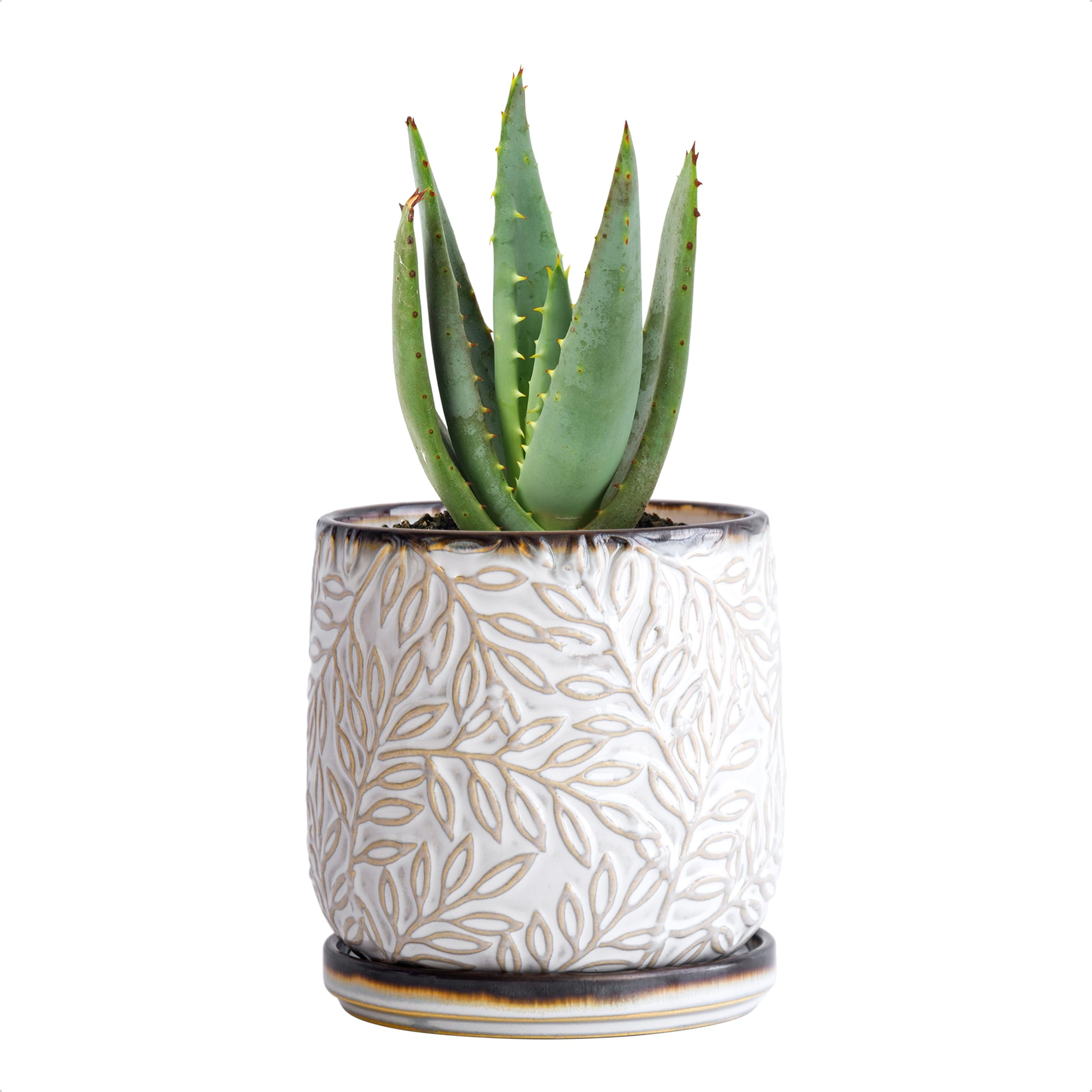
A small, heavy stoneware pot with embossed leaves that weighs 1.9 pounds, versus the SQOWL 6-inch pot at 1.4 pounds.
This pot is small — 4.3 inches outside diameter, 4 inches inside, and 4.8 inches tall — so it is best for a jade cutting, a very small plant in a 2-3 inch nursery pot, or as a gift for a plant lover. The stand-out feature is the embossed leaf design around the pot, which gives it a textured, artisanal look. Buyers rave about it: one called it a “lovely pot, heavy-duty” and noted it “includes a water saucer, mesh insert for the bottom, and a padded pad to prevent scratching the window ledge.” Another buyer said it was the “prettiest pot I’ve ever seen.”
At 1.9 pounds, it is surprisingly heavy for a 4-inch pot, versus the SQOWL 6-inch pot at 1.4 pounds, which tells you the stoneware (a dense, non-porous clay) is thick and dense. The capacity is only 0.2 gallons, so soil volume is limited, but that is fine for a small jade that likes to dry out between waterings. The smoked white color with green undertones means some buyers found it a bit lighter than expected, but almost everyone loves how it looks on a windowsill.
This is not for a full-grown jade — the roots will run out of room fast — but for a starter plant or a thoughtful gift, it is tough to top this package of extras including mesh, pad, and saucer.
What Makes It Special
- Includes mesh insert, padded pad, and matching saucer
- Heavy, dense stoneware feels premium
- Embossed leaf design gets consistent rave reviews
Size Limit
- Only 4 inches inside diameter — too small for an established jade
Ideal for: a jade cutting, a small succulent arrangement, or as a gift that comes with all the extras (mesh, pad, saucer).
Understanding the Specs
Drainage Hole
A hole in the bottom of the pot lets excess water escape instead of pooling around your jade’s roots. Without it, the soil stays wet too long and the roots can rot. Every pot in this list has one, and some also include a mesh pad or net over the hole to keep soil from washing out.
Pot Depth
A jade plant’s roots grow sideways, not deep. A shallow pot — 3 inches or less in height — prevents water from collecting at the bottom where roots cannot reach it. A deeper pot (5-6 inches) still works if you water less often and use a gritty, fast-draining soil mix.
Glazed vs Unglazed Ceramic
A glazed finish (a glass-like coating) seals the surface of the pot so water does not evaporate through the walls. That means the soil stays moist a little longer, so you water less often. An unglazed pot is porous and lets air and moisture pass through, drying the soil faster. Both work — just adjust your watering schedule to match.
Saucer Included
A matching saucer catches water that drains out of the pot after you water. This protects your furniture or windowsill from water rings. A mesh pad or drainage net between the saucer and the pot also helps prevent soil from spilling out and keeps the saucer cleaner.
FAQ
Does a jade plant need a deep or shallow pot?
How big of a pot does a jade plant need?
Can I use a pot without a drainage hole for a jade plant?
What is the best material for a jade plant pot?
How often should I water a jade plant in a ceramic pot?
Should I repot a jade plant right after buying it?
Will a jade plant grow bigger in a larger pot?
What does a saucer do for a jade plant pot?
Is a glazed or unglazed pot better for a jade plant?
Final Thoughts: The Verdict
For most people, the best pot for jade plant is the Eightpot 8 Inch Ceramic Succulent Planter because its wide, shallow shape perfectly matches a jade’s spreading roots and the glazed ceramic finish gives it a clean, durable look. If you want something slightly lighter with a natural bamboo saucer, grab the EPFamily 8 Inch Ceramic Bonsai Planter. And for a small jade cutting or a decorative gift pot with all the accessories included, the D’vine Dev 4 Inch Embossed Leaves Stoneware Planter is a standout choice.
How We Picked
We do not accept paid placement. Every pick is matched to a real buyer and a real use-case; we do not hands-on test units.
Sources & Methodology
Specifications: manufacturer listings and product documentation. Review insights: verified customer reviews, as of July 2026. Pricing: not shown on this page (it changes often); check the current price via the retailer link.
As an Amazon Associate, Lawn Gear Lab earns from qualifying purchases. This does not affect which products we feature.