
Specs are compiled from manufacturer listings and verified buyer reviews and can change over time — please confirm the key details on the product page before buying.
You spot a weed. You want it gone yesterday. That is what a post-emergent herbicide does — it attacks weeds that are already visible and growing, unlike a pre-emergent (a chemical that stops seeds before they sprout). The hard part is picking the right one: some kill everything they touch (non-selective), some gently remove a single weed type from your lawn, and others are formulated for massive pastures or industrial fence lines. This guide cuts through the bottle labels and application rates to show you exactly which concentrate handles your specific situation — without the guesswork.
I’m Rikta — the founder and writer behind Lawn Gear Lab. This guide is built by comparing the manufacturers’ published specifications and the patterns across verified customer reviews, so you get each pick’s real strengths and trade-offs instead of marketing spin.
Whether you are fighting crabgrass in a flower bed, clearing a fence line of brush, or trying to save a prized lawn from Poa annua (a common winter annual weed grass), the right chemistry changes everything — here is your honest look at the best post-emergent herbicide options for real yards and real budgets.
Our Picks at a Glance

How To Choose The Best Post-Emergent Herbicide
A post-emergent herbicide is a targeted tool. Your first decision is if you want to eliminate every plant in an area (non-selective) or surgically remove specific weeds while leaving your lawn unharmed (selective). The wrong choice can cost you a whole season of lawn recovery.
Non-Selective vs. Selective
A non-selective formula like glyphosate kills any green tissue it touches. It is the right choice for driveways, fence lines, garden beds before planting, or spot-treating a patch of poison ivy. A selective herbicide, on the other hand, targets specific weed families — something like mesotrione can kill crabgrass and clover while your Kentucky Bluegrass recovers.
Active Ingredient Concentration
The percentage of active ingredient tells you the potency, but not always the speed. A higher glyphosate percentage (41% vs. 50%) can mean more dead weeds per ounce of concentrate, but it also means more caution is needed around desirable plants. For lawn-safe selective control, ingredients like mesotrione or rimsulfuron hit specific enzymes in the weed while the turfgrass survives.
Volume and Coverage
Read the “makes X gallons” number on the bottle. A small 8-ounce bottle of mesotrione might take out the crabgrass in your front lawn, but a 2.5-gallon jug of glyphosate will handle an entire property edge-to-edge. Match the volume to your job, not the price tag.
Quick Comparison
| Model | Best For | Active Ingredient(s) | Volume | Selectivity | Amazon |
|---|---|---|---|---|---|
| Albaugh Gly Star Plus★ Best Overall | Large-Scale Weed Control | Glyphosate 41% with Surfactant | 2.5 Gallons | Non-Selective | Amazon |
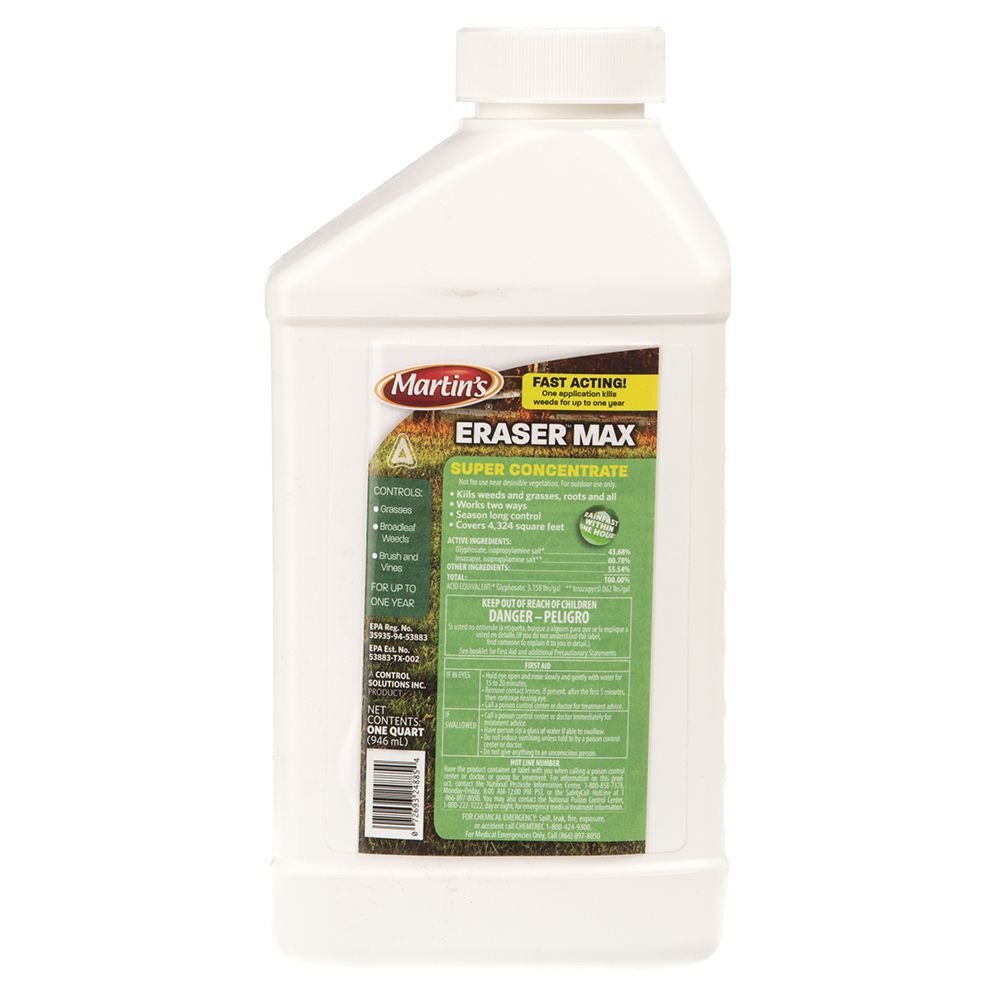
| Martin’s Eraser MaxAlso Great | Farm/Property Spot-Treatment | Glyphosate 43.68%, Imazapyr 0.78% | 32 oz | Non-Selective | Amazon |
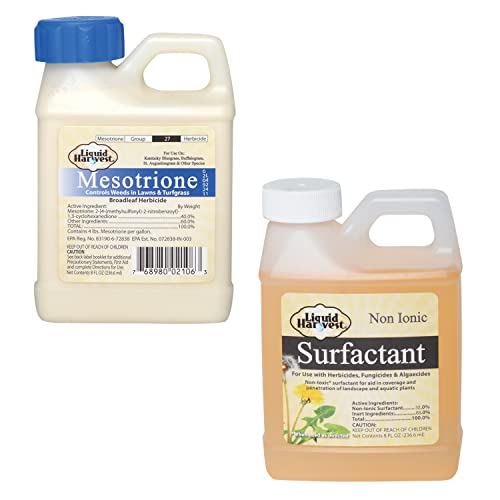
| Liquid Harvest Mesotrione BundleLawn-Safe Selector | Lawn-Safe Weed Control | Mesotrione | 8 oz | Selective | Amazon |
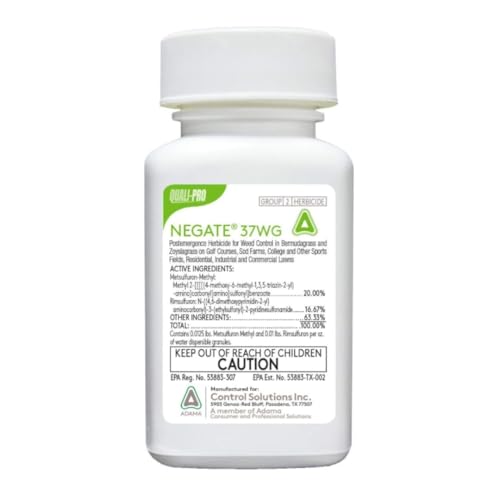
| Quali-Pro Negate 37WG | Warm-Season Turf & Poa Annua | Rimsulfuron 16.67%, Metsulfuron methyl 20% | 1.5 oz | Selective | Amazon |
| Plus Herbicide (Glyphosate 4+) | Comparable to Roundup at Lower Cost | Glyphosate 41% | 2.5 Gallons | Non-Selective | Amazon |
| Roundup Pro Herbicide | Industrial & Large-Property Weeds | Glyphosate 50.2% | 2.5 Gallons | Non-Selective | Amazon |
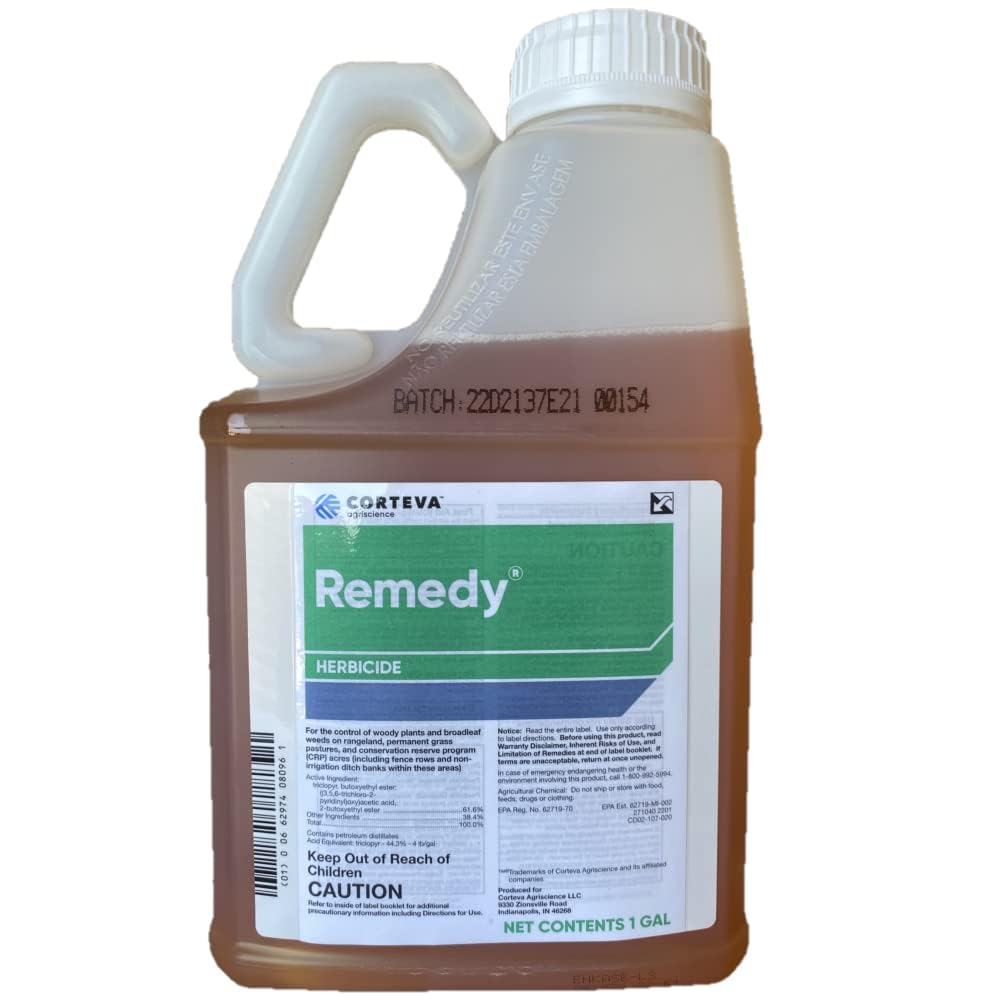
| Remedy Specialty Herbicide | Brush Control & Fence Lines | Triclopyr | 1 Gallon | Selective (Broadleaf/Brush) | Amazon |
| Target 6 Plus (MSMA) | Crabgrass & Dallisgrass in Warm Turf | MSMA 48.3% | 2.5 Gallons | Selective | Amazon |
| Hi Yield 16 Oz Grass Killer | Selective Grass Removal in Gardens | Fluazifop-P-butyl | 16 oz | Selective (Grasses only) | Amazon |
In‑Depth Reviews
1. Albaugh Gly Star Plus Herbicide (2.5 Gallons)
Our pick — over 4.5★ from 450+ verified ratings; the strongest balance of quality and price.
The 15-pound jug that keeps a big property weed-free while staying affordable.
This is the value king of non-selective control. A single 2.5-gallon jug contains 41% glyphosate with the surfactant (the wetting agent that helps the chemical stick to leaves) already mixed in — that is one less bottle to buy and one less mixing step. Reviewers point out it works as well as premium brands, with one buyer noting its effectiveness on lake lily pads. The general consensus is that for the price, you get a massive volume of a product that performs just like the name-brand stuff.
The honest observation from owners is patience: “takes about 10 days to two weeks to see everything dead, but for the price it’s worth it.” The surfactant being pre-mixed is a real time-saver, especially if you are used to buying a separate adjuvant (an additive that boosts performance). However, this product, according to its label, is not labeled for residential use and is intended for commercial applications — a critical detail for suburban homeowners. It is also restricted from sale in several western states including CA, MT, NV, OR, WA, and WY.
big coverage savings
- 2.5 gallons at a highly competitive price per ounce
- Surfactant is already in the jug — no extra purchase or mixing step
- Performs equally to well-known national brands in owner experience
not for small yards
- Labeled for commercial use, not residential lawns
- Not available in CA, MT, NV, OR, WA, WY
- Can take up to two weeks for full results on some weeds
who it’s for: Property managers, farmers, or commercial operators who need bulk non-selective herbicide and value a built-in surfactant.
who should skip: Homeowners looking to spot-treat a suburban lawn — this jug is oversized and labeled for commercial use only.
2. Martin’s Eraser Max Super Concentrate – 32oz
The trusted farm-hand that keeps working even after a rain shower.
This is the concentrate that experienced landowners reach for when they need reliable, total vegetation control and do not want to babysit the weather. The active ingredient mix — glyphosate at 43.68% combined with imazapyr (a residual broadleaf killer that stays active in the soil) at 0.78% — delivers a one-two punch that, according to reviewers, hits tougher than a straight glyphosate solution alone. The standout feedback from owners is that a few hours after spraying, heavy rain arrives, and the product still does its job. That rainfast window (the time before rain washes it off) is a genuine time-saver for anyone covering a large property where a sudden shower could otherwise wash away an entire afternoon of work.
Buyers sum it up: “mix this to the correct per gallon ratio and you will be happy with the results.” Many report seeing dead vegetation in about a week, with one long-time user calling it the best he has tried in 30 years of spraying weeds. The 32-ounce bottle is a concentrated oil that treats a very large area, making it a strong value even before you factor in the time saved by not re-spraying after rain.
The honest trade-off here is that imazapyr has soil activity and can linger. If you overspray near tree roots or garden beds, you may see damage to desirable plants. This is not a product for delicate flower borders; it is for fence rows, farm paths, driveways, and heavy weed patches where you want guaranteed results.
super concentrate power
- Rainfast within hours — a passing shower does not wash it off
- Dual-active formula (glyphosate + imazapyr) handles tough perennial weeds
- Buyers report visible kill in roughly one week
needs careful handling
- Imazapyr has soil residual activity, so overspray near trees and ornamentals can cause damage
- Needs proper safety gear and wind-free application
- Not labeled for general lawn use over turf
works for pros: Anyone managing a farm, acreage, or large property who wants a tough, rainproof non-selective killer that works fast.
think twice if: You need a selective herbicide that protects your lawn or flower beds — this one eliminates everything.
3. Liquid Harvest Mesotrione Bundle – 8 Ounces
The bleach that whitens weeds while your turfgrass lives to mow another day.
This is the selective solution for the homeowner who values their lawn. Mesotrione works by inhibiting photosynthesis (the process plants use to turn light into energy) in susceptible plants — the weed turns a ghostly white within three days and eventually dies, while cool-season grasses like Kentucky Bluegrass and Tall Fescue recover after three weeks of normal mowing. Owners mention seeing visual results fast: one buyer described the “bleached out crabgrass white” look after the first application. The bundle includes an 8-ounce surfactant (a wetting agent that helps the chemical stick to leaves), which is what makes the chemical stick to the leaves so it can do its work.
This product handles a broad list of 46 weed species and grass types, including crabgrass, clover, chickweed, and barnyard grass. It is also notable as one of the few effective chemical options for Nimblewill, a notoriously difficult weed to control. It works on several common lawn grasses but carries a long list of grasses it will damage — avoid using it on Bentgrass, Zoysiagrass, or Bermuda grass, as mesotrione can harm them. The ugliest phase is right after application, when the lawn is dotted with white weeds, but the final recovery is described as “excellent.”
bundle value deal: You spray a patch of clover and creeping charlie on a Tuesday, see white by Friday, and your lawn is fully green by the second mow three weeks later — selective chemistry doing exactly what you paid for.
best for lawns: Homeowners who want to kill specific weeds in a cool-season lawn without damaging the grass.
not for weeds: Hot-season lawns or anyone who cannot wait through the “ugly white weed” phase before the yard recovers.
4. Quali-Pro Negate 37WG Herbicide
The specialist that surgically removes Poa annua from warm-season grass.
If “Poa annua” is a four-letter word in your lawn care vocabulary, this is the granular concentrate you want. The dual active ingredients — rimsulfuron 16.67% and metsulfuron methyl 20% — are a potent sulfonylurea combination designed for established warm-season turfgrasses like Bermuda. Customers note yellowing in the weed within days and full death after two applications, while the Bermuda grass remains safe. One buyer describes it as “an excellent product for the stubborn weeds that nothing else touches.”
The catch is that this is a powerful, time-sensitive tool. The entire 1.5-ounce bottle must be mixed with one gallon of water, and the mixed solution expires after 30 days. This means it is ideal if you have a large area to treat at once, but wasteful if you only need a small spot spray. The value-for-money sentiment is mixed; some find it “excellent for the cost” while others feel the small bottle is expensive for a single treatment of even a modest 1,800 sq ft lawn.
reliable herbicide: A specialized, effective weapon against Poa annua and broadleaf weeds in warm-season turf, but you need to plan to use the entire bottle in one session.
reach for this: You have a warm-season lawn overwhelmed by Poa annua and need a proven, targeted fix.
look elsewhere: You want a general-purpose weed killer or only need a small amount for spot-treatment — the mix-and-use mandate makes this impractical for tiny lawns.
5. Plus Herbicide – 41% Glyphosate with Surfactant – 2.5 Gallon

The Roundup clone that brings the same kill power at a gentler price.
This 2.5-gallon jug of 41% glyphosate with a built-in surfactant (the wetting agent that helps the chemical stick to leaves) is the go-to for anyone who knows the big-brand markup is unnecessary. Owner experiences directly compare it to Roundup: “this works just as good as Roundup at a much cheaper price.” The surfactant is already in the formulation, which owners appreciate for saving a mixing step and improving stickiness on the leaf surface. The standard mix rate is 2 ounces per gallon of water for general application, making this a flexible option for everything from fence lines to tree bases.
The feedback on effectiveness is strong — one owner reports it killed all their sticker bushes and weeds with careful use. The caution is about drift: the same power that kills blackberry bushes will kill an ornamental shrub if the spray mist moves in the wind. A few owners noted that the jug cap can be counter-intuitive to open, sometimes sealed with a silicone sealant that requires a tool to remove. Overall, this is a solid, well-reviewed option for anyone who needs a large volume of reliable non-selective herbicide.
who it suits: Cost-conscious buyers who need bulk glyphosate and appreciate the pre-mixed surfactant.
who might struggle: Anyone without a proper sprayer or who is new to mixing concentrates — a simple mistake in ratio can kill desirable plants.
6. Roundup Pro Herbicide – 2.5 Gal.

The heavy artillery for poison ivy, brush, and industrial-scale weed patches.
This is the highest concentration glyphosate on this list at 50.2%. That extra percentage point matters when you are tackling deep-rooted perennials like poison ivy or woody brush. The user reviews are emphatic: one buyer describes it killing cottonwood root shoots in a single day with no re-treatment needed. Another buyer notes it dries in about three hours, which is vital in a rainy climate like Florida, and has used it successfully to kill Brazilian Pepper trees via stump painting.
On value, the math works significantly in its favor when compared to buying pre-mixed at big-box stores. One owner calculated that the concentrate covers roughly 140,000 square feet at a price that beats ready-to-use alternatives. The coverage figure in the specs is 435,600 square feet, which makes this a clear pick for large properties, rights-of-way, and commercial turf management. The honest downside is that preparation takes effort: you must dilute and mix with water, and safety gear — gloves, long sleeves, a mask — is non-negotiable when spraying a 50.2% concentrate.
pro-grade roundup: The genuine industrial-grade Roundup with the highest glyphosate percentage, built for serious jobs where cost-per-acre matters more than convenience.
best use case: Large property owners, farmers, or anyone needing to clear heavy brush and deep-rooted weeds with the most potent glyphosate formulation available.
skip it for: Small lawns or spot-treating a few dandelions — a quarter-gallon jug of a lower concentration would be easier and less wasteful.
7. Remedy Specialty Herbicide Weed Killer – 1 Gallon
The fence line fix that stops brush, cactus, and saplings from coming back.
If your problem is not weeds but woody plants — multiflora rose, honey locust, prickly pear cactus, cogon grass — you need a different chemistry. Remedy uses Triclopyr, a selective broadleaf and brush killer that does not harm most pasture grasses. It is the top-rated pasture herbicide for good reason, according to many owners: it moves through the entire plant, roots and top growth, meaning you do not just singe the leaves — you kill the whole system. Shoppers say that a 1:3 mix of Remedy to diesel for a basal bark application (painting the bottom of the stem) is “wonderfully deadly” on tough trees like honey locust.
The honest sizing of this product: it is tune for pasture and fence lines, not flower beds. It is “pricey but lasts,” with one owner in Florida noting it covers over 100 weekly lawn treatments. The product must dry before children or pets are allowed back in the area. For the specific job of maintaining a fence row or reclaiming a paddock from encroaching brush, owners are unanimous in their praise. One called it the best solution for prickly pear control, and another said it “absolutely annihilated” their cogon grass problem.
ideal property: Rural acreage, pastures, fence lines, and any area where woody brush and trees are the primary target, not lawn weeds.
not ideal for: Homeowners with a standard suburban lawn — this is overkill for dandelions and clover and may harm broadleaf ornamentals.
8. Target 6 Plus (MSMA 48.2%) Turf Herbicide – 2.5 Gallon

The old-school MSMA that still owns crabgrass and dallisgrass in warm turf.
MSMA (monosodium methanearsonate, a classic organoarsenic compound) is a classic active ingredient that has been used for decades on golf courses, sod farms, and warm-season lawns. This 2.5-gallon jug of 48.3% MSMA is the most-reviewed product on this list, with thousands of owners attesting to its effectiveness against crabgrass, dallisgrass, johnsongrass, and nutsedge. The feedback is direct: “works really good on sand burs” and “knocked it out quite impressively” on a Zoysia lawn infected with dallisgrass.
The key warning from owners is mixing accuracy. If you do not follow the label rates precisely, MSMA can cause significant browning of your Bermuda or Zoysia grass. It is effective and fast — one owner bought it five years ago and is still using the same supply, noting how potent the concentrate is. A minority of owners express concern about the product’s toxicity, and some experience temporary yellowing in Bermuda grass lawns even when applied correctly. It is a professional-grade tool with a long track record, but it demands respect and precision.
best for grass: Golf course superintendents, sod farmers, and homeowners with warm-season lawns who need proven crabgrass and dallisgrass control.
be careful if: You are new to liquid herbicides — incorrect mixing rates can brown your lawn, and the product carries toxicity concerns that require proper handling.
9. Hi Yield 16 Oz Grass Killer | Fluazifop-P-butyl Selective Herbicide
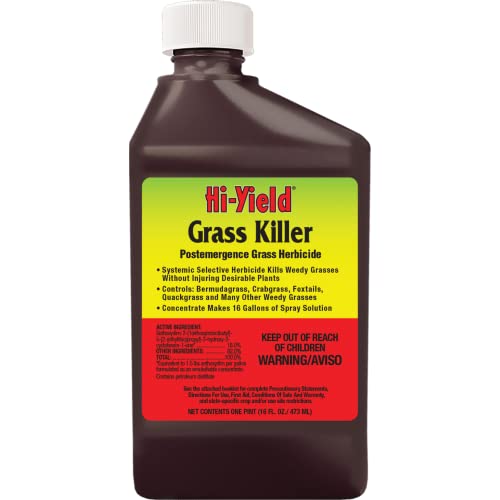
The selective grass killer that spares your vegetables and flowers.
When you have grass growing inside your garden beds, you cannot use a non-selective spray without killing your tomatoes. This is where Fluazifop-P-butyl (a selective herbicide that targets only grassy plants) earns its place. It is a selective post-emergent herbicide that targets grassy weeds like crabgrass and Bermuda grass while leaving broadleaf plants — vegetables, trees, shrubs, ornamentals — unharmed. Buyers report it stops weed grass growth within two days and makes 16 gallons of spray solution from the 16 oz bottle.
The real-world results are mixed, which is reflected in the rating. Some owners mention it worked perfectly: “killed all tall fescue in garden within days; vinca unaffected.” Others found it ineffective, applying multiple times with no apparent effect on the grass. A key detail is that you need a crop oil or non-ionic surfactant (a wetting agent that helps the chemical stick) for this product to stick to the leaf surface; without it, the chemical evaporates too quickly to work. This is a nuance that can make the difference between success and failure. It is a niche product — the right tool for a specific job — but not a universal solution.
use this for: Removing grassy weeds from vegetable gardens, flower beds, and around shrubs where non-selective sprays would cause collateral damage.
skip this if: You want a general-purpose weed killer or do not want to purchase a separate surfactant or crop oil for the product to be effective.
Understanding the Specs
Non-Selective vs. Selective
This is the most important split. A non-selective herbicide, usually based on glyphosate, kills any plant it touches. It is perfect for driveways, patios, and clearing a patch of land. A selective herbicide targets specific families of plants — for example, mesotrione kills broadleaf weeds and certain grasses but leaves your lawn grass alive. The product label will always tell you which weeds it controls and which turfgrasses are safe.
Surfactants
A surfactant (sometimes called a “wetting agent”) helps a liquid herbicide spread evenly across a waxy leaf surface and stick there instead of beading up and rolling off. Many concentrates come with a surfactant already mixed in. If yours does not, you need to add one — especially on hot days when the droplet would otherwise evaporate before the plant has time to absorb the chemical.
Rainfast Window
This is the length of time after spraying before rain can wash the chemical off the leaf. Some products need 6-8 hours of dry weather. Others, like the Martin’s Eraser Max on this list, are rainfast in a couple of hours. If you live in a rainy area, this is a spec that saves you from having to re-spray.
Active Ingredient Percentage
The number on the front of the bottle (e.g., 41% glyphosate) tells you how concentrated the active ingredient is. A higher percentage means more killing power per ounce of liquid, but it also means you need to be more precise with your mix ratio. A 50% concentrate covers more ground per bottle than a 41% one, but requires the same careful dilution.
FAQ
What is the difference between post-emergent and pre-emergent herbicide?
Can I use a post-emergent herbicide on my lawn without killing the grass?
How long does it take for a post-emergent herbicide to work?
Do I need to add a surfactant to my herbicide?
What does rainfast mean?
Is MSMA safe for all grass types?
Can I mix two different post-emergent herbicides together?
Why does my grass turn white after I spray mesotrione?
Final Thoughts: The Verdict
If you want one dependable pick, the best post-emergent herbicide winner is the Martin’s Eraser Max Super Concentrate because it delivers the fastest rainfast window, dual-active chemistry that handles tough perennial weeds, and a track record of reliability across thousands of owners. If you want a selective solution that protects your lawn, grab the Liquid Harvest Mesotrione Bundle. And for heavy brush and fence line control in pasture land, the Remedy Specialty Herbicide is the one to reach for.
How We Picked
We do not accept paid placement. Every pick is matched to a real buyer and a real use-case; we do not hands-on test units.
Sources & Methodology
Specifications: manufacturer listings and product documentation. Review insights: verified customer reviews, as of July 2026. Pricing: not shown on this page (it changes often); check the current price via the retailer link.
As an Amazon Associate, Lawn Gear Lab earns from qualifying purchases. This does not affect which products we feature.