
Specs are compiled from manufacturer listings and verified buyer reviews and can change over time — please confirm the key details on the product page before buying.
You want the weeds gone, but you do not want to nuke the pond doing it. The right pond weed herbicide kills the plant down to the root, waits a few days or weeks for the browning, and leaves your fish, frogs, and pets swimming in peace. The trade-off you are really weighing is speed versus longevity: a fast-acting contact spray shows results in a day or two but can bounce back, while a slow systemic treatment takes a month but clears the whole water body for the season.
I’m Rikta — the founder and writer behind Lawn Gear Lab. This guide is built by comparing the manufacturers’ published specifications and the patterns across verified customer reviews, so you get each pick’s real strengths and trade-offs instead of marketing spin.
You will learn which formulas match which weed, how to read a label for fish safety, and the honest limits of each pond weed herbicide in this lineup — so you pick the one that fits your water, not just the best-seller.
Our Picks at a Glance

How To Choose The Best Pond Weed Herbicide
Pond weed killers split into two behavioral camps, and picking the wrong one wastes a season. Contact herbicides like diquat and glyphosate hit the foliage you spray and die back in days; systemic options like fluridone work through the whole plant slowly, starving it over weeks. Your weed type, your patience, and your fish load should drive the call.
Match the chemical to the weed
Shoreline emergents — cattails, phragmites, pond grass — sit above the water and take a glyphosate or diquat spray well, especially with a surfactant (a soap-like additive that helps the liquid cling to leaves). Floating and submerged weeds like duckweed, watermilfoil, and hydrilla respond to diquat quickly, or to fluridone if you want season-long control. Read the weed list on the label before you buy; no single product kills everything.
Check the fish-safety line, not the marketing
Almost every aquatic label claims it will not harm fish when used as directed, but the fine print differs on water-use restrictions. Some formulas forbid swimming and irrigation after treatment; others have no swimming, boating, or livestock restrictions at all. If you have koi or a stocked bass pond, confirm the label names game fish explicitly before you pour.
Decide how long you want to wait
Fast-acting contact sprays show browning in 12 to 24 hours, but dead plant matter can deplete oxygen as it decays. Systemic treatments take weeks but clear a whole pond in one application. A common expert move is to treat only a portion of the pond at a time so fish can move to untreated water — a detail owners of stocked ponds stress repeatedly.
Quick Comparison
| Model | Best For | Active Ingredient | Volume | Weed Type | Amazon |
|---|---|---|---|---|---|
| Roundup Custom 53.8% Glyphosate★ Best Overall | Big ponds & shoreline brush | Glyphosate 53.8% | 2.5 gal (320 fl oz) | Emergent & terrestrial | Amazon |
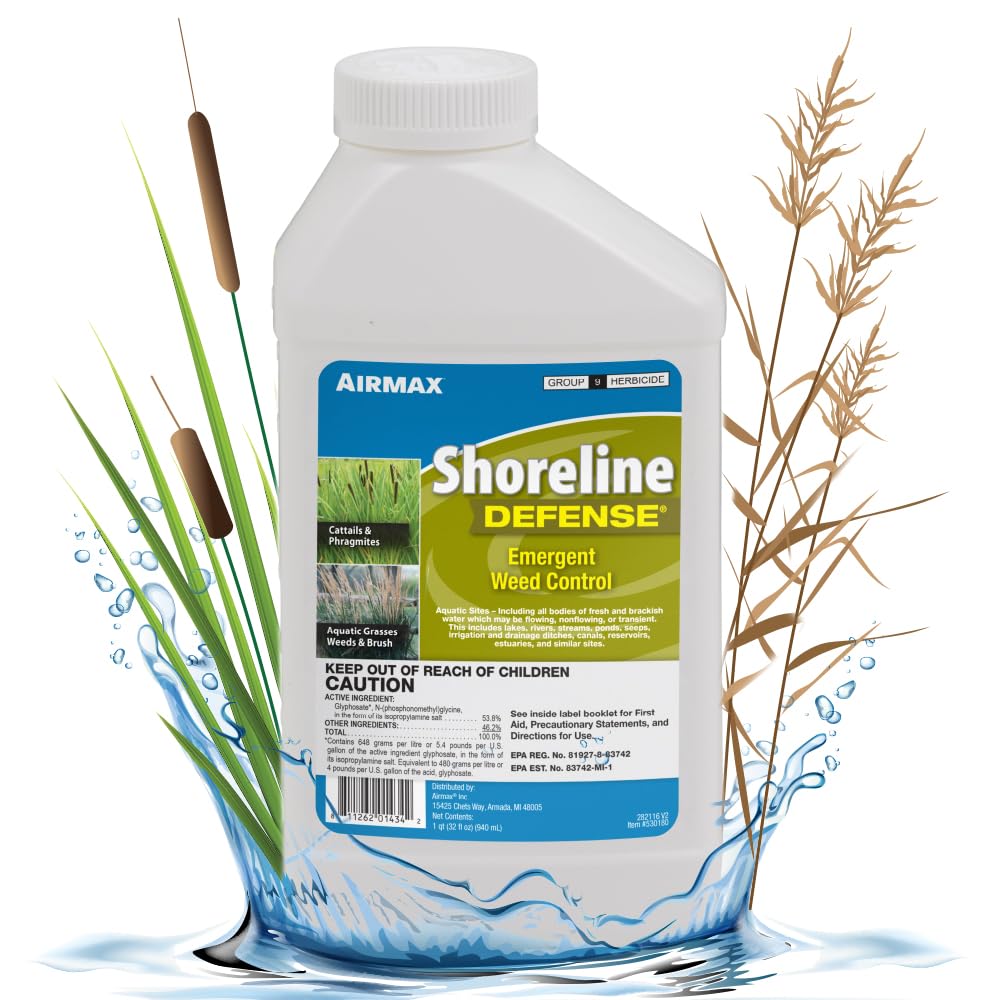
| Airmax Shoreline DefenseShoreline Specialist | Cattails & phragmites | Glyphosate | 1 Quart (32 fl oz) | Emergent shoreline | Amazon |
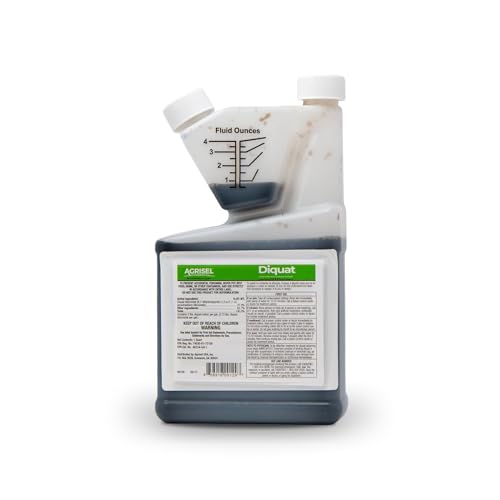
| Agrisel Diquat Weed KillerFast-Acting | Fast results in 1-2 days | Diquat dibromide | 32 fl oz | Aquatic & landscape | Amazon |
| Weedtrine D Aquatic Herbicide | Duckweed in large ponds | Diquat dibromide | 1 Gallon (128 fl oz) | Duckweed & broad spectrum | Amazon |
| Alligare Diquat | Hyacinth & fast knockdown | Diquat dibromide 37.3% | 1 Gallon (128 fl oz) | Pond, lake & landscape | Amazon |
| Airmax Wipeout | Season-long, no sprayer | Fluridone (systemic) | 4 Ounce | Floating & submerged | Amazon |
| Sonar RTU | Pour-and-go small ponds | Fluridone (systemic) | 1 Quart (32 fl oz) | Duckweed & broad spectrum | Amazon |
In‑Depth Reviews
1. Roundup Custom 53.8% Glyphosate for Aquatic & Terrestrial Use
Our pick — over 4.5★ from 300+ verified ratings; the strongest balance of quality and price.
The heavy-duty jug that buys you years of pond maintenance on a half-acre.
This 2.5-gallon concentrate is the volume king for a reason: 320 fluid ounces of 53.8% glyphosate, and one owner says it “lasts years for 0.5-acre pond.” It is the only jug here that handles both aquatic shoreline weeds and terrestrial brush, so one bottle covers cattails and the yard line beyond. The catch is its 27-pound weight — you need real storage space for it.
Effectiveness is what wins people over, with real-world reports of grasses in ankle-deep water turning color in about a week and dying by two. The trade-off, repeated across several buyers, is that this concentrate demands a surfactant (a leaf-sticking additive) to perform in the water; without it, rain can dilute the mix and slow the kill. It is non-selective, so it kills anything green it touches—keep it off plants you want to keep.
Versatility is the quiet differentiator here: the maker notes it suits aquatic, forestry, right-of-way, industrial, turf, ornamental, and habitat-restoration sites, with eco-friendly packaging to boot. It is the rare product where the biggest downside is simply the commitment — a jug this size, mixed weak at 8-10 oz per 16 gallons or strong at 8 oz per 8 gallons, is a multi-year supply for most ponds. It holds ten times the fluid of the Airmax Shoreline Defense quart (320 fl oz vs. 32 fl oz), which is why it wins on value per ounce.
What the jug delivers
- Non-selective and effective on more than 190 species of emerged weeds, brush, and vines
- Ten times the fluid of the Airmax quart — 320 fl oz vs 32 fl oz — for a fraction more effort
- Approved for both aquatic and terrestrial sites, so one bottle covers pond and yard
What to know before mixing
- Needs a surfactant added for reliable aquatic performance
- Non-selective — any overspray kills desirable plants on contact
- 27-lb jug demands sturdy storage space
Reach for it if: you run a half-acre or larger pond with mixed shoreline and yard weeds and want one concentrate that covers both.
Look elsewhere if: you want a quick pour-and-wait product — this is a mix-it-yourself concentrate that needs a sprayer and a surfactant.
2. Airmax Shoreline Defense Emergent Weed Control Herbicide
A shoreline-focused glyphosate that reclaims beaches and docks from cattails and phragmites.
If your problem is the weed line where land meets water, this quart is built exactly for that strip. It targets emergent weeds — cattails, phragmites, grasses, brush — and the maker claims it kills down to the root, so the regrowth is slower than a top-only trim. One buyer living beside a 1 1/2-acre pond reports it “killed everything where I sprayed it on the shoreline,” and came back for a second bottle.
At just 2 pounds and 32 fluid ounces, this is the lightest glyphosate option here — a 13.5x weight gap versus the 27-pound Roundup jug — which makes it the right scale for someone who wants shoreline control without storing a drum. The buyers-say consensus is quick: results start showing within the next day, and the label says it works in both fresh and brackish water, widening the ponds, lakes, rivers, and ditches it can serve.
The main caveat is the same one that follows any glyphosate: for best results you should add a surfactant, and the treatment works on foliage you can spray, not submerged plants. It is pet-friendly and won’t disturb wildlife when used per label, which is why it keeps earning repeat purchases for shoreline restoration.
Root-level control: kills down to the root for long-term control, not just a brown top.
Scale check: a 10,000 sq ft coverage quart that suits average ponds, not massive acreage.
Your pick if: your weeds are the emergent kind growing up from the shoreline and you want a fog-free, spray-and-wait fix.
Not for: submerged weeds or duckweed floating mid-pond — that needs a different chemistry.
3. Agrisel Diquat Weed Killer, Pet Safe, 32 Ounces
The fastest knockdown in the lineup — visible results in 1-2 days, green to brown fast.
Impatience has a product, and it is this diquat-based spray. The maker promises visible results in just 1-2 days, and the reviews back the speed with reports of noticeable changes in 12 hours and a full clear of floating duckweed on a 1/4-acre pond after one application. The active ingredient is diquat dibromide, a contact herbicide that works on both aquatic and landscape weeds, so the same 32-ounce bottle jumps between pond, greenhouse, nursery, and ornamental beds.
What everyone stresses is respect: this is a contact killer, and the reviews say it plainly — anything green it touches dies, so overspray is your enemy. One pond owner framed it as a feature: a single pass cleared the duckweed, as long as you watch the drift. The effectiveness is the dominant praise in the buyer feedback, and the EPA-approved status covers aquatic settings and ornamental gardens alike.
The honest trade-off is value. The reviews split on cost — some call it economical at low usage rates, others find it pricey for the size — and the 32-ounce bottle is the smallest here outside the Wipeout. It is the right call when speed matters more than spread, and when you are comfortable working carefully with a potent contact material.
Speed is the story: owners watch weeds brown within hours to a day, which no systemic option can match.
Care is mandatory: the same potency that kills weeds will kill ornamentals on contact.
Choose this when: you need a visible result this weekend and you are comfortable spraying with precision.
Skip if: you want a set-and-forget treatment — this is hands-on, and it will not prevent regrowth.
4. Weedtrine D Aquatic Herbicide 1 Gallon
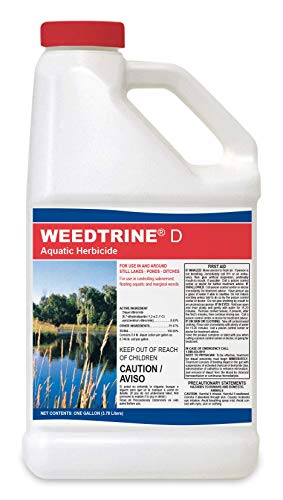
A professional-grade diquat gallon that ended years of duckweed frustration in hours.
Duckweed is the nemesis that drives pond owners to this gallon jug. The diquat-based formula covers submersed, floating, and emergent weeds, and the reviews tell a revival story: one owner who fought duckweed for years and even caused a fish kill with another product found this one “actually works as advertised.” The speed is the headline — weeds begin dying within hours of a shoreline spray pass, with the buyer consensus landing firmly on effectiveness.
At 1 gallon (128 fluid ounces), it covers roughly half an acre of weed growth, which makes it the sensible middle ground between the 32-ounce quarts and the 2.5-gallon Roundup. The label is transparent about what you give up: water use is restricted for irrigation, drinking, and swimming after treatment, and shipping is blocked to AK, CA, CT, HI, ME, NJ, NY, and WA — so confirm your state before ordering.
The value read here is split in the reviews, with some calling it a great deal and others feeling the price runs high. What is not in dispute is that a single gallon solved a multi-year duckweed war for owners who had tried everything else, and it does it while staying fish and wildlife safe per the label.
The duckweed closer: one application, hours to visible die-back, and years of frustration resolved.
Plan the timing: post-treatment water restrictions and state shipping limits need a check before checkout.
Best fit: the large-pond owner fighting floating and submerged weeds who wants professional-grade chemistry without a drum-sized purchase.
Not for: anyone needing to swim or irrigate soon after — respect the water-use window.
5. Alligare Diquat 1 Gallon
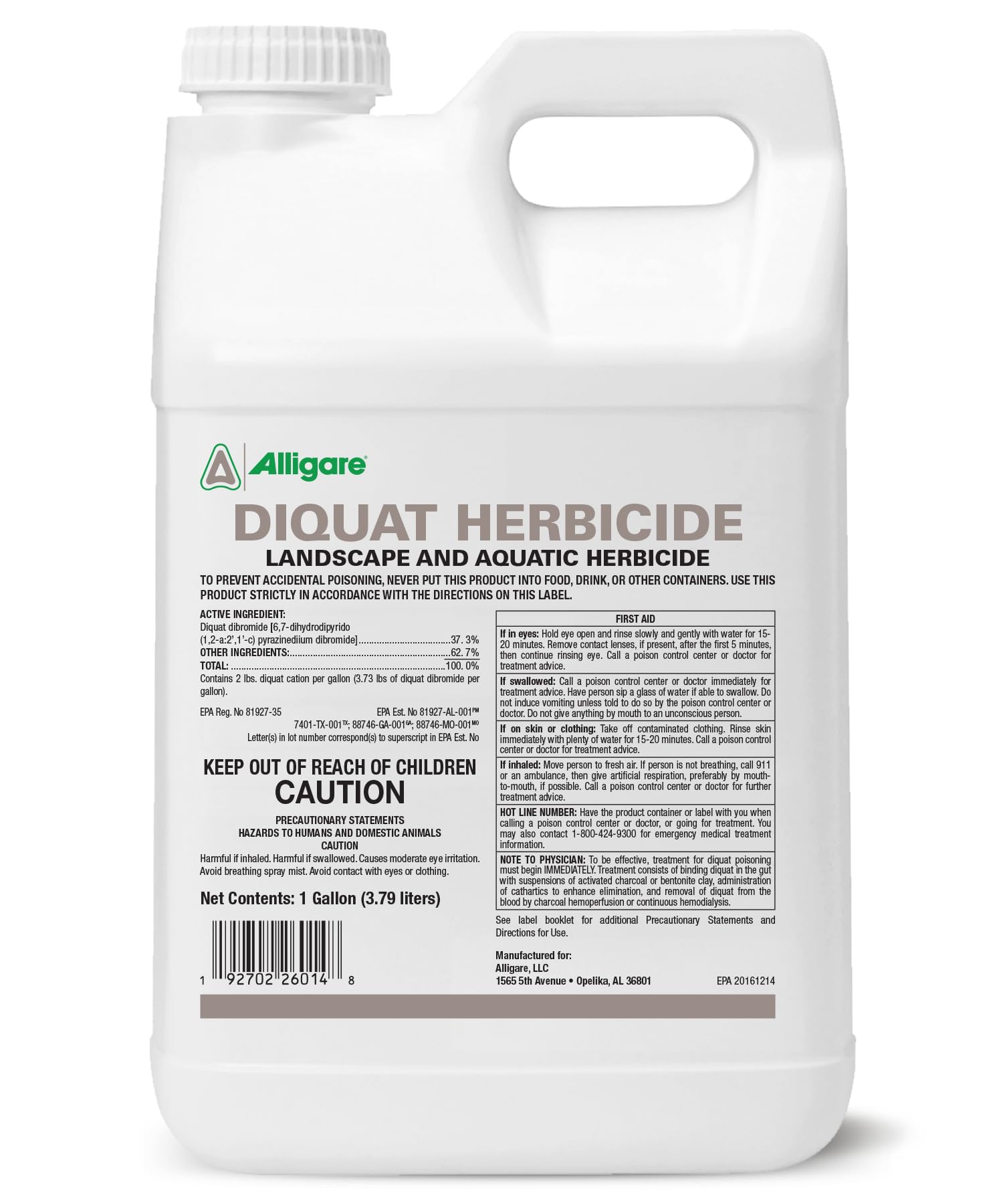
A potent diquat concentrate that turns water hyacinth brown within 24 hours.
When the weed is water hyacinth, the reviews point here. This 37.3% diquat concentrate is the highest-strength diquat in the lineup, and the feedback is emphatic: hyacinth browning within 24 hours, cattails turning in 12, and one owner claiming it beats Roundup on grass and weeds. The effectiveness is the dominant praise, and the 1-gallon size stretches across ponds, lakes, greenhouses, nurseries, and residential lawns.
The dosing is well documented — 3/4 oz per gallon of water for spraying, or 1 gallon per surface acre at 4-foot depth — which makes it easy to scale up or down. One experienced owner mixes it with Roundup to push kill rates to 99%, a power-user trick that shows how versatile the concentrate is. It is priced at the premium end of the diquat options, but the reviews repeatedly frame that as worth it for the speed.
There is a real safety rhythm owners stress: spray only a portion of the pond at a time so aquatic life can move away, because too much decaying plant matter at once depletes oxygen. That caution applies to any fast contact killer, and it is the single most important habit for keeping your fish alive while the weeds die.
Maximum strength: the highest diquat concentration here for the fastest knockdown on tough weeds.
Work in stages: partial-pond spraying protects fish from oxygen dips as plants decay.
Pick this for: water hyacinth, cattails, and duckweed when you want the strongest diquat punch per ounce.
Think twice if: you are new to herbicides — the strength demands careful dilution and staging.
6. Airmax Wipeout Pond Weed Defense Herbicide, 4 Ounce

A pour-and-wait fluridone treatment that clears the whole pond for the season.
This is the anti-spray: a 4-ounce bottle of systemic fluridone that you mix with pond water and pour around the shoreline, treating the entire body of water in a single application with no sprayer and no granular spreader. Rather than burning foliage on contact, it slowly reduces the weeds’ chlorophyll and starves them — which is exactly why there is no rapid oxygen depletion and no fish kill, the maker explains.
The reviews split hard on patience. Owners who understood the timeline loved it: an 80-year-old husband applied it easily to a lily-pad-covered pond and the payoff came at 45-60 days, while another saw a half-acre duckweed problem clear after about a month once rainfall helped churn the dead weeds under. Owners who expected fast results were disappointed, with a month passing and little visible change on a small detention pond. This is a chemistry that rewards early-spring application, even before plants appear.
What every satisfied owner says is the same: it is slow, but it works, and the convenience is class-leading for busy pond owners, HOAs, and commercial facilities. The 4-ounce size is small, the cost runs high — owners note the price climbing yearly — and there are no temperature, swimming, boating, fishing, or livestock restrictions after application, which is the cleanest access profile in this list.
Set-and-forget: one pour, all-season control, and zero spray equipment to fuss with.
Patience required: results arrive in weeks, not days — this is a slow starve, not a fast burn.
Reach for it if: you want season-long, whole-pond control and can apply in early spring before weeds take hold.
Look elsewhere if: you need to see browning this week — patience is not optional with fluridone.
7. Sonar RTU (Ready-to-Use) Aquatic Herbicide, 1 Quart

The simplest systemic on the shelf — pour a dose, no mixing, no boat, no spray rig.
If the idea of mixing concentrates and hauling a sprayer kills your motivation, this ready-to-use quart removes every barrier. The maker’s pitch is the most direct in the lineup: no mixing, no spray equipment, no boat — just pour the right dose directly into the pond. For a small koi pond, that meant a 3 ml dose that killed duckweed in a week, left three koi unharmed, and earned its buyer’s first-ever Amazon review.
The systemic fluridone chemistry works slowly and steadily, and the buyers-say consensus is that ponds “look great after treatment” once it finishes. One pond owner who had fought algae and duckweed for five years watched it come back clear for the summer, while another saw duckweed initially grow faster before disappearing completely at the 40-day mark. The pattern across reviews is clear: patience delivers, but it delivers reliably.
Dosing is dead simple — 4 quarts per half-acre at 4-6 feet average depth, and 1 quart covers 1/8 of an acre for the entire season. The EPA-approved formula is non-toxic to fish, pets, and wildlife, which is why it suits residential ponds, farms, and lakes. The honest caveats: a small share of users saw no effect after two cycles, and shipping is blocked to AK, CT, HI, ME, NJ, NY, WA, and Canada.
Zero-friction application: pour, wait, and let the systemic do the work across a whole season.
Season economics: a quart treats 1/8 acre for the entire season, so scale matters when budgeting.
Your match: small ponds, koi ponds, and anyone who wants season-long control without owning spray equipment.
Not for: quick visible results or ponds larger than what a quart can reach affordably.
Understanding the Specs
Active Ingredient: Contact vs. Systemic
The active ingredient decides everything about how your treatment behaves. Diquat dibromide is a contact herbicide — it burns what it touches, showing browning in 12 to 48 hours, but it does not move through the plant’s root system. Glyphosate is systemic, meaning it travels down to the roots and kills the whole plant, which is why it suits shoreline emergents like cattails. Fluridone is the slowest systemic of all, starving weeds of chlorophyll over weeks for whole-season control with the gentlest fish profile.
Surfactant and Why It Matters
A surfactant is a soap-like additive that helps the herbicide cling to waxy weed leaves instead of beading up and rolling off. Spray-on glyphosate and diquat products often work noticeably better with one added, and several owners in the reviews note it is the difference between a treatment that works and one that washes away in rain. It is an extra step, but for shoreline sprays it is close to mandatory.
FAQ
Will pond weed herbicide harm my fish?
How fast will I see results?
What is the difference between contact and systemic herbicides?
Do I need a surfactant with my pond herbicide?
Will these products harm frogs, pets, or livestock?
Can I swim or use the water for irrigation after treating?
Why is my pond weed coming back after treatment?
How much do I need for my pond size?
Can I use these on emergent weeds like cattails and phragmites?
Is it better to treat the whole pond or just the weeds I see?
Final Thoughts: The Verdict
For most pond owners, the pond weed herbicide winner is the Roundup Custom because its 320-ounce, 27-pound jug of 53.8% glyphosate handles both aquatic shoreline weeds and terrestrial brush for years, making it the best value per ounce on this list. If you want fast, visible results in a day or two, grab the Agrisel Diquat — just respect the contact chemistry. And if your pond is small and you want the simplest possible season-long fix with no sprayer and no mixing, the Sonar RTU is the one to reach for.
How We Picked
We do not accept paid placement. Every pick is matched to a real buyer and a real use-case; we do not hands-on test units.
Sources & Methodology
Specifications: manufacturer listings and product documentation. Review insights: verified customer reviews, as of August 2026. Pricing: not shown on this page (it changes often); check the current price via the retailer link.
As an Amazon Associate, Lawn Gear Lab earns from qualifying purchases. This does not affect which products we feature.